
Our readers keep the lights on and the weekend projects moving. As an Amazon Associate, I earn from qualifying purchases.
A biometric tracker promises to turn your body into a dashboard of actionable data, but the difference between a toy and a tool lives in the sensor stack, the sampling rate, and the algorithm that interprets the raw waveforms. Buying on brand alone or chasing a flashy screen often leads to noisy data and false insights that undermine the very goal of self-quantification.
I’m Rikta — the co-founder and writer behind FitlyFast. I’ve spent hundreds of hours dissecting the engineering specs, comparing optical heart rate architectures, and mapping the real-world accuracy of sleep staging algorithms in the current generation of wearable biometric trackers.
This guide separates trackers that deliver clinically useful metrics from those that just look the part, helping you invest in a best biometric tracker that actually matches your health monitoring priorities.
How To Choose The Best Biometric Tracker
Biometric trackers vary massively in sensor quality, data granularity, and companion algorithm sophistication. The right choice depends on whether you prioritize sleep apnea screening, athletic performance metrics, or long-term heart health trends. Here is the decision framework you need.
Optical Sensor Architecture and Sampling Rate
The PPG (photoplethysmography) sensor is the heart of every biometric tracker. Trackers that use multiple LEDs and photodiodes with a high sampling rate (over 50 Hz) produce cleaner waveform data, translating to more accurate heart rate and HRV readings during intense movement. Single-LED designs often struggle with motion artifact, particularly during running or HIIT.
Sleep Staging vs. Sleep Apnea Detection
Basic sleep staging tracks light, deep, and REM phases using movement and heart rate variability. A growing premium feature—sleep apnea monitoring—tracks blood oxygen desaturation events (AHI index) in real time. If sleep-disordered breathing is a concern, look for trackers with dedicated SpO2 sensors and validated apnea algorithms rather than generic oxygen trend tracking.
GPS Accuracy and Route Recording
For outdoor athletes, the GPS chipset and antenna design matter more than step counting accuracy. Trackers with multi-band GPS (L1+L5) or support for four satellite systems maintain a lock in tree cover and urban canyons. Single-satellite GPS drifts significantly during turns and inside wooded trails.
Battery Life vs. Feature Set
Continuous biometric monitoring drains power. A tracker that runs 10 days in smartwatch mode can drop to 40-70 hours when constant SpO2 monitoring or GPS is active. Decide whether you want a device you charge weekly with moderate biometrics or one you top up every few days that streams more granular data through the night.
Quick Comparison
On smaller screens, swipe sideways to see the full table.
| Model | Category | Best For | Key Spec | Amazon |
|---|---|---|---|---|
| Garmin vívoactive 6 | Premium Smartwatch | Body Battery & full training analytics | 11 days battery, AMOLED, 80+ sport apps | Amazon |
| RingConn Gen 2 | Smart Ring | Sleep apnea & discreet all-day wear | Sleep apnea AI, 12-day battery, no sub | Amazon |
| Apple Watch SE 3 | Ecosystem Watch | iPhone user & smartwatch integration | Always-On display, 18h battery, fast charge | Amazon |
| SUUNTO 9 Peak Pro | GPS Sports Watch | Multi-satellite GPS & endurance training | 4-satellite GPS, 300h tour mode, MIL-STD | Amazon |
| Fitbit Charge 6 | Mid-Range Fitness Band | Everyday fitness & Google integration | Built-in GPS, ECG, 40+ exercise modes | Amazon |
| Fitbit Inspire 3 | Entry-Level Band | Stress monitoring & light activity | Daily Readiness Score, 10-day battery | Amazon |
| XIAOMI Mi Smart Band 10 | Budget Value Band | Long battery & bright AMOLED on a budget | 1.72″ AMOLED, 21-day battery, 1500 nits | Amazon |
In‑Depth Reviews
1. Garmin vívoactive 6
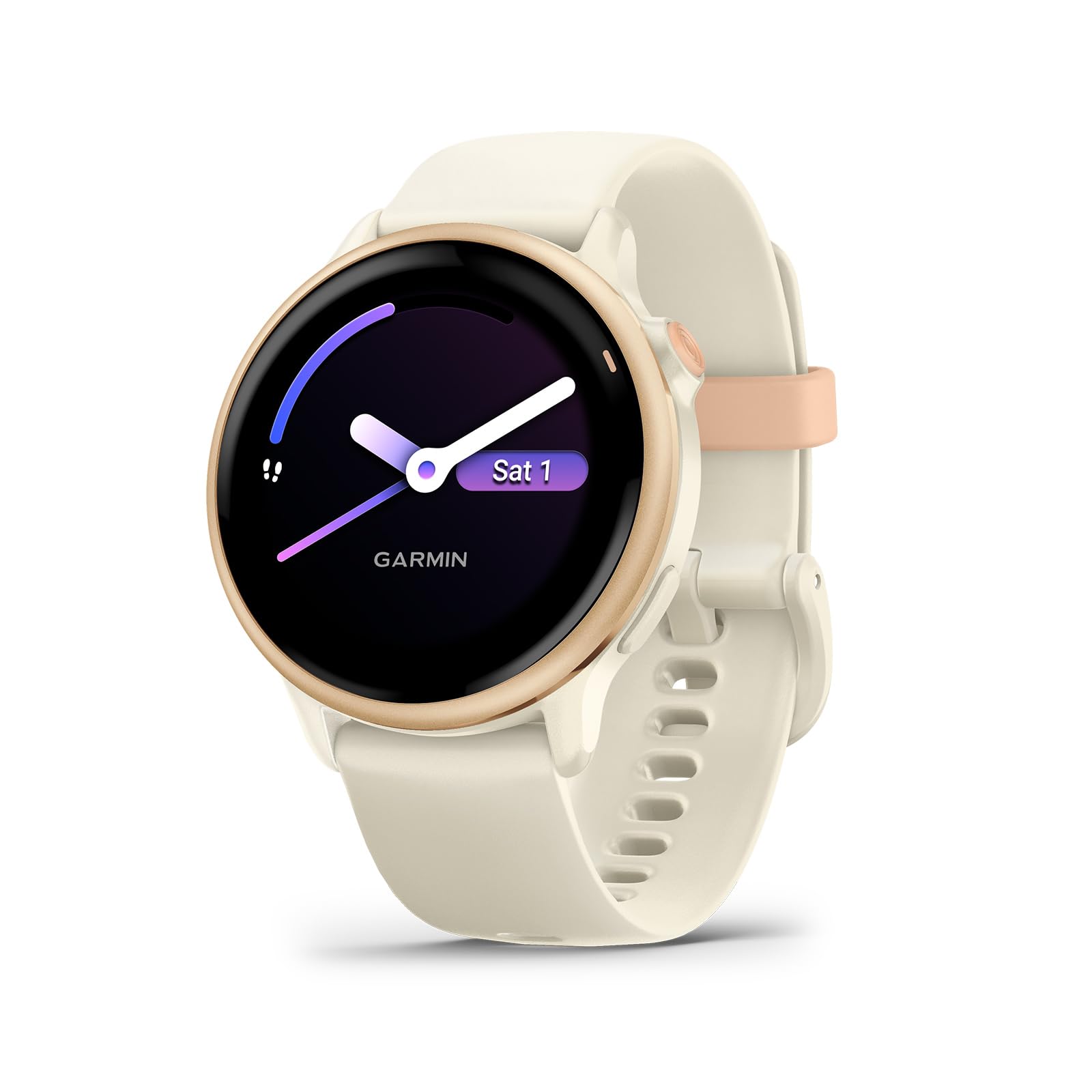
The Garmin vívoactive 6 delivers a rare combo: a crisp AMOLED display with up to 11 days of battery life in smartwatch mode. The Body Battery energy monitoring goes beyond simple sleep tracking by factoring in naps, stress levels, and recovery, giving you a genuinely useful readiness score for the day ahead. Its 80+ built-in sports apps cover everything from HIIT to golf, and the animated workout guidance helps maintain proper form without a phone.
Health monitoring depth is excellent for a lifestyle smartwatch. You get wrist-based heart rate, HRV status, stress tracking, menstrual health, meditation, and a morning report that summarizes your overnight recovery. The sleep score includes personalized coaching tips, and the smart wake alarm vibrates at the optimal sleep stage to avoid grogginess. No subscription fees block any metric—a clear advantage over some competitors.
The trade-off is the case material: ABS polymer and silicone keep it lightweight but less premium than full stainless steel or titanium builds. It also lacks an altimeter, so elevation data depends on GPS. For fitness-forward users who want a deep, subscription-free health picture in a comfortable, everyday package, the vívoactive 6 is the smartest biometric tracker on the market right now.
Why it’s great
- Body Battery integrates sleep, naps, stress, and workout data for real readiness insight
- Animated on-wrist workout guidance for strength, yoga, HIIT, and Pilates
- Zero subscription fees for any health metric, including sleep coaching and HRV status
Good to know
- No altimeter for barometric elevation readings
- ABS case feels less premium than metal builds at similar price points
2. RingConn Gen 2 Smart Ring

RingConn Gen 2 stands alone in this lineup as the only device with FDA-cleared sleep apnea monitoring built into a form factor that weighs just 2 grams. The AI-powered algorithm tracks AHI (Apnea-Hypopnea Index) and oxygen desaturation overnight, developed in collaboration with university sleep labs. For those who suspect sleep-disordered breathing but want a less intrusive alternative to clinical home tests, this ring delivers continuous, multi-night data without a mask or nasal cannula.
Beyond sleep, it tracks HR, HRV, SpO2, stress, and activity with no recurring subscription—a meaningful differentiator in a category where many rings lock advanced metrics behind a monthly paywall. Battery life reaches 10–12 days depending on ring size, and the included charging case extends runtime past 150 days for travel. The titanium build with 100-meter water resistance makes it rugged enough for swimming and daily showers.
The primary concern is durability of the black matte finish, which reports scratching under manual work. Battery degradation over months has also been noted in extended reviews, dropping from 7 days to 3–4 with continuous sleep apnea monitoring. It lacks GPS and on-device display, so it is a companion device, not a smartwatch replacement. For sleep and wellness data density in an invisible package, the RingConn Gen 2 is unmatched.
Why it’s great
- Clinical-grade sleep apnea monitoring with AI-driven AHI tracking
- Truly subscription-free: all health metrics accessible in the app permanently
- Ultra-thin 2g design with 100-meter water resistance
Good to know
- Black finish scratches easily with manual labor and daily wear
- No on-display GPS or smartwatch functions—phone required for navigation
3. Apple Watch SE 3
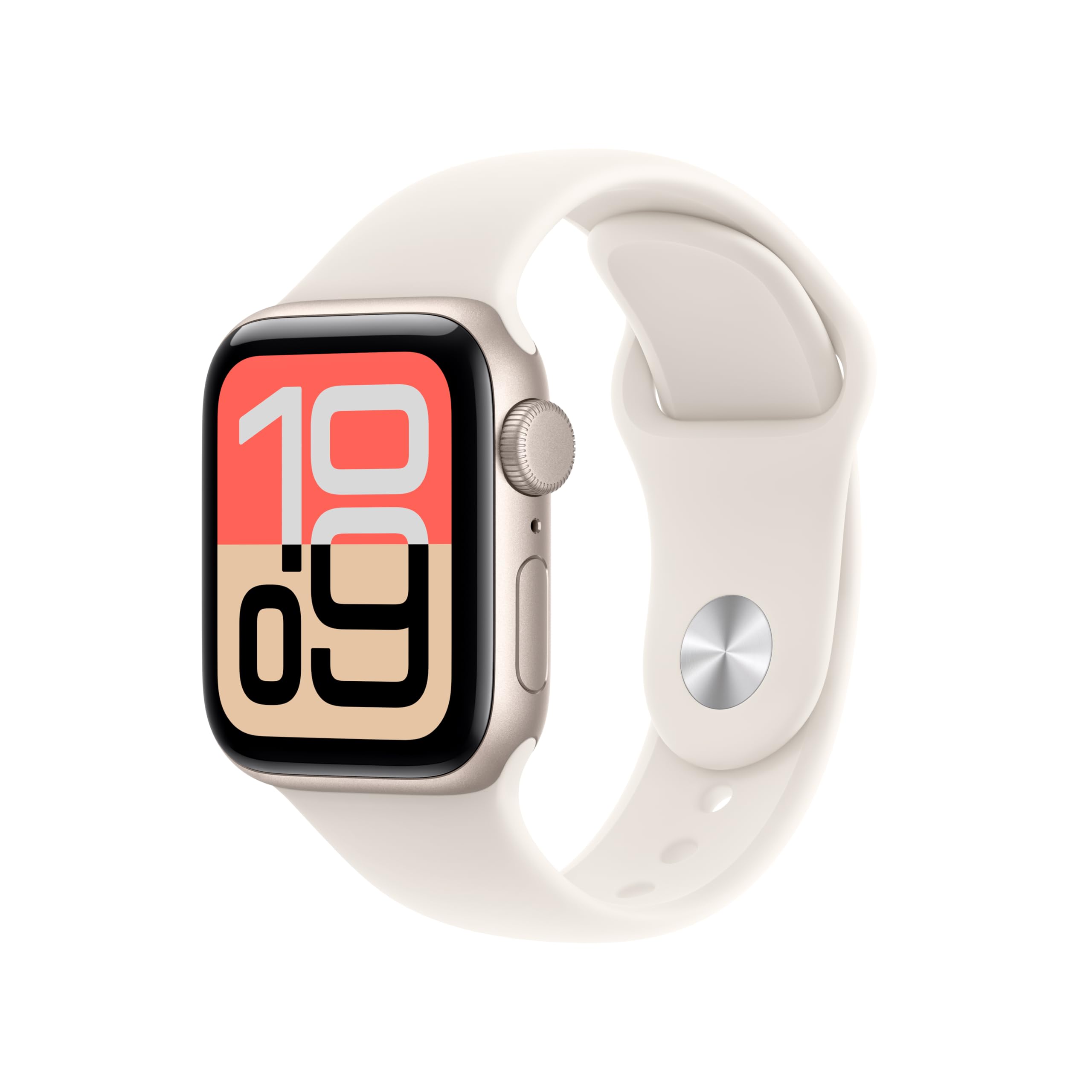
The Apple Watch SE 3 is the gateway into the Apple health ecosystem for iPhone users who want reliable biometric tracking without the price of the Series line. Temperature sensing provides richer data for the Vitals app and retrospective ovulation estimates, while the new sleep apnea notifications and overnight SpO2 sampling bring clinical-grade screening to the wrist. The 18-hour all-day battery combined with 15-minute fast charging (up to 8 hours of runtime) means it rarely spends time on the charger.
Workout Buddy, powered by Apple Intelligence from a nearby iPhone, delivers real-time coaching and form feedback during runs, strength training, and more. Safety features are a strong differentiator: fall detection, car crash detection, and Check In automatically notify emergency contacts when you do not arrive at a destination. The always-on Retina display means you see the time and metrics without raising your wrist, a quality-of-life improvement over the previous SE generation.
The SE 3 lacks the blood oxygen sensor found on the Ultra and some Series models, so native high-altitude SpO2 tracking is absent. The 18-hour battery is adequate for a full day but requires nightly charging if used for sleep tracking. The aluminum case and Ion-X glass scratch more easily than the sapphire on premium Apple Watches. For seamless iPhone health integration with essential safety and biometric features, the SE 3 delivers outstanding value.
Why it’s great
- Temperature sensing for deeper health insights and retrospective ovulation tracking
- Fast charging: 15 minutes provides up to 8 hours of battery life
- Fall, crash, and Check In safety features are best-in-class for wearables
Good to know
- No native blood oxygen sensor for on-demand SpO2 measurements
- 18-hour battery requires daily charging if used for overnight sleep tracking
4. SUUNTO 9 Peak Pro

The SUUNTO 9 Peak Pro is engineered for athletes and adventurers who rely on GPS fidelity as much as heart rate data. It locks onto four satellite systems (GPS, GLONASS, Galileo, BeiDou), maintaining pinpoint tracking even in steep canyons, dense forest, and urban high-rises. Battery life is class-leading: 40 hours in best GPS mode, 70 hours in endurance mode, and a staggering 300 hours in tour mode—more than enough for multi-day expeditions. A 10-minute top-up yields 2 hours of GPS training.
Build quality mirrors its heritage: handcrafted in Finland with military-grade durability, titanium and stainless steel options, and sapphire crystal glass that resists scratches from rock and trail debris. The 97 sport modes cover virtually every activity, with turn-by-turn navigation, weather alerts, and avalanche maps for backcountry safety. The Suunto app integrates with Strava, Training Peaks, and over 200 other fitness platforms for deep post-workout analysis.
The MIP (memory-in-pixel) display, while always-on and readable in direct sunlight, lacks the vibrant colors and touch responsiveness of AMOLED alternatives. Sleep tracking is adequate but not as granular as purpose-built sleep rings or premium Garmin models. Music storage and streaming are absent—you cannot pair Bluetooth headphones directly for offline playback. For GPS-intensive outdoor athletes who prioritize route accuracy and battery endurance over screen flash, the 9 Peak Pro is the definitive tool.
Why it’s great
- Quad-satellite GPS with exceptional accuracy in challenging terrain and urban canyons
- 300-hour battery life in tour mode supports week-long expeditions without recharge
- Sapphire crystal and titanium construction built to military durability standards
Good to know
- MIP display lacks the vivid color and touch quality of AMOLED watches
- No offline music storage or Bluetooth headphone pairing
5. Fitbit Charge 6

The Fitbit Charge 6 sits at the sweet spot of the fitness band market, packing built-in GPS, an ECG app, and a bright AMOLED display into a slim form factor. Its real-time heart rate syncs with compatible gym equipment—treadmills, ellipticals, and bikes—showing data directly on the machine display. For runners and gym-goers who want phone-free tracking, the onboard GPS and 40+ exercise modes cover most activities without carrying a phone.
Google integration is the headline addition here: Google Maps turn-by-turn directions appear on your wrist, Google Wallet handles contactless payments, and YouTube Music controls let you skip tracks during a run. The Daily Readiness Score and Stress Management Score use HRV, sleep, and activity data to tell you when to push and when to rest. The ECG app on the Charge 6 provides on-demand atrial fibrillation screening, a feature previously exclusive to premium smartwatches.
The proprietary magnetic charging cable is a weak point—users report connection issues over time, and the band itself has had durability complaints about the strap hinge. Battery life hovers around 7 days with typical use but drops if always-on display or continuous GPS is active. The Charge 6 is also a Google-owned product, which may raise privacy concerns for some users. For a feature-dense band with GPS, ECG, and Google ecosystem hooks, the Charge 6 is the strongest mid-range biometric tracker available.
Why it’s great
- Built-in ECG app provides on-demand atrial fibrillation screening from the wrist
- Built-in GPS tracks routes without requiring a connected phone
- Integrates heart rate data with compatible gym equipment in real time
Good to know
- Proprietary magnetic charger has reported connection reliability issues over time
- Band hinge durability varies; some users report failure within months of purchase
6. Fitbit Inspire 3

The Fitbit Inspire 3 is the simplest entry point into serious biometric tracking, focusing on stress management, sleep quality, and daily activity without overwhelming the user. The Daily Readiness Score tells you whether your body is primed for a workout or needs recovery, based on HRV, recent sleep, and activity levels. Active Zone Minutes gamify movement intensity, pushing you into fat-burn, cardio, or peak zones throughout the day.
Sleep tracking is automatic and detailed, providing a Sleep Score broken down by stage duration, restlessness, and restoration. The Smart Wake alarm vibrates during the lightest sleep phase within a 30-minute window, making mornings noticeably easier. SpO2 monitoring and irregular heart rhythm notifications add health-screening capability without a premium subscription fee. The 10-day battery life means you can wear it through a full work week and a weekend without the charger.
The Inspire 3 lacks built-in GPS, so outdoor run or cycle tracking relies on a connected phone’s GPS. The small vertical display cannot show full notifications or exercise metrics at a glance the way larger bands can. The proprietary charging cable and plastic hinge are potential failure points reported by long-term users. For a lightweight, unobtrusive tracker that nails sleep and stress analytics, the Inspire 3 delivers exceptional simplicity and battery life.
Why it’s great
- 10-day battery life minimizes charging interruptions and supports continuous sleep tracking
- Daily Readiness Score uses HRV and sleep data to guide workout intensity decisions
- Automatic sleep staging and Smart Wake alarm improve morning sleep quality
Good to know
- No built-in GPS requires a paired phone for outdoor route mapping
- Small vertical screen limits glanceable workout data and full notification content
7. XIAOMI Mi Smart Band 10
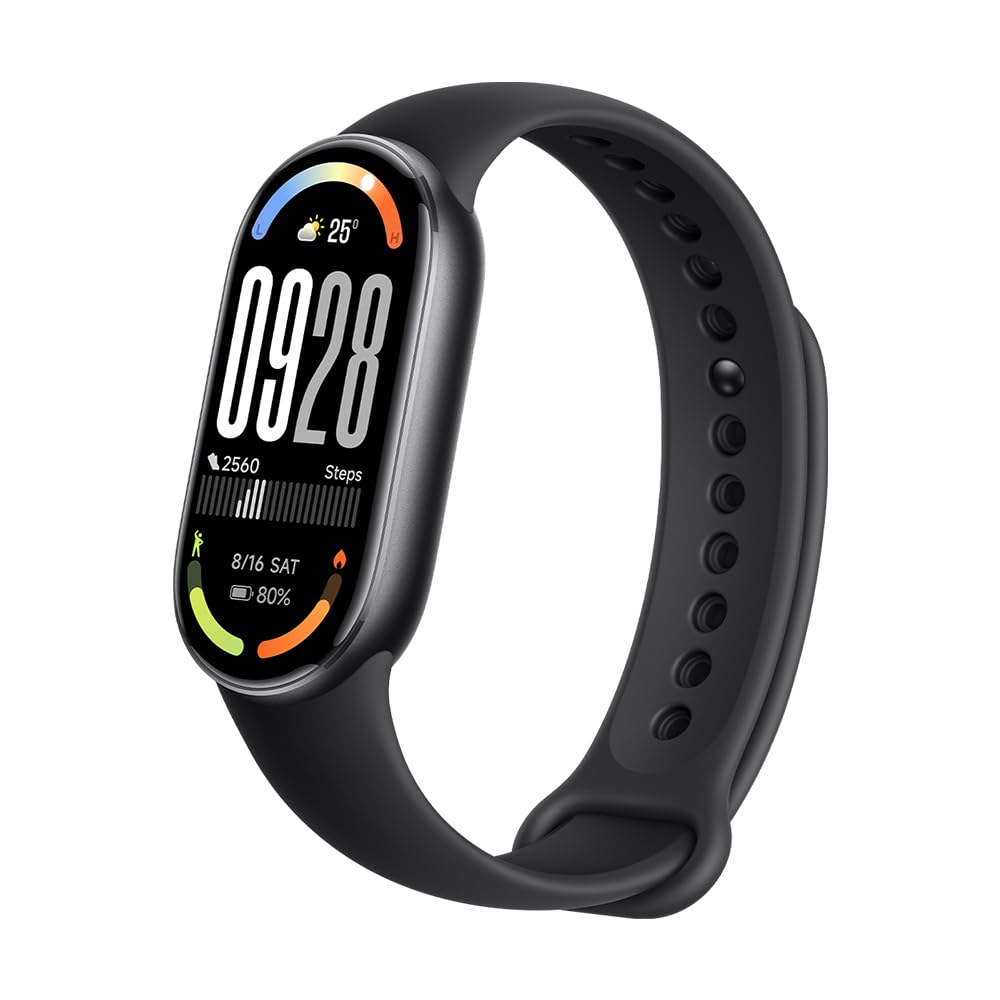
The Xiaomi Mi Smart Band 10 punches far above its weight class in display and battery life. The 1.72-inch AMOLED panel hits 1500 nits peak brightness, making it readable even under direct midday sun—a spec that rivals trackers costing several times more. The 21-day battery life with typical use means most buyers charge this band only twice a month, and the 1-hour fast charging time eliminates any wait anxiety.
Biometric tracking covers the essentials: heart rate, SpO2, stress levels, sleep stages, menstrual health, and blood pressure trend monitoring. The new high-precision electronic compass tracks swimming direction in pools, and the 150+ workout modes cover everything from HIIT to yoga. For swimmers, the 5 ATM water resistance holds up to pool sessions and open water. The HyperOS 2 interface is fluid for a budget device, and the fluoroelastomer band resists sweat degradation better than standard silicone bands at this price tier.
Step count accuracy is a known weak point, with some users reporting a 10-20% variance compared to Fitbit and other pedometers. The companion Xiaomi Fit app uses the metric system exclusively—distance in kilometers, weight in kilograms, height in centimeters—with no native imperial unit toggle. The 24-hour time format is also locked, which may frustrate some users. The GPS relies on a connected phone, lacking onboard satellite tracking. For budget-conscious buyers who want a bright, long-lasting display and multi-week battery life above all, the Mi Smart Band 10 is the strongest value proposition in the entry-level bracket.
Why it’s great
- 21-day battery life sets a class record, enabling true bi-weekly charging
- 1.72-inch AMOLED with 1500 nits brightness outperforms most bands at any price
- Fluoroelastomer band resists sweat and skin irritation better than basic silicone
Good to know
- Step count can drift 10–20% compared to higher-end fitness trackers
- App is metric-only—no native switch to pounds, miles, or 12-hour clock
FAQ
Can a biometric tracker detect sleep apnea without a doctor’s prescription?
Why does my optical heart rate tracker show incorrect readings during weightlifting?
What does HRV measure, and why does it matter for recovery tracking?
Final Thoughts: The Verdict
For most users, the Best Biometric Tracker winner is the Garmin vívoactive 6 because it blends deep health analytics—Body Battery, HRV, sleep coaching—with a premium AMOLED display, 11-day battery, and zero subscription fees. If you want dedicated sleep apnea screening in a form factor you forget you are wearing, grab the RingConn Gen 2. And for GPS-reliant outdoor athletes who need multi-satellite route accuracy and multi-day battery endurance, nothing beats the SUUNTO 9 Peak Pro.