
Our readers keep the lights on and the weekend projects moving. As an Amazon Associate, I earn from qualifying purchases.
A bedroom fan that actually helps you sleep needs to solve one problem above all others: delivering strong, consistent airflow without the hum, rattle, or sudden whoosh that pulls you out of deep rest. Bed sheets trap heat, and the wrong fan either blasts you with turbulent air or barely moves the air at all. The best designs couple high-velocity output with near-silent operation, using brushless DC motors, bladeless towers, or vortex-circulator engineering to keep the room cool while your brain stays asleep.
I’m Rikta — the co-founder and writer behind FitlyFast. I’ve spent hundreds of hours combing through airflow ratings, decibel specs, oscillation patterns, and real-user longevity reports to separate the fans that actually deliver on their quiet promises from those that don’t.
This guide focuses on units that balance wind speed, noise floor, and smart features so you can find the best bed fan for sleeping without waking up to a loud motor or a stuffy room.
How To Choose The Best Bed Fan For Sleeping
Choosing a fan for sleep means prioritizing noise level, airflow delivery, and control convenience over raw power. A loud, rattling fan defeats its purpose. Start by understanding what each spec actually means for your night’s rest.
Noise Rating: The Decibel Reality Check
Look for a noise rating at or below 28dB on low or sleep mode. A 20dB fan is practically inaudible in a quiet bedroom, while anything above 35dB becomes a noticeable background hum that can disturb light sleepers. The best models advertise their sleep-mode dB, but real-world performance depends on build quality — a cheap plastic housing can amplify motor vibration no matter what the sticker claims.
Airflow Velocity vs. Room Size
A fan that moves air at 26–28 ft/s is sufficient for most bedrooms (150–250 sq ft). Tower fans with bladeless or Coanda-effect designs deliver a broad, gentle stream that feels less harsh on the skin than a traditional propeller fan. Circulators like Vornado use vortex action to push air in a focused beam across the entire room, which is better for mixing with AC but can feel too direct if placed next to the bed.
Oscillation & Tilt Range
For bed use, 90° horizontal oscillation is the baseline. Fans with vertical tilt (pivoting head) or 3D auto-oscillation (horizontal + vertical) distribute air more evenly without creating a jet-stream effect on your face. A fan that can aim airflow upward or downward also helps avoid blowing directly on your head, which can dry out sinuses overnight.
Motor Type: DC vs. AC
DC motors are quieter, more energy-efficient, and offer more speed steps (8–12 vs. 3). They dominate the premium tower-fan segment. AC motors are simpler, cheaper, and often last longer in circulator-style fans, but they tend to emit a low hum that some sleepers find distracting. For a dedicated bed fan, a DC motor is almost always worth the premium.
Quick Comparison
On smaller screens, swipe sideways to see the full table.
| Model | Category | Best For | Key Spec | Amazon |
|---|---|---|---|---|
| DREO Tower Fan | DC Motor Tower | Ultra-quiet cooling | 20dB / 28ft/s / 8 speeds | Amazon |
| GoveeLife 42″ Tower Fan | Smart Tower | App + voice control | 12 speeds / 150° oscillation / 27dB | Amazon |
| SwitchBot Pedestal Fan | Cordless Pedestal | Portable battery use | 28hr battery / 27ft/s / 22dB | Amazon |
| hykolity Tower Fan | Budget Tower | Value for quiet airflow | 28dB / 26ft/s / 90° oscillation | Amazon |
| PELONIS Pedestal Fan | 3D Oscillating | Whole-room circulation | 26dB / 900 CFM / 3D auto-oscillation | Amazon |
| Vornado 673T Circulator | Air Circulator | Durable room mixing | 333 CFM / 90° pivot / 3 speeds | Amazon |
| Lasko Tower Fan T42954 | Classic Tower | Reliable long-term use | 262 CFM / 60° oscillation / 3 speeds | Amazon |
In‑Depth Reviews
1. DREO Tower Fan

The DREO Tower Fan is the quietest option in this lineup, with a claimed 20dB noise floor that makes it nearly imperceptible in a silent bedroom. Its upgraded brushless DC motor pushes air at 28ft/s, projecting up to 34ft, which is enough to cool a medium-sized master bedroom without the need for a hurricane-force blast. The algorithmic impeller design and Coanda effect minimize turbulence, so you get a smooth, even breeze rather than a choppy wind.
With 8 speeds and 4 modes (Normal, Natural, Sleep, Auto), you can dial in exactly the right level of airflow. Sleep Mode gradually reduces speed throughout the night, and the auto-off display ensures no LED glow disturbs your sleep cycle. The 90° oscillation covers a wide area, but the fan lacks vertical tilt — something to note if you want to aim airflow upward away from your face.
Multiple verified buyers mention using this fan for three-plus years without power degradation, though one review noted a drop in output after 12 months. The pinch-proof grille and ETL certification add safety peace of mind. The build is mostly ABS plastic, which feels solid but not premium. For the intersection of silence, power, and price, this is the pick for sleep-focused cooling.
Why it’s great
- Industry-leading 20dB sleep mode — nearly silent
- 8 speed settings allow precise airflow tuning
- Strong 28ft/s velocity reaches across the bed
- Removable grille simplifies cleaning
Good to know
- No vertical tilt for overhead direction
- Some users report power loss after 1–3 years
- Plastic build feels sturdy but not premium
2. GoveeLife 42″ Tower Fan

The GoveeLife 42″ Tower Fan is the smartest unit here, packing 12 wind speeds, 5 modes, and an adjustable oscillation range from 30° to 150°. That 150° sweep is wider than any other fan on this list, meaning it can cool an entire room without leaving dead zones. The built-in brushless DC motor keeps noise at 27dB on low settings — quiet enough for most sleepers, though not as whisper-thin as the DREO.
What sets this fan apart is the smart thermostat integration. Pair it with a GoveeLife thermo-hygrometer and the fan automatically adjusts speed based on room temperature. You can also set schedules, control oscillation angle, and dim the ambient light from the app or via Alexa, Google, or Siri. The aromatherapy box at the back is a thoughtful touch — add a few drops of essential oil to the pad, and the fan gently diffuses scent while cooling.
The removable grille and impeller wheel make cleaning straightforward, and the 42-inch height puts the airflow above bed level for most sleepers. The lack of 5G Wi-Fi support is a minor inconvenience, and the IR remote requires line-of-sight, but the app control makes up for it. For users who want automation and wide coverage, this is the top smart choice.
Why it’s great
- 150° oscillation range — widest in the category
- App control + smart thermostat integration
- 12 speeds for granular airflow selection
- Aromatherapy pad adds sleep-friendly scents
Good to know
- 27dB noise floor — quiet but not silent
- Does not support 5G Wi-Fi networks
- IR remote requires line-of-sight to fan
3. SwitchBot Smart Pedestal Fan
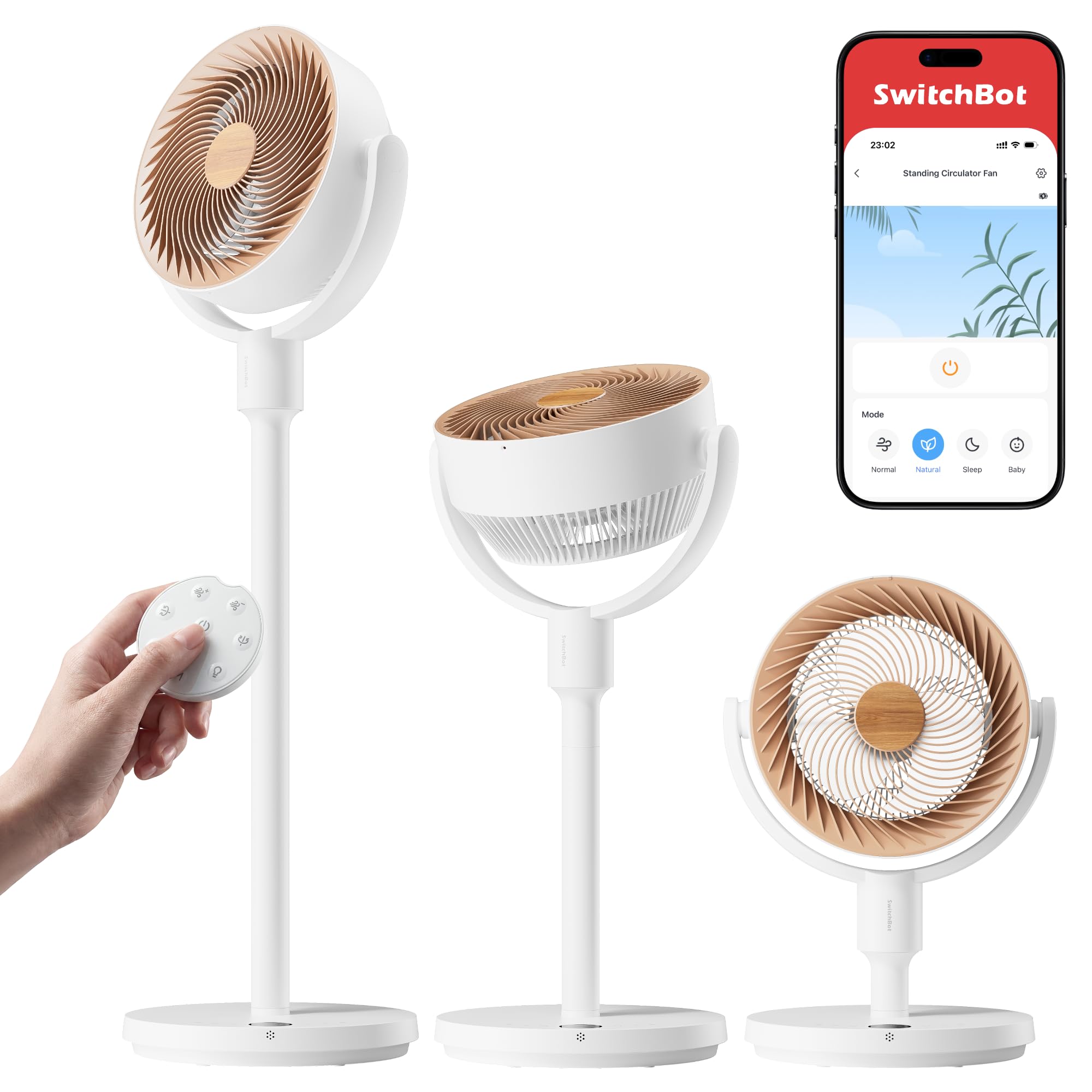
The SwitchBot Pedestal Fan stands out for its cordless capability — a built-in 2400mAh rechargeable battery delivers up to 28 hours of runtime in Baby Mode. This makes it the only fan here you can unplug and move from the bedroom to the patio, RV, or balcony without losing cooling. At 22dB in Sleep or Baby mode, it rivals the DREO for quietness, and its 27ft/s max wind speed keeps airflow strong when you need it.
Three adjustable heights (18.6, 29, and 39.4 inches) let it work as a desk fan, bedside fan, or full pedestal unit. The 90° horizontal oscillation combined with 100° vertical tilt provides 3D-like coverage, though it’s not fully automated like the PELONIS. Smart controls via the SwitchBot app, Alexa, Google Home, and Apple Home (requires a SwitchBot hub) give you flexible management without leaving the mattress.
The magnetic remote clips to the fan body, so it won’t disappear under the bed. Users consistently praise the strong breeze even at low settings, though battery life at maximum speed drops to around 3 hours. The build quality is functional plastic — it won’t win design awards, but the portability and 22dB floor make it a compelling option for sleepers who like to change positions or sleep outdoors.
Why it’s great
- Up to 28 hours cordless runtime in Baby Mode
- 22dB sleep mode — among the quietest tested
- Three height settings for desk, floor, or bedside
- Full smart home compatibility with hub
Good to know
- Battery drains quickly at max speed (~3 hrs)
- Plastic build feels less robust than DREO
- Smart features require additional SwitchBot hub
4. hykolity Tower Fan
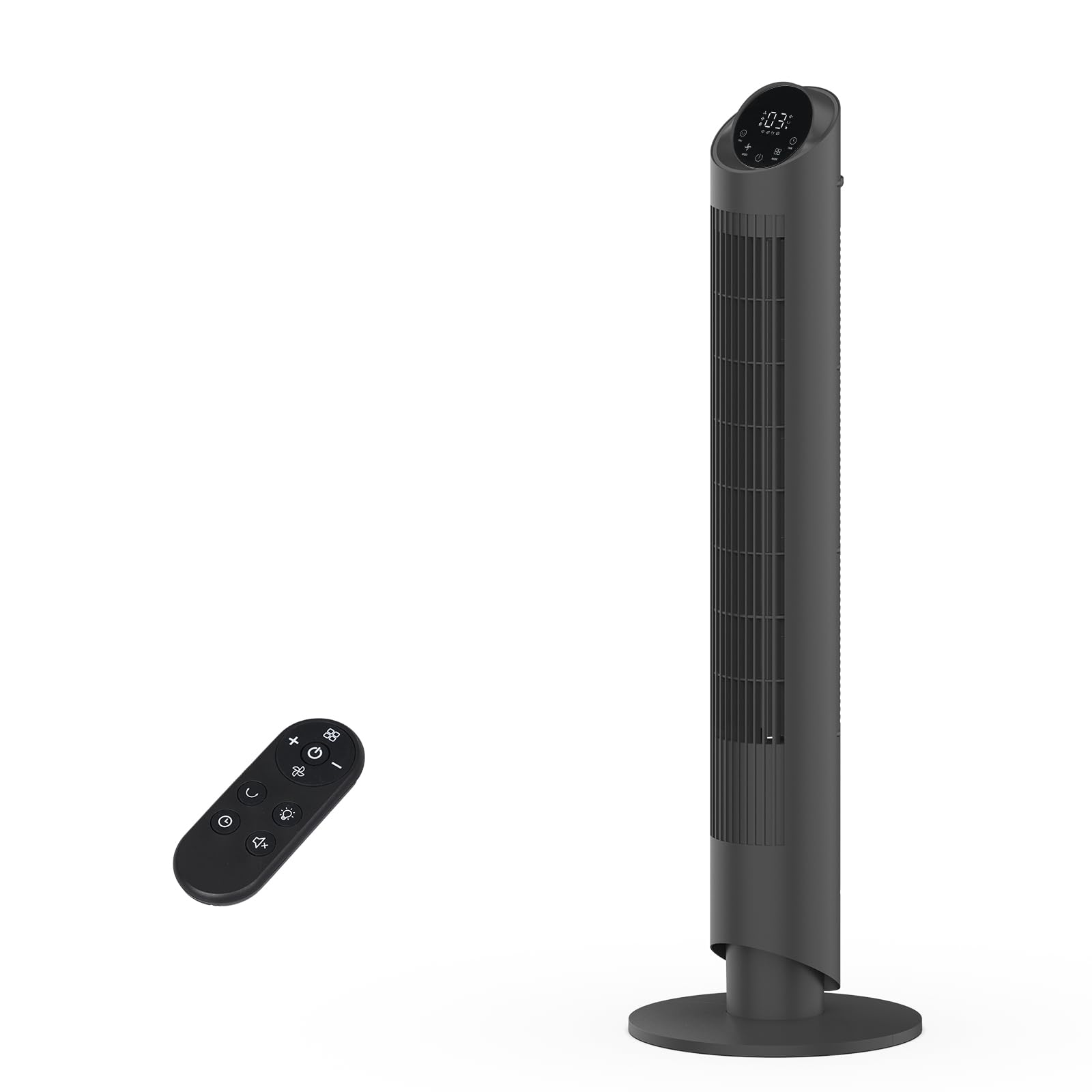
The hykolity Tower Fan delivers an impressive feature set at a price point that undercuts much of the competition. With a 28dB noise floor and 26ft/s wind speed, it offers near-silent operation comparable to mid-range DC models, but driven by a conventional AC motor. The 90° oscillation and Coanda-effect airflow system circulate air effectively across a standard bedroom without creating a harsh draft.
The 40-inch slim profile includes a concealed carry handle and remote storage slot, making it easy to reposition. Four modes (Normal, Natural, Sleep, Child) and 3 speeds give you enough variety to find a comfortable setting, though the lack of fine-grained speed control means you might land between too-soft and too-strong. The Sleep Mode automatically dims the LED display and reduces fan speed over time.
Customer reviews highlight the excellent value — buyers describe it as quiet, powerful, and easy to assemble without tools. A small minority reported units arriving with broken blades or internal rattling, though the seller and Amazon quickly resolved those cases. For sleepers on a tighter budget who still want modern tower design and low noise, this is the entry-level pick that punches above its weight.
Why it’s great
- 28dB noise level rivals many premium tower fans
- 26ft/s velocity provides strong cooling coverage
- Sleep mode with auto-off display for darkness
- Concealed carry handle and remote storage
Good to know
- Only 3 speeds — less granular than DC models
- Some reports of DOA units or internal noise
- No vertical tilt adjustment
5. PELONIS Pedestal Fan

The PELONIS Ultra OmniFlow is the only fan here with fully automated 3D oscillation — combining 135° horizontal sweep with 90° vertical tilt without requiring manual head adjustment. This creates a draft-free, evenly distributed air pattern that eliminates hot spots across the entire room. At 26dB on low, it’s quiet enough for sleeping, though the narrow air beam means it prioritizes reach over width — ideal for directing airflow toward the bed from across the room.
The Bionic Butterfly-Blade design and Triple Acceleration technology move 900 CFM of air, which is more than enough for medium bedrooms up to 225 sq ft. The dual-height configuration — 23.2 inches low or 42.5 inches high — adapts to desk, floor, or bedside use. The Memory Function remembers your speed and mode settings after a power outage, so you don’t have to reprogram the fan nightly.
Build quality is a highlight: the metal stand feels sturdy, and the twist-together assembly takes minutes. The capacitive touch buttons are responsive but hard to find in the dark, and the IR remote requires a direct line-of-sight to the fan base. Several reviewers note that the auto-oscillation is smooth but the horizontal spread is narrower than traditional tower fans. For sleepers who want whole-room circulation without a direct blast, this pedestal design delivers.
Why it’s great
- Automated 3D oscillation for full-room coverage
- 26dB noise floor — library-quiet operation
- Dual height settings for versatile placement
- Memory function recalls settings after power loss
Good to know
- Narrow horizontal beam — less room-bathing warmth
- Capacitive buttons invisible in pitch-dark rooms
- IR remote requires direct line-of-sight
6. Vornado 673T Air Circulator

The Vornado 673T is not a tower fan — it’s a vortex air circulator designed to move air across the entire room rather than just cooling the person in front of it. Its deep-pitched blades and enclosed air duct create a focused beam that circulates 333 CFM of air effectively, mixing room temperature so your AC or heater works less. The 90° pivoting head lets you direct that beam toward the ceiling for indirect cooling or straight at the bed for targeted relief.
On low speed, the 673T is quiet enough for most sleepers — a soft, even whoosh without blade rattle. On high, it produces a deeper hum that some users find grounding but others might find distracting. The 3-speed manual rotary dial is simple and tactile, and the removable front grille makes cleaning easy. Vornado backs this fan with a 5-year replacement warranty, signaling confidence in long-term durability.
Build quality is a strong point: the glossy plastic housing feels dense, and the unit has no wobble or vibration even on hard floors. Some buyers noted that the tilt mechanism doesn’t hold the head firmly in place at steep angles, causing it to drift downward. This fan is best for sleepers who want a circulator to mix room air rather than a direct personal breeze. It’s a long-term investment that consistently outlasts cheaper alternatives.
Why it’s great
- Vortex action circulates air across the whole room
- 5-year replacement warranty — category best
- Solid, rattle-free build quality
- Easy-to-clean removable front grille
Good to know
- Not a personal fan — more for room mixing
- Tilt mechanism may not hold head at steep angles
- High speed hum may bother light sleepers
7. Lasko Tower Fan T42954
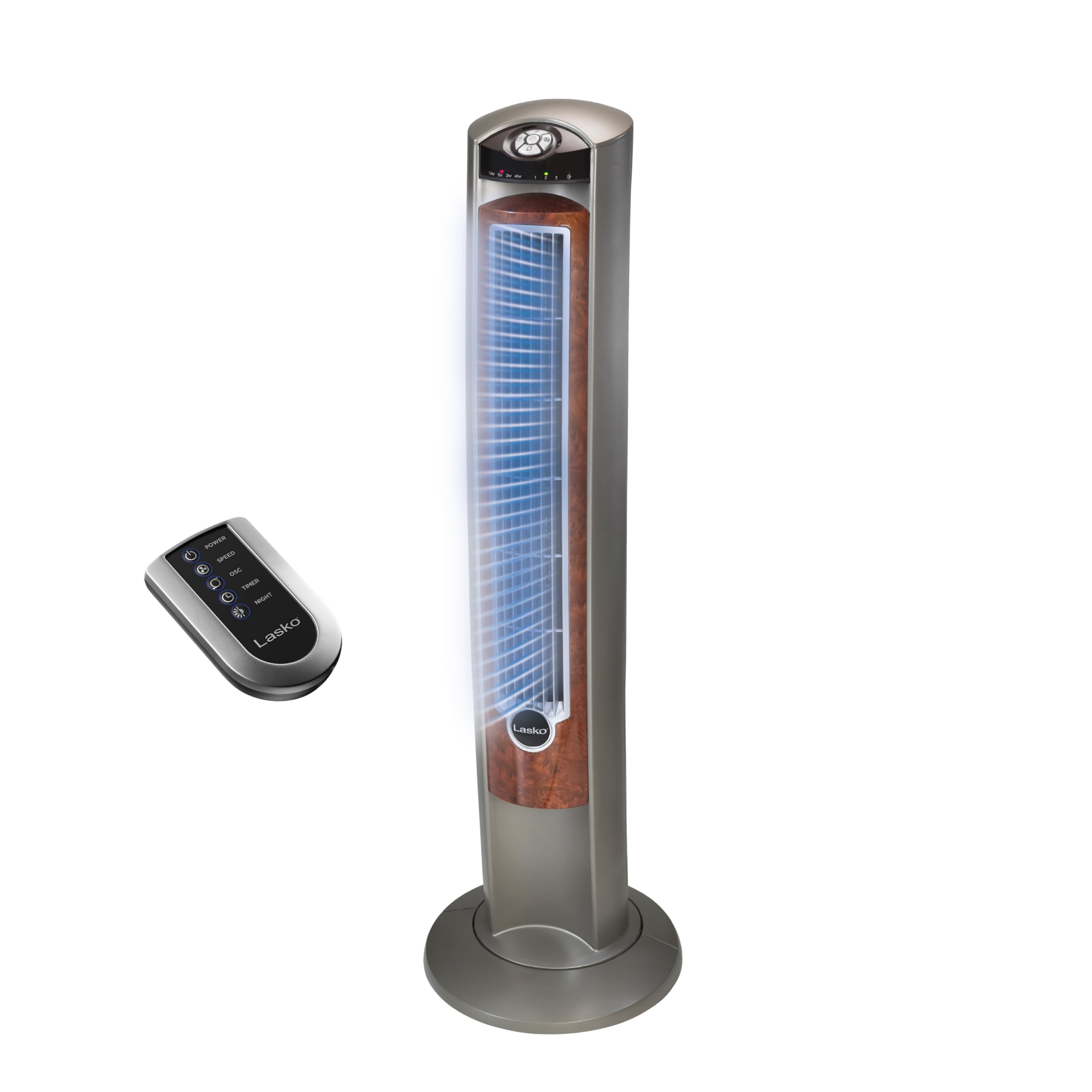
The Lasko Wind Curve T42954 is the most time-tested fan in this comparison — verified buyers report using it daily for 7 to 10 years without failure. It’s a straightforward tower fan with 3 speeds, 60° oscillation, and a 7.5-hour programmable timer. The nighttime setting auto-dims the LED display and lowers fan speed, which helps maintain a dark, quiet sleep environment. The 262 CFM airflow capacity is modest compared to newer models, but it’s adequate for small to medium bedrooms.
The remote control handles power, speed, oscillation, timer, and the nighttime mode, and a small storage slot on the back keeps it from getting lost. Assembly takes seconds — just snap the base halves together and drop the tower in. The gray/woodgrain finish blends into most bedroom decors without standing out. On low speed, the fan is quiet enough not to disturb sleep; on medium and high, the motor hum becomes noticeable but not aggressive.
The biggest trade-off is the limited 60° oscillation, which means the fan covers less lateral space than competitors with 90° or wider sweeps. The plastic base feels less durable than the rest of the unit — several users caution against knocking it into furniture. But for sheer reliability and simplicity, the Lasko is the no-surprises choice. If you want a basic, proven tower fan that will run for years without app updates or smart hub drama, this is it.
Why it’s great
- Proven 7–10 year lifespan from verified users
- Nighttime mode auto-dims display & reduces speed
- 7.5-hour timer for set-and-forget sleep use
- Lightweight with carry handle for easy moving
Good to know
- Only 60° oscillation — narrower coverage
- 262 CFM is low for larger rooms
- Plastic base is fragile against hard impacts
FAQ
Does a tower fan or a pedestal fan work better for bedside sleeping?
How loud is too loud for a bedroom fan at night?
Is an oscillating fan better than a fixed fan for sleep?
Can I use a smart fan with a voice assistant without a hub?
Will a bed fan help with night sweats or hot flashes?
Final Thoughts: The Verdict
For most users, the best bed fan for sleeping winner is the DREO Tower Fan because it combines the lowest noise floor in the category (20dB) with strong 28ft/s airflow and 8 speed settings, all at a price that undercuts premium smart models. If you want wide oscillation and smart thermostat control, grab the GoveeLife 42″ Tower Fan. And for cord-free portability — ideal for moving between the bedroom and patio or van — nothing beats the SwitchBot Pedestal Fan with its 28-hour battery life.