
Our readers keep the lights on and the weekend projects moving. As an Amazon Associate, I earn from qualifying purchases.
For runners, the difference between a good workout and a great one often comes down to the data you capture. An accurate GPS, reliable heart rate tracking, and battery life that lasts through long training blocks separate a true running companion from a gadget that becomes a distraction. The wrong watch leaves you guessing your pace, scrambling for a charger mid-week, or fighting with a dim screen under the midday sun — the right one becomes an extension of your training plan.
I’m Rikta — the co-founder and writer behind FitlyFast. My buying guides are built on hundreds of hours spent cross-referencing satellite chipset performance, display technology, battery reports, and real customer feedback to find the watches that deliver on their promises for runners who take their miles seriously.
After analyzing the top options on the market, these stand out as the best activity tracker for running based on GPS accuracy, battery endurance, and training features that actually improve your performance.
How To Choose The Best Activity Tracker For Running
A running watch is not just a fitness tracker with GPS slapped on. The best ones are purpose-built for the demands of the sport — accurate location tracking over varied terrain, battery chemistry that survives a marathon training block, and display technology that works whether you’re in a forest canopy or an open field. Here is what separates a good running watch from a great one.
GPS Accuracy & Satellite Support
If the distance measurement is off by 5 percent, your pace, splits, and training load calculations are all compromised. Look for watches that support multiple satellite systems — GPS, GLONASS, Galileo, and BeiDou — simultaneously. Multi-band GPS (L1 + L5) further improves accuracy by reducing signal interference from buildings or tree cover, a critical feature for trail runners or those who train in dense urban environments. Watches with SatIQ technology automatically switch between GPS modes to balance precision and battery life.
Battery Life — Smartwatch vs. GPS Mode
Battery life in smartwatch mode tells you how often you need to charge for daily wear. Battery life in GPS mode — the number that matters for runners — tells you if the watch can track a 3-hour marathon, a 12-hour ultra, or a multi-day stage race. Entry-level watches often deliver 10–15 hours of GPS tracking, which covers most half and full marathons. Mid-range models push past 30 hours, and premium watches with solar charging can extend battery life indefinitely in bright conditions. Charging speed matters too: a watch that recharges in under an hour is far easier to maintain during a heavy training week.
Display Technology — AMOLED vs. MIP
AMOLED displays offer vibrant colors, high contrast, and smooth touchscreen navigation, but they consume more power and can be harder to read in direct sunlight when brightness is set low. Memory-in-Pixel (MIP) displays, while less colorful, reflect ambient light like an e-reader and remain perfectly legible under the brightest sun with almost no battery drain. MIP is the favorite of ultrarunners and outdoor enthusiasts who prioritize all-day readability. AMOLED wins for runners who value a premium look and easy visibility in low-light conditions like early mornings or night runs.
Training Metrics & Running Dynamics
Beyond pace and distance, serious runners benefit from metrics like running power (wattage output), cadence, stride length, ground contact time, and vertical oscillation. Some watches provide running economy estimates by combining heart rate and pace data. Recovery time suggestions, training load analysis, and VO2 max estimation help you avoid overtraining. For triathletes, multi-sport auto-transition between swim, bike, and run is non-negotiable. For everyday runners, a built-in running coach or adaptive training plans — like Zepp Coach or Garmin Coach — offer personalized guidance without a subscription.
Quick Comparison
On smaller screens, swipe sideways to see the full table.
| Model | Category | Best For | Key Spec | Amazon |
|---|---|---|---|---|
| COROS PACE 4 | Mid-Range | Lightweight daily training | 32g weight, 41h GPS | Amazon |
| Garmin Forerunner 970 | Premium | Serious runners & triathletes | 26h GPS, AMOLED, maps | Amazon |
| COROS PACE Pro | Premium | Dual-freq GPS & offline maps | 31h dual-freq GPS, 1500 nits | Amazon |
| Amazfit Active Max | Mid-Range | Value & long battery life | 25-day battery, 3000-nit display | Amazon |
| Garmin Instinct 3 Solar | Premium | Rugged outdoor & ultrarunning | Unlimited solar battery, MIP | Amazon |
| Samsung Galaxy Watch 8 Classic | Premium | Lifestyle & coaching features | 30h battery, Rotating Bezel | Amazon |
| Apple Watch Ultra 3 | Premium | Ecosystem & multisport | Dual-freq GPS, 100m water | Amazon |
In‑Depth Reviews
1. COROS PACE 4
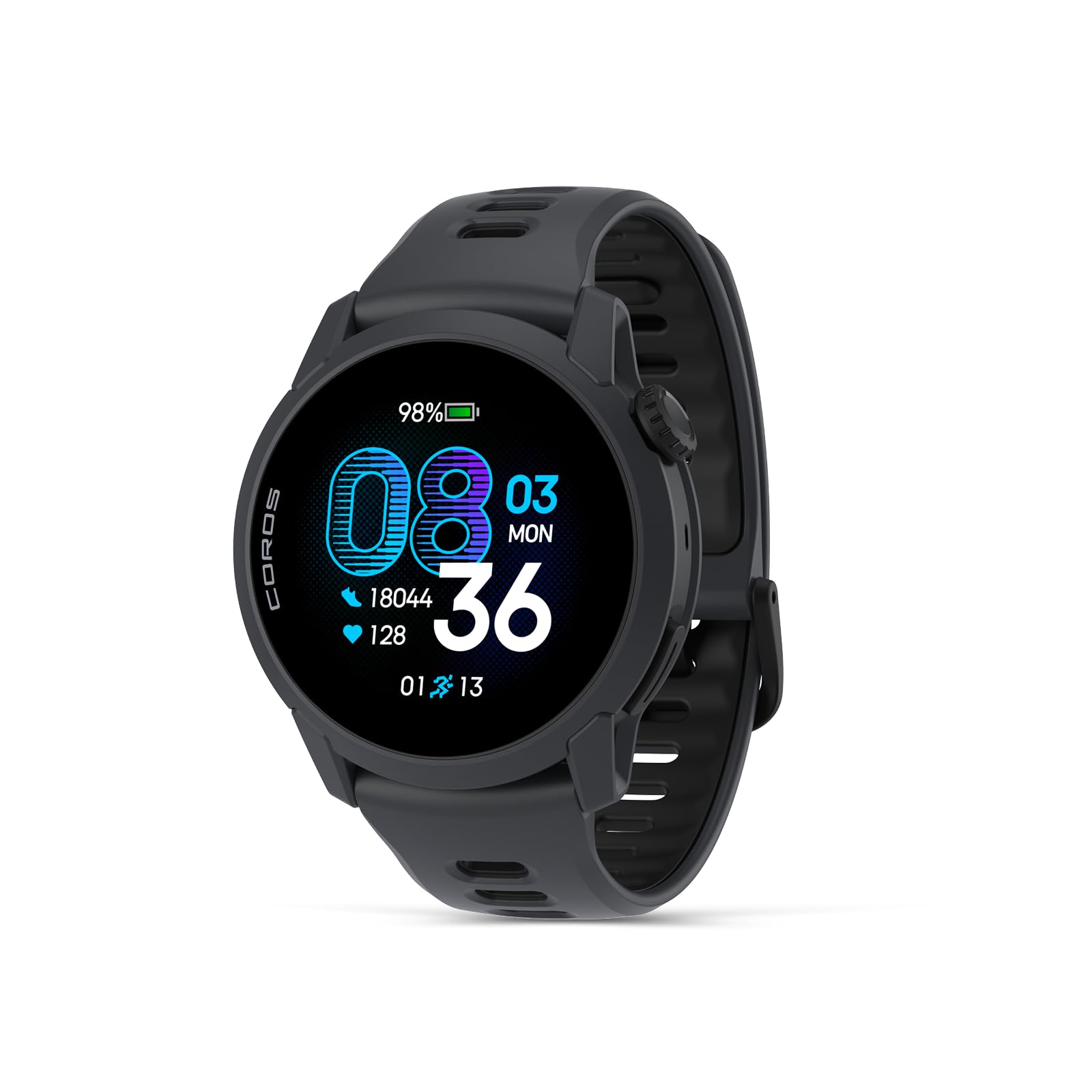
The COROS PACE 4 redefines what a mid-range running watch can deliver. At just 32 grams — lighter than most energy gels — it disappears on the wrist during long runs, yet packs a 1.2-inch AMOLED touchscreen that is 164 percent higher resolution than its predecessor. The combination of a tactile digital crown, two physical buttons, and a smooth touchscreen gives you control options whether you’re wearing gloves mid-winter or tapping through splits in a post-run cooldown. The voice recording feature lets you narrate training notes during the run, while voice control handles alarms and workout creation hands-free.
The 41 hours of continuous GPS tracking cover everything from a 50-mile ultra to a full week of daily runs without a charge. In smartwatch mode, the battery stretches to 19 days. Dual-frequency GPS delivers sub-10-foot accuracy even along tree-lined streets or between skyscrapers. The COROS app provides recovery time, HRV status, sleep stage analysis, and menstrual cycle tracking — all free, with no subscription paywall. Early adopters report seamless transitions from Garmin and Apple Watch ecosystems, praising the cleaner interface and superior GPS consistency versus watches costing twice as much.
The 4GB of onboard storage holds music playlists for phone-free runs, though you will need Bluetooth headphones. A screen protector is recommended since the glass is not sapphire. For runners who want professional-grade metrics, ultralight comfort, and multi-week battery life without the premium price tag, the PACE 4 is the clear benchmark in the mid-range category.
Why it’s great
- Remarkably light at 32g — comfortable for 24/7 wear and marathon distances
- 41 hours of GPS battery covers ultramarathons and multi-day training blocks
- Dual-frequency GPS delivers accurate pace and distance in challenging environments
- Free training metrics, recovery insights, and HRV analysis without a subscription
Good to know
- No built-in maps for turn-by-turn navigation
- Screen is not sapphire — a tempered glass protector is recommended
- Music storage requires Bluetooth headphones; no onboard speaker for playback
2. Garmin Forerunner 970

The Garmin Forerunner 970 sits at the top of the running watch pyramid for a reason. Its bright AMOLED touchscreen is paired with button controls — a deliberate design that lets you switch between touch and physical input depending on sweat, gloves, or rain. The lightweight titanium bezel and sapphire crystal lens give it a premium build that withstands daily abuse. A built-in LED flashlight with variable brightness and a red safety mode is invaluable for early morning or late-night runs on dark roads and trails.
Up to 26 hours of GPS battery covers even the longest training weeks, and the smartwatch mode lasts 15 days between charges. The training metrics stack is deep: running economy estimates how efficiently you use energy, step speed loss shows how much your form degrades as you fatigue, and running tolerance helps identify overload before injury strikes. Garmin Coach training plans adapt to your performance and recovery automatically. Multi-band GPS with SatIQ technology ensures locked-on positioning under tree cover or near tall buildings. The built-in microphone and speaker let you take calls from your wrist — useful for mid-run check-ins without pulling out your phone.
The ECG app checks for atrial fibrillation, and the Training Readiness score combines sleep quality, recovery, and HRV status to tell you when to push hard and when to back off. Full-color onboard maps with round-trip routing let you explore new routes without getting lost. Triathletes will appreciate the auto-transition detection between swim, bike, and run. The learning curve is steeper than simpler watches, but the depth of data is unmatched for runners who want to optimize every mile. The premium build and sapphire lens justify the higher price point for those who plan to wear it every day for years.
Why it’s great
- Outstanding AMOLED display with sapphire crystal and titanium bezel for durability
- Built-in LED flashlight with red mode for low-light safety
- Deep running metrics: running economy, step speed loss, running tolerance
- Full-color onboard maps with round-trip routing and multi-band GPS
- ECG app, Training Readiness score, and Garmin Coach adaptive plans
Good to know
- Steeper learning curve than simpler watches — expect a setup period
- Requires the HRM 600 chest strap for running economy and step speed loss metrics
- Premium price point — best for committed runners or triathletes
3. COROS PACE Pro

The COROS PACE Pro sits between the lightweight PACE 4 and premium Garmin models, offering a 1.3-inch AMOLED display with 1500-nit peak brightness that remains readable even under direct midday sun. The always-on screen with a fast gesture-activated backlight is designed for instant glanceability during intervals or races. COROS claims over 2x processor performance and 3x zoom speed versus its predecessors, and real-world testing confirms the interface feels instantly responsive with no lag between screens.
Battery life is exceptional for an AMOLED watch: 38 hours in standard GPS mode, 31 hours with dual-frequency GPS active, and 20 days of smartwatch use. When using the always-on display mode, expect about 6 days. The all-new satellite chipset delivers the most precise GPS COROS has ever produced — verified by users reporting distance accuracy within 10 feet per mile even in dense urban canyons. Free downloadable topographical and landscape maps with turn-by-turn navigation make it a strong choice for trail runners exploring unfamiliar routes. USB-C charging is a welcome addition; the included keychain adapter means you can charge it with the same cable as your phone or laptop.
The COROS app provides Training Status, custom workout creation, detailed activity summaries, and sleep analysis. The watch supports structured running plans for 3K through full marathon distances, and the pace strategy feature helps you execute race-day pacing. The silicone band is comfortable but a step below the premium feel of the Garmin Forerunner 970 band. The 22mm band width is standard, making replacement easy. The screen is small enough for comfortable 24/7 wear but large enough for viewing maps and data fields during a run. For runners who want AMOLED clarity, offline maps, and multi-week battery without stepping up to the premium price bracket, the PACE Pro is the ideal middle ground.
Why it’s great
- Stunning 1500-nit AMOLED display with always-on mode and fast gesture wake
- 31 hours of dual-frequency GPS — covers ultramarathons with ease
- Free topographical offline maps with turn-by-turn navigation
- USB-C charging with included keychain adapter for universal cable compatibility
- Fastest processor in COROS lineup — smooth, responsive UI
Good to know
- Silicone band feels less premium than Garmin alternatives
- Small screen can make map reading challenging during movement
- Watch faces and customization options are more limited than Garmin’s Connect IQ store
4. Amazfit Active Max

The Amazfit Active Max punches far above its price tier with a 3000-nit AMOLED display — bright enough to read clearly under harsh desert sun or on snowy trails. The 1.5-inch screen is the largest in this roundup, making data fields and maps easy to read for runners who prefer a bigger canvas. The 25-day battery life in smartwatch mode and multi-day GPS coverage eliminate the charging anxiety that plagues smaller fitness trackers. The 4GB of onboard storage holds enough music for phone-free runs, and the built-in speaker and mic handle Bluetooth calls and voice replies via Zepp Flow when connected to an Android phone.
Zepp Coach provides personalized AI-driven training plans for distances from 3K to full marathon, adapting based on your performance and recovery. The BioCharge energy monitoring score helps you decide when to push and when to rest by analyzing workouts and stress levels. Five satellite systems ensure fast, accurate GPS locking even in remote areas, and free downloadable offline maps with turn-by-turn directions cover terrain and ski maps. The 5 ATM water resistance rating means you can swim with it, and 170+ sport modes cover everything from strength training to trail running. The silicone band is comfortable and the magnetic charging base is simple — though it does not use USB-C.
Heart rate and SpO2 readings have been verified by users against medical devices, showing solid accuracy for a watch in this price range. The Zepp app integrates with Google Fit and Apple Health for seamless data sharing. The display size (1.5 inches) may feel large on smaller wrists, and the touch-only interface lacks physical buttons — something to consider if you run in the rain or wear gloves. The value proposition here is extraordinary: you get a bright, large AMOLED screen, strong GPS, dedicated running coach, and weeks of battery life at a fraction of the price of premium competitors. For runners who want maximum features for minimum spend, the Active Max is a smart choice.
Why it’s great
- Massive 3000-nit AMOLED display — readable in any lighting condition
- 25-day smartwatch battery life with strong GPS endurance
- Zepp Coach provides adaptive running plans without a subscription
- 4GB onboard storage for music and free offline maps with turn-by-turn directions
- BioCharge energy monitoring helps optimize training intensity
Good to know
- Touchscreen-only interface — no physical buttons for wet or gloved use
- Magnetic charger uses a proprietary puck, not USB-C
- Large 1.5-inch case may feel bulky on smaller wrists
5. Garmin Instinct 3 Solar

The Garmin Instinct 3 Solar is engineered for runners who spend more time on trails than roads and need a watch that survives the elements. The 50mm fiber-reinforced polymer case with a metal-reinforced bezel is built to MIL-STD-810 standards for thermal and shock resistance, and the 10 ATM water rating means it handles swimming, diving, and high-speed water sports without issue. The always-on Memory-in-Pixel (MIP) display reflects ambient light like a classic digital watch, making it perfectly legible in direct sunlight while consuming almost no power. Solar charging extends battery life indefinitely in smartwatch mode — assuming three hours per day in 50,000 lux conditions — and the built-in LED flashlight with variable intensities and strobe modes provides convenient illumination on dark trails.
Navigation features include a 3-axis compass, barometric altimeter, and multi-band GPS with SatIQ technology that delivers superior positioning while optimizing battery life. Health monitoring covers wrist-based heart rate, advanced sleep monitoring, Pulse Ox, and stress tracking. The lack of a touchscreen is intentional: physical buttons work reliably with gloves, in the rain, or when covered in mud. Garmin Pay enables contactless payments, and smart notifications keep you connected when paired with your phone. The Connect IQ Store allows customization with new apps and watch faces, though the monochrome display limits visual flair. Users praise the battery life — reporting up to 38 days out of the box — as a transformative upgrade for those coming from watches that require daily charging.
The Instinct 3 does not include onboard maps, music storage, or a color touchscreen, so runners who want those features should look at the Forerunner or COROS lines instead. The MIP display, while excellent in sunlight, is harder to read in dim indoor lighting. The 50mm case size may be too large for smaller wrists. For runners who prioritize durability, battery longevity, and off-grid navigation over visual polish, the Instinct 3 Solar is the toughest, most self-sufficient running watch on this list.
Why it’s great
- Solar charging provides unlimited smartwatch battery life in bright conditions
- MIL-STD-810 durability and 10 ATM water resistance handle extreme environments
- MIP display is perfectly readable in direct sunlight with negligible power draw
- Multi-band GPS with SatIQ for accurate navigation in remote areas
- Built-in LED flashlight with multiple modes for trail safety
Good to know
- No touchscreen, no color maps, no onboard music storage
- MIP display is harder to read in dim light compared to AMOLED
- 50mm case is large — may not suit smaller wrists
- Solar charging extends battery but does not fully recharge from empty
6. Samsung Galaxy Watch 8 Classic
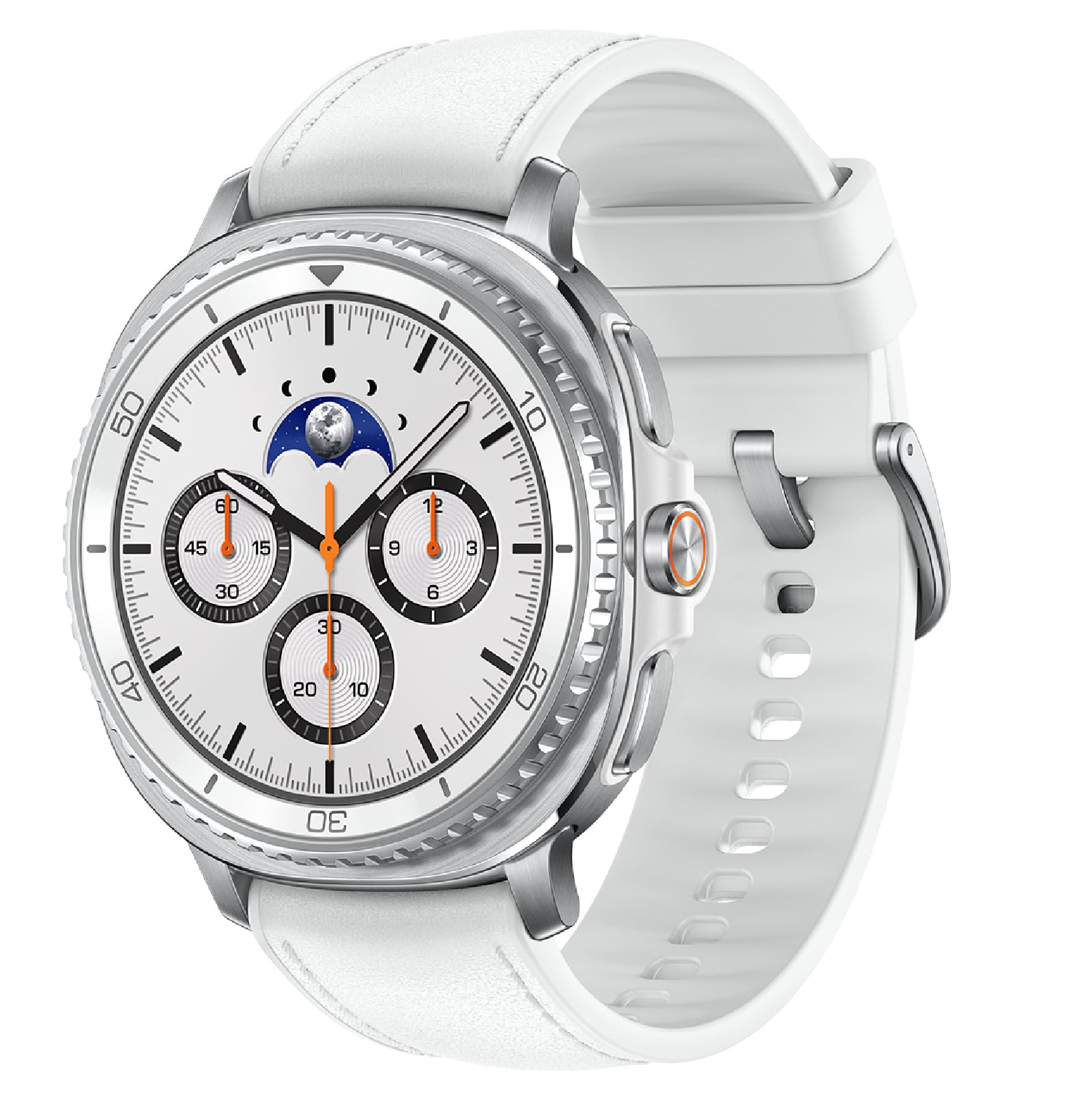
The Samsung Galaxy Watch 8 Classic combines premium watch aesthetics with running-focused coaching features. The iconic rotating bezel returns — a physical navigator that complements the touchscreen and works well when your fingers are sweaty or wearing gloves. The 46mm stainless steel case and sapphire crystal give it a premium feel, while the Super AMOLED display is among the brightest and most vibrant available. The Running Coach feature analyzes your age, weight, oxygen levels, and heart rate to deliver real-time guidance during runs, with personalized pacing suggestions based on your fitness level and target distance.
Advanced Sleep Coaching helps you understand how recovery affects performance, and the Energy Score with Galaxy AI provides a daily wellness snapshot based on sleep, activity, and heart rate variability. The BioActive sensor tracks heart rate, ECG, blood oxygen, body composition, and stress levels. The watch supports GPS tracking with fast satellite locking, though battery life is more limited than dedicated running watches: around 30 hours in smartwatch mode and roughly 8–10 hours with continuous GPS use. The Wear OS platform provides access to Google Maps, Spotify, and other third-party apps directly from your wrist. Bluetooth calling and messaging from the watch add convenience for daily life.
The Galaxy Watch 8 Classic requires an Android phone — and full functionality, including ECG and blood pressure monitoring, works best with a Samsung phone. The battery requires nightly charging for most users, especially if GPS tracking is used daily. The eco-leather band included with the White model looks great but is less breathable for sweaty summer runs. For runners who want a stylish everyday smartwatch that doubles as a capable running companion with AI-driven coaching, the Galaxy Watch 8 Classic delivers a polished experience — just keep in mind it is designed for moderate runs, not ultramarathons or multi-day adventures.
Why it’s great
- Premium design with rotating bezel, stainless steel, and sapphire crystal
- Running Coach provides real-time personalized pacing based on your fitness data
- Advanced Sleep Coaching and Energy Score help optimize recovery
- Wear OS gives access to Google Maps, Spotify, and third-party apps
Good to know
- Requires nightly charging — not suitable for multi-day GPS adventures
- Full health features (ECG, blood pressure) require a Samsung phone
- Does not work with iPhones — Android only
- GPS battery life is limited compared to dedicated running watches
7. Apple Watch Ultra 3
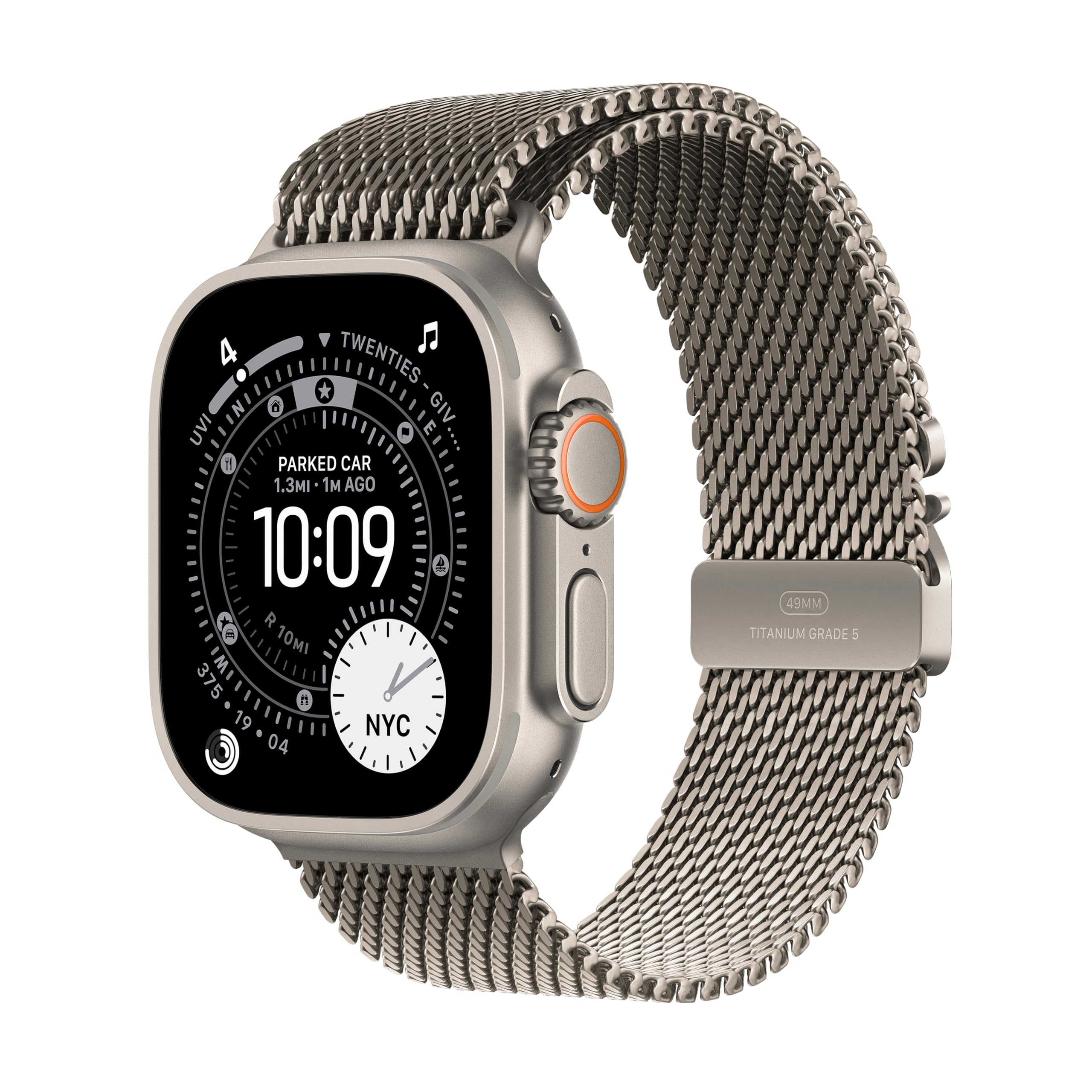
The Apple Watch Ultra 3 is the ultimate running smartwatch for those deeply embedded in the Apple ecosystem. The 49mm titanium case and sapphire crystal display are built to survive extreme conditions, with 100-meter water resistance that handles high-speed water sports and recreational diving. The precision dual-frequency GPS delivers outstanding accuracy — users report locked-on performance even in challenging urban environments with tall buildings. The Pacer feature helps you maintain target pace, and Heart Rate Zones display real-time intensity. Workout Buddy, powered by Apple Intelligence from your nearby iPhone, provides audio coaching and motivation during runs. Running power metrics and custom workout creation round out the running toolkit.
The larger display emits more light at wider angles for better legibility during workouts, and doubles as a flashlight. The customizable Action Button gives you immediate physical control over starting a workout, activating the flashlight, or launching a specific app. Battery life is a significant upgrade over standard Apple Watches: up to 42 hours of normal use, 72 hours in Low Power Mode, and up to 20 hours of GPS + heart rate tracking in Low Power Mode. Satellite communications allow you to text emergency services via satellite when you are out of cellular range — a critical safety feature for trail runners. Cellular connectivity lets you take calls, stream music, and use Siri without your phone nearby.
Health monitoring is deep: notifications for possible hypertension, irregular heart rhythm, sleep apnea, unusually high or low heart rate, and blood oxygen readings. The Vitals app tracks your sleep score and daily health status. Safety features include fall detection, car crash detection, and the new satellite SOS. The watch requires an iPhone, and the Milanese Loop and other metal bands can scratch the case or screen — rubber or silicone bands are recommended for running. Battery life, while improved, still falls short of dedicated running watches from Garmin and COROS for multi-day adventures. For runners who want the best integration with an iPhone, premium build, and an ever-expanding set of health and safety features, the Ultra 3 is the definitive choice.
Why it’s great
- Premium titanium case and sapphire crystal for extreme durability
- Precision dual-frequency GPS delivers exceptional accuracy
- Satellite SOS for emergency communication when off-grid
- Up to 42 hours of normal use, 72 hours in Low Power Mode
- Deep health monitoring: ECG, blood oxygen, sleep apnea detection, hypertension alerts
Good to know
- Requires an iPhone — not compatible with Android
- Battery life still lags behind Garmin and COROS for multi-day GPS use
- Metal bands can scratch the titanium case — silicone recommended for running
- Premium price point — the most expensive watch in this roundup
FAQ
How much GPS battery do I need for marathon training?
Do I need multi-band GPS for running in the city?
Can I use a running watch without a phone during runs?
What does running power tell me that pace and heart rate do not?
How important is VO2 max estimation from a wrist-based watch?
Final Thoughts: The Verdict
For most runners, the activity tracker for running winner is the COROS PACE 4 because it delivers professional-grade GPS accuracy, ultralight comfort at 32 grams, and 41 hours of GPS tracking at a price that undercuts premium rivals by a wide margin — all without a subscription fee. If you want the deepest running metrics and a premium AMOLED display with built-in maps, grab the Garmin Forerunner 970. And for runners who need a rugged, solar-powered companion for ultrarunning and off-grid adventures, nothing beats the Garmin Instinct 3 Solar.