
Our readers keep the lights on and the weekend projects moving. As an Amazon Associate, I earn from qualifying purchases.
A trekking backpack that fits poorly or fails under load will turn a scenic ridge into a miserable ordeal. The right internal frame, torso adjustability, and weight distribution separate a day you’ll remember from a day you’ll want to forget. This guide dissects seven packs built for multi-day trail use, focusing on the specs that actually matter when you’re ten miles from the trailhead.
I’m Rikta — the co-founder and writer behind FitlyFast. I’ve spent hundreds of hours analyzing load-bearing suspension designs, fabric denier ratings, and real-world user reports across budget and premium backpacks to build this guide.
Whether you’re planning a weekend thru-hike or a week-long expedition, understanding the suspension system, torso fit, and liter capacity will narrow your search for the best backpacks for trekking.
How To Choose The Best Backpacks For Trekking
Selecting a trekking backpack involves more than picking the largest bag you can find. The interaction between your body dimensions, the pack’s suspension architecture, and the total load you carry determines whether you’ll finish your hike energized or aching. Focus on four critical areas before making a decision.
Liter Capacity and Trip Duration
Match the pack volume to your trip length and gear compression. A 40L to 50L pack works for weekend trips with lightweight, modern gear. Packs in the 55L to 65L range accommodate bulkier sleeping bags, extra food, and colder-weather layers for multi-day treks. Going too large encourages overpacking, which adds unnecessary strain on your back and knees.
Internal Frame and Suspension Design
The frame transfers the load from your shoulders to your hips. Look for a lightweight metal stay — aluminum or steel — integrated into a back panel that keeps the pack stable against your body. Adjustable torso lengths are essential; a pack that sits too high or low causes chafing and poor weight distribution. Ventilated mesh back panels reduce sweat buildup on warm climbs.
Hip Belt and Shoulder Strap Quality
The hip belt carries roughly 80 percent of the load on a properly fitted pack. Thick, contoured padding that wraps around your iliac crest without digging in is mandatory. Shoulder straps should be S-curved to follow your torso contour without gaping. Load lifter straps at the top of the shoulder straps let you fine-tune the pack’s angle against your back.
Fabric Durability and Weather Protection
Nylon fabrics in the 420D to 600D range resist abrasion from rocks and trail debris better than standard polyester. An included or integrated rain cover is non-negotiable for unpredictable mountain weather. Some packs also feature a waterproof bottom panel to handle wet ground when you set the pack down.
Quick Comparison
On smaller screens, swipe sideways to see the full table.
| Model | Category | Best For | Key Spec | Amazon |
|---|---|---|---|---|
| Osprey Rook 65L | Premium Internal Frame | Multi-day comfort & ventilation | 3.7 lb, AirSpeed suspension | Amazon |
| Osprey Stratos 44L | Premium Day Pack | Fast day hikes & carry-on travel | 3.64 lb, 3D-tensioned mesh | Amazon |
| Kelty Asher 65L | Mid-Range Internal Frame | Custom torso fit at a fair price | 3 lb 5 oz, Fit Pro system | Amazon |
| Naturehike 65L | Ultralight Budget | Weight-conscious hikers on a budget | 2.56 lb, 420D nylon | Amazon |
| Mardingtop 60L Military | Modular Budget | Customization & heavy loads | 4.49 lb, MOLLE webbing | Amazon |
| Teton Scout 55L | Entry-Level Mid-Range | New hikers & Scout trips | Multi-position torso, 55L | Amazon |
| Night Cat 90L | Budget Large Capacity | Maximum storage with low mileage | 90L, adjustable frame | Amazon |
In‑Depth Reviews
1. Osprey Rook 65L

The Osprey Rook 65L uses a tensioned AirSpeed back panel that creates a significant ventilation gap between the mesh and the pack body, keeping your back dry on long ascents. The LightWire frame transfers the load to a padded, contoured hip belt, effectively removing pressure from your shoulders. At 3.7 pounds, it sits in the middle of the weight range for a full-featured 65-liter pack.
An integrated rain cover stows in its own zippered pocket, eliminating the need to dig through your pack when a storm rolls in. The zippered sleeping bag compartment with a floating divider lets you separate dirty gear from clean clothes. Angled water bottle pockets make one-handed access possible while walking, and multiple lashing points on the front panel give you options for strapping on a tent or sleeping pad.
User reports highlight the comfortable carry even under 35-pound loads, with the waist belt distributing weight effectively on hips. The lack of a front mesh pocket is a trade-off for the ventilated back panel, but the overall build quality and Osprey’s reputation for durability make this a reliable choice for multi-day treks up to five days.
Why it’s great
- Excellent AirSpeed ventilation reduces sweat buildup on warm days
- Integrated rain cover is convenient and secure
- LightWire frame efficiently transfers weight to the hip belt
Good to know
- No external mesh front pocket for quick-dry storage
- Higher price point than mid-range alternatives
2. Osprey Stratos 44L
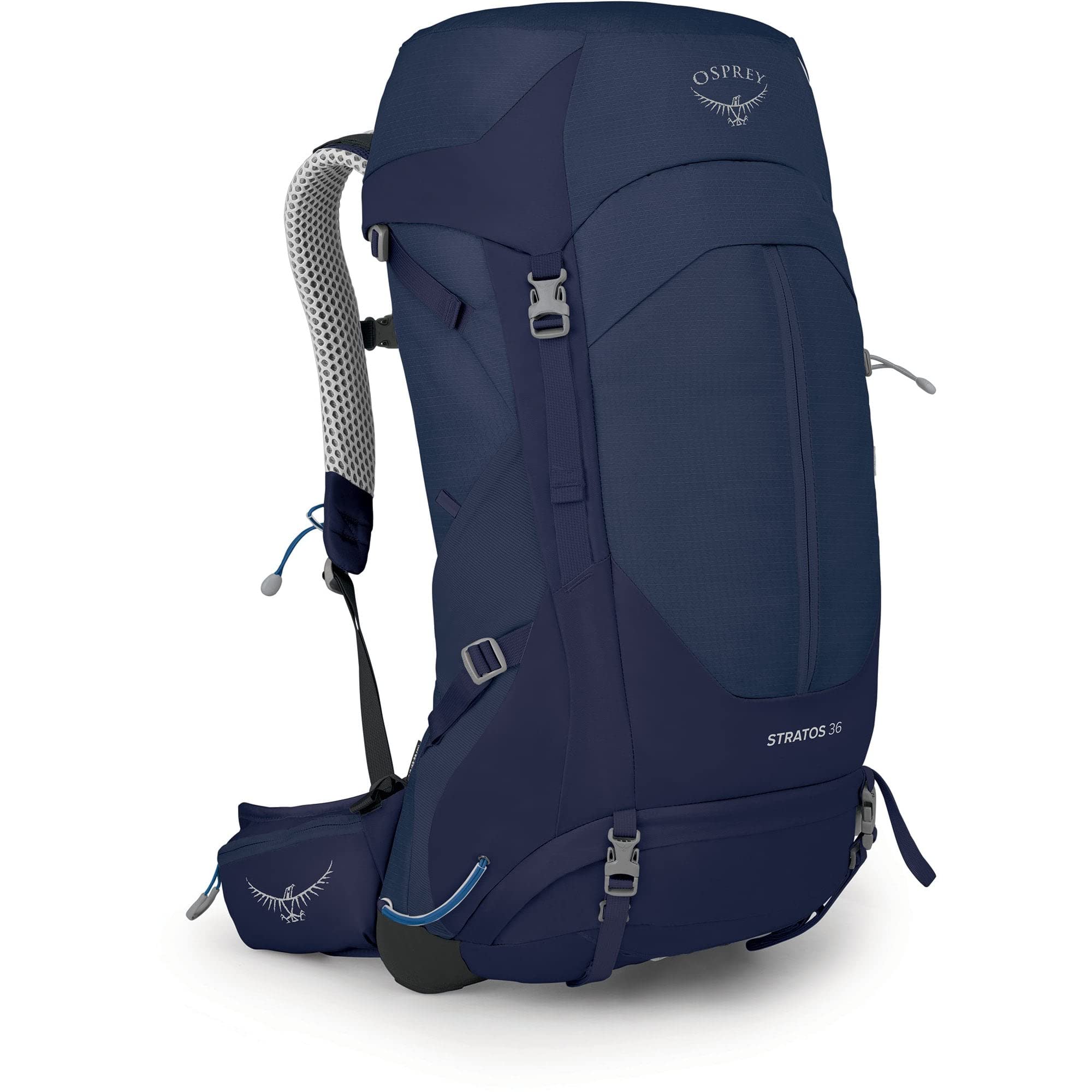
The Osprey Stratos 44L is purpose-built for day hikes and fast overnight trips where you don’t need the volume of a 65-liter pack. Its 3D-tensioned mesh back panel provides the same ventilated carry as the larger Osprey models but in a more compact, streamlined package. The injection-molded ladder torso adjustment system lets you dial in the fit from 16 to 21 inches without tools.
Top-loading with a secure drawcord closure, the Stratos includes an integrated rain cover and an internal hydration sleeve with a hose port routed through the back panel. The hip belt features zippered pockets for quick-access snacks or a phone, and the trekking pole attachments are well-placed for stability. At 3.64 pounds, it keeps weight low while maintaining a robust aluminum frame.
User feedback consistently praises the breathability of the back panel, noting that after long climbs the shirt remains dry against the mesh. The pack also works as carry-on luggage for air travel, though the rigid back panel requires overhead bin placement. For hikers who prioritize ventilation and a compact, well-organized load, this is a top-tier choice.
Why it’s great
- Outstanding back ventilation keeps you cool during strenuous climbs
- Adjustable torso system fits a wide range of body sizes
- Compact enough for carry-on travel while still expedition-ready
Good to know
- 44L capacity limits multi-day trips with bulky gear
- Rigid frame requires overhead bin space during air travel
3. Kelty Asher 65L
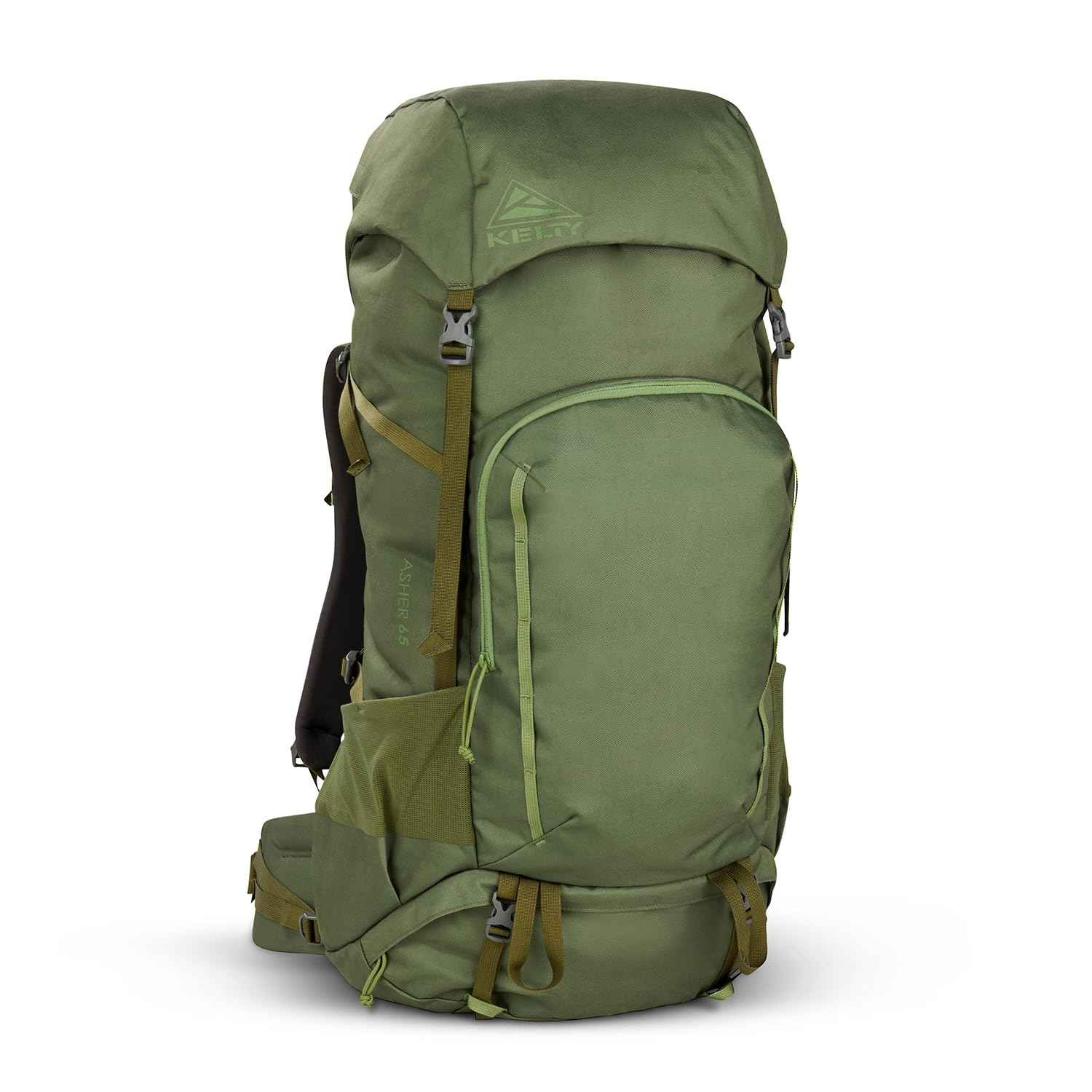
The Kelty Asher 65L packs expert-level features into a mid-range price bracket. Its Fit Pro torso adjustment system lets you fine-tune the fit on the fly, which is rare at this price point. The Amp Flow ventilated back panel combines an aluminum stay with a mesh overlay to keep the load balanced and your back cool.
It includes load lifter straps, a sleeping bag compartment, and hydration compatibility — all features that typically belong on packs costing significantly more. The polyester shell with C0 and PFC-free DWR treatment offers respectable water resistance, and the easy-pull zippers operate smoothly even with gloves on. At 3 pounds 5 ounces, it’s lighter than the Osprey Rook by several ounces.
Users with two to three years of daily and multi-day use report no significant wear, pointing to solid construction for the weight. The hip belt and shoulder padding are comfortable for optimal carry weights in the 30-to-50-pound range, making this a strong contender for anyone looking to invest in a reliable workhorse without jumping to premium prices.
Why it’s great
- Fit Pro system enables quick, tool-free torso adjustment
- Amp Flow back panel improves airflow compared to solid foam pads
- Excellent feature set for the price — load lifters, compartment dividers, rain fly
Good to know
- Shell fabric feels slightly lighter than premium nylon offerings
- Hip belt padding is functional but not as plush as high-end models
4. Naturehike 65L
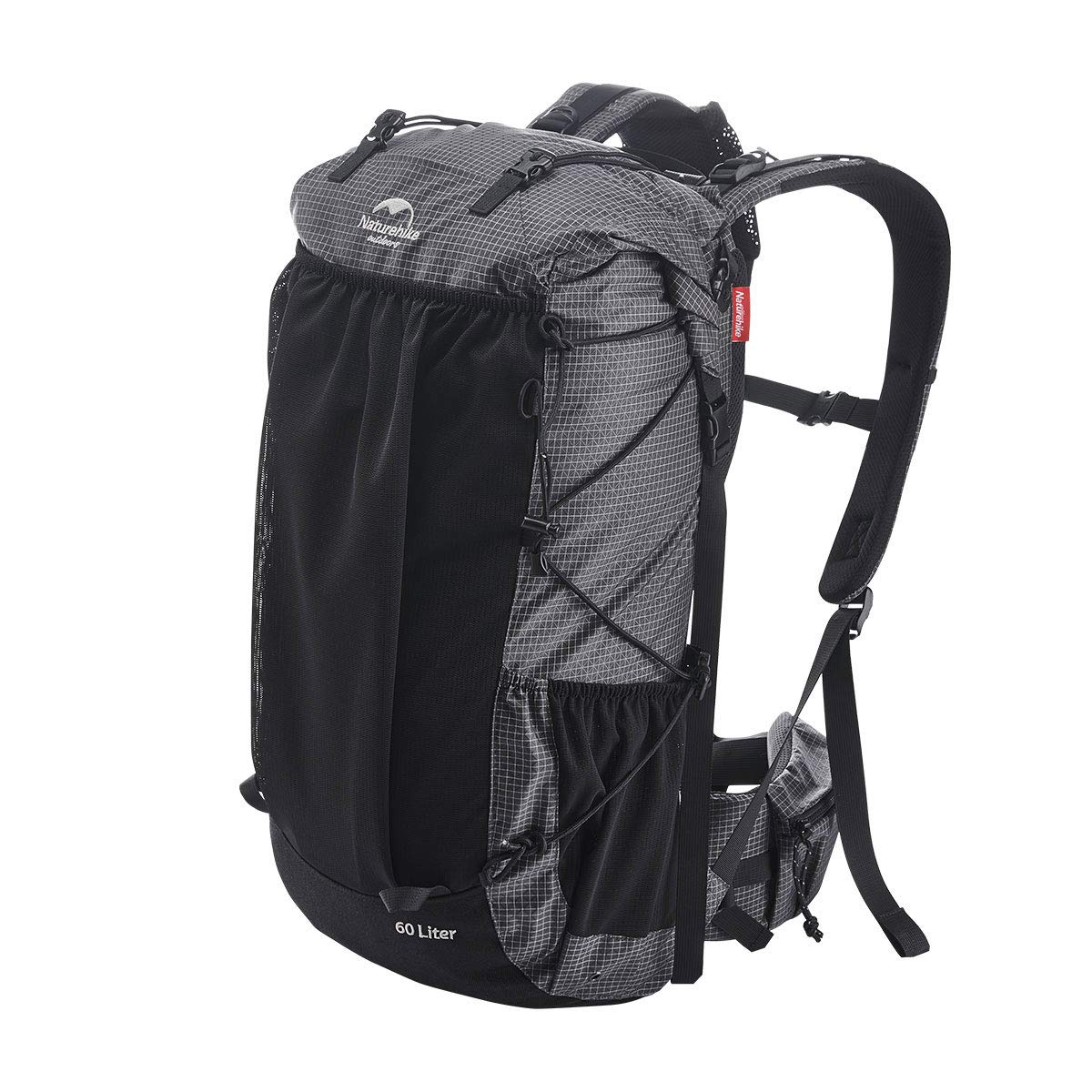
The Naturehike 65L hits an impressive 2.56 pounds while still providing 60+5 liters of storage, making it one of the lightest framed packs in this lineup. The 420D nylon fabric resists tears and scratches, and the water-repellent coating handles light rain — though a dedicated rain cover is included for heavier downpours. The ergonomic back pad and shoulder cushioning use mesh for breathability.
Compression straps on the top and both sides allow you to cinch down the load and attach trekking poles or a sleeping bag externally. The separate back pocket is designed for convenient shoe storage, which is a thoughtful touch for travel. Despite its light weight, users report the pack handles loads up to 40 pounds without tearing or stitching failure, even on rough terrain.
Users who completed extended hikes, including a 108-mile section of the Appalachian Trail, reported that the pack held up well with a 30-pound total load. The roll-top closure is secure but eliminates the easy-access brain pocket found on heavier packs. For hikers who count every ounce and want a functional, reliable pack at a budget-friendly price, this is a standout.
Why it’s great
- Remarkably light at 2.56 pounds without sacrificing capacity
- 420D nylon is durable and resists trail abrasion
- Roll-top design and compression straps offer versatile load management
Good to know
- Roll-top lacks a dedicated brain pocket for small essentials
- Frame can squeak under heavy loads
5. Mardingtop 60L Military
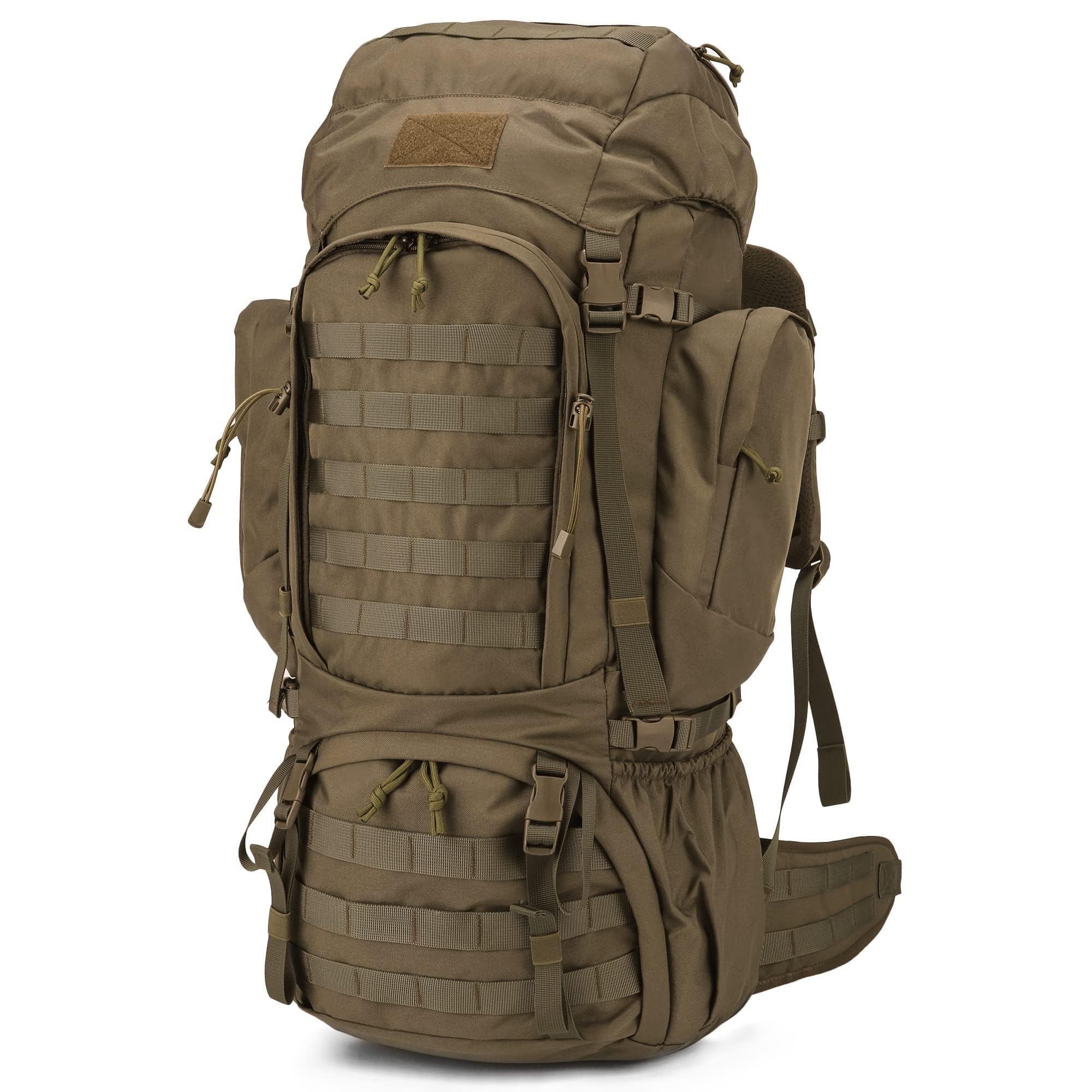
The Mardingtop 60L Military pack features a full MOLLE webbing system on the front and sides, allowing you to attach pouches, pockets, and gear externally for a fully customized loadout. The internal frame provides structure, and the 600D polyester fabric feels sturdy against trail debris. A zippered top pocket holds the included rain cover, and the pack is hydration-compatible for a 2.5-liter bladder.
The main compartment is large enough for a 15.6-inch laptop or a hydration bladder, with additional pockets for organization. The hiking pole attachments work for trekking poles or an ice axe, and the patch area on the front accepts name tapes or flag patches. Users note that the pack can be expanded from 60L to roughly 75L using the external MOLLE attachments.
Experienced users report the pack handles heavy loads — up to 90 pounds for short ruck runs — but note that the hip belt lacks padding and can cause chafing on longer distances. The shoulder straps are narrower than ideal for heavy carries, and the cinch straps tend to loosen under load. For moderate treks under 20 miles with loads under 50 pounds, it offers exceptional value and modularity.
Why it’s great
- Full MOLLE system allows unlimited attachment customization
- 600D polyester is heavy-duty and resistant to tears
- Expandable to 75L with external pouches
Good to know
- Hip belt padding is thin and can chafe under heavy loads
- Shoulder straps are narrow and may not suit broad-shouldered users
6. Teton Scout 55L
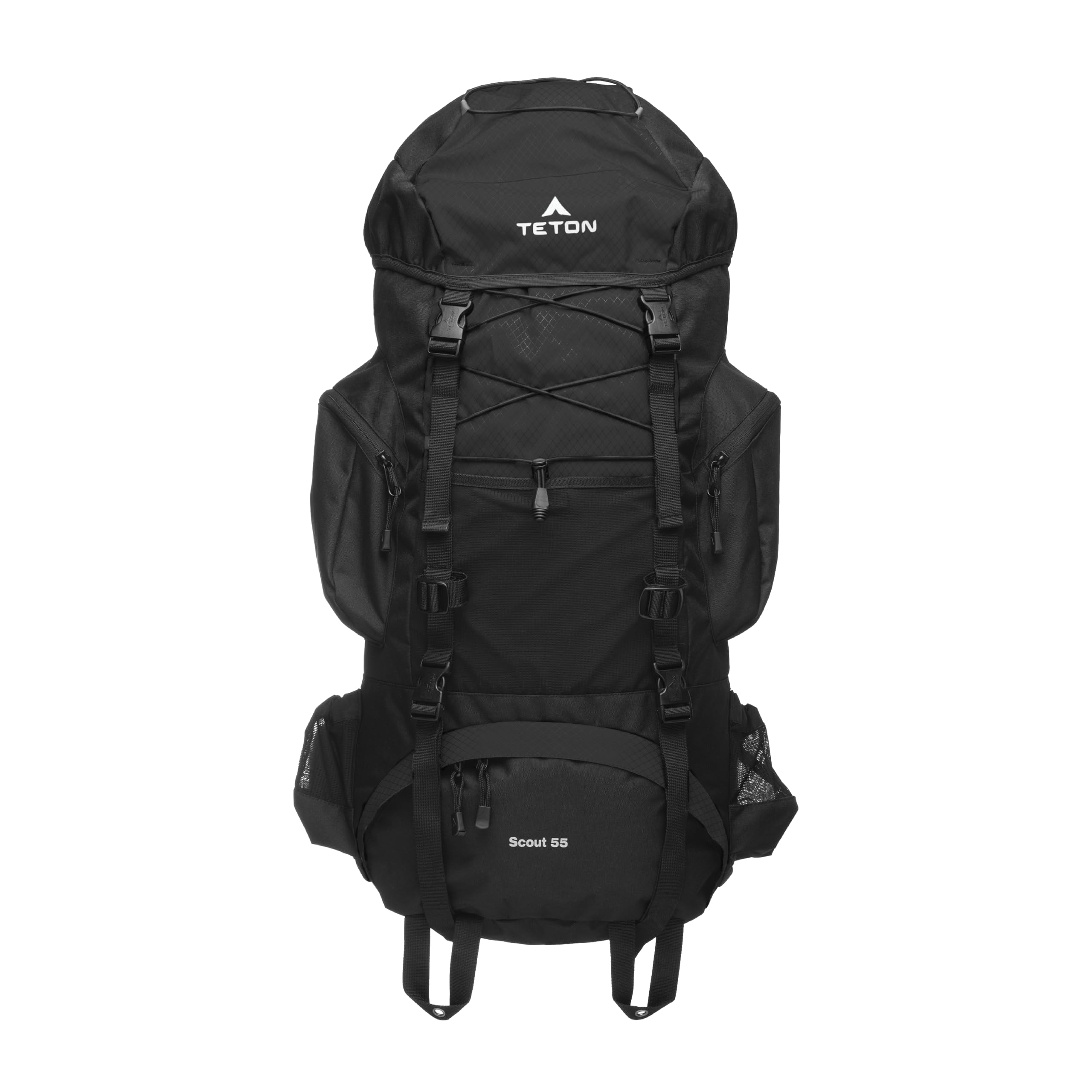
The Teton Scout 55L is designed for beginners and Scout-aged adventurers, offering a multi-position torso adjustment that fits medium and tall frames. The open-cell foam lumbar pad and molded channels provide airflow and comfort. A separate sleeping bag compartment and multidirectional compression straps keep your load secure and organized.
The pack includes a rain fly and hydration pocket, giving new hikers all the essentials in one package. The shoulder harness is comfortable for lighter loads, though users with larger builds note the straps lack thick padding. The chest strap slides, so some users add a fix to keep it in place. The 55L capacity is sufficient for a three-day trip when packing efficiently.
Users with smaller torsos and slim builds find the waist belt fits well, with one Scout mom reporting it accommodates a 23- to 26.5-inch waist without excess strap. The sleeping bag compartment is tight but functional, and the side mesh pockets hold 1-liter water bottles securely. For someone starting out and wanting a dependable, no-frills pack, the Teton Scout delivers reliable performance.
Why it’s great
- Adjustable torso length accommodates growing Scouts and varied torso sizes
- Built-in sleeping bag compartment keeps gear organized
- Included rain fly adds immediate weather protection
Good to know
- Shoulder straps are less padded than premium options
- Chest strap tends to slide out of position during use
7. Night Cat 90L

The Night Cat 90L is built for those who need the maximum possible storage for extended expeditions. Its internal frame and wide, thick foam-padded shoulder straps and waist belt aim to distribute heavy loads. The breathable mesh back panel and ergonomic design provide ventilation and comfort for long carries. An included rain cover and a separate waterproof bag offer layered protection against wet conditions.
The pack features five compartments for organization, including a main compartment large enough for bulky items like a tent and sleeping bag. The hydration sleeve supports a water reservoir with a straw port. Users with large builds report the pack fits well and carries plenty of gear for multi-day trips, though the hip belt may not cinch tightly enough for very slender users.
Some users reported durability issues after several uses, with zipper protectors falling off and seams beginning to tear under heavy loads. The tent strap also tore off during use. However, the customer service team provided quick replacements, and subsequent units performed without issues. For trips where raw capacity is the priority and mileage is moderate, the Night Cat 90L offers a massive volume at a budget-friendly entry point.
Why it’s great
- 90L capacity is among the largest available for trekking packs
- Multiple compartments keep gear well-organized
- Included rain cover and waterproof bag for wet-weather protection
Good to know
- Zippers and seams showed wear after limited use in early units
- Hip belt may not tighten enough for narrow waist sizes
FAQ
What liter capacity do I need for a 3-day trek?
How do I measure my torso length for a trekking backpack?
Is a ventilated back panel worth the extra weight?
Can I use a budget trekking backpack for a long-distance thru-hike?
Final Thoughts: The Verdict
For most users, the best backpacks for trekking winner is the Osprey Rook 65L because its AirSpeed suspension provides outstanding ventilation and load transfer for multi-day trips. If you want a compact, highly ventilated pack for day hikes and fast overnights, grab the Osprey Stratos 44L. And for the best balance of cost and premium features, nothing beats the Kelty Asher 65L with its adjustable Fit Pro torso system.