
Our readers keep the lights on and the weekend projects moving. As an Amazon Associate, I earn from qualifying purchases.
Allergy season doesn’t pause for age, but the medication aisle can feel like a minefield for seniors. Between worries about drowsiness, interactions with existing medications, and finding a formula that actually works without causing a crash, the search for the right relief is a serious health decision.
I’m Rikta — the co-founder and writer behind FitlyFast. I’ve spent hundreds of hours analyzing the chemical profiles, clinical efficacy data, and senior-specific safety considerations of over-the-counter antihistamines to build this guide.
This guide breaks down the top oral tablets, liquid gels, and nasal sprays to help you find the safest and most effective allergy medicine for seniors.
How To Choose The Best Allergy Medicine For Seniors
Selecting an allergy medication for an older adult requires a different set of criteria than for a younger person. The priority shifts from “fastest relief” to “safest relief with minimal side effects and drug interactions.” Understanding three core pillars will guide you to the right choice.
Prioritize Second-Generation Antihistamines Over Older Formulas
The most critical distinction is between first-generation (diphenhydramine) and second-generation (loratadine, cetirizine, fexofenadine, levocetirizine) antihistamines. First-generation drugs cross the blood-brain barrier readily, causing significant drowsiness, cognitive impairment, and increased fall risk in seniors. Second-generation options are formulated to stay out of the central nervous system, providing relief without sedation.
Check for Drug Interactions with Common Senior Medications
Many seniors manage concurrent conditions like high blood pressure, enlarged prostate, or glaucoma. Antihistamines can interact with blood pressure medications, sedatives, and anticholinergic drugs. Always cross-reference the active ingredient with a doctor or pharmacist. For example, first-generation antihistamines can worsen urinary retention in men with BPH, while some second-generation ones are generally safer for cardiac patients.
Match the Delivery Method to Digestive and Physical Needs
Swallowing pills can become difficult with age due to reduced saliva production or dysphagia. Nasal sprays bypass the stomach entirely, offering direct relief with minimal systemic absorption. Liquid gels can be easier to swallow than tablets. Also consider ease of use: a metered nasal spray pump may be simpler for someone with arthritis than twisting open a child-resistant bottle cap.
Quick Comparison
On smaller screens, swipe sideways to see the full table.
| Model | Category | Best For | Key Spec | Amazon |
|---|---|---|---|---|
| Flonase Allergy Relief Nasal Spray | Nasal Spray | Daily congestion & eye symptoms | 72 metered sprays per bottle | Amazon |
| Zyrtec 24 Hour Allergy Relief Liquid Gels | Liquid Gel | Fast-acting, potent relief | 10 mg cetirizine per capsule | Amazon |
| Claritin 24 Hour Allergy Medicine | Oral Tablet | Gentle, non-drowsy daily use | 10 mg loratadine per tablet | Amazon |
| Zyrtec Allergy Medicine Tablets | Oral Tablet | Year-round allergy control | 10 mg cetirizine per tablet | Amazon |
| Allegra Adult 24-Hour Allergy Relief | Oral Tablet | Non-drowsy, brain-fog-free use | 180 mg fexofenadine per tablet | Amazon |
| Xyzal 24 Hour Allergy Relief | Oral Tablet | Prescription-strength control | 5 mg levocetirizine per tablet | Amazon |
| RIGHT REMEDIES Allergy Relief Capsules | Oral Capsule | Budget-first, high-volume supply | 25 mg diphenhydramine per capsule | Amazon |
In‑Depth Reviews
1. Flonase Allergy Relief Nasal Spray
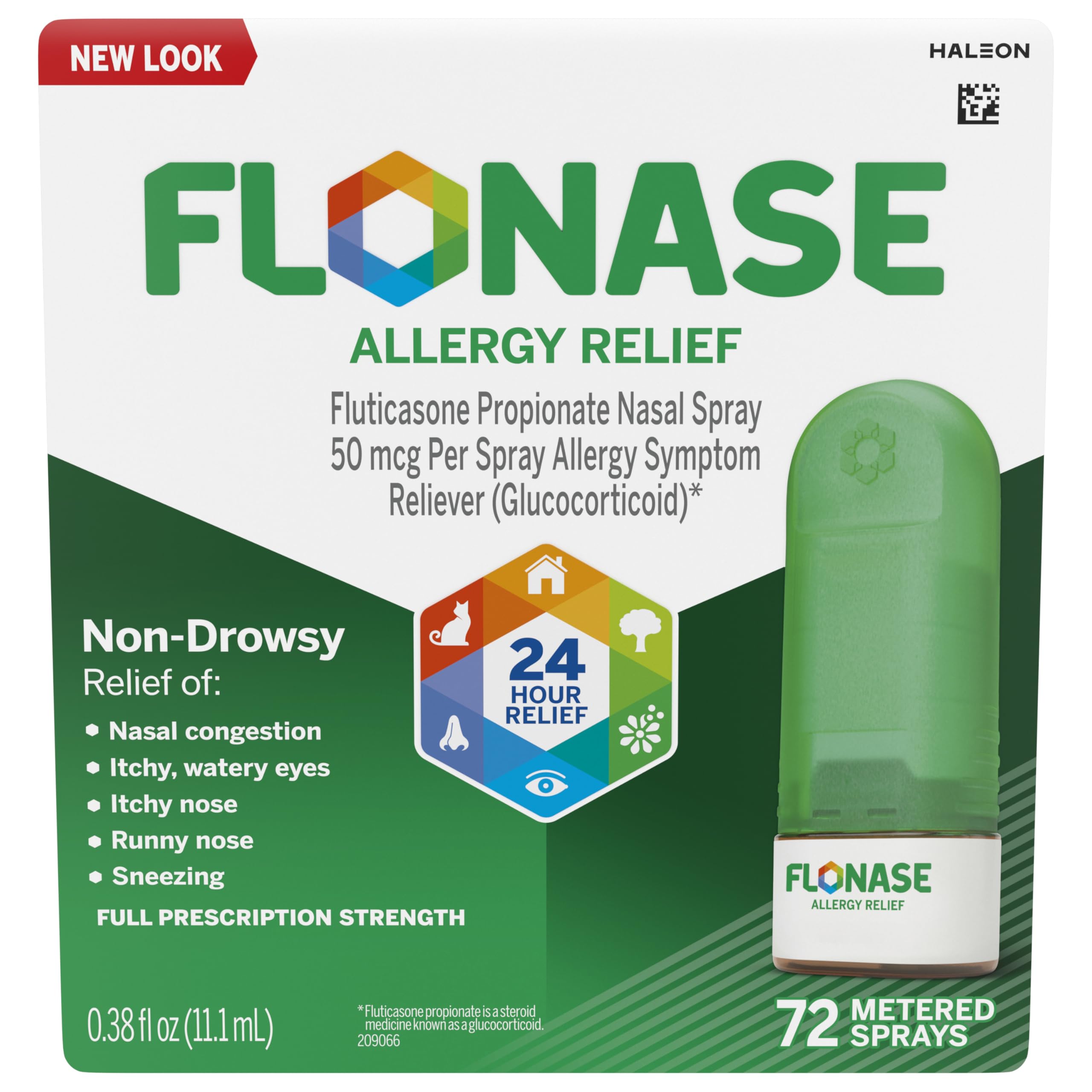
Flonase uses fluticasone propionate, a corticosteroid that works differently from oral antihistamines — it stops the allergic reaction at the source within the nasal passages rather than blocking histamine throughout the whole body. This topical approach means minimal systemic absorption, a significant safety benefit for seniors managing multiple medications.
The 72-spray bottle provides a full month of once-daily use, and the metered pump delivers a consistent dose every time — important for those with arthritis who need reliable mechanics. Users report relief from nasal congestion, sneezing, and even itchy, watery eyes within 20 to 25 minutes of first use.
A few users note a pleasant lilac scent and no aftertaste, though some mention the potential for rebound congestion with overuse. It’s non-drowsy by design, making it a strong candidate for seniors who need daily relief without cognitive effects.
Why it’s great
- Topical action with minimal systemic absorption, reducing drug interaction risk
- Non-drowsy, no sedating antihistamine side effects
- Clinically proven to relieve nasal congestion and eye symptoms in one spray
Good to know
- May require daily use for 1-2 weeks before achieving full effect
- Some users report mild nasal dryness or irritation
- Can cause rebound congestion if used for longer than recommended without breaks
2. Zyrtec 24 Hour Allergy Relief Liquid Gels
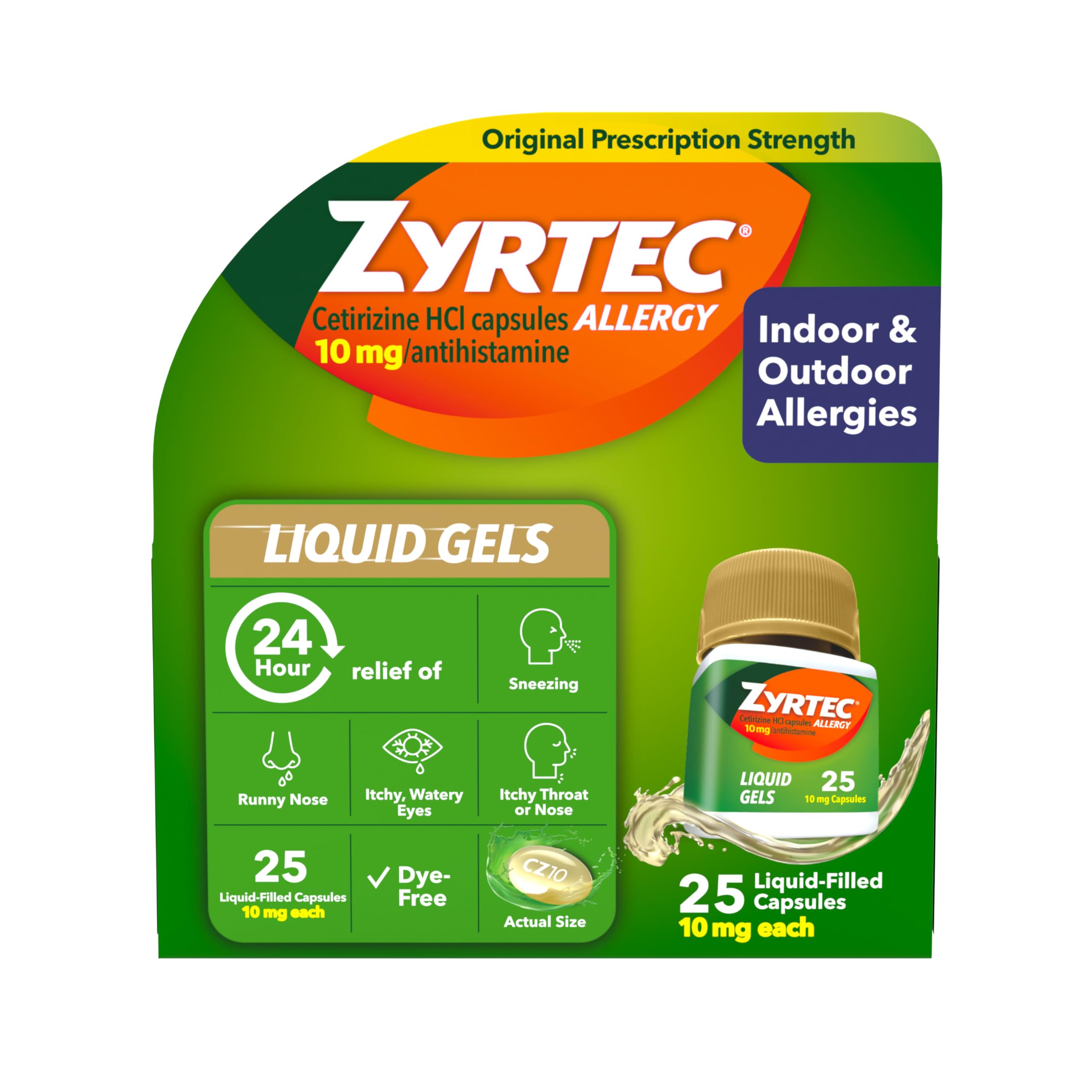
Zyrtec’s liquid gel format offers a distinct advantage for seniors who have difficulty swallowing tablets. The soft, smooth capsule glides down easily, and the liquid inside absorbs faster into the bloodstream than a compressed tablet — meaning quicker onset of symptom relief for those sudden pollen attacks.
Each gel contains 10 mg of cetirizine HCl, a second-generation antihistamine that is effective against both indoor allergens (dust mites, pet dander, mold) and outdoor triggers (tree pollen, grasses, weeds). One dose delivers a full 24 hours of coverage, making it a convenient once-daily option. Users consistently report it works better for severe allergies than generic cetirizine alternatives.
Be aware that some individuals experience mild drowsiness with cetirizine. While it is classified as non-drowsy, a small percentage of users — particularly older adults — may feel slightly sedated. It’s wise to test the first dose at home before driving or operating machinery.
Why it’s great
- Liquid gel format is easier to swallow than standard tablets
- Faster absorption for quicker symptom relief
- HSA/FSA eligible for cost-effective purchase
Good to know
- May cause mild drowsiness in a small percentage of seniors
- Cannot be split or adjusted — fixed 10 mg dose per capsule
- Not suitable for anyone with severe kidney impairment without doctor approval
3. RIGHT REMEDIES Allergy Relief Capsules
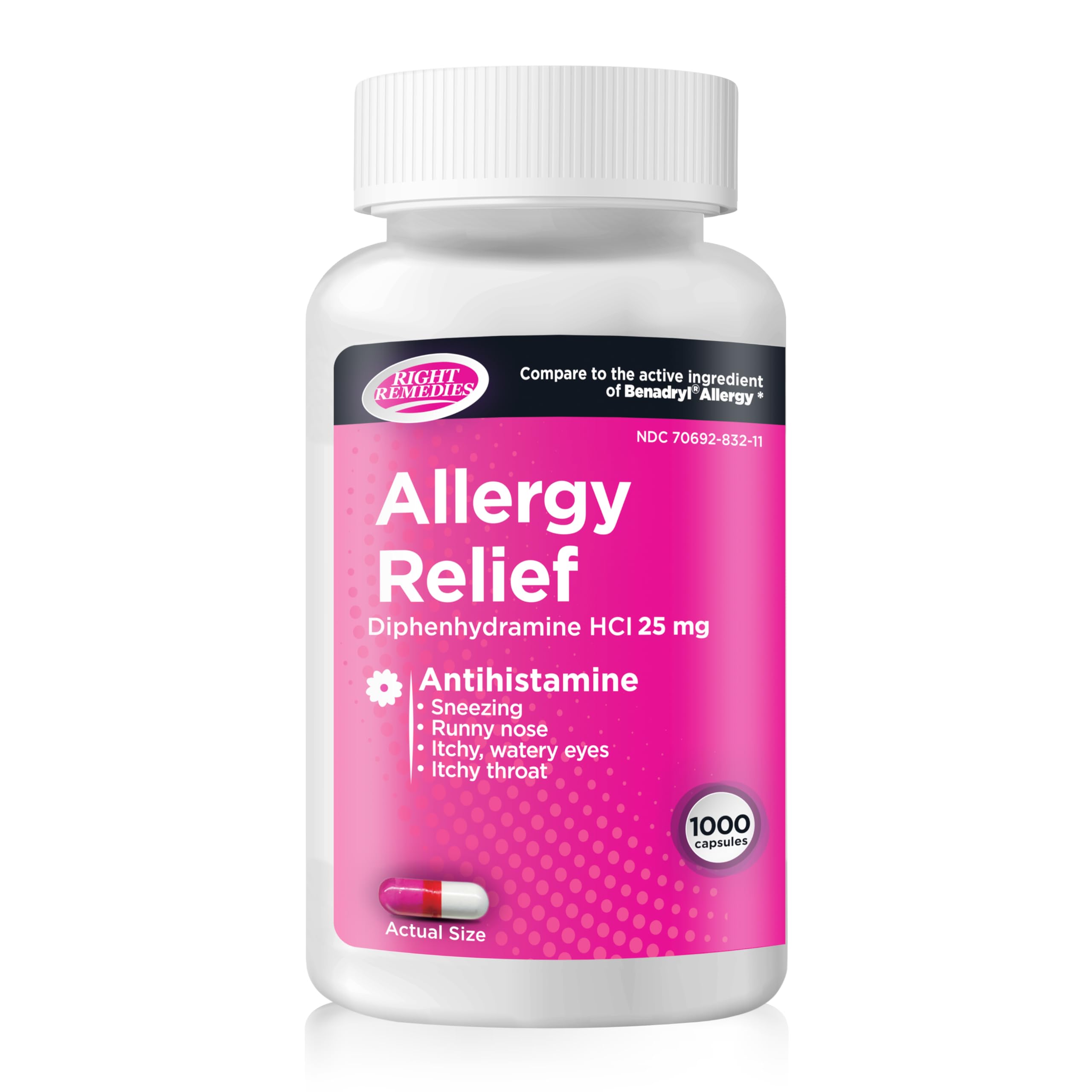
RIGHT REMEDIES offers diphenhydramine HCl 25 mg — the generic equivalent of Benadryl — in a massive 1,000-capsule bottle. This is a first-generation antihistamine, which means it crosses the blood-brain barrier effectively, making it a very powerful but also very sedating choice.
For seniors, this product demands caution. Diphenhydramine is the active ingredient most strongly associated with cognitive decline, confusion, and fall risk in older adults. It should only be used for acute allergic reactions or severe itching, not as a daily maintenance medication. The capsules are small and easy to swallow, and the value is unmatched if you need a bulk supply for rare, severe episodes.
Many users rely on this for its sedating side effect as a sleep aid, which underscores its potential for causing next-day grogginess. Never combine this with alcohol, sleep medications, or other sedatives. The manufacturer recommends adults and children 12+ take 1-2 capsules every 4-6 hours, with a maximum of 6 doses in 24 hours.
Why it’s great
- Extremely effective for acute allergic reactions and itching
- Exceptional value — lowest cost per dose of any product reviewed
- Small, soft capsules are easy to swallow
Good to know
- Strongly sedating — significantly increases fall risk in seniors
- First-generation antihistamine linked to cognitive impairment and urinary retention
- Not recommended for daily or long-term use in older adults
4. Claritin 24 Hour Allergy Medicine

Claritin earns the top position because loratadine, its active ingredient, has the best safety profile among all oral antihistamines for seniors. It is the least likely of the second-generation drugs to cause drowsiness, cognitive impairment, or drug interactions, making it the single safest choice for an older adult who needs daily allergy control.
The 10 mg tablet is tiny — one user described it as “nice tiny to swallow” — which removes the struggle some seniors face with larger pills. One tablet provides non-drowsy relief for a full 24 hours from over 200 allergens, including pet dander, dust, mold, and pollen. Many doctors specifically recommend Claritin as the first-line OTC antihistamine for elderly patients precisely because of its lack of sedation.
Some reviews note that it may be slightly less potent than Zyrtec for very severe allergies. For moderate, everyday seasonal or indoor allergies, however, its reliability and safety are unmatched. The 70-count bottle delivers over two months of daily use, and the price per dose is very reasonable for a branded medication.
Why it’s great
- Lowest risk of drowsiness among all oral antihistamines
- Smallest tablet size — very easy to swallow
- Doctor-recommended first-line OTC choice for seniors
Good to know
- May be less effective for very severe or acute allergy symptoms
- Can take 1-3 days of daily use for full therapeutic effect
- Some users find it less effective than cetirizine for skin-based itching
5. Zyrtec Allergy Medicine Tablets
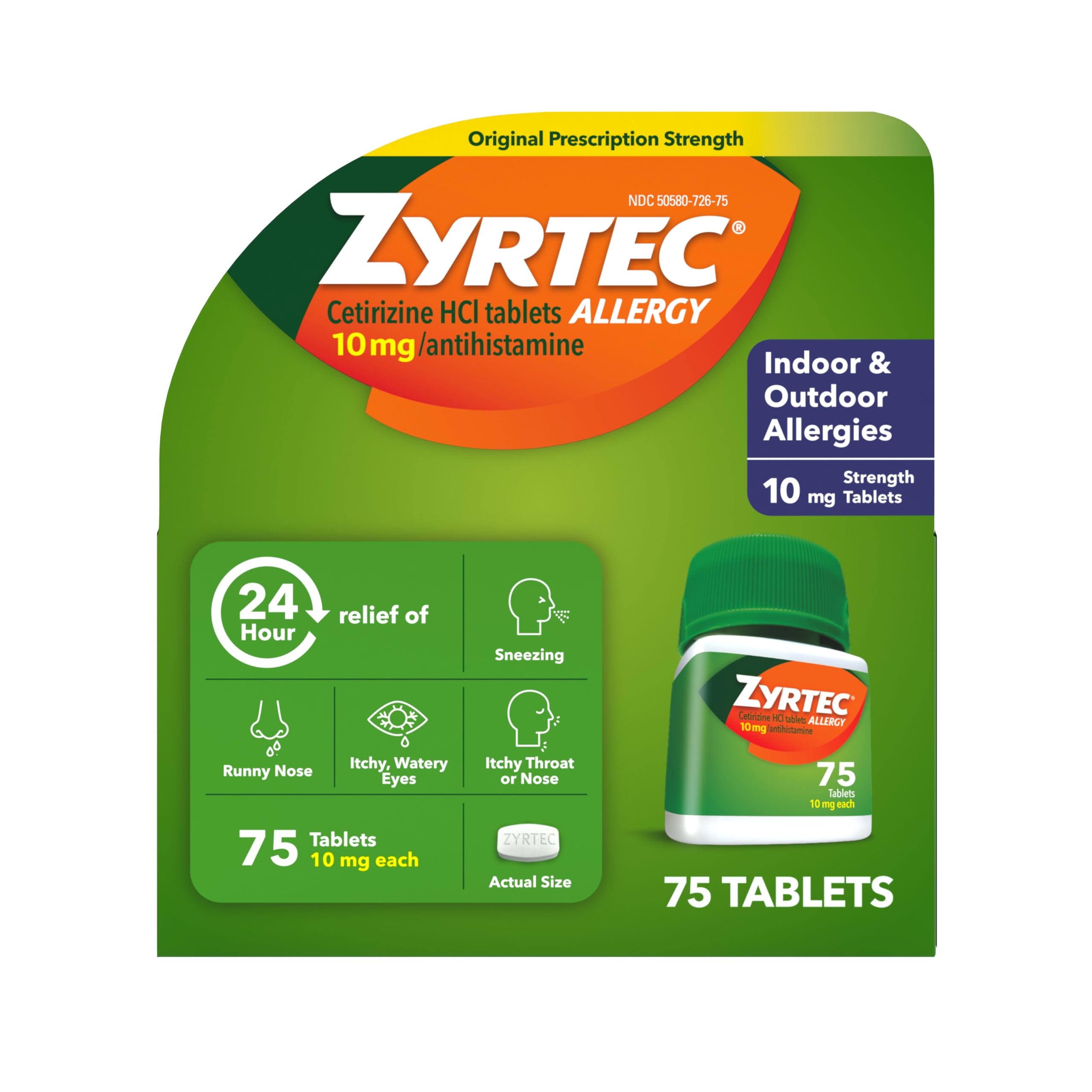
Zyrtec tablets provide 10 mg of cetirizine per dose and are the #1 doctor-recommended oral antihistamine brand among OTC options. The tablet format is a straightforward, cost-effective way to get the same active ingredient as the liquid gels, but in a form that can be split (some doctors recommend a half-dose for seniors with mild kidney impairment).
This 75-count bottle provides 75 days of once-daily relief, making it a strong mid-range option for seniors who need consistent, powerful symptom control from a brand they trust. Users consistently report fast relief from sneezing, runny nose, and itchy, watery eyes — often within the first hour of taking the pill.
The primary consideration is the same as the liquid gel version: cetirizine carries a slightly higher risk of causing drowsiness than loratadine or fexofenadine. For seniors who tolerate it well, the extra potency can be a distinct advantage over less powerful alternatives.
Why it’s great
- #1 doctor-recommended oral antihistamine brand
- Fast-acting — starts working at hour one
- Large 75-count bottle offers good value for daily users
Good to know
- Cetirizine can cause drowsiness in some seniors
- Tablets are somewhat larger than Claritin’s loratadine pill
- HSA/FSA eligibility depends on individual plan
6. Allegra Adult 24-Hour Allergy Relief Tablets
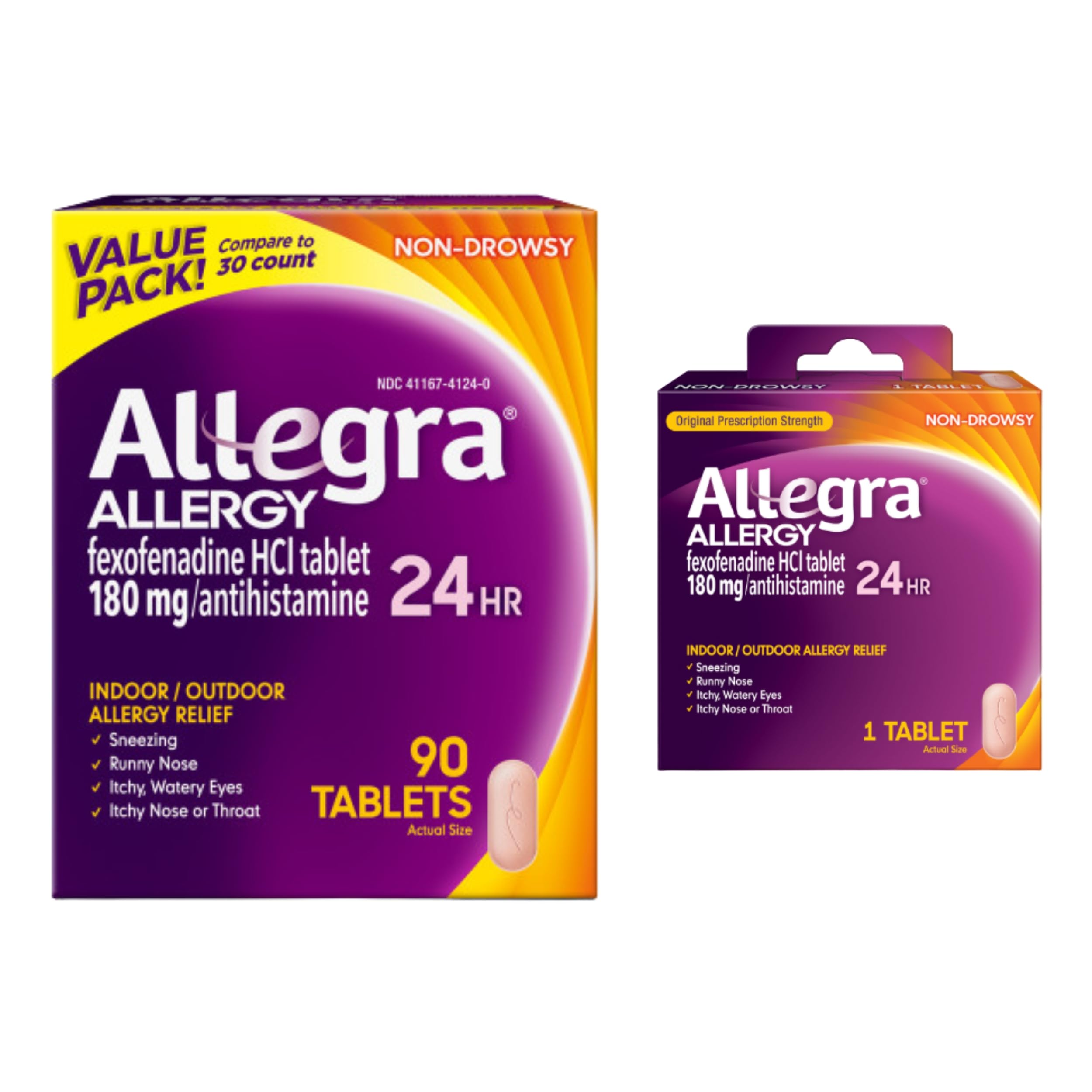
Allegra uses fexofenadine HCl 180 mg, which is distinct from other second-generation antihistamines in one critical way: it is the only one that is not metabolized by the liver’s cytochrome P450 system. This means it has virtually zero risk of interacting with other medications that are processed by the liver, a massive safety advantage for seniors on multiple prescriptions.
Fexofenadine is also considered the most non-sedating of all antihistamines — clinical data shows it causes no more drowsiness than a placebo. For seniors who struggle with the foggy feeling that can accompany cetirizine, Allegra offers a clear-headed alternative that still provides full-day relief from sneezing, runny nose, and itchy eyes.
This bundle includes a 90-count bottle plus a bonus 1-count travel pack. The single caution is that fexofenadine should not be taken with fruit juices (grapefruit, orange, or apple) within 4 hours, as these can significantly reduce absorption.
Why it’s great
- No known drug interactions — safest option for polypharmacy patients
- Clinically non-sedating — proven equal to placebo for drowsiness
- Bonus travel pack adds convenience for on-the-go relief
Good to know
- Must be taken with water only — fruit juices reduce effectiveness by up to 40%
- Tablet is larger than both Claritin and Xyzal
- May take 1-2 days of consistent use to reach maximum efficacy
7. Xyzal 24 Hour Allergy Relief Medicine
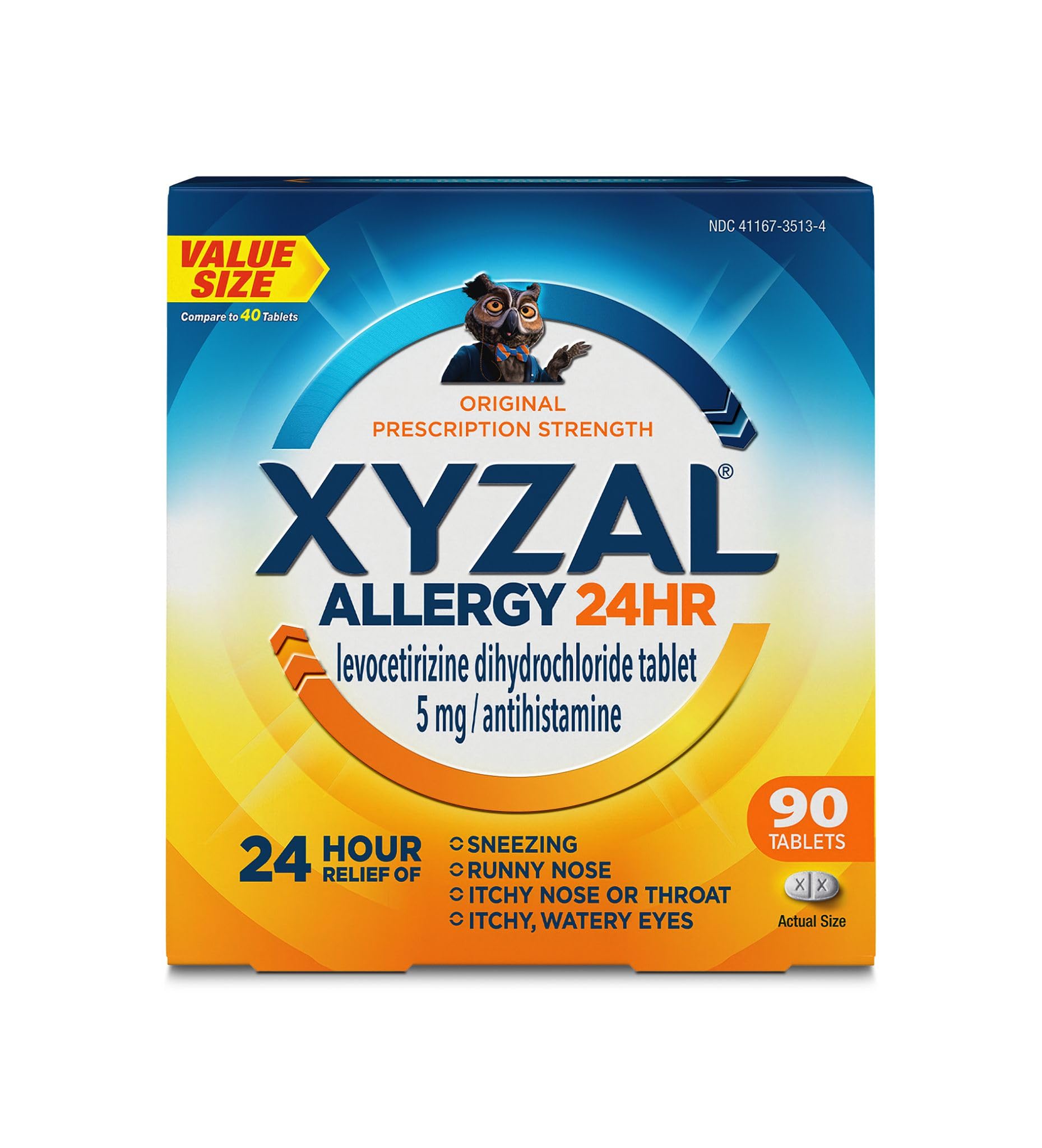
Xyzal contains levocetirizine dihydrochloride 5 mg, which is the purified, single-isomer version of cetirizine (Zyrtec’s active ingredient). This refinement makes it more potent at a lower dose (5 mg vs. 10 mg) and, clinically, may cause slightly less drowsiness than standard cetirizine while delivering comparable — some say superior — symptom relief.
The pill is described by users as small and tasteless, with no chalky residue. It starts working in 45 minutes and maintains its efficacy for the full 24-hour cycle, making it a popular choice for those with stubborn year-round allergies to pet dander, dust, and pollen. Doctors often recommend Xyzal when patients find Zyrtec effective but too sedating.
Xyzal is typically taken at night for allergy relief that lasts through the next day, which can be a convenient routine. Many long-term users report zero side effects over years of consistent use, though it’s still a second-generation drug and carries a small risk of sedation in sensitive individuals. The 90-count bottle covers three months of daily dosing.
Why it’s great
- More potent per milligram than standard cetirizine
- Small, tasteless, easy-to-swallow tablet
- Doctor-recommended for patients who need stronger relief with less sedation
Good to know
- Higher price point than generic alternatives
- Still carries a slightly higher drowsiness risk than loratadine or fexofenadine
- Dose reduction recommended for seniors with kidney impairment
FAQ
Is it safe for a senior to take allergy medicine every day?
Which allergy medicine is least likely to interact with blood pressure medication?
What should a senior do if they have difficulty swallowing allergy pills?
Final Thoughts: The Verdict
For most seniors seeking safe, daily allergy control, the winner is Claritin because its loratadine formula offers the best balance of non-drowsy relief, minimal drug interactions, and an exceptionally small, easy-to-swallow tablet. If you need stronger symptom control for severe allergies, grab Xyzal for its prescription-strength levocetirizine in a refined, low-dose formulation. And for seniors on multiple medications who need the safest possible interaction profile, nothing beats Allegra and its fexofenadine compound that avoids liver metabolism entirely.