
Our readers keep the lights on and the weekend projects moving. As an Amazon Associate, I earn from qualifying purchases.
A single wrong spray can turn a crystal-clear acrylic windshield into a hazy, scratched mess. Standard glass cleaners, especially those containing ammonia or alcohol, will attack acrylic surfaces, causing them to cloud, craze, and lose their structural integrity. The right acrylic cleaner, however, not only removes bugs and fingerprints but also protects the surface from static and future grime, extending the life of your investment.
I’m Rikta — the co-founder and writer behind FitlyFast. I’ve analyzed the chemical formulas, compared anti-static properties, and sifted through hundreds of real-world use cases to find the best products that deliver without damaging delicate surfaces.
Whether you are cleaning a motorcycle windshield, an aquarium, or a retail display, choosing the wrong product can lead to costly damage. This guide breaks down the top-performing acrylic cleaner options on the market to help you see clearly.
How To Choose The Best Acrylic Cleaner
Selecting the right acrylic cleaner is not about picking a glass cleaner off the shelf. You need to look for specific chemical properties and avoiding others. Focus on the formulation, the delivery method, and the intended use case to avoid damaging your surfaces.
Check the Chemical Formula
The single most important rule is to avoid ammonia and high concentrations of alcohol. These chemicals chemically attack acrylic, causing it to develop a network of fine cracks (crazing) or a permanent milky haze. Look for water-based, non-flammable formulas that explicitly state they are alcohol-free and ammonia-free.
Look for Anti-Static Properties
Acrylic surfaces act like magnets for dust due to static electricity. A quality acrylic cleaner will include anti-static agents that neutralize the charge on the surface, preventing dust from settling immediately after cleaning. This feature is critical for items like retail displays, motorcycle windscreens, and tanning beds that need to stay clean longer.
Consider Cleaner vs. Polish
Some products are purely cleaners that remove dirt and grime. Others, like the NOVUS kit, include a fine scratch remover (polish) that can restore clarity to hazy or lightly scratched acrylic. If you are working with an aged or damaged surface, a two-step system is a better investment than a simple cleaner spray alone.
Quick Comparison
On smaller screens, swipe sideways to see the full table.
| Model | Category | Best For | Key Spec | Amazon |
|---|---|---|---|---|
| NOVUS PK2-8 | Kit | Scratch Removal & Restoration | Two-Step System (Cleaner + Polish) | Amazon |
| Lucasol 1 Gallon | Cleaner | High-Volume & Commercial Use | Bulk 1 Gallon Value Size | Amazon |
| Prist Aerosol | Aerosol | Aviation & Performance Windscreens | Meets Federal Test Standards | Amazon |
| Invisible Glass 2-Pack | Spray | Vehicles & Helmet Visors | Anti-Static Formula | Amazon |
| Camco 40934 | Aerosol | Isinglass & Plexiglass Protection | Anti-Fog & Anti-Static | Amazon |
| Lucasol 32 oz | Spray | Tanning Beds & Gym Equipment | EPA & FDA Compliant | Amazon |
| Rolite RPAC16z | Spray | General Purpose & Displays | Streak-Free & Dust Repellent | Amazon |
In‑Depth Reviews
1. NOVUS-PK2-8 Plastic Clean & Shine Kit

This is the gold standard for acrylic restoration. The NOVUS kit includes both #1 Plastic Clean & Shine and #2 Fine Scratch Remover. The #2 polish uses micro-abrasives that actually remove fine scratches and oxidation from a surface, while the #1 cleaner provides anti-fog and anti-static protection for daily maintenance. It is a true restoration system, not just a surface cleaner.
Users report it brings heavily scratched polycarbonate gas mask lenses and 25-year-old acrylic tanks back to near-new clarity. The kit is compact enough for a glove box or saddlebag, making it a great companion for long trips. It is designed for use on uncoated plastics like Lexan and acrylic, but it is not safe for coated plastics, UV-protected surfaces, or eyeglass lenses.
The #2 scratch remover is not a “fine” polish in the traditional sense; some users found it slightly too aggressive for delicate items like camera lens covers because it can create a micro-haze if used improperly. It works best with a random orbital buffer or significant manual effort. The #1 cleaner alone is excellent for standard cleaning and adds a protective layer.
Why it’s great
- Removes fine scratches from uncoated acrylic and polycarbonate.
- Includes both a protective cleaner and a scratch remover.
- Anti-fog and anti-static properties on the daily cleaner.
Good to know
- #2 polish can cause hazing on coated or soft plastics.
- Not suitable for eyeglass lenses or UV-protected surfaces.
2. Lucas Acrylic Cleaner (1 Gallon)
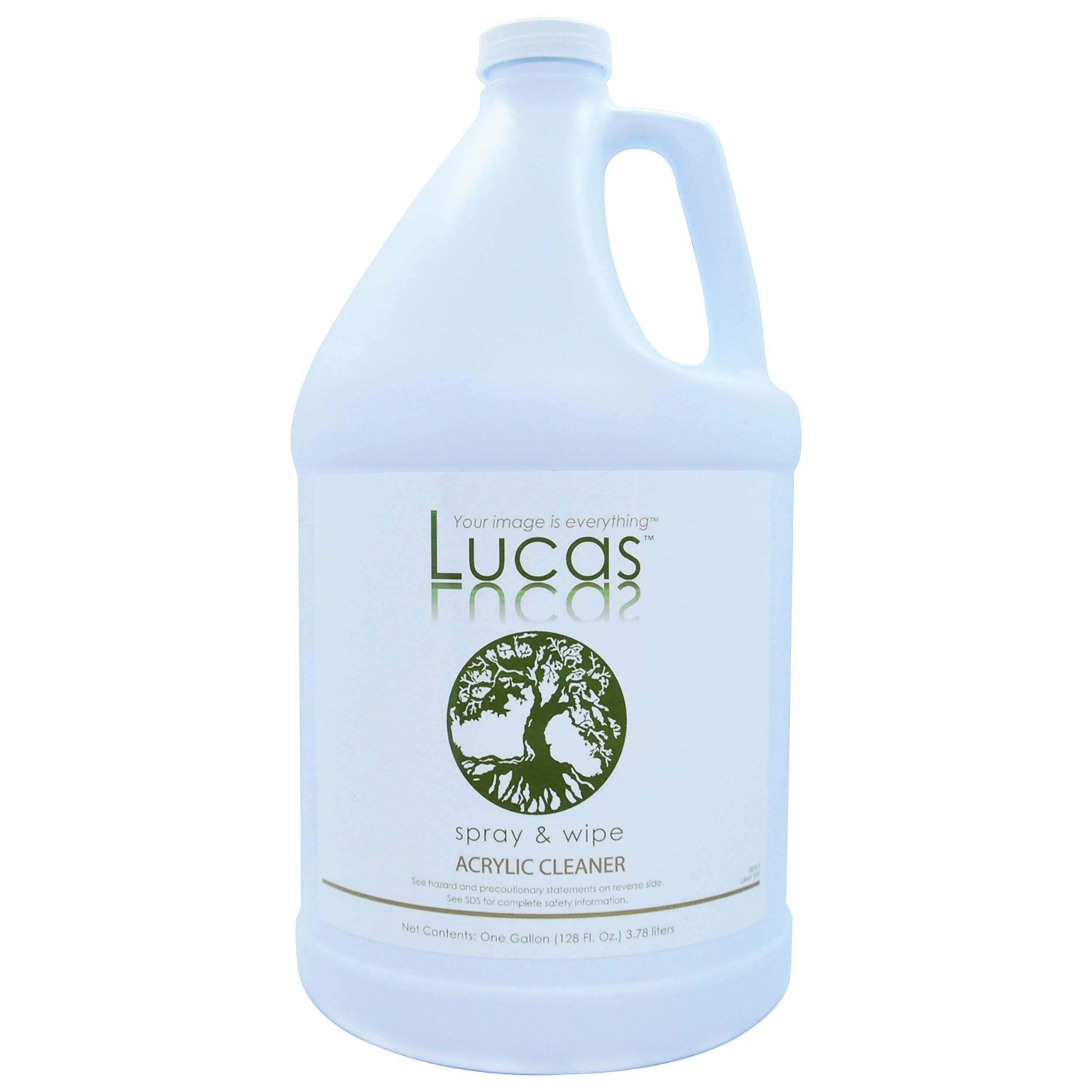
For users with high-volume cleaning needs, this gallon jug from Lucasol is the most economical way to keep acrylic surfaces spotless. It is designed for professional settings like salons, gyms, and tanning salons where you go through a lot of product. The formula is alcohol-free and ammonia-free, making it safe for sensitive acrylic shields on tanning beds and plexiglass barriers.
The liquid is a ready-to-use solution, meaning you do not need to dilute it. It is effective at removing tingle lotions, body oils, and common dirt without leaving a hazy residue. Users highlight that it leaves acrylic surfaces looking “like new” with minimal effort, and the lack of a strong chemical scent is a major plus for indoor use.
Because it is a non-aerosol concentrate (ready to use), you will need your own spray bottle for application. The large one-gallon container can be heavy and awkward to pour, but the cost per ounce is far lower than buying multiple spray bottles. Some users note that you need to buff the surface thoroughly to avoid any minor streaking.
Why it’s great
- Excellent value for high-volume or commercial use.
- Safe on acrylic, plexiglass, and delicate screens.
- No strong chemical odor; ideal for indoor environments.
Good to know
- Requires a separate spray bottle for application.
- May need more buffing to achieve a streak-free finish compared to aerosol options.
3. Prist Acrylic and Plastic Windscreen Cleaner
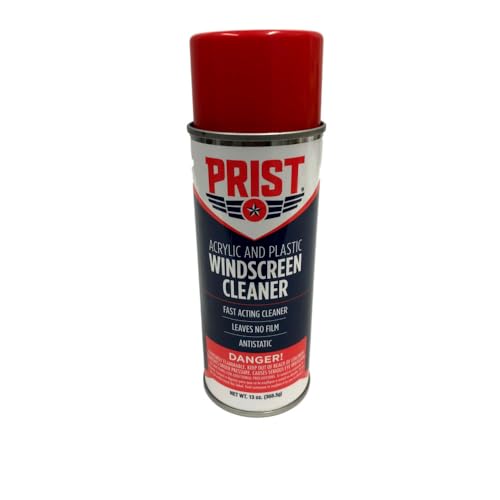
Prist is a name that comes directly from the aviation industry, and this aerosol foam is designed to exceed federal test standards for aircraft windscreen cleaning. It is safe on acrylic, stretched-acrylic, polycarbonate, and coated-glass windows, making it a top-tier choice for aircraft owners and pilots. The non-abrasive foam clings to vertical surfaces without dripping, allowing it to dwell on the dirt.
The eco-friendly formula is artificial color free and safe for use around people, pets, and plants, which adds a layer of safety for closed environments. It works exceptionally well on motorcycle windscreens and other high-performance plastics. Users report that it does not scratch the shield and leaves a perfectly non-smear finish, which is critical for safety in aviation.
The aerosol format is convenient but comes in a smaller 13-ounce can, so heavy users may go through it quickly. It also carries a premium price point compared to general-purpose cleaners. Some users found the bamboo scent pleasant, though it is unscented for most non-aerosol applications. It is a specialized product for those who demand the absolute best performance.
Why it’s great
- Exceeds federal test standards for acrylic and polycarbonate.
- Non-abrasive foam clings to vertical surfaces without dripping.
- Eco-friendly and safe around people and pets.
Good to know
- Smaller 13 oz can; not the most economical for high-volume use.
- Premium price point compared to general-purpose plastic cleaners.
4. Invisible Glass 92084-2PK Clear Plastic Cleaner

From the makers of the famous Invisible Glass cleaner, this formula is specifically designed for clear plastics. It is safe for acrylic and vinyl windows, motorcycle windscreens, helmet visors, and golf cart windshields. The anti-static protection creates a smooth layer that repels dust and seals the pores in the plastic, helping to keep the surface cleaner for longer.
Users rate this highly for use on side-by-side UTV windshields and golf cart enclosures, noting that it does not streak and wipes off easily. It cuts through road debris and bug residue effectively, leaving a glossy finish. The 22-ounce bottles in the two-pack provide a solid value for the performance level.
The main complaint across multiple reviews is the sprayer quality. Several users report the trigger mechanism breaks within the first few uses, forcing them to decant the liquid into another bottle. If you buy this, it is smart to have a backup spray bottle ready. Otherwise, the liquid itself is excellent for the price.
Why it’s great
- Effective anti-static layer reduces future dust attraction.
- Streak-free and haze-free on most clear plastics.
- Good value with two 22-ounce bottles included.
Good to know
- Sprayer nozzle is prone to breaking after a few uses.
- Struggles with heavily caked-on bug guts without some scrubbing.
5. Camco Plastic Cleaner and Polish (40934)

Camco is a trusted brand in the RV and marine world, and this aerosol polish-cleaner is designed for demanding outdoor applications. It is specifically marketed to protect isinglass, PLEXIGLAS, and vinyl from browning and hardening, which are common issues with UV exposure and saltwater. The aerosol spray seals the pores of the plastic, providing a protective coating against the elements.
Motorcycle and RV owners use this religiously, with one user noting a single can lasts 2-3 seasons of regular use on a Harley windshield. It removes bugs better than standard cleaners and leaves a clear, lustrous look. The anti-static and anti-fog properties are major benefits for those riding in varying weather conditions.
The only downside is the price, which sits at a premium level. It is more expensive than general-purpose spray cleaners, but the concentrated, long-lasting formula justifies the cost for specific use cases. It is not ideal as a general household acrylic cleaner; it is better saved for outdoor vehicles and equipment where its protective properties are most valuable.
Why it’s great
- Seals and protects plastic from UV browning and hardening.
- Excellent for removing stubborn bug residue on windshields.
- Long-lasting; a single can offers many applications.
Good to know
- Premium price point compared to standard plastic cleaners.
- Best used for outdoor vehicle/marine applications, not general household use.
6. Lucasol Acrylic & Plastic Cleaner Spray (32 oz)
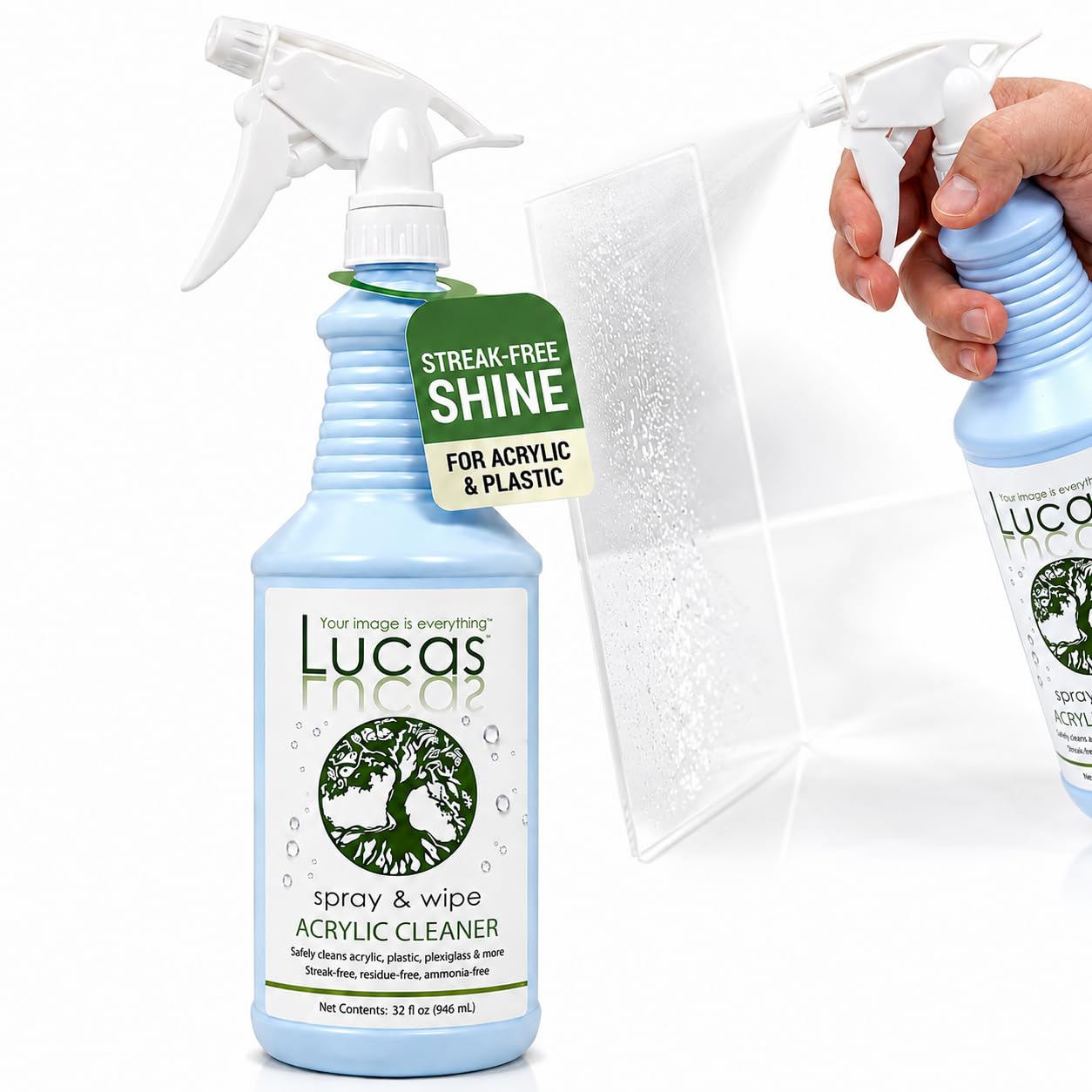
This Lucasol cleaner is specifically formulated for the salon and spa industry, meeting EPA List N disinfectant information and FDA eyeshield safety standards. It is a water-based, alcohol and ammonia-free formula that will not degrade acrylic tanning bed shields or plexiglass barriers. It is designed to safely remove tingle lotions, tanning residues, and fingerprints without causing clouding or cracking.
Users rave about the complete lack of strong chemical scent, making it a pleasure to use in indoor, occupied spaces. It leaves a streak-free shine on mirrors, screens, and shields without any residue. The 32-ounce spray bottle is ready to use out of the box and feels like a premium product in terms of effectiveness and material quality.
While it is very effective, some users note that it requires a bit more elbow grease to fully remove heavy residue compared to more aggressive industrial cleaners. It is not a heavy-duty degreaser. If you have a heavily soiled acrylic surface, you may need to spray more and rub longer to get a perfect finish.
Why it’s great
- Specifically designed for tanning beds and salon equipment.
- No strong chemical smell; pleasant for indoor use.
- Streak-free and residue-free on acrylic and glass.
Good to know
- Requires more physical effort to remove heavy or caked-on residues.
- Not a heavy-duty degreaser; better for maintenance than initial deep cleaning.
7. Rolite RPAC16z Plastic & Acrylic Cleaner Spray
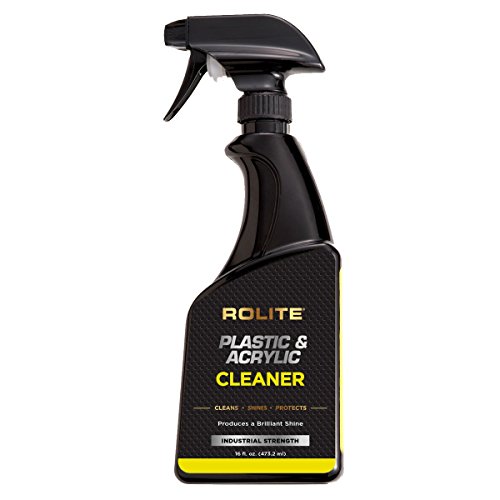
The Rolite RPAC16z is an entry-level, budget-friendly option that still delivers strong performance. Its water-based, streak-free formula is completely non-flammable and contains zero ammonia or alcohol. It is designed to clean and shine nonporous surfaces, including plexiglass, lexan, polycarbonate, and fiberglass, while leaving a dust-repellent coating that keeps fingerprints at bay.
Users have had success with it on motorcycle windshields and acrylic display cases, noting it lifts haze and micro-dirt that standard glass cleaners leave behind. It is a versatile, general-purpose acrylic cleaner that works well for a wide variety of household and automotive tasks. The dust-repellent property is a tangible benefit that helps surfaces stay clean longer.
The recurring issue with this product is the spray nozzle. Multiple verified reviews state the trigger leaked or failed to spray from the first use. While the liquid inside is excellent, you should plan to decant it into a different, more reliable spray bottle. Also, one user reported it left cloudiness on plexiglass used for a drum cage under direct light, so it may not be ideal for all polycarbonate applications.
Why it’s great
- Affordable and effective for general acrylic cleaning.
- Leaves a dust-repellent surface to reduce static attraction.
- Safe on a wide range of nonporous materials.
Good to know
- Spray nozzle often fails or leaks from the start.
- May cause cloudiness on certain polycarbonate (plexiglass) surfaces.
FAQ
Can I use Windex or standard glass cleaner on acrylic?
What is the best way to remove fine scratches from acrylic?
Why does my acrylic still look hazy after cleaning?
Final Thoughts: The Verdict
For most users, the acrylic cleaner winner is the NOVUS-PK2-8 Kit because it is the only product that can both clean and restore scratched acrylic to like-new condition. If you want a simple, anti-static daily cleaner for vehicles and windshields, grab the Invisible Glass 2-Pack. And for high-volume commercial use or salon environments, nothing beats the value of the Lucas Gallon for keeping large surfaces streak-free and odorless.