
Our readers keep the lights on and the weekend projects moving. As an Amazon Associate, I earn from qualifying purchases.
Standard potting soil suffocates bonsai roots. The dense, moisture-retaining organic matter that garden plants love will rot the fine, delicate root systems of a tree confined to a shallow bonsai pot. The single most important factor in bonsai survival is soil that balances water retention with rapid, unimpeded drainage and constant air flow to the root zone.
I’m Rikta — the co-founder and writer behind FitlyFast. I’ve spent hundreds of hours analyzing the particle size distribution, pH stability, and water-holding capacity of dozens of bonsai soil blends on the market to build a guide that focuses on measurable performance, not marketing claims.
This guide breaks down the critical specs behind a healthy root system to help you choose the absolute best bonsai tree soil for your species, skill level, and growing conditions.
How To Choose The Best Bonsai Tree Soil
The right bonsai mix feels like a contradiction: it must hold enough water to keep the tree hydrated between waterings, yet drain so quickly that the roots never sit in moisture. The secret lies in the granular, inorganic structure of the components. Organic garden soil breaks down into a muddy paste that clogs air pockets, whereas a proper bonsai blend maintains its open structure for years.
Particle Size and Structure
Every particle in a quality bonsai soil acts like a tiny sponge with hard edges. The ideal range is roughly 1/4 inch down to 1/16 inch. Particles smaller than 1/16 inch fill the gaps between larger grains, collapsing the air spaces that roots need to breathe. Bags labeled “pre-sifted” or “screened” have already removed this destructive dust fraction, which saves you the hassle of sifting at home.
Component Materials
Akadama is the traditional Japanese gold standard — a baked clay granule that slowly breaks down over two to three years, providing both structure and some water retention. Pumice is a lightweight volcanic glass that holds water inside its porous structure while keeping the mix open. Lava rock adds weight and sharp edges that anchor roots. Calcined clay (often sold as Turface) is a budget-friendly alternative to akadama that performs similarly. A blend of these inorganic materials combined with a small amount of pine bark or horticultural charcoal creates the ideal environment.
Species-Specific Blends
Deciduous trees like Japanese maple and elm prefer a mix with slightly more water-retentive akadama. Conifers such as juniper and pine need a grittier, faster-draining blend with more pumice and lava rock. Tropical species like ficus and Fukien tea sit somewhere in between. An all-purpose blend works for beginners, but matching the mix to your tree type removes one major variable from the success equation.
Quick Comparison
On smaller screens, swipe sideways to see the full table.
| Model | Category | Best For | Key Spec | Amazon |
|---|---|---|---|---|
| Bonsai Outlet Premium Blend | Akadama Mix | Finished bonsai, conifers | Double-sifted akadama, lava, pumice | Amazon |
| Espoma Organic Bonsai Mix | All-Purpose | Repotting, beginners | 4-quart resealable bag | Amazon |
| Harris Premium Blend | All-Purpose | Seedlings and cuttings | Forest humus + pumice + lime | Amazon |
| Tinyroots Akadama | Pure Akadama | Traditional Japanese soil mix | Sifted 1/8 to 1/16 inch | Amazon |
| Bonsai Outlet Deciduous Blend | Deciduous Mix | Maple, elm, hornbeam | Akadama, pumice, slate, charcoal | Amazon |
| Bonsai Jack Universal Mix | Gritty Mix | Succulents and tropicals | Optimal pH 6.4, pre-washed | Amazon |
| The Bonsai Supply Calcined Clay | Single Component | Custom mixing, succulents | 1/8 inch high-fired clay | Amazon |
In‑Depth Reviews
1. Bonsai Outlet Premium Bonsai Soil – Tinyroots 2.25 Quart Blend

This blend from Tinyroots uses a professional-grade ratio of genuine akadama, red lava rock, and pumice — the three classic inorganic components that Japanese masters have relied on for decades. The particles are double-sifted before bagging, which means you get far less dust and more consistent 1/8 to 1/4 inch granules compared to many competitors. The mix arrives dry and ready to use for most conifers, pines, and junipers that demand sharp drainage.
The resealable pouch keeps leftover soil fresh for future repotting sessions, and the 2.25-quart volume is enough for a single medium-sized training pot or a few small shohin containers. Several user reports highlight that the pre-sifting claim is not perfect — a small amount of fine powder may still settle at the bottom of the bag — so sifting once more before use is a safe habit. The structural integrity of the akadama granules is notably higher than budget alternatives, meaning the mix will hold its open structure for at least two growing seasons.
For growers who want a ready-to-use professional blend without hunting down and mixing individual components, this is the most reliable option. It is particularly well-suited for finished bonsai where root ramification and fine feeder root development are the priority.
Why it’s great
- Professional-grade akadama holds structure longer than cheap alternatives
- Double-sifting removes most dust and fines
- Excellent for conifers that need fast drainage
Good to know
- Some powder may remain — additional sifting recommended
- Primarily suited for finished trees, not raw soil for cuttings
2. Espoma Organic & Natural Bonsai Soil Mix (4 Quarts)

Espoma brings over 90 years of organic gardening experience into a bonsai mix built around fast-draining ceramic particles. The 4-quart bag is double the volume of most competitors at a similar tier, making it the strongest value proposition for anyone repotting multiple trees or maintaining a small collection. The mix is pre-blended and ready to use directly from the resealable bag — no additional sifting required.
The primary aggregate is a lightweight, porous ceramic that strikes a solid balance between moisture retention and drainage. It does not contain akadama, which is a deliberate choice: the ceramic granules are more durable and will not break down as quickly in the pot. The absence of akadama means you lose the natural wet-to-dry color change cue, but a simple moisture meter or finger test compensates. The bag is press-to-close resealable, which keeps the remaining soil from drying out between uses.
Some buyers use this mix as a top dressing for houseplants or as a sub-substrate in aquascapes, which speaks to its clean, dust-free formulation. For a beginner or intermediate grower looking for a dependable all-purpose soil that handles a wide range of species without breaking the bank, this is the most practical choice.
Why it’s great
- Double the volume of most bags at a similar cost
- Ready to use with no sifting or dust issues
- Durable ceramic particles resist breakdown
Good to know
- No akadama — lacks wet-to-dry color indicator
- Ceramic particles may be too large for tiny shohin pots
3. Harris Bonsai Soil, All Purpose Premium Blend (2qt)

Harris formulated this blend with forest humus, pumice, calcined clay, basalt rock dust, and lime — an unusual but effective combination that provides both organic matter for nutrient cycling and sharp mineral aggregates for drainage. The inclusion of lime is a smart touch because it buffers the pH of the organic fraction and prevents the acidic conditions that often develop in shallow bonsai pots.
The particle size distribution leans slightly finer than the pure inorganic mixes, which makes this a strong choice for seed starting and rooting cuttings. The finer organic particles help maintain consistent moisture around delicate new roots without waterlogging. Several users reported rapid new growth and zero signs of transplant shock after repotting established trees into this mix.
The 2-quart volume is perfectly sized for a single tree or several small containers. The only real trade-off is that the organic fraction will decompose over time, meaning you will need to repot sooner than you would with a fully inorganic mix. For growers who prioritize initial growth response over long-term structure, this is an excellent mid-range option.
Why it’s great
- Includes pH-buffering lime for stable root environment
- Works well for seedlings, cuttings, and small trees
- Good moisture retention without becoming soggy
Good to know
- Organic matter breaks down faster than inorganic-only mixes
- Finer particles may compact slightly over time
4. Tinyroots Akadama 2.25qt Bonsai Soil

This is pure akadama, mined from Japanese volcanic soil and sifted through a 1/8-inch mesh followed by a 1/16-inch mesh to remove dust and fine particles. Akadama serves as both the water-holding and nutrient-exchanging component in a traditional bonsai mix. The granules darken visibly when wet, giving you a clear visual cue for when to water — a feature no synthetic ceramic can replicate.
The standout quality of this batch is the structural integrity of the individual granules. Many budget akadama products crumble into powder within weeks, but the Tinyroots akadama holds its shape through multiple wet-dry cycles. Users report minimal dust in the bag, confirming the double-sifting claim. The 2.25-quart volume is enough to mix your own custom blend with pumice and lava rock, or to use as a top dressing for a refined tree.
Pure akadama is not a complete soil by itself — it needs to be blended with 30-50% pumice or lava rock for proper aeration. This product is best for experienced bonsai growers who prefer to formulate their own mix and want a reliable akadama source that will not disintegrate after one season.
Why it’s great
- Genuine Japanese akadama with strong granule structure
- Double-sifted to remove dust and fines
- Provides clear wet-to-dry color change indicator
Good to know
- Must be mixed with pumice or lava rock for proper drainage
- Not a complete soil — requires blending
5. Bonsai Outlet Deciduous Bonsai Soil Blend Mix (2 Quarts)

This deciduous-specific blend uses akadama, pumice, expanded slate, and horticultural charcoal in a ratio designed for trees like Japanese maple, hornbeam, elm, and beech. The inclusion of charcoal adds an extra layer of biological filtration and helps keep the root zone fresh between waterings. The particles are pre-sifted and 100% natural, with all heavy oversized particles removed before bagging.
The visual appeal of this mix is notable — the orange-beige tones of the akadama and slate create a clean, traditional look that complements the aesthetic of a deciduous bonsai. Users report excellent drainage paired with enough moisture retention to support the rapid spring growth that maples and elms are known for. The wet-to-dry contrast is clear, making watering decisions straightforward even for less experienced growers.
A few buyers noted that the bag volume felt slightly smaller than expected due to the dense weight of the slate component. The 2-quart bag is sufficient for one medium-sized deciduous tree or several smaller pre-bonsai. This is a niche blend, but for anyone growing a maple or elm, it removes the guesswork of achieving the right moisture balance.
Why it’s great
- Species-specific ratio optimized for deciduous trees
- Charcoal component keeps root zone fresh
- Clear wet-to-dry color contrast
Good to know
- Slate makes the mix heavier than all-pumice alternatives
- Not suitable for conifers or tropicals needing faster drainage
6. Bonsai Jack Universal Organic Bonsai Soil Mix #221 (2 Quarts)
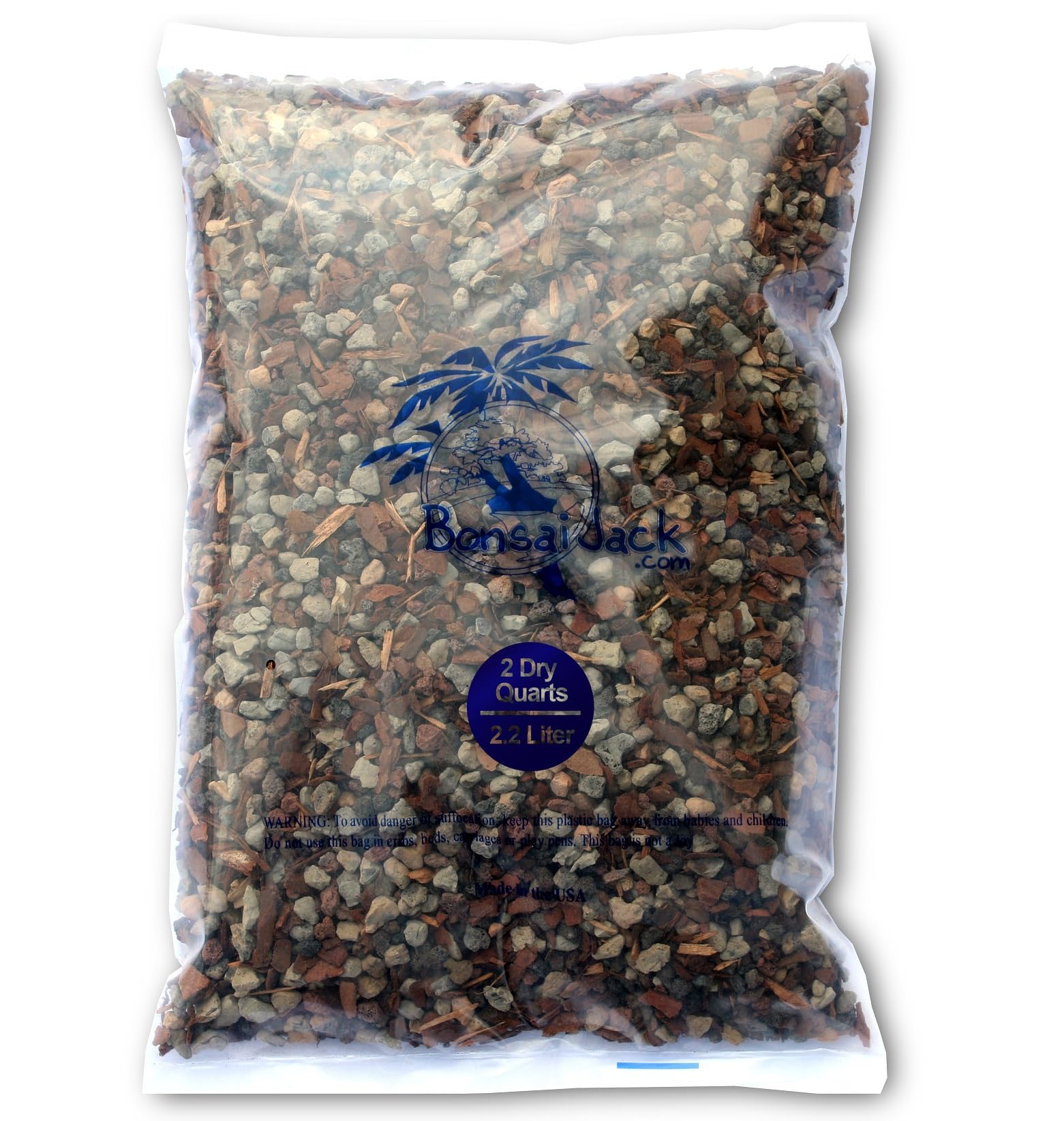
Bonsai Jack’s Mix #221 is a screened and pre-washed blend with a verified pH of 6.4, making it one of the few soils on the market where the pH is guaranteed rather than assumed. The blend uses a bark and soil base combined with calcined clay and other gritty aggregates to create a fast-draining, moisture-retentive environment suitable for tropicals and many deciduous species.
The pre-washing step removes fine organic dust that can clog pores in the bottom of a bonsai pot. Users report that the mix is remarkably consistent from bag to bag — a sign of quality control that smaller brands often lack. The particle sizes are uniform enough that you rarely need to sift before use. The bark component adds a slight acidity over time, which is beneficial for species like azalea but may require occasional monitoring for neutral-loving trees.
A long-term user with a three-year update noted that the mix holds enough water for full-sun trees and does not break down significantly over multiple seasons. It is not a substitute for high-end akadama in a refinement-phase tree, but for pre-bonsai, early training, and vigorous growers, it delivers consistent results at a fair price.
Why it’s great
- Verified pH 6.4 with consistent batch quality
- Pre-washed to remove dust and fines
- Does not break down significantly over multiple seasons
Good to know
- Bark component adds acidity over time
- Not ideal for refined trees needing pure inorganic mix
7. The Bonsai Supply Calcined Clay (2 Quarts)

This is a single-component product: high-fired calcined clay sifted to a consistent 1/8-inch particle size. Calcined clay is functionally similar to akadama but more durable and significantly cheaper. The high-firing process creates hard, porous granules that absorb water like a sponge and release it slowly to the roots while maintaining sharp edges that create air pockets in the soil profile.
The 2-quart stand-up pouch uses eco-friendly packaging and is easy to store between uses. This product is not a complete mix — it is a base aggregate that you blend with pumice, lava rock, or pine bark to create your own custom recipe. It is also an excellent choice as a soil component for succulents and cacti, giving you versatility beyond bonsai. The slight pink-red color is a natural result of the firing process and does not affect performance.
For growers who enjoy the control of mixing their own soil, this calcined clay provides a reliable, dust-free foundation at a price point that encourages experimentation. It is also the best option for anyone maintaining a large collection who needs a cost-effective bulk aggregate that performs consistently.
Why it’s great
- Hard-fired clay granules are extremely durable
- Low dust content and consistent 1/8-inch size
- Works as a bonsai base or succulent soil component
Good to know
- Must be mixed with pumice or lava for bonsai use
- Pink-red color may differ from traditional akadama appearance
FAQ
Can I use regular potting soil for my bonsai tree?
How often should I repot my bonsai and replace the soil?
What is akadama and do I need it for healthy bonsai?
Should I sift my bonsai soil even if the bag says pre-sifted?
Final Thoughts: The Verdict
For most users, the bonsai tree soil winner is the Espoma Organic Bonsai Mix because it offers double the volume of most competitors, requires no sifting, and works reliably for a wide range of species without breaking the bank. If you want a professional-grade blend for a conifer or finished tree, grab the Bonsai Outlet Premium Blend with its genuine akadama and double-sifted particles. And for builders who prefer total control over their mix, nothing beats the cost and durability of The Bonsai Supply Calcined Clay as a base aggregate.