
Our readers keep the lights on and the weekend projects moving. As an Amazon Associate, I earn from qualifying purchases.
The first few months with a newborn are a delicate dance of soothing, feeding, and sleep. A pacifier that doesn’t stay put, feels too rigid, or causes skin irritation adds frustration to an already exhausting schedule. Finding one that matches a tiny mouth’s anatomy and supports natural oral development is the real goal from day one.
I’m Rikta — the co-founder and writer behind FitlyFast. I’ve spent hundreds of hours analyzing material safety data, nipple geometry, shield designs, and parent-reported acceptance rates across dozens of models to separate marketing claims from what actually works for newborns.
This guide breaks down the top contenders for the smallest set of gums, covering silicone texture, shield flexibility, weight, and sterilization practicality. By the end, you’ll know exactly which 0-3 month pacifier suits your baby’s specific needs and your daily routine.
How To Choose The Best 0-3 Month Pacifier
Newborns have tiny mouths and sensitive skin, so the wrong pacifier can cause rejection, irritation, or even feeding confusion. The key is matching the design to your baby’s specific oral anatomy and your lifestyle. Focus on three core areas: material and nipple shape, shield ergonomics, and cleaning convenience.
Nipple Material & Shape
Silicone nipples are firm, hygienic, and odorless, making them the standard for most newborns. Latex rubber is softer and more flexible, mimicking the breast’s feel, but degrades faster and can cause allergies in rare cases. Symmetrical orthodontic nipples reduce pressure on developing gums and teeth. Round nipples, often seen in BIBS models, support a natural sucking reflex. Acceptance rates hovering around 94–98% in top brands show that texture and flexibility directly impact whether a newborn takes the pacifier or spits it out.
Shield Design & Weight
A curved, ventilated shield prevents skin irritation and allows air circulation around the nose and chin. Ultralight shields are easier for a 0–3 month old to keep in place, reducing the frustration of constant reinsertion. Models with rounded edges and flexible materials leave fewer red marks on delicate cheeks. A heavy shield can cause the pacifier to fall out as the baby moves, so weight is a quiet but critical spec.
Sterilization & Convenience
Newborn immune systems require frequent sterilization. One-piece silicone designs are the easiest to clean because there are no crevices for moisture or bacteria to hide. Two-piece pacifiers with latex nipples need careful hand-washing to avoid damage. Built-in sterilizing cases that work in a microwave cut down on steps, especially during late-night cleanings. Glow-in-the-dark features help you locate dropped pacifiers in the crib without turning on harsh lights that disrupt sleep.
Quick Comparison
On smaller screens, swipe sideways to see the full table.
| Model | Category | Best For | Key Spec | Amazon |
|---|---|---|---|---|
| Philips Avent Ultra Soft Nighttime | Silicone | Nighttime soothing with glow-in-the-dark caps | 80% plant-based materials; 98% nipple acceptance | Amazon |
| Philips Avent Ultra Soft Orthodontic | Silicone | Orthodontic support with gentle cheek pressure | Orthodontic symmetrical nipple; narrow neck design | Amazon |
| MAM Original Start | Silicone | Comfort fit for sensitive newborn skin | SkinSoft silicone; 94% acceptance rate | Amazon |
| MAM Comfort | Silicone | Exclusively breastfed babies and preemies | 32% lighter than other one-piece pacifiers | Amazon |
| Nanobebe | Silicone | Breastfeeding babies needing nipple transition | One-piece 100% silicone; contoured face fit | Amazon |
| BIBS 2-Pack (Sage Glow) | Latex | Natural rubber feel with Danish design | Natural rubber latex; round symmetrical nipple | Amazon |
| BIBS Liberty Soother | Latex | Designer look with natural latex flexibility | Natural rubber latex; Liberty print shield | Amazon |
In‑Depth Reviews
1. Philips Avent Ultra Soft Nighttime Pacifiers
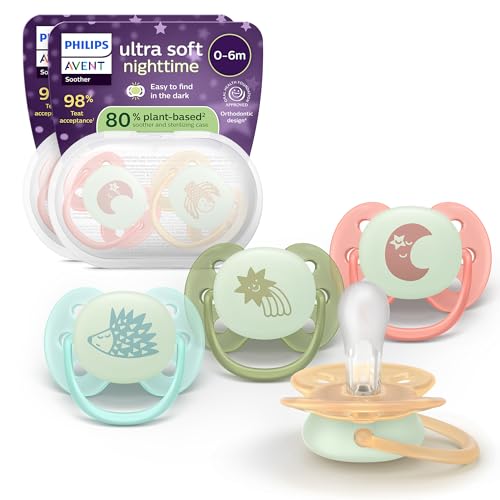
The Philips Avent Ultra Soft Nighttime set earns the top spot by solving the two biggest newborn pacifier frustrations: keeping it in at night and keeping it clean. The soft, flexible shield follows the natural contours of a baby’s face, reducing the red marks that plague less ergonomic designs. Each cap glows in the dark long after the lights go out, making midnight crib retrieval a quiet, eyes-closed operation.
The symmetrical silicone nipple has a narrow neck that minimizes pressure on delicate teeth and gums while the textured surface encourages latch. Parent reports indicate a 98% acceptance rate, which is among the highest in the category. The included cases double as microwave sterilizers, cutting CO2 emissions by half compared to electric steaming. Plant-based materials (80% renewable) also score points for eco-conscious households.
Durability holds up well through the first six months, though some parents note that once teeth emerge, the silicone can develop small holes. The 4-pack with two sterilizing cases provides generous rotation, and the loop on each pacifier easily clips to a holder without discomfort. For a balanced mix of comfort, convenience, and sustainability, this is the most complete package for the 0–3 month window.
Why it’s great
- Glow-in-the-dark caps simplify nighttime retrieval
- Microwave-sterilizable cases included for quick cleaning
- 98% nipple acceptance rate reported by parents
Good to know
- Nipple may develop holes once teething begins
- Cases require water and 3 minutes in microwave, not instant
2. Philips Avent Ultra Soft Orthodontic Pacifiers

This version of the Philips Avent Ultra Soft line focuses on orthodontic benefits, featuring a symmetrical nipple with a narrower neck that specifically reduces pressure on emerging teeth and gums. The shield is rounded and flexible to distribute cheek contact gently, which parents frequently mention as a relief from the deep red indentations caused by harder plastic designs. It works well for babies who need a bit more guidance in their oral development from the start.
The 98% acceptance rate holds here too, with the textured silicone nipple encouraging latch even for picky newborns. One standout difference is that the orthodontic design actively discourages the liquid buildup inside the nipple that plagues some competitors like BIBS, where condensation can form. Parents also note that the one-piece silicone construction simplifies cleaning, and the sterilizing cases (two included) make microwave sterilization straightforward without extra equipment.
Complaints about the Nighttime version—nipple holes after teeth—still apply, but the orthodontic focus makes this a smarter long-term investment for the 0–6 month span. The 4-pack provides enough rotation for heavy use, and the shield’s softness ensures that even extended soothing sessions don’t leave marks. For parents prioritizing jaw and gum health from day one, this is the specialized pick.
Why it’s great
- Orthodontic narrow neck reduces pressure on teeth and gums
- Super soft shield prevents cheek irritation and red marks
- No moisture or condensation buildup inside the nipple
Good to know
- Not glow-in-the-dark, unlike the Nighttime version
- Nipple may wear faster if baby starts teething early
3. MAM Original Start Baby Pacifiers
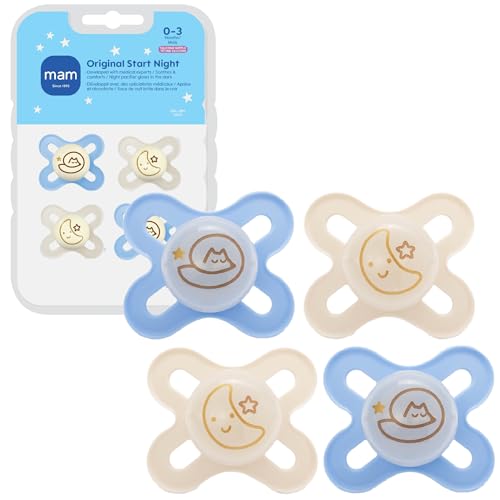
Developed in collaboration with orthodontists and pediatric dentists, the MAM Original Start is built specifically for smaller newborn mouths. The SkinSoft silicone nipple is thinner and more flexible than standard silicone, which earns the 94% acceptance rate from parents. The smaller, breathable curved shield is designed to leave room for tiny noses and minimize skin contact, reducing irritation for babies with sensitive complexions.
The glow-in-the-dark feature is embedded in the shield, not the cap, which means the entire pacifier is visible in low light. Parents consistently report that this pacifier stays in the baby’s mouth longer than other options, likely due to the lightweight shield and the breast-like latch feel of the nipple. Dimples inside the shield further protect the skin by raising the surface slightly off the face, preventing moisture buildup.
Manufactured in Europe, the MAM Original Start exceeds both American and European safety standards. The symmetrical nipple has no right-side-up orientation, so reinsertion during sleepy moments is foolproof. Some parents mention that the glow effect is not as bright as the Philips Avent cap design, but it is still functional for locating in the crib. For a pacifier that balances orthodontic input with skin comfort, this is a strong contender.
Why it’s great
- SkinSoft silicone mimics breastfeeding latch and reduces rejection
- Breathable curved shield with dimples minimizes skin irritation
- Glow-in-the-dark shield helps with nighttime location
Good to know
- Glow brightness is moderate, not as strong as cap-based designs
- Nipple is quite soft; may wear faster than firmer silicone options
4. MAM Comfort Baby Pacifier
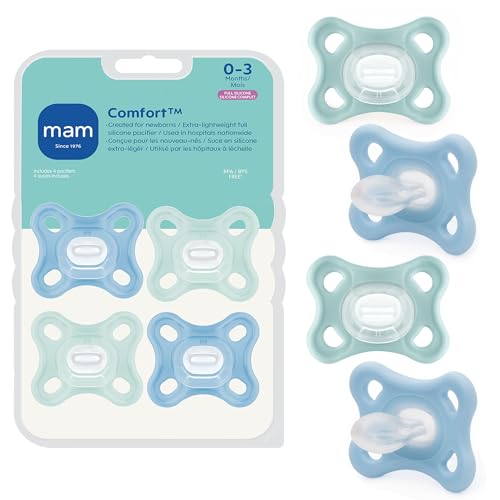
The MAM Comfort is specifically designed with exclusively breastfed (EBF) babies in mind, and the reviews confirm this focus. It is 32% lighter than other one-piece pacifiers, which makes it easier for newborns to keep it in their mouths without constant readjustment. The one-piece construction uses flexible medical-grade silicone, eliminating the crevices that trap milk or moisture in two-piece designs.
The symmetrical nipple adheres to the American Academy of Pediatricians guidelines and was developed with orthodontists and pediatric dentists. A unique fingerhold design allows the parent to place a finger inside the nipple, which is helpful for bonding and for guiding the pacifier into a newborn’s mouth during early attempts. Distributed in hospitals nationwide, the Comfort version is a clinical favorite for preemies.
Parents of EBF babies repeatedly mention that their children reject all other pacifiers but accept this one. The lightweight nature also reduces the risk of the pacifier falling out during sleep. The main trade-off is the absence of a glow-in-the-dark feature or a sterilizing case, meaning you will need a separate sterilization solution. For a dedicated breastfeeding tool that prioritizes weight and simplicity, this is the top option.
Why it’s great
- 32% lighter than average, staying in place more easily
- One-piece silicone design simplifies sterilization
- Fingerhold feature aids parent-baby bonding during use
Good to know
- No glow-in-the-dark feature or sterilizing case included
- Lightweight shield may not suit babies who prefer more substantial feel
5. Nanobebe Baby Pacifiers
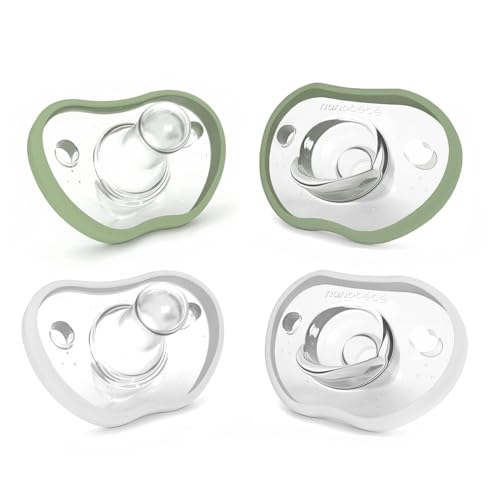
Nanobebe markets this pacifier as an award-winning option for breastfed babies, and the one-piece 100% silicone construction delivers on that promise. The ergonomic shield curves comfortably around the baby’s face, nose, and chin, resting snugly enough to stay in place without constant reinsertion. The silicone is ultra-soft and skin-like, designed to eliminate nipple confusion by mimicking the feel of the mother’s breast during feedings.
Parents of exclusively breastfed infants frequently highlight that the Nanobebe passes the “triangle test”—a method orthodontists recommend to check that a pacifier does not interfere with breastfeeding latch. The one-piece design eliminates the water-trapping crevices found in two-piece latex pacifiers, making sterilization by boiling or dishwasher straightforward. The orthodontic shape also supports healthy jaw and palate development.
The 4-pack comes in neutral tones (Sage and White) that avoid overly “baby” color schemes. Some parents note that the shield holes can occasionally catch a baby’s thumb during car rides, though this is a rare occurrence. For breastfeeding families looking for a pacifier that transitions smoothly from bottle to soothing, the Nanobebe offers a reliable, parent-tested solution.
Why it’s great
- One-piece 100% silicone with no moisture-trapping crevices
- Passes the triangle test for breastfeeding latch compatibility
- Ergonomic face-contour shield stays put without red marks
Good to know
- Shield hole may catch baby’s thumb in rare cases
- Not glow-in-the-dark, daytime-only design
6. BIBS Pacifiers 0-6 Months 2-Pack

With over 40 years of Danish design heritage, BIBS offers a natural rubber latex nipple that is softer and more flexible than standard silicone. The round symmetrical shape mimics the breast’s natural contour, and many parents report that this is the only pacifier their breastfed baby will accept. The lightweight shield features ventilation holes to reduce moisture buildup, and the shield is available in a range of muted, modern colors.
The natural latex material does not attract hair or lint the same way silicone does, staying cleaner in the crib. However, latex is less durable than silicone: it can swell or melt if boiled, and teeth can damage it faster. The glow-in-the-dark version (Sage Glow/Cloud Glow) is a welcome addition for nighttime use, though the glow is embedded in the shield rather than a cap, so it is less bright than the Philips Avent solution.
Parents with lip-tied babies sometimes find the large bulb shape harder to hold, but most newborns adapt quickly. The 2-pack provides minimal rotation compared to 4-pack options, so you will likely need to purchase multiple sets. For families who prioritize a soft, breast-like feel and Scandinavian design quality, BIBS delivers a premium tactile experience.
Why it’s great
- Natural latex is softer and more flexible than silicone
- Latex resists attracting hair and lint better than silicone
- Glow-in-the-dark shield available for nighttime convenience
Good to know
- Latex wears faster and cannot be boiled (only hand-washed)
- 2-pack provides less rotation; multiple sets needed for heavy use
7. BIBS Liberty Soother 2-Pack
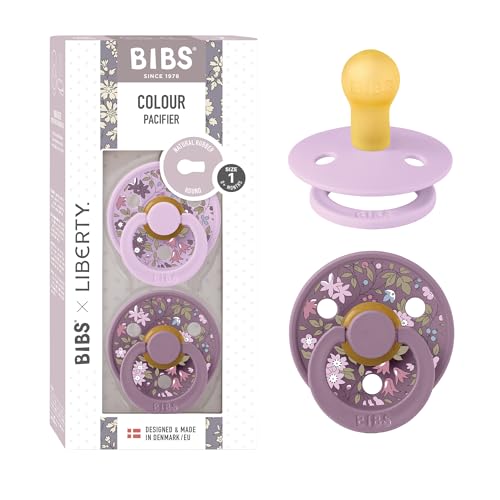
The BIBS Liberty Soother combines the brand’s signature natural latex nipple with exclusive Liberty London prints, creating a pacifier that is as much an accessory as a soothing tool. The round latex nipple closely resembles the flexible movement of a mother’s breast during breastfeeding, supporting a natural sucking instinct. The lightweight plastic shield has ventilation holes to keep the mouth area dry and reduce irritation.
Parents consistently note that the Liberty Soother is the only pacifier their baby will accept, with repeated mentions of high build quality and the absence of plastic or silicone taste. The latex does withstand teething chewing better than expected, though it still wears faster than silicone. The 2-pack allows for light rotation, but at this premium tier, you pay more per unit than the mid-range options.
One minor quality complaint some parents report is that the nipple can occasionally appear slightly crooked out of the packaging, though this typically does not affect function. The availability in two sizes (Size 1 for 0–6 months) ensures a good fit from birth. For style-conscious parents who want a pacifier that feels like a natural extension of breastfeeding and looks beautiful on the go, this is the premium statement choice.
Why it’s great
- Exclusive Liberty prints offer unique designer aesthetic
- Natural latex nipple supports breastfeeding latch and feel
- High-quality construction with no plastic or silicone taste
Good to know
- Nipple may appear slightly crooked in some units
- Latex is less durable than silicone and needs replacement every 4–6 weeks
FAQ
Will a pacifier at this age cause nipple confusion for my breastfed baby?
How do I sterilize a latex pacifier without damaging it?
Why does my newborn keep spitting the pacifier out?
How often should I replace pacifiers for a 0-3 month old?
Final Thoughts: The Verdict
For most users, the 0-3 month pacifier winner is the Philips Avent Ultra Soft Nighttime because it combines a 98% acceptance rate, glow-in-the-dark caps, and two microwave-sterilizable cases in one affordable 4-pack. If you want dedicated orthodontic support for jaw health, grab the Philips Avent Ultra Soft Orthodontic. And for an exclusively breastfed baby needing a lightweight, hospital-approved design, nothing beats the MAM Comfort.