
Our readers keep the lights on and the weekend projects moving. As an Amazon Associate, I earn from qualifying purchases.
Selecting a mulch for your vegetable garden is a decision that directly impacts soil biology, moisture retention, and the nutrient density of your harvest. The wrong choice can introduce weed seeds, rob nitrogen from the soil as it decomposes, or fail to break down in time for the next planting season.
I’m Rikta — the co-founder and writer behind FitlyFast. I’ve spent hundreds of hours cross-referencing organic certifications, particle-size grading, and real-world breakdown rates across brands to find the bagged mulches that truly feed a veggie bed rather than just decorate it.
Whether you need a fast-acting compost top-dress or a long-lasting straw blanket, this breakdown of the best bagged mulch for vegetable garden use will help you match the right product to your specific growing goals.
How To Choose The Best Bagged Mulch For Vegetable Garden
Not all bagged mulches are created equal when it comes to edibles. You need a product that will break down into usable humus without competing with your crops for nitrogen. Start by checking for OMRI (Organic Materials Review Institute) certification — this ensures the product contains no synthetic pesticides, herbicides, or GMOs. Next, consider the material type: compost-based mulches feed soil microbes and add nutrients quickly, while straw-based options insulate the soil and suppress weeds over a longer period. Finally, particle size matters — finer particles integrate faster but may need more frequent reapplication, whereas coarse materials last longer but can be harder to work around tender seedlings.
Organic Certification and Safety for Edibles
Unlike decorative bark sold for landscaping, bagged mulches labeled for vegetable gardens must meet stricter purity standards. OMRI listing is the gold standard — it confirms the product is free from synthetic chemicals that could leach into your tomatoes or peppers. Products like the Wiggle Worm Worm Castings and Blue Ribbon Organics Compost carry this certification, giving you peace of mind that every nutrient going into the soil is plant-safe.
Moisture Retention vs. Nutrient Delivery
A mulch layer’s primary job is to hold moisture at the root zone, but a secondary benefit is slow-release feeding. Straw mulches (like HealthiStraw) excel at moisture conservation — they can reduce watering by up to 50 percent — but add minimal nitrogen. Compost-based mulches (like the R&M Organics or Espoma blends) deliver a direct nutrient boost but may dry out faster on the surface. Many experienced gardeners layer a thin compost base under a straw top-dressing to get the best of both worlds.
Bag Size and Value Per Square Foot
Bag weights range from 10 pounds to 40 pounds, and cubic-foot volume varies just as much. A 1-cubic-foot bag covers roughly 12 square feet at a 1-inch depth — enough for a small raised bed. For larger plots, a 3-cubic-foot compressed bale of straw goes much further. Always calculate the depth you need (2 to 3 inches for weed suppression) and multiply by your bed’s square footage before buying multiple bags. Buying in larger single-bag volumes often yields better value per square foot than piling up smaller bags.
Quick Comparison
On smaller screens, swipe sideways to see the full table.
| Model | Category | Best For | Key Spec | Amazon |
|---|---|---|---|---|
| Wiggle Worm Worm Castings | Living Soil | Microbial boost & root health | 40 lb bag with worm egg material | Amazon |
| Blue Ribbon Organics Compost | Premium Compost | Fine-textured soil amendment | 7.9 gal bag, OMRI certified | Amazon |
| Espoma Land & Sea Compost | Crustacean Meal | Nutrient-dense transplant mix | 24 lb bag with lobster & crab meal | Amazon |
| HealthiStraw GardenStraw | Straw Mulch | Long-lasting weed suppression | 3 cu ft compressed bale | Amazon |
| Back to the Roots Organic Mulch | Peat-Free | Eco-friendly raised bed mulch | 1 cu ft, wood fines & yucca extract | Amazon |
| BRUT Worm Farms Cow Compost | Manure Compost | Gentle nitrogen-rich top dressing | 10 qt bag, odor-free & OMRI listed | Amazon |
| R&M Organics Premium Compost | Manure Compost | All-purpose soil amendment | 10 lb bag, 5:1 mixing ratio | Amazon |
In‑Depth Reviews
1. Wiggle Worm Worm Castings
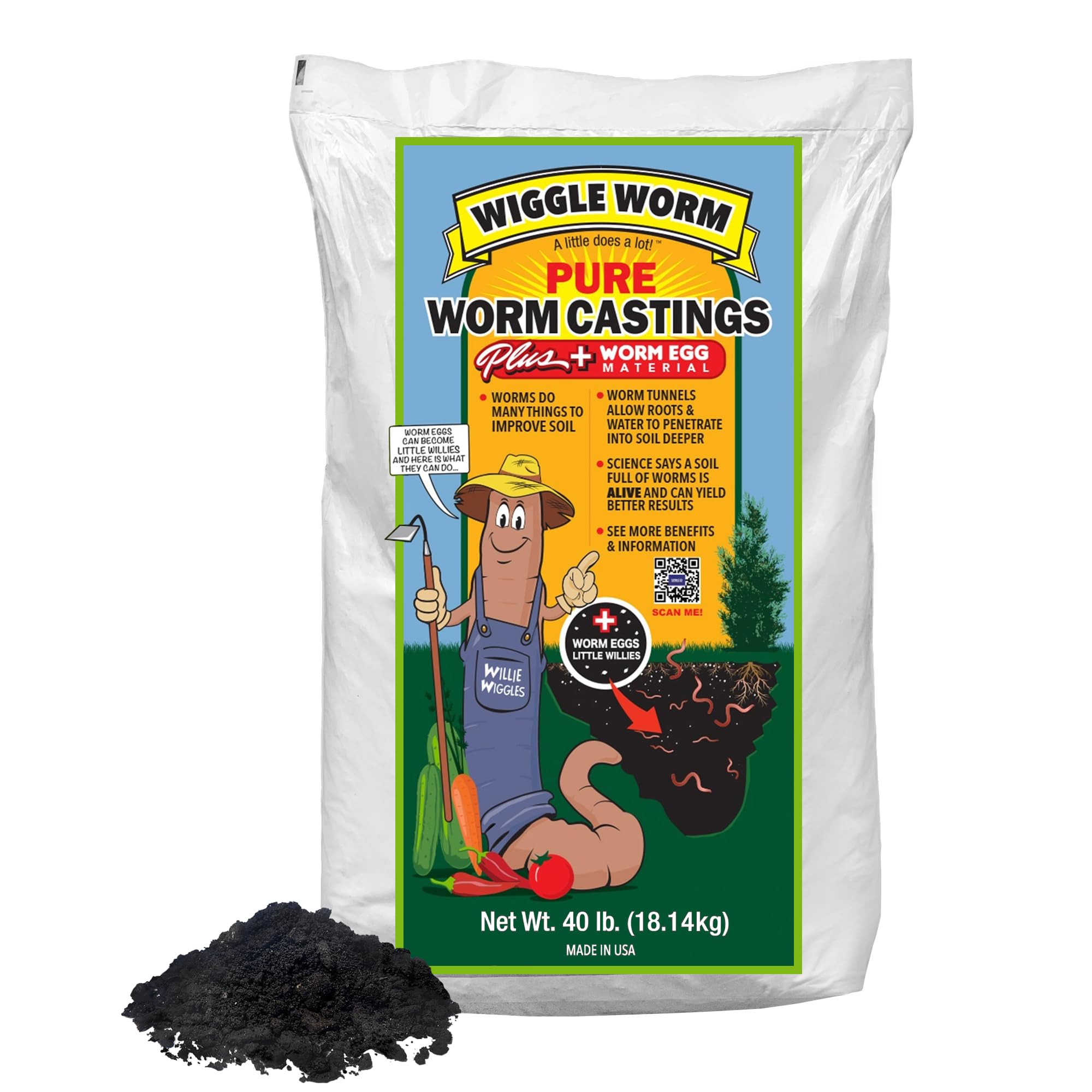
Wiggle Worm delivers 100 percent pure worm castings plus worm egg material — a living soil amendment that introduces beneficial microbes and ongoing biological activity directly into your vegetable bed. The finely sifted texture mixes easily into potting soil or top-dresses around tomatoes and peppers without clumping or odor.
Real gardeners report that this product transformed harsh desert soil, enabling gardenias and strawberries to survive triple-digit summers and freezing winters. The worm eggs can hatch in moist soil, creating a self-sustaining population that continues to aerate and enrich the root zone long after application.
The 40-pound bag covers significant ground for a small to medium raised bed, and the absence of filler material means every pound is active biology rather than inert bulk. This is the benchmark product for anyone serious about building living soil in an edible garden.
Why it’s great
- Pure worm castings with no filler — 40 lb of active biology per bag
- Worm egg material can hatch and create a self-sustaining soil system
- Odorless and safe even around tender seedlings and transplants
Good to know
- Heavy bag at 40 pounds — may be difficult to maneuver for some
- Small rocks can occasionally pass through the sifting process
2. Blue Ribbon Organics OMRI Certified Compost

Blue Ribbon Organics produces what regular buyers call “black gold” — a dark, earthy-smelling compost that is OMRI certified for organic vegetable production. The 7.9-gallon bag contains a finely screened product with no debris, making it ideal for augmenting raised beds and container-grown edibles.
Users in Southern California note that this compost avoids the fungus gnats and water-repellent issues common with cheap big-box brands. It moistens easily and blends well with perlite and bark for a lightweight, nutrient-dense potting mix. The rich color indicates a high humus content that feeds soil biology immediately.
The smaller bag size targets gardeners with moderate beds or container setups rather than large-scale plots. If your priority is a clean, consistent compost that delivers predictable results without contaminants, this is a top contender for the best bagged mulch for vegetable garden application.
Why it’s great
- OMRI certified — fully safe for organic vegetable gardens
- Fine, debris-free texture ideal for containers and raised beds
- No odor or water repellency issues common with low-grade compost
Good to know
- Bag volume is smaller than many bulk options at 7.9 gallons
- Premium pricing per cubic foot compared to local landscape suppliers
3. Espoma Organic Land and Sea Gourmet Compost

Espoma’s Land and Sea compost stands out for its unique inclusion of lobster and crab meal — crustacean shells that pack a slow-release punch of calcium and chitin. The chitin naturally encourages soil bacteria that can suppress fungal pathogens, making this a smart choice for disease-prone heirloom tomatoes or squash.
The 24-pound bag contains a proprietary Myco-Tone blend of endo and ecto mycorrhizae, which form symbiotic relationships with vegetable roots to improve water and nutrient uptake. Users report excellent results with hostas, peppers, and herbs when used as a transplant mix or side dressing.
Because the crustacean meal gives it a distinct marine scent, this is best used outdoors rather than in indoor container gardens. For outdoor vegetable beds, the dual-action nutrition and disease-suppression properties make it a highly specialized option within the best bagged mulch for vegetable garden category.
Why it’s great
- Lobster and crab meal deliver slow-release calcium and chitin for disease suppression
- Includes Myco-Tone mycorrhizae for enhanced root symbiosis
- Rich granule texture integrates well with native soil around transplants
Good to know
- Marine scent may be noticeable in enclosed spaces
- Not suitable as a top-dressing mulch if you prefer a uniform look
4. HealthiStraw GardenStraw
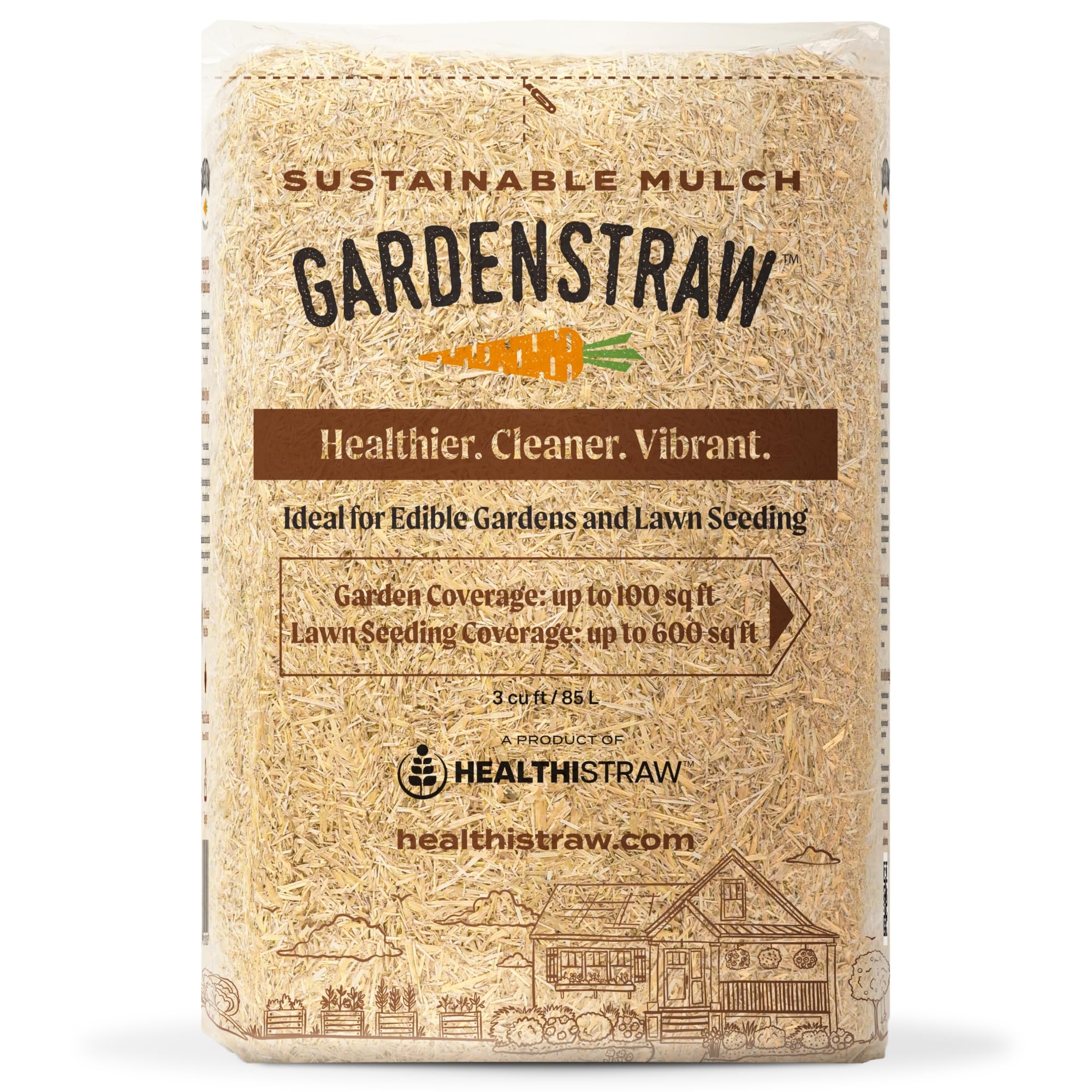
HealthiStraw GardenStraw is a compressed 3-cubic-foot bale of 100 percent non-GMO wheat straw, naturally filtered to remove dust, dirt, and as many weed seeds as possible. The rough-cut straw fibers interlock when watered, resisting wind blow-off and heavy rain without chemical binders.
Users highlight its exceptional coverage — one bale can cover up to 100 square feet at a 2- to 3-inch depth, ideal for larger vegetable gardens. The straw breaks down over a growing season, contributing carbon to your compost pile and improving soil structure without robbing nitrogen.
A few users report trace grass seeds in the bale, though far fewer than generic straw bales from feed stores. For weed suppression and moisture conservation — especially during hot summer months — this is the most practical option among the best bagged mulch for vegetable garden products.
Why it’s great
- Compressed bale covers up to 100 sq ft at effective 2–3 inch depth
- Interlocking straw fibers stay put without chemical binders
- Reduces watering needs by approximately 50 percent
Good to know
- Some users note occasional grass seeds in the bale
- Bulkier than compost bags — requires storage space before use
5. Back to the Roots Organic Premium Mulch

Back to the Roots takes an eco-conscious approach with a 100 percent organic, peat-free mulch made from upcycled wood fines. The formula includes yucca extract for moisture control, dolomitic limestone to balance pH, and gypsum to improve water absorption — all in a single 1-cubic-foot bag.
Intended specifically for raised bed vegetable gardens, this mulch blend provides a dark, clean aesthetic that winterizes plants well. Users praise its ease of use — simply cut the bag open and pour — and note that it stays in place without floating away during heavy rain.
The primary drawback reported is value perception: some users feel the price per bag is higher than similar products available at local garden centers. For those who prioritize peat-free sourcing and a ready-to-use organic blend, however, this is a solid mid-range pick.
Why it’s great
- 100 percent peat-free and organic — reduces environmental impact
- Yucca extract and gypsum improve moisture and water absorption
- Proudly made in the USA from upcycled plant materials
Good to know
- Price per cubic foot is higher than some big-box competitors
- Best suited for raised beds rather than in-ground plots
6. BRUT Worm Farms Cow Compost

BRUT Worm Farms offers a 100 percent pure composted cow manure that is OMRI listed, additive-free, and carefully aerated to eliminate strong odors. The finely sifted texture is gentle on roots — no risk of burning seedlings — and delivers nitrogen, calcium, and iron in a form vegetables can access quickly.
First-time growers report remarkable results mixing this at a 3:2 ratio with standard potting soil: tomato seeds planted March 1st produced vigorous transplants by late April. The compost also works well as a top dressing for roses and flower beds, not just vegetables.
The 10-quart bag is compact, making it a convenient entry-level option for small garden beds or container veggies. While the bag size limits its use for large plots, the quality of the compost itself rivals far more expensive products, earning it a stable spot among the best bagged mulch for vegetable garden options.
Why it’s great
- OMRI listed — fully organic and safe for edible crops
- Zero odor and no plant-burn risk, even for delicate seedlings
- Fine sifted texture blends seamlessly into existing soil
Good to know
- Compact 10-quart bag is best suited for small beds or containers
- Premium-priced per volume compared to bulk manure options
7. R&M Organics Premium Organic Compost
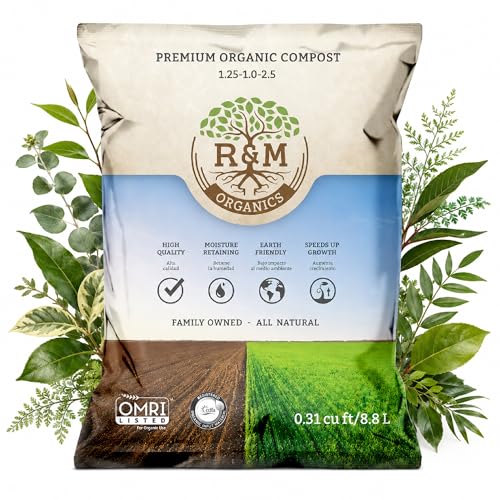
R&M Organics Premium Compost is a dairy cow manure-based soil amendment processed through a complete aeration system to reduce odor and impurities. The result is a clean, earthy material that can be applied as a thin quarter-inch layer around plants or mixed into soil at a 5:1 ratio for new beds.
Users share specific success stories: a Master Gardener recommended it to rescue azaleas damaged by a roof-washing chemical, and a tomato plant with yellow leaves and spindly stems turned green and began producing flower buds within a week. The compost is fine and topsoil-like with no clumps, making it easy to spread by hand.
The 10-pound bag is compact enough for small-space gardeners who need a quick fix for a struggling plant or a nutrient boost for a single raised bed. For anyone new to working with compost-based mulches, this is a reliable starting point that delivers visible results fast.
Why it’s great
- Nutrient-rich dairy cow manure compost with low odor
- Revives stressed plants quickly — visible turnaround within a week
- Fine, clump-free texture for even spreading around delicate crops
Good to know
- 10-pound bag covers limited area — best for small beds or targeted feeding
- Not OMRI listed, so may not suit strict organic growers
FAQ
Can I use bagged mulch intended for landscaping in my vegetable garden?
How deep should I apply bagged compost mulch around tomato plants?
Will bagged straw mulch introduce weed seeds into my garden?
Can I mix different bagged mulches together for better results?
Final Thoughts: The Verdict
For most users, the bagged mulch for vegetable garden winner is the Wiggle Worm Worm Castings because it provides living biology, safe organic certification, and long-term soil-building value in one bag. If you want a fine-textured compost amendment with guaranteed purity, grab the Blue Ribbon Organics Compost. And for extensive weed suppression and water conservation in larger plots, nothing beats the HealthiStraw GardenStraw.