
Our readers keep the lights on and the weekend projects moving. As an Amazon Associate, I earn from qualifying purchases.
Mud, rock, gravel, and root — the wrong tread or cushioning setup turns a promising run into a frustrating slip-fest. The best all-terrain running shoes balance aggressive outsole grip with ride comfort that doesn’t punish your joints on hard-packed sections. That balance is harder to find than most runners expect.
I’m Rikta — the co-founder and writer behind FitlyFast. I’ve spent hundreds of hours analyzing outsole lug patterns, midsole foam densities, stack heights, and waterproof membranes to understand what separates a capable hybrid shoe from one that compromises on both road and trail.
Whether you’re tackling technical singletrack or mixing pavement with packed dirt, the right pair keeps you stable and comfortable mile after mile. This guide breaks down the top contenders to help you find the best all-terrain running shoes for your specific routes and foot shape.
How To Choose The Best All-Terrain Running Shoes
Picking a shoe for mixed terrain means weighing grip against comfort, durability against weight. The right choice depends on the surfaces you run most and your foot’s natural mechanics. Focus on these four areas to narrow the field.
Outsole Grip and Lug Pattern
Lug depth and spacing directly control how a shoe bites into loose dirt, mud, or wet rock. Aggressive, widely spaced lugs (4mm or deeper) excel on soft trails but feel unstable on pavement. Low-profile, tightly packed lugs transition better between road and trail but sacrifice purchase in slick conditions. Look for a directional chevron pattern if you tackle steep descents.
Cushioning and Stack Height
Stack height (the distance from your foot to the ground) affects both protection and stability. High-stack shoes (30mm+) absorb shock well but feel tippy on uneven rock gardens. Lower stacks (20-25mm) offer better ground feel and stability for technical terrain but provide less impact protection for long road stretches. Mid-range cushioning around 25mm is the sweet spot for most all-terrain runners.
Drop and Foot Strike
Heel-to-toe drop influences your stride mechanics. Zero-drop shoes (0mm) encourage a midfoot strike and mimic barefoot running, which strengthens feet but stresses calves. Traditional drops (8-12mm) favor heel-strikers and feel more natural for road runners transitioning to trails. Most all-terrain shoes settle between 4mm and 8mm for a balanced ride.
Upper Durability and Protection
The upper needs to resist abrasion from rocks and brush while allowing debris to escape. Reinforced mesh or ripstop nylon handles trail abuse better than thin knit. Look for a protective toe cap and a gusseted tongue to keep out sand and pebbles. If you run in wet conditions, consider a waterproof membrane, but understand that it reduces breathability and slows drying when soaked.
Quick Comparison
On smaller screens, swipe sideways to see the full table.
| Model | Category | Best For | Key Spec | Amazon |
|---|---|---|---|---|
| Brooks Cascadia 19 | Premium | Technical trail & ultramarathon | 4mm lugs, 22mm stack | Amazon |
| ALTRA Lone Peak 9 | Premium | Wide feet & zero-drop | 0mm drop, 25mm stack | Amazon |
| adidas Terrex Soulstride Rain.rdy | Mid-Range | Wet-weather trail running | RAIN.RDY waterproof membrane | Amazon |
| Merrell Speed Strike 2 | Mid-Range | Hybrid hiking & running | Sticky rubber outsole | Amazon |
| New Balance Fresh Foam X Garoé V2 | Mid-Range | Plush cushioning on mixed terrain | Fresh Foam X, 6mm drop | Amazon |
| New Balance Dynasoft Tektrel V1 | Budget | Daily walking & light trails | Dynasoft midsole, suede upper | Amazon |
| Columbia Vertisol Trail | Budget | Casual wear & pavement | Engineered underfoot, traction rubber | Amazon |
In‑Depth Reviews
1. Brooks Men’s Cascadia 19 Mountain Trail Running Shoe
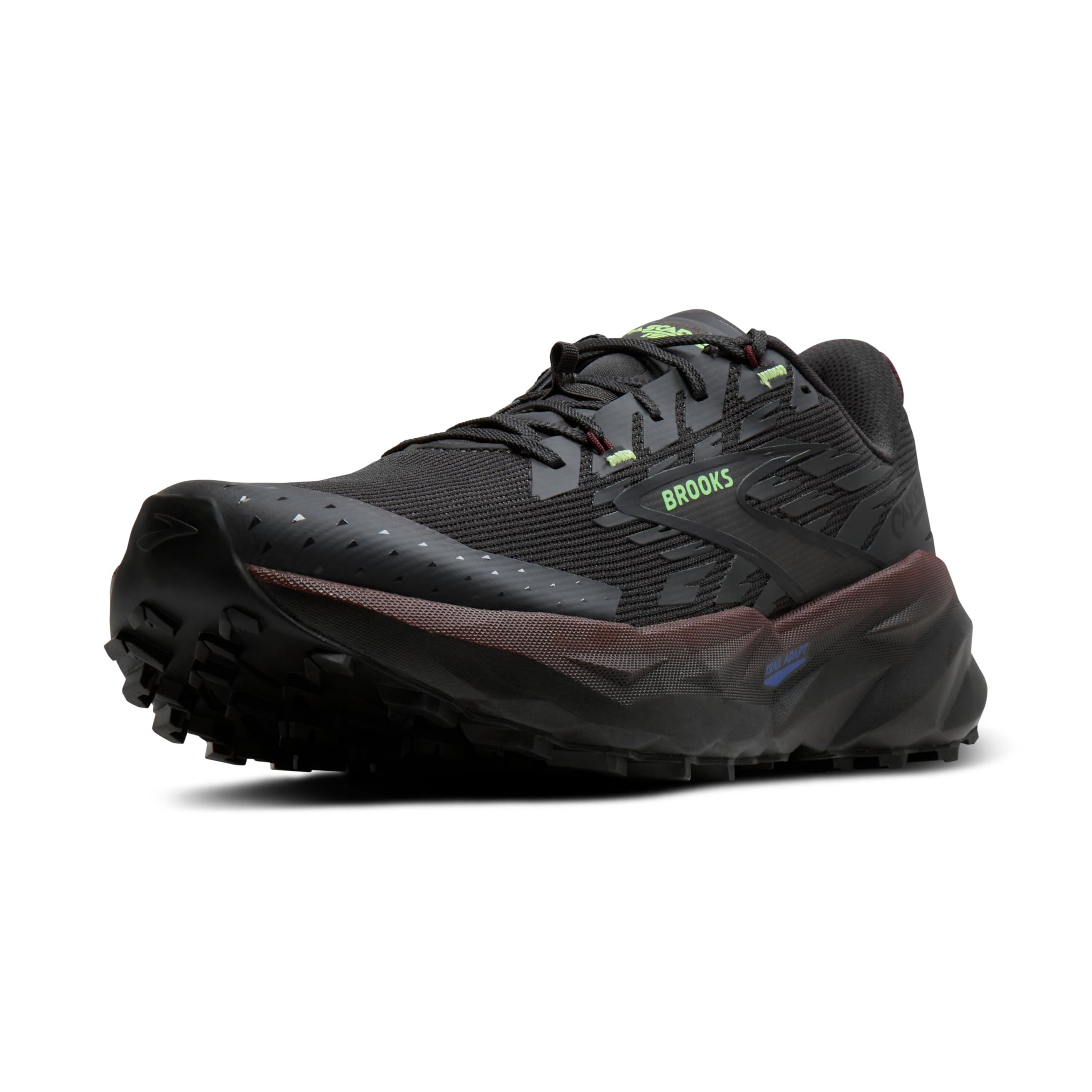
The Brooks Cascadia 19 earns the top spot for its exceptional stability on technical terrain. The wide platform and 4mm lugs provide reliable grip on loose rock and steep descents without compromising the neutral ride that prevents ankle rolling. Testers report the midsole holds up well beyond 150 miles, including a full 50K ultramarathon, which speaks to the durability of the PDRB shank and DNA Loft cushioning.
Fit is true to Brooks sizing, with a medium width that accommodates most foot shapes. The breathable mesh upper resists abrasion, though the lugs could be more aggressive for deep mud. The outsole traction is competent on hard-pack and dry rock, but runners who regularly face sloppy conditions may want a dedicated mud shoe.
At a premium price point, the Cascadia 19 is an investment for runners who prioritize stability and comfort over raw speed. The neutral ride and excellent arch support make it a strong choice for long days on mixed terrain, and the overall construction feels reassuringly solid straight out of the box.
Why it’s great
- Wide platform prevents ankle rolling on technical trails
- Reliable grip on dry rock and hard-pack
- Proven durability over 150+ miles
Good to know
- Lugs could be more aggressive for deep mud
- Premium price point
2. ALTRA Men’s Lone Peak 9 Trail Running Shoe
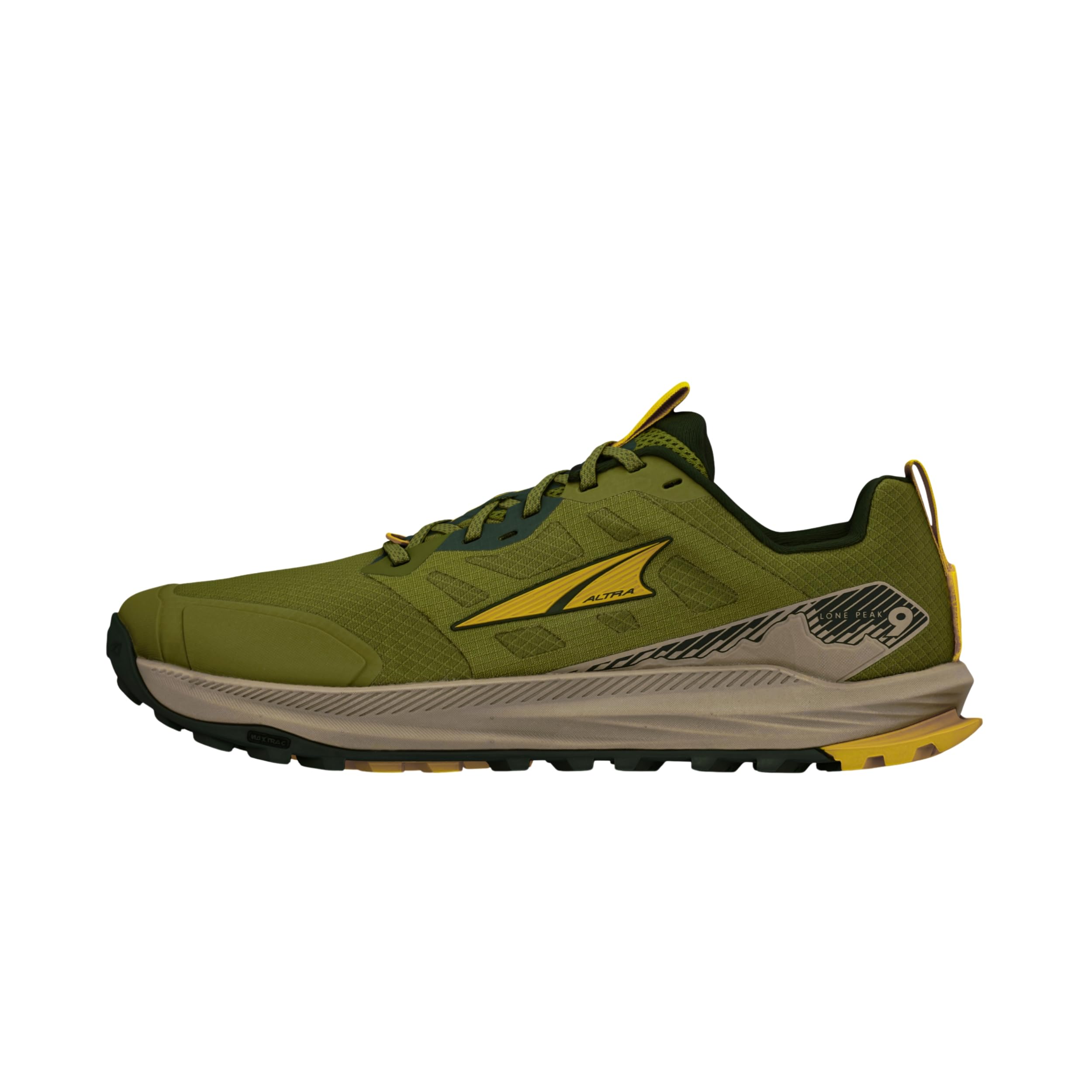
The ALTRA Lone Peak 9 is the definitive choice for runners who need a spacious toe box and a zero-drop platform. The FootShape design allows toes to splay naturally, which improves balance on uneven ground and reduces the risk of blisters on long runs. The MaxTrac outsole delivers sticky grip on mud, rock, and snow, while the 25mm stack height provides moderate cushioning with excellent ground feel.
Users report that the Lone Peak 9 runs large, so sizing down a half size is common advice. The roomy fit accommodates thick socks for cold-weather runs and makes room for custom orthotics. The revised upper uses recycled ripstop mesh that improves durability over previous versions, and the Stoneguard insert protects against sharp debris without feeling stiff.
The zero-drop design takes adjustment for runners used to traditional heel-to-toe drops. Transition slowly to avoid calf strain. For those who prefer a natural, minimalist stride with ample toe room, the Lone Peak 9 is a standout that handles everything from daily walks to multi-day backpacking trips.
Why it’s great
- Roomy toe box reduces blister risk on long runs
- Excellent MaxTrac grip on varied terrain
- Durable recycled ripstop upper
Good to know
- Runs large; size down a half
- Zero-drop requires transition period
3. adidas Women’s Terrex Soulstride Rain.rdy Trail Running Shoes
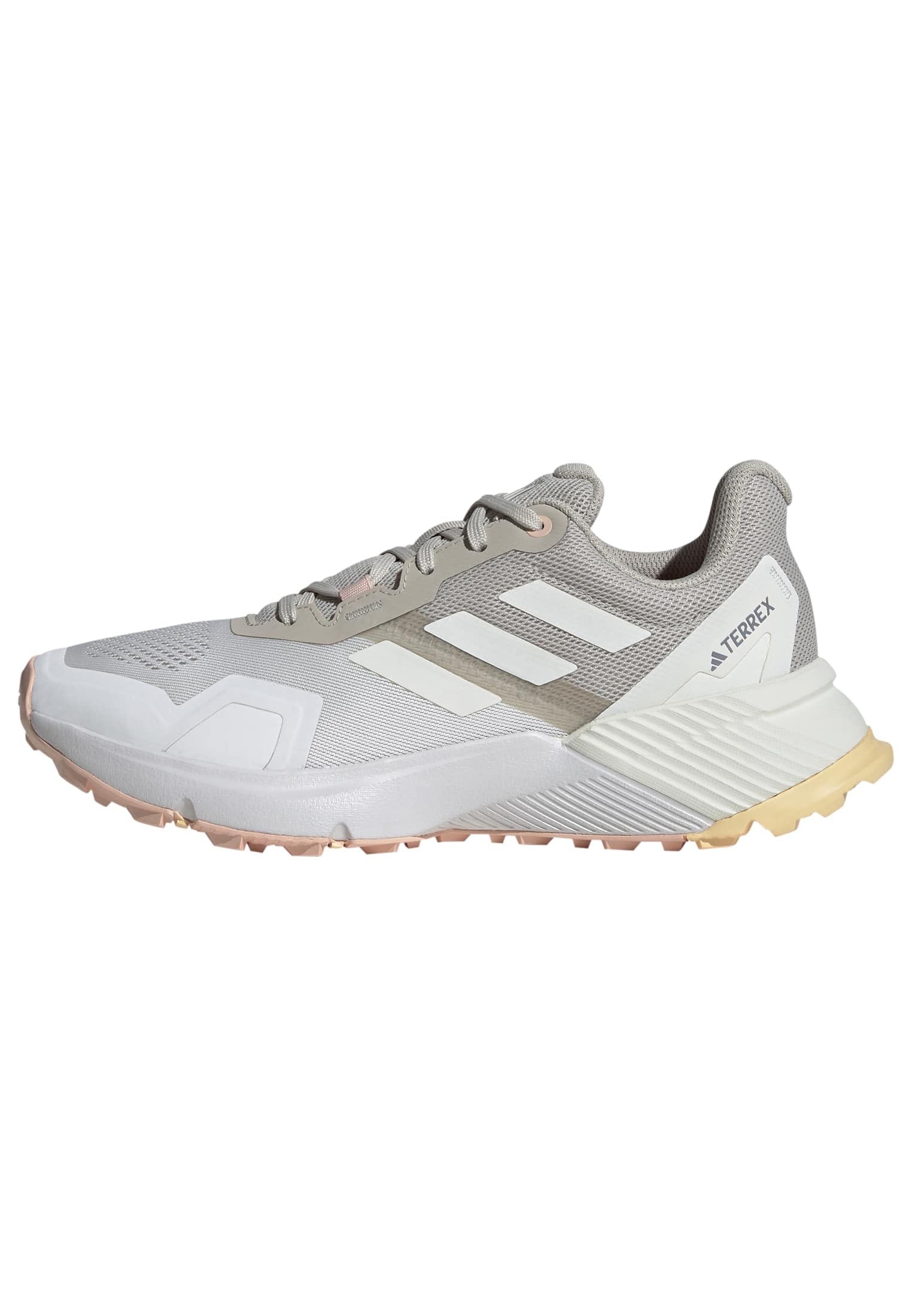
The adidas Terrex Soulstride Rain.rdy is built for runners who refuse to let wet weather cut their run short. The RAIN.RDY upper offers reliable waterproofing that keeps feet dry during light rain and puddle splashes, while the lightweight mesh maintains decent breathability for its category. The EVA midsole delivers consistent cushioning without feeling mushy, and the grippy rubber outsole handles slick paths with confidence.
Fit is true to size, though the shoe runs narrow, so those with wider feet should consider sizing up or trying the standard width. The heel design is notably supportive, with one reviewer over 76 reporting pain-free two-mile walks despite chronic conditions. The aggressive tread pattern provides good traction on loose soil and grass, but minimal water resistance limits performance in heavy downpours.
The mid-range price point makes this a practical choice for road-to-trail runners who face frequent rain. The bulkier heel may feel clunky to speed-oriented runners, but the stability and cushioning are ideal for recovery runs and casual trail exploring in damp conditions.
Why it’s great
- Effective RAIN.RDY waterproofing for light rain
- Supportive heel design for stability
- Comfortable EVA cushioning throughout the run
Good to know
- Runs narrow; not ideal for wide feet
- Minimal water resistance in heavy rain
4. Merrell Men’s Speed Strike 2

The Merrell Speed Strike 2 strikes an impressive balance between a lightweight running shoe and a capable hiker. The durable outdoor mesh upper is breathable and resists trail debris, while the sticky rubber outsole provides reliable traction on dry rock, packed dirt, and even metal roofs. At roughly 1.5 pounds per pair, it feels nimble enough for 20-30 mile weekly runs yet sturdy enough for scrambling on class 2 terrain.
Break-in is quick, with most wearers reporting comfort straight out of the box. The midsole offers moderate cushioning that works for both running and hiking, though heavier runners may want more support underfoot. The Speed Strike 2 accepts Superfeet green inserts, which improves arch support for those who need it. Sizing runs slightly small initially but relaxes after a few wears.
The main trade-off is the lack of waterproofing. The mesh upper dries quickly when wet, but rain and stream crossings will soak through. For dry-weather hybrid use, the Speed Strike 2 is a versatile workhorse that outperforms its mid-range price would suggest.
Why it’s great
- Lightweight balance between running shoe and hiker
- Sticky rubber outsole with excellent traction
- Quick break-in with room for custom orthotics
Good to know
- Not waterproof
- Moderate cushioning may not suit heavy runners
5. New Balance Men’s Fresh Foam X Garoé V2 Trail Running Shoe
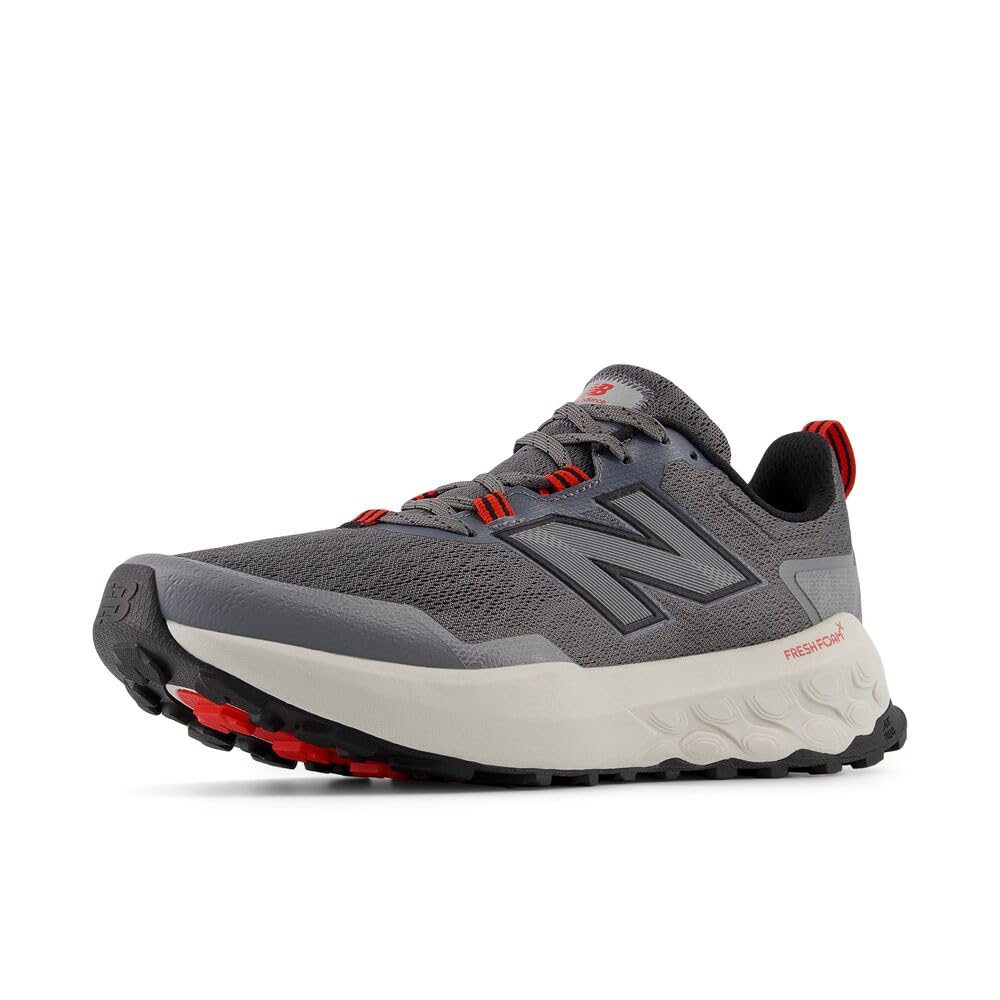
The New Balance Fresh Foam X Garoé V2 prioritizes comfort above all else. The Fresh Foam X midsole delivers a soft, bouncy ride that absorbs shock effectively on hard-packed trails and pavement, making it an excellent choice for runners transitioning from road running. The 6mm drop feels natural for most foot strikes, and the thick, plush sole provides noticeable cushioning without sacrificing too much ground feel.
Durability is impressive, with one reviewer reporting 700+ miles on their first pair with minimal sole wear. The grip is competent on packed dirt and gravel, but the sole lacks the deep lugs needed for loose, technical terrain. The upper is lightweight with minor glue spots noted on some units, though this doesn’t affect performance. Sizing runs true to US sizing but slightly larger than Adidas or Brooks, so check the fit chart.
The Garoé V2 lacks dedicated arch support, which may be a dealbreaker for runners with flat feet or high arches. The soft sole also means less stability on uneven rock gardens. For mixed terrain that leans toward groomed trails and fire roads, this shoe offers exceptional plushness at a mid-range price.
Why it’s great
- Exceptional Fresh Foam X cushioning for long runs
- Proven durability beyond 700 miles
- Natural 6mm drop for mixed foot strikes
Good to know
- Lacks arch support
- Insufficient grip for technical trails
6. New Balance Men’s Dynasoft Tektrel V1 Suede Trail Running Shoes
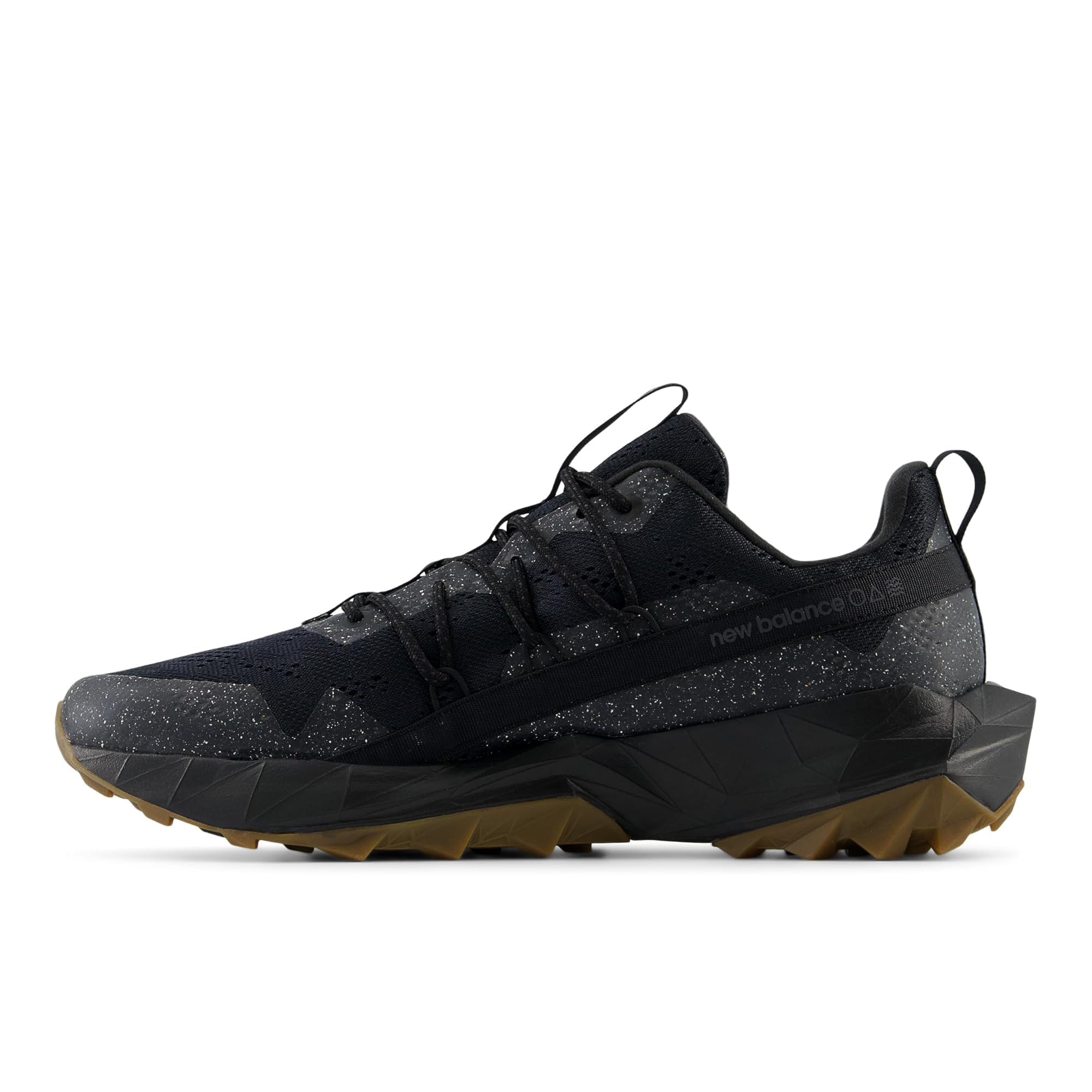
The New Balance Dynasoft Tektrel V1 is a budget-friendly workhorse that punches above its weight for daily walks and light trail use. The Dynasoft midsole provides responsive cushioning that feels supportive without being overly soft, and the suede upper adds a touch of style that transitions well to casual wear. One reviewer reported heavy daily use (7-11 miles per day) over eight months with the shoe remaining comfortable and durable.
Traction is decent on packed trails, gravel, and even light snow or ice, making it a reliable year-round option for moderate terrain. The fit runs true to size with good support and flexibility, and the shoe breaks in quickly with no hotspots reported. Some users experienced sizing inconsistencies between size 10 and 10.5, so trying on or ordering from a flexible return policy is wise.
The suede upper is not waterproof and holds moisture longer than mesh alternatives. The outsole lugs are shallow, so loose gravel and deep mud will challenge grip. For budget-conscious runners who stick to groomed trails, pavement, and daily walking, the Dynasoft Tektrel V1 delivers surprising value and longevity.
Why it’s great
- Excellent durability for heavy daily use
- Responsive Dynasoft cushioning
- Versatile style for casual wear
Good to know
- Suede upper not waterproof
- Shallow lugs limit technical trail grip
7. Columbia Men’s Vertisol Trail Hiking Shoes
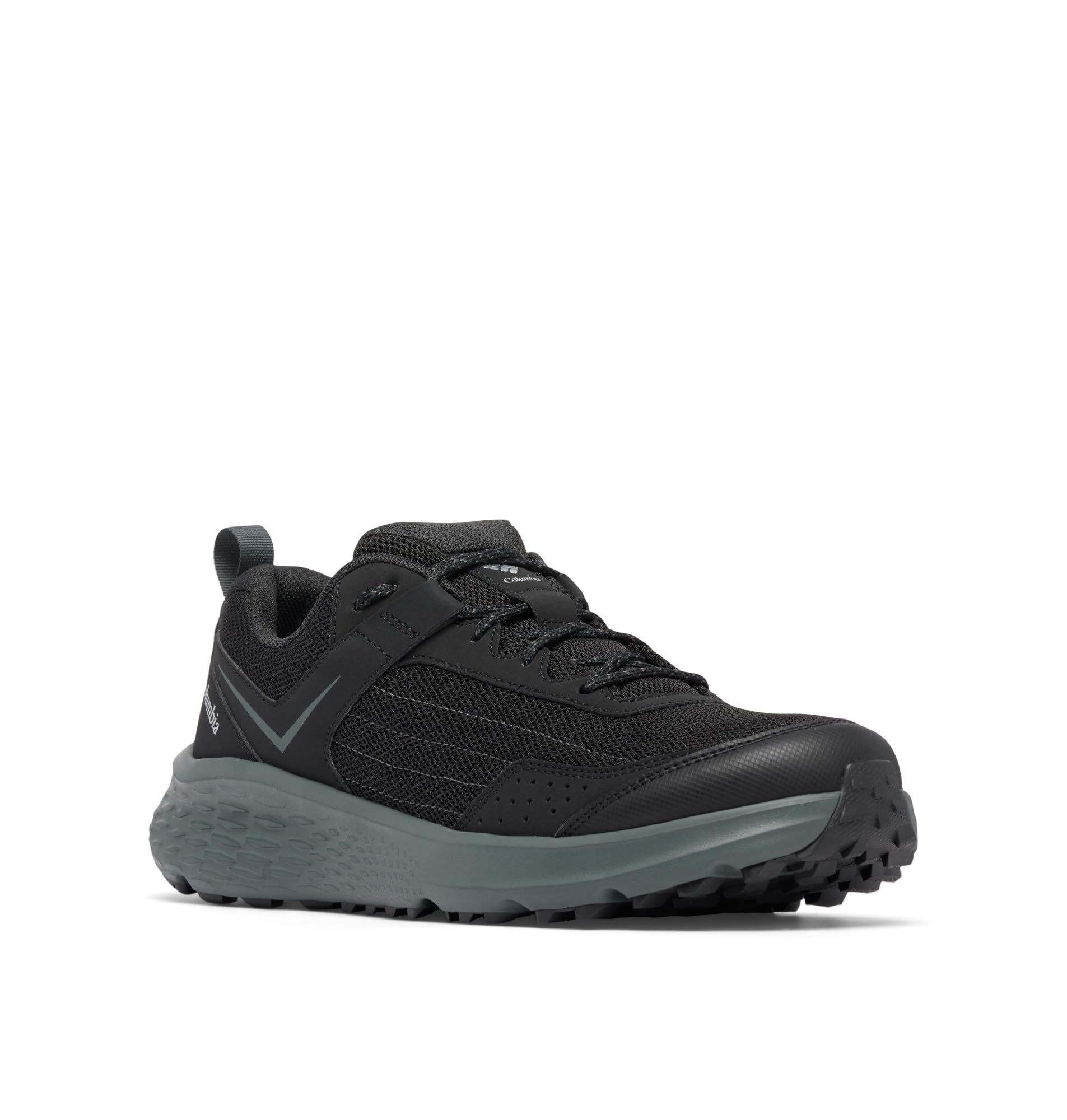
The Columbia Vertisol Trail is an entry-level option that shines as a casual sneaker for pavement and light trails. The engineered underfoot system provides decent comfort and stability for short runs and daily wear, and the breathable mesh upper keeps feet cool without requiring any break-in. The traction rubber sole offers reliable grip on dry sidewalks and packed dirt, making it a safe choice for the occasional off-road detour.
Most wearers find the fit true to size and appreciate the lightweight feel. However, the shoe lacks the ankle support and outsole aggression needed for heavy hiking or rocky terrain. The large lugs can be noisy on hard floors, similar to mud tires on pavement, and the mesh upper offers minimal debris protection. This is not a traditional rugged hiking boot, and expectations should match its intended use.
The budget price point makes the Vertisol Trail an accessible starting point for new runners or those who want a second pair for casual errands and short nature walks. The versatility is limited on technical ground, but for the price, it delivers functional comfort for light mixed use.
Why it’s great
- Lightweight and breathable with zero break-in
- Comfortable for all-day wear and pavement
- Budget-friendly entry point
Good to know
- Not suitable for heavy hiking or rocky terrain
- Large lugs are noisy on hard floors
FAQ
What lug depth do I need for mixed terrain running?
Can I wear zero-drop trail shoes if I normally run in 8mm drop road shoes?
Is a waterproof membrane worth it for all-terrain running?
Final Thoughts: The Verdict
For most users, the all-terrain running shoes winner is the Brooks Cascadia 19 because it delivers outstanding stability and reliable grip on technical terrain without sacrificing comfort for long distances. If you need a spacious toe box and prefer a zero-drop natural stride, grab the ALTRA Lone Peak 9. And for runners who face wet weather regularly, nothing beats the adidas Terrex Soulstride Rain.rdy for keeping your feet dry and comfortable on damp trails.