
Our readers keep the lights on and the weekend projects moving. As an Amazon Associate, I earn from qualifying purchases.
Faded dashboards, cracked vinyl seats, and bleached-out door panels make even a well-maintained car feel decades older than it is. Restoring that showroom finish doesn’t require a costly upholstery shop, just the right aerosol paint that bonds to plastic, fabric, and vinyl without peeling weeks later.
I’m Rikta — the co-founder and writer behind FitlyFast. I’ve spent countless hours analyzing adhesion formulas, flex additive chemistry, and drying schedules so you can match the right coating to your specific interior surface without trial-and-error waste.
This guide breaks down the best options for every surface type, from premium color-matched coatings to budget-friendly restorers, to help you find the perfect auto interior paint for your next weekend project.
How To Choose The Best Auto Interior Paint
Interior repair paint is a different beast from exterior body paint. It needs to remain flexible as the cabin heats up to 140°F in summer, bond to slick plastic surfaces without the benefit of etch primers, and withstand constant contact from hands, shoes, and cargo. Here are the three specs that matter most.
Finish Type and Gloss Level
OEM interior surfaces typically land in one of three gloss ranges: matte (most dashboards and door tops), satin (trim pieces and consoles), or gloss (accent panels and luxury wood trims). Picking the wrong sheen creates a mismatch that screams “painted.” Study your panel in direct sunlight and order a sample can if you are unsure.
Adhesion Requirements and Surface Prep
Automotive plastics often contain mold-release agents or UV stabilizers that cause regular paint to bead up or flake. Many interior paints now include a self-priming formulation that grabs onto polypropylene and TPO, but stubborn surfaces may still require a dedicated adhesion promoter step. Wipe down with acetone or a wax remover first.
Flexibility and Full Cure Time
A coating that dries rock hard will crack on a vinyl seat or a flexible door panel during the first hot day. Look for paints labeled “flexible” or “fabric-rated” and respect the full cure window — some need 24 hours to reach final durability even though they feel dry to the touch in 30 minutes.
Quick Comparison
On smaller screens, swipe sideways to see the full table.
| Model | Category | Best For | Key Spec | Amazon |
|---|---|---|---|---|
| SEM 15013 Landau Black | Premium Aerosol | Color-matched vinyl & plastic | Gloss finish, 12 oz | Amazon |
| SEM 49143 Trim Black Ultra | Premium Aerosol | Exterior + interior trim restoration | Satin finish, 14.5 oz | Amazon |
| Dupli-Color HVP106 | Mid-Range Aerosol | Seats, dashboards, door panels | Matte finish, 11 oz | Amazon |
| HI-TECH Big Can Black | Mid-Range Aerosol | Carpets and upholstery dyeing | 15 oz aerosol | Amazon |
| VHT High Temp Plastic | Mid-Range Aerosol | Engine covers and underhood plastic | Matte finish, 11 oz | Amazon |
| NADAMOO Plastic Restorer | Value Restorer | Faded exterior & interior trim | Liquid ceramic, 30 ml | Amazon |
| Malco Aqua Bead Dressing | Specialty Dressing | High-shine trim and tires | Water-based, 1 gallon | Amazon |
In‑Depth Reviews
1. SEM 15013 Landau Black Color Coat – 12 oz

SEM has been the gold standard for interior trim paint among professional restorers for decades, and the 15013 Landau Black continues that reputation. Its 12-oz aerosol delivers a slightly glossier black than the factory satin seen on many Ford and GM interiors, but users report an almost seamless match when applied to vinyl seats, door cards, and carpet. The glossier profile actually helps it resist scuff marks better than flat finishes in high-contact zones.
Adhesion is exceptional when preceded by a proper cleaning routine — reviewers stress using an acetone wipe and an adhesion promoter on bare plastic like polypropylene. The paint dries fast enough to handle in about an hour, though full flexibility takes longer to develop. Users have restored headrests, dashboards, and even entire seat bases with a single can saving hundreds of dollars over replacement parts.
One drawback is the gloss level for those seeking a dead-flat OEM restoration — the Landau Black is noticeably shinier than the company’s Satin Black formula. Ventilation is also non-negotiable: SEM sprays contain strong solvents that require a respirator in enclosed spaces. For a professional-grade bond with excellent color consistency, this is the premium standard.
Why it’s great
- Bonds to plastic, vinyl, and carpet with proper prep
- Dries quickly for same-day reassembly
- Trusted OEM-recommended formulation
Good to know
- Glossier than factory satin finishes
- Requires respirator in tight spaces
2. SEM 49143 Trim Black Ultra Satin – 14.5 oz

Where the Landau Black leans gloss, SEM’s 49143 Trim Black Ultra hits a true satin sheen that aligns perfectly with OEM interior pillars, door handles, and exterior trim pieces. The 14.5-oz can offers more coverage than the standard 12-oz format, and the “Ultra” transfer-efficiency nozzle lays down less overspray so you waste less paint on masked-off areas.
Users consistently praise its adhesion to a wide range of substrates — steel, aluminum, TPO, and polypropylene — without the need for a separate primer on most surfaces. The satin black is a true jet-black with no blue or brown undertones, making it ideal for restoring truck pillars and wheel-well trim that have faded to a chalky gray. Reviewers report it holds up to weather cycling without peeling or fading even weeks after application.
The 24-hour dry time is longer than most aerosol paints, so plan your project schedule accordingly. Also, a few customers noted that cans can arrive with dented nozzles due to shipping, so inspect before heavy use. For a versatile, OEM-matched satin finish that works both inside the cabin and on exterior plastic cladding, this is the top satin pick.
Why it’s great
- True satin sheen matches factory trim
- Adheres to metal, plastic, and aluminum without primer
- Ultra transfer nozzle reduces paint waste
Good to know
- Full-cure time of 24 hours
- Can nozzle can arrive damaged in transit
3. Dupli-Color HVP106 Vinyl & Fabric Coating – 11 oz
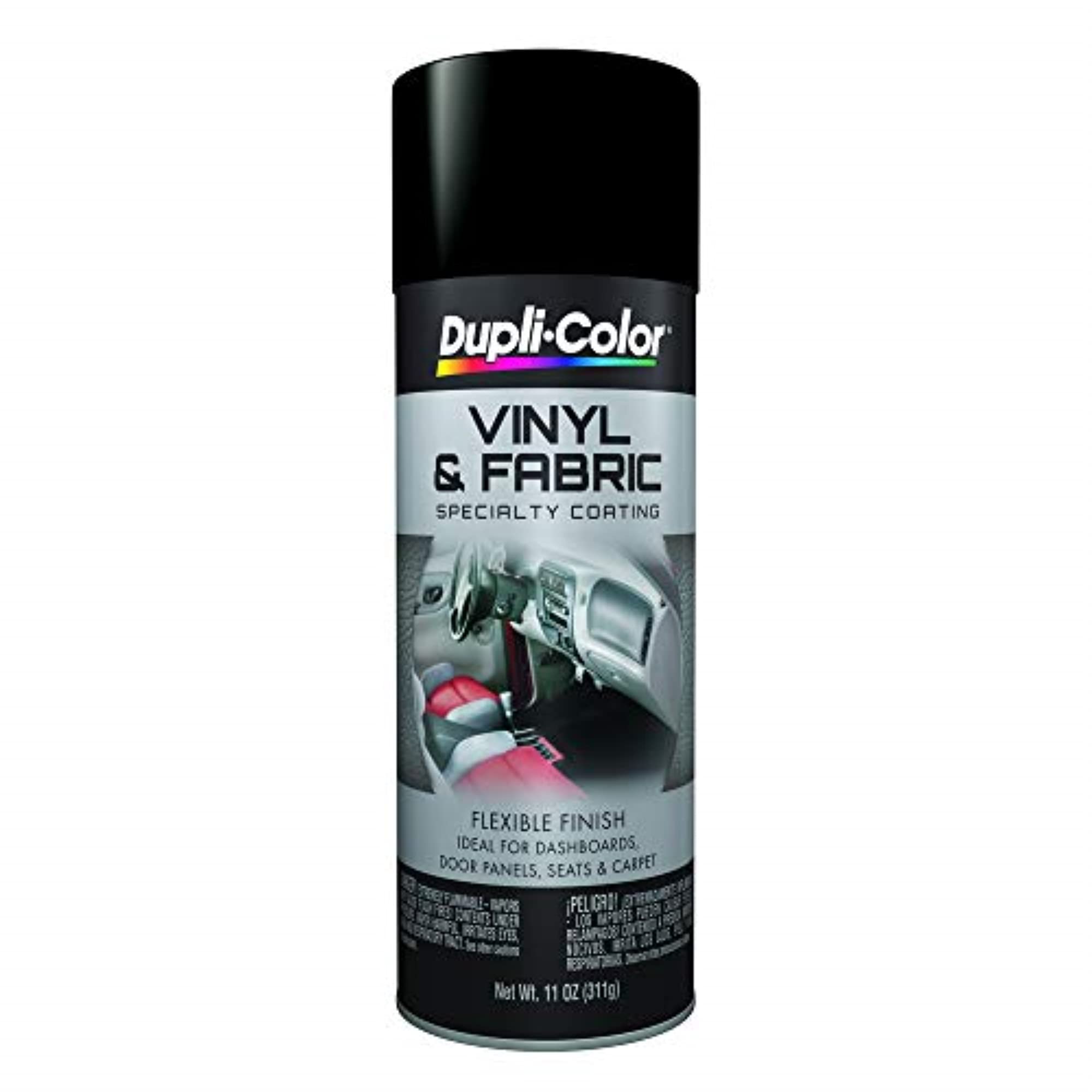
Dupli-Color’s HVP106 remains a crowd favorite because it bridges the gap between a dye and a paint. The self-priming aerosol is formulated with a maximum adhesion promoter built in, so it grabs onto vinyl seats, fabric headliners, and plastic door panels without a separate prep step. Users report it transforms faded interiors after just 30 minutes of drying time to the touch, with full handling in one hour.
The flat black matte finish is forgiving on uneven textures and hides imperfections better than glossier alternatives. Customers have successfully used it on projects ranging from restoring 1980s GM interiors to recoloring wool upholstery on dining chairs. Multiple thin coats are recommended — skipping this step can result in lighter color than the cap indicates, especially on porous fabric that soaks up the first pass.
The primary limitation is that the paint stiffens the surface noticeably. Reviewers warn against using it on frequently sat-on upholstery without extensive brushing between coats to keep the material pliable. If you are restoring decorative panels, shift boots, or low-contact dashboards, this delivers excellent value. For high-abrasion seats, plan extra coats and patience.
Why it’s great
- Self-priming bonds to vinyl and fabric directly
- Dries fast — 30 minutes to the touch
- Matte finish hides surface imperfections
Good to know
- Stiffens fabric; needs extra coating for flexibility
- Color can be lighter than cap label
4. HI-TECH Big Can Black Spray Dye – 15 oz

HI-TECH tackles a different need with this product: it is a spray dye rather than a paint, designed to soak into carpet fibers and upholstery without leaving a thick layer that cracks. At 15 oz, it offers a third more volume than standard 11-oz cans, and the adjustable fan nozzle lets you switch between a narrow stream for trim edges and a wide pattern for open carpet areas.
The dye formula bonds deeply to nylon carpet, vinyl, and fabric without altering the material’s texture — a huge advantage over paints that turn plush carpet into stiff felt. Users on older Ford Ranger and F-Series trucks report that two cans cover an entire cab floor and the color holds up to foot traffic without rubbing off on shoes. The dye also handles bleach spots and sun discoloration on dashboards well.
However, the dye’s adhesion to hard plastics is inconsistent. Reviews mention that some glossy plastic surfaces reject the dye, causing it to wipe off even after drying. A compatibility test on a hidden area is mandatory before committing to a full panel. For carpet and fabric restoration, this is the most cost-effective volume option on the list.
Why it’s great
- 33% more product per can than standard sizes
- Adjustable fan nozzle gives precise coverage
- Preserves original texture of carpet and fabric
Good to know
- Does not adhere well to all hard plastics
- Test compatibility before full application
5. VHT High Temperature Plastic Paint – 11 oz
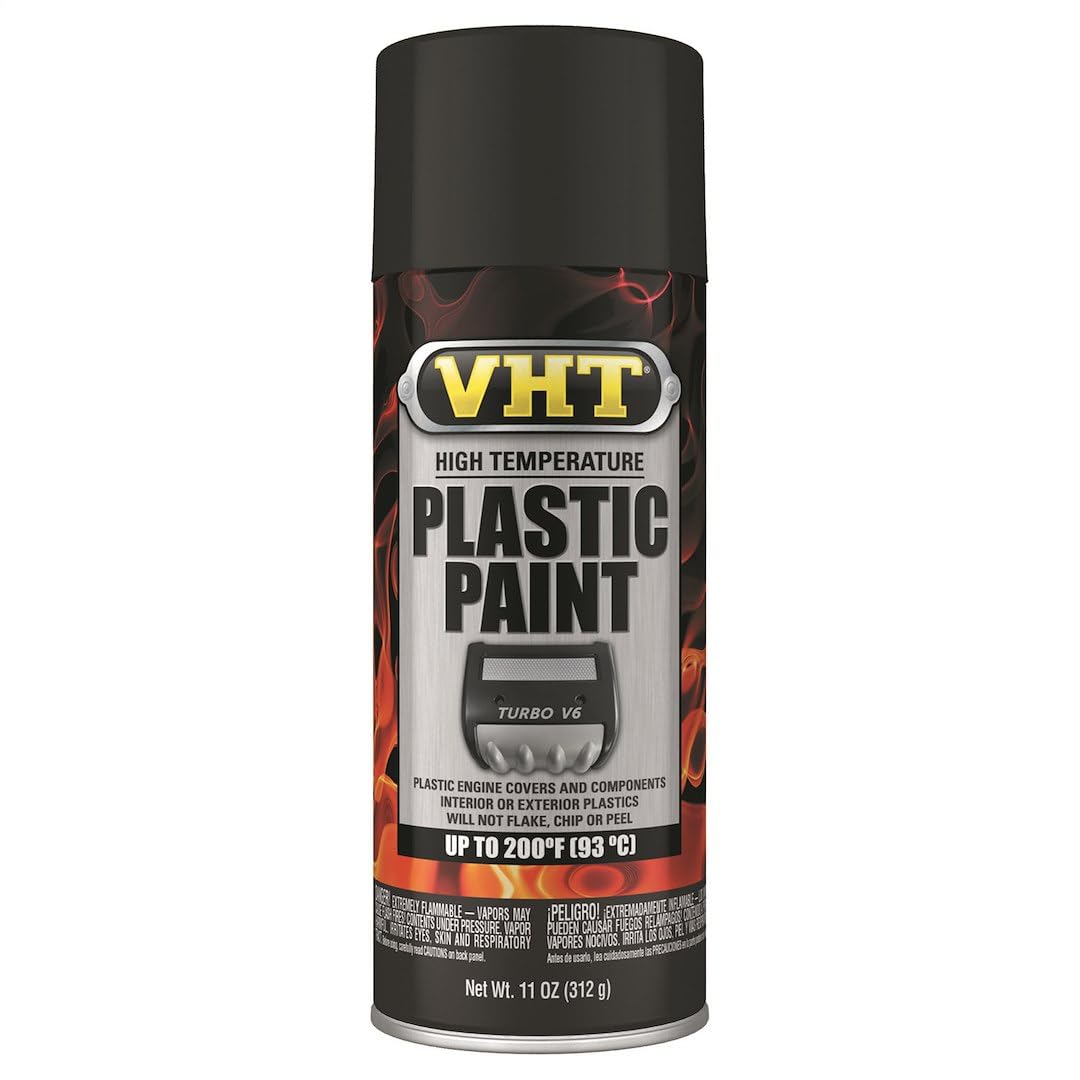
VHT is best known in the high-temp coating world, and its plastic-specific aerosol brings that heat resistance to interior and underhood components. The formulation withstands continuous exposure up to 200°F without softening or bubbling, making it a logical choice for engine covers, radiator shrouds, and dashboard surfaces that bake in direct sun.
Unlike many plastic paints that require sanding to achieve bite, VHT’s formula grabs onto smooth plastic without abrasion. Reviewers have used it on motorcycle battery covers with existing glossy paint and saw it level out scratches and imperfections without peeling. The finish is slightly glossier than a true matte, but clear coat can be applied on top for extra depth.
Durability reports are mixed for high-contact items: a reviewer who painted truck door handles noted chipping within months. The paint works best on static panels that do not flex or get gripped frequently. If your project is a heat-exposed panel that stays put, VHT is a strong mid-range option. For daily-touch surfaces, look at the flexible SEM formulas instead.
Why it’s great
- Withstands 200°F continuous heat
- Adheres to plastic without sanding
- Resists oil and automotive fluids
Good to know
- May chip on high-contact handles and trim
- Not recommended for flexible vinyl panels
6. NADAMOO Plastic Restorer – 30 ml

NADAMOO takes a fundamentally different approach from spray paints. Instead of laying down a pigmented film, this liquid ceramic coating penetrates the pores of faded plastic and chemically bonds to restore the original black color. It is a restorer rather than a paint, so it works best on trim that has turned gray from UV exposure rather than trim that needs a color change.
The concentrated formula is incredibly economical: one 30-ml bottle covers two full vehicles when applied thinly with the included sponge. Users report that a single application on a 2015 Mazda 3 lasted nearly a year before needing a refresh, and the coating holds up to rain and car washes without streaking. The finish is deep glossy black, which suits exterior trim, mirror housings, and door handles perfectly.
Because it is a clear coating, NADAMOO does not cover up scratches or change the color of light panels — it only restores existing black plastic. It also has a thin consistency that can drip if applied too heavily. For a no-fuss trim revival with long-lasting results, this is the smartest non-paint option for faded bumpers and grilles.
Why it’s great
- One bottle covers two full vehicles
- Chemical bond lasts up to 6–12 months
- No overspray or masking needed
Good to know
- Only restores black — does not change color
- Thin liquid drips easily; apply sparingly
7. Malco Aqua Bead Water Based Dressing – 1 Gallon
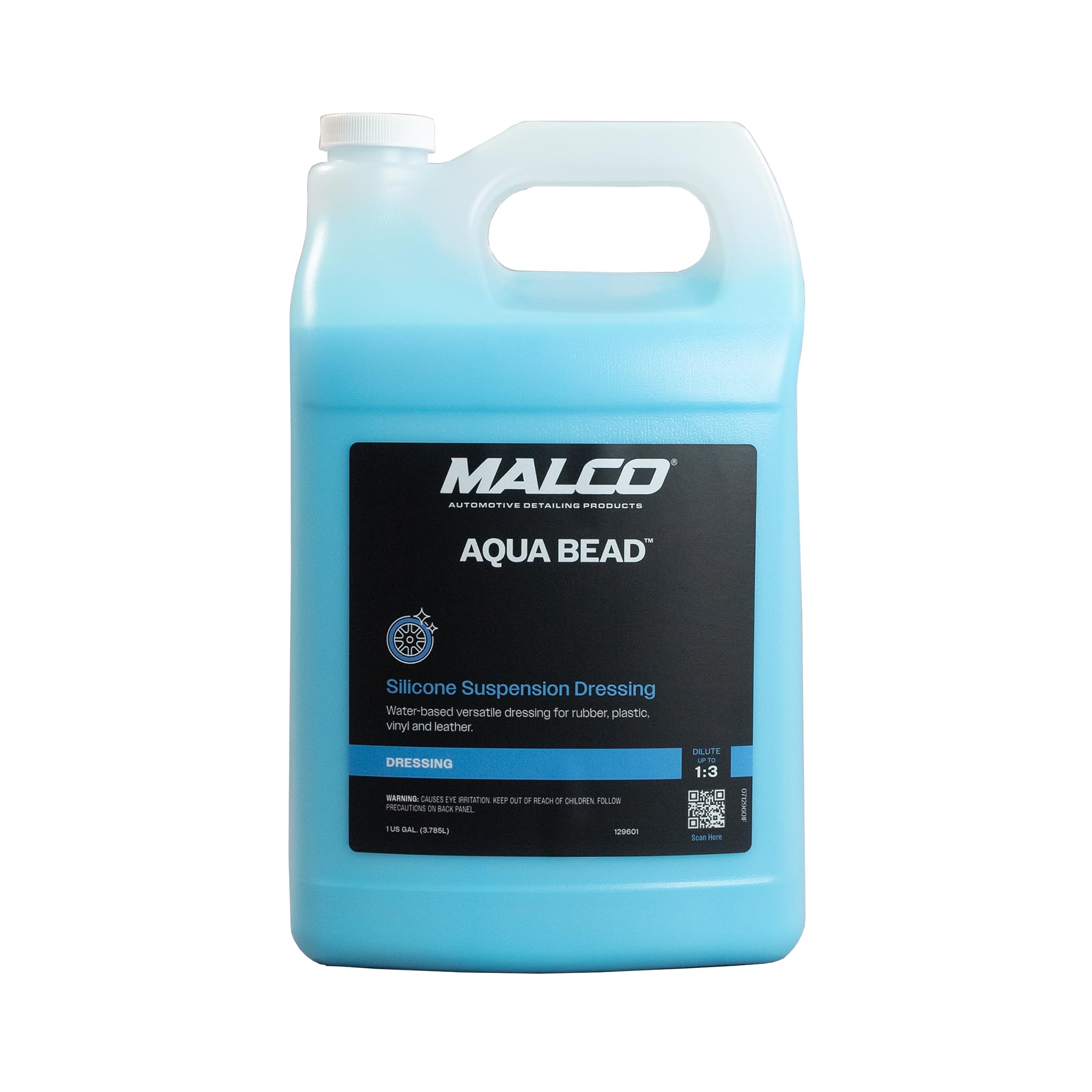
Malco Aqua Bead belongs in a different subcategory from the spray paints above — it is a water-based dressing rather than a coating, meaning it sits on top of the surface to create a glossy, wet-look shine rather than bonding permanently. The 1-gallon concentrate is designed to be diluted anywhere from 1:2 to 1:4 depending on the target gloss level, making it incredibly versatile across interior panels, tires, and engine bays.
Dealership detailers and restoration shops use Aqua Bead because it applies fast, dries non-greasy, and does not sling off rotating tires. The water-activated formula works on both wet and dry surfaces, and it repels water to prevent future staining. Users report that a 3:1 dilution on engine compartments leaves a factory-clean appearance without damaging hybrid electrical components.
This is not a permanent paint solution. The dressing lasts 2–3 washes before needing reapplication, and the product is slippery — reviewers caution against use on interior footwells or sealed concrete floors. If you need a durable, long-term color change for faded trim, choose one of the aerosol paints above. For a quick, show-quality gloss, this gallon jug is the most economical choice in the roundup.
Why it’s great
- One gallon makes multiple gallons at 1:4 dilution
- Works on wet or dry surfaces without streaking
- Non-greasy finish that resists dust attraction
Good to know
- Not a permanent paint; washes off after 2–3 washes
- Slippery on floors and pedals — avoid interior use on foot areas
FAQ
Can I use regular spray paint on car interior plastic?
How much interior paint do I need for a full cabin project?
Final Thoughts: The Verdict
For most users, the auto interior paint winner is the SEM 15013 Landau Black because it delivers professional-grade adhesion and color consistency for vinyl, plastic, and carpet. If you need a factory-correct satin finish for trim pieces and pillars, grab the SEM 49143 Trim Black Ultra. And for a budget-friendly carpet and upholstery dye that preserves texture, nothing beats the HI-TECH Big Can Black Spray Dye.