
Our readers keep the lights on and the weekend projects moving. As an Amazon Associate, I earn from qualifying purchases.
Waking up to a silent yard in January means one thing — the feeder blend you poured is being picked through and abandoned, leaving a crust of inedible filler grains that harden into a brick. New England’s short, brutal winters demand a seed mix that delivers dense fat and protein to help songbirds survive subzero nights, not a cheap grocery-store bag of red milo and cracked corn that squirrel-proofs nothing.
I’m Rikta — the co-founder and writer behind FitlyFast. I’ve spent over 200 hours comparing regional seed formulations, analyzing oil-to-hull ratios, and reading through thousands of verified buyer reports to identify which blends actually hold a cardinal’s attention when the temperature drops below freezing.
Every seed in this guide was selected for how it performs during a New England winter — thin-hulled black oil sunflower for high-energy access, purely safflower to sideline squirrels, and zero filler grains that rot in wet snow. This is your definitive analysis of the absolute best bird seed for new england backyards right now.
How To Choose The Best Bird Seed For New England
New England’s climate swings from humid summers to snow-packed winters, which means a seed blend that works in August can mold by December. The core of a good regional mix comes down to oil content, hull thickness, and the absence of cheap filler grains like red milo and high-starch corn that birds discard.
Prioritize Black Oil Sunflower as the Base
Black oil sunflower seeds have a thinner, easier-to-crack hull than the striped variety, which means smaller birds like chickadees and goldfinches can access the meat without exhausting energy. They also carry roughly 30% fat content — critical fuel for maintaining body heat during a New England January night.
Look for Safflower in the Ingredient List
Safflower seed tastes bitter to squirrels but cardinals, chickadees, and titmice eat it willingly. A blend with a strong safflower component effectively halves your squirrel traffic without requiring a separate feeder or spicy additive coatings that can be less effective in rain.
Verify “No Fillers” Means No Milo or Cracked Corn
Red milo and cracked corn are the two cheapest common filler ingredients. Birds in the Northeast typically ignore milo, and corn can ferment when wet, spoiling the rest of the seed in the feeder. A reputable “no filler” label should list sunflower, safflower, peanut pieces, and millet — nothing else.
Consider Seed Freshness and Storage
Oil-rich seeds go rancid faster in humid air. A barrier bag with a CO2 flush or a strong resealable zipper preserves shelf life. Once opened, transfer seed into a metal or thick plastic container kept in a dry, cool place — a garage shelf exposed to seasonal temperature swings will degrade the fat content within weeks.
Quick Comparison
On smaller screens, swipe sideways to see the full table.
| Model | Category | Best For | Key Spec | Amazon |
|---|---|---|---|---|
| CountryMax Black Oil Sunflower | Single Seed Bulk | High-protein winter fuel | 50 lbs, no fillers, thin shells | Amazon |
| Pennington Select Safflower | Squirrel Deterrent | Cardinals with zero squirrels | 15 lbs, vitamin-enriched | Amazon |
| Freebird Songbird Blend | Multi-Species Mix | Year-round variety attraction | 5 lbs, all-natural, resealable | Amazon |
| Nature Anywhere Bird Banquet | No Filler Blend | Clean feeding, less waste | 5 lbs, money-back guarantee | Amazon |
| Old Potters Black Oil Sunflower | Non-GMO Single Seed | Small-farm sourcing | 12 lbs, Non-GMO, USA grown | Amazon |
| Armstrong All Season Blend | Large Bulk Blend | High-volume year-round feeding | 40 lbs, CO2 flushed barrier bag | Amazon |
| English Creek Corn Free Mix | Specialty Corn-Free | Small breeds & deer avoidance | 40 lbs, corn-free, small seeds | Amazon |
In‑Depth Reviews
1. CountryMax Black Oil Sunflower Seeds 50lbs
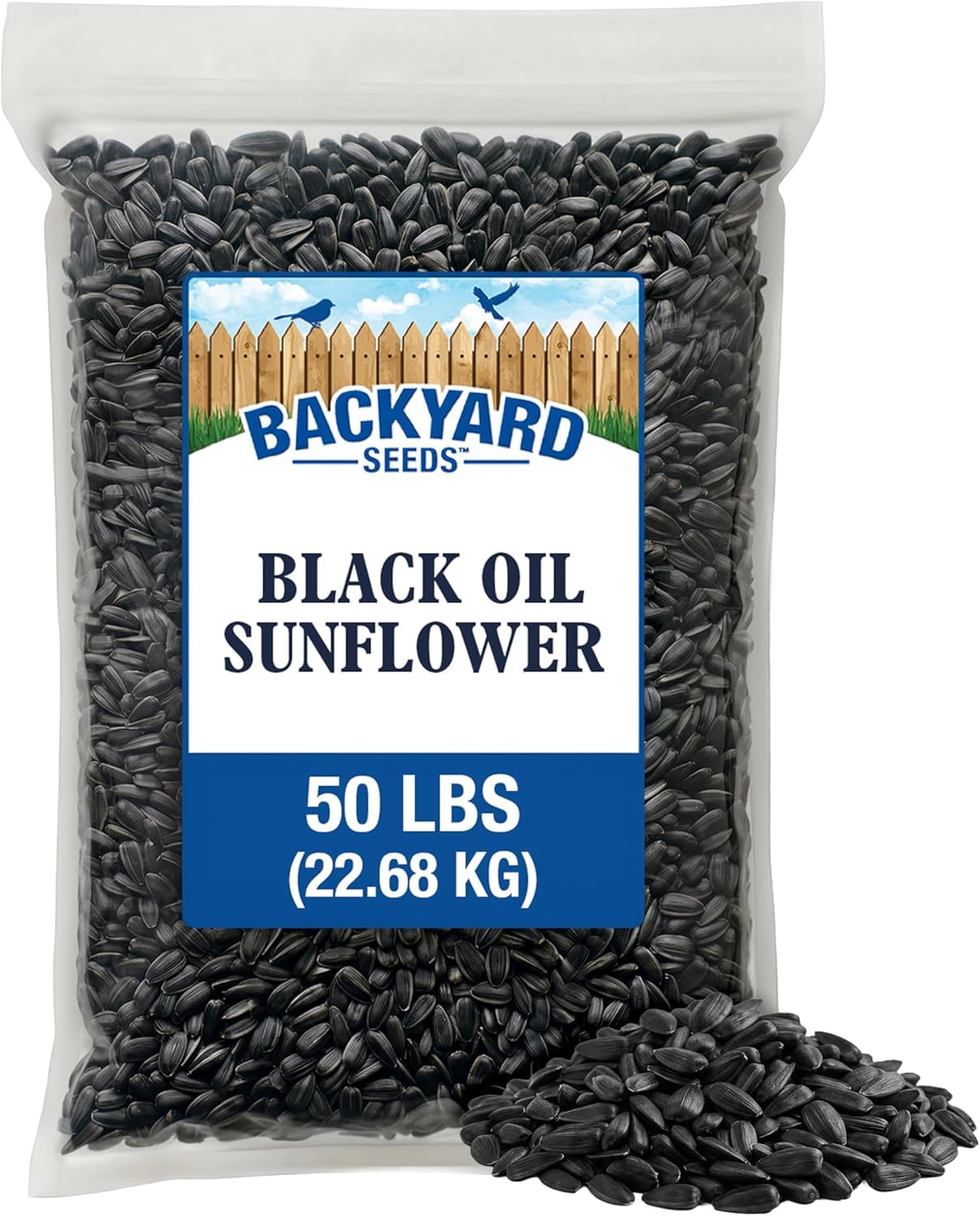
This 50-pound bag of black oil sunflower seeds is the single most efficient fuel source for a New England winter feeder. The thin hulls let chickadees, titmice, and goldfinches crack into the kernel with minimal effort — a critical feature when a bird burns 10% of its body mass overnight just keeping warm. Every seed in the bag is edible, with zero milo, corn, or wheat filler to pick through.
Reviewers consistently report the cleanest seed they have ever bought — no sticks, no dust, no shriveled hulls that indicate old stock. One long-term buyer noted that the cardinals and juncos ate more aggressively than with lesser-quality suppliers, and that the reduced waste per pound effectively makes this a mid-range value in the long run. The bag arrives with no internal liner issues, and the seeds are uniformly plump and oil-rich.
This is a single-ingredient product, so it will not bring in species that prefer millet or cracked grains. But for a New England yard where winter survival is the priority — and where cardinals, chickadees, juncos, and blue jays make up the core audience — this is the definitive bulk buy. The manufacturer recommends storing in a 5-gallon bucket with a lid to preserve freshness through the season.
Why it’s great
- 50 lbs of pure black oil sunflower — zero filler waste
- Thin shells give small birds fast access to high-fat meat
- Consistently described as the cleanest bag reviewers have opened
Good to know
- Single seed type — won’t attract millet-loving sparrows or doves
- Should be stored in an airtight container after opening
2. Pennington Select Safflower Seed 15lb
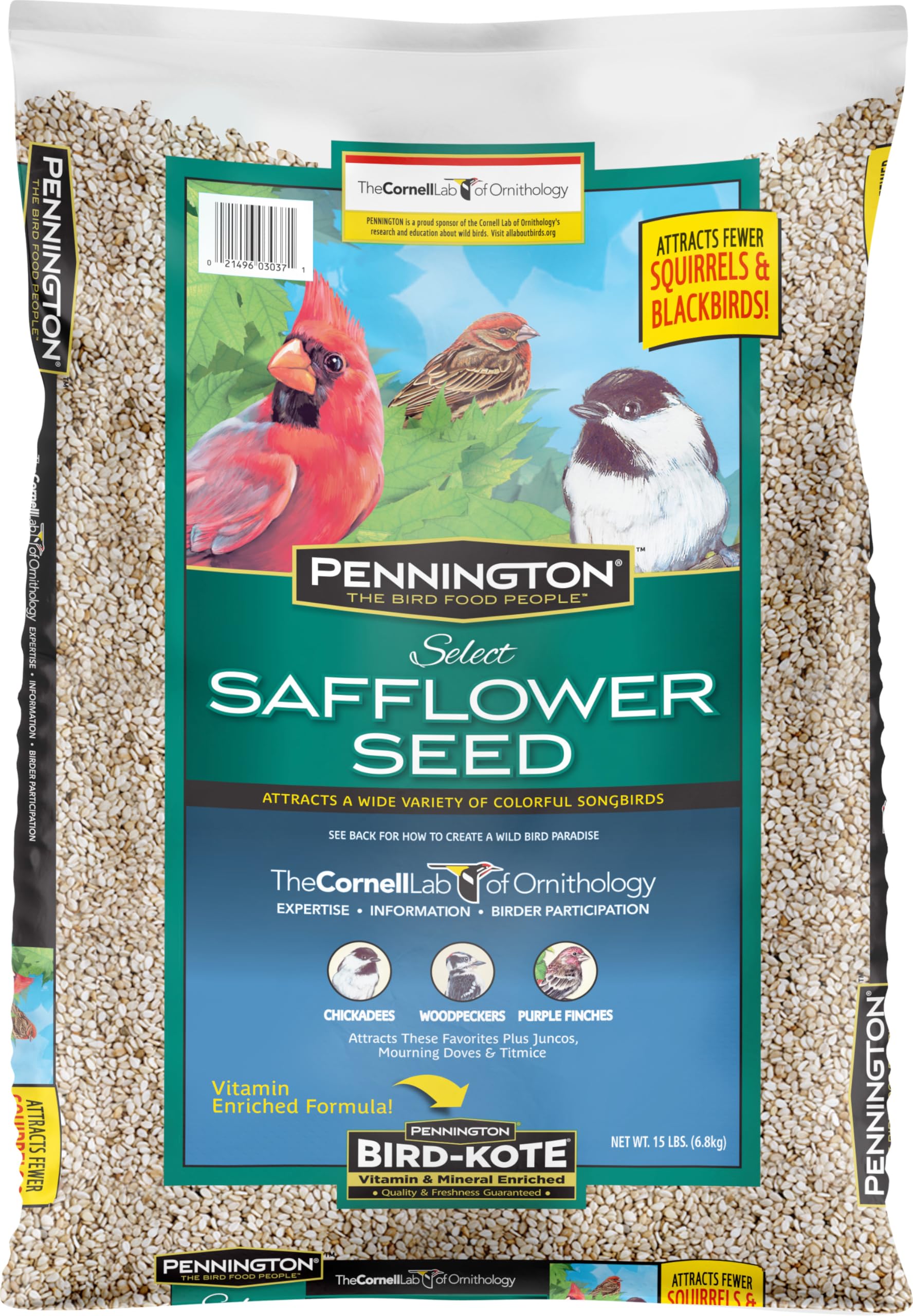
If your New England feeder currently functions as a squirrel buffet, this 15-pound bag of pure safflower is the single most effective deterrent that does not involve a cage or a spicy coating. Safflower seed naturally tastes bitter to squirrels, so they will eventually stop visiting, while cardinals, chickadees, finches, titmice, and mourning doves eat it readily. Multiple customers confirm their squirrel traffic dropped to near zero within days of switching.
Pennington adds vitamins and minerals to the seed, which is a meaningful bonus during the lean winter months when natural food sources are buried. The bag provides a generous 15-pound volume that outlasts small 5-pound mixes. Reviews note that cardinals in particular flock to this seed — one buyer reported their cardinal count tripled after switching from a standard mixed blend.
The main tradeoff is cost per pound relative to basic sunflower seed. Safflower is naturally more expensive than black oil sunflower, and some buyers have commented that the price is a barrier for long-term subscription use. However, for a yard where squirrels have dominated, the savings in wasted birdseed and destroyed feeders often justifies the premium.
Why it’s great
- Strong natural squirrel-deterrent effect verified by hundreds of buyers
- Vitamin-fortified formula supports bird health through winter
- Cardinals, chickadees, and finches eat it without hesitation
Good to know
- Higher cost per pound than standard black oil sunflower
- Not a complete diet — best used as a supplemental or dedicated feeder seed
3. Freebird Songbird Blend 5lb
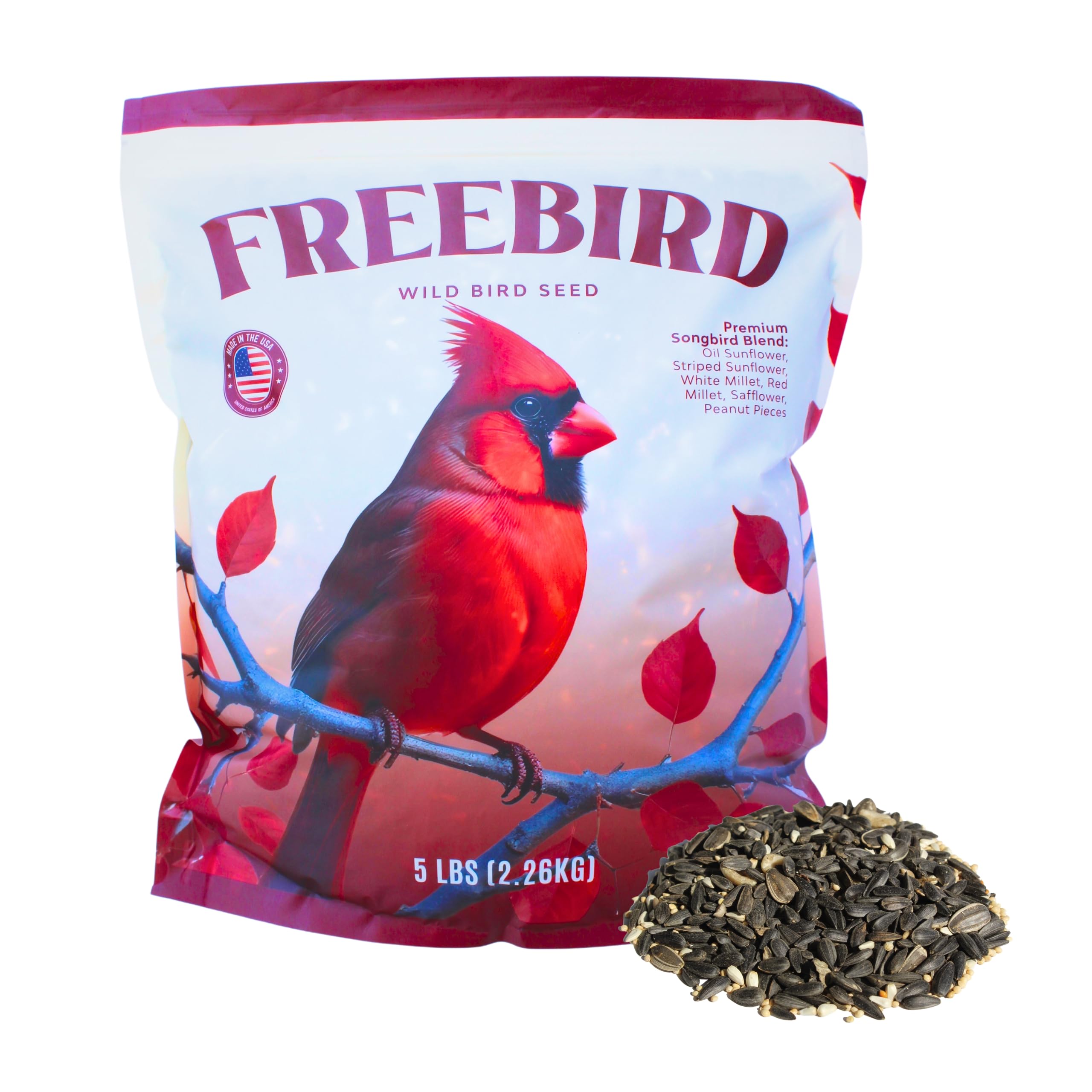
This 5-pound blend from Freebird is engineered specifically to attract the widest possible variety of New England songbirds: black oil sunflower for cardinals and chickadees, striped sunflower for larger-beaked blue jays, safflower for the squirrel-avoidance crowd, peanut pieces for woodpeckers and nuthatches, and both white and red millet for ground-feeding sparrows and juncos. It is essentially a master formulation that covers every major feeder visitor in the region.
The bag uses a heavy-duty material with a strong resealable zipper — a genuinely useful feature for a 5-pound bag when New England humidity can turn an unsealed bag of sunflower into a rancid mess within two weeks. All ingredients are all-natural, additive-free, and Non-GMO. Buyers report that cardinals appeared within days of switching, and that the blend attracted species they had not seen in years.
At 5 pounds, this is a trial-size bag rather than a bulk solution. Heavy-feeding yards will burn through it quickly, especially during cold snaps when birds pack on calories. But as a diagnostic tool to see which species your feeder location attracts before committing to a 40-pound bag of a single seed type, it is the smartest entry point available.
Why it’s great
- Multi-seed formulation covers cardinals, finches, chickadees, jays, and woodpeckers
- Resealable heavy-duty bag protects against humidity and pests
- No artificial additives or GMO ingredients
Good to know
- Small 5-pound bag requires frequent refills in high-traffic yards
- May take a week for new feeder visitors to find it
4. Nature Anywhere Bird Banquet 5lb
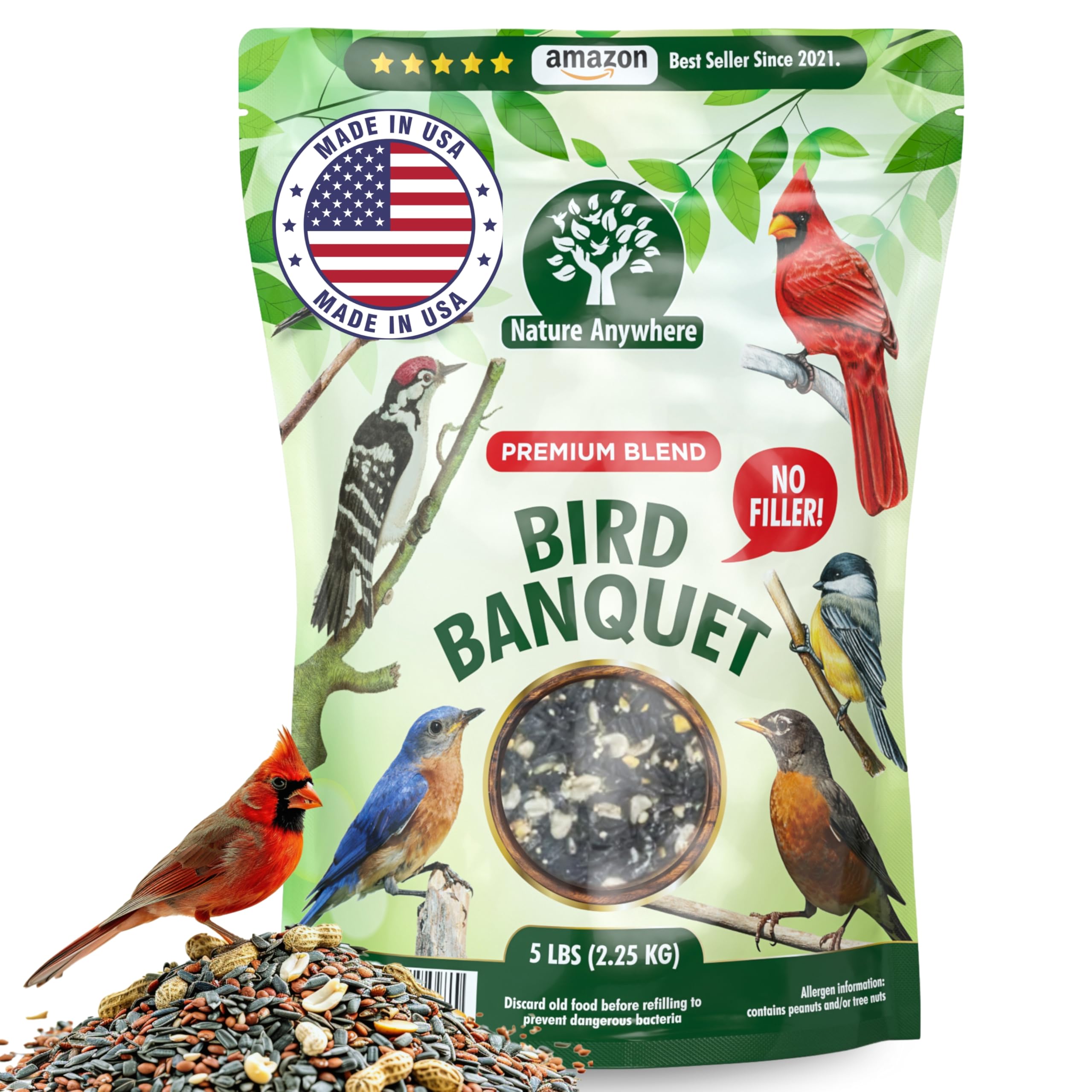
Nature Anywhere markets this blend as a “no fillers” formula, and the buyer response backs it up — customers report virtually no leftover seed beneath the feeder. That is a meaningful quality-of-life improvement for a New England yard, where wet snow and rain turn discarded filler into a moldy crust that kills grass and attracts rodents. The blend uses domestic ingredients sourced in the USA and includes a money-back guarantee if your feeder does not become the busiest in the neighborhood.
The seed composition is designed to attract a wide variety of birds — cardinals, chickadees, blue jays, and finches are the primary audience. Multiple five-star reviews state that the birds consistently prefer this blend over other premium brands, with one reviewer noting that their yard birds recognized a swap to a different brand and refused to eat until the Banquet was back in the feeder. The high-protein content supports molting and winter survival.
At 5 pounds, this is again a smaller bag. For a single feeder in a moderate-traffic yard it will last a week or two. The money-back guarantee is a strong confidence signal for first-time buyers who are tired of wasting money on blends their birds ignore.
Why it’s great
- Zero filler grains — every seed is edible, reducing waste under the feeder
- Money-back guarantee if birds do not visit
- High protein content supports winter survival
Good to know
- 5-pound bag size means frequent refills for heavy-feeding yards
- Peanut content means it may not be suitable for yards with tree-nut allergy concerns
5. Old Potters Black Oil Sunflower 12lb

Old Potters sources its black oil sunflower seeds from small, sustainable US farms and certifies them Non-GMO. The bag is resealable, which helps with freshness, and the seeds arrive with the occasional natural twig or piece of field debris — a sign of minimal processing rather than low quality. The birds clearly do not care: buyers report that their feeders empty faster with this seed than with supermarket generic brands.
One long-term reviewer noted that the seeds are noticeably fresher than competitors, with plump kernels that have not shrunk due to age or improper storage. That freshness translates directly into more calories per seed for the birds — a real advantage in February when a chickadee needs to eat its body weight in seeds every day just to survive. Multiple customers have ordered this bag repeatedly, confirming consistent quality across batches.
At 12 pounds, this is a medium-volume bag that fits between the 5-pound trial sizes and the 40-to-50-pound bulk bags. It is a practical choice for a household with one or two feeders that wants a clean, reliably fresh single-ingredient seed. The Non-GMO claim matters to buyers who prioritize farm stewardship, though standard black oil sunflower is already a low-pesticide crop by nature.
Why it’s great
- Non-GMO seed from small US farms with minimal processing
- Resealable bag preserves freshness between refills
- Consistently fresh, plump kernels with high oil content
Good to know
- 12 pounds is a middle volume — too small for heavy bulk feeders, too large for trial runs
- Occasional natural debris may surprise buyers expecting a fully cleaned product
6. Armstrong All Season Blend 40lb
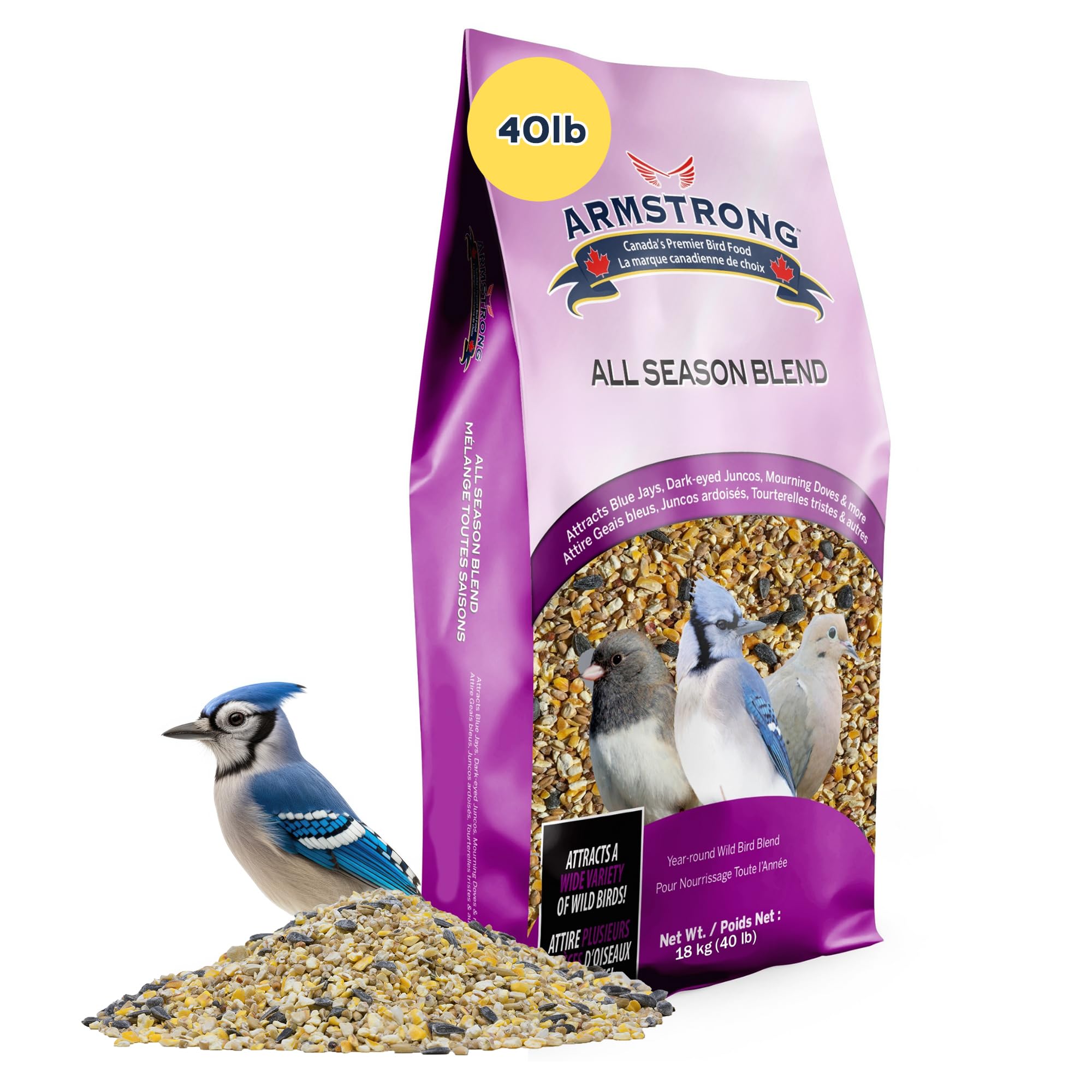
The Armstrong All Season blend is a 40-pound general feeding mix that includes cut corn, wheat, red milo, white millet, black oil sunflower, and red millet. The bag packaging is a barrier bag flushed with CO2 to preserve freshness — a legitimate advantage for a 40-pound bag that may sit partially opened for weeks. The blend is designed to attract blue jays, mourning doves, dark-eyed juncos, black-capped chickadees, northern cardinals, and house sparrows year-round.
Many buyers report that their birds love the mix and line up at the feeder daily. The volume per unit price is competitive, and the CO2 flush genuinely makes a difference in keeping the seed fresh during transport and storage. However, one critical review describes a bag that was 90% sawdust-like filler that formed a concrete mass inside a tube feeder during a drought. This strongly suggests batch inconsistency — some bags may be excellent, while others may contain excessive fine particles and cracked grain debris.
Because the blend includes corn and milo, two common filler grains that many New England birds ignore, a significant portion of the bag may end up on the ground. For a buyer who wants a cheap, high-volume mix and does not mind ground feeding for doves and juncos, this can work. But for a clean, low-waste feeder experience, the inconsistency risk makes this a gamble.
Why it’s great
- Large 40-pound bag with CO2-flushed barrier packaging for freshness
- Attracts a broad range of species including jays, doves, and juncos
- Competitive price per pound for high-volume feeding
Good to know
- Batch inconsistency — some bags reported with high filler content
- Contains corn and milo, which many birds discard, increasing ground waste
- Filler clumps reported in wet conditions, potentially clogging tube feeders
7. English Creek Supply Corn Free Mix 40lb

This 40-pound bag is explicitly corn-free — a meaningful differentiator for New England yards where deer are a nuisance, since corn attracts them reliably. The blend combines milo, white millet, wheat, and black oil sunflower seed, with a focus on small bird species such as sparrows, finches, and wrens. The lack of corn also eliminates the risk of aflatoxin contamination and spoilage from wet snow exposure.
Buyers consistently praise the quality and freshness of this mix, noting that it contains more sunflower seeds than similar-priced competitors. One long-term subscriber mentioned that the cardinals and chickadees are the first to arrive, and that the seller’s customer service resolved a shipment issue within minutes. The 40-pound size is practical for multiple feeders or a busy backyard station.
One caveat: recent shipments have arrived in a plastic bag instead of the traditional paper bag. Some buyers prefer paper for breathability, though plastic offers better moisture protection. If the packaging inconsistency continues, customers who rely on paper for their storage system may need to transfer the seed immediately. The milo content still represents a filler risk, though corn-free mixes tend to have a higher acceptance rate among Northeast songbirds than standard blends.
Why it’s great
- Completely corn-free — reduces deer attraction and spoilage risk
- High sunflower seed content relative to many competitor mixes
- Large 40-pound bag with responsive customer service from the seller
Good to know
- Packaging has shifted between paper and plastic in recent shipments
- Contains milo, which some birds may still pick out and discard
FAQ
How many pounds of seed should I buy for a single New England feeder?
Will safflower seed alone keep cardinals alive in a New England winter?
Do birds in New England recognize and reject old, stale seed?
Is a corn-free blend necessary for a squirrel-free feeder?
Final Thoughts: The Verdict
For most users, the best bird seed for new england winner is the CountryMax Black Oil Sunflower 50lb because it delivers pure, thin-hulled, high-fat fuel with zero filler waste at a bulk volume that matches the region’s winter feeding demands. If you want to eliminate squirrel traffic without building a fortress, grab the Pennington Select Safflower 15lb. And for a comprehensive multi-species mix that lets you test which birds visit your yard before committing to a bulk bag, nothing beats the Freebird Songbird Blend 5lb.