
Our readers keep the lights on and the weekend projects moving. As an Amazon Associate, I earn from qualifying purchases.
Plastic and metal expand at different rates, flex differently under load, and reject most off-the-shelf glues because the bond line can’t absorb the mismatch between a rigid metal surface and a softer polymer substrate. A bonding agent for plastic to metal must bridge that gap without turning brittle under thermal cycling or vibration — something a general-purpose craft glue simply isn’t designed to handle.
I’m Rikta — the co-founder and writer behind FitlyFast. This guide cuts through the chemical noise by analyzing real cure times, shear strength ratings, substrate compatibility lists, and temperature tolerances across seven adhesives that actually work on mixed-material joints.
Whether you’re reattaching an automotive emblem, sealing a leak in an aluminum bracket, or repairing a cracked plastic housing on a metal tool frame, finding the right bonding agent for plastic to metal means matching the formula’s flexibility to the specific load your repair will carry.
How To Choose The Best Bonding Agent For Plastic To Metal
Selecting the right adhesive for a plastic-to-metal bond starts with identifying the specific polymers involved. Many plastics — polypropylene, polyethylene, and some nylons — have low surface energy and require a primer or a specialized two-part system to achieve any meaningful grip. Metal surfaces need proper degreasing and abrasion to give the adhesive a mechanical foothold. The following factors determine whether the bond survives its intended use.
Surface Energy and Primer Requirements
Low-surface-energy plastics like polypropylene and polyethylene are the most common failure points in mixed-material bonds. Standard cyanoacrylates and epoxies bead up and peel off without a surface activator. The Loctite Plastics Bonding System addresses this by pairing a cyanoacrylate with a separate activator that etches the polymer surface at a molecular level. If you are bonding an automotive trim piece or a household plastic part known to resist glue, a primer-based system is usually the smarter starting point.
Working Time and Cure Flexibility
Fast-setting formulas (five minutes or less) are convenient for small repairs, but the rapid cure can trap alignment errors and produce a rigid bond that cracks under thermal expansion. Slower-curing epoxies with 30-minute working times give you room to clamp, adjust, and build thickness over irregular gaps. For repairs that will experience vibration — such as brackets on a vehicle or a cracked crankcase — a toughened epoxy that retains some flexibility after full cure often outperforms a brittle instant bond.
Temperature and Chemical Resistance
Engine compartments, outdoor equipment, and workshop fixtures expose the bond line to heat cycles, moisture, and oil. Standard super glues degrade above 180°F. If your repair sits near an engine or in direct summer sun, look for an adhesive rated above 300°F. The AOJEL S300 metal epoxy tolerates up to 392°F after full cure and resists routine oil contact, making it suitable for rigid metal repairs that also touch plastic components.
Quick Comparison
On smaller screens, swipe sideways to see the full table.
| Model | Category | Best For | Key Spec | Amazon |
|---|---|---|---|---|
| Starbond 5 Min Epoxy Pro Kit | Flex Epoxy | Vibration-prone mixed-material repairs | 2,600 lb shear strength | Amazon |
| 3M Panel Bonding Adhesive 38315 | Auto Epoxy | Structural panel bonding steel to plastic | 47.5 mL glass-bead epoxy | Amazon |
| Loctite Plastics Bonding System | Primer CA | Polypropylene and polyethylene parts | 1-minute fixture time | Amazon |
| AOJEL S300 Metal Epoxy | Cold Weld | Load-bearing rigid metal repairs | 392°F heat resistance | Amazon |
| 3M Emblem & Trim Adhesive 03601 | Auto Trim | Automotive emblem and trim attachment | 15-minute set time | Amazon |
| RH S-18 All-Purpose Adhesive | Contact Cement | Neoprene and rubber to metal bonding | 24-hour full cure | Amazon |
| Tikfoam Waterproof Repair Tape | Repair Tape | Quick patch repairs on outdoor gear | 3 in x 25 ft roll | Amazon |
In‑Depth Reviews
1. Starbond 5 Minute Epoxy Pro Kit

The Starbond 5 Minute Epoxy Pro Kit delivers a toughened formula that absorbs vibration and thermal movement without cracking — essential when bonding plastics like ABS or PVC to metal brackets that experience load cycling. Its 2,600 lb shear strength rating puts it in the structural repair category, and the 1:1 mix ratio by volume eliminates guesswork. The kit includes screw-cap bottles, reusable mixing trays, and a spatula, so you don’t waste material fighting a leaky syringe.
Handling strength arrives in roughly five minutes, which allows minor positioning adjustments before the epoxy sets, but the full 24-hour cure is necessary for maximum load capacity. The cured finish is clear, making it acceptable for visible repairs on furniture or automotive interior components. Users report success on materials ranging from wood and ceramic to glass and metal, but the flexible nature of this epoxy means it is well-suited for repairs where rigid cold-weld systems normally fail under repeated stress.
One limitation is that the 5-minute window is real — once the epoxy kicks, repositioning is not possible, so dry-fit your parts first. The Pro Kit format also means you get more product than a standard syringe, which makes sense for multiple repairs or larger gap fills. For mixed-material bonds that must flex without breaking, this is the most versatile ready-to-mix option available.
Why it’s great
- Toughened formula resists brittle cracking under vibration and thermal expansion
- High 2,600 lb shear strength suitable for structural repairs
- Complete kit includes mixing tools and reusable trays
Good to know
- 5-minute working time requires careful pre-fit before mixing
- Full load capacity requires 24-hour cure
2. 3M Panel Bonding Adhesive 38315

3M’s 38315 panel bonding adhesive is a two-part epoxy specifically formulated for bonding steel, aluminum, SMC, and FRP to non-structural components — and it doubles as a reinforcement for welded or riveted joints. The red-colored paste includes glass bead technology that ensures a consistent bond gap and prevents the panels from squeezing out all the adhesive during clamp-up. This is the adhesive body shops reach for when welding is impractical or when coating burn-through on galvanized steel is a concern.
The adhesive is extremely tacky upon application — there is almost no sliding the mating parts into position once the two sides make contact, so precise alignment before the joint closes is non-negotiable. Users report using sheet metal screws to hold panels during the 24-hour cure, then grinding the screw heads flush before applying filler over the seam. The waterproof nature of the cured bond means it can seal the joint against moisture ingress, preventing the rust that often starts at welded seams.
The cartridge format requires a manual applicator and static mixing nozzle, which adds upfront tooling cost. The 50 mL volume is relatively small for large panel jobs, so plan your coverage accordingly. For bonding automotive-grade SMC, fiberglass, or metal panels to plastic substrates with a structural bond that outlasts spot welds, this is the professional-grade choice.
Why it’s great
- Glass bead technology ensures consistent bond line thickness
- Waterproof barrier prevents corrosion at the joint
- Ideal replacement for welding on coated or thin-gauge metals
Good to know
- Requires manual applicator and mixing nozzle (sold separately)
- Extremely tacky — almost no repositioning once surfaces meet
3. Loctite Super Glue Plastics Bonding System
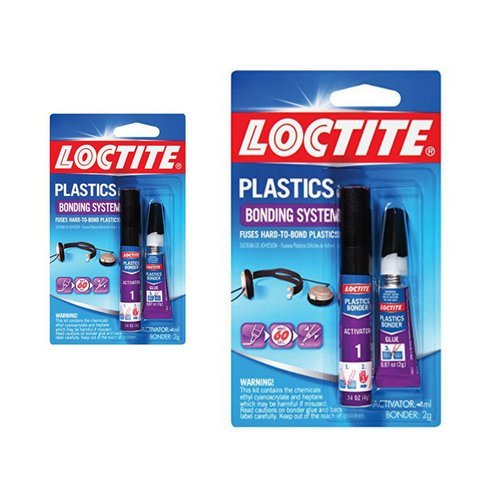
The Loctite Plastics Bonding System stands apart because it combines a standard cyanoacrylate with a separate surface activator that primes low-surface-energy plastics — polypropylene and polyethylene specifically — before the adhesive touches the joint. Without the activator, those plastics shear off the glue line under minimal load. With it, the bond develops full strength in about a minute, eliminating the need for clamping. The formula dries clear and resists water, most chemicals, and freezing temperatures, making it suitable for refrigerator door handles, automotive interior clips, and outdoor plastic components attached to metal frames.
Users consistently report that this system succeeds where multiple other adhesives have failed on tough plastics like polypropylene cat carriers and complex curved structural cracks on expensive equipment. The two-step process requires choreographing the activator application and the adhesive placement because the bond sets almost instantly on contact. Wear gloves — the activator and adhesive combination bonds skin faster than it bonds most materials.
The main caveat is that this system is optimized for plastics, specifically polypropylene and polyethylene, and does not claim the same bond strength on metal as dedicated epoxy products do. For plastic-to-metal joints where the metal surface is prepared and the plastic is a low-energy polymer, the activator primes the plastic side while the CA grips the metal. For pure metal-to-metal structural loads, a two-part epoxy remains the stronger choice.
Why it’s great
- Activator enables bonding to polypropylene and polyethylene — plastics most glues cannot grip
- Sets in one minute with no clamping needed
- Withstands freezing temperatures and chemical exposure
Good to know
- Requires practice to apply activator and adhesive before instant set
- Not optimized for pure metal-to-metal structural loads
4. AOJEL S300 Metal Epoxy Repair System
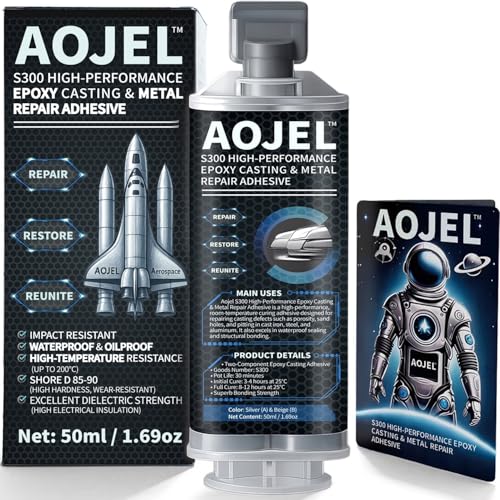
The AOJEL S300 is a two-part cold-weld epoxy engineered for rigid metal repairs on aluminum, steel, cast iron, stainless steel, and other non-flexing substrates. Its standout spec is a post-cure heat resistance of 392°F, which places it in a class above standard epoxies for engine-adjacent repairs, exhaust brackets, and workshop fixtures that see high temperatures and oil contact. The 30-minute working time at 77°F gives you room to build thickness over gaps and align components before the material kicks into a hard, drillable body.
Proper surface preparation is critical — the manufacturer explicitly requires removing oil, rust, paint, and moisture, then roughening smooth metal for mechanical grip. Users have successfully repaired cracked crankcases on ATVs, separated aluminum patio chair straps, and metal fence posts, noting that the slow cure allows for the multiple applications needed to build up depth over severe cracks. The silver-and-beige color blends acceptably on aluminum and steel surfaces, and the cured material accepts drilling, sanding, filing, and painting.
The plunger mechanism on the dual-syringe has drawn criticism for uneven dispensing, especially when only a small amount is needed. Separate tubes would eliminate this issue but would also require manual measurement. Additionally, this epoxy is explicitly not for polyethylene, polypropylene, PTFE, silicone, soft plastics, or any flexible or moving joint. It is a rigid repair material for rigid substrates, so pairing it with a plastic component means the plastic must be stiff enough to handle the cured epoxy’s lack of flexibility.
Why it’s great
- Withstands up to 392°F after full cure for engine-bay and high-heat repairs
- 30-minute working time allows controlled build and alignment
- Drillable, sandable, and paintable after 24-hour cure
Good to know
- Not for flexible plastics, PE, PP, PTFE, or moving joints
- Dual syringe plunger can be uneven for small amounts
5. 3M Plastic Emblem & Trim Adhesive 03601

3M’s 03601 is a clear, quick-drying acrylic adhesive formulated specifically for attaching plastic and metal emblems, badges, side trim, and interior panels to painted automotive surfaces. The single-component tube requires no mixing — just clean the surface, apply directly from the nozzle, and press the parts together. The formula sets in about 15 minutes and reaches full cure in 24 hours, minimizing downtime compared to slower epoxies. Its weather-resistant construction stands up to car washes, UV exposure, road vibration, and temperature swings.
The liquid consistency can be messy with excess ooze, so careful application and immediate cleanup are recommended. Users have successfully reattached 23-year-old vehicle emblems and fixed Tesla interior panels that were separating. The 3-pack format provides two extra tubes for multiple repairs or for larger jobs. For customers who prefer a cleaner application, 3M also offers a double-sided tape version of this adhesive, but the liquid format penetrates irregular gaps that tape cannot bridge.
The primary limitation is that this adhesive is optimized for automotive trim applications where the plastic component is rigid and the metal surface is painted or clear-coated. It is not a structural epoxy for load-bearing repairs, and it will not fill large gaps or bond to bare, oily metal without proper prep. For quick emblem reattachment or interior panel repairs on cars, this is the fastest automotive-compatible option.
Why it’s great
- 15-minute set time with no mixing required
- Withstands car washes, heat, and vibration in automotive use
- 3-pack provides good value and extra tubes for future repairs
Good to know
- Liquid consistency can be messy with excess ooze
- Not designed for structural or gap-filling repairs
6. RH S-18 All-Purpose Adhesive
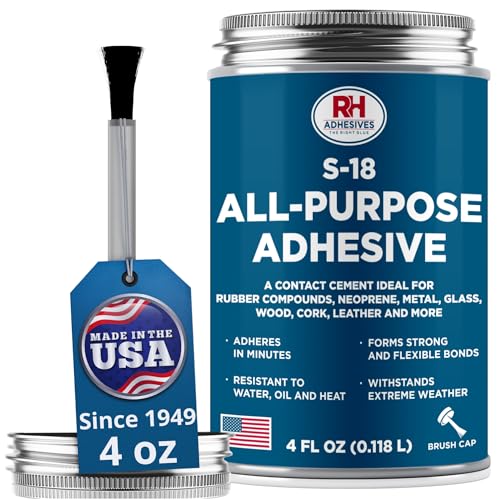
The RH S-18 is a neoprene-based contact adhesive made in America since 1949, formulated to bond porous and non-porous materials with a flexible film that resists water and oil. This is the traditional rubber cement chemistry adapted for multi-surface adhesion — the manufacturer specifically calls out affixing SBR rubber and neoprene to metal, as well as bonding various plastics to other materials. The off-white liquid applies with a brush or dabber from the can and requires a contact-bond technique: coat both surfaces, let the solvent flash off, then press together for an immediate grip.
Users report excellent results on leather boot repairs, foam pipe insulation, and neoprene yoga mats, noting the strong initial tack and the ability to reposition briefly before the bond sets. The film delivers good peel strength and aging properties, which matters for repairs that experience repeated flexing rather than continuous static load. The 4-ounce can is a manageable size for DIY projects, though users recommend buying a larger size if you plan multiple repairs, as the solvent can weaken if the can sits open for extended periods.
The critical limitation is that the S-18 is a contact cement, not a structural epoxy. It will not fill gaps, and if the bond line sees prolonged heat and moisture, failures occur — one user reported the adhesive failing on an outdoor car hail protection setup after exposure to rain and heat. Indoor applications and repairs that do not endure constant direct water immersion produce reliable, long-lasting results. For bonding flexible materials like neoprene, felt, or rubber to metal surfaces, this is a proven, low-toxicity option.
Why it’s great
- Flexible film absorbs movement without cracking
- Excellent peel strength for rubber, neoprene, and felt to metal
- Made in America with a long track record since 1949
Good to know
- Contact cement technique requires coating both surfaces and letting solvent flash off
- Can fail under prolonged outdoor heat and moisture exposure
7. Tikfoam Waterproof Repair Tape

Tikfoam’s waterproof repair tape is not an adhesive in the traditional dispensed sense — it is a heavy-duty, self-adhesive vinyl tape designed for permanent outdoor patching on fabric, canvas, vinyl, metal, plastic, and glass. The 3-inch by 25-foot roll provides enough coverage for RV roof tears, awning rips, tarp holes, boat covers, and tent repairs. The adhesive is aggressively sticky and gets tighter over time, with heat actually improving the bond strength rather than degrading it.
Application requires a clean, dry surface and firm pressure — users recommend heating the tape with a hot air blower after application to ensure the adhesive flows into the substrate texture. The tape has survived repeated rolling and flexing on bicycle bags, boat covers, and camper shells without edge lifting. The black color blends reasonably well on dark surfaces, and the tape can be cut with a utility knife for custom shapes. For emergency field repairs or temporary fixes on plastic-to-metal joints on outdoor equipment, this tape offers instant water resistance without the cure time required by liquid adhesives.
The biggest practical frustration is separating the thin paper backing from the tape — the adhesion is so strong that the backing can tear before releasing. A utility knife or careful edge-starting technique helps. This is not a replacement for structural epoxies on load-bearing plastic-to-metal joints; it is a surface patch that bridges gaps and seals against weather. For permanent structural bonding, pair this tape with a proper epoxy on the underlying joint, then use the tape as a waterproof top layer.
Why it’s great
- Instant waterproof seal with no curing time
- Bonds stronger in heat and tightens over time
- Large 25-foot roll covers multiple repairs
Good to know
- Thin backing paper is difficult to separate from the tape
- Not a structural replacement for epoxy on load-bearing joints
FAQ
Can I use super glue to bond ABS plastic to an aluminum bracket?
How do I prepare a metal surface for epoxy if it has paint or rust?
What bonding agent works best for outdoor plastic-to-metal repairs exposed to rain and UV?
Final Thoughts: The Verdict
For most users, the bonding agent for plastic to metal winner is the Starbond 5 Minute Epoxy Pro Kit because its toughened formula absorbs vibration and thermal expansion without becoming brittle, making it the safest choice for mixed-material repairs around the home, workshop, and vehicle. If you need to bond polypropylene or polyethylene specifically, grab the Loctite Plastics Bonding System for its activator that primes those impossible-to-stick surfaces. And for rigid, high-heat metal repairs where the plastic component is also rigid and the joint will see temperatures above 300°F, nothing beats the AOJEL S300 Metal Epoxy.