
Our readers keep the lights on and the weekend projects moving. As an Amazon Associate, I earn from qualifying purchases.
Nothing kills a project faster than a metal railing that wobbles, a machine base that shifts, or an anchor bolt that spins freely in its hole. The wrong adhesive here means the bond fails under shear or pull-out stress, wasting hours of labor and materials. You need a product engineered to handle the thermal expansion mismatch between metal and porous concrete, while delivering enough tensile strength to meet structural demands.
I’m Rikta — the co-founder and writer behind FitlyFast. I’ve spent hundreds of hours researching anchoring epoxies, construction adhesives, and two-part repair systems to understand which formulations actually hold metal to concrete under load, moisture, and temperature swings.
After analyzing seven of the most capable products on the market, I’ve identified the strengths and trade-offs of each so you can confidently choose the right adhesive for metal to concrete for your specific repair or installation.
How To Choose The Best Adhesive For Metal To Concrete
Selecting the right adhesive for metal to concrete means looking beyond marketing claims and focusing on load requirements, environmental conditions, and application workflow. A paste-style anchoring epoxy behaves completely differently from a spray contact cement or a liquid bonding admixture. Match the product to your specific job.
Two-Part Epoxy vs. Single-Part Construction Adhesive
Two-part epoxy cartridges, like those from Sika or Akona, mix resin and hardener as they exit the nozzle, creating a chemical cure that delivers high bond strength even in damp holes. Single-part construction adhesives use a water-based or solvent-based formula that relies on evaporation to set, making them weaker under shear and unsuitable for anchoring threaded rods or rebars. For structural metal-to-concrete bonds, a two-part epoxy is the baseline requirement.
Cure Time and Working Window
Fast-curing epoxies set in 3 to 12 minutes and reach full load capacity in under two hours, which is ideal for quick repairs where you need immediate holding power. Slower-curing formulations give you 30 to 60 minutes of working time for adjustments, important when positioning bolts, brackets, or railings. The trade-off is simple: fast cure means less forgiveness, longer cure means more patience.
Moisture and Temperature Tolerance
Concrete in basements, outdoor slabs, or masonry walls almost always contains residual moisture. Many standard adhesives lose bond strength on wet surfaces or break down under freeze-thaw cycles. Look for systems explicitly rated for damp or flooded holes, and check the product’s continuous temperature range. The best formulations operate between sub-freezing and over 250 degrees Fahrenheit without degrading.
Quick Comparison
On smaller screens, swipe sideways to see the full table.
| Model | Category | Best For | Key Spec | Amazon |
|---|---|---|---|---|
| Akona Fast-Setting Anchoring Epoxy | Anchoring Epoxy | Fast structural anchoring | Sets in 12 minutes | Amazon |
| DCP Quickmast AE15 | Epoxy Acrylate | Wet/flooded hole anchoring | Cures in 40-145 minutes | Amazon |
| SIKA AnchorFix-2 | Anchoring Epoxy | High load capacity anchors | Solvent-free, high strength | Amazon |
| 3M Hi-Strength 94 ET Spray | Spray Adhesive | Large surface laminations | 60-minute bonding range | Amazon |
| SikaLatex R | Concrete Admixture | Cement mortar bonding | 500 PSI bond strength | Amazon |
| PLJOFRSHI Metal Repair Glue | Epoxy Putty | Small repairs and cracks | 4680 PSI cured strength | Amazon |
| Professional Soma Fix Construction Adhesive | Polyester Resin | Budget-friendly anchoring | Fast-curing resin | Amazon |
In‑Depth Reviews
1. Akona Fast-Setting Anchoring Epoxy

The Akona Fast-Setting Anchoring Epoxy hits the sweet spot between speed and strength. It sets in 12 minutes and reaches full cure in 16 hours, meaning you can anchor a threaded rod, bolt, or rebar into concrete and apply tension the same day. The gray color blends into standard concrete surfaces, so it doesn’t stick out visually on repair jobs.
Moisture tolerance is a standout feature here. Concrete floors and walls nearly always harbor dampness, and many epoxies struggle to bond in those conditions. Akona’s formulation resists chemicals and solvents, making it a reliable choice for garages, basements, and outdoor slabs where oil drips or road salt might be present.
Users report holding over 100 pounds on a single 1/2-inch threaded rod, with the epoxy bonding so aggressively that removing it requires drilling. For structural metal-to-concrete jobs where you need a quick-curing, high-strength bond without waiting days, this is the pick to beat.
Why it’s great
- 12-minute set time gets you back to work fast
- Moisture tolerant for damp concrete environments
- Gray color blends with standard concrete surfaces
Good to know
- 8.45-ounce tube is small for larger projects
- Requires a standard caulk gun for application
2. DCP Quickmast AE15 Concrete Epoxy
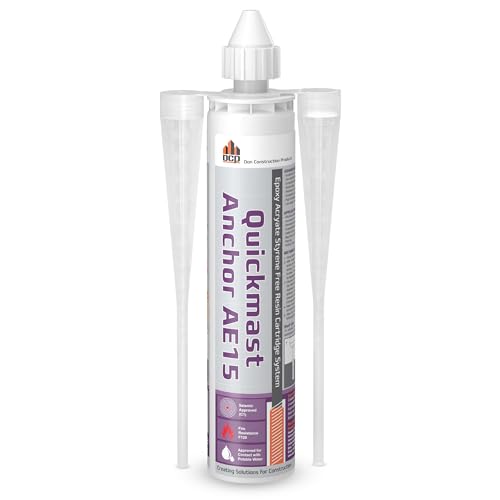
The DCP Quickmast AE15 is engineered specifically for environments where standard epoxies fail: wet, flooded, and even submerged concrete holes. This two-part acrylate epoxy maintains strong adhesion regardless of moisture conditions, curing to full load capacity in 40 to 145 minutes depending on base material temperature. It’s styrene-free, which means less odor and a safer work environment.
The cartridge system delivers a consistent 1:1 mix through static nozzles, compatible with standard caulking guns. The working time is tight — 4 to 10 minutes — so you need to move fast once you start injecting. But that speed means you can anchor rebar, threaded rods, or heavy machinery bases and trust the hold within a couple of hours.
Users highlight that it sets “hard as a rock” and that rebar stands upright in minutes. The trade-off is that the epoxy is very thick and can break a cheap caulk gun, so a heavy-duty gun is recommended. For wet holes, high load anchoring, or outdoor concrete that sees rain, this is the specialist choice.
Why it’s great
- Rated for dry, wet, and flooded concrete holes
- Rapid cure to full load capacity in under 2.5 hours
- Styrene-free formulation reduces health concerns
Good to know
- Very short working window of 4-10 minutes
- Requires a powerful caulking gun to dispense
3. SIKA AnchorFix-2 Super Strength Anchoring Adhesive

SIKA AnchorFix-2 is a staple among contractors for good reason. This two-component epoxy delivers professional-grade holding power for threaded bars, rebars, and bolts in uncracked concrete, solid masonry, stone, and steel. It’s solvent-free and certified safe for use in drinking water systems, so you can use it on indoor projects without worrying about chemical off-gassing.
The fast-curing formula means your anchor stays firmly in position without slipping, even in vertical or overhead applications. The cartridge works with most standard applicator guns, though the thick consistency can clog nozzles if you pause too long between injections. Users report anchoring two-post car lifts with bolts torqued to 120 foot-pounds with zero movement.
The downsides are speed-related. The epoxy sets so quickly — sometimes in three minutes at lower temperatures — that you may only get one or two bolts placed before the nozzle hardens. Plan your work to inject all anchors in a single continuous session, and keep spare nozzles on hand.
Why it’s great
- High load capacity for structural anchoring like car lifts
- Solvent-free and safe for drinking water contact
- Fast cure holds anchors in place without slippage
Good to know
- Sets very fast; limited working time for multiple anchors
- Thick consistency may require a powered caulking gun
4. 3M Hi-Strength 94 ET Spray Adhesive Glue
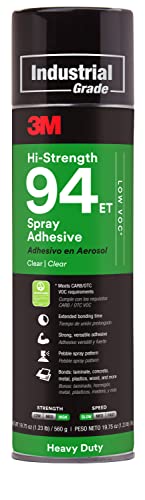
This is not your typical anchoring epoxy. The 3M Hi-Strength 94 ET is a spray contact adhesive designed for large surface laminations where you bond metal sheets to concrete or other substrates across broad areas. Its extended bonding range of up to 60 minutes gives you time to position and reposition substrates before the bond becomes permanent, reducing rework on awkward installations.
The spray format covers wide surfaces quickly and evenly, making it ideal for attaching metal panels, soundproofing mats, or heavy carpet to concrete floors. It’s GREENGUARD certified and CARB compliant, with low VOC content that helps contribute to LEED credits for green building projects. The aggressive tack grabs immediately on contact, yet the long open time keeps you flexible.
Ventilation is non-negotiable here. The fumes are strong and require a respirator or well-ventilated workspace. For anchoring bolts or structural loads, this is the wrong tool. But for bonding large metal sheets or panels to concrete where clamping pressure isn’t practical, this spray adhesive is highly effective.
Why it’s great
- 60-minute open time allows precise positioning of large panels
- Low VOC and GREENGUARD certified for indoor air quality
- Aggressive tack bonds metal to various substrates on contact
Good to know
- Not designed for structural or load-bearing anchoring
- Strong fumes require respirator and ventilation
5. SIKA SikaLatex R Concrete Adhesive Glue

SikaLatex R is a liquid acrylic-polymer admixture that transforms standard Portland-cement mortar into a high-bonding, durable concrete repair material. You mix it directly with cement or concrete instead of water, creating a fortified grout that achieves 500 PSI bond strength. It’s ideal for bonding fresh concrete to old concrete, patching spalls, and attaching metal fixtures embedded in cement.
The freeze-thaw resistance sets it apart for outdoor and cold-climate use. Repeated freezing and thawing cycles destroy ordinary concrete bonds, but SikaLatex R fortifies the matrix to prevent spalling and cracking. It won’t create a vapor barrier either, so moisture can still escape through the concrete naturally.
This is not a standalone adhesive — you must combine it with cement or mortar mix. That adds labor and mixing steps that a tube epoxy skips. But for bonding metal anchor plates, railings, or bolts into concrete where the surrounding area needs patching, the integration of adhesive and repair material in one step saves time overall.
Why it’s great
- Strengthens cement mortar to 500 PSI bond strength
- Resists freeze-thaw damage for outdoor durability
- Does not create a vapor barrier in concrete repairs
Good to know
- Requires mixing with cement; not a standalone adhesive
- 30-day full cure time is much longer than epoxy systems
6. PLJOFRSHI Metal Repair Glue, 2 Part Heavy Duty Epoxy
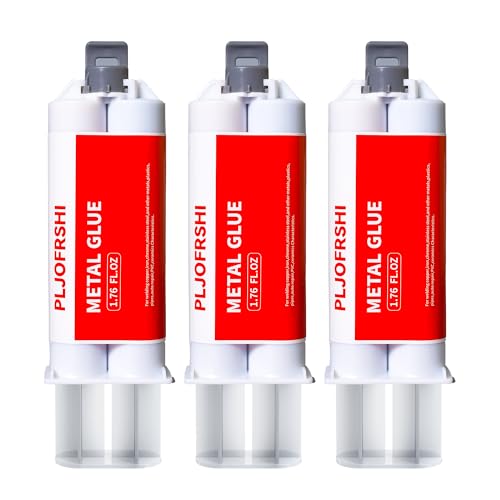
This three-pack epoxy kit delivers impressive specifications at a budget-friendly entry point. Each tube contains a two-component heavy-duty epoxy with a cured strength of 4680 PSI and a thermal stability range from -65°F to 287°F. That’s a wider operating window than several more expensive options, making it a strong candidate for automotive, boat, or outdoor repairs where temperature extremes are common.
The 1:1 mixing syringe makes application straightforward, and the included pusher and scraper add convenience. The epoxy sets in about five minutes and fully cures in 24 hours, achieving a gray finish that can be drilled, sanded, and painted. It bonds to aluminum, copper, iron, stainless steel, wood, plastic, and glass in addition to concrete.
The caveat is precision. For anchoring bolts or structural loads, a cartridge-based epoxy with a static mixer nozzle provides more consistent mixing and less waste. The syringe works best for smaller repairs like filling cracks, sealing leaks, or bonding brackets where high strength is needed but full-depth injection isn’t critical.
Why it’s great
- 4680 PSI cured strength rivals premium anchoring epoxies
- Wide temperature range from -65°F to 287°F
- Multi-material bonding including metal, wood, and ceramics
Good to know
- Hand-mixing syringe less consistent than cartridge systems
- Best suited for smaller repairs, not large anchor jobs
7. Professional Soma Fix Construction Adhesive
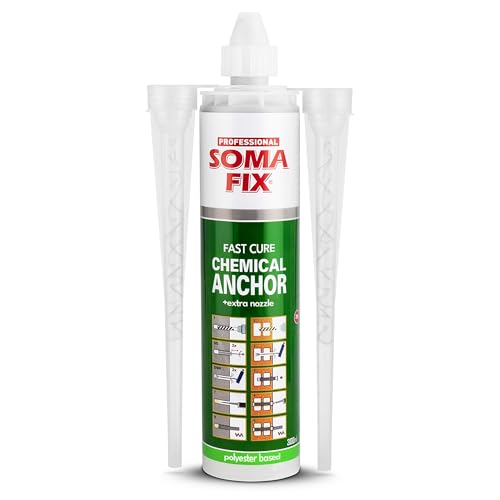
Professional Soma Fix offers a polyester resin anchoring system at a price that undercuts most epoxy cartridges while still delivering reliable holding power for concrete, brick, stone, and granite. The fast-curing formula sets quickly, and the included extra nozzle means you can complete multiple holes without pausing to clean or replace a clogged tip.
Application follows the standard drill-and-inject workflow: drill the hole, clean it, inject the resin, and insert the fastener before the material hardens. For hollow materials like brick or block, the product works with a mesh sleeve to prevent the resin from draining away, ensuring a secure anchor point.
The trade-off for the lower cost is that polyester resin typically has lower tensile strength and less chemical resistance than epoxy acrylate or pure epoxy systems. Users report it works well for railings, light fixture anchors, and general fastening where loads are moderate. For heavy structural anchoring like machinery bases or vehicle lifts, a premium epoxy system remains the safer choice.
Why it’s great
- Budget-friendly option for anchoring in solid concrete
- Extra nozzle included for multi-hole applications
- Fast-curing resin saves time on quick projects
Good to know
- Polyester resin weaker than epoxy for high-load anchoring
- Requires mesh sleeve for hollow masonry applications
FAQ
Can construction adhesive bond metal to concrete as well as epoxy does?
How do I prepare concrete for the strongest metal-to-concrete bond?
What temperature range can metal-to-concrete adhesives handle?
Can I use a spray adhesive to anchor bolts into concrete?
Final Thoughts: The Verdict
For most users, the best adhesive for metal to concrete winner is the Akona Fast-Setting Anchoring Epoxy because it combines a 12-minute set time, moisture tolerance, and proven holding power in a straightforward cartridge format. If you need an all-conditions solution that works in wet, flooded, or outdoor concrete, grab the DCP Quickmast AE15. And for the heaviest structural loads like car lifts or machinery anchoring, nothing beats the SIKA AnchorFix-2.