
Our readers keep the lights on and the weekend projects moving. As an Amazon Associate, I earn from qualifying purchases.
The speakers built into your monitor or laptop barely manage a whisper, leaving game footsteps buried, movie dialogue hollow, and your music collection flat. You need something that brings sound to life without demanding a corner of your paycheck for rent. The market is crowded with cheap plastic boxes that rattle and overpriced audiophile gear that makes no sense for a desk setup. This guide cuts past the noise to find the affordable computer speakers that actually deliver clear, balanced audio with enough low-end presence to make your games and media feel full.
I’m Rikta — the co-founder and writer behind FitlyFast. This guide is built from hundreds of hours of parsing technical datasheets, cross-referencing driver materials, amplifier wattage ratings, and connectivity standards, and analyzing real user feedback to isolate the desktop speakers that earn their spot on your desk without draining your wallet.
The search for the perfect balance of clarity, connection options, and physical footprint ends here with our curated selection of the best affordable computer speakers that prove great sound doesn’t require a second mortgage.
How To Choose The Best Affordable Computer Speakers
Picking the right pair of budget-friendly desktop speakers is about understanding where brands cut corners. A low price often means compromises in driver quality, amplifier power, or enclosure construction. Knowing which specs to prioritize keeps you from buying something that will buzz and distort at moderate volume.
Driver Size and Configuration
The driver is the engine of the speaker. A larger driver, typically measured in inches, can move more air and produce deeper bass. Look for at least a 2.5-inch full-range driver as a baseline for decent audio. For more distinct highs, a dedicated tweeter, like a 0.75-inch silk dome, paired with a separate mid-bass driver creates a more detailed and layered sound stage than a single full-range unit can manage.
Connectivity and the DAC Difference
How you send audio to the speakers matters as much as the speakers themselves. A 3.5mm aux cable works, but it relies on your computer’s internal sound card, which can introduce noise. Speakers with a built-in USB DAC bypass that by handling the digital-to-analog conversion internally, resulting in a cleaner signal path with less static and hiss. USB-C and Bluetooth 5.x options add flexibility for modern laptops and wireless streaming, but check for codec support like aptX Low Latency if you game wirelessly.
Enclosure Build and Power Type
Plastic enclosures vibrate with the sound, adding unwanted resonance and muddying the audio. A Medium-Density Fiberboard (MDF) wooden cabinet is denser and absorbs that resonance, keeping the sound from the driver clean and precise. Also, check the power source. USB-powered speakers are convenient but limited in output volume and bass. Speakers with an external AC power adapter can drive larger amplifiers and a subwoofer, delivering the power needed for room-filling sound without distortion.
Quick Comparison
On smaller screens, swipe sideways to see the full table.
| Model | Category | Best For | Key Spec | Amazon |
|---|---|---|---|---|
| Edifier G1000 II | Gaming | Compact RGB gaming sound | 2.5-inch Full-Range, Bluetooth 5.4 | Amazon |
| Creative T60 | Multimedia | Clear dialogue and compact desk | Built-in DAC, Virtual Surround | Amazon |
| OHAYO 60W | Hi-Fi | Detailed sound with MDF build | MDF Wood, 3-inch + Tweeter | Amazon |
| Bluedee 2.1 | 2.1 System | Deep bass with subwoofer | Dedicated Subwoofer, 80W Peak | Amazon |
| Ortizan C7 | Studio | Near-field music production | TRS Balanced, 24-bit DAC | Amazon |
| Edifier G2000 | E-Sports | High volume and RGB effects | 32W Peak, 2.75-inch Driver | Amazon |
| Amazon Basics | Basic | Simple upgrade from built-in | USB-Powered, 3.5mm Aux | Amazon |
In‑Depth Reviews
1. Edifier G1000 II
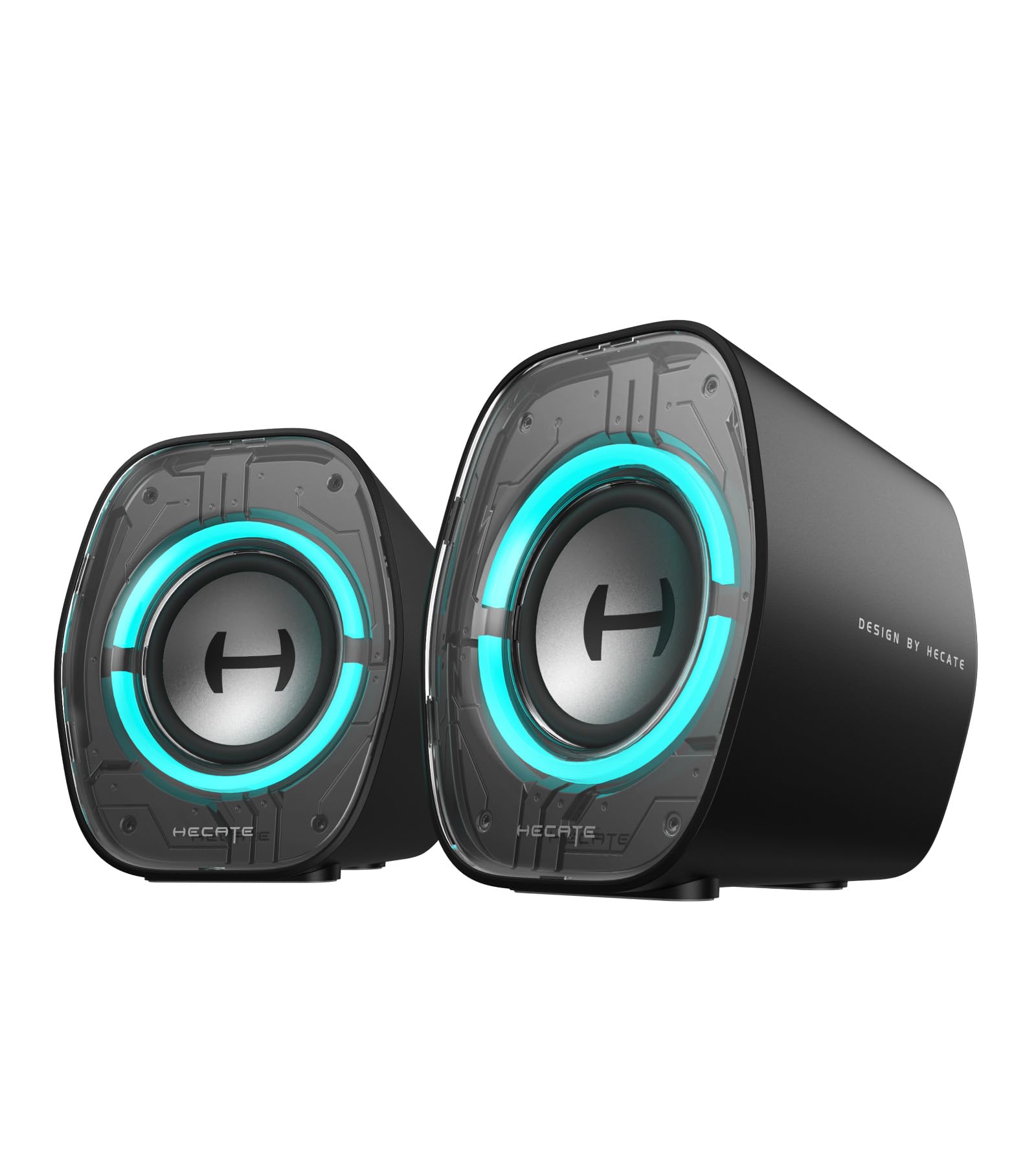
The Edifier G1000 II hits the sweet spot for the user who wants modern connectivity and versatile sound without jumping to a premium tier. Its 2.5-inch full-range driver is paired with a racetrack bass reflex port, which extends the low-end response beyond what a sealed budget driver can produce. This gives you enough thump for gaming explosions and the low rumble of a movie soundtrack without needing a separate subwoofer.
Connectivity is the standout feature here. Bluetooth 5.4 offers low latency for gaming, and the inclusion of both USB-C and standard 3.5mm AUX means it will work seamlessly with anything from a modern laptop to a desktop PC. The triple EQ modes for Music, Gaming, and Movie presets are practically tuned, meaning you get a noticeable shift in soundstage rather than a gimmicky filter. The top-mounted buttons for EQ and input switching are a welcome ergonomic touch compared to rear-mounted controls.
The 10-degree upward tilt of the cabinet is a thoughtful acoustical detail, aiming the drivers toward your ears to reduce desk reflection and improve clarity at a normal seated distance. The G1000 II delivers a complete, feature-rich package that bridges the gap between basic USB speakers and expensive dedicated monitors. For a daily driver on a mid-range budget, this set offers the most well-rounded feature set.
Why it’s great
- Excellent Bluetooth 5.4 with low latency
- Triple EQ modes for different content
- Compact footprint with a 10-degree tilt design
Good to know
- Bass extension is good, not earth-shattering
- Voice prompts cannot be fully disabled
2. Creative Labs T60

Creative Labs brings decades of audio engineering experience to the T60, a compact desktop system that punches well beyond its physical size. The key differentiator here is the built-in USB DAC, which bypasses your computer’s potentially noisy onboard sound card. This results in a remarkably clean signal path, with crisp highs and tight mids that reveal details in music mixes you would miss on standard aux-only speakers.
The T60 is designed for the user who prioritizes dialogue clarity for video calls and movies. The dedicated “Voice” mode boosts mid-range frequencies, making speech sound present and natural without the tinny echo that plagues lesser speakers. While the drivers are small and the low-end extension is not subwoofer territory, the clarity across the rest of the frequency range is impressive for such a small enclosure. The compact size allows it to sit flush under a 32-inch monitor without blocking the screen.
Connectivity is versatile, with Bluetooth, USB, and a 3.5mm input, and the speaker remembers the last input source used. The volume knob has a physical feel, though some units show a slight delay in response. The lack of auto-shutoff is a minor oversight for an energy-conscious setup. If your priority is crystal-clear communication and accurate audio reproduction over booming bass in a small footprint, the T60 is a top-tier choice in this price bracket.
Why it’s great
- Built-in USB DAC for cleaner audio
- Excellent mid-range clarity for voice
- Compact footprint for tight desks
Good to know
- Low-end bass extension is limited
- No auto-shutoff feature
3. OHAYO 60W

OHAYO aims directly at the budget-conscious audiophile with a construction choice that immediately separates it from the plastic crowd: an MDF wooden enclosure. This material density is critical because it absorbs cabinet vibrations that would otherwise color the sound. The result is a cleaner, more accurate presentation from the 3-inch carbon fiber full-range driver and the dedicated 0.75-inch silk dome tweeter, a two-way design that provides separation between highs and mids most single-driver setups lack.
The feature set is generous for the price point. The front panel offers independent Treble and Bass knobs, giving you real tonal control without needing an equalizer app. The connectivity suite is impressively broad, offering Bluetooth 5.3, USB, RCA, and a 3.5mm Aux input. The inclusion of a 60W peak power rating means these speakers can fill a small to medium room without straining, maintaining clarity even when driven hard.
Multiple user reports from experienced listeners note the sound signature is “flat enough” for casual music mastering, a strong endorsement at this price. The main trade-off is the physical size; these are bookshelf speakers, not ultra-compact desktop units. They require dedicated space on either side of your monitor. For the user who values accurate audio reproduction and build quality over extreme portability, the OHAYO 60W set offers a genuine hi-fi path on a strict budget.
Why it’s great
- MDF wood enclosure for cleaner sound
- Two-way driver design with tweeter
- Separate Treble and Bass physical controls
Good to know
- Larger bookshelf form factor
- Extreme low-bass requires a subwoofer
4. Bluedee 2.1 with Subwoofer
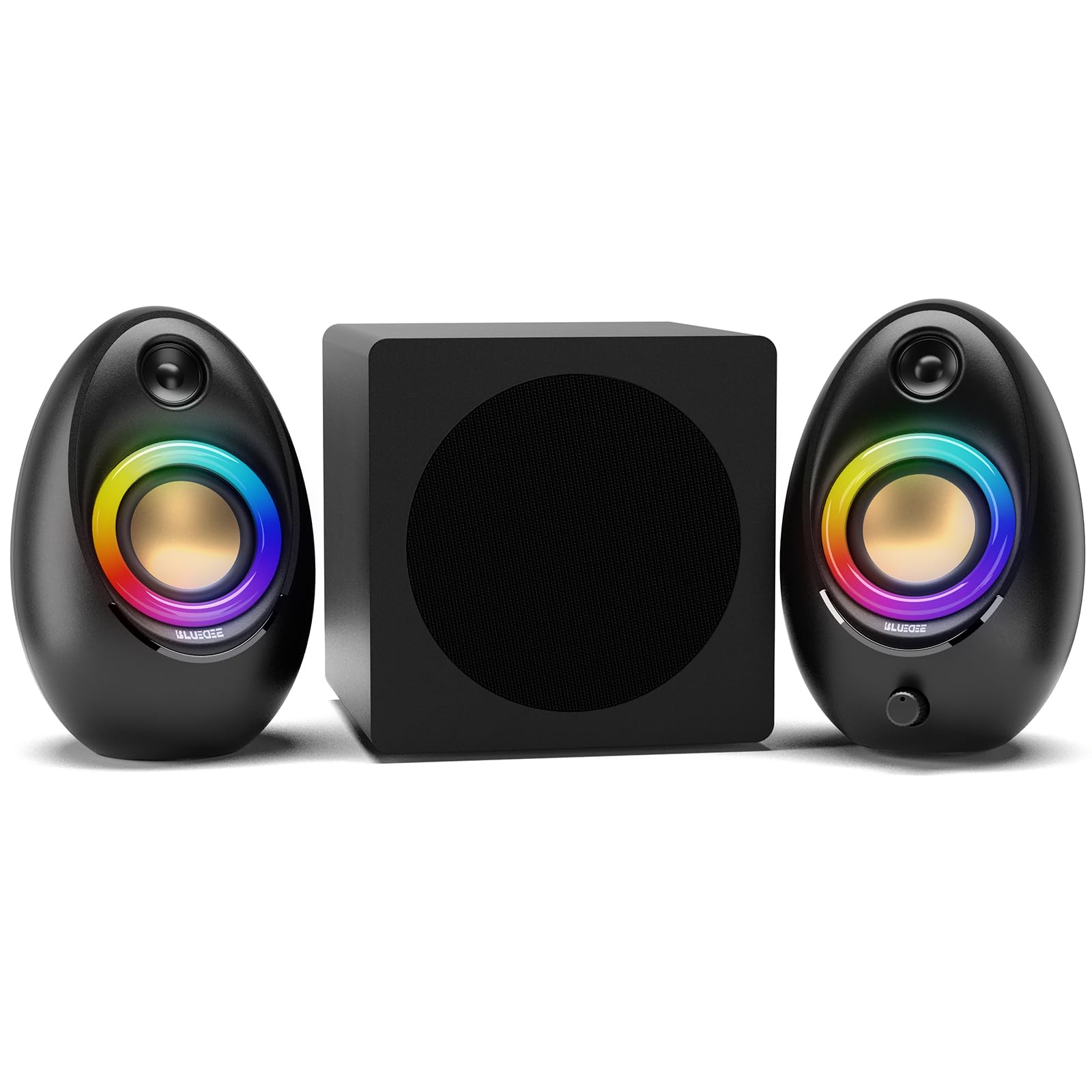
If you need palpable, chest-thumping bass for movies and explosive games, the Bluedee 2.1 system is the only practical choice in this affordable lineup. Its dedicated subwoofer takes the burden of low-frequency reproduction off the satellite speakers, allowing them to focus on clear, undistorted mids and highs. The 80W peak power rating gives this system headroom that 2.0 setups simply cannot match in the low-end department.
The inclusion of Bluetooth 5.4 is a forward-looking choice, offering stable wireless performance with low latency. Wired connections are equally well-supported via USB-A, USB-C, and standard 3.5mm AUX, ensuring compatibility with any PC or laptop. The all-in-one control knob on the satellite speaker handles volume, playback, lighting mode switching, and input selection, keeping the desk clean and operation intuitive.
Reviewers consistently praise the system for delivering “punchy, clean bass that rivals pricier Edifier systems.” The DSP tuning ensures the sound does not get harsh at high volumes, a common failure of cheap 2.1 systems. The trade-off for this bass is space: you need room on the floor or desk for the subwoofer box. If your primary listening revolves around action films, EDM, or competitive gaming where footsteps and explosions matter, the Bluedee 2.1 delivers the most visceral audio experience in this guide.
Why it’s great
- Dedicated subwoofer for deep bass
- 80W peak power with DSP tuning
- Bluetooth 5.4 with USB-C connectivity
Good to know
- Subwoofer requires extra desk or floor space
- Plastic satellite enclosures
5. Ortizan C7 Studio Monitors
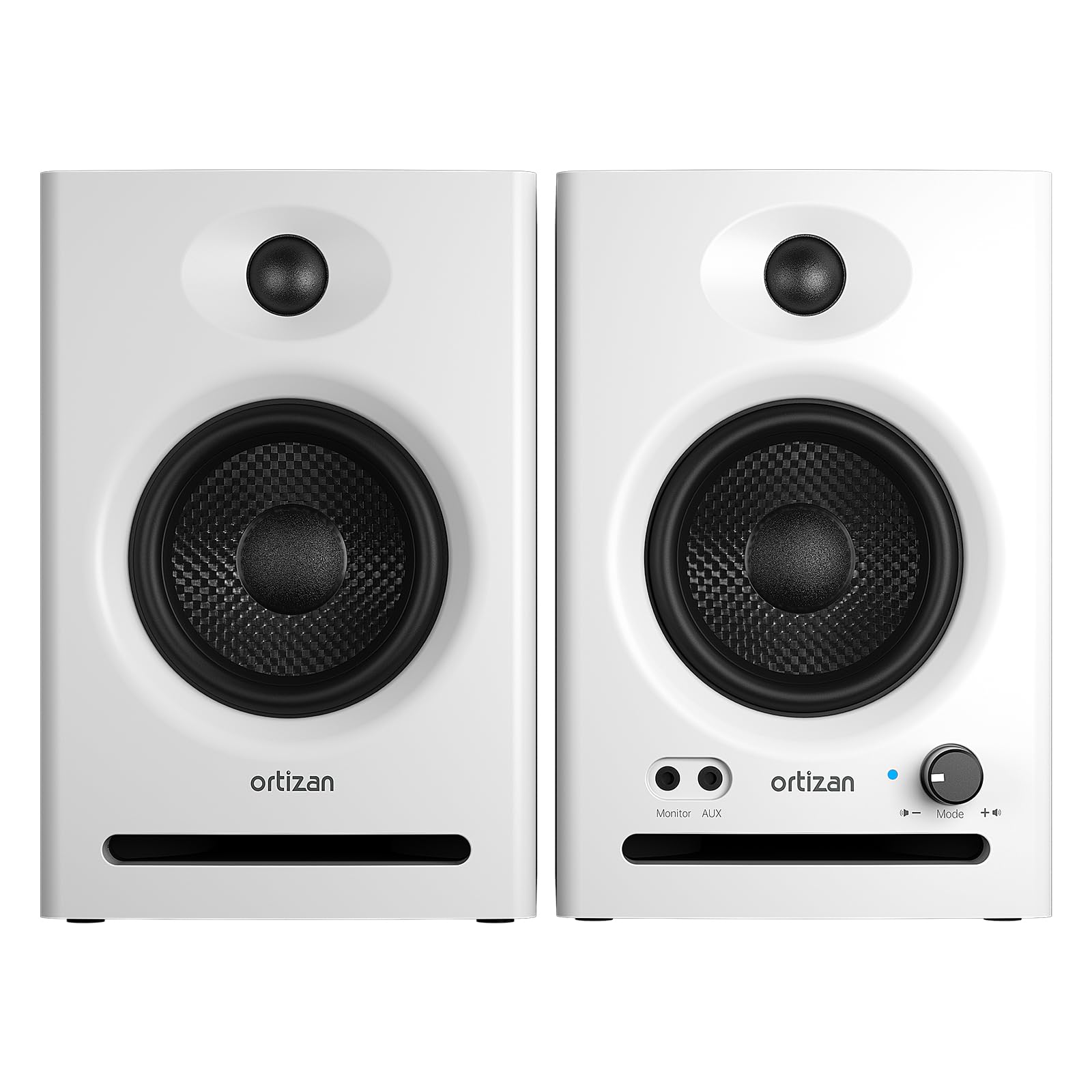
The Ortizan C7 speakers are a revelation for the aspiring content creator or home studio musician who needs accurate monitoring on a tight budget. Their defining feature is the inclusion of 6.35mm TRS balanced inputs, a professional connection standard that rejects electrical interference and allows for longer cable runs without noise. This level of connectivity is virtually unheard of in this price range and opens the door to connecting audio interfaces and mixing consoles.
Acoustically, the C7 uses a 3.5-inch carbon fiber mid-bass driver paired with a 0.75-inch silk dome tweeter. The carbon fiber cone is stiffer than paper or polypropylene, reducing distortion at higher volumes and providing a flatter frequency response. The internal 24-bit DAC captures digital audio via USB with minimal signal loss, contributing to a sound signature that reviewers describe as “near-flat” and tonally close to much more expensive reference monitors.
The speaker also features dedicated Music and Monitor listening modes, a professional tool for switching between a flatter analytical sound and a slightly more colored listening experience. The main compromises are a weaker low-end extension that benefits from a subwoofer for hip-hop and EDM, and a volume knob that feels slightly choppy rather than smooth. If accurate sound reproduction for music creation or critical listening is your priority, the Ortizan C7 represents an incredible value that bridges the gap between consumer speakers and professional monitors.
Why it’s great
- TRS balanced inputs for pro gear
- Carbon fiber drivers for low distortion
- Near-flat frequency response for monitoring
Good to know
- Bass is limited, subwoofer recommended
- Volume knob has digital steps, not analog smooth
6. Edifier Hecate G2000
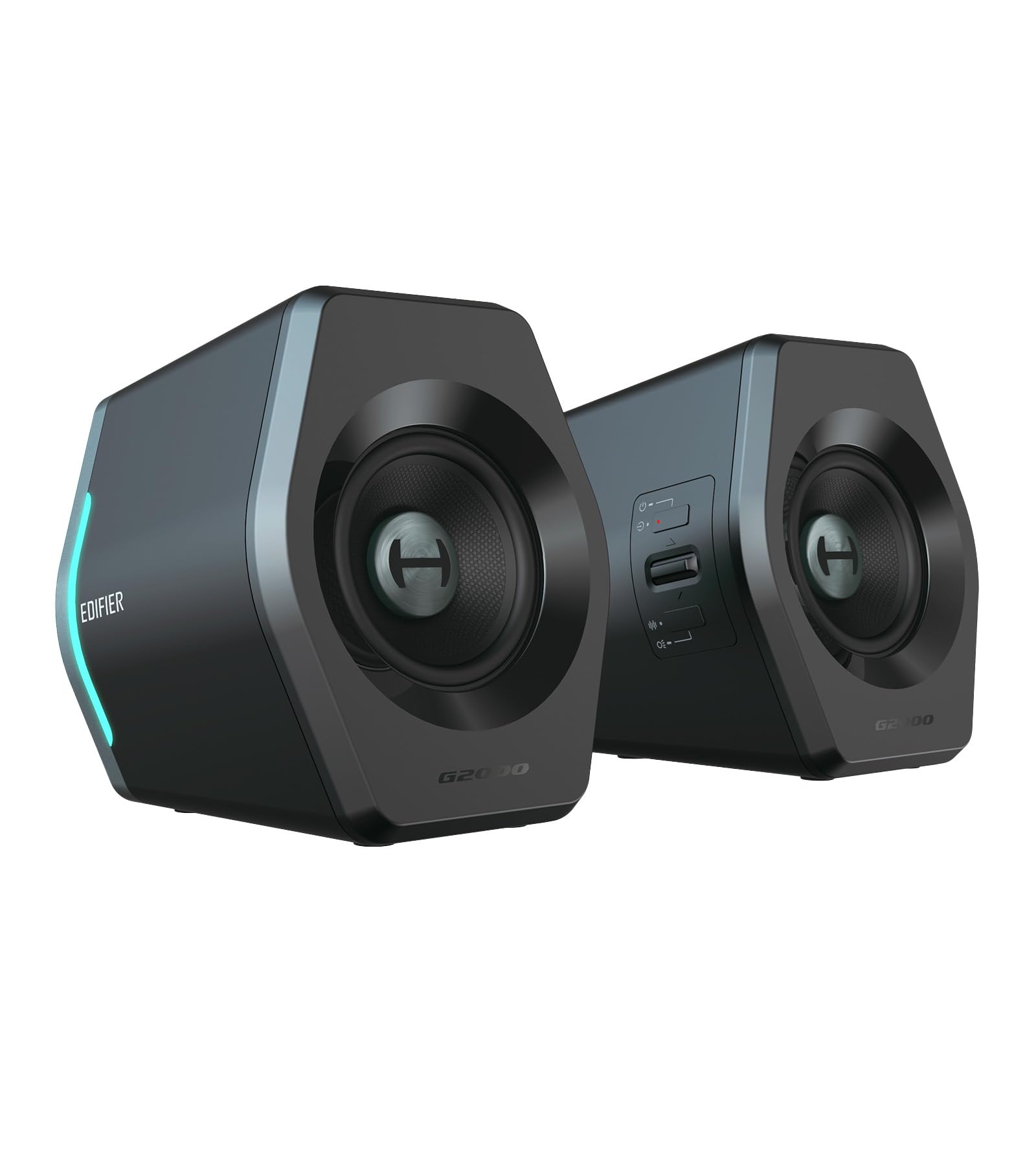
The Edifier Hecate G2000 is purpose-built for the competitive gamer who wants explosive audio and a vibrant aesthetic. With a 32W peak power output driven by 2.75-inch full-range drivers, these compact speakers can fill a room with clean, punchy sound. The dedicated Gaming EQ mode sharpens the soundstage for positional audio cues, making enemy footsteps and directional gunfire more discernible during intense matches.
The RGB lighting is not an afterthought—it offers 12 customizable effects that can sync with your gameplay atmosphere or be set to a static glow for a cleaner look. The build quality features matte panels and a metal laser-engraved knob, giving it a premium feel that matches its higher price point within the affordable category. The compact 4.1-inch square footprint and 10-degree upward tilt make it an ideal fit on a crowded gaming desk, sliding under a monitor easily.
Multi-device connectivity via Bluetooth 5.1, USB sound card, and 3.5mm AUX ensures compatibility with a gaming PC, PS4, or phone. The main critique is the “gimmicky” chime sound it makes on power-up and power-down, which some users find grating. Additionally, using a high-quality 3.5mm aux cable often yields better audio quality than Bluetooth. For the dedicated gamer who values a bold look and powerful, punchy audio in a tiny chassis, the G2000 is a fierce contender.
Why it’s great
- High 32W peak power in a tiny chassis
- 12 customizable RGB lighting effects
- Dedicated Gaming EQ mode for audio cues
Good to know
- Loud power-on/off chime
- AUX cable yields better quality than Bluetooth
7. Amazon Basics Stereo 2.0

The Amazon Basics Stereo 2.0 speakers are the entry-level solution for anyone currently suffering through laptop or monitor speakers and needing an immediate, painless upgrade. These are powered directly by a USB port and accept audio via a standard 3.5mm aux cable, meaning there is zero setup friction. Plug them in, and you instantly get louder, clearer audio for YouTube, meetings, and casual music.
The design is simple and functional. The in-line volume control cable dangles below the desk, providing easy access without reaching for a knob. A bottom radiator is engineered to provide a “springy” bass response, which is a clever trick for a USB-powered set. While this does not compare to a dedicated subwoofer, it adds a noticeable punch during action scenes that flat USB speakers lack. The blue LED lights add a subtle glow, and the scratch-resistant padded base protects your desk surface.
User reviews consistently praise the “bang for your buck” and note they are significantly louder and clearer than the built-in speakers on a Dell or HP desktop. The primary limitation is power. Being USB-powered means output is capped, and the bass will distort if the volume is pushed to maximum. They are best for small rooms, apartments, or office cubicles. For the absolute lowest barrier to entry, the Amazon Basics Stereo speakers solve the “no sound” problem reliably and cheaply.
Why it’s great
- Simple plug-and-play USB setup
- Bottom radiator for surprising bass
- Excellent value for the entry-level price
Good to know
- USB power limits maximum volume and bass
- Sound quality is basic, not hi-fi
FAQ
Is a USB connection always better than a 3.5mm aux connection for computer speakers?
What is the practical advantage of a 2.1 speaker system over a 2.0 system for a desktop?
How does peak wattage relate to actual loudness and sound quality?
Final Thoughts: The Verdict
For most users, the best affordable computer speakers winner is the Edifier G1000 II because it delivers the best mix of modern Bluetooth connectivity, versatile EQ tuning, and a compact, desk-friendly design that works for gaming, movies, and music. If you want deep bass for explosive content, grab the Bluedee 2.1 system. And for accurate sound reproduction needed for music creation, nothing beats the Ortizan C7 Studio Monitors.