
Our readers keep the lights on and the weekend projects moving. As an Amazon Associate, I earn from qualifying purchases.
Nothing ruins a summit push faster than a sleepless night spent shivering on frozen ground. Your sleeping pad is the single most critical layer between your body and the cold, rocky earth — get it wrong and even the best sleeping bag won’t save you. Weight, packed size, and insulation (measured by R-value) are the non-negotiable specs that separate a restful alpine sleep from a miserable, heat-sapping ordeal.
I’m Rikta — the co-founder and writer behind FitlyFast. I’ve spent countless hours analyzing insulation technologies, valve designs, fabric deniers, and packed volumes to bring you the clearest breakdown of what actually works when you’re carrying every ounce on your back.
A quality backcountry sleep demands a pad that balances warmth, weight, and durability. After extensive research, I’ve curated the definitive list of the best backcountry sleeping pad options for every type of trail dweller.
How To Choose The Best Backcountry Sleeping Pad
Selecting the right backcountry sleeping pad means ignoring the marketing fluff and focusing on three interconnected pillars: thermal insulation, physical comfort, and packability. Your budget and typical terrain will dictate where you compromise, but understanding the core metrics is essential before you click buy.
Decoding R-Value: Your Shield Against Ground Heat Loss
R-value measures a pad’s resistance to conductive heat loss into the ground. For three-season backpacking where lows hover around freezing, aim for an R-value of 4.0 or higher. For true winter or alpine conditions, a pad with an R-value of 5.0 or above is non-negotiable. Remember, R-values are additive — you can stack a closed-cell foam pad under an inflatable to boost total warmth, though this adds bulk and weight.
Thickness, Baffles, and Your Sleeping Position
A pad’s thickness directly determines how well it isolates you from rocks and roots. Most quality pads sit between 3 and 4 inches thick. The internal baffle structure is equally critical: horizontal baffles offer comfort for side sleepers but can feel unstable, while vertical or I-beam baffles provide better stability for restless sleepers who toss and turn. If you sleep on your side, look for pads with larger outer chambers or thicker profiles to prevent your hip from bottoming out against the ground.
Weight vs. Packed Volume: The Eternal Trade-off
Ultralight backpackers often prioritize a pad that weighs under a pound and packs down to the size of a 1-liter water bottle. The trade-off is usually durability and sometimes warmth. Heavier pads with higher denier fabrics (like 70D nylon bottoms) are more resistant to punctures from sharp rocks and thorns, making them better suited for rugged terrain. A pump sack is a luxury that saves you from blowing moisture-rich breath into the pad, which can lead to internal mold and reduced insulation over time. Always consider the packed length — a short, fat roll fits better inside a frameless backpack than a long, skinny one.
Quick Comparison
On smaller screens, swipe sideways to see the full table.
| Model | Category | Best For | Key Spec | Amazon |
|---|---|---|---|---|
| Therm-a-Rest NeoAir XTherm NXT | Premium | Extreme cold / Mountaineering | 7.3 R-Value, 15.5 oz | Amazon |
| Therm-a-Rest NeoAir XLite NXT | Premium | Year-round ultralight backpacking | 4.5 R-Value, 13 oz | Amazon |
| NEMO Equipment Tensor All-Season | Premium | Silent side sleepers | 5.4 R-Value, 17.6 oz | Amazon |
| Big Agnes Rapide SL | Mid-Range | Three-season comfort / bike packing | 4.8 R-Value, quilted top | Amazon |
| FLEXTAILGEAR R05 | Mid-Range | Cool-weather side sleepers | 5.6 R-Value, 4 in thick | Amazon |
| Naturehike Ultralight | Mid-Range | Budget-friendly winter warmth | 4.6 R-Value, 27 oz | Amazon |
| Hikenture Camping Sleeping Pad | Budget | Entry-level all-season value | 6.2 R-Value, 1.5 lb | Amazon |
In‑Depth Reviews
1. Therm-a-Rest NeoAir XTherm NXT

The NeoAir XTherm NXT is the gold standard for mountaineers and cold-weather campers who refuse to compromise on warmth. Its 7.3 R-value is achieved through a combination of reflective ThermaCapture technology and a Triangular Core Matrix that minimizes convective heat loss — this pad is as warm as a closed-cell foam pad but with a much softer, 3-inch-thick profile. The 70D ripstop nylon bottom provides serious puncture resistance for rocky alpine campsites, while the WingLock valve allows rapid inflation and lightning-fast deflation even with cold, stiff fingers.
Weighing only 15.5 ounces in Regular size, it packs down to roughly the volume of a 1-liter bottle, making it one of the most warmth-dense options on the market. The included pump sack keeps moisture out of the pad and reduces inflation time to under a minute. Users consistently report staying warm in sub-freezing temperatures with lower-rated quilts and bags, a testament to how effectively this pad isolates the body from the ground.
The primary trade-off is noise: the reflective layer produces a noticeable crinkle sound when shifting position during the night. While many users report this becomes less bothersome over time, light sleepers may find it distracting. Additionally, a small number of users have reported slow leaks, so testing the pad before a major expedition is recommended. For those who need absolute warmth in a minimal package, the XTherm NXT remains the undisputed king.
Why it’s great
- 7.3 R-value is unmatched for its weight class — ideal for extreme cold.
- WingLock valve makes inflation simple and deflation instant.
- 70D bottom fabric withstands rough terrain and thorns.
- Packs down extremely small for the warmth it provides.
Good to know
- Crinkling noise from reflective layer may disturb light sleepers.
- Some units have been reported with slow, persistent leaks.
- Tapered shape may not suit everyone’s preferred sleeping position.
2. Therm-a-Rest NeoAir XLite NXT

The NeoAir XLite NXT has long been the benchmark for ultralight backpackers. At just 13 ounces and packing down to the size of a standard 1-liter bottle, it shaves critical weight for multi-day carries. Its 4.5 R-value is warm enough for most three-season conditions and even mild winter use, making it a versatile choice for year-round adventures where base temperatures rarely plunge below 20°F. The updated NXT generation has largely resolved the loud crinkling issue that plagued earlier versions, with most users describing it as silent or only faintly present.
The 3-inch-thick profile provides consistent comfort without bottoming out, thanks to the internal baffled structure that stabilizes the air chamber. The WingLock valve is a pleasure to use — the one-way inflation mechanism eliminates backflow, and the wide deflation port lets you pack up in seconds. The PFAS-free DWR coating on the stuff sack is a nice environmental touch, though the 20D nylon face fabric is thin and requires careful site selection and potentially a groundsheet for protection.
This pad is truly best for gram-counting backpackers who prioritize minimal weight and packed size above all else. It is not the widest pad on the market at 20 inches, and some side sleepers may find it feels narrow. The price point is steep, but the build quality and warranty support from Therm-a-Rest are excellent. If you can stomach the cost, the XLite NXT is the most performance-driven ultralight pad money can buy.
Why it’s great
- Incredibly light at 13 oz — perfect for long-distance carries.
- Durable WingLock valve for easy one-handed inflation and rapid deflation.
- Excellent warmth-to-weight ratio for three-season conditions.
- Updated design is significantly quieter than previous generations.
Good to know
- Thin 20D fabric requires careful ground preparation to avoid punctures.
- Narrow 20-inch width may feel restrictive for broader side sleepers.
- May not be warm enough for deep winter below 20°F without pairing.
3. NEMO Equipment Tensor All-Season
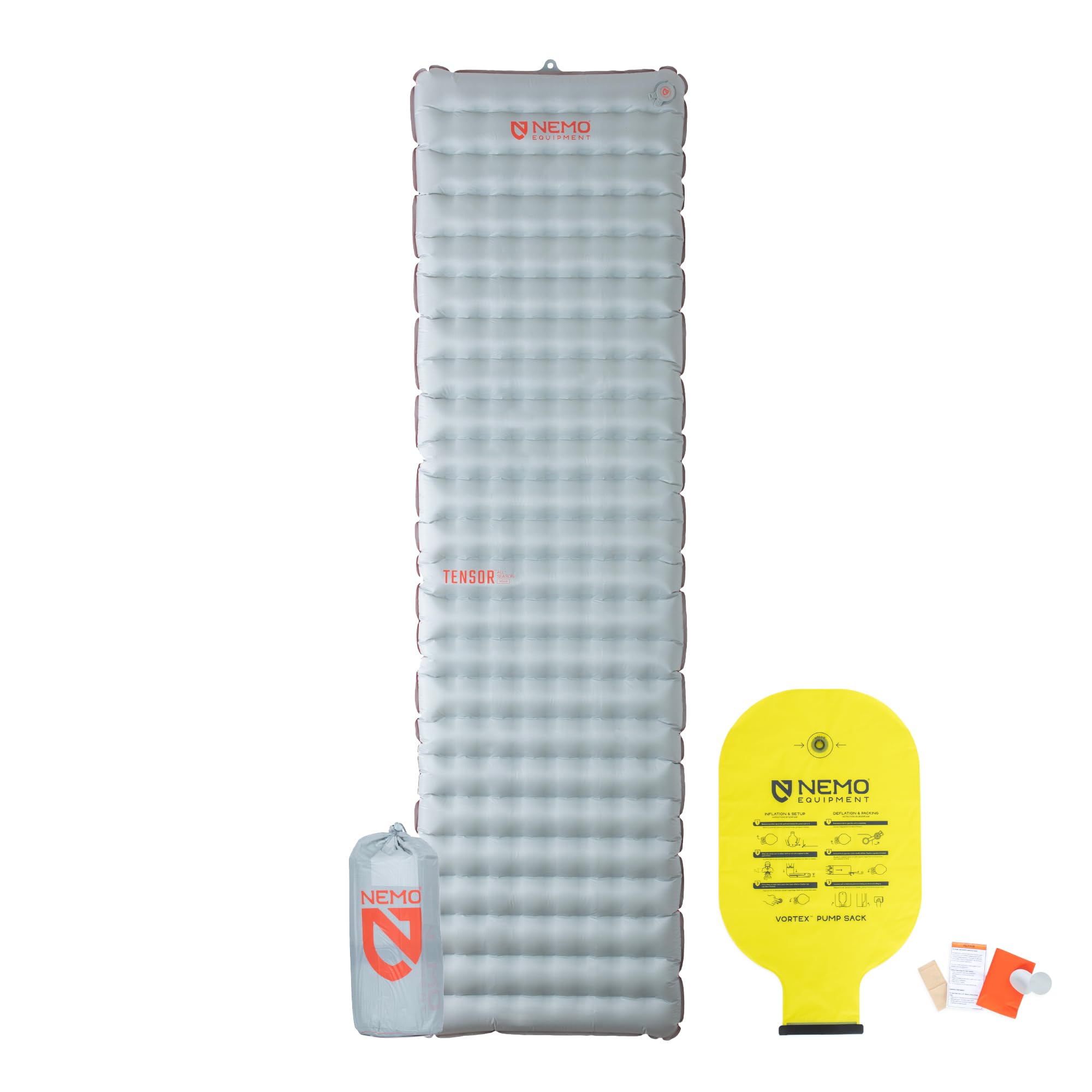
The NEMO Tensor All-Season is the quietest premium insulated pad on the market. While many high-R-value pads rely on crinkly reflective layers, NEMO’s floating Thermal Mirror metallized film is suspended within the baffles to eliminate the crinkle sound. At 5.4 R-value, it provides genuine four-season warmth without the noise penalty. The 3.5-inch thickness offers cushioned loft for side sleepers, and the Spaceframe baffle design uses die-cut trusses that completely eliminate the springy, trampoline-like sensation common in many inflatable pads.
NEMO uses bluesign approved premium nylon fabrics that are lightweight yet surprisingly puncture-resistant. The pad survived 18°F hammock camping and rocky ground without issues in user reports. The included inflation sack works well, though some users note it takes two or three sackfuls of air to reach full firmness. The single valve is simple but effective — push to inflate, pull to deflate — though deflation requires a bit of rolling or packing technique. The Regular size (72×20 inches) is adequate for most, but the wide version is highly recommended for larger or broader sleepers.
The Tensor’s main drawback is its price, which sits at the top end of the market. Build quality is outstanding, and NEMO’s lifetime warranty backs it with confidence. If silence is your top priority and you regularly camp in mixed seasons, the Tensor All-Season is the refined choice. It is slightly heavier than the Therm-a-Rest XLite, but the comfort and quiet are worth the extra 4.6 ounces for many backcountry enthusiasts.
Why it’s great
- Near-silent insulation — no annoying crinkle or rustle when shifting.
- Spaceframe baffles eliminate trampoline bounce for stable sleep.
- 5.4 R-Value provides genuine four-season warmth capability.
- Bluesign certified fabrics with good puncture resistance.
Good to know
- Price is premium — expect to pay top dollar for this performance.
- Deflation requires careful rolling or packing to fully evacuate air.
- Single valve, while simple, is slower than the WingLock system.
4. Big Agnes Rapide SL

The Big Agnes Rapide SL is designed for comfort first — its quilted top layer creates a pillowy, cushioned sleeping surface that feels more like a home mattress than a backpacking pad. At 4.8 R-value, it delivers ample warmth for three-season adventures and mild shoulder-season use. The proprietary offset I-Beam construction reduces weight while maintaining consistent stability, and the 4.25-inch outer chambers create a subtle cradle that keeps you centered on the pad without the bouncy sensation of some air mattresses.
The double ripstop nylon with aviation-grade TPU lamination has proven exceptionally puncture-resistant in user reports, including a week-long Grand Canyon backpacking trip. The high-volume Pumphouse inflation sack fills the pad in under four minutes without introducing moisture, and the micro-adjustment valve lets you fine-tune firmness easily. This pad is also noticeably quieter than many reflective-layer pads, making it a strong choice for tent-sharing.
The trade-off is packed size and weight — it’s not the smallest or lightest pad in this roundup. It will take up slightly more space in your backpack than the Therm-a-Rest XLite. However, for anyone who prioritizes sleep quality on multi-day trips and isn’t cutting every gram, the Rapide SL offers a fantastic balance of comfort, warmth, and durability. The lifetime warranty from Big Agnes provides peace of mind for years of adventure.
Why it’s great
- Quilted top provides exceptional plush comfort for side and back sleepers.
- Offset I-Beam construction reduces weight while maintaining stability.
- Micro-adjustment valve allows precise firmness tuning.
- Very durable fabric resists punctures well in rugged terrain.
Good to know
- Packed size is larger than ultralight competitors.
- Weight is slightly higher — not ideal for gram-counters.
- R-Value good for three seasons but may need pairing for deep winter.
5. FLEXTAILGEAR R05
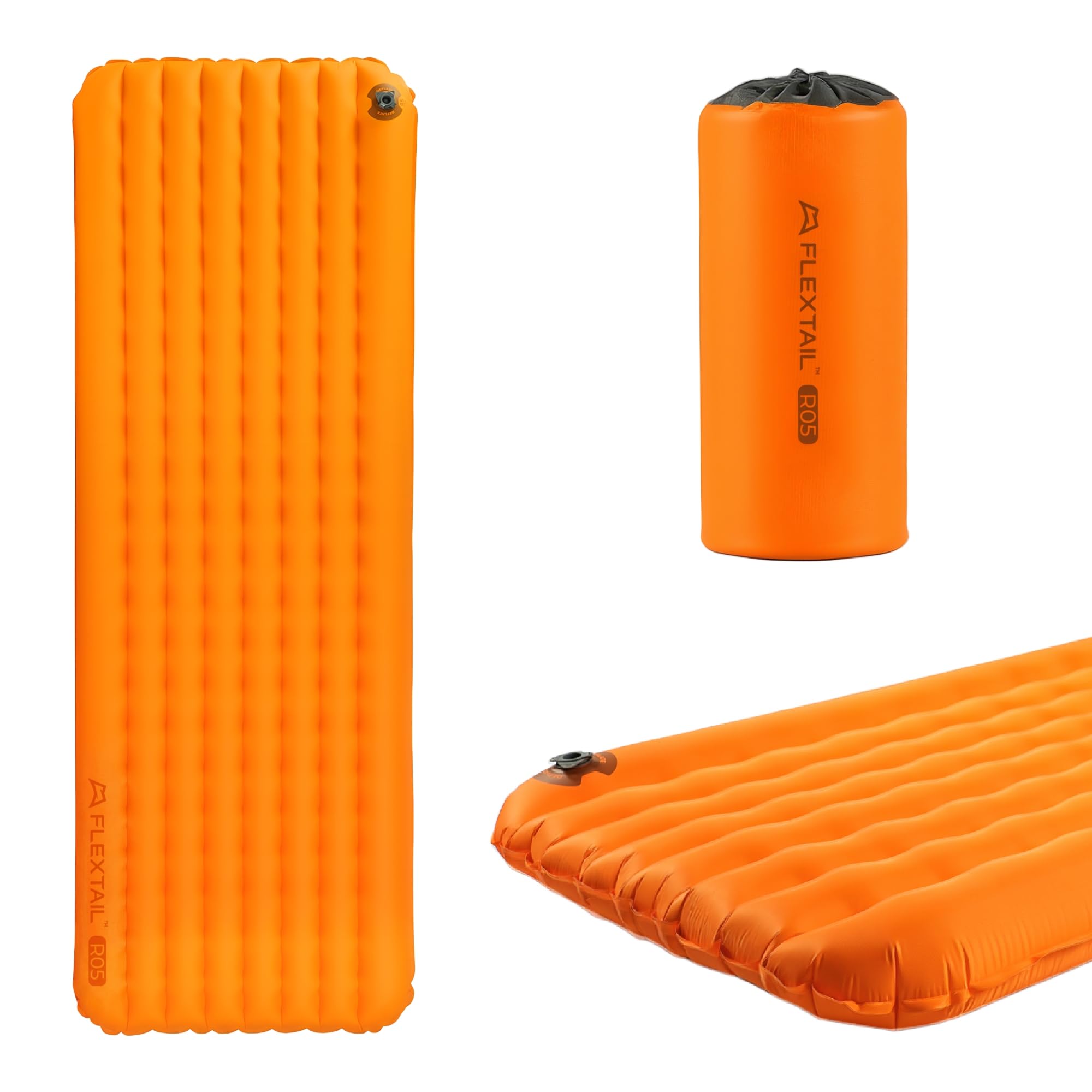
The FLEXTAILGEAR R05 punches well above its weight class with an ASTM-tested 5.6 R-value and a generous 4-inch thickness that provides outstanding ground isolation. This is a genuinely warm pad, tested by users who stayed comfortable below freezing with a 10°F quilt and 25 mph winds. The internal chamber structure distributes weight evenly and the integrated reflective layer boosts thermal efficiency without massive added weight. At 19.6 oz (555 g), it is heavier than the premium ultralight pads, but the warmth and thickness make it a legitimate four-season contender.
For side sleepers, the 4-inch thickness is a game-changer — it prevents hip bottom-out better than almost any other pad in the mid-range category. The 77-inch length accommodates taller users well, and the 25.6-inch width offers ample room to roll. The included storage bag and two repair patches add value. The tear-resistant 20D nylon fabric feels durable enough for typical backpacking terrain, though users have noted that the valve on some units may be prone to slow leaks, so checking the unit upon arrival is wise.
The R05 occupies a sweet spot between price and performance. It offers premium-level warmth for a fraction of the cost of high-end models, making it an excellent choice for budget-conscious backpackers who still demand real insulation. The main downsides are the modestly higher weight and packed size compared to the true ultralight elite. If you can handle the extra ounces, this pad delivers exceptional thermal performance that rivals pads costing significantly more.
Why it’s great
- 5.6 R-Value is genuinely warm for sub-freezing conditions.
- 4-inch thickness provides superior comfort for side sleepers.
- Excellent warmth-to-price ratio — great value for insulated pads.
- Stable internal chambers prevent bouncing and bottoming out.
Good to know
- Heavier than premium ultralight options at 19.6 oz.
- Some units reported with valve leaks requiring return.
- Not as packable as the Therm-a-Rest XLite or NEMO Tensor.
6. Naturehike Ultralight
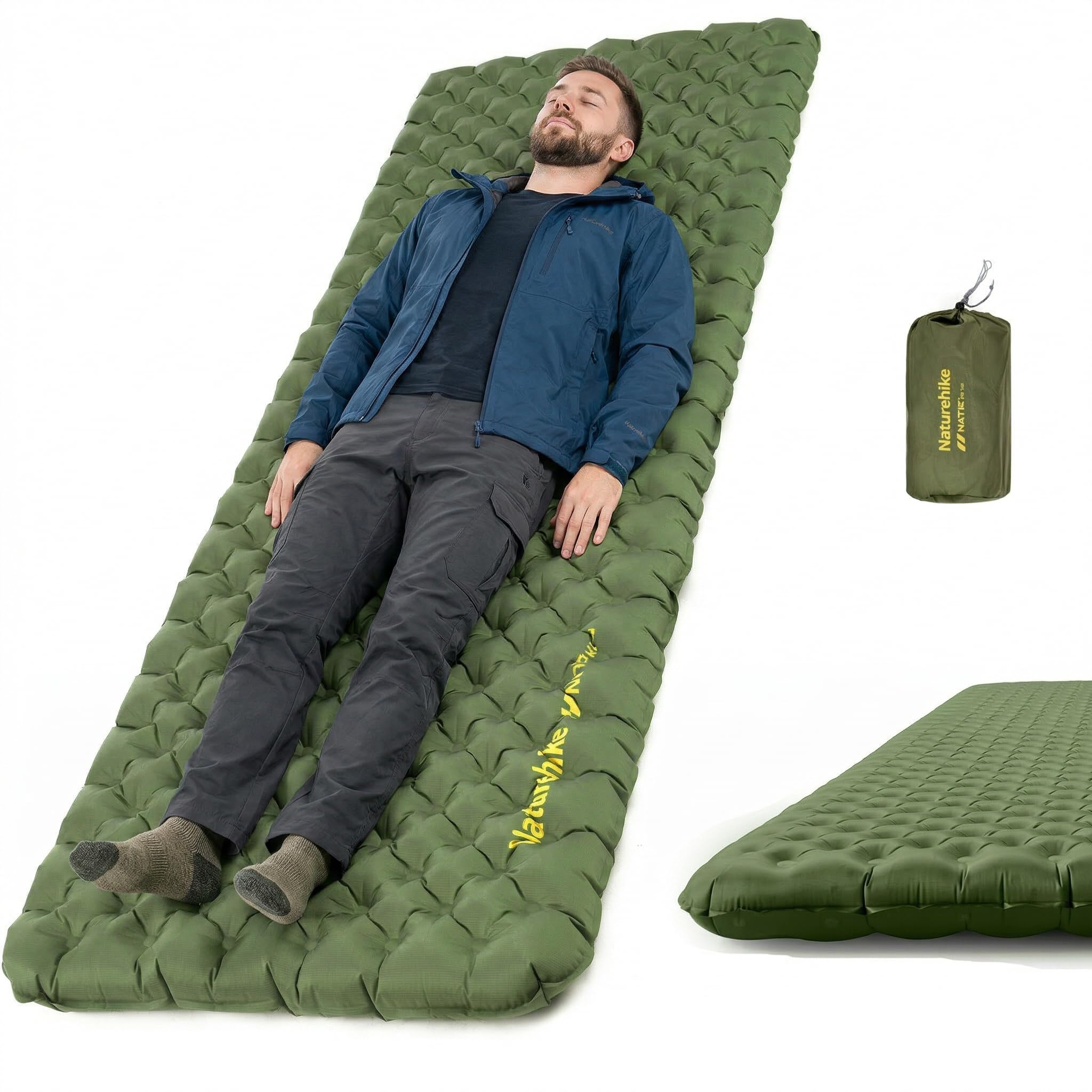
The Naturehike Ultralight pad leverages an eight-layer aluminum molded 3D insulation structure that significantly reduces convective heat loss, achieving a 4.6 R-value warm enough for conditions down to -4°F. The NKTR Air Heat-Reflective System uses multi-layer composite aluminum to circulate heat and prevent the back from getting cold. The 3.2-inch thickness and punching point structure distribute pressure evenly, providing a soft but supportive feel that suits both back and side sleepers. At 27 ounces, it is the heaviest pad in our roundup, but the warmth is genuine and reliable.
The 20D nylon and TPU construction offers good abrasion resistance and flexibility in cold temperatures. The patented dual-vent valve design is clever — open the outer air cover for one-way inflation to reduce backflow, then open the inner cover for rapid deflation. The included inflatable bag doubles as a stuff sack, though some users found the attachment method unclear. The pad measures 77 x 25.2 inches, providing generous room for rolling and shifting. Users have reported excellent durability and comfort, even with regular use and some rough handling.
The Naturehike pad is not for the ultralight purist — it is bulky and heavy compared to the competition. However, for car campers, canoe trippers, or backpackers who prioritize warmth and budget over weight, this pad is an exceptional value. The 4.6 R-value is sincere and well-tested. The only real technical downside is the slight learning curve with the inflation bag attachment. If you want a warm, cozy winter sleep without a premium price tag, this is an excellent choice.
Why it’s great
- 4.6 R-Value is genuinely warm for winter conditions down to -4°F.
- Dual-vent valve allows controlled one-way inflation and fast deflation.
- Roomy dimensions (77 x 25.2 in) suit tall and broad sleepers.
- TPU construction is durable and cold-resistant.
Good to know
- Heavy at 27 ounces — not suitable for ultralight backpacking.
- Bulkier packed size than premium competitors.
- Inflation bag attachment method can be unintuitive at first.
- Some users report slight crinkling from the reflective layer.
7. Hikenture Camping Sleeping Pad
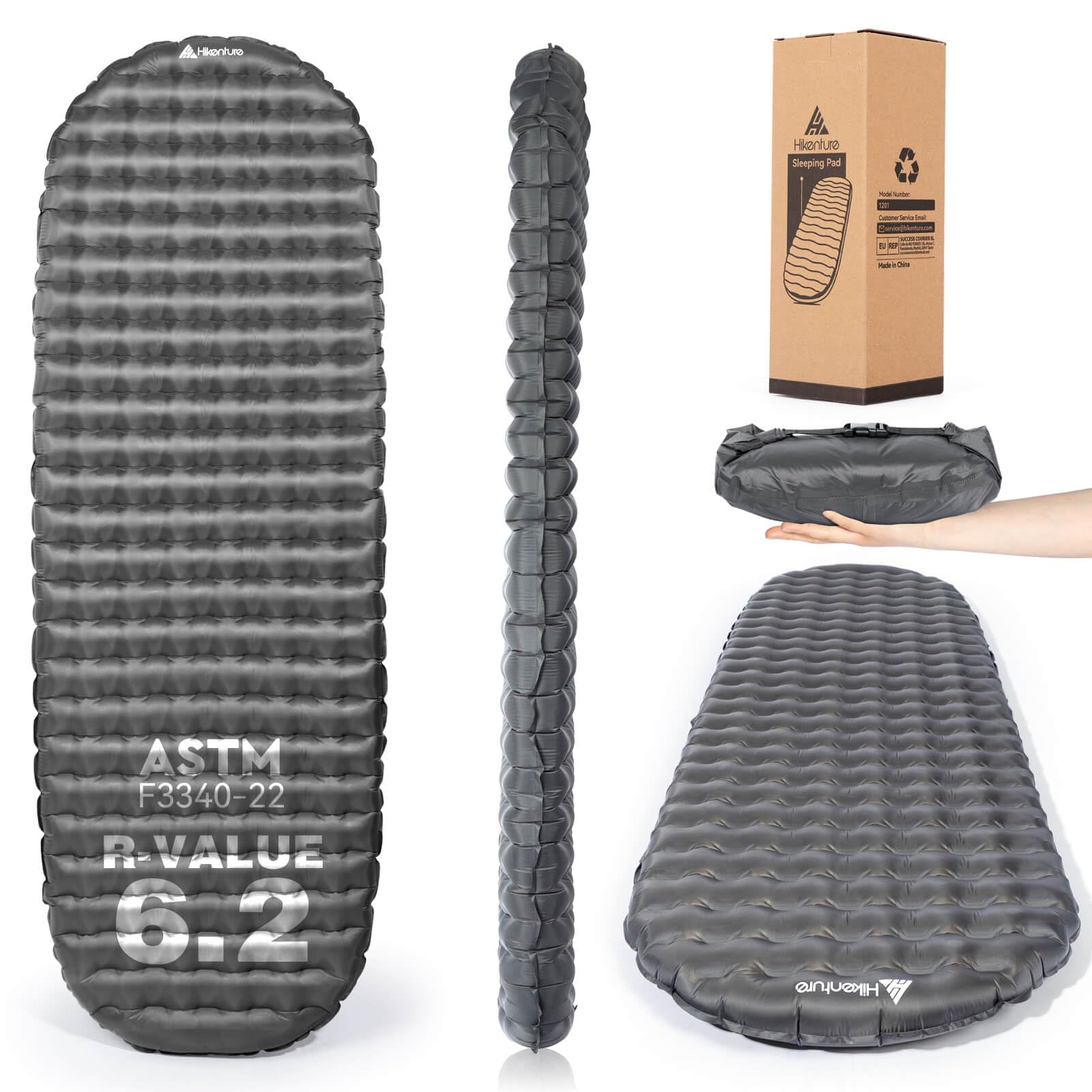
The Hikenture pad is the surprise contender of this roundup, offering a 6.2 R-value — one of the highest in the entire list — at a price that undercuts most competitors. This ASTM-tested insulation is achieved through an aluminum film construction that effectively reflects body heat back to the user. The 3.2-inch thickness and unique airbag structure distribute pressure evenly, and users have reported staying warm in snowstorms with a 0°F-rated bag. The pad includes two repair patches, a thoughtful addition for a budget-friendly product.
The included 40L storage bag doubles as a pump sack that inflates the pad in about 3 squeezes, a genuinely convenient feature at this price point. The TPU liner is an eco-friendly material choice, and the cardboard packaging reduces plastic waste. Weighing 1.5 pounds, it is not an ultralight option, but the packed size is reasonable for the warmth offered. Users have reported surprisingly good durability, withstanding kids jumping on it and dog claws (though the latter did cause a puncture that was easily repaired with the included kit).
The trade-offs are clear: the pad is noticeably crinkly due to the reflective liner, and the valve at the foot end can be difficult to reach and operate one-handed. It is also heavier and bulkier than premium alternatives. However, for anyone on a tight budget who needs genuine winter-capable insulation, the Hikenture pad delivers performance that punches far above its price class. It is the ideal entry point for new backpackers or those building a second kit for friends.
Why it’s great
- 6.2 R-Value offers incredibly high warmth for the price point.
- Durable enough to survive rough handling and minor abuse.
- Pump sack inflation is fast and easy — no puffing required.
- Eco-friendly TPU liner and cardboard packaging are thoughtful touches.
Good to know
- Crinkly reflective liner is fairly loud when shifting position.
- Valve at foot end is hard to reach and operate one-handed.
- Heavier and bulkier than premium pads — not for gram-counters.
FAQ
Can I use a foam pad underneath my inflatable pad for more warmth?
How do I prevent moisture from getting inside my sleeping pad?
What is the minimum R-value for camping near freezing temperatures (32°F)?
Why are some inflatable pads noisy while others are silent?
Final Thoughts: The Verdict
For most users, the winner of the best backcountry sleeping pad title is the Therm-a-Rest NeoAir XTherm NXT because its 7.3 R-value and 15.5-ounce weight are unmatched for extreme conditions. If you want the lightest possible three-season pad, grab the Therm-a-Rest NeoAir XLite NXT. And for the quietest, most comfortable insulated sleep, nothing beats the NEMO Equipment Tensor All-Season.