
Our readers keep the lights on and the weekend projects moving. As an Amazon Associate, I earn from qualifying purchases.
The wrong pair of tennis shoes turns a tight two-setter into a misery of sliding heels, pinched toes, and flat-footed landings. On an all-court surface, you need a sole that grips during side-steps, an upper that locks the midfoot without choking it, and a midsole that absorbs the shock of hard court landings without feeling like a marshmallow.
I’m Rikta — the co-founder and writer behind FitlyFast. For this guide, I cross-referenced customer wear-test data across hard court, clay, and pickleball usage to identify which all-court models actually survive the baseline grind and which ones let you down after sixty hours.
Whether you’re a 4.0 singles player or a weekly doubles warrior, the list below captures the best all court tennis shoes that balance outsole longevity, lateral stability, and foot comfort for the modern game.
How To Choose The Best All Court Tennis Shoes
Buying all-court tennis shoes without understanding outsole compound and chassis design is a gamble. Hard courts eat rubber fast, and a shoe that slides on clay will grip too aggressively on acrylic. Here are the three decisions that separate a good buy from a regret.
Outsole Rubber Density and Tread Pattern
Look for a herringbone or modified herringbone tread — it offers the best compromise between grip on hard court and the ability to slide on clay. The rubber hardness (measured by durometer) directly predicts how many hours the sole lasts. A premium outsole like K-Swiss Dragguard 7.0 or ASICS AHAR+ can survive 80 to 120 hours of hard court play before smoothing out. Budget-friendly models often use softer rubber that wears flat in under sixty hours.
Midsole Stiffness vs. Forefoot Flexibility
A stiff midsole (like the carbon-fiber plate in the New Balance Coco CG2) provides explosive energy return but can feel board-like for players who rely on feel. A dual-density midsole (Surgelite plus Shock Spring in the Hypercourt Supreme 2) offers a progressive ride — soft enough for heel landings, firm enough for toe-off. Test the forefoot flex by bending the shoe: if it only bends at the ball, it’s built for aggressive movers.
Heel Lock and Arch Support
Sliding heel equals blisters and lost confidence. Look for a bootie collar or internal heel counter that wraps the Achilles without pressure points. Multiple lace loops near the ankle help cinch the heel down. If reviews consistently mention heel lift, plan on aftermarket insoles — the stock foam in most tennis shoes is thin and compresses fast.
Quick Comparison
On smaller screens, swipe sideways to see the full table.
| Model | Category | Best For | Key Spec | Amazon |
|---|---|---|---|---|
| K-Swiss Hypercourt Supreme 2 | Premium | Aggressive movers needing heel lock | Dragguard 7.0 HB outsole | Amazon |
| ASICS Gel-Resolution X | Premium | Baseline grinders wanting stability | Dynawall heel midsole | Amazon |
| New Balance Coco CG2 | Premium | Players who value ankle support | Carbon fiber plate midsole | Amazon |
| Wilson Rush Pro 4.5 | Mid-Range | All-court players wanting zero break-in | Duralast all-court outsole | Amazon |
| adidas Courtjam Control 3 | Mid-Range | Players who need a wide toe box | Adituff toe wrap | Amazon |
| Wilson Rush Pro Ace | Mid-Range | Recreational players on a budget | 4D Support Chassis | Amazon |
| K-Swiss Court Express | Budget | Entry-level play or light practice | Leather upper | Amazon |
In‑Depth Reviews
1. K-Swiss Men’s Hypercourt Supreme 2 Tennis Shoe
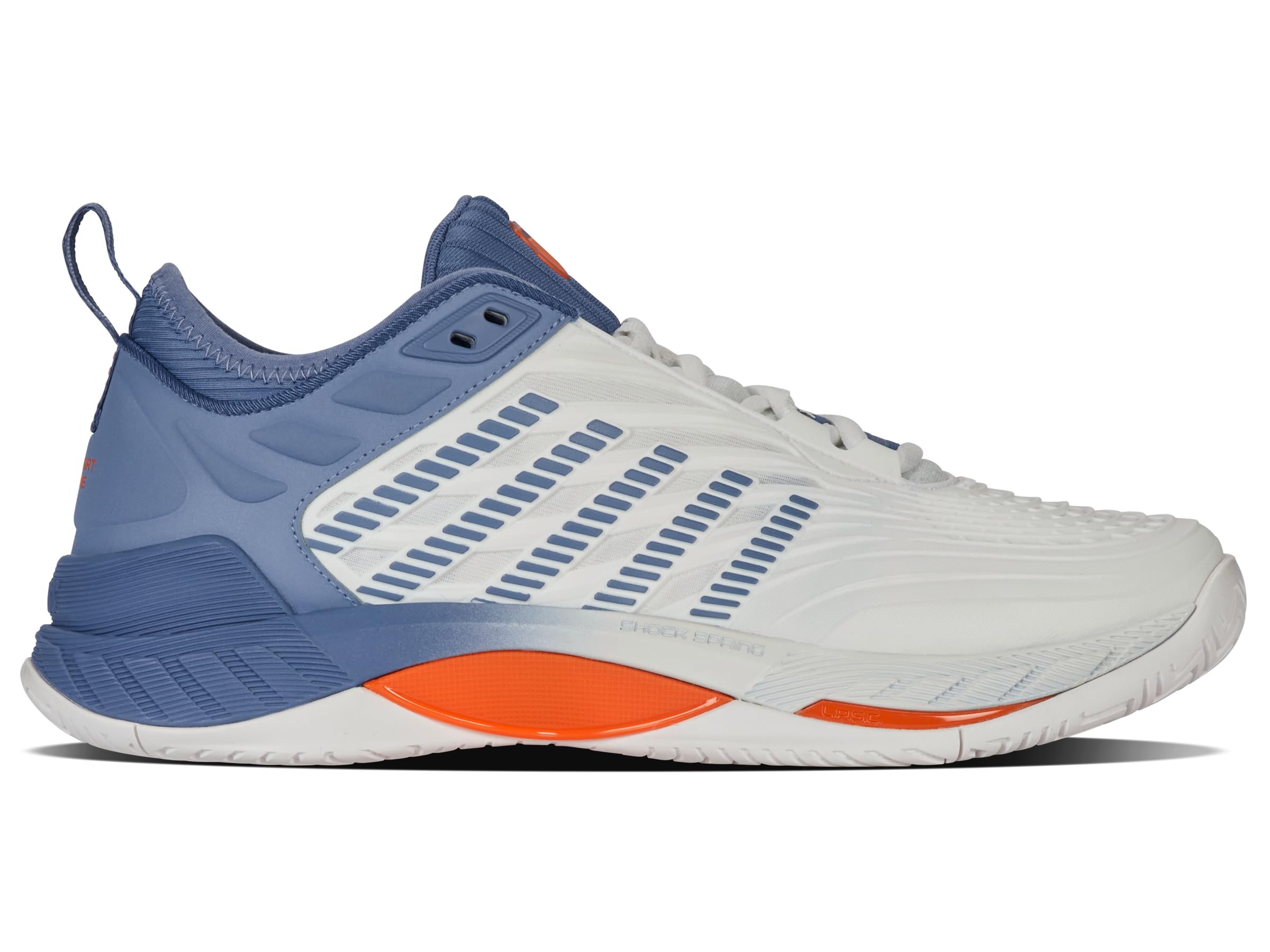
The Hypercourt Supreme 2 earns the top spot because it solves two problems at once: it offers a locked-in heel via its engineered soft bootie collar, and its dual-density midsole pairs a lightweight Surgelite external foam with a high-rebound Shock Spring inner foam for propulsive toe-off. The herringbone Dragguard 7.0 outsole balances grip and slide across hard court and clay, giving the player full surface confidence.
Customer reports confirm zero break-in needed — the bootie collar eliminates heel slip out of the box, which is rare for a shoe with this level of lateral stiffness. Several reviewers noted that plantar fasciitis symptoms disappeared after switching to this model, thanks to the firm arch wrap and responsive forefoot cushioning.
Some users with very narrow heels still experienced minor lift that was solved by a gel insert, and the snugger fit compared to older K-Swiss models means players with wide feet should consider going up half a size. Overall, this is the most balanced all-court performer for the price.
Why it’s great
- Bootie collar eliminates heel slip from the first wear
- Herringbone Dragguard outsole lasts 80+ hours on hard court
- Firm midsole eliminated plantar fasciitis for multiple users
Good to know
- Snugger fit than prior K-Swiss models; size up for wide feet
- Some narrow heels still need a gel insert for perfect lock
2. ASICS Men’s Gel-Resolution X Tennis Shoes
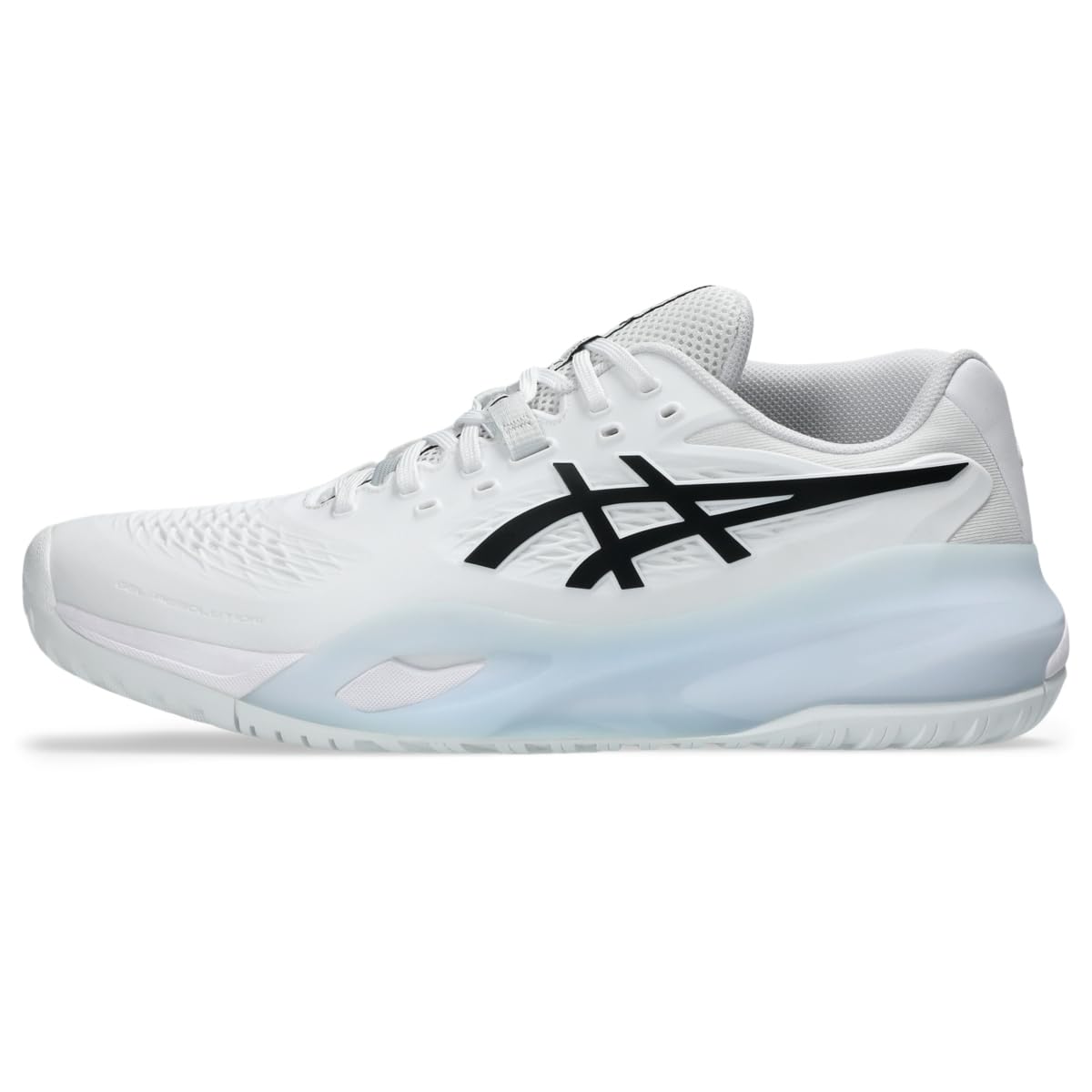
ASICS built the Gel-Resolution X specifically for baseline controllers who make multiple lateral cuts per point. The Dynawall technology extends into the heel, creating a wide landing platform that resists rollover during sudden direction changes. The two-piece midsole design separates cushioning from stability, so your foot sinks slightly on impact but doesn’t wobble during the push-off.
Reviewers consistently cite the extended outsole durability — one user reported the soles lasting a full year with 6-8 hours of outdoor play per week. The Dynalacing system provides a locked-in feel across the midfoot without requiring excessive lace tension, which helps prevent lace bite.
The shoe runs about half a size shorter and slightly wider than previous Gel-Resolution versions, so traditional ASICS buyers should size up. The stock insole is thin foam that compresses quickly — most serious players replace it with a Dr. Scholls Active Run or Superfeet green to maintain heel cushioning. Some find the shoe heavy, but the weight translates directly into durability and stability.
Why it’s great
- Dynawall heel extension resists rollover during lateral cuts
- Outsole lasts a full season with heavy play
- Dynalacing locks the midfoot without excessive pressure
Good to know
- Runs half a size shorter than previous versions
- Stock insole is thin and compresses fast; plan to swap
3. New Balance Women’s Coco Cg2
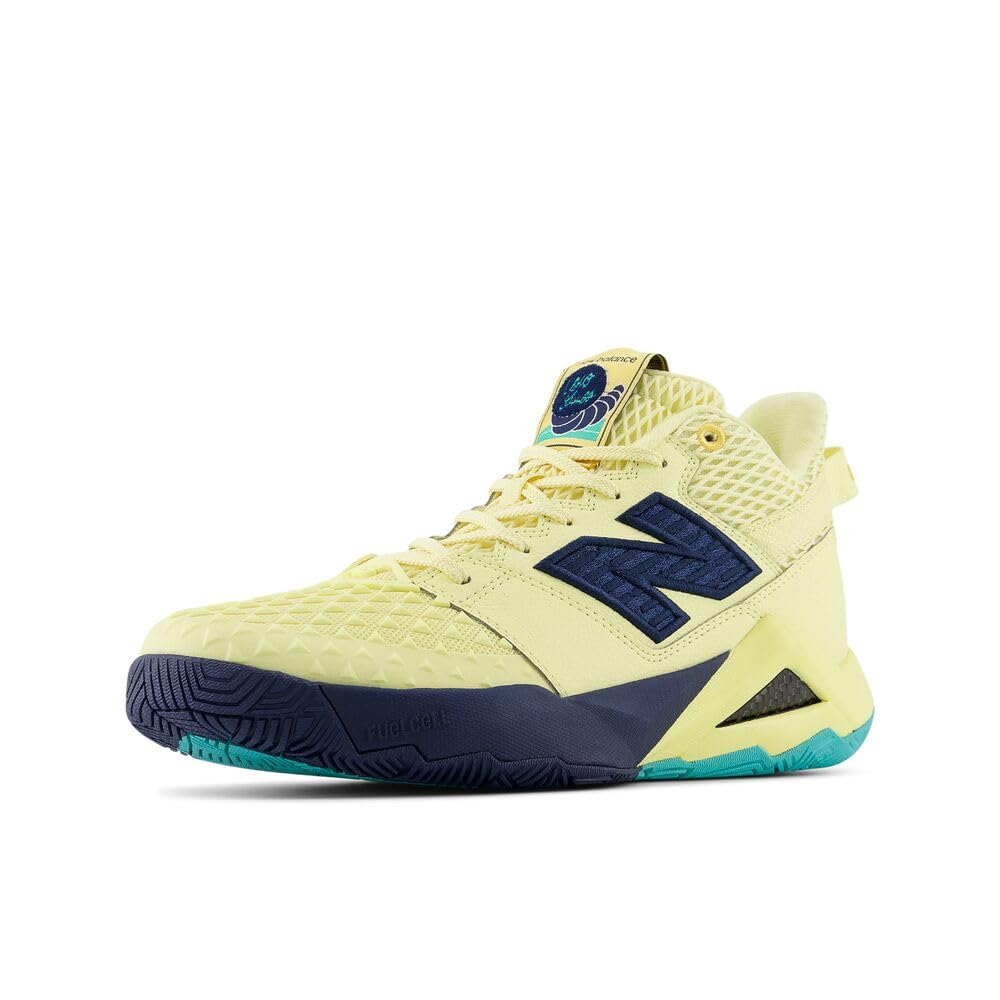
The Coco CG2 takes a different approach to all-court performance by using a dual-density FuelCell midsole with a carbon fiber plate. The plate acts like a springboard under the forefoot, returning energy during explosive starts while the FuelCell foam absorbs the landing. The mid-cut silhouette wraps above the ankle, providing a level of support that traditional low-cut tennis shoes simply cannot match.
Players who wear this shoe for tennis or pickleball consistently praise the lateral stability — the higher top prevents the ankle from rolling during wide steps. Reviews note that the shoe fits true to size for most foot shapes, though some users with narrow heels experienced slight slip that was resolved with Superfeet green insoles.
The main durability concern is the outsole: several users reported the rubber wearing smooth after 2.5 months of heavy pickleball (3-4 days per week). This makes the CG2 a better choice for players who value comfort and ankle support over raw outsole longevity. The materials and construction quality are clearly premium, justifying the investment for players who prioritize feel.
Why it’s great
- Carbon fiber plate delivers explosive forefoot energy return
- Mid-cut silhouette offers outstanding ankle support
- Premium materials and build quality
Good to know
- Outsole wears faster than expected for the price
- Narrow heels may need aftermarket insoles for heel lock
4. Wilson Men’s Rush Pro 4.5 Tennis Shoes
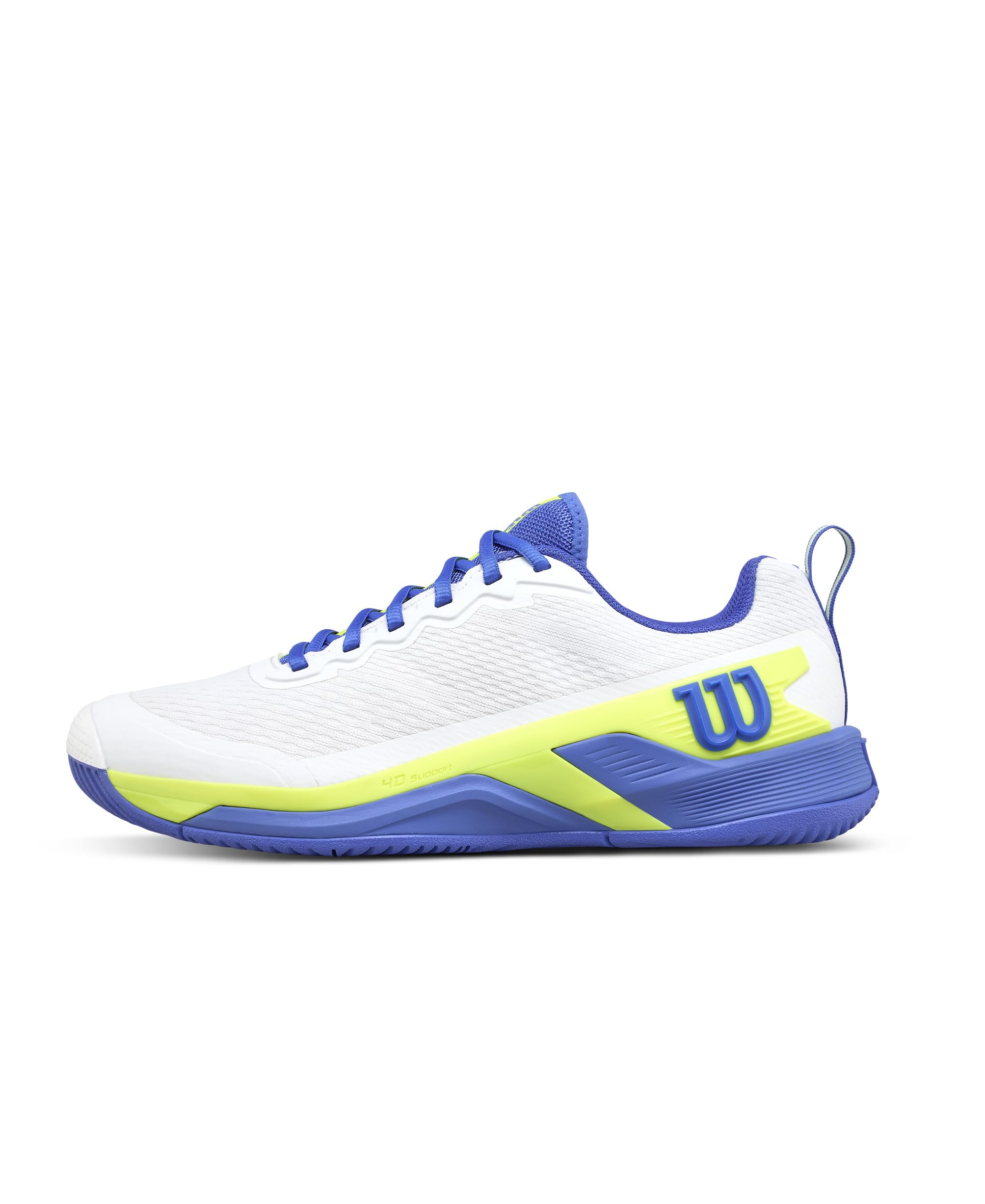
The Wilson Rush Pro 4.5 hits the sweet spot for the player who wants a stable, responsive shoe that doesn’t need a week to break in. The 4D Support Chassis runs asymmetrically from heel to toe, limiting supination and torsion during pivot movements. The Duralast outsole provides reliable traction on hard courts and holds up well for players who log 3-4 hours per week.
Reviewers who used these for a full season (150+ hours) report that the shoe maintains its structural integrity — the upper doesn’t collapse, and the midsole retains its bounce. The fit is true to size, and the toe box offers enough room for natural foot splay without feeling sloppy.
The mesh upper breathes well, but some players note that the shoe lacks the premium plushness of higher-end models. For the mid-range price, it delivers a combination of durability and comfort that makes it a strong choice for intermediate players who want to stick with one shoe for the long haul.
Why it’s great
- 4D Support Chassis provides excellent lateral stability
- Duralast outsole holds up for 150+ hours of play
- Zero break-in period out of the box
Good to know
- Not as plush as premium models
- Toe box may feel snug for very wide feet
5. adidas Mens Courtjam Control 3 Tennis Sneakers
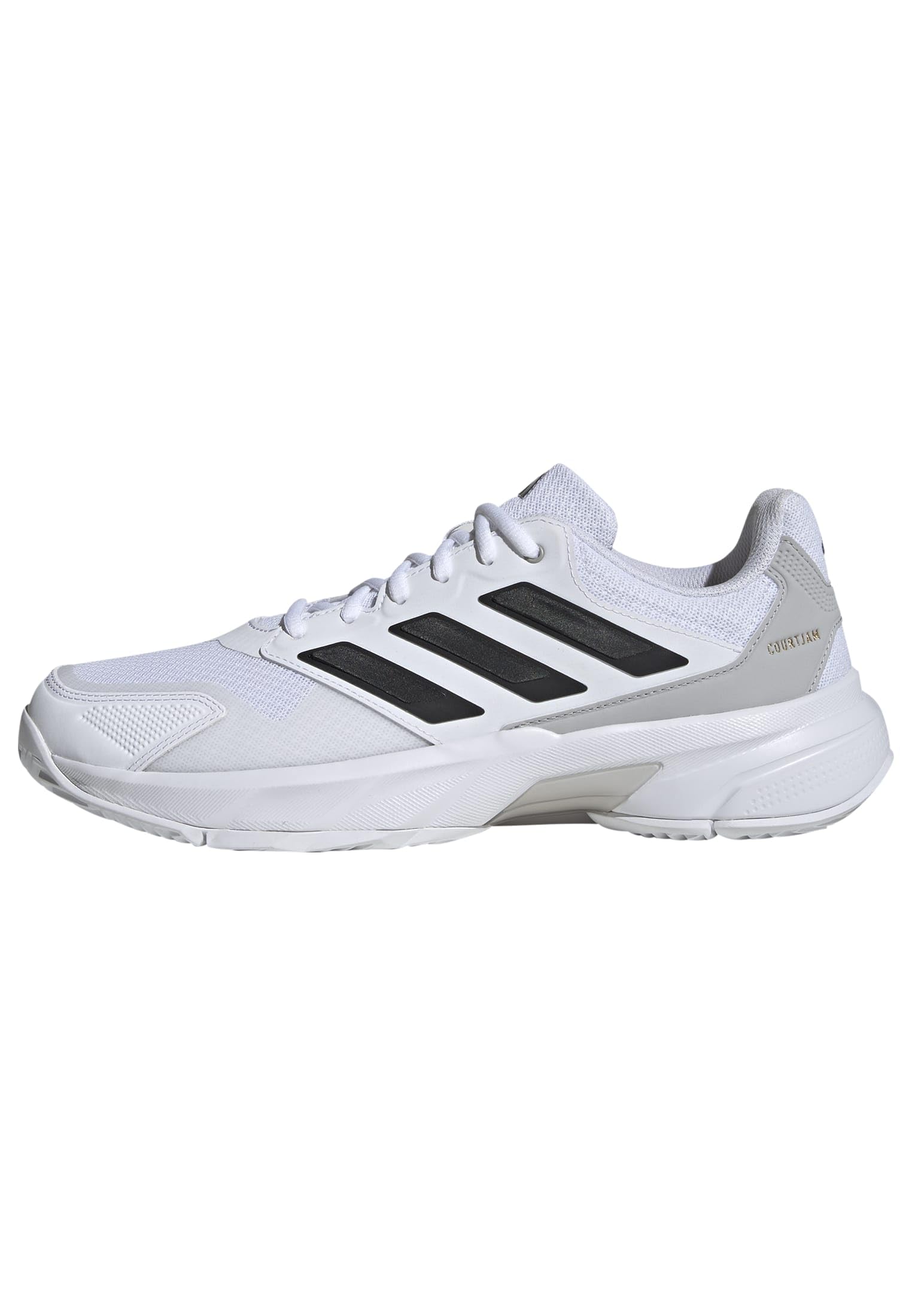
The Courtjam Control 3 is a revelation for players who have been squeezed out of modern Adidas tennis shoes. The toe box is generous — noticeably wider and more square-ish than the Barricade line — which allows the toes to spread during lateral stops. The Adituff wrap protects the toe area from drag, and the Adiwear outsole delivers above-average durability for mid-range gear.
Multiple reviewers who play 6-7 hours per week reported that these shoes last 60+ days of hard court use, which translates to roughly 360-420 hours. The bounce cushioning provides a springy feel that helps during high-tempo points, and the mesh upper keeps the foot ventilated even during long matches.
The main compromise is that the outsole isn’t quite as tenacious as the premium models on clay — it grips hard court well but doesn’t slide as cleanly on loose surfaces. Also, the midsole lacks the progressive stiffness of a dual-density design, so aggressive movers may find it a touch too soft for quick transitions.
Why it’s great
- Wide, square-ish toe box accommodates natural foot splay
- Bounce cushioning feels springy during high-tempo play
- Adituff toe wrap protects against drag
Good to know
- Outsole doesn’t slide as cleanly on clay
- Midsole may feel too soft for aggressive movers
6. WILSON Men’s Rush Pro Ace Tennis Shoes
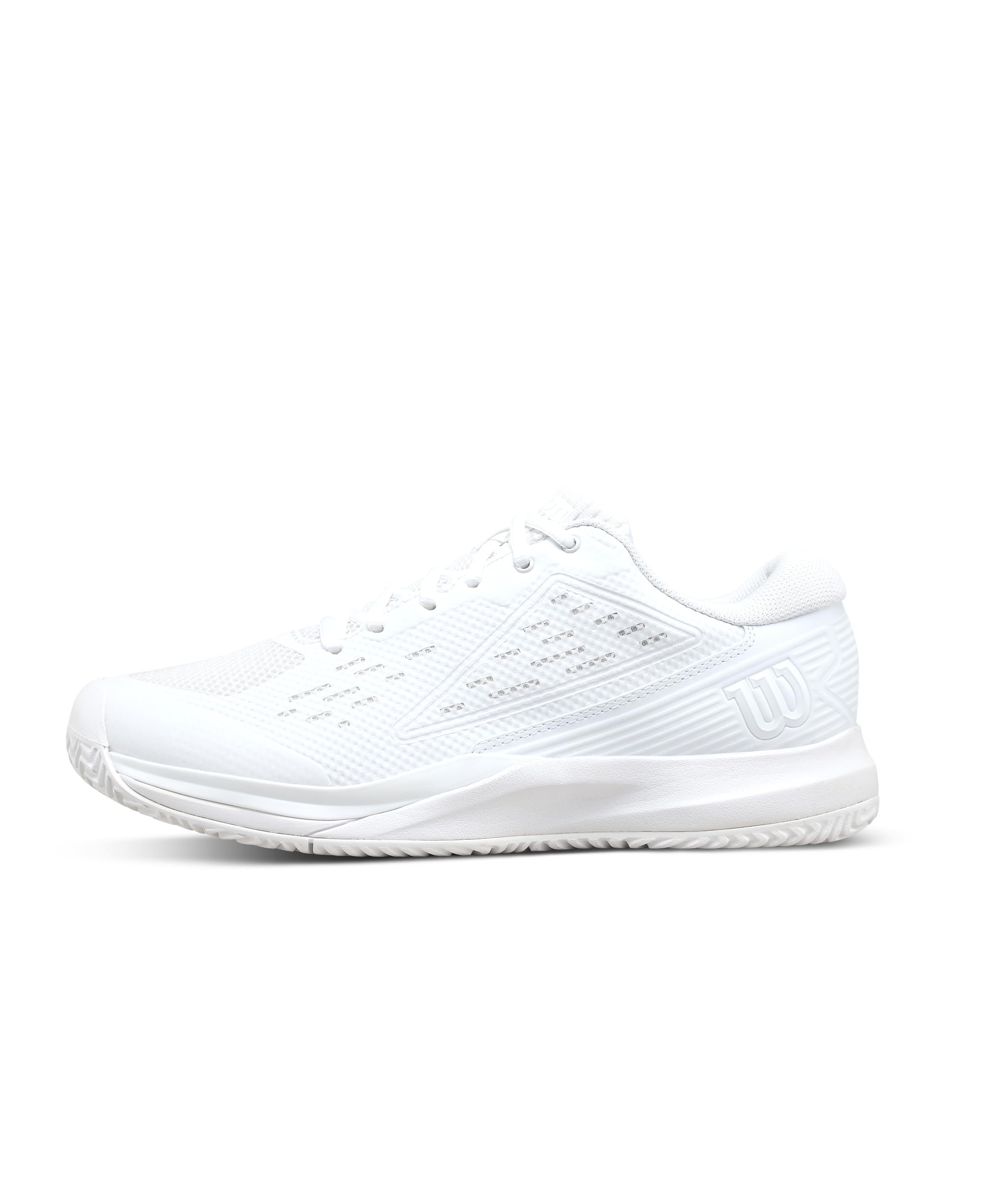
The Rush Pro Ace is the gateway shoe for recreational tennis and pickleball players who want genuine all-court performance without spending premium money. It inherits the Duralast outsole from the Rush Pro 3.0 and 3.5, so you get the same traction pattern that Wilson has proven on hard courts. The RDST + EVA midsole provides decent impact protection, especially in the heel, without making the shoe feel heavy.
The breathable mesh upper balances ventilation with support, and the 4D Support Chassis adds lateral stability that many entry-level shoes lack. Reviewers consistently note that it fits well for medium and slightly wide feet, and several reported that it breaks in within a few sessions.
The durability cap is real — one reviewer whose 18-year-old plays hard on the court said the outsole doesn’t last a full season of heavy play. For casual weekenders (2-3 times per week), the Ace offers strong value. For competitive juniors or heavy hitters, the outsole will smooth out before the midsole packs in.
Why it’s great
- Duralast outsole provides proven hard court traction
- RDST + EVA cushioning absorbs heel impact well
- 4D Support Chassis adds lateral stability for the price
Good to know
- Outsole may not last a full season for heavy players
- Upper support is adequate but not premium-level
7. K-Swiss Women’s Court Express Tennis Shoe
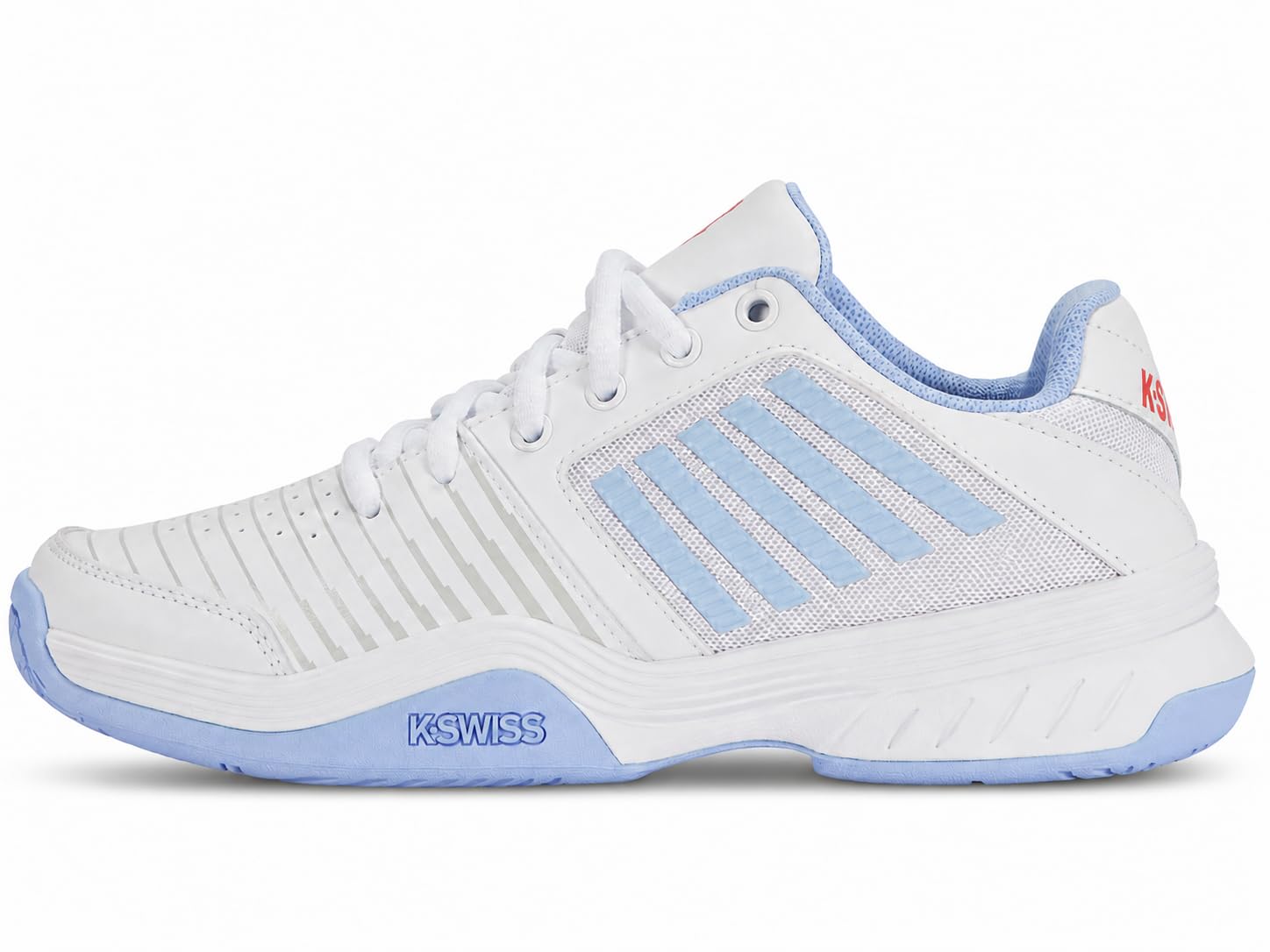
The K-Swiss Court Express is built for the player who values sturdy construction and a wide toe box over flashy tech. The leather upper is a rarity in modern tennis shoes — it offers better structure and protection than mesh, and it holds its shape longer. The shaped sole provides good traction, and users who wear these for work as well as play report that the shoe feels supportive over long days on hard floors.
The trade-off is break-in time. The leather is stiff out of the box, and the shoe doesn’t flex as naturally as mesh-based competitors. Several reviewers noted it feels tight initially and requires a shoehorn to slip on. After a week of wear, the leather softens and the shoe molds to the foot, but impatient buyers may find the first few sessions uncomfortable.
Weight is another factor — at roughly 2 pounds per pair, the Court Express is noticeably heavier than the Wilson Rush Pro Ace or adidas Courtjam. This is a shoe for the casual player who plays 1-2 times per week and wants something durable that won’t fall apart. It is not built for the aggressive mover chasing balls for three hours straight.
Why it’s great
- Leather upper holds shape longer than mesh shoes
- Wide toe box accommodates custom orthotics
- Shaped sole provides good traction on court
Good to know
- Stiff leather requires a break-in period
- Heavier than most mesh competitors
FAQ
Is a herringbone or modified herringbone tread better for hard court?
How do I know if I need a wide or narrow toe box in a tennis shoe?
How many hours should a premium all-court tennis shoe last on hard court?
Can I use all-court tennis shoes for pickleball?
Final Thoughts: The Verdict
For most users, the all court tennis shoes winner is the K-Swiss Hypercourt Supreme 2 because it combines a bootie collar for heel lock, a herringbone Dragguard outsole for surface versatility, and a dual-density midsole that works for aggressive movers without needing a break-in period. If you prioritize lateral stability and outsole longevity from the baseline, grab the ASICS Gel-Resolution X. And for explosive energy return and ankle support in a premium package, nothing beats the New Balance Coco CG2.