
Our readers keep the lights on and the weekend projects moving. As an Amazon Associate, I earn from qualifying purchases.
The right backpacking shovel disappears into your pack until you need it, then makes digging a proper six-inch cathole effortless through roots, clay, or packed trail soil. A flimsy trowel bends on the first rock, while an oversized entrenching tool turns a lightweight kit into an anchor. This guide breaks down seven of the most capable options on the market, from ultralight aluminum slivers to folding steel spades built for serious backcountry work.
I’m Rikta — the co-founder and writer behind FitlyFast. For this guide I analyzed over 150 customer reviews across seven competing models, cross-referenced material science specs from titanium to carbon steel, and ranked each shovel by real-world digging performance rather than marketing claims.
Whether you’re thru-hiking the Pacific Crest Trail or car camping with the family, this breakdown of the best backpacking shovel options will help you match the right tool to your terrain, weight budget, and digging style.
How To Choose The Best Backpacking Shovel
Selecting a backpacking shovel starts with a single question: how much digging do you actually do? Thru-hikers digging only catholes can get away with a 1-ounce trowel, while overlanders and winter campers need a folding spade that moves snow and gravel. Let’s break down the three factors that matter most.
Weight vs. Durability: The Material Trade-off
Aluminum trowels like the TheTentLab Deuce #3 weigh under an ounce but can bend if you pry against a buried rock. Titanium models such as the Vargo Dig Dig Tool offer twice the strength of aluminum at roughly the same weight, though they cost more. Steel folding shovels from Gerber and Schrade tip the scale near 2.5 pounds but survive chopping roots and prying boulders. Match the material to the terrain — rocky alpine soil demands titanium or steel, while soft forest duff shines with an ultralight aluminum blade.
Serrated Edges and Cutting Performance
A smooth scoop struggles against roots and compacted clay, which is why the best backcountry trowels now incorporate serrated teeth or a knife edge. The DirtSaw design on the Deuce #3 agitates and cuts dirt like a serrated blade without snagging on roots, while the Vargo Dig Dig Tool features Hori-Hori-inspired saw teeth that slice through subsurface vegetation. If your typical campsite has thick root mats or dry, hard soil, prioritize a shovel with aggressive serration over a plain blade.
Handle Length and Digging Ergonomics
Short-handled trowels (under 8 inches) pack small and offer fine dexterity in deep holes, but they require you to kneel or squat lower to apply force. Longer folding spades (16 to 24 inches) let you dig from a standing position but add bulk and weight. The best compromise is a tool with a rolled or rounded handle that prevents hot spots on your palm — look for the ergonomic grip details on models like the PACT Outdoors or Vargo Dig Dig rather than flat stamped metal that digs into your hand.
Quick Comparison
On smaller screens, swipe sideways to see the full table.
| Model | Category | Best For | Key Spec | Amazon |
|---|---|---|---|---|
| TheTentLab DirtSaw Deuce #3 | Ultralight Trowel | Thru-hiking, Cathole Digging | 0.97 oz, Aluminum, Serrated Teeth | Amazon |
| Vargo Titanium Dig Dig Tool | Titanium Trowel | Rooty Soil, Hard Ground | 1.1 oz, Titanium, Hori-Hori Style | Amazon |
| PACT Outdoors Backpacking Shovel | Aluminum Trowel | General Backpacking, Comfort Grip | 1.28 oz, Extruded Aluminum, Depth Mark | Amazon |
| Camco Portable Folding Shovel | Folding E-Tool | Car Camping, Emergency Kit | 16 oz, Alloy Steel, Serrated Edge | Amazon |
| Schrade Delta Pay Dirt Shovel | Mid-Size Folder | Trail Maintenance, Digging & Chopping | 2.4 lbs, 3CR13 Steel, Locking Collar | Amazon |
| Gerber Gear E-Tool Folding Spade | Full-Size E-Tool | Heavy-Duty Camping, Overlanding | 2.4 lbs, Carbon Steel, 24″ Open | Amazon |
| Gerber Military Style Folding Spade | Tactical E-Tool | Emergency Rescue, Snow Digging | 2.3 lbs, Boron Carbon Steel, 90° Lock | Amazon |
In‑Depth Reviews
1. TheTentLab DirtSaw Deuce #3
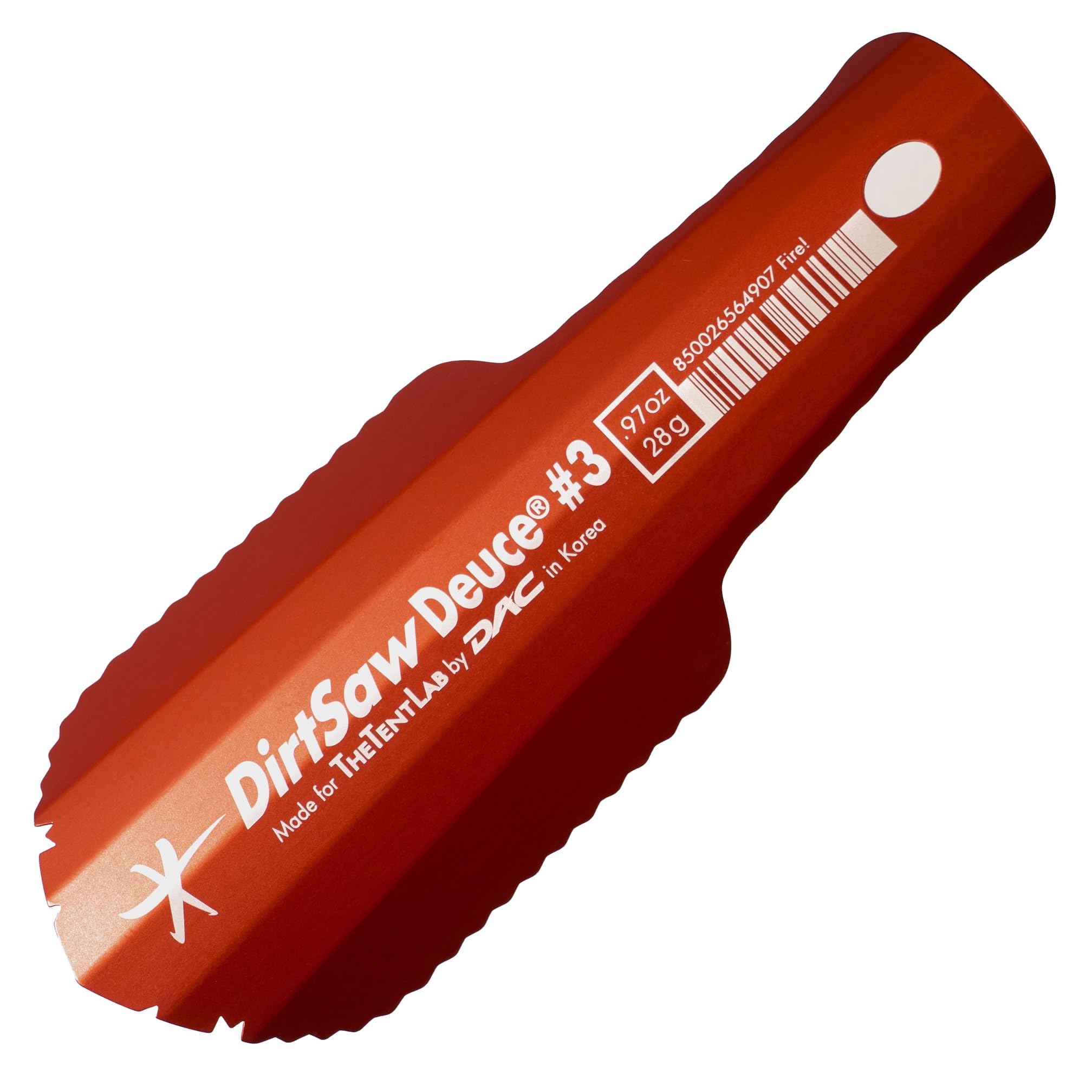
The Deuce #3 from TheTentLab completely rethinks what a lightweight trowel can do. Its patent-pending DirtSaw teeth agitate and cut dirt like a serrated knife without snagging on roots — a major advantage over plain-edge trowels that get stuck on subsurface vegetation. The patented “ray-bends” increase bending strength by 65% at the center and nearly 3x at the hole, so this sub-ounce tool resists warping even when you pry against buried rocks.
You use the Deuce upside-down about a third of the time: first to probe the top three inches for rocks or roots, then to saw the perimeter of the hole. Deeper in the cathole, the same technique breaks up hard dirt and helps pry out obstacles. The stubby handle gives exceptional dexterity in narrow holes — longer trowels suffer from “ever-narrowing hole syndrome” as you dig deeper, but the Deuce maintains control right down to the full eight-inch depth.
The blunt front shape efficiently pulls loose dirt from deeper holes and makes a stronger tip for prying. Two deep notches protect recessed teeth that you can sharpen with a nail file, and the full tumbled deburring ensures no sharp edges threaten your hands. The colorful anodized finish prevents corrosion and keeps your hands clean of gray aluminum residue. A lifetime warranty and 100% recyclable aluminum seal the deal for eco-conscious backpackers.
Why it’s great
- Insanely light at under an ounce without sacrificing strength
- DirtSaw teeth cut roots without snagging on them
- Short handle provides excellent control in deep catholes
Good to know
- Can bend if used to pry large rocks aggressively
- Requires learning the “upside-down” sawing technique for best results
2. Vargo Titanium Dig Dig Tool

The Vargo Dig Dig Tool takes inspiration from the Japanese Hori-Hori knife, delivering a titanium blade that cuts through dirt and roots with authority while weighing just over an ounce. Titanium is 45% lighter than steel and twice as strong as aluminum, giving this trowel a durability-to-weight ratio that handles rocky soil without bending. The serrated edges slice through subsurface roots that would stop a standard scoop trowel cold.
Two boat cleat-style cutouts on the blade double as guylines anchors for your shelter, making this a genuine multi-tool for ultralight campers. The rolled handle at both ends eliminates the sharp edges found on flat stamped trowels — your palm won’t feel punished after digging multiple catholes. At just 32 grams, it’s barely noticeable in a pack but provides serious digging power when you need it.
Customer reports confirm the titanium blade can engrave softer metals and remains undamaged even when scraping against rocks. The only trade-off is the narrow blade profile — it moves less dirt per scoop than wider aluminum trowels, so you’ll make more passes to reach the six-inch depth. Wrapping the handle with paracord or wearing lightweight gloves improves comfort during extended use in hard-packed ground.
Why it’s great
- Premium titanium construction resists bending and corrosion
- Boat cleat cutouts double as tent stake and guylines anchors
- Serrated Hori-Hori edge cuts through roots efficiently
Good to know
- Narrow blade requires more scoops per hole than wider options
- Bare titanium handle can feel slippery or sharp during prolonged digging
3. PACT Outdoors Backpacking Shovel

The PACT Outdoors shovel delivers a surprisingly comfortable digging experience thanks to its tubular extruded aluminum design. Unlike flat metal trowels that create pressure points, the rounded handle distributes force across your palm, reducing fatigue when you’re digging through clay or packed dirt. The cutting edge is sharp enough to slice through thick vegetation and small roots, making site selection less of a chore.
An integrated six-inch depth marker takes the guesswork out of responsible cathole digging, ensuring your waste is buried deep enough to prevent animal disturbance. At just 1.28 ounces, it’s light enough for the most weight-conscious backpacker, yet several customer reports confirm it survived 500+ miles on the Florida Trail cutting through sand, soil, and lime rock without failure. The folding design collapses small enough to stash in a hip belt pocket or cook kit.
The serrated edge is genuinely functional for trimming roots, though it’s not designed for heavy chopping or prying. Some users note the sharp edge can scratch other gear if stored loose, so tucking it inside a stuff sack or wrapping it in a bandana is wise. For the price, this trowel offers a rare combination of ultralight weight, ergonomic comfort, and real-world durability that outperforms many more expensive options.
Why it’s great
- Tubular aluminum handle eliminates pressure points during digging
- Six-inch depth marker ensures compliant cathole depth
- Proven durability over hundreds of trail miles
Good to know
- Sharp serrated edge can scratch adjacent gear in a pack
- Slightly heavier than the Deuce #3 but with better hand comfort
4. Camco Portable Folding Shovel

The Camco folding shovel hits a sweet spot for car campers and emergency kits who want a real steel blade without the weight of a full-size spade. The alloy steel head unfolds to 23 inches, giving you enough leverage to dig through snow, mud, or sand from a comfortable standing position. A locking collar keeps the blade secure during use, and the serrated edge doubles as a saw for cutting through small roots or branches.
At 16 ounces, it’s too heavy for ultralight backpacking but perfect for trunk storage, RV kits, or basecamp setups where you might need to dig a fire pit, trench a tent, or clear snow. Several users report using it as an emergency beach shovel or for digging out a stuck vehicle — versatility that a tiny trowel simply can’t match. The folding mechanism collapses to 9.5 inches, fitting neatly inside the included storage pouch.
A few customers also note the storage pouch feels flimsy compared to the shovel’s build quality. Still, for the price, it’s a rugged, functional tool that outperforms cheap multi-tool shovels found in discount stores.
Why it’s great
- Steel blade provides real digging power for snow and hard-packed soil
- Folds compactly to 9.5 inches with included storage pouch
- Serrated edge functions as a saw for cutting roots
Good to know
- Heavy for backpacking at 16 ounces
- Short handle requires stooping during use
5. Schrade Delta Class Pay Dirt Shovel
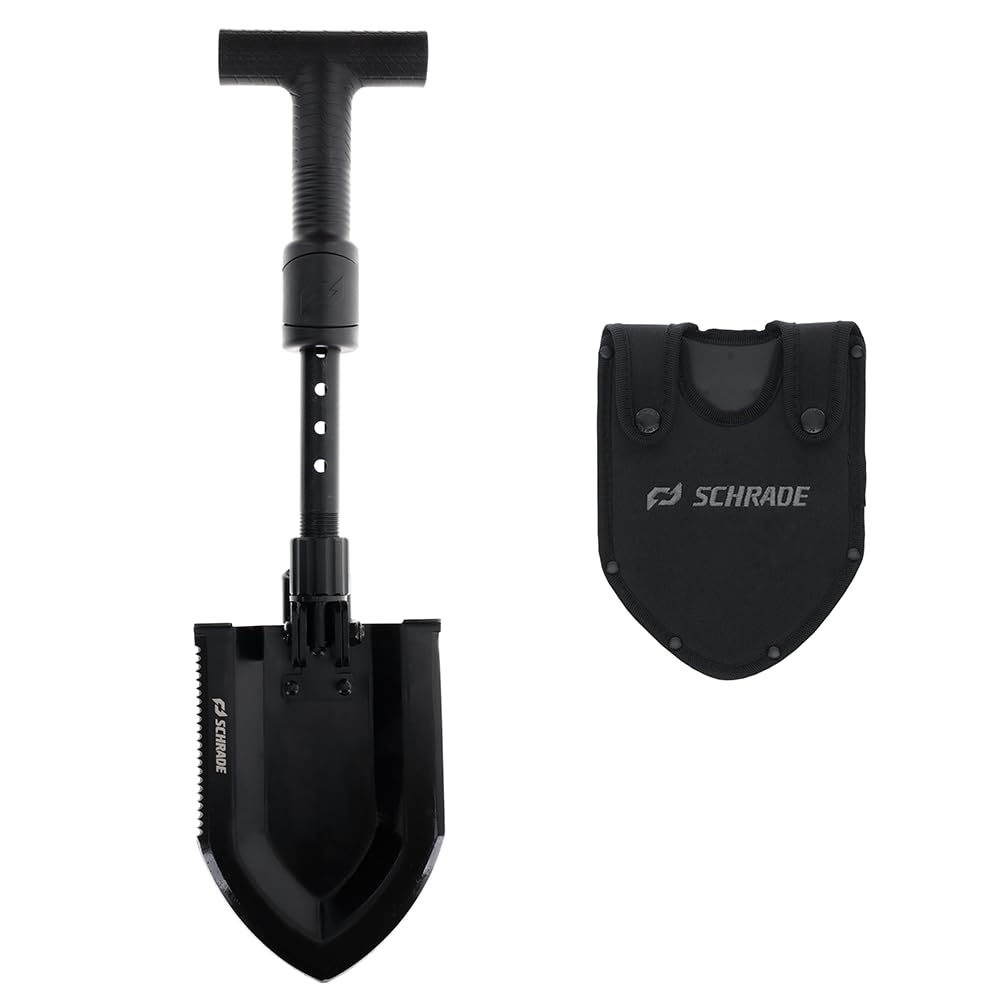
Schrade’s Pay Dirt Shovel bridges the gap between ultralight trowels and full-size entrenching tools, offering a folding design that opens to 16.5 inches for serious digging. The 3CR13 steel blade holds a sharp edge and resists chipping against rocks, making it suitable for trail maintenance, chopping small roots, or digging fire pits. A partially serrated edge adds cutting capability for vines and tough vegetation.
The folding handle collapses for stowing in the included polyester sheath, and the locking collar mechanism feels secure in use. At 2.4 pounds, it’s too heavy for mile-hungry thru-hikers but works well for weekend car campers, overlanders, or anyone who needs a self-defense-capable tool that also digs. Customer reviews highlight the blade’s sharpness out of the box and the shovel’s ability to handle snow, mud, and gravel without deformation.
The handle lock can feel stiff initially, especially with winter gloves on, though it loosens with use. The blade capacity is limited compared to a round-point spade, so moving large volumes of soil takes more effort. If you want a compact digging tool that also chops and pries for campsite chores, the Pay Dirt delivers solid performance without breaking the bank.
Why it’s great
- 3CR13 steel holds a sharp edge and resists chipping
- Folding design with locking collar stays rigid during use
- Partially serrated blade cuts roots and vines effectively
Good to know
- Heavy for backpacking at 2.4 pounds
- Handle lock can be stiff to operate with gloves
6. Gerber Gear E-Tool Folding Spade
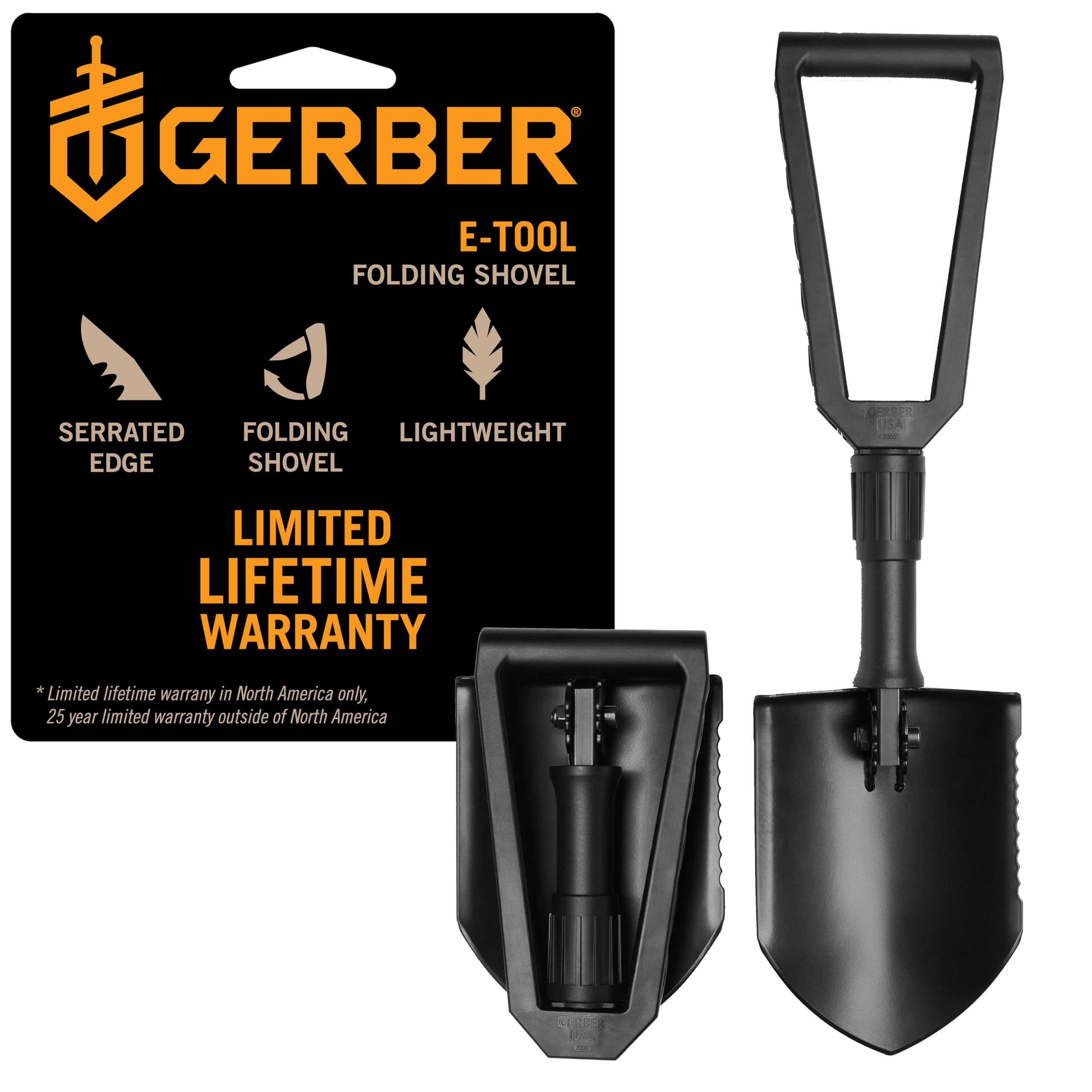
The Gerber E-Tool folding spade is the closest thing to a military-issue entrenching tool you can buy at retail, and it’s a meaningful upgrade over the old tri-fold designs. The powder-coated carbon steel head resists rust far better than traditional USGI shovels, while the anodized aluminum shaft and glass-filled nylon handle provide a robust but lighter frame. When fully opened to two feet, this spade moves serious dirt — snow, sand, hard-packed clay, you name it.
The glass-filled nylon handle features an open design that gives room for a firm grip with gloves, and the locking mechanism holds the blade at multiple angles for digging, chopping, or scraping. Customer reviews from current and former military personnel confirm this spade outperforms the issued version in rust resistance and overall build quality. It folds down to 9.37 inches for storage in a vehicle kit or large pack.
The trade-off is weight: at 2.4 pounds, this is not a piece of gear you add to a sub-10-pound backpacking load. It also lacks a carrying sheath, so you’ll need a Molle II pouch or similar accessory for safe transport. The serrated edge is sharp enough to cut roots but requires gloves to avoid cuts during handling. For basecamp, overlanding, or bushcraft applications where real digging power matters, this spade is the benchmark.
Why it’s great
- Carbon steel head and aluminum shaft deliver real digging power
- Multiple locking angles for digging, chopping, and scraping
- Proven durability from military and heavy-use customers
Good to know
- No carrying sheath included
- Too heavy for ultralight backpacking
7. Gerber Military Style Folding Spade
This Gerber E-Tool variant swaps the carbon steel head for boron carbon steel, a formulation that offers edge retention and toughness similar to premium knife steels. The blade can hold up to serious chopping and prying without rolling the edge — one customer reported digging a 225-foot trench in a crawlspace without needing to retighten any fasteners. The glass-filled nylon handle and 7075 aluminum shaft keep the weight at a manageable 2.3 pounds while providing an extremely rigid digging platform.
Unlike the standard Gerber E-Tool, this model locks into position without achieving a true 90-degree angle — it stops closer to 65-70 degrees, which some users find awkward for pick-style use. However, the blade’s boron steel composition enables it to function as an emergency axe or hatchet in a pinch, chopping through two-inch branches with ease. The plastic handle also stays warmer than metal in cold weather, a thoughtful touch for winter campers.
The main downside is the lack of a carrying case, and the edge is sharp enough to cut gear if stored loose. It also doesn’t come with a sheath, so budget for a proper Molle pouch if you plan to carry it on a pack. For overlanders, off-roaders, and anyone building an emergency vehicle kit, this spade provides the highest strength-to-weight ratio in the folding E-Tool category.
Why it’s great
- Boron carbon steel blade provides superior edge retention and toughness
- Lightweight for its strength due to 7075 aluminum shaft
- Plastic handle stays warm in cold conditions
Good to know
- No carrying sheath included
- Locking angle does not reach 90 degrees
FAQ
How deep should a cathole be in the backcountry?
Can I use a backpacking trowel to dig a fire pit?
Is titanium worth the extra money over aluminum for a trowel?
What’s the difference between a folding E-Tool and a backpacking trowel?
Final Thoughts: The Verdict
For most users, the best backpacking shovel winner is the TheTentLab DirtSaw Deuce #3 because it combines ultralight weight with a patented cutting system that handles roots better than any trowel near its weight class. If you want titanium strength for rocky terrain, grab the Vargo Titanium Dig Dig Tool. And for car campers or overlanders who need a full-size spade that folds compactly, nothing beats the Gerber Gear E-Tool Folding Spade.