
Our readers keep the lights on and the weekend projects moving. As an Amazon Associate, I earn from qualifying purchases.
The biggest risk in buying an aerial drone isn’t the price tag on the box—it’s the sinking feeling when your new camera stops stabilizing over a canyon or when a sudden gust of wind takes your shiny new toy for a one-way trip. The market is flooded with cheap, flimsy models that promise 4K but deliver shaky, unusable footage, making the search for a genuinely capable flying camera a minefield of regret.
I’m Rikta — the co-founder and writer behind FitlyFast. My weeks spent cross-referencing camera sensor specs, gimbal stabilization systems, and real-world flight logs from hundreds of verified buyers means this guide cuts straight to what separates a reliable aerial tool from a frustrating toy.
After sifting through countless hours of crash reports and actual performance data, I’ve put together what I consider to be the definitive guide to finding the best aerial drone for your specific needs, from lightweight no-registration models to pro-grade cinema rigs.
How To Choose The Best Aerial Drone
Selecting the right drone depends entirely on matching its core specs to your intended use—a vlogger’s flying camera differs vastly from a photographer’s aerial platform. Focus on the gimbal type, sensor size, and flight safety features before you ever look at the controller app.
The Gimbal is Everything
A 3-axis mechanical gimbal uses motors to physically stabilize the camera, keeping shots smooth even in level-5 wind conditions. Electronic image stabilization (EIS) alone crops the frame and can introduce artifacts, making a mechanical gimbal mandatory for professional-looking footage.
Weight Class and Regulations
The sub-250-gram class is a sweet spot: no FAA registration or Remote ID is required, making them ideal for travel and spontaneous flights. Once your drone exceeds this limit, you must register it, mark it with your FAA number, and carry a Remote ID module—an added layer of complexity for casual flyers.
Flight Time and Battery Management
Real-world flight time per battery typically ranges from 15 to 30 minutes, depending on wind and use of features like ActiveTrack. Multi-battery “Fly More” combos are essential for extended sessions, and a smart charging hub that manages voltage is a must for battery longevity and safety.
Obstacle Avoidance Capability
Entry-level drones often lack obstacle sensors entirely, while mid-range models offer forward or downward sensing. Premium drones feature 360-degree omnidirectional obstacle avoidance, which dramatically reduces crash risk when flying through trees, around buildings, or in tight indoor spaces.
Quick Comparison
On smaller screens, swipe sideways to see the full table.
| Model | Category | Best For | Key Spec | Amazon |
|---|---|---|---|---|
| SKYROVER X1 Combo | Premium | All-around cinematic | 9.32‑mi transmission, 360° OA | Amazon |
| DJI Mini 5 Pro Fly More | Premium | Pro-grade photography | 1‑inch CMOS, 52‑min flight | Amazon |
| HOVERAir X1 PRO | Mid-Range | Action/dynamic sports | 42 km/h follow, OmniTerrain | Amazon |
| DJI Mavic Air 2 Combo | Premium | Advanced hobbyist | 48MP camera, 34‑min flight | Amazon |
| Ruko UHD 8K | Mid-Range | Travel/beginner | 20,000 ft range, 96‑min total | Amazon |
| Bwine F7GB2 Pro | Mid-Range | High-altitude flights | L6 wind resistance, 2000m peak | Amazon |
| Bwine F7MINI 4K | Mid-Range | Beginner with screen | Built‑in 5.5″ touchscreen RC | Amazon |
| Potensic ATOM 4K | Mid-Range | Value/performance | 6‑km transmission, Sony sensor | Amazon |
| HOVERAir X1 | Entry-Level | Ease of use | 125g, palm-launch, 32GB storage | Amazon |
In‑Depth Reviews
1. SKYROVER X1 Drone Fly More Combo with Screen Controller
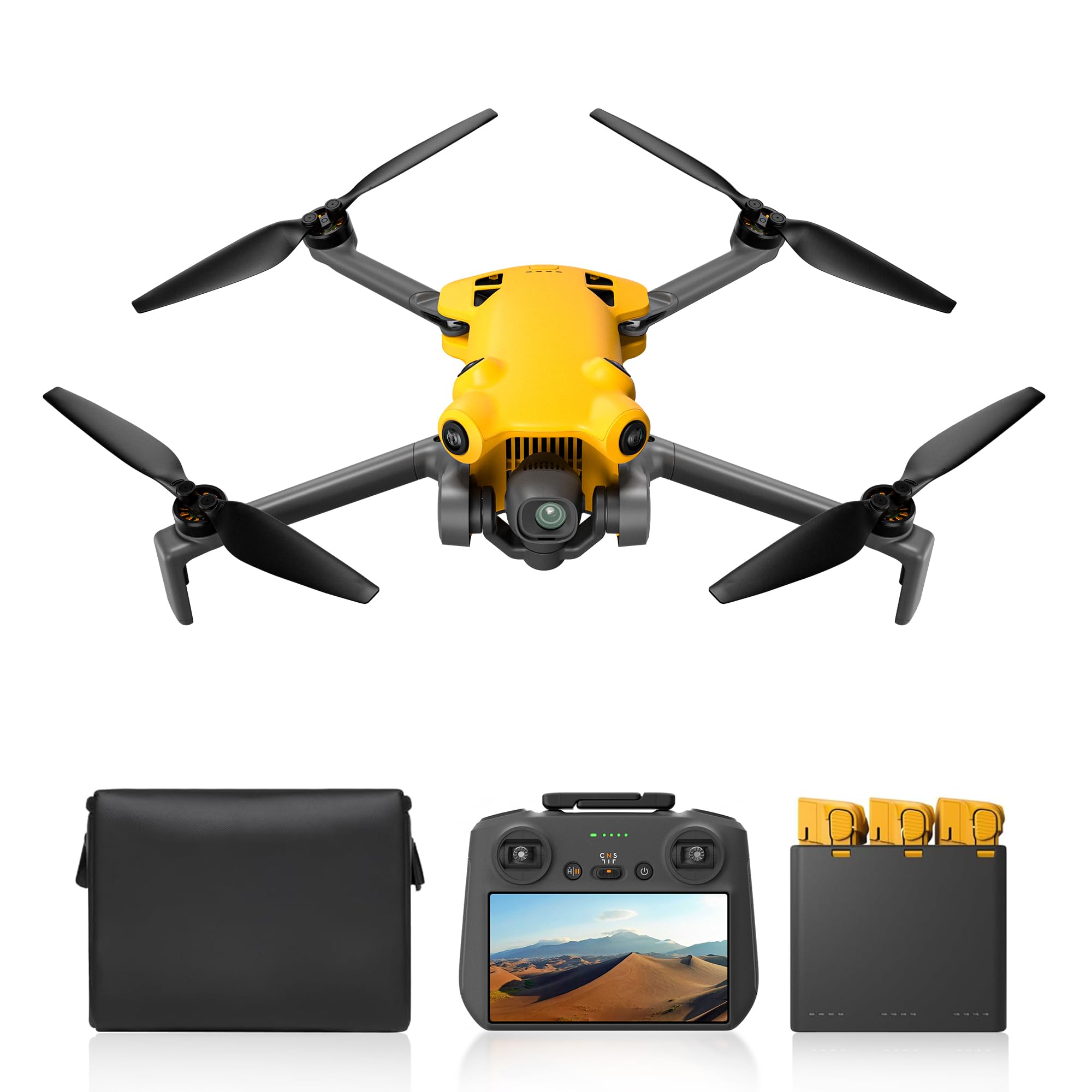
The SKYROVER X1 Fly More Combo is a standout in the sub-249g class, offering 360-degree obstacle avoidance and a 5.5-inch 700-nit touchscreen controller that eliminates the need for a phone. Its 1/1.32″ CMOS sensor with an f/1.7 aperture captures 4K/60fps HDR video and 48MP photos, while the 3-axis gimbal keeps footage steady even in moderate wind. The 9.32-mile transmission range with 1080p/60fps live view is top-tier for its weight class.
ActiveTrack 360° and Smart Spotlight provide reliable subject tracking, and the vertical shooting mode is perfect for social-media-ready clips. The 96-minute total flight time (three batteries) means extended shooting sessions, and AI Night Shot mode delivers usable low-light imagery without excessive noise. Customer support is responsive, with users reporting quick replacement of crash-damaged parts.
Battery management requires attention—users note that running the battery too low at distance can cause anxiety, and the 32-minute per-battery claim is accurate under calm conditions. The controller’s phone holder is snug, making it difficult for larger cases. Overall, this is the most feature-complete drone for the price, combining premium safety sensors with professional camera specs.
Why it’s great
- 360° obstacle avoidance with audible warnings
- Built-in 700-nit screen controller, no phone required
- Excellent HDR video and low-light Night Shot mode
Good to know
- Controller phone holder too snug for large cases
- Battery anxiety at distance; land with reserve
2. DJI Mini 5 Pro Fly More Combo Plus
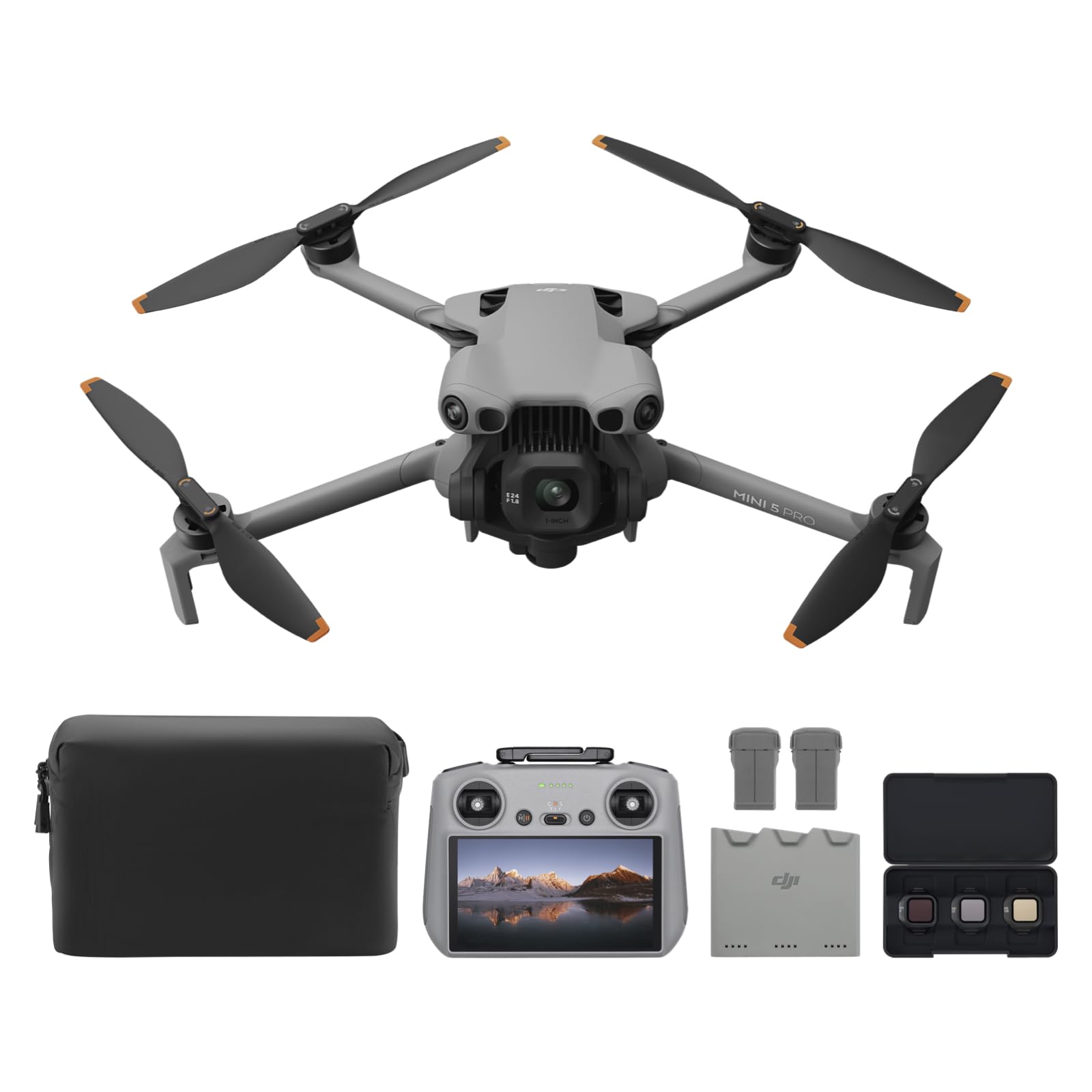
The DJI Mini 5 Pro Fly More Combo Plus sets the benchmark for sub-250g camera drones, featuring a 1-inch CMOS sensor that dramatically improves dynamic range and low-light performance over smaller sensors. It records 4K/60fps HDR video and offers a 225° gimbal rotation for true vertical filming without cropping. The forward-facing LiDAR and vision sensors enable omnidirectional obstacle sensing, making night flights safer with the Nightscape OA system.
ActiveTrack 360° now includes customizable tracking modes that keep cyclists and runners perfectly framed, even through obstacles. The Intelligent Flight Battery Plus extends flight time to a claimed 52 minutes (real-world closer to 45 in moderate wind). The DJI RC 2 controller includes a built-in bright display, eliminating the need for a phone cable tether. The 42GB internal storage is generous, reducing reliance on microSD cards.
US customers should note that DJI Care Refresh is not available for US purchases, and the larger batteries push the total weight over 250g, requiring FAA registration and Remote ID. Some users reported firmware update issues with the charging hub, and the RC 2 controller is heavy enough that a lanyard is recommended for comfort. Despite these caveats, the sensor size and AI tracking capabilities are unmatched at this weight.
Why it’s great
- 1-inch CMOS sensor for superior dynamic range
- Omnidirectional obstacle avoidance with LiDAR
- 52-minute max flight time (with Plus battery)
Good to know
- No US warranty; DJI Care Refresh unavailable
- Plus battery adds weight, requiring FAA reg
3. HOVERAir X1 PRO 4K Drone

The HOVERAir X1 PRO is built for action—its upgraded aerodynamic design allows a follow speed of 42 km/h (26 mph) with a burst speed of 60 km/h, perfect for tracking cyclists, runners, and skiers. The two-axis gimbal with EIS and horizon leveling delivers stabilized 4K/60fps footage, and the OmniTerrain capability means it can launch and track over snow, water, and cliffs without issue. The 192g weight keeps it FAA‑exempt and ultra-portable.
Hands‑free operation is the core design: palm takeoff, voice commands, and 15+ fully automatic flight modes (Hover, Follow, Zoom Out, Orbit, Dolly Track) require no controller or app for basic use. The rear ToF proximity sensor provides active collision detection for obstacles approaching from behind at speeds up to 1.5m/s. The 32GB internal storage plus external SD support (up to 1TB) is generous for long shoots.
Some units have reported failure after just over a month of use, which points to quality control variations. The lack of a remote controller means no manual stick flying—this is a camera that follows, not a traditional pilot drone. The 104° FOV lens is narrower than action cameras, so group shots require more distance. It’s a specialist tool for capturing dynamic self‑centered footage, not a general-purpose flyer.
Why it’s great
- 42 km/h follow speed for sports
- Flies over snow, water, and cliffs
- Fully hands‑free, no controller needed
Good to know
- Some units failed within weeks
- No manual stick control for precise piloting
4. DJI Mavic Air 2 Fly More Combo

The DJI Mavic Air 2 Fly More Combo includes the DJI Smart Controller, which has a built-in bright screen that eliminates the need for a phone, and the quad-bayer 48MP camera captures 4K/60fps video with a 1/2-inch CMOS sensor. The 3-axis gimbal provides smooth footage in windy conditions, and the 34-minute flight time is competitive (delivering 20–30 minutes in real‑world flying). The combo includes three batteries, a charging hub, ND filters, and a shoulder bag.
ActiveTrack 3.0 and Spotlight 2.0 keep subjects centered even during fast maneuvers, and the obstacle sensing in three directions (forward, backward, downward) adds beginner‑friendly crash protection. The Mavic Air 2 handles strong wind surprisingly well, with users reporting stable flights even in moderate gusts. The Smart Controller is a huge quality‑of‑life upgrade, providing clear FPV without cable clutter.
The Smart Controller has relatively short battery life (roughly 2.5 hours) compared to the drone batteries, and charging it is slow even with USB‑C fast chargers. File transfer from the drone to the controller is unintuitive, and the free DJI Fly app can be buggy. Despite its age, the Mavic Air 2 remains a solid, reliable aerial platform, though the lack of omnidirectional obstacle avoidance means you must stay alert near trees.
Why it’s great
- Built-in Smart Controller screen
- Fantastic wind resistance and stability
- Great flight time and overall combo value
Good to know
- Smart Controller battery drains fast
- Only 3‑direction obstacle sensing
5. Ruko 4K UHD Drone with 8K Photo

The Ruko drone packs a 48MP 1/2″ CMOS sensor that captures 8K photos and 4K/30fps video, paired with a 3‑axis brushless gimbal and EIS for stability. At under 249g, it’s FAA-exempt and folds down to pocket size. The 20,000-foot digital transmission range (R2 system, no Wi‑Fi interference) is exceptional for the price range, and the 96-minute total flight time with three intelligent batteries is ideal for long travel days.
AI takeoff/landing and quadruple positioning (GPS, barometric sensor, TOF, optical flow) provide precise hovering indoors and out. The built-in beeper makes locating a lost drone easy. Customer service appears proactive: one user reported a propeller failure after four flights and received a full replacement drone. The carrying case and full accessory kit add genuine value for travelers.
The joysticks are sensitive, requiring a light touch for smooth footage, and the camera lacks manual exposure controls. Some units have arrived with defective batteries, though video proof enabled quick customer service resolution. The 8K photo mode is interpolated, so real resolution is closer to 48MP stills. Still, for the price and feature set, it’s a compelling travel companion for beginners.
Why it’s great
- Under 249g and FAA-exempt
- Exceptional 20,000 ft digital range
- Proactive customer service for defects
Good to know
- Sensitive joysticks; light touch needed
- 8K photo is interpolated
6. Bwine F7GB2 Pro Drone

The Bwine F7GB2 Pro is built for high-altitude flying, with a 1806 brushless motor and certified level-6 wind resistance that allows stable operation on 2000-meter peaks. The 4K detachable camera uses a 3-axis gimbal with 5x digital zoom and a 120° FOV lens, capturing acceptable footage even in low-light conditions. The 75-minute total flight time (three 2600mAh UL‑certified batteries) is competitive, and the 10,000-foot control range is ample for mountain patrols and farm surveys.
GPS‑based automated functions include follow‑me, waypoint, orbit, and auto return on low battery or signal loss. The remote has a built-in screen overlay for telemetry, though the screen can be hard to see in direct sunlight. Beginners appreciate the beginner mode that limits height and distance until they’re comfortable. Customer support is responsive, with one user receiving a replacement GPS unit after a connection issue.
The 550g weight means FAA registration is mandatory, and the camera distorts slightly on rapid turns. The 15–20 minute per-battery real-world flight time is shorter than the marketed 25 minutes. The carrying case is a hard shell that offers decent protection. It’s a solid choice for explorers who need a drone that can handle thin air and strong winds.
Why it’s great
- Level-6 wind resistance, 2000m altitude
- Detachable 4K camera with 3-axis gimbal
- Quick customer service for issues
Good to know
- Camera distorts on fast turns
- FAA registration required (550g)
7. Bwine F7MINI 4K Video 8K Photo Drone
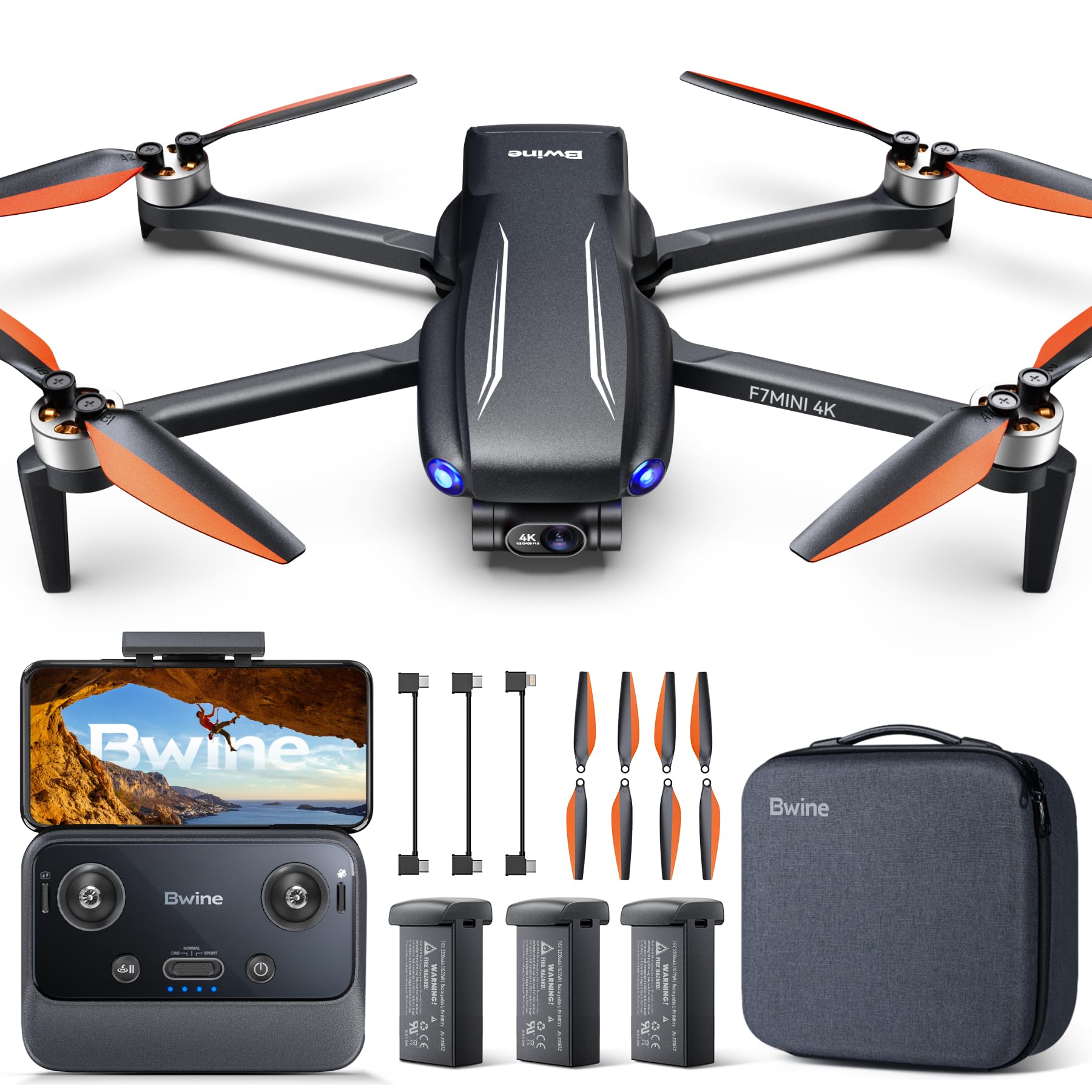
The Bwine F7MINI (RC3 variant) breaks the sub-250g barrier while including a built-in 5.5-inch HD touchscreen controller, eliminating the need for a phone. The 48MP 1/2″ CMOS sensor with F1.8 aperture captures 4K/30fps video and 8K photos (interpolated). The 3‑axis stabilized gimbal handles level-5 winds well, and the 1503 brushless motor pushes a 31 mph top speed for responsive flying. Total flight time with three batteries is 96 minutes (32 minutes each).
The 20,000-foot digital transmission uses wired tech for zero‑latency feed, and the GPS system includes smart RTH, dynamic home point, and a 120dB locator buzzer for recovery. Optical flow positioning allows stable indoor flight without GPS. Beginner features like one‑button takeoff/landing and three flight speeds make it accessible for first‑time pilots. The padded case and complete accessory kit are well appreciated.
The RC3 remote’s screen, while convenient, is not as bright as premium controllers (700+ nits successor), making it slightly harder to see in direct sunlight. Some users note the follow‑me mode restricts gimbal angles. The camera’s low‑light performance is average, with noticeable noise after dusk. For the price, the integrated screen and FAA‑exempt weight make it a standout package for learners who want to skip phone tethering.
Why it’s great
- Built-in 5.5″ touchscreen controller
- Under 249g, no FAA registration
- 96‑min total flight time with 3 batteries
Good to know
- Screen could be brighter for sunlight
- Low‑light camera performance is average
8. Potensic ATOM 4K GPS Drone

The Potensic ATOM 4K Fly More Combo offers a Sony CMOS sensor and a 3‑axis brushless gimbal that delivers genuinely smooth 4K/30fps footage, even in level-5 wind conditions. At under 249g, it’s FAA-exempt, and the 6‑km transmission range (PixSync 3.0) provides reliable long‑distance control. The three‑battery kit with a parallel 60W charging hub provides 96 minutes of total flight time, and a 64GB microSD card is included as a bonus.
Visual Tracking and QuickShots (Pull‑Away, Rocket, Circle, Spiral, Boomerang) make cinematic capture easy for beginners. GPS return‑to‑home and enhanced GPS capabilities ensure safe landing if the signal drops. The compact carrying bag and included spare propellers make it a complete travel kit. Users praise its durability—aircraft has survived multiple crashes with only prop replacements needed.
The camera struggles in low light, with noticeable noise. The follow‑me mode restricts gimbal angles, limiting framing options. Some users report range is optimistic—reliable control tops out around 7,000–8,000 ft in open areas. The firmware update process can cause gimbal drift issues, though support is responsive. It’s a fantastic entry point for the price, but experienced users may find the camera limiting for professional work.
Why it’s great
- Sony sensor + 3‑axis gimbal for smooth footage
- Under 249g, no FAA registration
- 96‑min total flight, parallel fast charging
Good to know
- Camera weak in low light
- Range optimistic; reliable ~7,000 ft
9. HOVERAir X1 Drone with Camera

The original HOVERAir X1 weighs only 125g—lighter than most smartphones—making it the most portable and FAA-registration-free drone in this roundup. It launches from your palm with one click and operates completely hands‑free, using pre‑programmed flight paths (Hover, Follow, Zoom Out, Orbit, Bird’s Eye). The 2.7K/30fps and 1080P HDR video, stabilized by a triple stabilization system, is good for social media clips but not professional cinema.
The 32GB internal storage keeps footage private and eliminates lost SD cards. The fully enclosed design with safety guards makes it safe for close‑range use around people and pets, though it lacks obstacle avoidance. It’s remarkably durable: users report surviving 20‑foot rolls and multiple crashes with no damage. Customer service is excellent, with one user receiving a refund after water damage caused by user error.
It does not fly over water well (crashes are common), and it’s limited to level‑4 wind (7.9 m/s), so breezy days ground it. The 11‑minute battery life is short, and the lack of a remote means no manual control—you get what the modes offer. It’s a fantastic personal photographer for active solo users, but not a traditional pilot’s drone. For pure grab‑and‑go simplicity, nothing beats this featherweight.
Why it’s great
- Ultra‑light 125g, fits in a pocket
- One‑button palm launch, no controller needed
- Extremely durable; survives crashes well
Good to know
- Does not fly over water
- 11‑min flight time per battery
- No manual control stick
FAQ
Do I need FAA registration for a drone under 249g?
What level wind resistance should a beginner drone have?
How long does a drone battery actually last in the air?
Final Thoughts: The Verdict
For most users, the best aerial drone winner is the SKYROVER X1 Fly More Combo because it combines 360° obstacle avoidance, a brilliant built-in screen controller, and 4K/60fps HDR video in a sub-249g package that rivals premium brands at a fraction of the cost. If you want the ultimate camera quality, grab the DJI Mini 5 Pro for its 1-inch sensor. And for hands‑free action sports capture, nothing beats the HOVERAir X1 PRO.