
Our readers keep the lights on and the weekend projects moving. As an Amazon Associate, I earn from qualifying purchases.
Choosing the wrong boot on a logging site can turn a long shift into a dangerous one. Slipping on wet bark, feeling a steel toe crush under a rolling log, or having your feet go numb in freezing mud are real problems that demand a specific build: a pronounced heel for climbing, a thick leather upper for cut resistance, and a waterproof membrane that actually breathes. This guide separates the true workhorses from the weekend warriors.
I’m Rikta — the co-founder and writer behind FitlyFast. I’ve spent hundreds of hours analyzing specs, reading field reports, and comparing durability claims across the most demanding work boot categories.
After cross-referencing customer data from oil rigs, fire lines, and logging camps, I’ve narrowed down the top contenders for the best boots for logging on the market today.
How To Choose The Best Boots For Logging
Logging boots are a specific sub-category of work boot, not just a heavy-duty hiking boot. They are defined by a high, pronounced heel (usually 90 degrees) that digs into loose bark and mud, a steel or composite toe for impact protection, and a rigid shank that supports your arch when climbing on spiked trees or walking on steep, uneven slopes. Without these three core features, you are not wearing a logger boot.
Logger Heel & Outsole
The 90-degree heel is the single most defining visual feature of a logging boot. It provides a mechanical ledge that a climber can rest their foot on when using climbing spikes, and it prevents forward slipping on loose terrain. Look for a Vibram or similar high-traction rubber outsole with deep, aggressive lugs. A flat or moderate heel does not belong on a logging site.
Waterproofing & Insulation
A waterproof membrane (GORE-TEX, Danner Dry, or proprietary brand) is essential for keeping feet dry in wet brush, snow, or rain. Insulation, measured in grams of Thinsulate, ranges from 200g to 400g. For year-round work in moderate climates, 200g is sufficient. For northern logging in sub-zero conditions, 400g is necessary.
Steel Shank & Toe Protection
A steel shank provides the torsional rigidity your foot needs when standing on a narrow branch or a metal ladder rung. Steel toes offer the highest impact and compression protection (ASTM F2413 rated). For electrical hazard environments, look for EH-rated boots that provide secondary protection against live circuits.
Quick Comparison
On smaller screens, swipe sideways to see the full table.
| Model | Category | Best For | Key Spec | Amazon |
|---|---|---|---|---|
| Thorogood Logger 9″ | Premium Insulated | Cold weather, chainsaw work | 400g Thinsulate | Amazon |
| Danner Logger 9″ | Premium Build | All-day wear, shorter break-in | Danner Dry membrane | Amazon |
| Chippewa 8″ Paladin | Premium Value | Wide feet, classic build | Goodyear Welt | Amazon |
| Carolina 8″ Logger (9824) | Mid-Range Memory Foam | Comfort on uneven terrain | Memory Foam Footbed | Amazon |
| Carolina 8″ Elm Logger | Mid-Range Value | Entry-level logger boot | Slip-& oil-resisting sole | Amazon |
| Ariat Cascade 8″ | Mid-Range Style | Less extreme work, daily use | Square toe, wide fit | Amazon |
| Irish Setter Two Harbors | Mid-Range All-Day | Zero break-in, long shifts | 11-inch shaft height | Amazon |
| Georgia Boot Low Heel Logger | Entry Level | Budget-friendly, dry conditions | 200g Thinsulate | Amazon |
| Haix Protector Ultra | Premium Specialist | Cut protection, fireline work | Para-aramid cut guard | Amazon |
In‑Depth Reviews
1. Thorogood Logger Series 9″ Waterproof Insulated Steel Toe

The Thorogood Logger 9″ is the benchmark for cold-weather logging work. It pairs a Crazy Horse leather upper with 400 grams of 3M Thinsulate insulation, making it capable of keeping feet warm in deep snow while still being breathable enough for active work in milder temperatures. The Vibram slip-resistant outsole with its reinforced tip stitch handles chainsaw oil and wet bark without degrading.
Internally, the steel shank provides the rigid arch support you need when climbing on a tree trunk or standing on a ladder rung for hours. The Ultimate Shock Absorption comfort system reduces fatigue on concrete or gravel between tree stands.
Build quality is one of the highest in this price tier, with full-grain American leather and a waterproof membrane that keeps moisture out through rain and snow. A few users noted the laces are short, which is a minor annoyance, but the overall construction and rebuildable Goodyear welt make this a long-term investment in foot safety.
Why it’s great
- Exceptional 400g insulation for sub-zero conditions
- Rebuildable Goodyear welt construction
- Heavy-duty traction on mud, snow, and bark
Good to know
- Very heavy; each boot weighs around 4 pounds
- Requires a solid 10-15 hour break-in period
- Stock laces are short; replace immediately
2. Danner Logger 9″ Waterproof Nubuck Leather
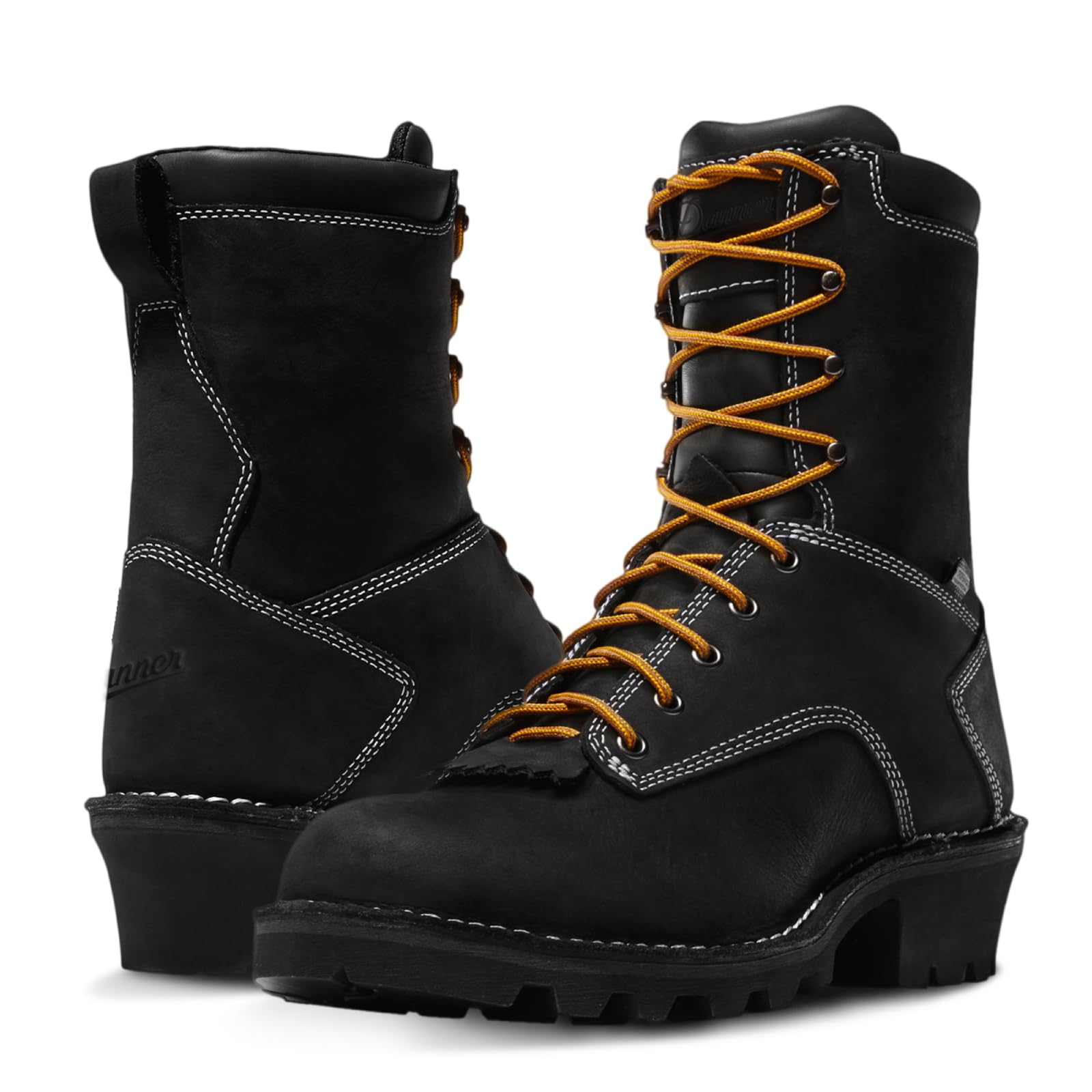
The Danner Logger 9″ is a legendary silhouette in the logging boot world, known for its excellent out-of-box comfort relative to other heavy logger boots. The oiled nubuck leather is tough enough to resist abrasion from brush and bark, yet flexible enough to require a shorter break-in period. The 90-degree heel is pronounced and does exactly what it is supposed to do — dig into loose ground and provide a ledge for climbing.
Internally, the Bi Fit Board system combines the shank, lasting board, and midsole into a single component, reducing the overall weight of the boot without sacrificing the torsional rigidity you need for tree climbing. The Danner Dry waterproof barrier is highly breathable, preventing the clammy feeling that often plagues fully waterproof boots.
Electrical hazard certification (ASTM F2892-18) adds an important safety layer for anyone working near downed power lines or heavy electrical equipment. Customers who have owned this boot for years report that with occasional oiling, the leather outlasts the sole, and resoling is straightforward. It is a smart, durable investment for anyone who spends 10+ hours a day in the woods.
Why it’s great
- Shorter break-in period than most logger boots
- Bi Fit Board reduces weight significantly
- High-traction 90-degree logger heel
Good to know
- Runs slightly large; consider half-size down
- Nubuck leather requires regular conditioning
- Stiff on pavement; best on soft terrain
3. Chippewa 8″ Waterproof Steel Toe Logger
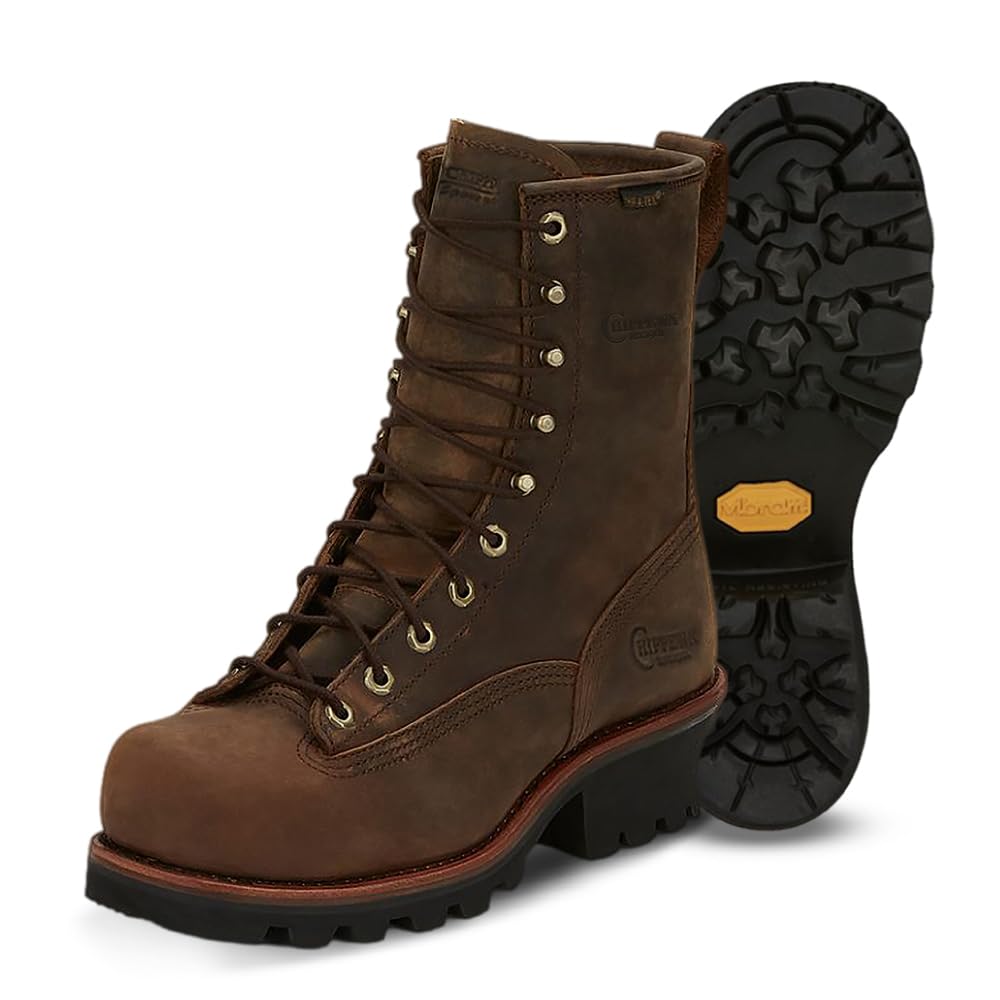
The Chippewa Paladin 8″ Logger is a classic American work boot built with Goodyear leather welt construction, meaning it can be resoled once the Vibram Tacoma TC4 Plus outsole wears down. The full-grain leather upper is thick enough to resist cuts from brush and saws, yet it molds to the shape of your foot over time. It comes in a steel-toe configuration that meets ASTM F2413 EH standards.
What sets this boot apart from similarly priced options is the outsole lug depth. The Vibram Tacoma sole is aggressive without being overly bulky, providing excellent grip on both loose dirt and wet metal. The Orthotic comfort insole is removable, allowing you to swap in custom orthotics if you need arch support beyond what the built-in insole provides.
Customer feedback from construction and forestry workers highlights the excellent fit for wide feet and the long-lasting full-grain leather that holds up with annual oiling. The main complaint is the bulkiness of the boot — it is not nimble. But for a logger boot, bulk usually translates to durability, and these deliver on that promise.
Why it’s great
- Rebuildable Goodyear welt construction
- Spacious toe box for wide feet
- Deep-lug Vibram outsole for loose terrain
Good to know
- Boot is heavy and somewhat bulky
- Not ideal for purely hard-surface work
- Ankle support is good but takes time to break in
4. Haix Protector Ultra 8″ Steel Toe

The Haix Protector Ultra is an engineering-heavy boot that brings European forestry standards to the US market. The defining feature is the para-aramid lining (the same material used in bulletproof vests) that provides Class 2 cut protection, an important safety factor for anyone using chainsaws. The nubuck leather upper is reinforced with rubber overlays at the toe and heel to resist abrasion from climbing spurs.
It uses a two-zone lacing system, allowing you to independently tighten the lower foot and upper ankle for a locked-in fit. The Gore-Tex membrane combined with the Haix Climate System manages moisture well, keeping feet dry without overheating. The non-metallic puncture plate is a plus for anyone working in debris-heavy environments.
Customer reports confirm the boot is stiff at first but becomes supportive and comfortable after a break-in. It is also heavy, comparable to any premium logger boot. The main drawback reported is difficulty getting warranty support if stitching fails within the first year. For serious forestry professionals who need cut protection, this boot is a top-tier choice.
Why it’s great
- Para-aramid Class 2 cut protection
- Two-zone lacing for custom fit
- Excellent temperature regulation
Good to know
- Very expensive; premium price point
- Warranty process can be difficult
- Runs slightly large; may need an insert
5. Irish Setter Two Harbors 11″ Waterproof Steel Toe

The Irish Setter Two Harbors is notable for its exceptional all-day comfort right out of the box. Multiple customer reports from oil rig and snowy field workers mention wearing these boots for 21-hour shifts with zero break-in period. The 11-inch shaft height provides additional calf protection against brush and sawdust compared to the standard 8-inch logger boot.
The steel toe is built to ASTM standards, and the outsole handles oil, mud, and snow without melting or losing traction — a common complaint with lower-end boots on hot oil rig surfaces. The waterproofing holds up well in heavy rain and snow conditions, keeping feet dry through the entire shift.
One consistent point from long-term users is the overall durability. Customers report these boots lasting 11 to 15 months of heavy daily use before needing replacement, which is competitive in this category. The main weakness mentioned is occasional stitching wear at high-stress points like the ankle flex area. For the money, this is a zero-fuss work boot that performs reliably from day one.
Why it’s great
- No break-in period required
- Very comfortable for 12+ hour shifts
- Tall 11-inch shaft for extra protection
Good to know
- Stitching can wear sooner than premium boots
- Not rebuildable; consumable boot
- Wide feet should size up for thick socks
6. Carolina 8″ Logger (CA9824) Steel Toe

The Carolina 8″ Logger (CA9824) is designed with a memory foam footbed that contours to your foot shape over the first week of wear. This reduces hot spots and pressure points during long shifts on uneven terrain. The boot features a triple-rib steel shank, providing the rigid support needed for tree climbing and steep slope work.
The steel toe is rated for impact and compression, and the slip-resistant rubber lug outsole provides good footing on wet surfaces. One frequent positive note from buyers is the full-grain leather build, which feels suppler than some comparably priced options, making the break-in less painful.
Compared to the Georgia boot, users note that the Carolina offers better foot support and less foot pain after long shifts. However, the boot runs slightly smaller, and those with wide feet should order a wide width. A small number of users reported the memory foam wearing out quickly, but the overall value for the build quality remains strong.
Why it’s great
- Memory foam footbed reduces fatigue
- Triple-rib shank supports climbing
- Full-grain leather is soft and durable
Good to know
- Runs small; order up or wide
- Memory foam compresses over months
- Heavier than some competitors
7. Carolina 8″ Elm Logger (CA9821) Steel Toe
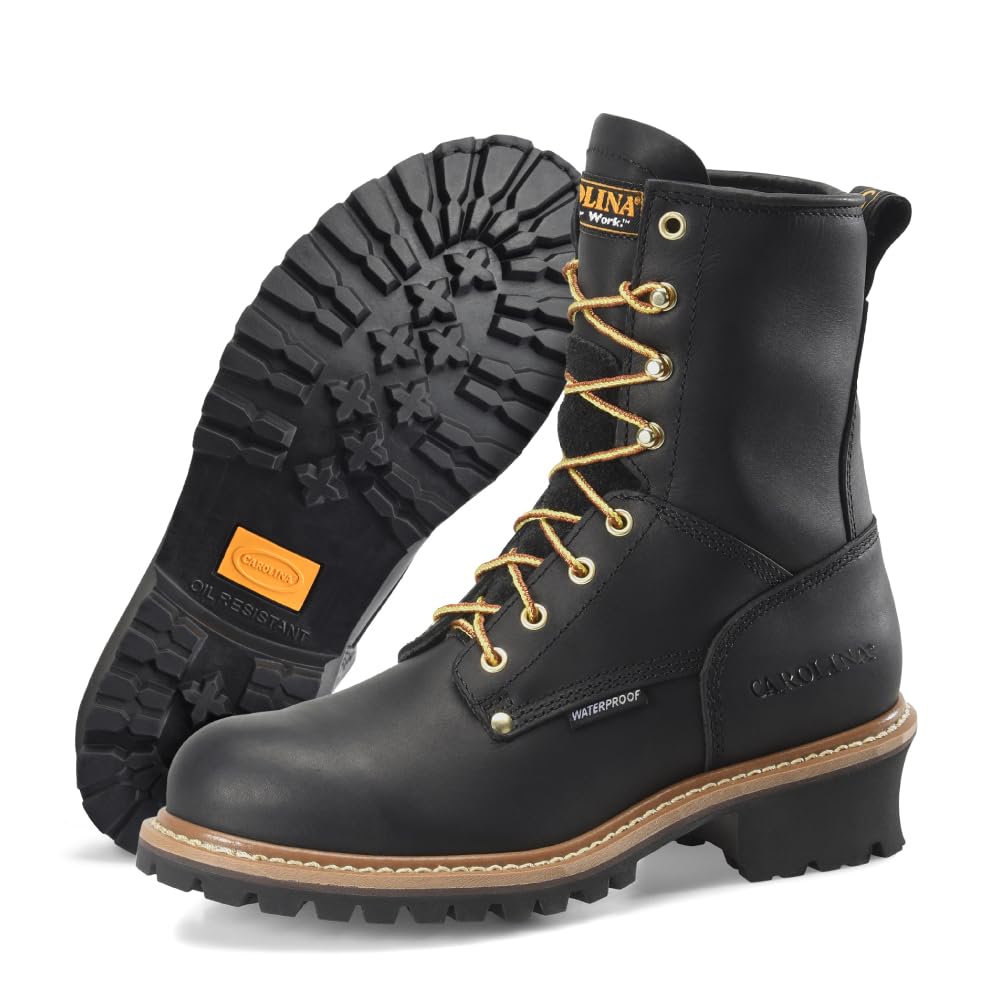
The Carolina Elm Logger is a no-frills entry into the logger boot category at a very approachable price point. The Pillow Cushion Memory Foam footbed provides decent initial comfort, and the steel toe, steel shank, and slip-resistant rubber lug outsole cover all the essential requirements for logging work. It comes in a wide width option, which is helpful for thick sock wearers.
The durable leather upper holds up well against brush and mud, and the welt construction gives it a solid, traditional logger boot look. Many working professionals, including arborists and linemen, have reported positive experiences with the boot’s stability in wet conditions. The tall logger heel is noticeable but not as pronounced as a Danner or Thorogood.
A critical warning from one user: the boot’s comfort faded rapidly after about one month of daily heavy use, with the memory foam and sole showing accelerated wear. This suggests the Elm Logger is best suited for lighter-duty work or as an occasional-use boot rather than a 60-hour-per-week logging operation.
Why it’s great
- Affordable entry into logger boots
- Memory foam insole for initial comfort
- Wide width option for roomy fit
Good to know
- Durability is inconsistent; some fail quickly
- Not suitable for extreme daily abuse
- Memory foam compresses faster than premium models
8. Ariat Cascade 8″ Wide Square Toe

The Ariat Cascade 8″ is not a traditional logging boot if you look strictly at the heel — it lacks the pronounced 90-degree logger heel. However, it is a very capable work boot for outdoor tasks that require comfort and durability over raw climbing performance. The square toe provides plenty of room for toe splay, and the wide fit accommodates heavy thermal socks.
Ariat’s construction quality is well respected. Buyers report that this boot holds up well for 6 to 12 months of heavy-use trades like plumbing and construction. The leather is good quality, and the boot breaks in within about a week of light use. The outsole provides reasonable traction on mud and gravel, though it won’t dig in like a true Vibram logger sole.
For a logger who occasionally climbs, this boot is adequate but not ideal. For someone who spends more time on machinery or walking on flat ground and less time on spiked trees, the Ariat Cascade is a strong, comfortable choice. It simply lacks the shank rigidity and heel profile required for serious climbing work.
Why it’s great
- Excellent entry-level work boot quality
- Square toe offers generous foot room
- Comfortable out of the box
Good to know
- Not a true logger heel; lower climbing performance
- Heavy boot even by work boot standards
- Not ideal for steep, loose terrain
9. Georgia Boot Low Heel Logger GORE-TEX
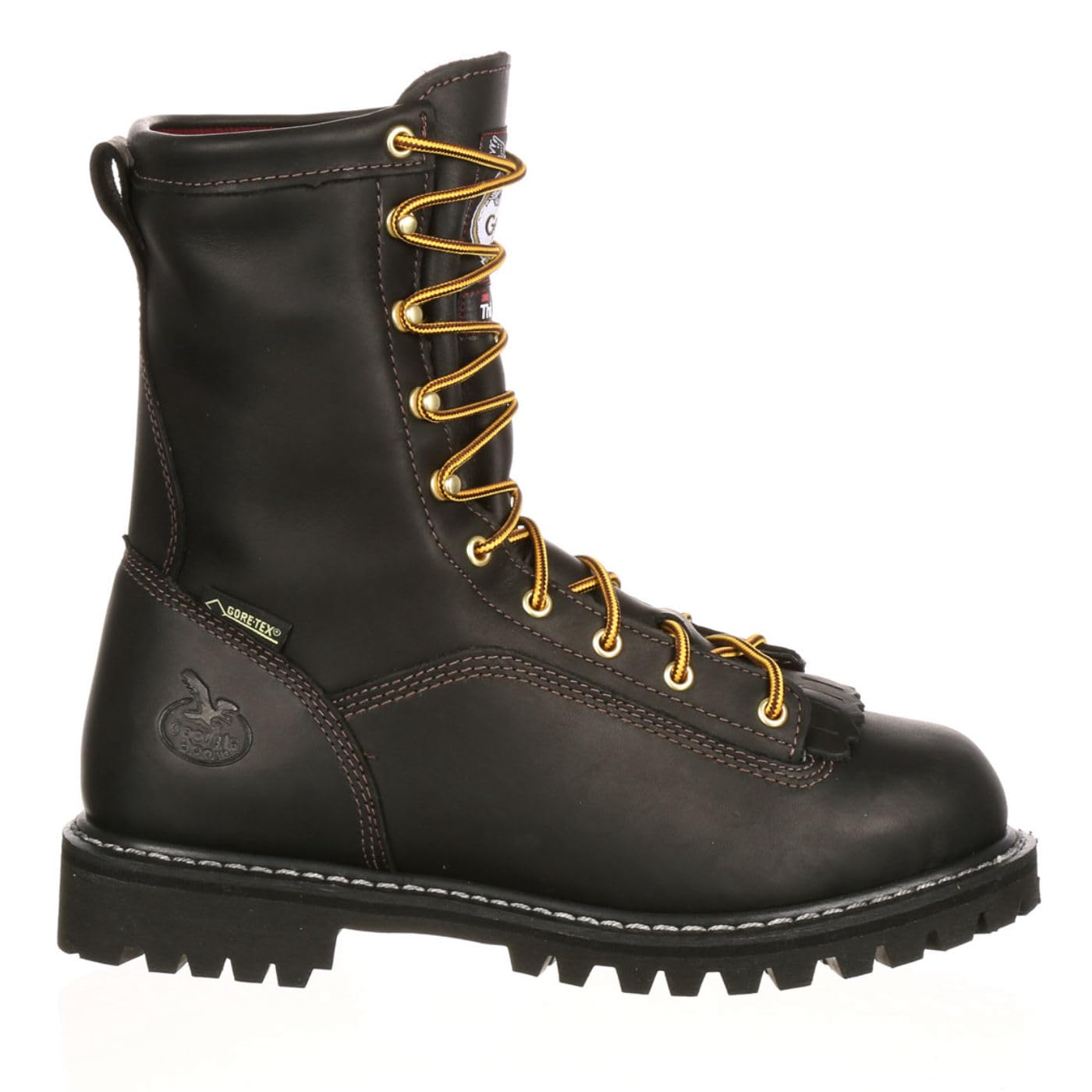
The Georgia Boot Low Heel Logger is a solid workhorse for the logger on a tighter budget. It features a full-grain leather upper, 200 grams of 3M Thinsulate insulation, and a GORE-TEX waterproof liner — the same technology found in much more expensive boots. The Vibram lug outsole offers good oil and slip resistance, and the steel shank provides the arch support needed for uneven terrain.
Several long-term owners report these boots lasting years with proper care, citing the Goodyear welt construction and robust leather as the main reasons. The low-heel profile (less aggressive than a pure 90-degree logger heel) makes them more versatile for walking on flat surfaces compared to a tall logger boot.
The main trade-off is that the ankle support is less stiff than dedicated logger boots, and the leather is noticeably thinner than boots from Danner or Thorogood. For light to medium logging tasks or for someone transitioning into the work, this is a reliable, comfortable starting point.
Why it’s great
- GORE-TEX membrane at a lower price
- Goodyear welt construction
- Good comfort and durability for the cost
Good to know
- Thinner leather than premium brands
- Low heel reduces climbing performance
- Ankles are less stiff for heavy terrain
FAQ
Can I wear hiking boots instead of logger boots for logging?
How important is steel toe protection for logging?
How long should a pair of logging boots last?
Final Thoughts: The Verdict
For most users, the boots for logging winner is the Thorogood Logger 9″ because it delivers the best balance of cold-weather insulation, rebuildable construction, and deep-tread traction for real forestry work. If you want a shorter break-in and lighter weight for all-day wear, grab the Danner Logger 9″. And for maximum cut protection and advanced engineering at the highest tier, the Haix Protector Ultra is the specialist choice.