
Our readers keep the lights on and the weekend projects moving. As an Amazon Associate, I earn from qualifying purchases.
Dry, cracked leather boots lose their shape, let in moisture, and shorten a boot’s life by years. The right oil penetrates deep into the fibres, replenishing natural oils lost to weather and wear, and creates a water-resistant barrier without suffocating the leather. Choosing a formula that balances softening power with proper breathability is the single decision that determines whether your boots last a decade or a season.
I’m Rikta — the co-founder and writer behind FitlyFast. I’ve spent hundreds of hours digging into the chemical compositions, application methods, and real-world wear results across dozens of leather conditioners to separate marketing claims from genuinely effective formulas.
Whether you own heritage work boots, fashion Chelsea boots, or rugged hiking leathers, finding the right formulation matters more than any brand name. This guide cuts through the noise to deliver a clear, researched take on the best boot oil for your specific leather type and budget.
How To Choose The Best Boot Oil
Picking a boot oil comes down to three variables: the leather’s current condition, your climate, and the finish you expect. Oils heavy in pine pitch and mink oil deliver deep waterproofing but darken leather significantly. Lighter seed-oil and beeswax blends condition without as much colour shift. Matching the oil’s carrier base — whether it’s mink, neatsfoot, or plant-derived — to your boot’s tanning process prevents oversaturation and tacky residues.
Mink Oil vs. Neatsfoot Oil vs. Beeswax Blends
Mink oil is the go-to for heavy waterproofing and softening stiff work leathers. It penetrates quickly but can darken leather two to three shades. Neatsfoot oil, rendered from cattle bones, is prized for restoring flexibility to dry, brittle leather without leaving a greasy film — though it can weaken stitching over time if over-applied. Beeswax blends create a durable surface barrier that sheds water and mud, ideal for wet conditions, but they require more buffing to avoid a tacky finish. Most premium boot oils combine two of these bases for balanced performance.
Application Method and Residue
Paste-style oils in tins (like mink oil or Huberd’s dressing) are applied by finger or cloth and need body heat to melt into the leather. Liquid oils in bottles spread more evenly but can pool in creases if you apply too much. After application, let the oil absorb for at least an hour — overnight for heavily dried leather. A good oil leaves the surface feeling supple, not sticky. If you feel tackiness 24 hours later, you used too much and need to buff the excess with a clean cloth.
Quick Comparison
On smaller screens, swipe sideways to see the full table.
| Model | Category | Best For | Key Spec | Amazon |
|---|---|---|---|---|
| Leather Honey | Liquid Conditioner | Deep restoration of dry leather | 6-month protection per coat | Amazon |
| Red Wing Boot Oil | Pine Pitch Blend | Oil-tanned work boots | Significantly darker finish | Amazon |
| Huberd’s Dressing | Neatsfoot & Beeswax | Breaking in stiff new leather | Metal can, beeswax base | Amazon |
| Red Wing Natural Conditioner | Pine Pitch, Mink, Beeswax | Heritage boot care | 3 oz tin, matte finish | Amazon |
| Angelus Mink Oil | Pure Mink Oil Paste | Budget waterproofing | 7.6 oz tub, no odour | Amazon |
| Cobbler’s Choice | Seed Oil & Beeswax | Minimal colour change | Triple filtered beeswax | Amazon |
| Leather Boot Care Kit | Mink Oil & Soap Kit | Complete starter setup | Includes brush, sponge, cloth | Amazon |
In‑Depth Reviews
1. Leather Honey Leather Conditioner
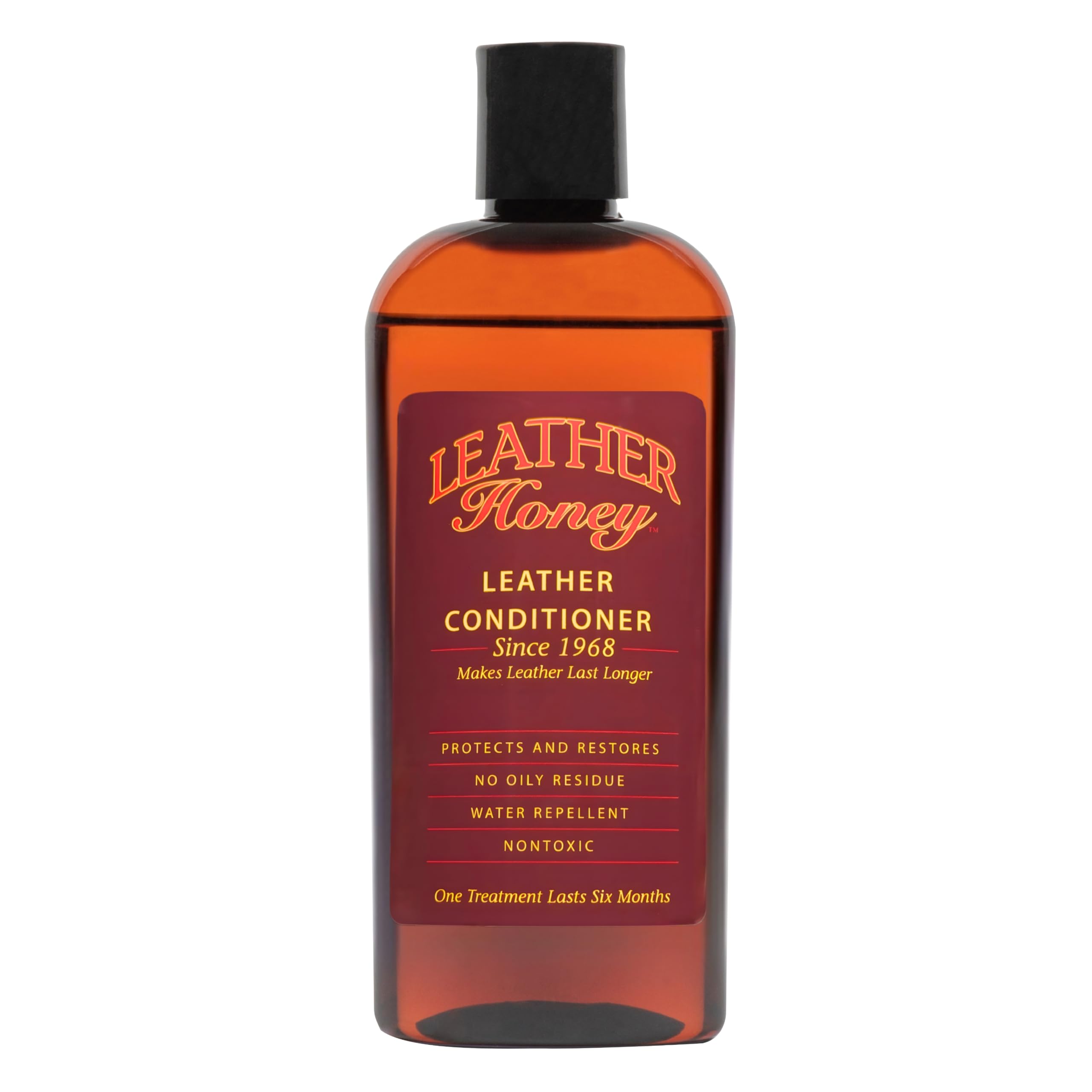
Leather Honey penetrates deeper than any paste-based oil due to its thin liquid viscosity, which travels down into dry, cracked fibres rather than sitting on the surface. Where mink oils merely coat the top grain, this conditioner rehydrates leather from the inside out — a critical distinction for aged or sun-bleached leathers that have lost structural flexibility. Its pH-balanced, fragrance-free formula is also free of silicone and solvents, making it a safer choice for furniture and automotive leather where skin contact is constant.
The trade-off lies in the application process: the liquid is sticky and thick, requiring you to spread it thinly and then buff aggressively after letting it absorb for several hours. Users report that heat — using a hairdryer on the leather before applying — dramatically improves absorption speed and reduces sticky residue. One application reportedly lasts up to six months, which cuts down the frequency of reapplications compared to mink oil pastes that need monthly touch-ups in wet climates.
It is worth noting that Leather Honey is not intended for suede, faux leather, or vinyl. On genuine leather, expect moderate darkening that fades slightly after a day of wear. The 8-ounce bottle covers roughly 15 items (boots, jackets, belts) with multiple coats, making the cost-per-use exceptionally low for a premium conditioner.
Why it’s great
- Penetrates deep into cracked, dry leather fibres
- One treatment lasts up to six months
- Non-toxic and free of PFAS forever chemicals
Good to know
- Sticky application requires thorough buffing
- Darkens leather noticeably, especially on light colours
2. Red Wing Shoes All Natural Boot Oil
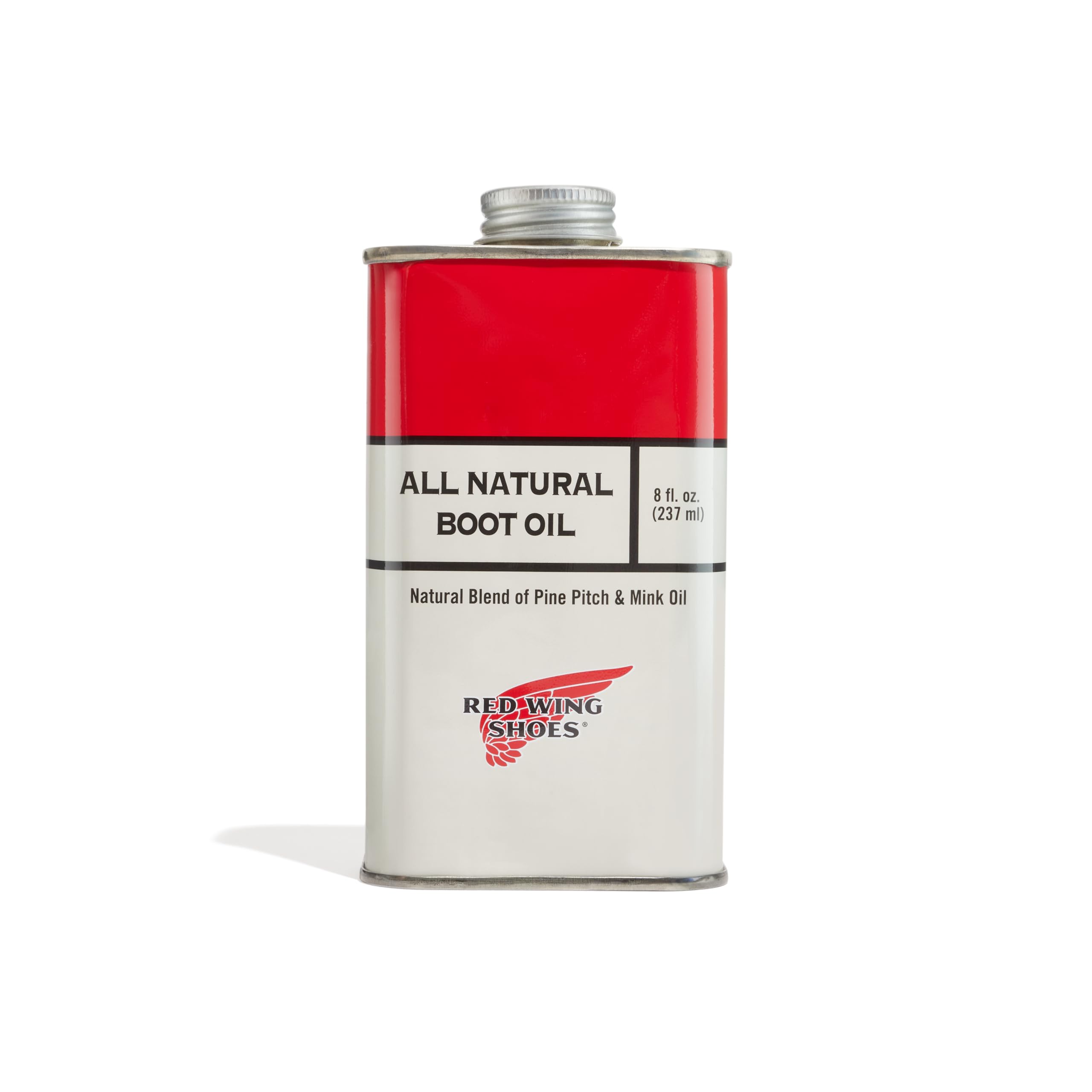
Red Wing’s own boot oil blends pine pitch and mink oil into a liquid formula designed specifically for oil-tanned leathers like those used in Iron Rangers and work boots. Pine pitch acts as a natural tackifier that bonds the oil to the leather surface, creating a water-resistant seal that standard mink oil alone cannot achieve. Users in heavy-industrial trades report that boots treated before first wear resist shrinking and hole formation significantly longer than untreated boots.
This oil darkens leather more than any other product on this list, turning a tan or copper roughout into a deep brown or nearly black finish. That makes it ideal for work boots where aesthetics take a back seat to protection, but a poor match for fashion boots where you want to preserve the original colour. The liquid consistency spreads easily with a cloth, and users note it conditions without the foul smell associated with pure neatsfoot oil.
The 8-ounce bottle matches the same size as the Leather Honey and Cobbler’s Choice options, but its pine-pitch base means it requires more frequent reapplication — typically every 4-6 weeks for daily-wear boots exposed to moisture. It is also safe for baseball gloves and saddles, though the darkening effect remains uniform across all leather types.
Why it’s great
- Best water resistance of any liquid boot oil
- No rancid odour like pure neatsfoot
- Prevents shrinking and holes in work boots
Good to know
- Darkens leather significantly — not for colour preservation
- Requires monthly reapplication for daily wear
3. Huberd’s Leather Dressing with Neatsfoot Oil
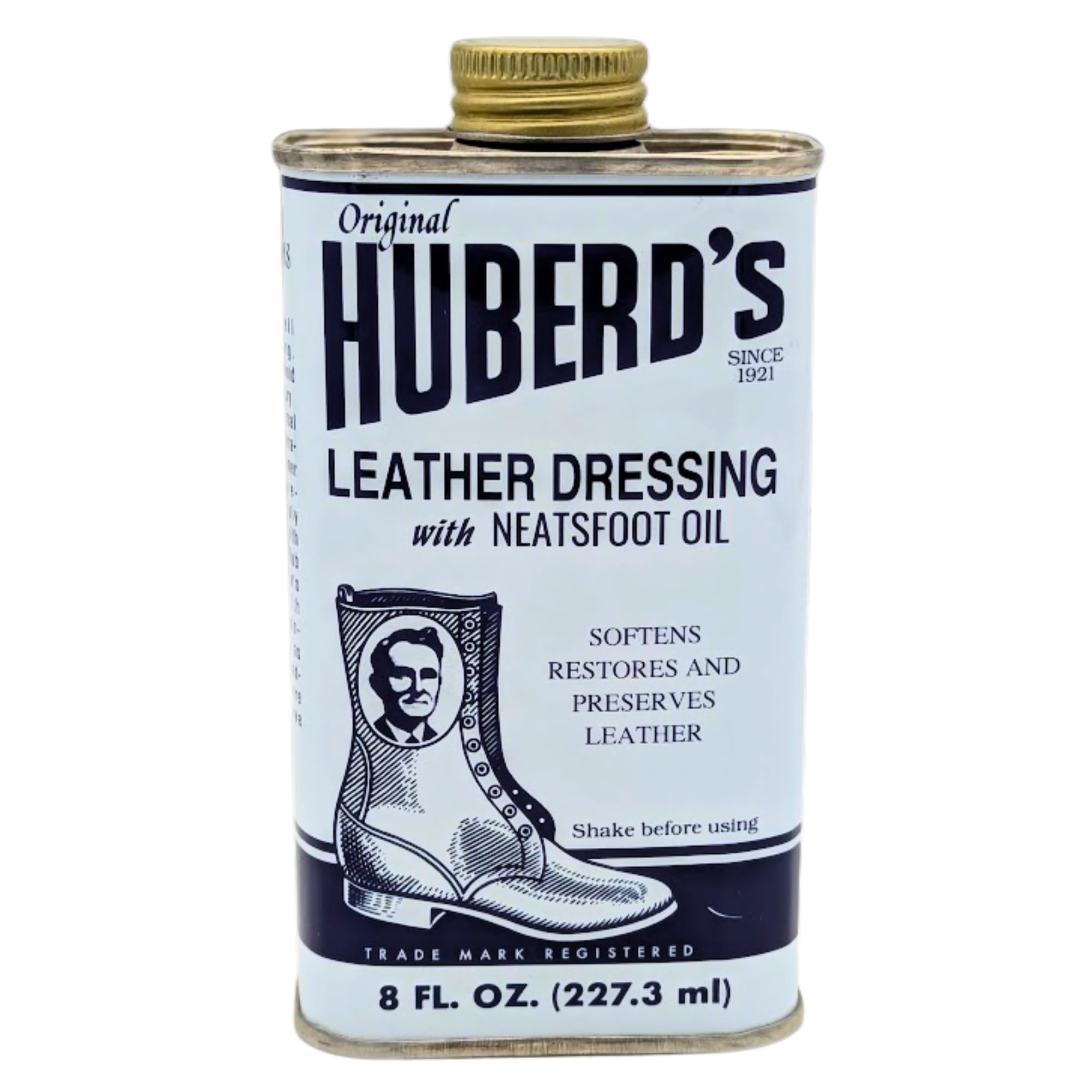
Huberd’s has been manufacturing this beeswax-and-neatsfoot-oil dressing since 1921, and its formula has remained unchanged — a testament to how well it works on the stiffest leathers. The wax-heavy consistency requires body heat or a low-temperature hair dryer to melt into the leather, but once absorbed, it transforms brittle, neglected leather into pliable, flexible material. Ranchers and equestrians have relied on this for saddles and work boots for generations, and modern users find it equally effective on Birkenstock straps and hiking boots.
The neatsfoot oil component penetrates deep to restore lost oils, while the beeswax sits on the surface as a buffable sheen that sheds water. Unlike straight neatsfoot oil, the beeswax carrier prevents the oil from migrating into stitching and weakening it over time — a common failure point with pure neatsfoot applications. The metal tin is a practical bonus: it doesn’t crack in cold weather and is fully recyclable.
One downside is the sheer intensity of the dressing. It leaves a visible waxy layer that attracts dust if you do not buff it thoroughly. Apply it sparingly — a thin layer goes further than a thick glob, and you can always add more. The 8-ounce tin lasts multiple seasons for a pair of boots, making it a strong mid-range option despite its premium heritage.
Why it’s great
- Softens the stiffest leathers — ideal for breaking in new boots
- Beeswax seals moisture out without weakening stitching
- 100-year-old formula, still made in the USA in a metal can
Good to know
- Heavy wax layer requires thorough buffing to avoid dust attraction
- Darkens leather and leaves a glossy sheen
4. Red Wing Heritage All Natural Leather Conditioner
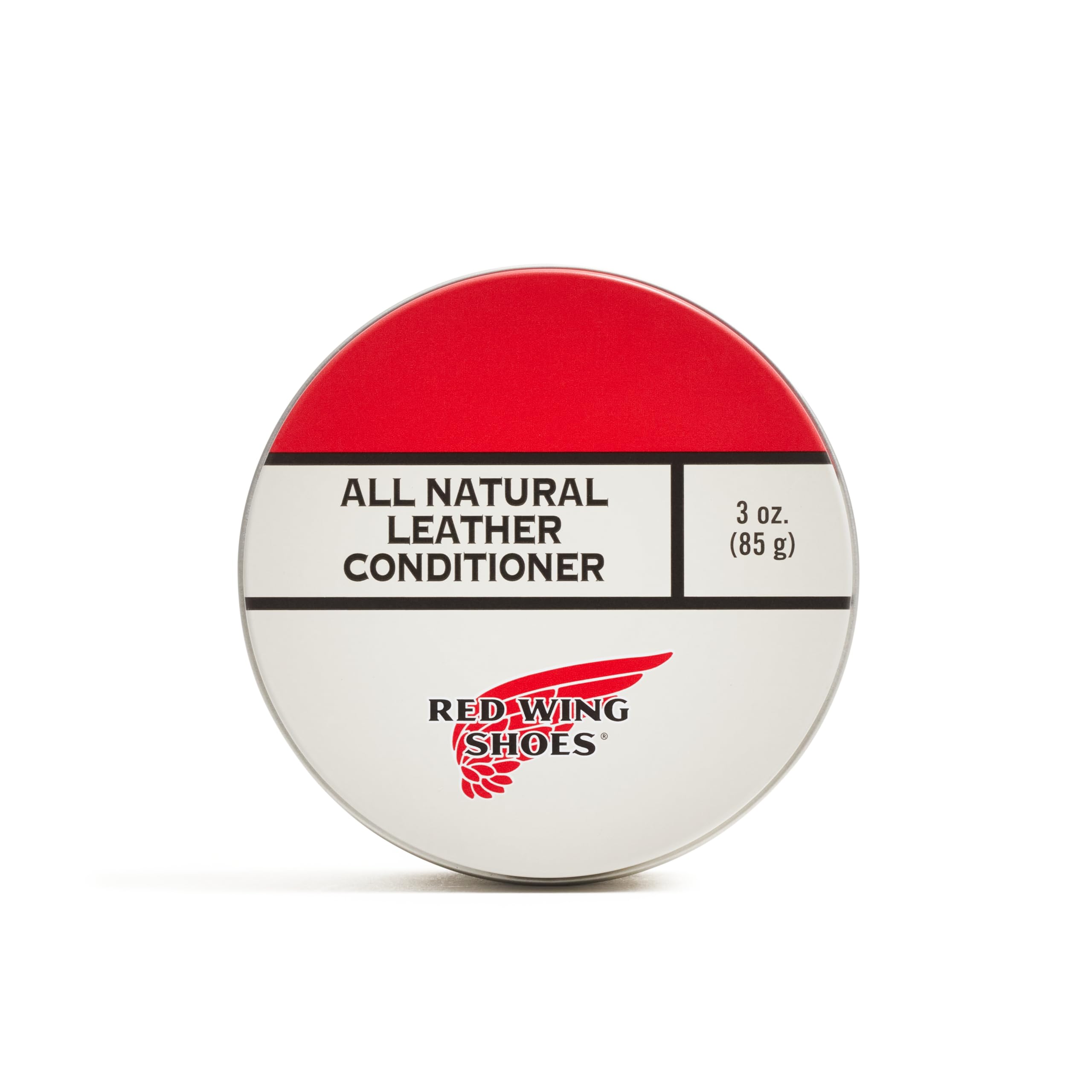
This 3-ounce paste tin from Red Wing Heritage combines pine pitch, mink oil, and beeswax into a dense waxy block that melts at body temperature. Unlike the liquid Boot Oil (product 2), this conditioner leaves a matte, non-greasy finish that does not attract dirt. Users applying it to Iron Rangers report that the darkening effect is temporary — the leather returns closer to its original colour after a day of wear — making it a smarter choice for heritage boot owners who want protection without permanent colour alteration.
The paste format is inherently more controlled than liquid oils: you scoop out a pea-sized amount, rub it between your fingers to liquefy it, and work it into the leather in circular motions. This reduces the risk of overapplication and pooling in creases. The trade-off is that it takes more manual effort to cover a full boot, and the 3-ounce tin is small — expect to use about a quarter of the tin per application on a pair of size-10 boots.
For those who rotate between multiple pairs of boots, the longevity of the tin is reasonable, but heavy users may find themselves ordering refills sooner than they would with an 8-ounce liquid bottle. It also contains beeswax, which provides light weatherproofing but is not as robust as the seal created by the liquid Boot Oil on the same brand’s shelf.
Why it’s great
- Matte, non-greasy finish — no dirt attraction
- Temporary darkening, colour returns after wear
- Controlled paste application prevents overuse
Good to know
- Small 3-ounce tin may need frequent repurchase for heavy users
- Manual application takes more time than liquid oils
5. Leather Boot Care Kit (Mink Oil, Saddle Soap, Applicators)

This complete kit bundles a mink oil paste, saddle soap bar, a bristle brush, a sponge applicator, and a polishing cloth into one box, removing the guesswork for first-time boot oil users. The mink oil is a standard formulation — no pine pitch or beeswax additions — which means it conditions well and provides solid waterproofing but darkens leather by two to three shades and requires monthly reapplication in wet conditions. The saddle soap is effective for deep cleaning before oiling, lifting dirt and salt residue that would otherwise lock out the conditioner.
The included bristle brush has stiff nylon bristles that work well for scrubbing mud-caked work boots, but users with smooth-finished leather should use the sponge applicator to avoid scratching the surface. The kit logic is sound: clean with soap, scrub with brush, apply oil with sponge, buff with cloth — all without buying separate tools. This workflow is particularly helpful for cowboy boots and work boots that accumulate heavy grime from outdoor use.
On the downside, the mink oil itself is not as refined as the Angelus or Red Wing pastes — it has a slightly greasier feel and may leave a tacky residue if applied too thickly. The kit also does not include any instructions beyond the basic labels, so beginners should look up a standard cleaning-and-oiling routine online before starting.
Why it’s great
- All-in-one solution — no separate tools needed
- Saddle soap deeply cleans before conditioning
- Great value for first-time boot oil buyers
Good to know
- Mink oil is standard-grade — less refined than premium pastes
- No instruction guide included for proper application order
6. Cobbler’s Choice Co. All-Natural Leather Restorer Conditioner
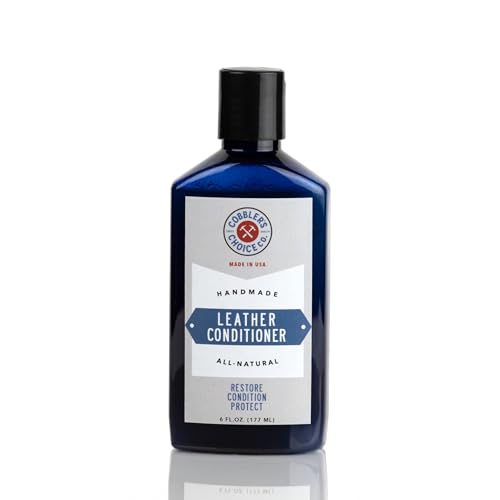
Cobbler’s Choice differentiates itself by being one of the few boot oils formulated with seed oils rather than animal-based mink or neatsfoot. The blend uses naturally occurring lipids and triple-filtered beeswax to condition without the strong colour shift typical of mink oil. Users report that it darkens leather only slightly — noticeably less than Angelus or Red Wing Boot Oil — and that the colour lightens back closer to the original after a day of wear, making it a strong candidate for fashion boots or lighter-coloured leathers.
The beeswax base provides a water-resistant layer that holds up well against rain and light snow, though it is not as durable as the pine-pitch seal found in Red Wing’s liquid formula. The 6-ounce bottle is a generous size, enough for roughly 8-10 full applications on a pair of boots. The triple-filtered beeswax also means the paste is free of impurities that can leave a cloudy residue on dark leather — a common issue with cheaper wax blends.
Application is straightforward: clean the leather first, apply a small amount onto a dry cloth, rub in circular motions, let dry for one hour, and repeat if needed. The main caveat is that the seed oil base may not penetrate as deeply as mink or neatsfoot on severely dried leather — boots that are already cracking may need two or three applications in quick succession to see full restoration.
Why it’s great
- Minimal colour change — best for preserving original leather tone
- Triple-filtered beeswax prevents cloudy residue
- Plant-based oils suitable for sensitive users
Good to know
- Penetration is weaker on severely dried, cracking leather
- Water resistance is moderate, not heavy-duty
7. Angelus Mink Oil for Leather Boots
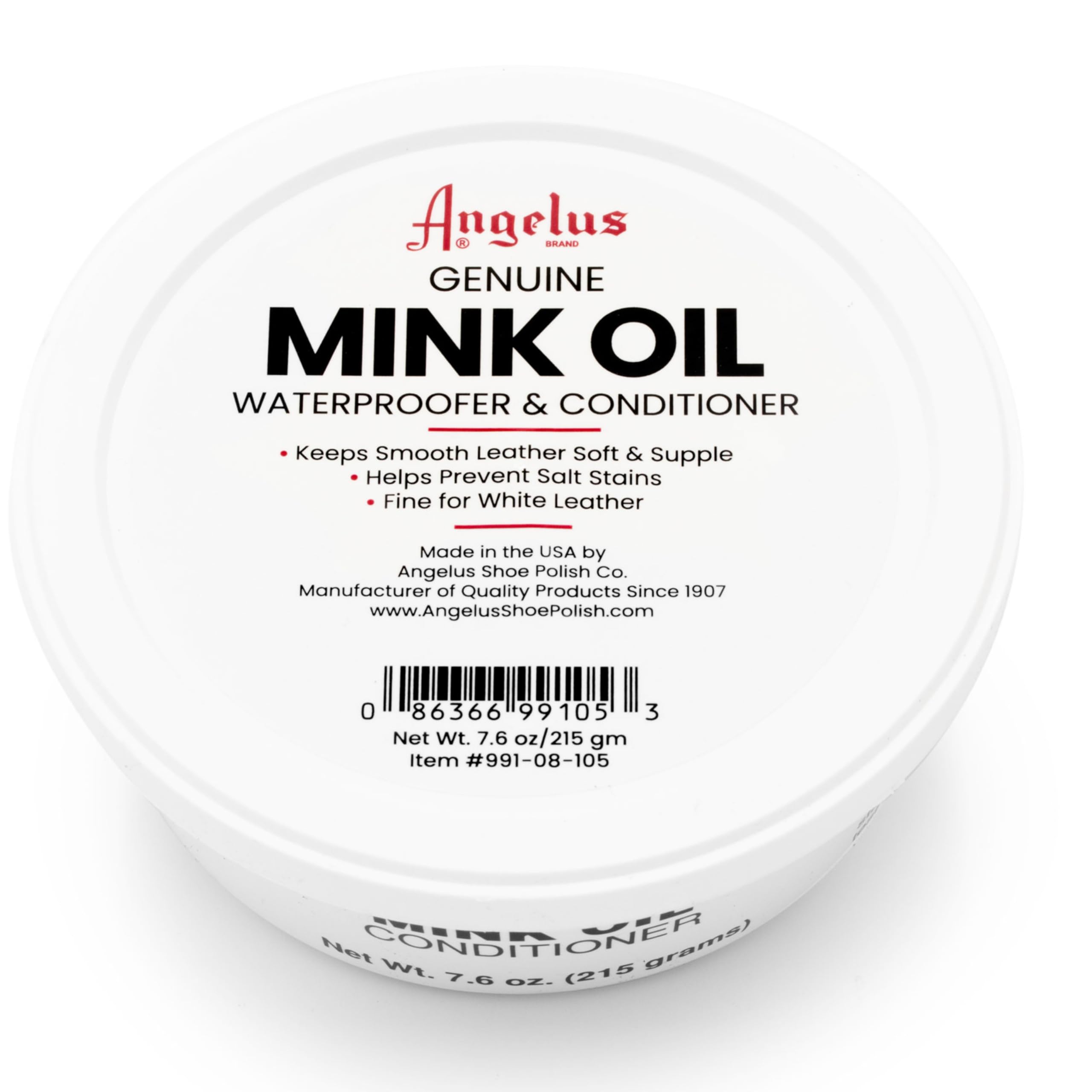
Angelus Mink Oil is the entry-level standard for boot conditioning — no fragrance, no additives, just pure mink oil in a large 7.6-ounce plastic tub. For the price, you get more volume than any other product in this guide, and the paste is easy to apply with your fingers directly onto clean leather. It softens stiff leather effectively, creates a reliable water-resistant barrier, and leaves no greasy residue when applied sparingly. Users note that it has virtually no odour, which is a clear advantage over neatsfoot-based products.
The most common feedback from long-term users is that it performs identically to more expensive mink oils — it is simply a no-frills formulation. It does darken leather noticeably, so test it on a hidden spot before applying to the full boot. The plastic tub is less durable than Huberd’s metal can, but it is lighter and easier to scoop from. One tub easily lasts a full year of monthly conditioning on two pairs of boots.
Where Angelus falls short is in the depth of conditioning compared to the Leather Honey or Cobbler’s Choice blends. Mink oil primarily coats and seals rather than deeply penetrating dry fibres, so boots that are already cracked or severely dried will not see the same revitalization they would from a liquid conditioner. It is best used as a maintenance oil for leather that is still in decent shape.
Why it’s great
- Lowest cost per ounce — massive tub for the price
- No odour, no greasy residue when applied correctly
- Effective waterproofing for wet weather boots
Good to know
- Darkens leather significantly — not for colour preservation
- Surface-level conditioning — less effective on cracked leather
FAQ
Will boot oil darken my light-coloured leather boots?
How often should I apply boot oil to my work boots?
Can I use boot oil on suede or nubuck leather?
Final Thoughts: The Verdict
For most users, the best boot oil winner is the Leather Honey Leather Conditioner because its deep-penetrating liquid formula restores even severely dried leather and lasts six months per application. If you want maximum waterproofing for heavy work boots, grab the Red Wing Boot Oil. And for a complete beginner setup with tools included, nothing beats the Leather Boot Care Kit.