
Our readers keep the lights on and the weekend projects moving. As an Amazon Associate, I earn from qualifying purchases.
A four-year-old’s legs are long enough to push hard, but their arms are still building the strength to steer a heavy bike. The wrong balance bike makes every ride a struggle against weight and poor geometry. The right one turns sidewalk cruising into an effortless glide that builds real coordination before pedals ever enter the picture.
I’m Rikta — the co-founder and writer behind FitlyFast. I’ve spent dozens of hours comparing wheel sizes, frame materials, seat-adjustment ranges, and tire types to find the models that actually fit a 4-year-old’s proportions and riding style.
This guide cuts through the marketing clutter to pinpoint the best balance bike for 4 year old riders, sorting by weight, tire traction, and growth room so you can buy with real confidence.
How To Choose The Best Balance Bike For 4 Year Old
A 4-year-old is in a transitional zone — too tall for most 12-inch balance bikes and still too short for a standard 16-inch pedal bike. The seat height range is the single most important spec. Look for a minimum seat height around 14 inches and a maximum near 20 inches to give at least a year of growth. Wheel diameter matters too: 14-inch wheels roll over bumps more smoothly than 12-inch, but they add weight, so the frame material needs to compensate.
Frame Weight and Material
A steel frame under 9 pounds is acceptable for a 4-year-old, but magnesium alloy or glass-reinforced nylon frames under 8 pounds make a noticeable difference in how easily a child lifts the bike over curbs and picks up speed. Aluminum, like the Strider 12 Pro uses, drops under 6 pounds but the trade-off is a smaller wheel size.
Tire Type: Air vs. Foam vs. EVA
Air-filled rubber tires provide the best traction and shock absorption on loose gravel, grass, and uneven pavement. They require occasional inflation but deliver a far smoother ride. EVA foam tires are maintenance-free and lighter, but they slip on wet surfaces and transmit more vibration. For a 4-year-old riding primarily outdoors, air tires are the better choice.
Adjustability and Growth Room
A 4-year-old’s inseam can range from 14 to 18 inches. A bike with an adjustable seatpost spanning at least 4 inches ensures the bike fits now and for the next year or two. Handlebar height adjustment matters less than seat height, but a range of at least 3 inches helps maintain a comfortable riding posture as the child grows.
Quick Comparison
On smaller screens, swipe sideways to see the full table.
| Model | Category | Best For | Key Spec | Amazon |
|---|---|---|---|---|
| Strider 12 Pro | Premium | Ultra-light build | 5.3 lb aluminum frame | Amazon |
| Bicystar 14″ (Blue) | Mid-Range | Outdoor terrain grip | 14″ air tires, steel frame | Amazon |
| Bicystar 14″ (Dark Blue) | Mid-Range | Wide inseam range | 14″–21″ seat height | Amazon |
| Birtech 14″ | Mid-Range | Lightweight alloy frame | 8.6 lb magnesium frame | Amazon |
| Ridego 14″ | Mid-Range | Composite frame portability | 8.16 lb nylon frame | Amazon |
| KRIDDO 12″ | Budget | Customizable fun | Dual-bearing wheels | Amazon |
| Gotrax KS12 | Budget | LED play appeal | 12″ EVA tires, 8.6 lb | Amazon |
In‑Depth Reviews
1. Strider 12 Pro
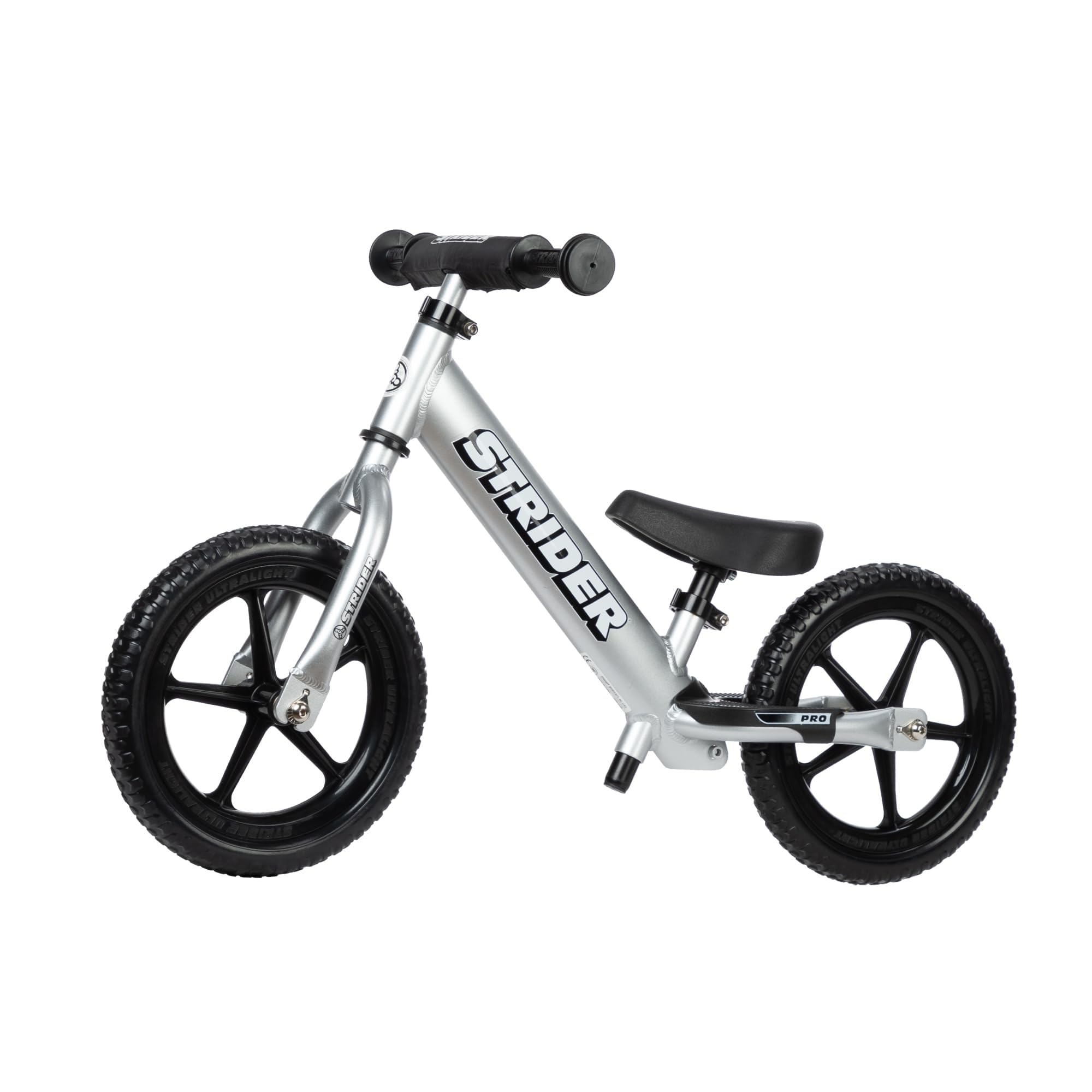
The Strider 12 Pro is the lightest balance bike in this lineup at just 5.3 pounds, thanks to its aluminum alloy frame. That weight difference is immediately obvious when a 4-year-old tries to lift the bike over a curb or turn it around in a tight space. The included XL seatpost extends the usable range up to a 60-pound child, giving this bike a longer lifespan than most 12-inch models.
The foam tires are maintenance-free and roll quietly on pavement, but they lack the grip of air tires on loose gravel or wet grass. For sidewalk and driveway riding, this is an advantage — no pumping tires, no flats. The tool-free seat and handlebar adjustments mean you can raise the bike in seconds as your child grows.
Customer reviews consistently highlight how quickly children transition to a pedal bike after using the Strider. Multiple parents report that their kids skipped training wheels entirely after mastering balance on this bike. The trade-off is a higher price point and a wheel size that tops out sooner than 14-inch alternatives.
Why it’s great
- Ultra-light 5.3 lb aluminum frame is the easiest for a 4-year-old to maneuver
- XL seatpost extends use to 5 years old and 60 lbs
- Tool-free seat and handlebar adjustments
Good to know
- 12-inch wheels limit rollover clearance on rough terrain
- Foam tires offer less traction on loose surfaces than air tires
2. Bicystar 14 Inch (Blue)
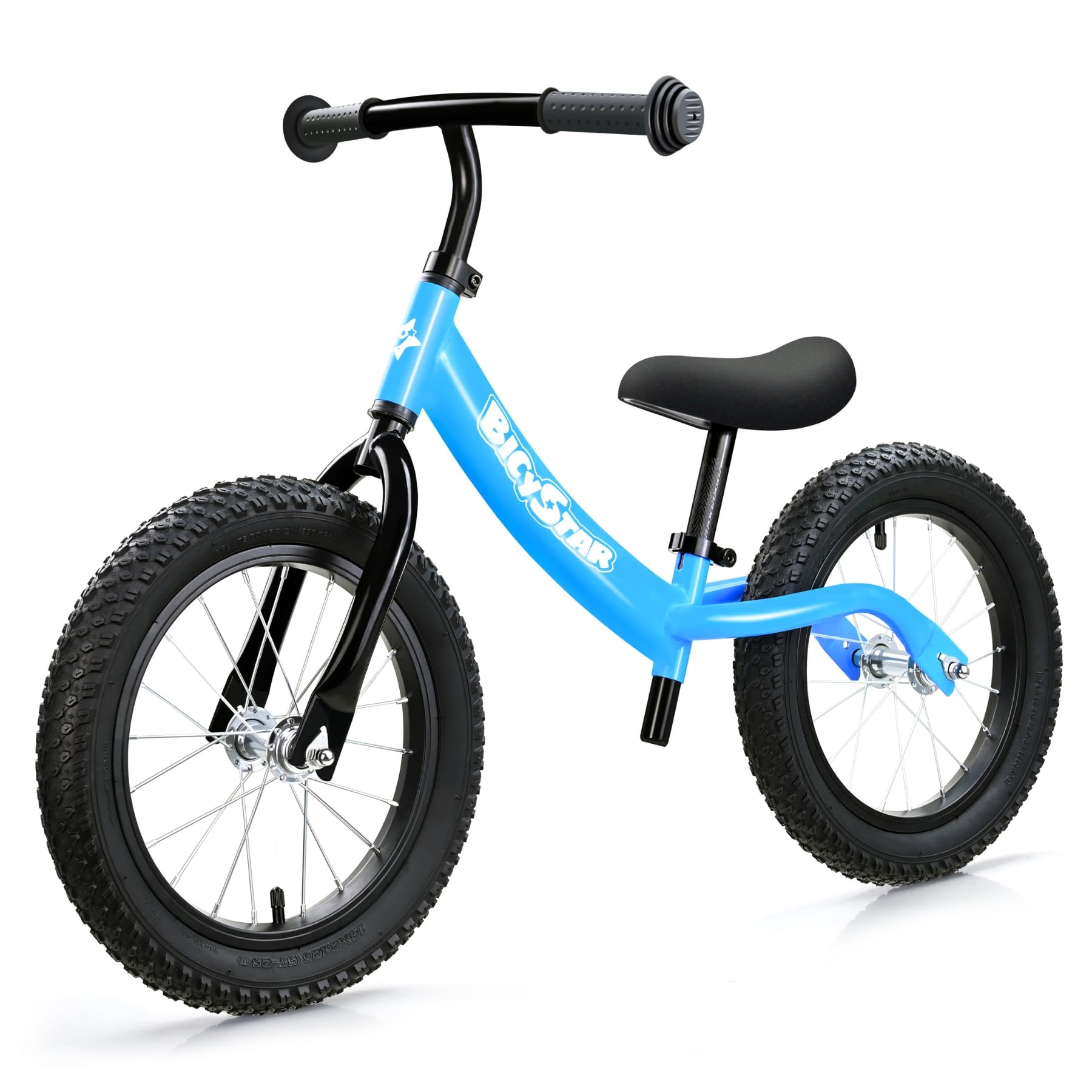
The Bicystar 14 Inch uses real air-filled rubber tires that grip well on gravel, grass, and uneven pavement. The 14-inch wheels roll over bumps that would stop a 12-inch bike, making this a strong choice for families who ride on mixed surfaces. The carbon steel frame keeps the bike sturdy at 8.5 pounds — reasonable for a 4-year-old who has some upper-body strength.
The seat adjusts from 13 to 21 inches, covering an inseam range that fits a short 3-year-old and a tall 6-year-old. The padded seat and soft silicone grips add comfort for longer rides. A footrest is included, which helps children learn to coast with their feet up — a key skill for transitioning to a pedal bike.
The 8-year frame warranty and 2-year tire warranty provide peace of mind. Customers report easy assembly in about 10 minutes and praise the build quality relative to higher-priced brands. One reviewer noted that the bike felt comparable to a Strider but with larger wheels and better tire grip.
Why it’s great
- 14-inch air tires provide excellent traction on loose surfaces
- Wide seat adjustment range (13″–21″) fits growing children
- Included footrest helps teach coasting
Good to know
- Steel frame is heavier than aluminum or composite alternatives
- No bell or basket included
3. Bicystar 14 Inch (Dark Blue)
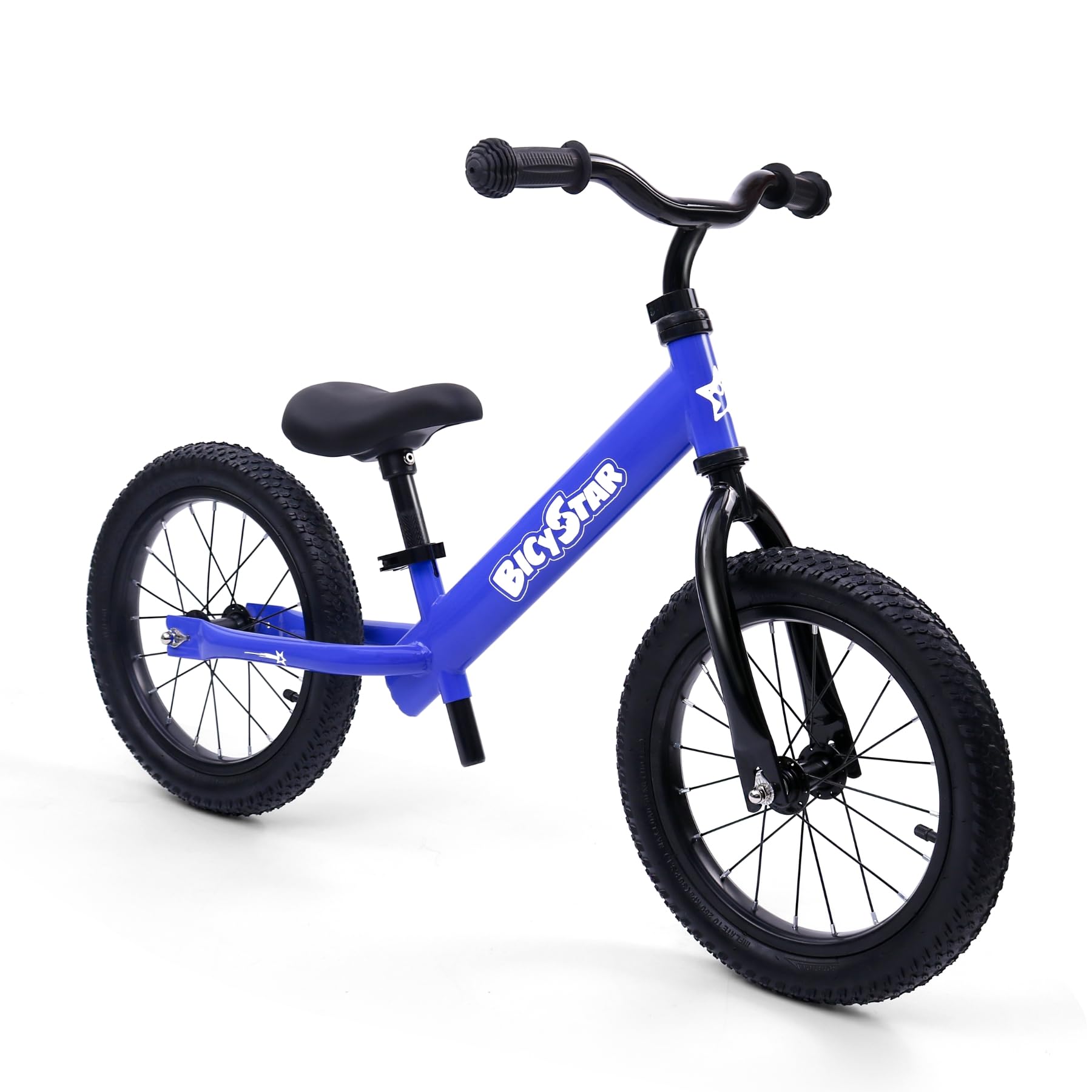
The dark blue version of the Bicystar 14 Inch shares the same air tires and carbon steel frame as the blue model but adjusts to a taller maximum handlebar height of 27 inches. This makes it a better fit for taller 4-year-olds and children who are already approaching the top of the inseam range for most balance bikes.
The seat adjusts from 14 to 21 inches, and the handlebar range of 25 to 27 inches gives a more upright riding position for longer torsos. The padded saddle and soft grips are identical to the blue version, and the footrest remains in place for coasting practice. At 11.6 pounds, this bike is heavier than the blue version, likely due to a different steel gauge or additional frame reinforcement.
Customer feedback highlights that this bike helped children ages 3 to 6 transition to pedal bikes in as little as two weeks. The wider handlebar range was specifically noted by parents of taller children who found other balance bikes too cramped. Assembly is straightforward with included tools.
Why it’s great
- Tallest handlebar height (27″) in this lineup for bigger kids
- Air tires provide smooth ride on varied terrain
- Backed by 8-year frame warranty
Good to know
- Heavier than the blue version at 11.6 lb
- Assembly requires extra tightening of seat and handlebar bolts
4. Birtech 14″ Magnesium Alloy

The Birtech 14″ uses a magnesium alloy frame that weighs 8.6 pounds — light for a 14-inch wheel bike. Magnesium offers better vibration damping than steel or aluminum, which translates to a smoother ride on bumpy sidewalks. The matte paint finish resists chipping better than gloss paints, according to several long-term user reviews.
The air tires require inflation before first use and periodic topping off, but they provide excellent traction on grass and gravel. The seat adjusts quickly via a snap mechanism rather than a bolt-and-wrench system, making height changes fast. The handlebar height adjusts between 62 and 67 cm, and the seat ranges from 45 to 52 cm.
Some units have arrived with defective tire valves, though the seller has shipped replacement tires promptly. A few customers recommend replacing the stock inner tubes with higher-quality ones for better puncture resistance. When everything works correctly, the bike offers premium-level ride quality at a mid-range price.
Why it’s great
- Magnesium frame dampens vibration better than steel or aluminum
- Snap-adjust seat mechanism for tool-free height changes
- Lightweight for a 14-inch balance bike at 8.6 lb
Good to know
- Some units arrive with defective tire valves
- Stock inner tubes are prone to punctures
5. Ridego 14 Inch

The Ridego 14 Inch uses a glass-reinforced nylon composite frame that weighs 8.16 pounds — the lightest of the 14-inch wheel bikes in this guide. The composite material won’t rust like steel and can handle up to 110 pounds. The air tires are fitted with deep anti-slip tread that provides confidence on loose dirt and wet pavement.
The seat adjusts from 14.2 to 18.3 inches, which fits most 4-year-olds but offers less upward growth room than the Bicystar models. A footrest is molded into the frame for coasting practice, though some reviewers noted it can scratch bare feet — riding with shoes is recommended. The padded saddle is wider than average, offering more comfort for longer sessions.
Assembly takes about 5 minutes with the included tools. Customers describe the bike as “surprisingly sturdy” for its weight and note that their children adapted quickly. One reviewer mentioned using it both indoors and outdoors thanks to the lightweight build that makes it easy to carry through narrow doorways.
Why it’s great
- Lightest 14-inch option at 8.16 lb with rust-proof composite frame
- Deep-tread air tires grip well on loose surfaces
- Quick 5-minute assembly
Good to know
- Seat height maxes out at 18.3″ — less growth room than some competitors
- Footrest can be uncomfortable on bare feet
6. KRIDDO 12″ Toddler Balance Bike
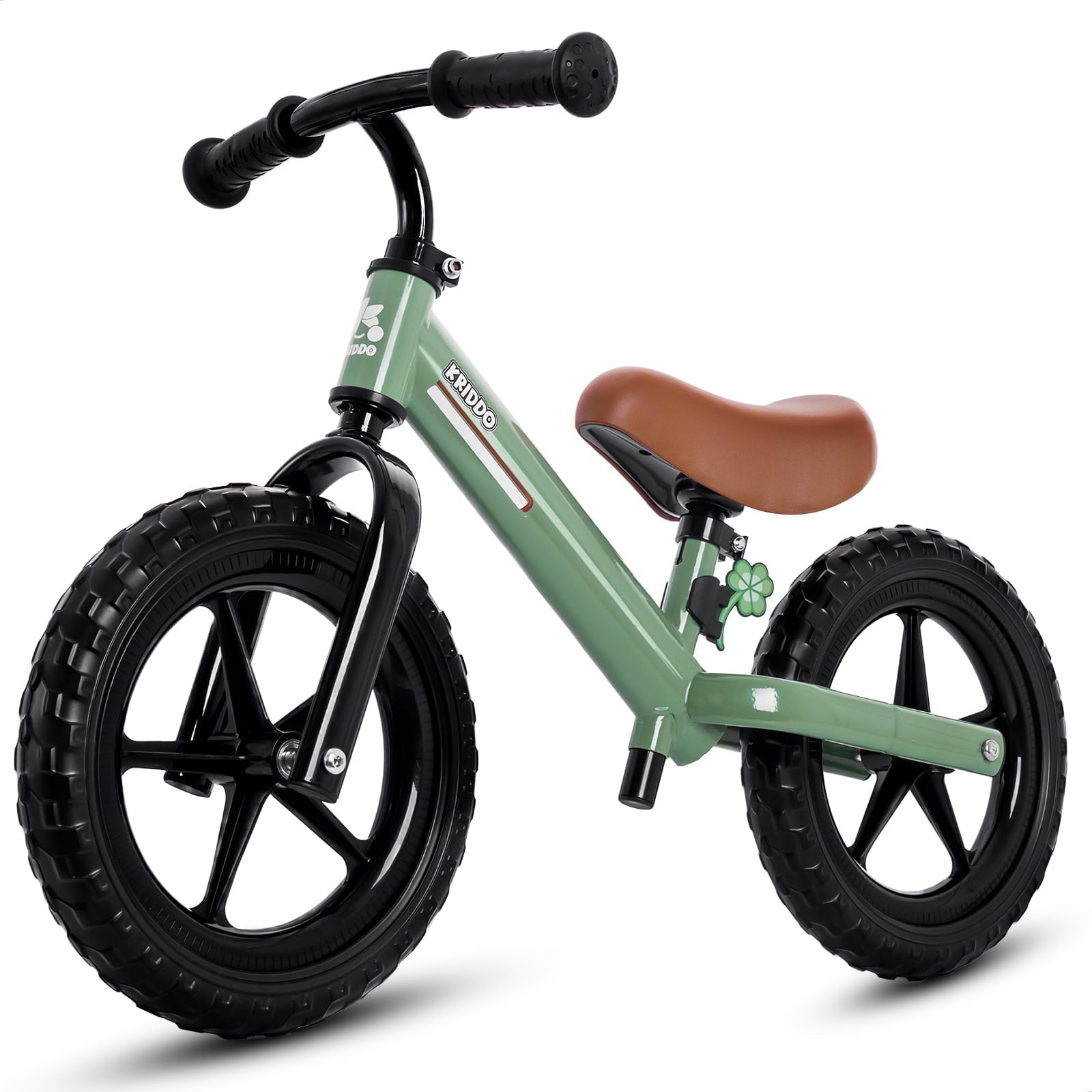
The KRIDDO 12″ uses dual-bearing wheels that reduce rolling resistance, making it easier for a 4-year-old to maintain speed with less effort. The carbon steel frame is sturdy but weighs more than premium options. The 12-inch wheels work well on pavement and packed dirt but struggle on loose gravel compared to 14-inch models.
The seat adjusts from 14.17 to 18.5 inches, and the handlebars adjust from 20.08 to 21.65 inches — a narrower range than most competitors. Customization comes from two included decorative plates (a flower and a clover) that attach under the seat, which young children enjoy personalizing. The puncture-proof tires eliminate flat-tire worries but provide less shock absorption than air tires.
Multiple customers note that this bike fits a 3-year-old perfectly but becomes snug for a confident 4-year-old who is growing quickly. It’s a strong choice for a child on the smaller side who will use the bike for one to two seasons before moving up to a larger model. Assembly is straightforward, and the neutral green color works well for any gender.
Why it’s great
- Dual-bearing wheels reduce rolling resistance for easier gliding
- Puncture-proof tires need zero maintenance
- Customizable plates add fun personalization
Good to know
- 12-inch wheels limit rough-terrain capability
- Adjustment range is smaller than 14-inch competitors
7. Gotrax KS12
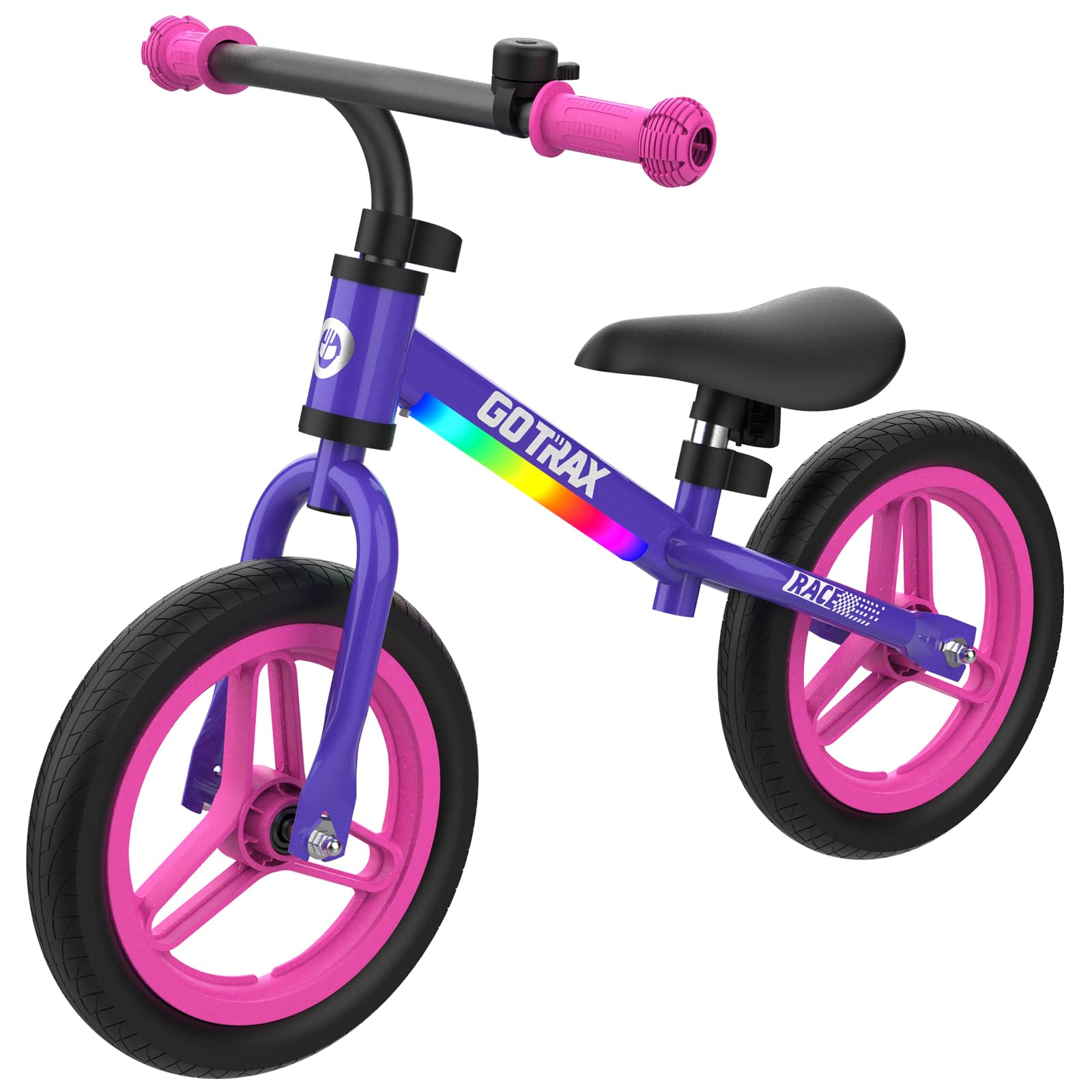
The Gotrax KS12 stands out with built-in LED lights that activate when the bike moves, creating visual appeal that excites young riders. The 12-inch EVA foam tires are lightweight and puncture-proof, though they transmit more vibration than air tires. The iron frame is durable but on the heavier side at 8.6 pounds for a 12-inch bike.
The seat adjusts from 16.5 to 18.3 inches, and the handlebars from 22.8 to 26 inches. A bell is included, which adds to the fun factor that kids love. The padded seat cushion and silicone handlebar grips are comfortable for rides up to 30 minutes. The maximum rider weight of 110 pounds means this bike could technically support a heavier child, but the 12-inch wheels become limiting at taller heights.
Customer reviews consistently mention the “cute” design and the attention the LED lights attract from other children. Many parents report that the light-up feature motivated their child to ride more frequently. Assembly takes about 5 minutes with the included tools. For a 4-year-old on the shorter end of the height range who responds well to visual incentives, this is a compelling entry-level option.
Why it’s great
- LED lights engage children and encourage more riding time
- Lightweight EVA tires require no inflation
- Quick 5-minute assembly
Good to know
- 12-inch wheels limit use on rough terrain
- Iron frame is heavier than composite or aluminum alternatives
FAQ
Is a 12-inch or 14-inch balance bike better for a 4-year-old?
How do I know if the seat height is correct for my 4-year-old?
Final Thoughts: The Verdict
For most users, the balance bike for 4 year old winner is the Strider 12 Pro because its 5.3-pound aluminum frame makes it the easiest for a 4-year-old to control and lift, and the XL seatpost extends its usefulness significantly. If you want a 14-inch bike with air tires for outdoor versatility, grab the Bicystar 14 Inch (Blue). And for a lightweight composite option that won’t rust, nothing beats the Ridego 14 Inch.