
Our readers keep the lights on and the weekend projects moving. As an Amazon Associate, I earn from qualifying purchases.
A projector that sits inches from the wall, casting a sharp 4K image up to 150 inches without ceiling mounts or long cable runs, changes how you think about a home theater. The ultra short throw design eliminates the center-of-the-room shadow issue that plagues standard projectors, letting you place the unit directly on a media console. The challenge is picking the right laser engine, brightness rating, and smart platform from a market crowded with triple-laser and single-laser models that look similar on paper but perform very differently in a living room.
I’m Rikta — the co-founder and writer behind FitlyFast. I have spent hundreds of hours analyzing laser TV specifications, ALPD and RGB light engine performance data, and real-world user reports to separate genuine contrast and color improvements from marketing claims in the UST projector category.
This guide covers the highest-rated laser models, their real brightness behavior, and the setup quirks that only become obvious after installation so you can confidently choose the right 4k ultra short throw projector for your space.
How To Choose The Best 4K Ultra Short Throw Projector
Three core decisions define a UST projector purchase: the laser light engine type, the brightness level needed for your room’s ambient light, and the smart TV platform that determines your streaming experience. Ignoring any of these three leads to a unit that either washes out during the day, lacks the color saturation you expected, or frustrates you with a sluggish interface.
Single-Laser vs. Triple-Laser (RGB) Light Engines
Single-laser projectors (ALPD 3.0 and similar) use a blue laser that passes through a phosphor wheel to generate white light, then splits colors via a color wheel. This approach produces decent brightness but limited color volume — typically around 90-100% of Rec.709 or DCI-P3. Triple-laser (RGB) engines, including Hisense LPU, AWOL PixelLock, and XGIMI X-Master, fire red, green, and blue laser diodes independently. The result is 107-110% of Rec.2020 color gamut with noticeably richer reds, deeper greens, and less color desaturation in bright scenes. If you prioritize color accuracy and HDR performance, triple-laser units justify their premium price.
Brightness: ISO Lumens vs. ANSI Lumens and Room Conditions
Manufacturers quote brightness in ISO lumens (common for Chinese-made UST projectors) or ANSI lumens (the older US standard). ISO lumens are roughly 10-15% lower than ANSI for equivalent brightness, so a 2400 ISO lumen projector behaves similarly to a 2100 ANSI lumen unit. For a room with moderate ambient light (blinds partly open), you need at least 2000 ISO lumens to maintain a watchable image on a 120-inch screen. For daytime viewing with some direct light, 2500-3000 ISO lumens with a good ALR screen is the realistic threshold. Units under 1800 ISO lumens are strictly for dark-room use.
Game Mode and Input Lag for Console Gaming
Not all UST projectors handle gaming well. Standard 4K@60Hz input lag ranges from 40ms to 60ms on many models, which is borderline for fast-paced shooters or fighting games. Look for models that specifically advertise a game mode with input lag under 15ms at 4K. A few projectors — the NexiGo Aurora Pro and the AWOL Aetherion Max — achieve sub-10ms 4K latency through HDMI 2.1 support with VRR and ALLM. For competitive console gaming, prioritize units with documented low-latency performance over vague “game mode” claims.
Quick Comparison
On smaller screens, swipe sideways to see the full table.
| Model | Category | Best For | Key Spec | Amazon |
|---|---|---|---|---|
| NexiGo Aurora Pro | Triple Laser | Lowest input lag gaming | 2400 ISO lumens, 8ms lag | Amazon |
| Formovie Theater | ALPD 4.0 RGB+ | Color accuracy + Bowers & Wilkins sound | 1800 ISO lumens, 3000:1 contrast | Amazon |
| Epson LS800 | 3LCD Laser | Bright room performance | 4000 lumens, 150″ max | Amazon |
| Hisense PX3-PRO | Triple Laser LPU | Wide color gamut (110% BT.2020) | 3000 ISO lumens, ΔE≈0.9 | Amazon |
| XGIMI Horizon 20 Max | Triple Laser | Daylight brightness + lens shift | 5700 ISO lumens, 20000:1 contrast | Amazon |
| AWOL Aetherion Pro | Triple Laser | Native contrast + anti-RBE | 2600 ISO lumens, 6000:1 native | Amazon |
| XGIMI AURA Series | Dual Laser | Compact design + Dolby Vision | 2300 ISO lumens, 1M:1 dynamic | Amazon |
| BenQ TK710STi | Single Laser | Fast gaming (240Hz) | 3200 ANSI lumens, 4ms lag | Amazon |
| WEMAX Nova Pro | ALPD Single Lase | Budget-friendly UST with Google TV | 2100 ISO lumens, 150″ max | Amazon |
| Samsung Premiere LPU7D | Single Laser | Tizen OS + Gaming Hub | 2500 ISO lumens, 2M:1 contrast | Amazon |
| AWOL Aetherion Max | Triple Laser RGB | 200″ screen + daytime viewing | 3300 ISO lumens, 6000:1 native | Amazon |
| Samsung Premiere LPU9D | Triple Laser | Premium all-in-one design | 3450 ISO lumens, 130″ max | Amazon |
| Hisense XR10 | Triple Laser + Zoom | Optical zoom + lens shift flexibility | 6000 ANSI lumens, 6000:1 contrast | Amazon |
In‑Depth Reviews
1. NexiGo Aurora Pro

The NexiGo Aurora Pro takes the top spot because it delivers triple-laser color volume, Dolby Vision support, and the lowest tested 4K input lag of any current UST projector at 8ms. That combination makes it lethal for both movie nights and competitive console gaming — no other UST in this price band offers sub-10ms latency alongside 107% Rec.2020 color coverage. The ALPD 4.0 RGB+ engine produces clean whites and saturated primaries without the rainbow effect that bothers some viewers on single-chip DLP units.
The built-in 60W speaker system (dual 15W woofers and dual 15W tweeters) provides enough presence for a medium-sized living room, though purists will still want an external soundbar. Dynamic laser dimming pushes the native 3000:1 contrast ratio deeper for black scenes, reducing light output by over 60% in dark areas without crushing shadow detail. The 2400 ISO lumen output handles moderate ambient light well when paired with an ALR screen, making it viable for mixed-use spaces.
Some users report the remote requires precise pointing, and the auto-focus routine runs on every startup, which adds a few seconds to the boot sequence. The fan remains quiet during standard movie viewing but becomes audible during extended 4K gaming sessions. Active 3D support is included, though 3D glasses are sold separately. For the performance-per-dollar ratio, this is the benchmark.
Why it’s great
- Lowest 4K input lag (8ms) among UST projectors
- Dolby Vision and HDR10+ with dynamic tone mapping
- Triple-laser ALPD 4.0 RGB+ for wide color gamut
Good to know
- Remote sensitivity can be inconsistent
- Fan noise increases during high-brightness gaming
- 3D glasses not included in the box
2. Formovie Theater

The Formovie Theater earned first place at both the 2022 and 2023 Laser TV Showdown for good reason. It uses ALPD 4.0 RGB+ triple-laser technology that outputs 107% of Rec.2020 color gamut, paired with a custom Bowers & Wilkins speaker system that delivers genuinely rich audio without an external soundbar. The 1800 ISO lumen brightness limits it to controlled-light environments, but the color accuracy and black-level performance in a dark room rival much more expensive units.
Dolby Vision and HDR10+ support are both present, with a 3000:1 native FOFO contrast ratio that produces deep blacks without the elevated floor seen on single-laser projectors. The Android TV 11.0 interface is responsive, and Chromecast is built in for easy casting. The unit’s design is compact — a 20-inch width fits most media consoles — and the fan noise measures low enough to be inaudible during normal dialogue scenes.
The remote lacks a backlight, which is a minor annoyance in dark rooms. Some owners report the Android TV interface can feel sluggish after months of use, and the unit does not support 4K at 120Hz input, capping gaming at 60Hz. The 1800 ISO lumens also mean you need a dedicated ALR screen for any daytime viewing. A few DMD chip failures have been reported after two years of heavy use, so an extended warranty is worth considering.
Why it’s great
- Reference-grade Rec.2020 color accuracy
- Bowers & Wilkins audio eliminates need for external speakers
- Compact footprint and quiet fan operation
Good to know
- 1800 ISO lumens requires dark room for best results
- No 4K@120Hz gaming input
- Occasional reports of DMD failure after extended use
3. Epson LS800
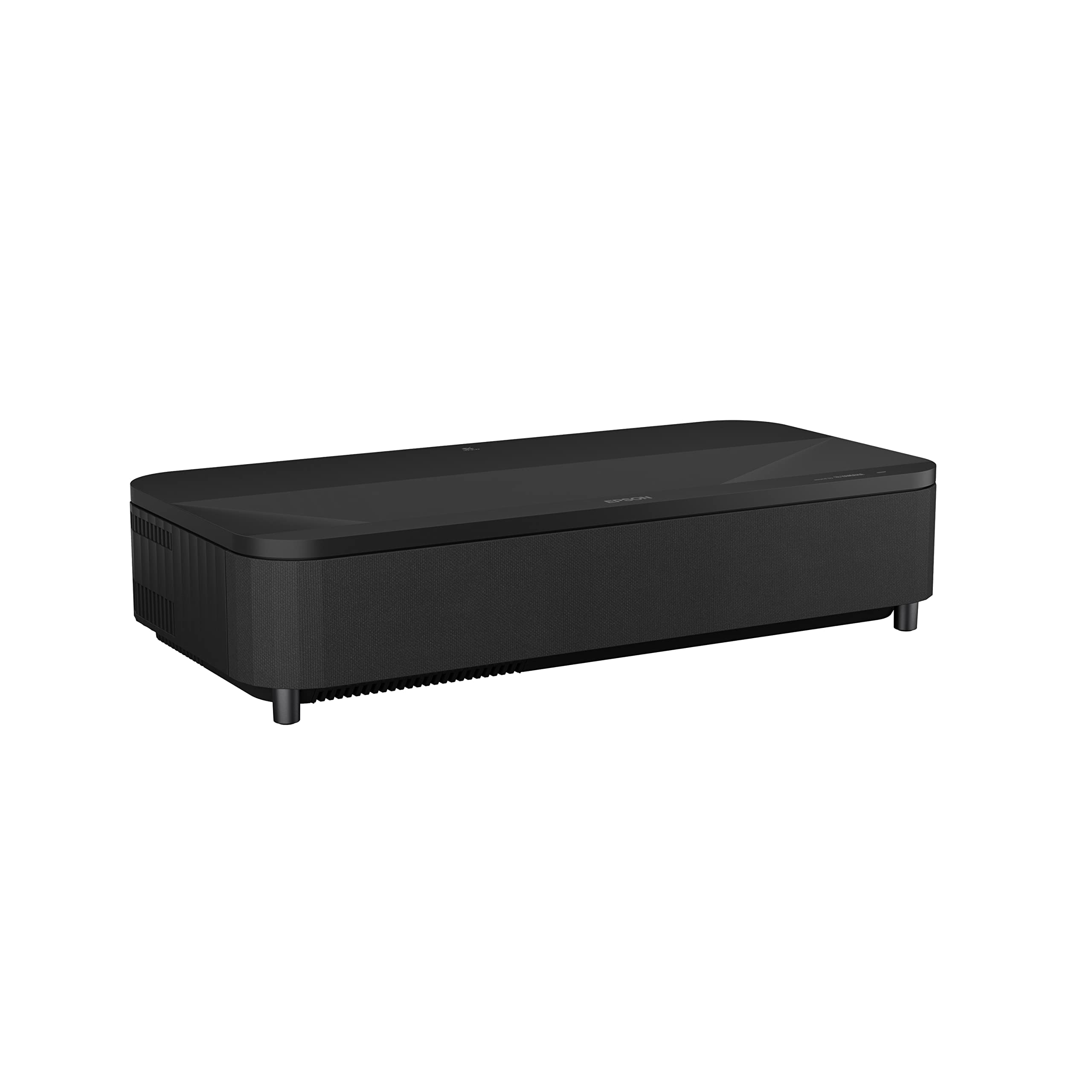
The Epson LS800 stands alone in this list because it uses a 3-chip 3LCD system instead of a DLP light engine. The practical difference is zero rainbow effect (RBE) — a huge advantage for viewers sensitive to the color-separation artifacts common on single-chip DLP projectors. With 4000 lumens of both color and white brightness, the LS800 is the brightest UST on this list, producing a watchable 150-inch image even with some ambient light in the room.
Epson’s 4K PRO-UHD pixel-shifting technology delivers sharp 4K resolution from three 1080p LCD panels, and the 10-bit HDR processing accepts 100% of the HDR source signal for smooth gradation. The built-in Yamaha 2.1-channel sound system includes a dedicated subwoofer, producing bass that most built-in projector speakers cannot match. Setup is straightforward with multi-point picture adjustment and individually adaptable feet for leveling on uneven surfaces.
The 3LCD design has a native contrast ratio around 2500:1 dynamic, which does not reach the black depth of high-end triple-laser DLP units. The super short throw ratio (0.16:1) can make corner alignment tricky — the projector sits so close to the wall that even slight protrusions can cause shadows. The Android TV interface has shown reliability issues for some users, with HDMI handshake problems and app crashes reported after extended use. Gaming input lag is also higher than dedicated gaming models.
Why it’s great
- Zero rainbow effect (3LCD design)
- Highest total brightness (4000 lumens) for daytime viewing
- Built-in Yamaha audio with subwoofer
Good to know
- Native contrast lower than triple-laser DLP units
- Smart TV interface can be unreliable
- Not true 4K native — uses pixel-shifting
4. Hisense PX3-PRO

Hisense’s LPU (Laser Processing Unit) technology in the PX3-PRO uses a pure triple-laser architecture that achieves 110% BT.2020 color gamut with a measured color accuracy of ΔE≈0.9 — meaning the colors are essentially indistinguishable from the reference standard. The 3000 ISO lumen brightness is well-balanced for a variety of room conditions, and the AI-powered upscaler does a credible job boosting 1080p and 1440p content to near-4K sharpness on screen sizes up to 150 inches.
The PX3-PRO supports Dolby Vision, Dolby Atmos, IMAX Enhanced, and Active 3D, with a 240Hz high refresh rate mode for gaming. The Harman Kardon speaker system produces clear dialogue and respectable bass for a built-in setup. Google TV provides a clean interface with easy access to streaming apps, and the ultra short throw ratio of 0.22:1 allows 120 inches from roughly 25 inches of wall clearance.
Auto keystone calibration requires uploading a photo to the device’s website, which is less convenient than the fully automatic systems on competing models. Some users notice a slight rainbow effect, though it is less pronounced than on single-laser DLP projectors. The unit lacks an optical zoom, so screen size adjustments require physically moving the projector. The remote control is functional but not backlit.
Why it’s great
- Industry-leading color accuracy (ΔE≈0.9) at this tier
- 110% BT.2020 wide color gamut from pure triple laser
- IMAX Enhanced and Dolby Vision both supported
Good to know
- Auto keystone requires photo upload process
- No optical zoom for screen size adjustment
- Minor rainbow effect possible on some content
5. XGIMI Horizon 20 Max
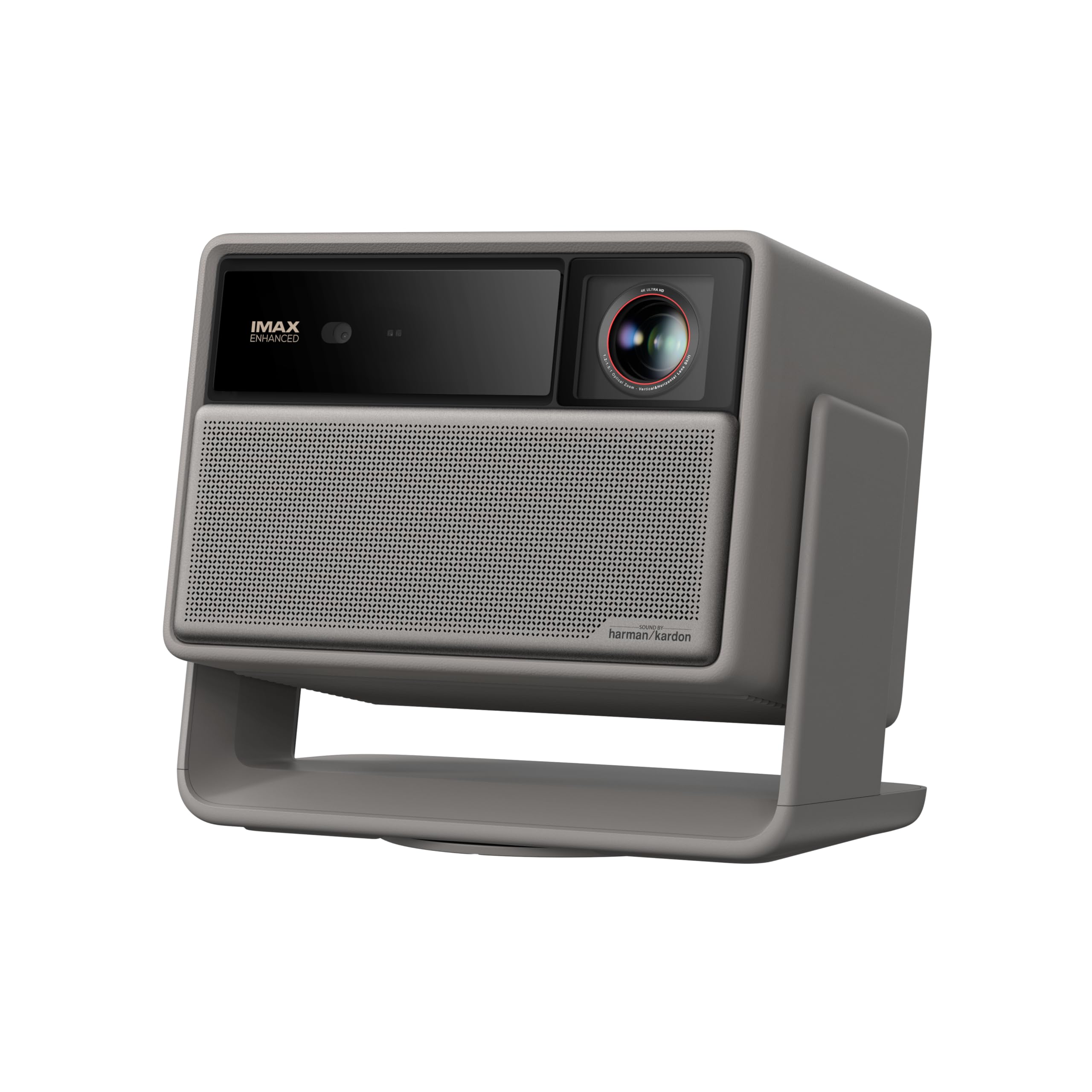
The XGIMI Horizon 20 Max uses an X-Master RGB triple-laser engine rated at 5700 ISO lumens — the highest peak brightness on this list. Real-world testing shows actual output closer to 3600-3900 lumens in standard 4K mode, but that still places it ahead of most UST projectors for daytime viewing. The 20,000:1 contrast ratio and 110% BT.2020 color coverage produce images that stay vivid even with curtains partially open, making it a legitimate TV replacement.
Optical lens shift and zoom are the Horizon 20 Max’s standout features — most UST projectors force you to reposition the entire unit, but this model allows horizontal and vertical adjustments without moving the projector body or degrading image quality. The Harman Kardon speaker system is the best built-in audio on any XGIMI projector to date, with clear mids and enough volume to fill a large room. Google TV is fully integrated with licensed Netflix, and the MediaTek chipset delivers responsive menu navigation.
The 1ms input lag at 1080p@240Hz makes it an excellent gaming projector, though 4K@120Hz support is not present. Some units exhibit laser speckle on matte white screens and visible rainbow effect in high-contrast menus. The fan is audible at higher brightness levels, and the 5.4 kg weight makes it less portable than smaller UST models. A few users report focus uniformity issues at the edges of the image.
Why it’s great
- Optical lens shift and zoom for flexible placement
- Highest brightness for daytime viewing
- Excellent Harman Kardon built-in speakers
Good to know
- Laser speckle and rainbow effect on some surfaces
- No 4K@120Hz input
- Heavy and less portable than competitors
6. AWOL Aetherion Pro
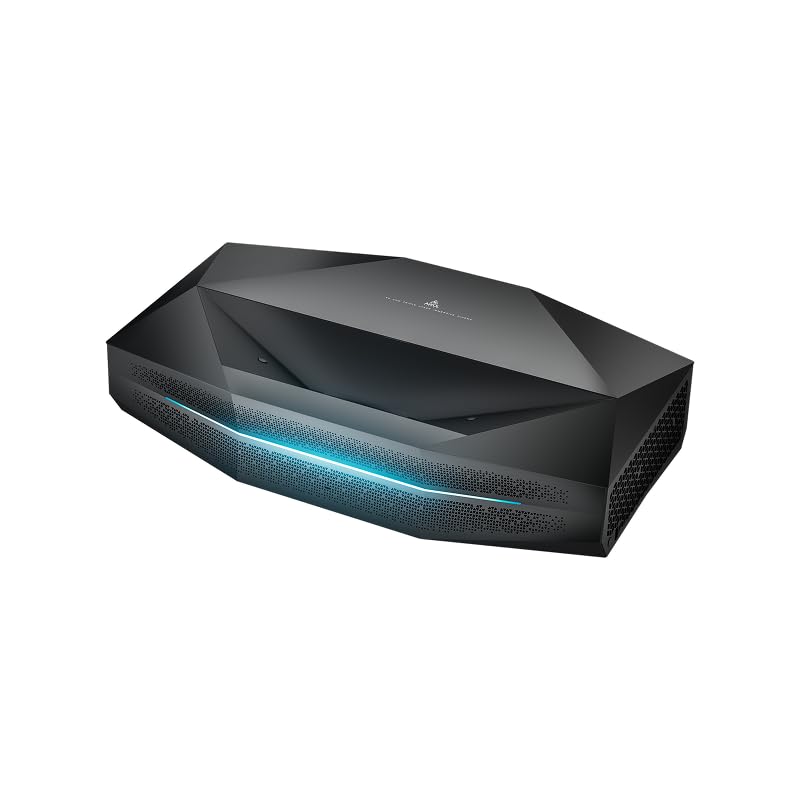
AWOL’s Aetherion Pro focuses on an area where most UST projectors compromise: native contrast. The Noirscene System II with a 6-level IRIS delivers 6000:1 native contrast and 60,000:1 viewing contrast, which produces blacks that approach OLED-like depth compared to the typical 3000:1 native ratio on competing models. The 2600 ISO lumens and anti-RBE technology reduce rainbow effect by 99.99%, making it a strong choice for viewers prone to eye strain from DLP rainbows.
PixelLock technology maintains sharp 4K clarity even on a 200-inch screen, and the 1ms ultra-low latency at 240Hz rivals dedicated gaming monitors. The unit supports Dolby Vision, HDR10+, and HLG, with active 3D capability. ISF certification and a professional CMS allow color calibration for home theater enthusiasts. Google TV provides the smart platform, and connectivity includes three HDMI ports, USB, and component input.
The internal speakers are genuinely poor — many owners recommend bypassing them entirely with an external audio system. Optical audio output works well for connecting a soundbar, but the built-in sound lacks bass and clarity. Fan noise becomes noticeable after about 1.5 hours of 4K HDR playback. The 3D mode requires manual activation and auto-exits after each movie, which is inconvenient for regular 3D viewing. A few HDMI handshake issues have been reported with Panasonic 4K players.
Why it’s great
- Best native contrast (6000:1) among UST projectors
- Anti-RBE technology eliminates rainbow effect
- 200-inch screen support with sharp PixelLock clarity
Good to know
- Built-in speakers are poor quality
- Fan noise increases during extended HDR playback
- 3D mode requires manual activation
7. XGIMI AURA Series

The XGIMI AURA Series (specifically the AURA 2) crams Dolby Vision, IMAX Enhanced, and a Harman Kardon speaker system into a compact chassis measuring just 20 inches wide and 5.7 inches deep. The Dual Light 2.0 laser engine produces 2300 ISO lumens with a dynamic contrast ratio claimed at 1,000,000:1, though real-world contrast is closer to the 3000:1 native typical of DLP projectors. The 0.177:1 throw ratio projects 150 inches from about 27 inches of wall clearance.
Auto keystone and auto focus work reliably in most setups, and wall color adaptation compensates for non-white projection surfaces. The built-in Harman Kardon speakers are genuinely good by projector standards — enough bass and clarity that many users skip buying a separate soundbar. An auto protective lens cover slides shut when the projector powers off, preventing dust accumulation on the lens.
Some units exhibit corner keystone skew that the auto correction fails to fully resolve, and the wall adaptation mode requires an internet connection to function, which feels like an unnecessary constraint. The Android TV interface can feel sluggish at times. Audio over optical can cut out intermittently for some users. The unit lacks an IR receiver, making it incompatible with universal or third-party remotes without a workaround.
Why it’s great
- Very compact footprint for a UST projector
- Dolby Vision and IMAX Enhanced certified
- Auto lens cover protects against dust
Good to know
- Corner keystone issues reported on some units
- No IR receiver for universal remote control
- Wall adaptation mode requires internet connection
8. BenQ TK710STi

The BenQ TK710STi prioritizes gaming performance over cinematic color volume. The 3200 ANSI lumens laser light source produces a bright image for ambient light conditions, and the 240Hz refresh rate with 4ms response time at 1080p makes it one of the fastest projectors for competitive gaming. The 600,000:1 dynamic contrast ratio produces respectable black levels for a single-laser DLP, and the 95% Rec.709 color coverage is sufficient for most gaming content.
Google-certified Android TV with built-in Netflix support means you do not need an external streaming stick. The short throw ratio (0.69-0.83:1) is not ultra short throw — it requires about 5-7 feet from the screen for a 150-inch image, so it is not a true UST in the sense of sitting on a media console. That extra distance can be an advantage for ceiling mounting above the seating area, reducing the risk of the projector being bumped.
Quality control is a concern: multiple users report receiving units with focus uniformity problems (blurry corners) or excessively loud fan noise that sounds like a vacuum cleaner. The HDMI auto-powers-on issue with A/V systems has been reported, and some units randomly switch between HDR and SDR modes. The fan is noticeably louder than laser UST competitors during normal operation. If you get a well-built unit, the gaming performance is excellent, but the failure rate appears higher than average.
Why it’s great
- Exceptional 4ms response time for gaming
- 3200 ANSI lumens for bright room use
- Built-in Android TV with Netflix
Good to know
- Not ultra short throw — requires 5-7 feet from screen
- QC issues with focus uniformity and fan noise
- 95% Rec.709 color coverage is below triple-laser models
9. WEMAX Nova Pro
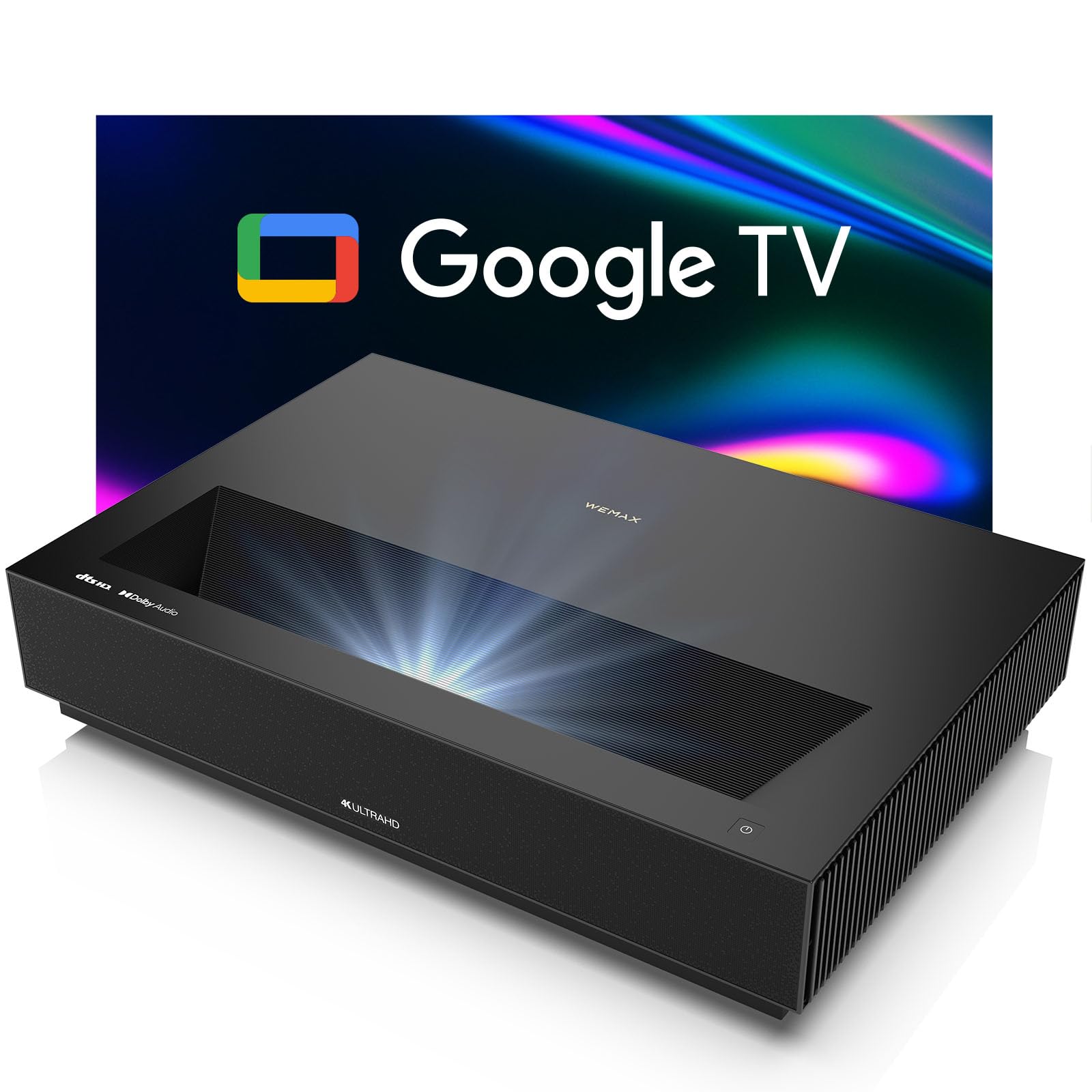
The WEMAX Nova Pro enters the UST market as the most affordable entry point for a 4K laser projector with Google TV built in. The ALPD laser engine produces 2100 ISO lumens and covers 110% Rec.709 color gamut, which is adequate for dark-room viewing on screen sizes up to 150 inches. The 0.23:1 throw ratio allows a 120-inch image from about 19 inches of wall clearance, making it suitable for compact media consoles.
Native Netflix integration is a strong selling point at this price — many budget UST projectors require a separate streaming stick for certified Netflix playback. The dual 15W speakers support Dolby Audio and DTS-HD, providing enough volume for a medium living room. MEMC motion compensation at 120Hz reduces judder during fast-moving content, and Active 3D support is included. Eye-friendly low blue light technology reduces eye strain during extended viewing sessions.
Multiple users report that the smart features require an optical audio connection to work properly, and the HDMI inputs can fail to read signals, requiring constant restarts. Screen alignment on larger displays (128-150 inches) is difficult due to limited picture adjustment options. The remote lacks a source button, and input mode resets when the projector powers off. Build quality feels less premium than mid-range competitors, with some units exhibiting creaking from the chassis.
Why it’s great
- Most affordable 4K UST with Google TV and Netflix
- MEMC at 120Hz for smooth motion
- Eye-friendly low blue light certification
Good to know
- HDMI input reliability issues reported
- Limited screen adjustment options for large setups
- Build quality feels less substantial
10. Samsung Premiere LPU7D
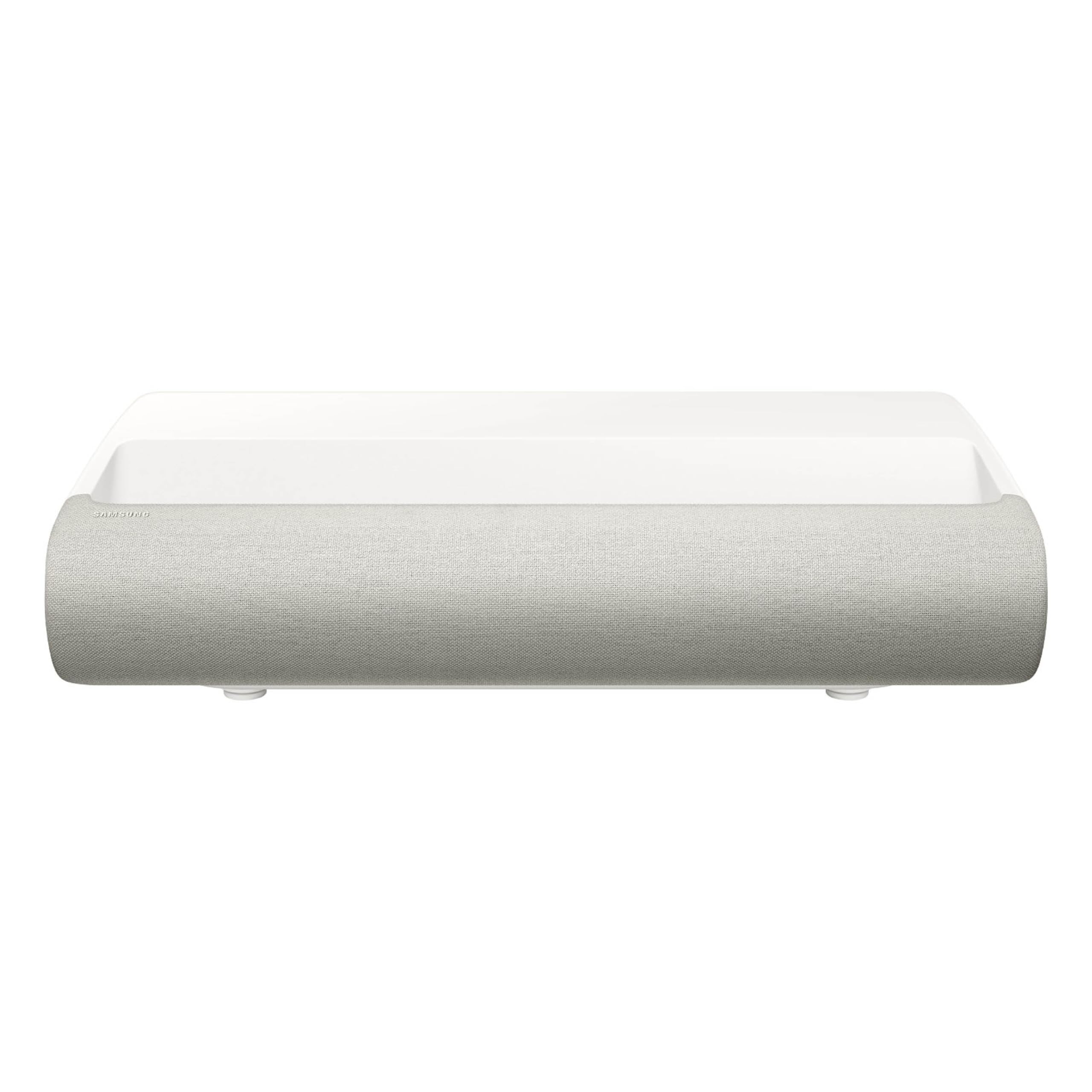
The Samsung Premiere LPU7D brings the Tizen smart TV ecosystem to the UST projector category, including Samsung Gaming Hub for cloud gaming without a console. The 4K laser technology with AI upscaling improves low-resolution content noticeably, and Vision Boost automatically adjusts color and contrast based on room lighting conditions. The 2500 ISO lumens are sufficient for moderate ambient light, and the 2.2 channel 30W speaker system includes Object Tracking Sound Lite for spatial audio.
The ultra short throw design sits close to the wall, and Samsung’s build quality is evident in the sleek white chassis. Multiple voice assistants (Alexa and Bixby) are built in, and Custom Ambient Mode can project decorative scenes or widgets on the wall when not watching content. The unit is compact enough to fit on most TV stands without protruding.
Reports of software slowdown after a week of use are common — accumulated RAM can cause 5-10 minute delays in accessing settings or starting apps. Audio devices disconnect randomly, requiring reboots. Samsung’s customer service for projector issues has been described as inadequate by multiple users. The unit requires a perfectly flat UHD-rated screen to avoid image distortion, and the drop-down screen compatibility is limited. For the asking price, the software issues are hard to overlook.
Why it’s great
- Tizen OS with Samsung Gaming Hub for cloud gaming
- Vision Boost auto-adjusts to room lighting
- 4K AI upscaling improves lower-resolution content
Good to know
- Software slowdown after a week of use
- Requires perfectly flat, certified screen
- Poor customer support for projector issues
11. AWOL Aetherion Max
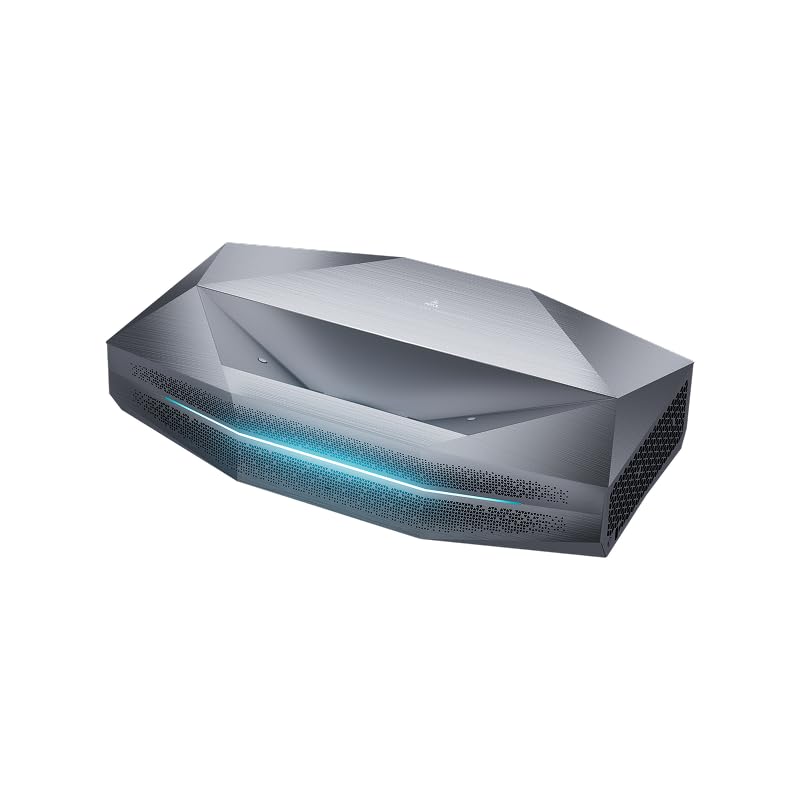
The AWOL Aetherion Max is the big brother to the Aetherion Pro, adding 700 more ISO lumens (3300 total), a 7-level IRIS for deeper contrast control, and three HDMI 2.1a ports plus DisplayPort 1.4a for multi-device gaming setups. The native 6000:1 contrast and 60,000:1 viewing contrast through the Noirscene System II produce the deepest blacks in the UST category, with shadow detail that survives even moderate ambient light. Anti-RBE technology reduces 99.99% of rainbow effect, and TÜV Harmful Light Reduction certification supports longer viewing sessions.
The 1ms input latency at 240Hz with VRR and ALLM is the best gaming performance available from any UST projector. The 0.2:1 throw ratio projects up to 200 inches from inches away, and the triple laser outputs 110% Rec.2020 for lifelike color. Dolby Vision Gaming, HDR10+, and Dynamic Tone Mapping ensure HDR content looks correct regardless of the source. Google TV provides the smart platform, and the unit consumes significantly less electricity than a comparable large-screen TV.
The internal speakers are dreadful — users consistently report terrible audio that requires external speakers, EQ adjustments, or a soundbar. Fan noise becomes noticeable after an hour of 4K HDR playback. The menus are described as primitive with poor explanations for settings. Active 3D works but requires manual activation and auto-exits after each use. The unit is expensive relative to the competition, and the built-in audio deficiency feels like an oversight at this price point.
Why it’s great
- Best overall gaming connectivity (HDMI 2.1a + DisplayPort)
- Superior native contrast and black level performance
- Anti-RBE technology for rainbow-effect-free viewing
Good to know
- Built-in speakers are poor and require external audio
- Fan noise increases during extended HDR playback
- Expensive, with primitive menu interface
12. Samsung Premiere LPU9D
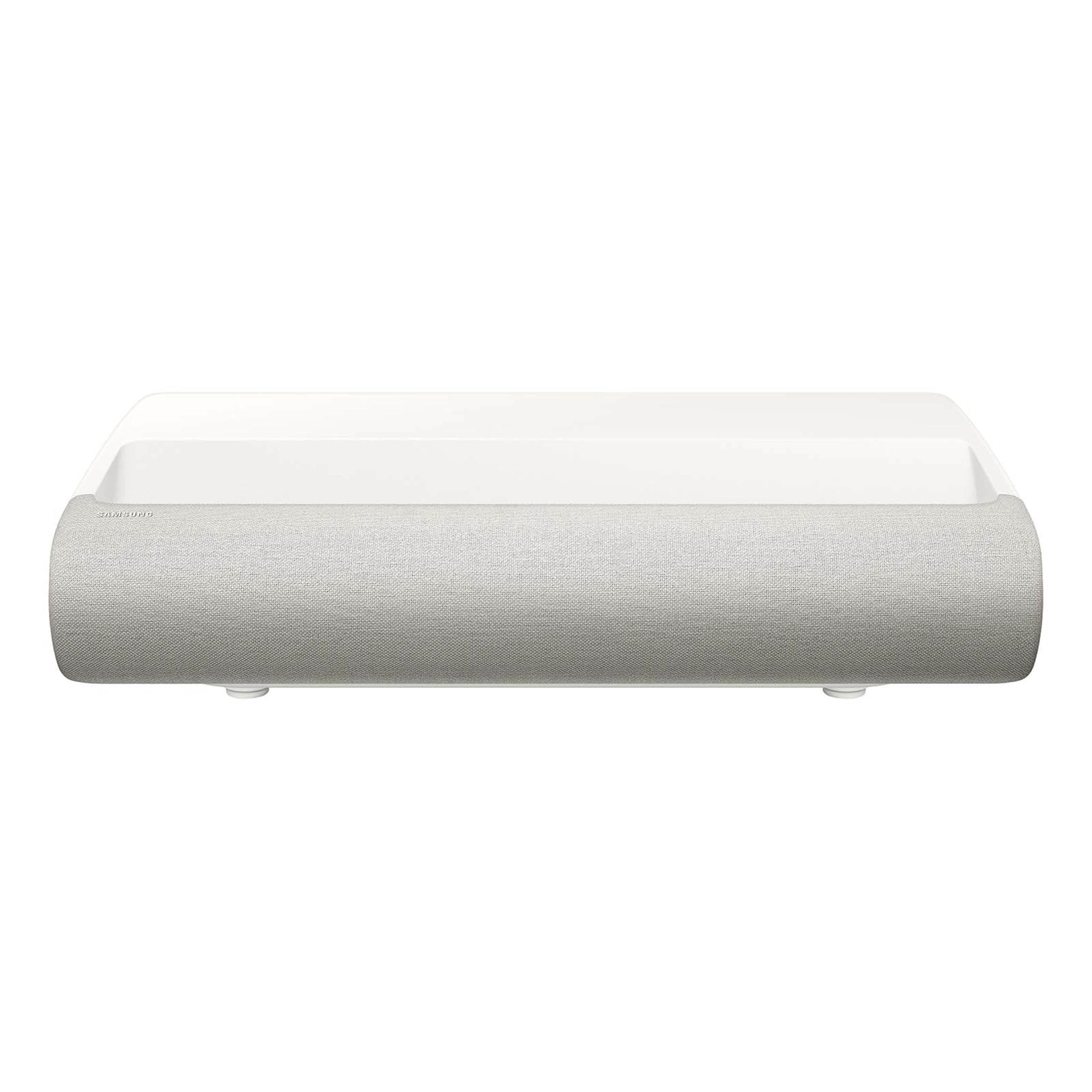
The Samsung Premiere LPU9D upgrades from the LPU7D with triple-laser technology, delivering over a billion colors and a wider color gamut than its single-laser sibling. The 3450 ISO lumens provide excellent daytime brightness, and the 40W 2.2.2 channel speaker system includes up-firing drivers and Object Tracking Sound for immersive audio. Vision Boost Pro and Real Depth Enhancer further improve contrast and detail in challenging lighting conditions.
The ultra short throw design projects up to 130 inches, and the Samsung Tizen OS provides access to streaming apps and the Gaming Hub for cloud gaming. The Filmmaker Mode preserves the director’s intent for movie watching, and Motion Xcelerator ensures smooth motion during fast-paced content. The all-white chassis matches most modern living room furniture, and the compact design sits flush on a media console.
The same software slowdown issue that plagues the LPU7D affects the LPU9D — RAM fills up after a week or two, causing severe lag in the interface. Audio disconnections are another recurring complaint, and Samsung’s customer support has been described as unhelpful by multiple users. The unit requires a perfectly flat, UHD-certified screen for clear images, and old drop-down screens cause visible distortion. For the premium asking price, these reliability concerns are significant.
Why it’s great
- Triple-laser technology for wide color gamut
- 40W speaker system with up-firing drivers
- Vision Boost Pro for excellent daytime viewing
Good to know
- Software slowdown after a week of use
- Requires perfectly flat, certified screen
- Poor customer support for projector issues
13. Hisense XR10
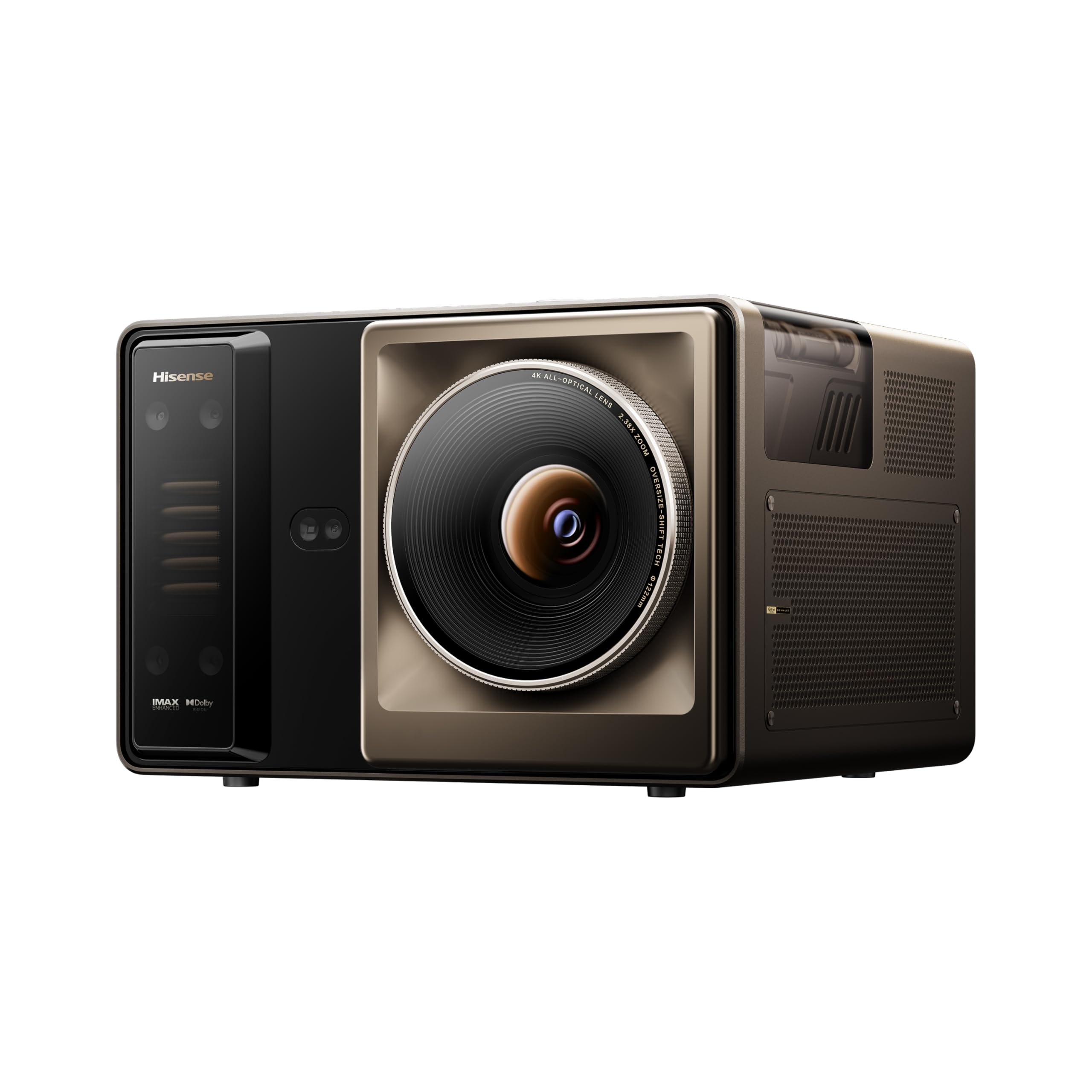
The Hisense XR10 is the most technically advanced projector on this list, featuring a 17-element all-glass lens, true optical zoom (0.84-2.0:1 throw ratio), lens shift, and a liquid cooling system for sustained high-brightness operation. The 6000 ANSI lumens peak brightness — the highest on this list — is achieved through dual laser light sources and an optimized optical path. The 7-level IRIS delivers up to 6000:1 contrast, and the triple-laser engine covers a wide Rec.2020 gamut.
The optical zoom and lens shift are game-changers for permanent installations. You can adjust the image size without moving the projector or sacrificing sharpness, and the lens shift allows vertical and horizontal adjustments for precise screen alignment. The IMAX Enhanced certification extends to up to 26% more screen area, and the DTS:X support provides immersive audio. Active 3D, Dolby Vision, and HDR10+ are all supported. The VIDAA smart OS is responsive and ad-free during playback.
This is not an ultra short throw projector — it requires 0.84 to 2.0 times the screen width for placement. For a 100-inch screen, you need 7-17 feet of distance. It is a standard-throw laser projector, not a UST. Some users report minor laser speckle on matte screens, though this is resolved with a fine-texture screen surface. The liquid cooling system adds complexity, and the unit is large compared to desktop UST projectors. The price is also the highest on this list, putting it in a different budget category.
Why it’s great
- Optical zoom and lens shift for flexible installation
- 6000 ANSI lumens for extremely bright performance
- 17-element all-glass lens for sharp image
Good to know
- Not ultra short throw — requires distance from screen
- Larger and heavier than UST units
- Highest price point on this list
FAQ
Can I use a 4K UST projector without a special screen?
How much distance does a UST projector need from the wall for a 120-inch image?
Why do some UST projectors show rainbow effect and how do I avoid it?
Can I game on a UST projector with HDMI 2.1 consoles?
Final Thoughts: The Verdict
For most users, the 4k ultra short throw projector winner is the NexiGo Aurora Pro because it balances triple-laser color quality, Dolby Vision support, and the lowest gaming input lag in the category at a reasonable price point. If you want zero rainbow effect and the highest brightness for daytime viewing, grab the Epson LS800. And for the deepest black levels and largest 200-inch screen capability, nothing beats the AWOL Aetherion Max.