
Our readers keep the lights on and the weekend projects moving. As an Amazon Associate, I earn from qualifying purchases.
Audio quality in Bluetooth earbuds used to be a compromise—convenience at the cost of detail, bass that blurs rather than punches, and treble that fatigues rather than sparkles. That trade-off is dead. The latest generation of true wireless earbuds packs multi-driver arrays, Hi-Res codecs like LDAC, and advanced ANC that doesn’t smother the soundstage.
I’m Rikta — the co-founder and writer behind FitlyFast. I analyze market data and spec sheets daily to identify which wireless earbuds deliver genuine audiophile-grade sound without the cable.
This guide breaks down seven pairs that redefine what wireless audio can be, from balanced armature hybrids to dual-driver flagship systems. Whether you demand studio neutrality or a thumping V-shape, these are the models that prove a cord is no longer required for sonic excellence. Those seeking the finest audio quality bluetooth earbuds must prioritize driver architecture and codec support over brand loyalty.
How To Choose The Best Audio Quality Bluetooth Earbuds
Picking the right pair for your ears depends on understanding three interlocking factors: the driver hardware inside the bud, the digital codec pipeline from your phone, and the tuning philosophy of the brand. Ignore any one and you risk paying for a spec sheet that sounds flat in real life.
Driver Architecture: Dynamic, Balanced Armature, or Hybrid?
A single dynamic driver (like the 10mm or 12mm units found in most earbuds) handles the full frequency range. It’s good for bass impact but can struggle with treble clarity and instrument separation at higher volumes. Balanced armature drivers excel at midrange and high-frequency detail but lack punchy low-end. Hybrid designs—like the triple-driver Status Pro X or dual-driver JBL Tour Pro 3—assign a dynamic driver to bass and one or more balanced armatures to mids and highs, giving you the best of both worlds. For critical listening, hybrids are the gold standard.
Codec Support: LDAC vs. AAC vs. SBC
The codec is the digital bridge between your phone and earbuds. LDAC, Sony’s proprietary codec, transmits up to 990 kbps at 24-bit/96kHz—close to wired Hi-Res quality. AAC is the standard for iPhone users and delivers solid detail up to 256 kbps. SBC, the baseline Bluetooth codec, caps out at roughly 328 kbps and introduces audible compression artifacts. If you own an Android phone that supports LDAC, prioritize earbuds with that codec. iPhone users should prioritize AAC optimization and driver quality over codec count.
ANC and Soundstage Interaction
Active noise cancellation is a double-edged sword for audio purists. Poorly tuned ANC introduces a low-pressure sensation or phase distortion that collapses the soundstage. The best implementations—found on the Nothing Ear (3) and Soundcore Liberty 5 Pro—use multiple microphones to sample and cancel noise in real-time without injecting artifacts into the music signal. If you plan to use ANC while listening, look for earbuds that offer adjustable ANC levels or a dedicated transparency mode that preserves frequency balance.
Quick Comparison
On smaller screens, swipe sideways to see the full table.
| Model | Category | Best For | Key Spec | Amazon |
|---|---|---|---|---|
| Apple AirPods Pro 2 | Premium | Seamless iOS integration & clinical hearing aid use | H2 chip + low-distortion driver | Amazon |
| Status Pro X | Premium | Audiophile detail with triple-driver hybrid setup | 12mm dynamic + dual Knowles BA drivers | Amazon |
| JBL Tour Pro 3 | Premium | Feature-rich smart case & spatial audio with head tracking | 10.2mm dynamic + balanced armature hybrid | Amazon |
| Soundcore Liberty 5 Pro | Mid-Range | Crystal-clear calls & personalized EQ via HearID 5.0 | 10 sensors + Thus AI Chip | Amazon |
| Nothing Ear (3) | Mid-Range | Balanced sound with strong ANC and transparent design | 12mm dynamic driver with ceramic diaphragm | Amazon |
| Sennheiser IE 200 | Value | Wired neutral reference sound with dual bass tuning | 7mm TrueResponse transducer | Amazon |
| Sennheiser IE 100 Pro | Value | Stage monitoring & balanced monitor tuning | 10mm dynamic broadband driver | Amazon |
In‑Depth Reviews
1. Apple AirPods Pro 2
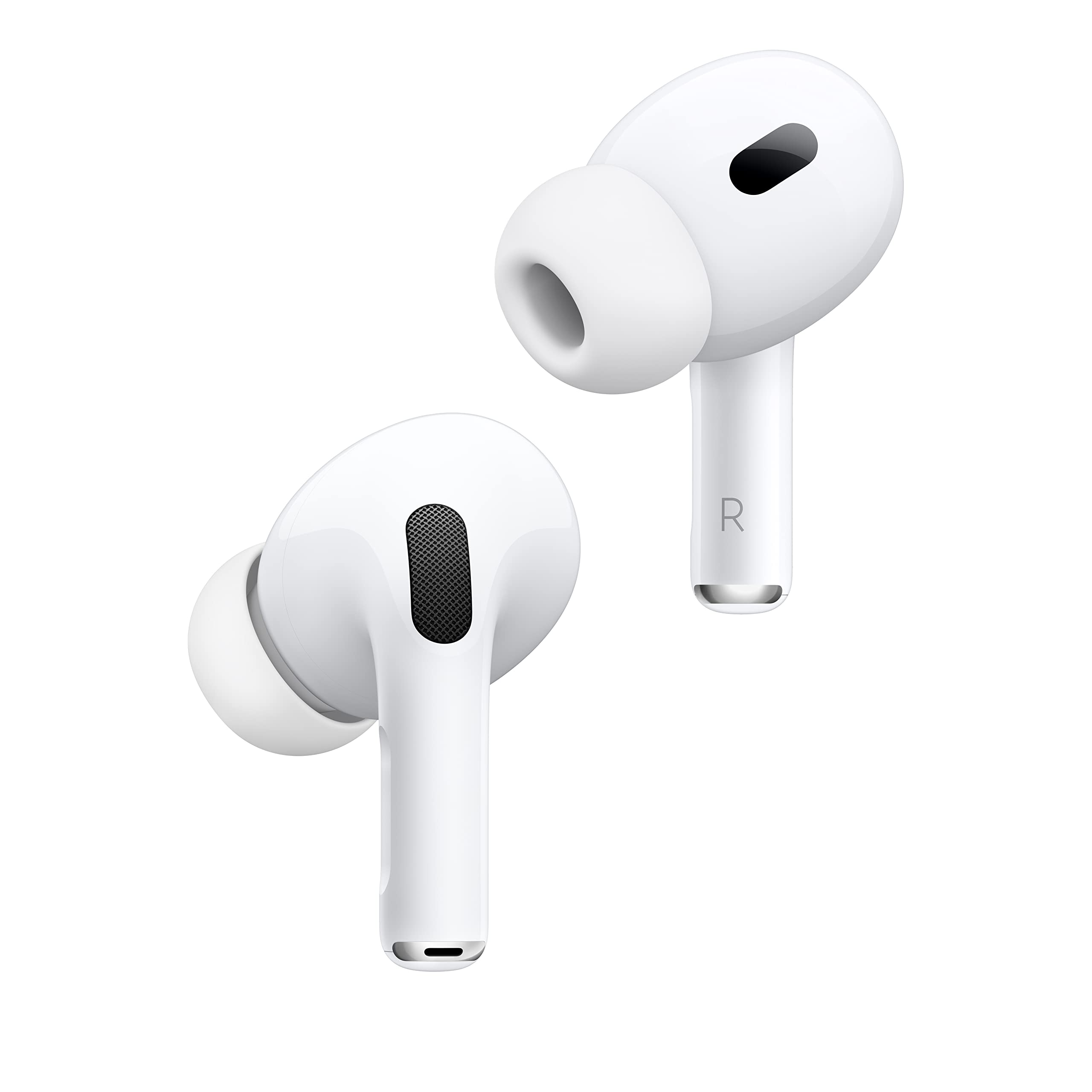
The AirPods Pro 2 represent a rare convergence of consumer convenience and audiophile intent. The custom-built low-distortion driver, driven by the H2 chip, delivers a frequency response that is both fun and accurate—rich bass that doesn’t bleed into the mids, and crisp highs without sibilance. The sound is impressively wide for a closed-back design, with instrument separation that reveals layers in complex mixes. Apple has tuned these for a neutral-warm signature that satisfies both casual listeners and critical ears.
The Adaptive Transparency mode is the most natural implementation in this category; it blends the outside world without pumping or adding a hollow reverb. The addition of a clinically validated Hearing Test and hearing aid functionality is unprecedented—this is the first earbud pair that can double as a medical-grade audio device. Battery life sits at 6 hours with ANC, and the case adds three full charges via USB-C or MagSafe.
The stem-based controls are intuitive for playback and call management, and the fit is secure across four silicone tip sizes. Voice Isolation during calls is excellent, cutting out background chatter effectively. The main limitation for Android users is the lack of LDAC support—AAC is the best you get here, which is fine but not the bitrate pinnacle. For iOS users, these are the most complete package available.
Why it’s great
- Industry-leading Adaptive Transparency and ANC that doesn’t distort the soundstage
- Low-distortion driver with neutral-warm tuning that satisfies critical listeners
- Clinically validated Hearing Test and hearing aid feature built into the firmware
Good to know
- Limited to AAC codec—Android users lose potential bitrate performance
- Stem controls require a brief learning curve for volume swipes
2. Status Pro X Wireless Earbuds
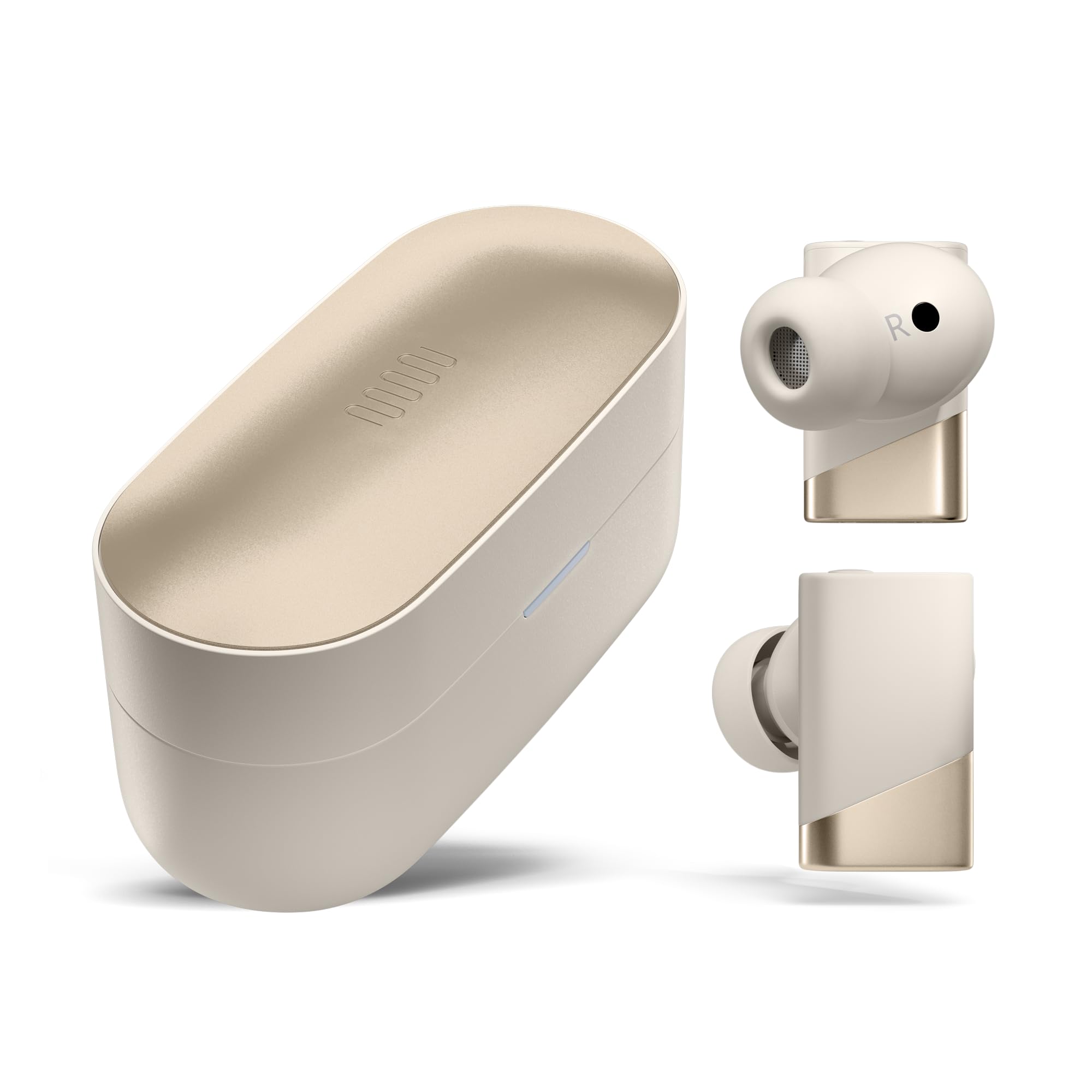
The Status Pro X is a statement piece for anyone who believes true wireless earbuds can rival wired IEMs. The hybrid driver array pairs a 12mm dynamic driver for bass with dual Knowles balanced armature drivers for mids and highs. The result is a sound signature that can be tuned via the app from a stock V-shape to a harman-neutral profile. Detail retrieval is exceptional—micro-details like finger slides on guitar strings and breath intakes are rendered with clarity that is rare at this price tier.
LDAC support at 990 kbps ensures the full resolution of your Hi-Res files reaches the drivers without compression artifacts. The stock tuning is bass-forward but not bloated; switching to the Knowles preset tightens the low-end and pushes vocals forward. The ANC depth of 52 dB is the highest on paper in this list, and in practice it silences industrial hum and crowd noise effectively. The beamforming mic array with Voiceloom AI handles voice pickup well, though wind noise can occasionally creep into calls.
Battery life is the main compromise here: around 5 hours with ANC active, and the case provides roughly 32 hours total. The small case charges quickly (10-15 minutes for hours of playback) but lacks a battery percentage indicator. The ear tips that ship with the unit are average—upgrading to foam tips improves both seal and bass response. For pure audio quality in a wireless form factor, this is the closest you can get to a wired IEM experience.
Why it’s great
- Triple-driver hybrid (dynamic + dual Knowles BA) delivers stunning detail and separation
- LDAC Hi-Res support at up to 990 kbps for near-wireless-bitrate perfection
- Multiple app presets allow tuning from V-shape to harman-neutral
Good to know
- Battery life is roughly 5 hours with ANC; the case adds just three full charges
- Stock ear tips are average; plan to swap for foam for optimal seal
3. JBL Tour Pro 3

The JBL Tour Pro 3 brings a balanced armature for high frequencies and a 10.2mm dynamic driver for bass and vocals. This hybrid architecture ensures the high end is airy and precise while the low end remains punchy and clean. The sound is slightly U-shaped out of the box, but JBL’s companion app offers a 10-band EQ that lets you flatten the curve for a more neutral playback. Spatial Audio with head tracking is competent—the effect is convincing enough for movies but less critical for music listening.
The smart charging case is the standout innovation here. The 1.57-inch touchscreen lets you adjust ANC levels, EQ, and volume without touching your phone. It also functions as a wireless transmitter: plug an AUX or USB-C source into the case and the audio streams to the earbuds—useful for in-flight entertainment systems or old MP3 players. ANC performance is good but not class-leading; high-frequency sounds like keyboard clicks or distant chatter get through more than on the AirPods Pro 2 or Status Pro X.
Call quality is solid but not best-in-class—the microphones handle quiet rooms well but struggle in windy conditions. Battery life is strong at roughly 8 hours per charge with ANC, and the case holds three additional charges. The fit is comfortable for long sessions, and the included foam tips improve passive isolation. The premium price is justified by the case’s utility, but audio purists may want to look at the Status Pro X for raw driver quality.
Why it’s great
- Hybrid dual-driver system with dedicated balanced armature for clear highs
- Smart case with touchscreen doubles as a wireless transmitter for non-Bluetooth sources
- Good battery life at roughly 8 hours per charge with ANC enabled
Good to know
- ANC is less effective on high-frequency noise compared to the top competitors
- Call quality degrades noticeably in outdoor or windy conditions
4. Soundcore Liberty 5 Pro
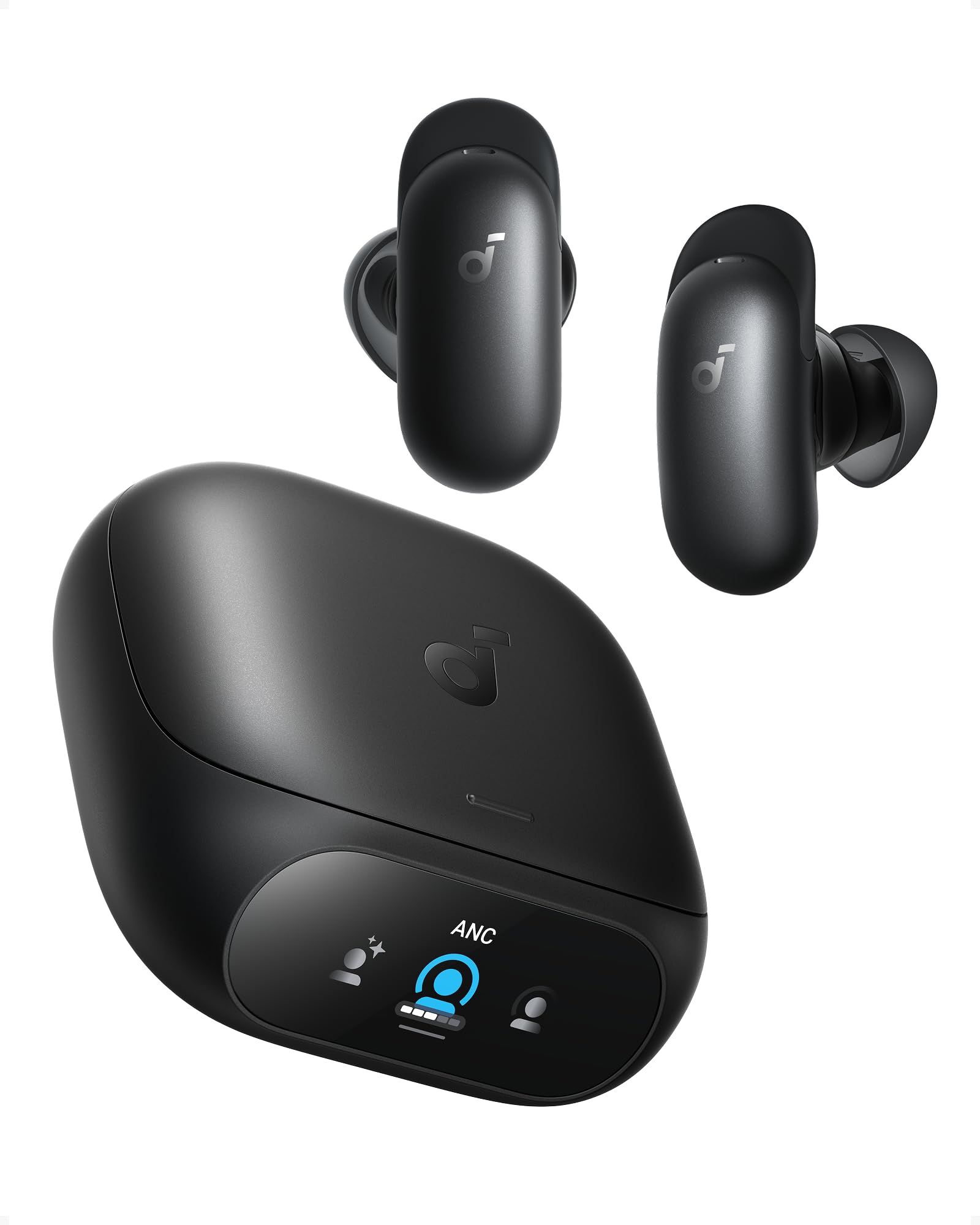
The Soundcore Liberty 5 Pro is a mid-range marvel that outpaces many premium competitors in call quality and ANC execution. The ten-sensor array paired with the Thus AI chip processes noise signals at a staggering 384,000 per second, resulting in noise cancellation that rivals over-ear headphones. The ANC is deep and neutral with no audible hiss or pressure build-up, preserving the sound signature of whatever you’re listening to.
Sound quality out of the box is V-shaped with a heavy bass lift and slightly splashy treble. This is not a neutral monitor, but the HearID 5.0 personalization system runs a quick hearing test and adjusts the EQ to your specific ear sensitivity. After calibration, the frequency response flattens significantly, revealing cleaner mids and better vocal presence. The Guinness World Record certification for call quality is not marketing fluff—voice isolation in environments over 100 dB is genuinely impressive, extracting speech from background roar with clarity.
The bean-style design is comfortable and secure, with optional wing tips for exercise. Battery life reaches 6-7 hours with ANC, and the case screen provides per-earbud percentage displays. The case itself is a bit bulky, but the touchscreen adds useful quick controls. The main drawback is the stock tuning—without calibration, the bass can be overwhelming for critical listening. For most users, though, the Liberty 5 Pro offers extraordinary value for the sound and feature set.
Why it’s great
- Guinness World Record-certified call quality; voice isolation works in extreme noise
- ANC is deep and artifact-free, rivaling over-ear headphone performance
- HearID 5.0 personalization tailors the frequency response to your hearing profile
Good to know
- Out-of-box sound is very bass-heavy and V-shaped; needs EQ or HearID calibration
- Case is relatively bulky despite the useful touchscreen
5. Nothing Ear (3)
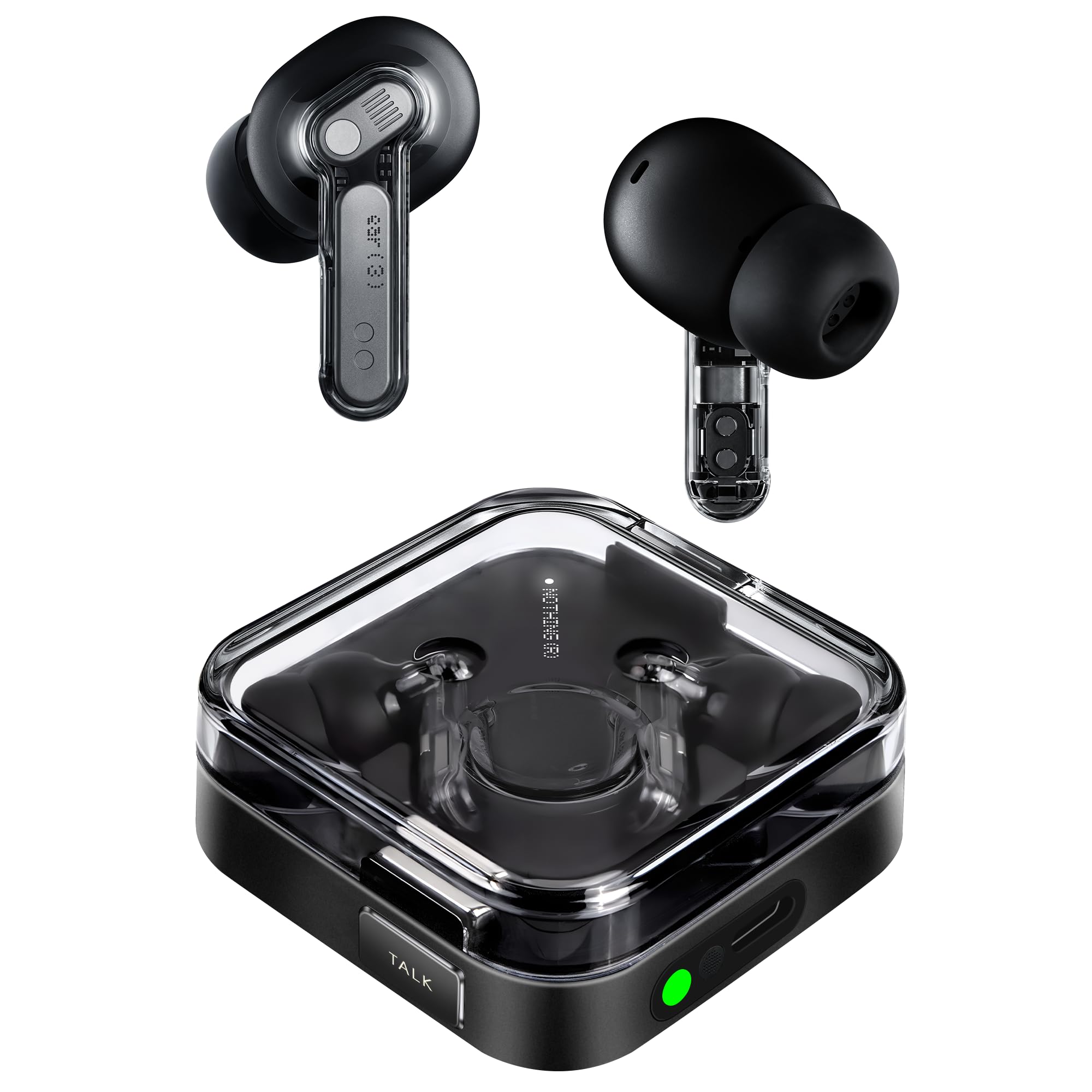
The Nothing Ear (3) is the rare earbud that nails both aesthetic and acoustic balance. The 12mm driver leverages a ceramic diaphragm that is 10% more rigid than standard polymer diaphragms, reducing distortion and allowing the driver to move more piston-like. The result is a sound that is clean, detailed, and slightly mid-forward—vocals and lead instruments sit naturally in the mix without getting buried by bass. Bass is present and punchy but never overwhelming, making these a great choice for listeners who want clarity across all genres.
The Smart Hybrid ANC reaches 45 dB of attenuation and recalibrates every millisecond, effectively canceling both low-frequency rumble and mid-frequency chatter. The Transparency Mode is responsive and natural. The six-microphone array with Super Mic technology is genuinely impressive for calls—activating the case’s dedicated mic button boosts clarity in loud settings to the point where callers cannot tell you are outside. The included app provides a parametric EQ for fine-tuning the sound to your taste.
Battery life sits at roughly 5 hours with ANC on, and the case holds an additional 33 hours. The transparent design is a conversation starter but also functional, allowing you to see the driver housing. Dual Bluetooth 5.4 connectivity lets you switch between devices seamlessly. The only compromise is the lack of LDAC support—these max out at AAC, which is fine for most listeners but a limitation for Android users with Hi-Res libraries. For balanced, non-fatiguing sound with strong ANC, these are a top contender.
Why it’s great
- Ceramic diaphragm reduces distortion for clean, articulate sound across all frequencies
- Smart ANC recalibrates every millisecond for effective noise cancellation
- Super Mic feature with case button dramatically improves call clarity in noisy environments
Good to know
- No LDAC support—codec maxes out at AAC, limiting Android Hi-Res potential
- Battery life with ANC is only around 5 hours per charge
6. Sennheiser IE 200

The Sennheiser IE 200 is a wired IEM, not a true wireless earbud, so its inclusion here is deliberate for listeners who prioritize audio quality above all else—including the convenience of a cable. The 7mm TrueResponse transducer is a single dynamic driver tuned for neutrality. The frequency response is flat out of the box, with expressive mids, smooth treble, and controlled bass. This is a reference-grade tuning; it reveals the quality of your source files and amplification chain without adding coloration.
The dual bass-tuning design is a clever feature: by mounting the ear tips at one of two positions on the nozzle, you can switch between a tighter, neutral bass response and a fuller, warmer presentation. The included memory foam and silicone tips make finding a comfortable seal straightforward. The MMCX connectors allow for cable upgrades, though the stock braided cable is already low-noise. The compact shell is lightweight and fits flush in the ear, making it suitable for long listening sessions.
The main trade-off is the lack of convenience features—no ANC, no microphone, no wireless connectivity. You will need a DAC or a headphone adapter for modern smartphones. The soundstage is wide for a single-driver IEM, with good instrument separation, but it cannot match the holographic imaging of multi-driver hybrids. For the price, this is an entry point into audiophile-grade listening that outperforms any wireless earbud under three times its cost in pure resolution and accuracy.
Why it’s great
- Neutral, reference tuning reveals the true quality of your source material
- Dual bass-tuning design lets you switch between tight and warm low-end presentations
- Replaceable MMCX cable and comfortable fit make it a long-term audiophile investment
Good to know
- Wired design requires a DAC or adapter for modern smartphones; no built-in microphone
- Single dynamic driver cannot match the detail retrieval of multi-driver hybrids
7. Sennheiser IE 100 Pro
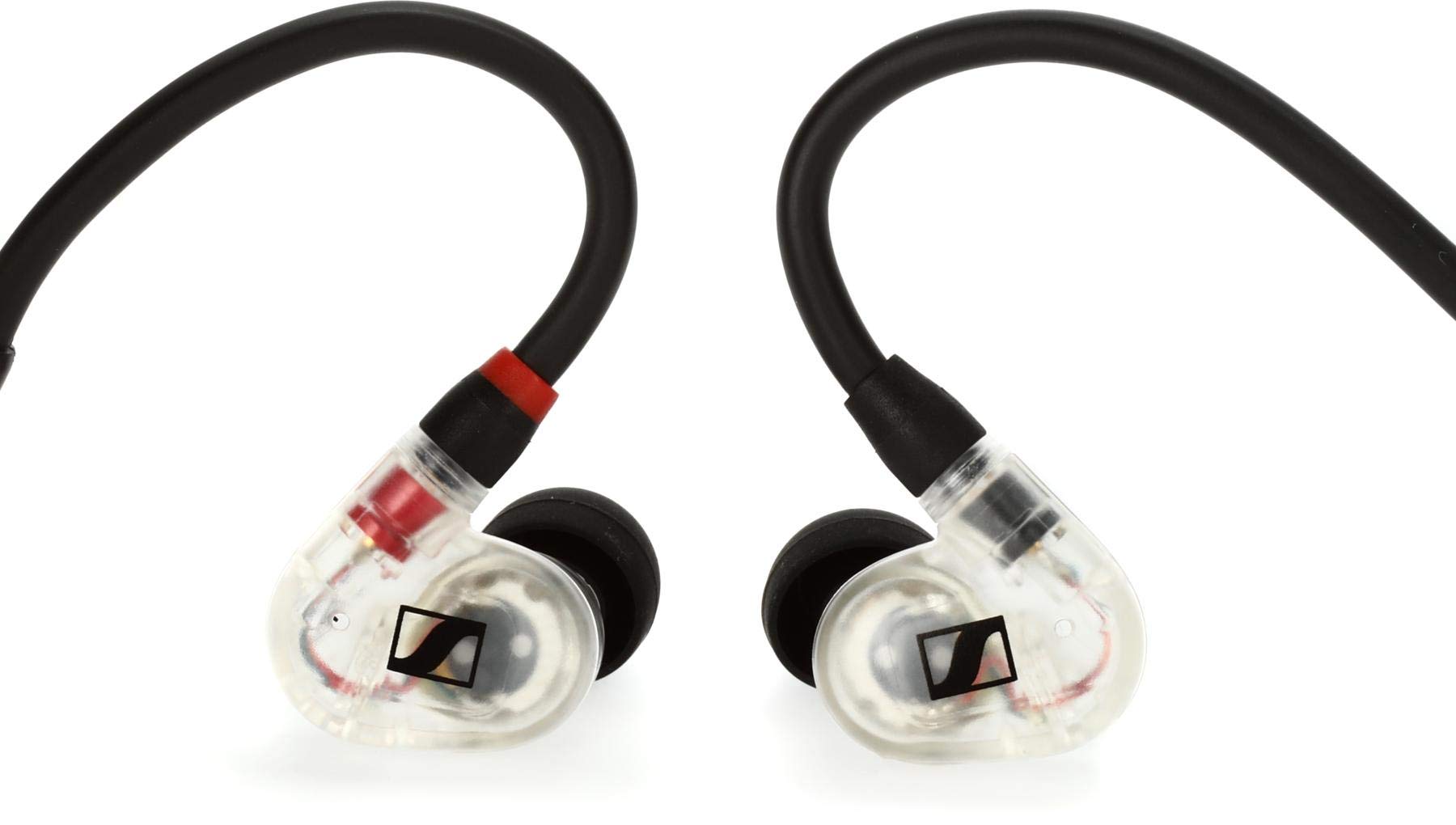
The IE 100 Pro is Sennheiser’s professional in-ear monitor built for live stage use, but its sound profile translates beautifully to critical home listening. The 10mm dynamic driver is tuned for clarity and low distortion, with a slight treble boost that helps musicians hear cymbals and transient details on stage. At home, this translates to a crisp, detailed presentation that excels at acoustic instruments and vocal articulation. The bass is tasteful and tight—present enough for rock and electronic but never muddy or boomy.
The impedance of 20 ohms makes these easy to drive from a standard headphone jack or a budget USB-C DAC. The housing is slim and ergonomic, designed to sit flush and stay secure during movement. The cable is stage-proof with a reinforced internal duct, and the detachable MMCX connector allows for easy replacement if the cable fails. The included silicone and foam ear tips offer excellent passive isolation, blocking up to 26 dB of ambient noise without any electronics.
These are wired monitors, meaning no ANC, no Bluetooth, and no microphone. The treble-forward tuning can be fatiguing for some listeners, especially on poorly recorded tracks—sibilance on “S” and “T” sounds is more pronounced here than on the IE 200. They also benefit from a clean source; plugging into a laptop’s headphone jack vs. a dedicated DAC reveals a noticeable difference in noise floor and clarity. For musicians or listeners who want a pure, distortion-free monitor path, these deliver professional-grade sound at a fraction of the cost of custom IEMs.
Why it’s great
- Professional stage monitor tuning with crisp transient response and tight bass
- Lightweight, ergonomic shell stays secure during movement; excellent passive isolation
- Detachable MMCX cable with 20-ohm impedance works well with most portable sources
Good to know
- Treble-forward tuning can cause sibilance on poor recordings or with certain tips
- Wired design and lack of microphone limit everyday convenience
FAQ
Can Bluetooth earbuds sound as good as wired IEMs?
What does LDAC do for audio quality?
Does ANC affect sound quality in earbuds?
What is the difference between a dynamic driver and a balanced armature?
Final Thoughts: The Verdict
For most users, the audio quality bluetooth earbuds winner is the Apple AirPods Pro 2 because its H2 chip, low-distortion driver, and unmatched ecosystem integration make it the most complete package for everyday listening and hearing health. If you want audiophile-grade detail and LDAC support in a wireless form, grab the Status Pro X. And for the best value with exceptional call quality and personalizable sound, nothing beats the Soundcore Liberty 5 Pro.