
Our readers keep the lights on and the weekend projects moving. As an Amazon Associate, I earn from qualifying purchases.
Finding houseplants that actively filter indoor air toxins without posing a risk to your curious feline companion requires navigating two distinct data sets — NASA’s clean air study and the ASPCA’s toxicity database. Most popular indoor plants land on only one of those lists, leaving cat owners with a frustratingly short roster of genuinely safe, hardworking greenery.
I’m Rikta — the co-founder and writer behind FitlyFast. After cross-referencing NASA’s identified air-purifying species against ASPCA’s non-toxic plant registry and analyzing hundreds of verified buyer reports on plant health upon arrival, I compiled this category-specific guide to help you choose specimens that actually survive delivery and thrive in low-light indoor conditions.
Whether you’re a first-time plant parent or a seasoned collector looking for a vet-approved addition, this roundup of the best air purifying plants safe for cats isolates the varieties that filter benzene, formaldehyde, and xylene while keeping your whiskered companions completely out of harm’s way.
How To Choose The Best Air Purifying Plants Safe For Cats
Selecting a plant that simultaneously scrubs indoor air and won’t trigger a veterinary emergency requires more than scanning a tag. You need to verify the exact species against the ASPCA database — many common houseplants share a genus with toxic relatives, and a “prayer plant” label might refer to a safe Maranta or an unsafe Calathea relative depending on the seller. For cat owners, the first filter is always species-level identification, not genus-level.
Verify ASPCA Non-Toxic Status by Scientific Name
Marketing copy often uses “pet friendly” loosely. The only reliable source is the ASPCA’s Toxic and Non-Toxic Plant List, which categorizes plants by their binomial scientific name. A “Parlor Palm” (Chamaedorea elegans) is non-toxic, but a “Sago Palm” (Cycas revoluta) is deadly. Always search the exact Latin name before purchasing. The products in this guide have been cross-referenced against the ASPCA’s current non-toxic registry, so every entry here passes that check.
Match Light Availability to Plant Requirements
Air-purifying capacity is tied to photosynthesis — a plant that gets insufficient light stops filtering effectively. The Philodendron Brasil tolerates low light but grows fastest in bright indirect light. The Parlor Palm actually thrives in lower light without losing its air-purifying ability, making it a stronger choice for dim apartments. Spider plants need moderate indirect light to maintain variegation and robust filtration. Assess the foot-candles in your target spot before committing to a species.
Inspect Packaging and Shipping Method
Online plant purchases arrive either in soil (potted) or bare root. Bare root specimens require immediate potting and careful watering to avoid transplant shock. Potted plants in nursery containers with moist soil can wait a few days before repotting. Regardless of method, look for sellers that use insulation, secure packing, and fast shipping — a plant that spends five days in a dark, cold truck may arrive with yellowed leaves or root rot regardless of its species. Customer reviews mentioning “arrived healthy despite long transit” are a strong signal of reliable packaging.
Quick Comparison
On smaller screens, swipe sideways to see the full table.
| Model | Category | Best For | Key Spec | Amazon |
|---|---|---|---|---|
| Live Plant, Lemon Lime Maranta Prayer Plant | Mid-Range | Low-light filtering | ASPCA non-toxic Maranta | Amazon |
| Thorsen’s Greenhouse Lemon Lime Prayer Plant | Mid-Range | Foliage movement | Maranta leuconeura | Amazon |
| Spider Plant Variety Pack | Premium | Maximum variety | 4 distinct chlorophytum | Amazon |
| Shop Succulents Calathea Concinna Freddie | Premium | Statement leaf pattern | 6-inch nursery pot | Amazon |
| Silver Satin Pothos Hanging Basket | Premium | Trailing display | 6-inch hanging planter | Amazon |
| Philodendron Heartleaf Brasil | Mid-Range | Beginner low care | 4-inch nursery pot | Amazon |
| Thorsen’s Greenhouse Parlor Palm | Mid-Range | Lowest light corner | Chamaedorea elegans | Amazon |
In‑Depth Reviews
1. Live Plant, Lemon Lime Maranta Prayer Plant (Hopewind)

The Lemon Lime Maranta from Hopewind hits the sweet spot between air-purifying capability and absolute cat safety. Maranta leuconeura is explicitly listed by the ASPCA as non-toxic to felines, and its leaves exhibit nyctinasty — the famous nightly “prayer” movement — which adds a dynamic visual element that most static houseplants lack. Arriving at 12–16 inches tall in a 4-inch nursery pot, this specimen is large enough to make an immediate impact on a shelf or windowsill without overwhelming a small living space.
Buyer reports consistently praise the vigorous root system and the presence of active new growth at the soil line, indicating the plant was propagated recently rather than sitting in a warehouse. The vivid green leaves brushed with yellow and dark-green veins retain their pattern even in medium indirect light, though direct sun will scorch the edges. The Hopewind packaging includes eco-friendly insulation, and multiple reviewers noted that the plant survived six-day shipping with minimal leaf stress.
Watering every 1–2 weeks when the top half of the soil is dry is the correct cadence, and occasional misting helps maintain the humidity this tropical species prefers. The Maranta isn’t a heavy feeder — dilute liquid fertilizer every 4–6 weeks during the growing season is sufficient. For cat owners who want a living, moving plant that actively filters indoor air without any toxic concern, this is the strongest single-specimen choice available.
Why it’s great
- ASPCA non-toxic status verified by species-specific listing
- Nyctinastic leaf movement adds living dynamism
- 12–16 inch mature size provides instant visual presence
- Multiple buyers confirmed healthy root system and new growth upon arrival
Good to know
- Needs bright indirect light; direct sun causes leaf burn
- Must be kept away from cold drafts below 60°F
- Occasional misting needed in dry indoor air
2. Thorsen’s Greenhouse Lemon Lime Prayer Plant (Gold Pot)
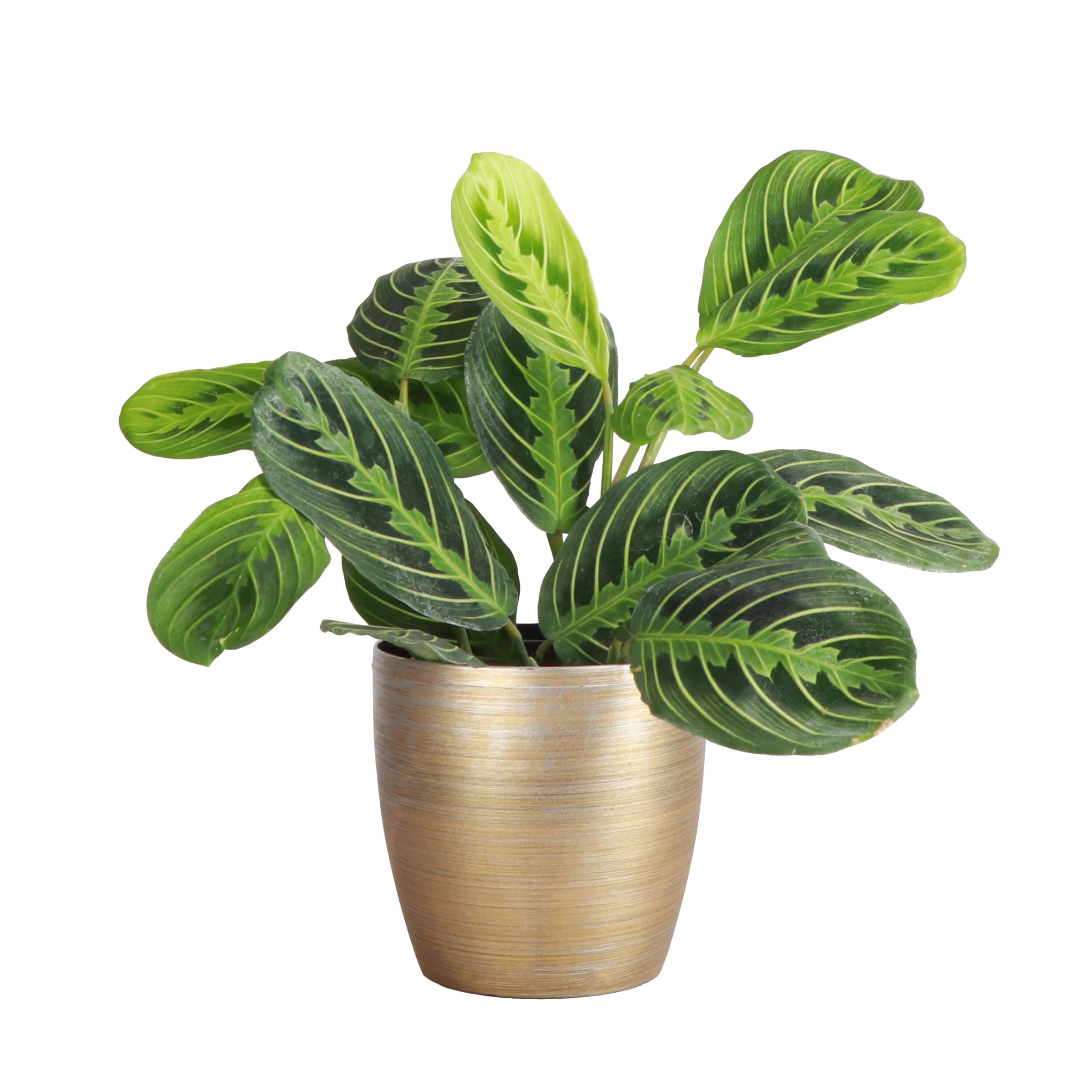
Thorsen’s Greenhouse offers a version of the same Maranta leuconeura species but in a gold-colored nursery pot that makes it immediately gifting-ready. The plant ships at 5–8 inches tall in a 4-inch pot, which is noticeably smaller than the Hopewind offering, but the trade-off is a slightly lower entry point and the convenience of a decorative pot that doesn’t require immediate repotting. The shade resistance claim is accurate — this prayer plant tolerates lower light than many Maranta varieties, though leaf movement slows in dimmer spots.
Customer feedback indicates that these plants arrive with full, healthy foliage and that the root system is well-developed for the pot size. One buyer reported the plant doubling in size within two months, and another noted blooming — small white flowers that emerge from the leaf nodes in spring. The horizontal growing habit makes this an excellent candidate for a hanging planter rather than a tabletop display, especially if you want the leaves to cascade naturally.
The gold pot is lightweight plastic, not ceramic, so it won’t tip over easily if your cat knocks against it, but the small size means you’ll need to repot within 3–6 months as the roots fill the container. Weekly watering when the top inch of soil dries out keeps the foliage turgid. For cat owners who prioritize a ready-to-display aesthetic and don’t mind a smaller starting size, this is the most polished prayer plant option at this tier.
Why it’s great
- Comes in a decorative gold nursery pot ready for display
- Explicitly listed as non-toxic by the ASPCA
- Shade tolerant — performs better in dim corners than most Marantas
- Horizontal growth habit ideal for hanging baskets
Good to know
- Starts at 5–8 inches, noticeably smaller than Hopewind’s 12–16 inch offering
- Repotting needed within 3–6 months as roots outgrow the 4-inch pot
- Some buyers received plants that needed immediate repotting for best growth
3. Spider Plant Variety Pack (4 Plants)
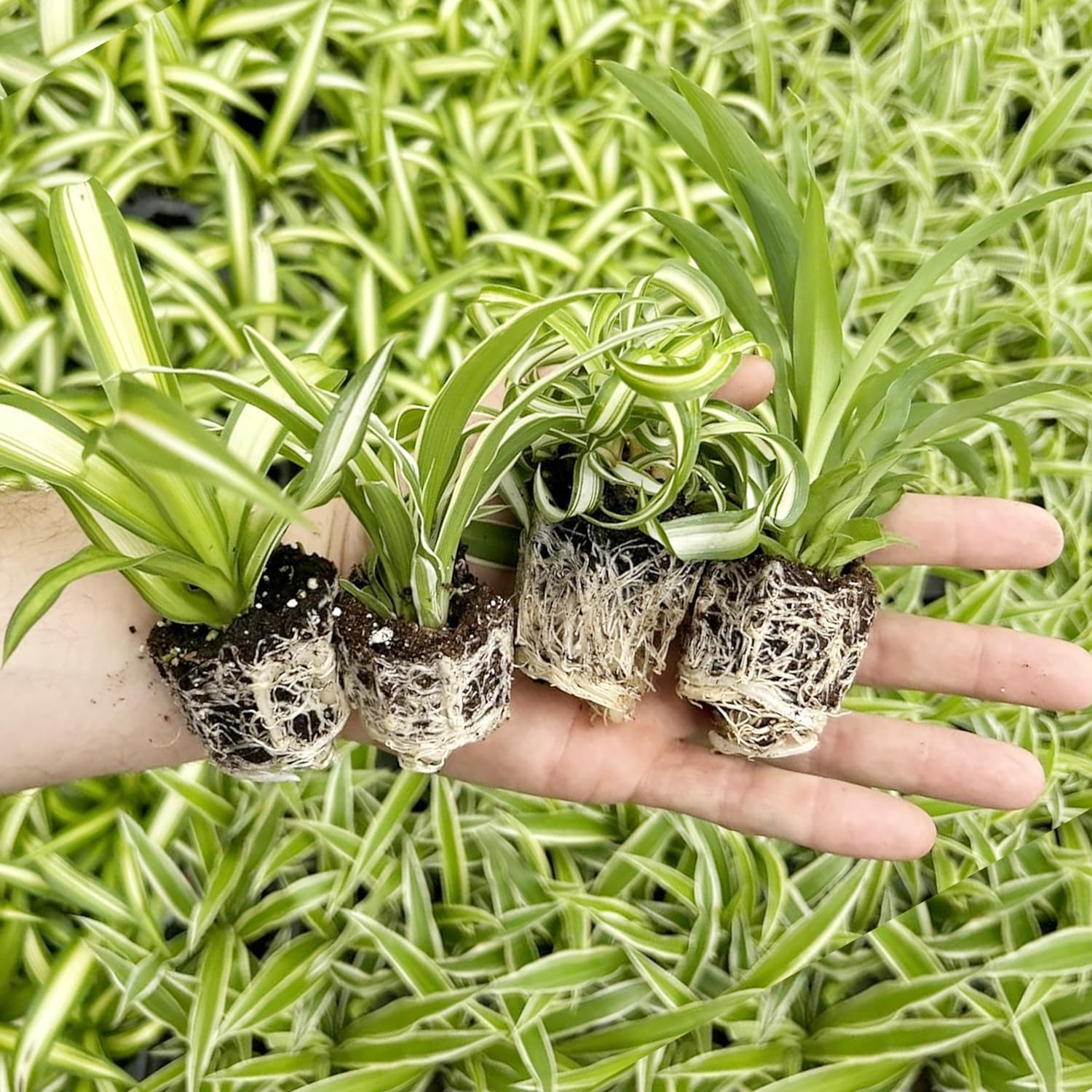
The Spider Plant Variety Pack from August Breeze Farm contains four distinct chlorophytum varieties — Ocean, Hawaiian, Green, and Bonnie Curly — each with different leaf shapes and variegation patterns. Chlorophytum comosum is one of the most thoroughly documented air-purifying plants, having been included in NASA’s original Clean Air Study for its ability to remove formaldehyde and xylene. Critically, every spider plant variety is listed as non-toxic by the ASPCA, making this multi-pack a risk-free way to build an instant cat-safe collection.
These are bare-root starter plants with well-developed root systems, meaning you’ll need to pot them yourself into 4-inch containers within 24–48 hours of arrival. Multiple buyers specifically noted that the root systems were “incredible” and that the plants arrived with healthy, pest-free foliage despite being shipped bare root. The Bonnie Curly variety, with its twisted leaves, is the most visually interesting of the set and often hard to find at local nurseries.
Spider plants thrive in moderate indirect light and are exceptionally forgiving of missed waterings — they store moisture in their tuberous roots. Avoid direct sun, which causes the leaf tips to brown. These are fast growers that will produce offsets (baby spider plants) within a year, effectively multiplying your collection. For cat owners who want maximum variety and the strongest air-purifying reputation at once, this four-pack delivers the best value.
Why it’s great
- Four distinct spider plant varieties in one purchase
- NASA-listed air purifier for formaldehyde and xylene removal
- ASPCA non-toxic across all chlorophytum species
- Excellent root systems reported by multiple verified buyers
Good to know
- Bare root — requires immediate potting and careful watering post-arrival
- Variegated varieties need brighter light to maintain their pattern
- Bonnie Curly is slightly more particular about watering consistency
4. Shop Succulents Calathea Concinna Freddie
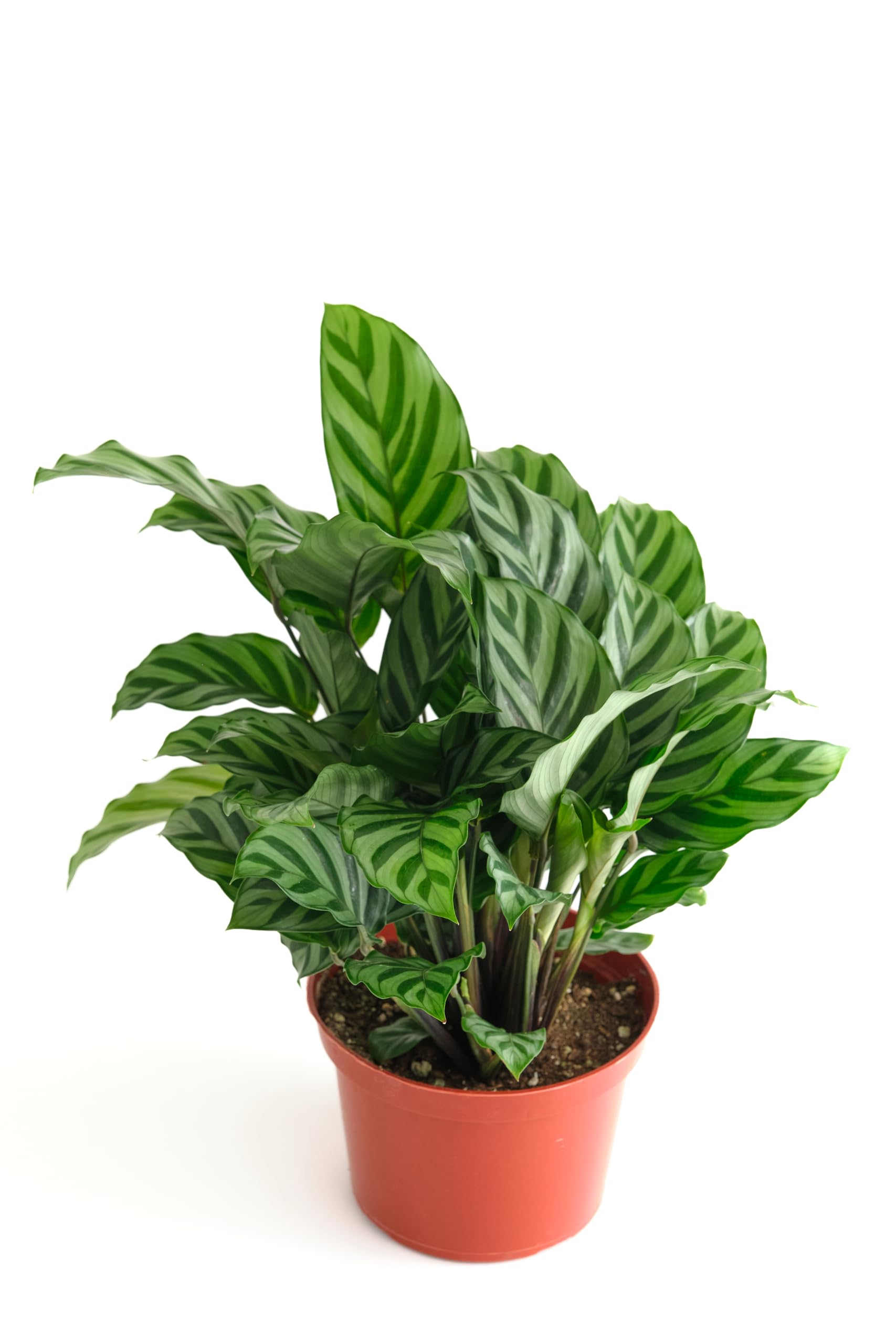
The Calathea Concinna, known commercially as the Freddie Plant, displays broad, lance-shaped leaves with alternating dark and light green stripes that create a distinctly architectural look. This is the only entry in this guide that arrives in a 6-inch nursery pot, giving it an immediate size advantage — the larger pot means a more mature root system and taller foliage that typically reaches 1–2 feet at shipping. Calatheas are not listed as toxic by the ASPCA, making them safe for cats, but they are marginally more demanding than spider plants or pothos.
Freddie requires consistently moist soil — never soggy, but never fully dry — and benefits from distilled water or rainwater, as tap water minerals can cause leaf tip browning. The broad leaf surface area is excellent for passive air purification, and the plant’s natural growth pattern fills lateral space without requiring aggressive pruning. Customer reviews highlight that plants arrived with “incredible root systems” and multiple stems, often exceeding the product photography in fullness.
The higher maintenance requirement is real: if you travel frequently or tend to forget waterings, Freddie will develop crispy leaf edges within a week of drought. Pairing it with a humidity tray or placing it in a naturally humid bathroom helps. For the cat owner who wants a bold, large-leafed specimen that clearly communicates “tropical” and is willing to provide consistent care, this is the most visually commanding cat-safe option.
Why it’s great
- Largest pot size at 6 inches — more mature root system from day one
- Distinctive striped leaf pattern adds architectural interest
- ASPCA non-toxic — safe for feline homes
- Multiple buyers reported plants exceeding product photo fullness
Good to know
- Requires consistently moist soil — more demanding than pothos or spider plants
- Prone to leaf tip browning from tap water minerals
- Needs higher humidity to prevent leaf edge crispiness
5. Silver Satin Pothos Hanging Basket (Plants for Pets)

Silver Satin Pothos (Scindapsus pictus) is frequently grouped with true pothos but is genetically distinct — and importantly, the ASPCA lists Scindapsus pictus as non-toxic to cats. This particular offering from Plants for Pets ships in a 6-inch hanging basket, giving you an immediate vertical display with trailing vines that naturally cascade over the edge. The leaves are heart-shaped with a matte silver overlay and subtle green spotting, creating a soft shimmer that catches low light beautifully.
The packaging from Plants for Pets is consistently praised for its security — the plant arrives with soil still moist and leaves intact, even after extended transit. Buyers noted that the root system was well-developed and that the plant appeared “happy” and “thriving” upon opening, with no yellowing or browning. The trailing habit makes this an excellent choice for bookshelf tops, macrame hangers, or any elevated surface where vines can drape freely without being accessible to a curious cat’s mouth.
Pothos is famously low-maintenance: water when the top inch of soil dries out, and it will tolerate moderate indirect light, though the silver variegation intensifies under brighter conditions. One buyer reported root rot after purchase, so inspect the drainage holes upon arrival and repot if the soil feels overly wet. For cat owners who want an instantly full, trailing plant that requires minimal intervention and arrives ready to hang, this is the strongest vertical option.
Why it’s great
- Comes in a 6-inch hanging basket for immediate vertical display
- ASPCA non-toxic — Scindapsus pictus is safe for cats
- Silver variegated leaves create a soft, luminous effect in low light
- Packaging praised for keeping soil moist and leaves intact during transit
Good to know
- One buyer reported root rot upon arrival — check drainage immediately
- Silver variegation fades in very low light
- Trailing vines can be tempting for cats to bat at even if non-toxic
6. Philodendron Heartleaf Brasil (Hopewind)

Philodendron hederaceum ‘Brasil’ is a heartleaf philodendron cultivar with variegated leaves that transition from dark green to chartreuse along the center vein. This is one of the most forgiving indoor plants in existence — it tolerates low light, inconsistent watering, and average humidity without shedding leaves. Crucially, Philodendron hederaceum is listed as non-toxic by the ASPCA, making it a safe choice despite the common misconception that all philodendrons are dangerous to cats.
Hopewind’s offering arrives in a 4-inch nursery pot with the plant at 2–3 inches tall at the soil line, with trailing vines that may already be 4–6 inches long. The organic soil mix drains well, and the plant is propagated from disease-free stock. Customer reviews overwhelmingly describe the plants as “healthy” and “beautiful” with a strong root system that establishes quickly after repotting. The heartleaf Brasil is a champion at filtering airborne toxins, and its trailing habit makes it ideal for desks, shelves, or as a tabletop centerpiece that won’t trigger allergic reactions in sensitive cats.
The main trade-off is that heartleaf philodendrons are slow to produce the dramatic variegation shown in product photos without bright indirect light. If you place it in a dim corner, the new leaves may emerge mostly green. Regular rotation prevents the plant from leaning toward the light source. For entry-level plant owners or those who want a nearly unkillable cat-safe option, this is the most low-risk selection.
Why it’s great
- Extremely forgiving of irregular watering and low light
- Trailing growth habit works well on desks and shelves
- ASPCA non-toxic — Philodendron hederaceum is safe for cats
- Organic soil mix promotes healthy root establishment
Good to know
- Variegation fades to mostly green in low light conditions
- Slower growing than pothos — takes longer to fill a pot
- Leaves are small (2–3 inches) compared to larger philodendron species
7. Thorsen’s Greenhouse Parlor Palm (White Pot)
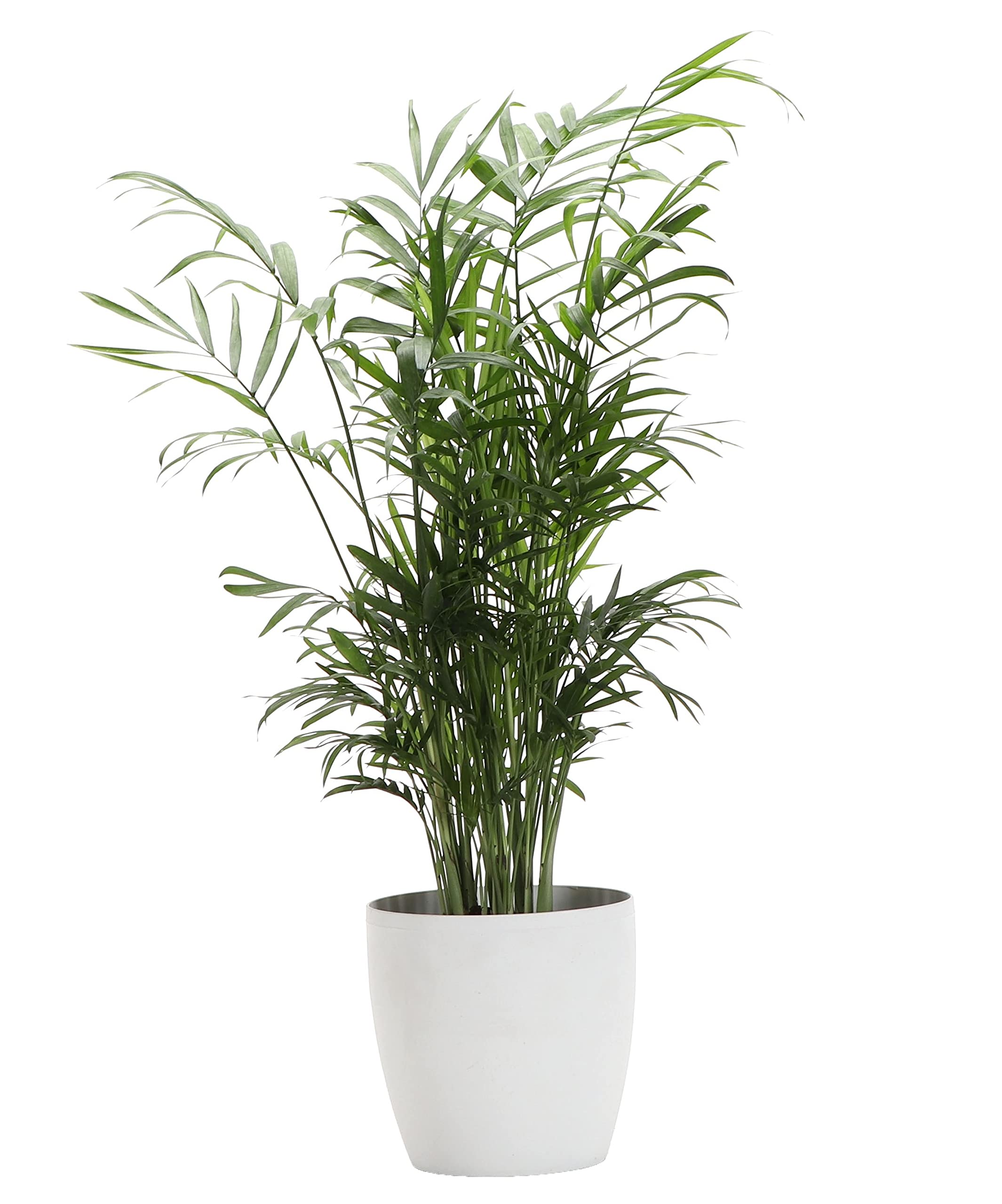
The Parlor Palm (Chamaedorea elegans) from Thorsen’s Greenhouse is the only palm on this list, and it serves a unique niche: it is the single best cat-safe air purifier for genuinely low-light rooms where nothing else survives. Parlor Palms evolved as understory plants in tropical rainforests, so they tolerate the dimmest corners of your home without etiolating. ASPCA lists the species as non-toxic, and the feathery fronds don’t produce sap or oils that might cause digestive upset if nibbled.
This particular offering ships in a white 4-inch pot at 5–8 inches tall with multiple stems emerging from the soil, giving it an already full appearance. The plant is drought tolerant — it can survive a missed watering — but performs best with consistent moisture and monthly fertilizer during the growing season. Customer feedback highlights that the plants arrive “absolutely fabulous” in health, with vibrant green foliage and no damage despite the box being handled roughly during delivery.
The key limitation is that Parlor Palms are extremely slow growers. You will not notice significant vertical expansion for months, and the plant’s air-purifying capacity is proportional to its leaf surface area, which starts small. It also requires repotting into a slightly larger container every 12–18 months to prevent root binding. For the cat owner who needs a reliable, non-toxic plant for a dark corner or bathroom with no window, this palm is the only genuinely effective option on the market.
Why it’s great
- Best low-light tolerance of any cat-safe air-purifying plant
- ASPCA non-toxic with soft fronds that don’t irritate cat mouths
- Multiple stems provide a full look even at small shipping size
- Drought tolerant — survives occasional missed waterings
Good to know
- Extremely slow growing — takes years to double in height
- Small starting size (5–8 inches) requires patience for visual impact
- Requires repotting every 12–18 months to prevent root binding
FAQ
Are all philodendrons safe for cats?
How many air-purifying plants do I need for a 1,500-square-foot home?
Will my cat get sick from nibbling a marble queen pothos?
Do air-purifying plants actually filter the air or is that a myth?
Final Thoughts: The Verdict
For most users, the air purifying plants safe for cats winner is the Lemon Lime Maranta Prayer Plant from Hopewind because it combines proven ASPCA non-toxic status with nyctinastic leaf movement, a 12–16 inch mature starting size, and reliable air-purifying capability in a low-maintenance package. If you want maximum variety, grab the Spider Plant Variety Pack for four distinct species in one order. And for a dim corner where nothing else thrives, nothing beats the Parlor Palm from Thorsen’s Greenhouse as the ultimate low-light, completely non-toxic solution.