
Our readers keep the lights on and the weekend projects moving. As an Amazon Associate, I earn from qualifying purchases.
Side sleepers face a unique battle on the trail. The hips and shoulders, the widest points of your skeleton, press down with disproportionate force. On a standard sleeping pad, that often means one thing: a bony hip grinding into hard-packed dirt by 2 AM, a numb shoulder waking you at dawn, and a wrecked next day on the trail. The right sleeping pad for side sleepers must solve for pressure-point isolation, not just overall loft.
I’m Rikta — the co-founder and writer behind FitlyFast. Over many hours of market research, I’ve analyzed the internal baffling patterns, R-value lab data, foam density specifications, and real-world user reports from side-sleeping backpackers to identify which pads truly relieve those pressure points under load.
If you carry your shelter on your back, every ounce and every inch of pack volume competes with food, water, and safety gear — which is why finding the precise backpacking sleeping pad for side sleepers that delivers hip relief without weighing down your pack is the single most impactful gear decision you will make this season.
How To Choose The Best Backpacking Sleeping Pad For Side Sleepers
Selecting a pad for side sleeping is different from choosing one for back or stomach sleepers. The key metrics revolve around vertical thickness, baffle orientation, and the pad’s ability to keep your hip from contacting the floor. Below are the three specifications you must evaluate before buying.
Thickness and Bottom-Out Resistance
Side sleepers require at least 3 inches of loft to prevent the hip bone from pressing through the pad. Pads in the 3.5 to 4.25-inch range offer a meaningful safety margin. Thickness alone, however, is not enough — the internal structure must resist compression under concentrated loads. Look for pads with vertical baffles or offset I-beam designs that maintain structural integrity rather than horizontal chambers that allow the hip to sink and displace air sideways.
R-Value and Ground Insulation
A side sleeper’s body has less surface area in contact with the pad compared to a back sleeper, which theoretically reduces conductive heat loss. Still, if the pad compresses under the hip, that spot becomes a thermal bridge to the cold ground. Choose a pad with an R-value of at least 4.5 for three-season use, and 6 or higher for shoulder-season and winter camping. Reflective liners and foam-air hybrid constructions provide better warmth per ounce than simple air chambers.
Weight, Pack Size, and Comfort Trade-Offs
Ultralight backpackers may prioritize a sub-16-ounce pad, but side sleepers often need to accept a few extra ounces for proper pressure-point relief. Self-inflating foam pads offer superior comfort and noise reduction but pack larger and weigh more. Straight air pads pack smallest but may feel unstable without advanced baffling. The right balance depends on trip length and how much your sleep quality affects your next day’s performance.
Quick Comparison
On smaller screens, swipe sideways to see the full table.
| Model | Category | Best For | Key Spec | Amazon |
|---|---|---|---|---|
| Therm-a-Rest MondoKing 3D | Self-Inflating | Luxury car camping | 4.25 in thick, R-Value 7.0, 30 in wide | Amazon |
| Big Agnes Rapide SL | Air Pad | Ultralight side sleepers | 3.5 in thick, 4.25 in outer chambers, 20 in wide | Amazon |
| Therm-a-Rest NeoAir Xlite NXT | Air Pad | Ultralight backpacking | 3 in thick, R-Value 4.5, 13 oz weight | Amazon |
| Hikenture 4 Inch Self-Inflating | Self-Inflating | Car camping comfort | 4 in thick, R-Value 9.5, 80×28 in | Amazon |
| PineHike Camping Sleeping Pad | Hybrid Foam/Air | Electric pump convenience | 4 in thick, R-Value 9.5, built-in pump | Amazon |
| Naturehike Ultralight Pad | Air Pad | Budget side sleepers | 3.2 in thick, R-Value 4.6, 27.2 oz weight | Amazon |
| Hikenture Camping Sleeping Pad | Air Pad | All-season budget value | 3.2 in thick, R-Value 6.2, 1.53 lb weight | Amazon |
In‑Depth Reviews
1. Therm-a-Rest MondoKing 3D Self-Inflating Camping Sleeping Pad

The MondoKing 3D is the gold standard for side sleepers who drive to their campsite or paddle in. Its 4.25-inch thickness and StrataCore construction — alternating ridges of foam and air — create a surface that absorbs your hip without letting it touch the ground. The 30-inch width provides enough space to roll onto your side without an elbow slipping off the edge. The stretch knit fabric layer adds a soft, quiet surface that eliminates the crinkle noise common to air-only pads.
The TwinLock valve system separates inflation and deflation into two one-way valves, which speeds setup and prevents accidental air loss. At 5.5 pounds and packing down to 26 by 10.3 inches, this pad is not for backpacking, but for car camping, it delivers hotel-grade sleep. The 7.0 R-value means you can take it into deep winter conditions and still wake up warm, even when your hip is pressing hard into the pad.
Customer feedback consistently praises the groundless comfort. Users weighing up to 300 pounds report zero bottoming out and describe sleeping better on this pad than on their home mattress. The self-inflating foam core requires a few minutes to expand, then you top it off with the included pump sack for precise firmness. The only real drawback is the bulk, but if you have the space, this is the most side-sleeper-friendly pad on the market.
Why it’s great
- 4.25-inch thickness prevents hip bottoming out entirely
- 7.0 R-value insulates well in sub-freezing temperatures
- Stretch knit fabric is silent and soft against skin
- 30-inch width accommodates side-sleeping arm positions
Good to know
- Too heavy and bulky for backpacking
- Self-inflating requires 2-4 hours for full loft initially
- Slides on slick tent floors without a ground sheet
2. Big Agnes Rapide SL Insulated Sleeping Pad

The Rapide SL is engineered for backpackers who refuse to sacrifice sleep quality for pack weight. Its offset I-beam construction reduces total pad weight while maintaining stability under a side sleeper’s hips. The quilted top and 4.25-inch outer chambers (larger than the inner chambers) cradle your body and create a subtle cupping effect that keeps you centered — exactly what side sleepers need when they shift positions at night.
At 3.5 inches thick overall, it clears the minimum threshold for hip clearance, and the high-volume valve with micro-adjustment allows you to dial in the exact firmness. The Pumphouse inflation sack fills the pad in roughly four minutes without introducing moisture from your breath. The double ripstop nylon exterior with aviation-grade TPU lamination offers impressive durability for its sub-20-ounce weight class.
Side sleepers specifically note the thick edge chambers prevent the “rolling-off” sensation. One reviewer reported that the pad improved their Garmin sleep score by 1.5 hours compared to a previous pad. The R-value of 4.8 is solid for three-season use, though winter campers will want to pair it with a closed-cell foam pad underneath for extra warmth. It is an investment, but one that pays back in trail energy.
Why it’s great
- Offset I-beam baffles prevent hip from bottoming out
- Thicker outer chambers keep side sleepers centered
- Light enough for multi-day backpacking trips
- Quiet fabric with minimal crinkle noise
Good to know
- 30D fabric is less durable than thicker materials
- Pump sack inflation takes some practice
- R-value 4.8 is not ideal for deep winter camping alone
3. Therm-a-Rest NeoAir Xlite NXT Ultralight Sleeping Pad

The NeoAir Xlite NXT is the standard-bearer for ultralight backpacking. At just 13 ounces in the Regular size, it rolls down to roughly the volume of a 1-liter water bottle — space that every gram-conscious hiker will appreciate. The 3-inch thickness and Triangular Core Matrix baffle structure provide the stability side sleepers need, though the margin is tighter than the thicker pads on this list.
Therm-a-Rest solved the legendary crinkle noise problem with the NXT generation. Earlier Xlite models were notoriously loud; the NXT uses a different lamination process that dramatically reduces the sound. The WingLock valve is both dependable and fast, with a wide opening for rapid deflation. The reflective ThermaCapture technology traps radiant heat, giving you a 4.5 R-value that is warm enough for three-season and into early winter conditions.
Side sleepers around 180 pounds report no bottoming out, though heavier individuals might find the 3-inch profile borderline. The 20-inch width is standard — consider the Regular Wide version if you need more real estate for your arms. The 30D ripstop nylon requires careful ground selection; a ground sheet or tent footprint is recommended. For the weight-obsessed backpacker who sleeps on their side, this is the pad that makes every ounce count.
Why it’s great
- Incredibly lightweight (13 oz) and packable
- NXT generation is much quieter than previous versions
- Triangular Core Matrix provides stable support
- 4.5 R-value is warm for three-season use
Good to know
- 3-inch thickness may bottom out under heavier side sleepers
- 20-inch width feels narrow for side sleeping
- Thin fabric is prone to punctures on rough ground
4. Hikenture 4 Inch Self-Inflating Sleeping Pad

Hikenture’s 4-inch self-inflating pad offers a luxurious sleeping surface at a competitive price point. The 4-inch thickness is more than enough to keep your hip off the ground, and the memory foam core paired with an air chamber provides a plush, noise-free sleep experience. The 80 by 28-inch dimensions give ample room for taller side sleepers to stretch out without hanging off the end.
The self-inflating design uses a patented two-way valve that lets you open the cap to allow air in for automatic inflation, then close it for a firm seal. A few minutes of self-inflation gets you most of the way there, then a few bags of air from the included pump sack top it off. The 9.5 R-value is exceptionally high — this pad is warm enough for winter car camping and will never be a cold spot even on frozen ground.
Users highlight the soft polyester top fabric that requires no additional sheet for comfort. The pad is heavier at 6.5 pounds and packs larger than air-only models, making it a dedicated car-camping solution. The customer service is responsive; one reviewer reported a tear in the first unit and received a no-questions-asked replacement. For side sleepers who drive to camp, this pad offers a compelling blend of comfort, warmth, and value.
Why it’s great
- 4-inch thickness provides reliable hip clearance
- 9.5 R-value is extremely warm for cold conditions
- Soft polyester surface is quiet and comfortable
- Self-inflating with included pump sack is easy to set up
Good to know
- Too heavy and bulky for backpacking
- Deflating and rolling up takes effort
- Unit quality control can vary
5. PineHike Camping Sleeping Pad with Built-in Electric Pump

PineHike’s pad integrates a rechargeable 2400mAh electric pump directly into the pad, eliminating the need to carry a separate pump or use your breath. A single button press inflates the pad to full firmness in about 50 seconds — a genuine convenience when you arrive at camp in the dark or rain. The 4-inch thickness and high-resilience 50D sponge design provide reliable hip relief for side sleepers.
The hybrid construction combines air and memory foam, giving you the plush feel of a foam mattress with the adjustability of an air chamber. The 9.5 R-value is very high, making this pad suitable for all four seasons. At 6.6 pounds, it is firmly in the car-camping weight class, but the built-in pump means you leave one more piece of gear at home. The 78.7 by 29.1-inch surface offers generous width for side sleepers who need arm space.
User feedback is generally positive, with many praising the quick inflation and comfort for back and hip pain. However, there is a notable failure mode: a few users reported the pump battery swelling after roughly 9 months of regular use, which rendered the pad unusable since there is no manual inflation valve. If you choose this pad, treat the battery with care and avoid storing it fully drained for long periods.
Why it’s great
- Built-in electric pump inflates in under a minute
- 4-inch memory foam layer supports side sleepers well
- 9.5 R-value is excellent for winter camping
- Very wide (29.1 in) surface for plenty of room
Good to know
- Pump battery failure can render the pad unusable
- Heavy (6.6 lbs) for any kind of backpacking
- No backup manual inflation valve if pump fails
6. Naturehike 27oz Ultralight Sleeping Pad
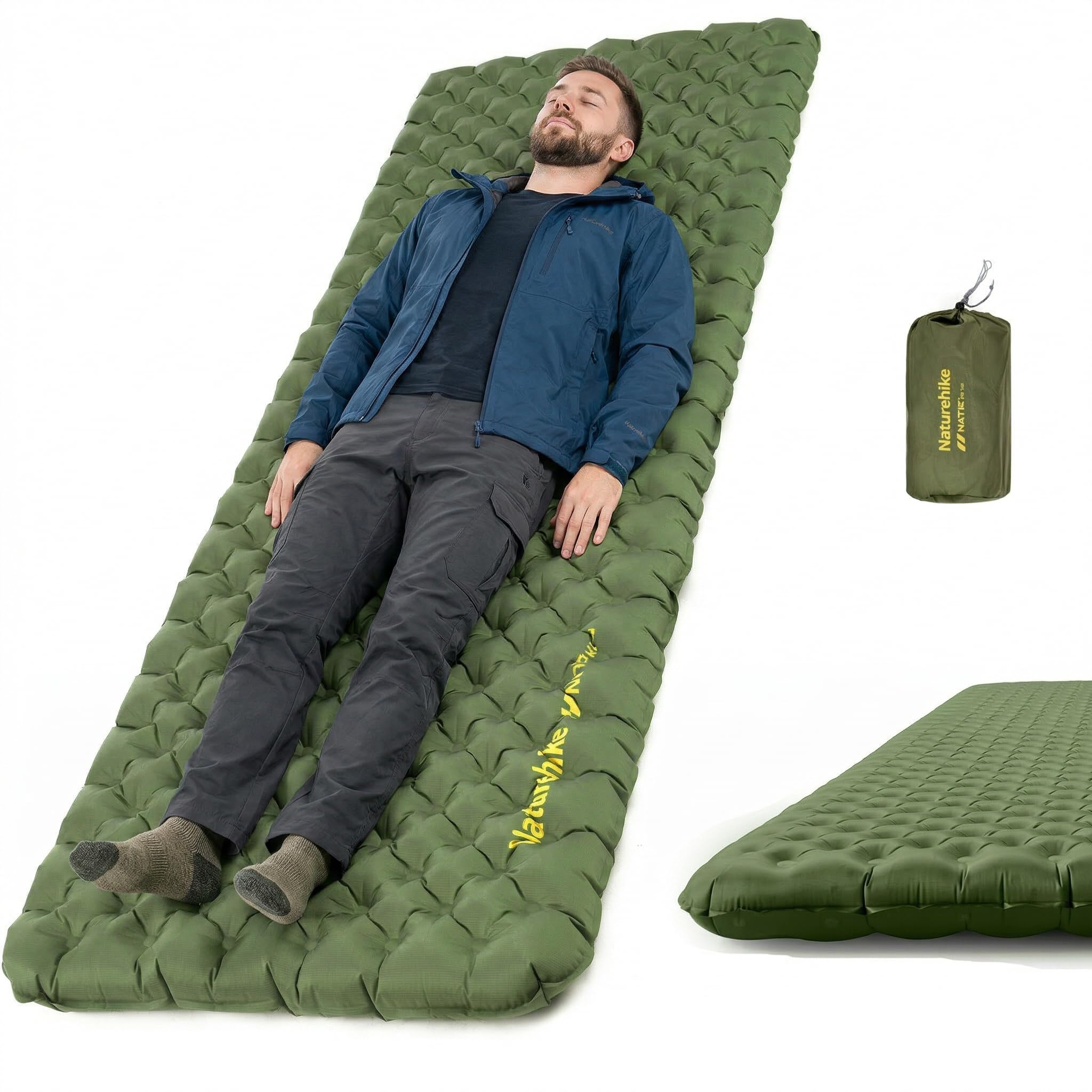
The Naturehike pad delivers a surprisingly premium feel at an entry-level price point. The 3.2-inch thickness and 4.6 R-value make it a viable three-season option for side sleepers on a budget. Its eight-layer aluminum molded 3D insulation structure is sophisticated for this price tier, reducing convective heat loss and reflecting body warmth back at you. The 27.2-ounce weight keeps it competitive with more expensive ultralight pads.
The dimpled surface pattern (punching point structure) distributes pressure evenly, and the 25.2-inch width is generous — wider than many pads in its weight class. The patented dual-vent valve allows one-way inflation when only the outer cover is open, and rapid deflation when you open the inner cover. The included pump sack and TPU repair kit are nice bonuses. The 20D nylon and TPU construction offers good abrasion resistance for the weight.
Side sleepers with bony hips report the pad is comfortable, with sufficient cushion to prevent ground contact. The crinkle noise is present but less pronounced than some aluminum-lined pads. One quirk: the instructions for attaching the pump sack are unclear, and some users struggle initially. The pad holds air well and does not require re-inflation through the night, a common issue with cheaper valves.
Why it’s great
- Budget-friendly price for a well-insulated pad
- 3.2-inch thickness works for many side sleepers
- Generous 25.2-inch width for side-sleeping arm space
- Packs small and weighs under 2 pounds
Good to know
- Instructions for pump sack attachment are unclear
- Some crinkle noise from the reflective liner
- 3.2 inches may bottom out for heavier side sleepers
7. Hikenture Camping Sleeping Pad with 6.2 R-Value
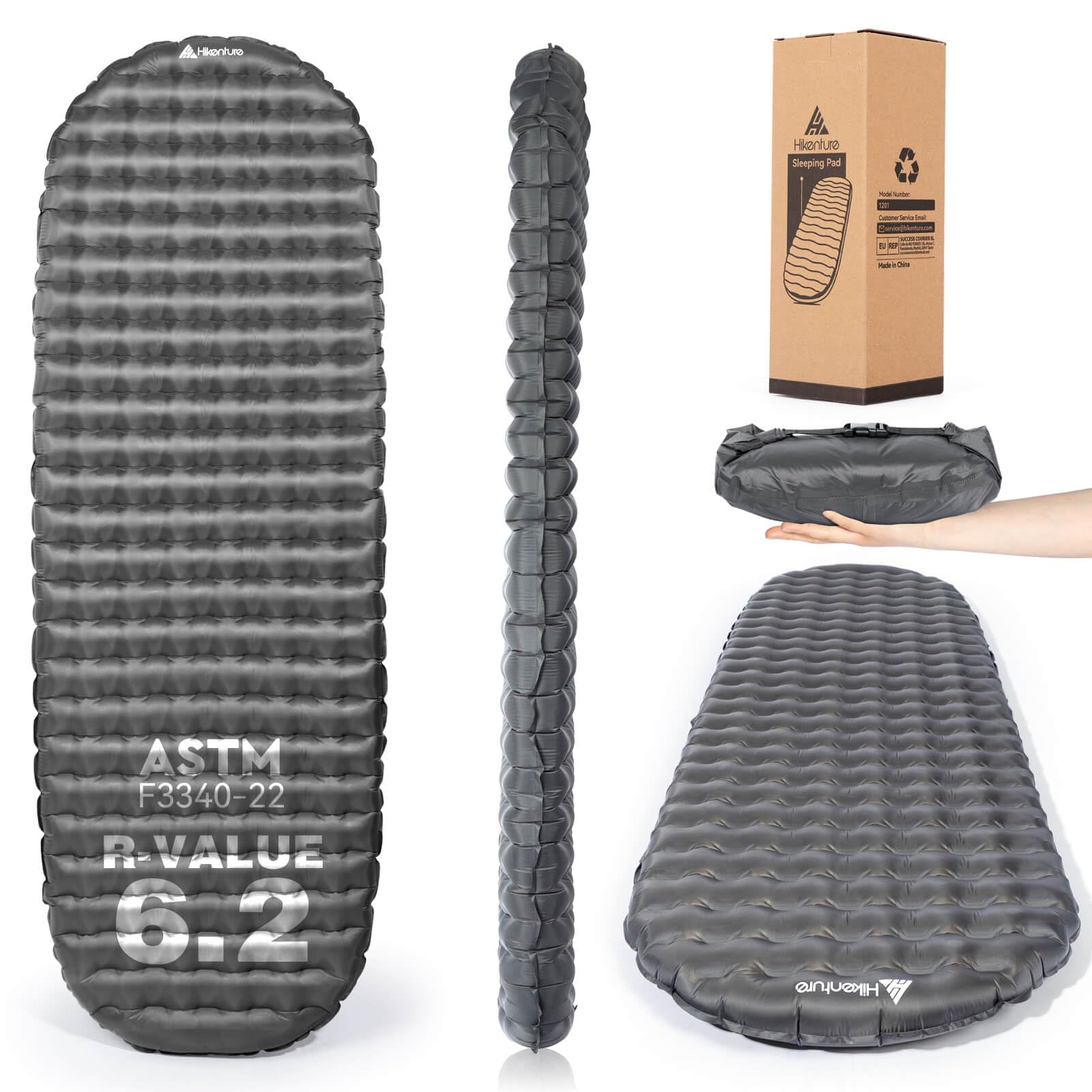
The Hikenture pad punches above its price class with an ASTM-tested 6.2 R-value and 3.2-inch thickness that provides reliable hip clearance for most side sleepers. The aluminum film reflective liner effectively traps body heat, making this pad genuinely usable in sub-freezing temperatures. At 1.53 pounds packed weight, it is light enough for backpacking while offering warmth that typically costs much more.
The airbag structure is designed with a unique vertical baffle arrangement that distributes pressure evenly and prevents the “bottoming out” sensation when you sit up or roll onto your side. The 40L pump sack doubles as a storage bag and inflates the pad in three squeezes. The TPU liner is environmentally friendly and holds air well — reviewers report no noticeable air loss over multiple nights. Two repair patches are included.
Reviews specifically note the pad works well for side sleepers in cold conditions, with one user taking it down to 5°F with a 0-degree bag. The crinkle noise is mentioned as minimal — less intrusive than many reflective pads. The only frustration is the nozzle location at the foot end, which is hard to reach and open one-handed, and the lack of a rapid-deflate valve makes breakdown slightly slower.
Why it’s great
- 6.2 R-value provides excellent warmth-to-weight ratio
- 3.2-inch thickness works well for most side sleepers
- Lightweight (1.53 lbs) and compact for backpacking
- Included pump sack inflates quickly and doubles as storage
Good to know
- Nozzle at foot end is awkward to access
- No rapid deflate valve slows breakdown
- Actual weight may be slightly over 1.53 lbs
FAQ
How thick does a sleeping pad need to be for side sleeping?
Can an ultralight pad work for side sleepers?
What R-value do I need for winter camping as a side sleeper?
Why do self-inflating pads feel better for side sleepers than air pads?
Final Thoughts: The Verdict
For most users, the backpacking sleeping pad for side sleepers winner is the Big Agnes Rapide SL because it strikes the ideal balance between backpackable weight (under 20 ounces) and genuine side-sleeper comfort with its offset I-beam baffles and thick outer chambers. If you want maximum warmth and never need to carry it more than 50 feet from your car, grab the Therm-a-Rest MondoKing 3D. And for the gram-counting thru-hiker who refuses to compromise, nothing beats the Therm-a-Rest NeoAir Xlite NXT.