
Our readers keep the lights on and the weekend projects moving. As an Amazon Associate, I earn from qualifying purchases.
Camping in the peak of summer often means two things: unforgettable memories under the stars and sweating through your sleeping bag by 7 AM. The core problem is that a standard box fan just moves hot air around, and most campgrounds lack the 15-amp hookup a bulky home portable air conditioner requires. A dedicated camping unit changes that—it delivers enough BTUs to drop the temperature inside a tent, truck cab, or RV without needing a dedicated high-power circuit.
I’m Rikta — the co-founder and writer behind FitlyFast. Over the past several months, I’ve cross-referenced real-user field reports with the technical datasheets of dozens of portable units to find the ones that actually survive a dusty weekend and deliver measurable cooling.
Whether you are outfitting a family tent for a long weekend or squeezing a compact unit into your van for a cross-country road trip, the ac for tent camping you choose will determine whether you wake up refreshed or drenched in sweat.
How To Choose The Best AC For Tent Camping
The camping AC market splits into two distinct technology camps — compressor-based units that use a refrigerant cycle and evaporative coolers that rely on water evaporation. Compressor units work in any humidity level but draw more power. Evaporative coolers (swamp coolers) are cheap and sip power, but become useless once the relative humidity climbs past 60%. Knowing which environment you camp in is the first decision.
BTU vs. Tent Volume: Don’t Over-Buy
A 12,000 BTU home portable unit is designed for a 500-square-foot room. A typical 6-person tent has a floor area of around 100-120 square feet. Overpowering that space leads to short-cycling, wasted generator fuel, and a unit that runs loud for no reason. For a standard family cabin tent, a 5,200 to 7,000 BTU compressor unit is usually the sweet spot. For a small backpacker tent or only spot-cooling while you sleep, a 4,000-6,000 BTU evaporative cooler can keep you comfortable — provided the air is dry.
Power Budget: Generator, Battery, or Shore Power
Most campgrounds with electric hookups provide at least a 15-amp (1800-watt) pedestal. That’s enough to run a 5,200 BTU camping AC and a few lights. Dry camping requires a generator rated for at least 1,000 running watts for a small compressor unit, or a 200Ah lithium battery bank with a pure sine wave inverter for a few hours of run time. Evaporative coolers often draw only 60-80 watts and can run off a mid-sized portable power station overnight. Calculate your total watt-hour budget before buying any unit.
Drainage and Condensation
In a tent, water is the enemy of comfort. Compressor-based ACs generate significant condensate — a 10,000 BTU unit can produce a gallon or more per night in humid air. Units with a self-evaporation system re-evaporate much of that water into the exhaust stream, drastically reducing the need to drain. If you choose a unit without self-evaporation, plan for a condensate pump or a gravity-drain hose routed outside the tent. Evaporative coolers add humidity to the air, so they require good tent ventilation to prevent clammy conditions.
Noise and Light Management
Camping ACs must be quiet enough not to disturb nearby tent neighbors at a campground. A noise level of 46-50 dB is acceptable — it’s roughly the sound of a quiet library or a gentle conversation. Units with a dedicated Sleep Mode drop the fan speed and dim the LED display, which is critical for shallow sleepers. Also, look for closable vents on the front panel to prevent the unit’s internal light from illuminating the entire tent.
Portability and Setup
Weight and shape matter. A 66-pound wheeled tower unit is fine for a car-camping setup where you park next to your tent, but it’s too heavy to carry any distance. True camping-specific units weigh between 30 and 35 pounds and include a carry handle or bag. The exhaust hose must be routed outside the tent through a zippered port or a window adapter. Some tents have a dedicated air conditioner port (a zippered flapped opening near the bottom); if yours doesn’t, you will need to use a foam block kit and cut a hole in the mesh or stake down the hose under the rainfly.
Quick Comparison
On smaller screens, swipe sideways to see the full table.
| Model | Category | Best For | Key Spec | Amazon |
|---|---|---|---|---|
| OUTOHOME 5200BTU | Compressor Camping AC | Tent & Van Spot Cooling | 5,200 BTU / 400W / 31 lb | Amazon |
| BAYKUL 6800/7500 BTU | Compressor Heat/Cool | All-Season Camping | 6,800 BTU cool / 7,500 BTU heat / 550W | Amazon |
| Feelfunn 14,000 BTU | High-Power Portable | Large RVs & Glamping | 14,000 BTU / 42 dB sleep mode | Amazon |
| ZAFRO 10,000 BTU | Smart Compressor AC | App-Controlled Tent Setup | 10,000 BTU / Self-Evaporating / 47 dB | Amazon |
| DOMANKI 12,000 BTU | Mid-Range Portable | Family Tent & Cabin | 12,000 BTU / 48 dB sleep mode / 500 sq.ft | Amazon |
| KoolSiln 12,000 BTU | Quiet Self-Evap | Light Sleepers in Tents | 12,000 BTU / 44 dB / 80% auto-evap | Amazon |
| Temprium 8000 BTU | Smart Portable AC | Generator-Powered Camping | 8,000 BTU / 50 dB / App+Voice enabled | Amazon |
| Laluztop 3-in-1 Evaporative | Evaporative Cooler | Dry-Climate Tent Cooling | 8L tank / 60W / 16 hrs low speed | Amazon |
| FODFINU Swamp Cooler | Budget Evaporative | Low-Humidity Spot Cooling | 3.5-gal tank / 45 dB / 2,500 CFM | Amazon |
In‑Depth Reviews
1. OUTOHOME 5200BTU Portable Tent Air Conditioner
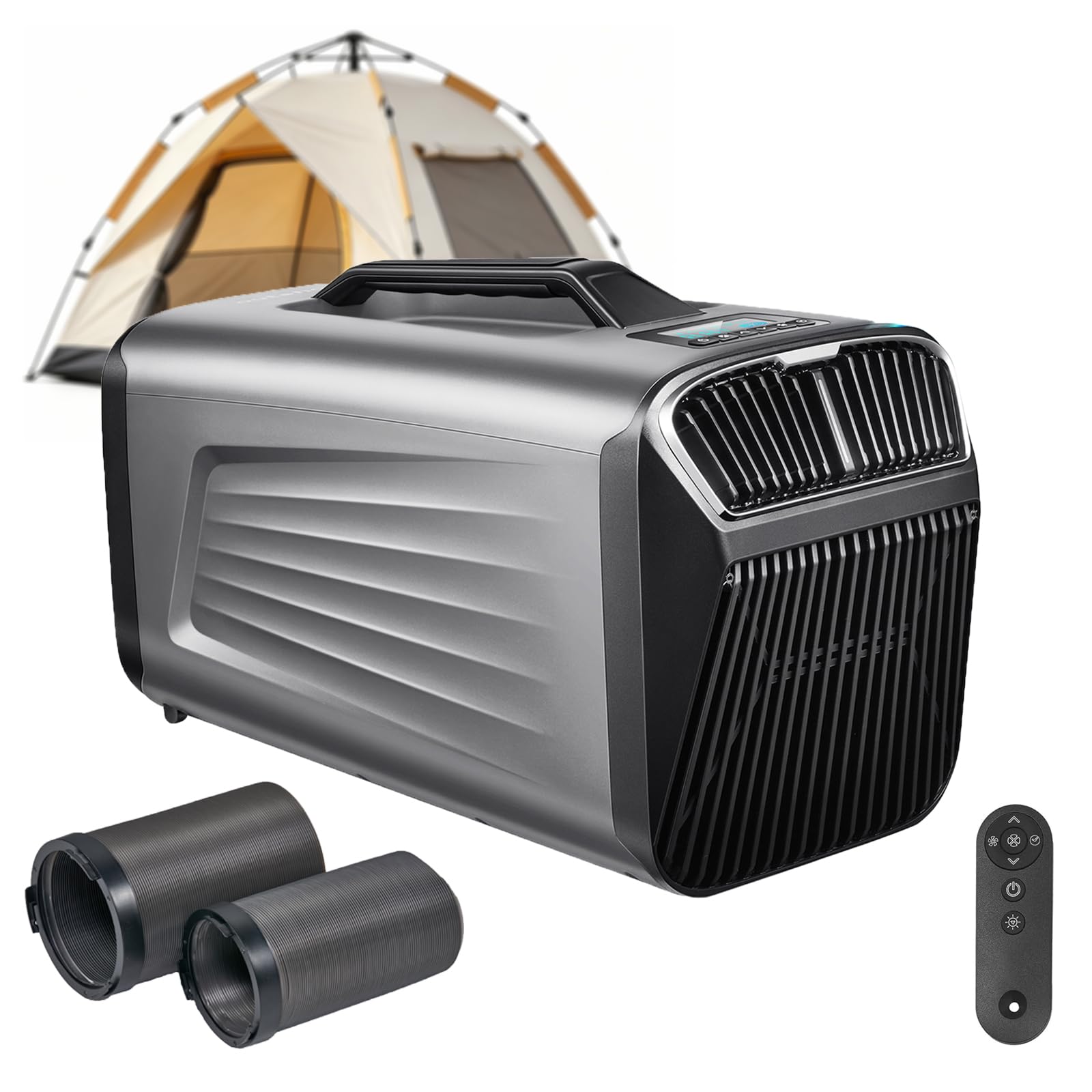
This unit strikes the hardest-to-find balance for campers: genuine compressor cooling in a package that one person can carry. Weighing 31 pounds with a recessed handle, the OUTOHOME delivers 5,200 BTU — enough to drop the temperature of a large cabin tent by 18°F in about five minutes. The GMCC compressor is the real deal, and the 400-watt peak draw means a mid-sized generator or a 200Ah lithium battery bank can run it for a full night without issue.
Sleep Mode keeps noise to 46-50 dB, and the self-evaporation design handles condensate up to 70% relative humidity without needing a drain bucket. The metallic paint finish resists scuffs from gear stacking, and the compact footprint (22 x 11 x 14 inches) fits beside a cot or in the corner of a truck cab. It is not an off-grid solution for tent backpackers — you need a power source — but for car campers and van travelers, it is the most purpose-built camping AC on the list.
Some users reported that the temperature display defaults to Celsius with no way to set Fahrenheit permanently, and a few units have had issues with warm air blowing after short cycles, though the majority of field tests show strong performance. The double-hose design is a bonus for heat rejection in confined spaces.
Why it’s great
- True 5,200 BTU compressor cooling at only 400W peak draw
- Self-evaporating up to 70% humidity — no messy condensate bucket in the tent
- 31-pound carry weight with integrated handle for true one-hand portability
Good to know
- Default temperature in Celsius with no permanent °F setting
- A few early failure reports — check Amazon return policy before purchase
2. BAYKUL 6800/7500 BTU Portable Camping Air Conditioner
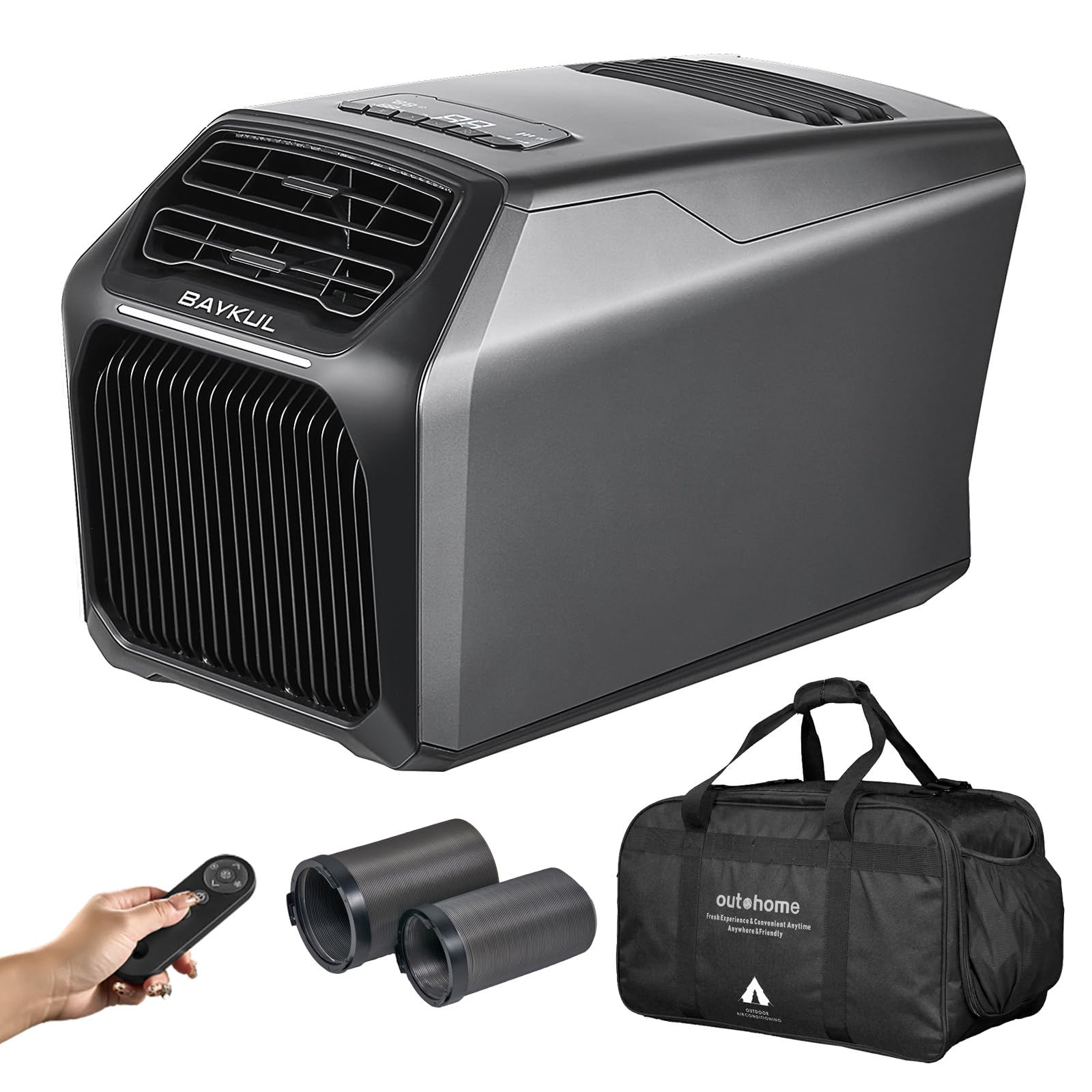
The BAYKUL is the only unit on this list that handles both extremes of the camping season. With 6,800 BTU of cooling and 7,500 BTU of heating, it bridges hot summer nights and chilly spring mornings. The 550-watt average draw keeps it friendly for portable power stations and small inverter generators, and the eco-friendly R-32 refrigerant provides a noticeable efficiency bump over older R-410A units of the same size.
The included carry bag is a thoughtful touch — the unit slides in and becomes a simple duffel, which beats wrestling with a bare metal casing. The remote uses RF rather than IR, meaning you can activate it from outside the tent or from the front seat of a van without line-of-sight. In real-world testing, it dropped a 100-square-foot tent from 90°F to 72°F in about eight minutes.
However, you pay a premium for the heat-pump functionality. Build quality concerns surfaced in a small number of reviews, with one buyer reporting the unit ran dangerously hot. The temperature display is in Celsius only, and the controls can be a bit unintuitive until you read the manual thoroughly.
Why it’s great
- Heat and cool in one compact unit — covers camping from May to October
- RF remote works through tent walls and vehicle body panels
- Includes a dedicated carry bag for easy transport
Good to know
- Build quality variability — some units reported overheating
- Celsius-only temperature display with no toggle
3. Feelfunn 14,000 BTU Portable Air Conditioner
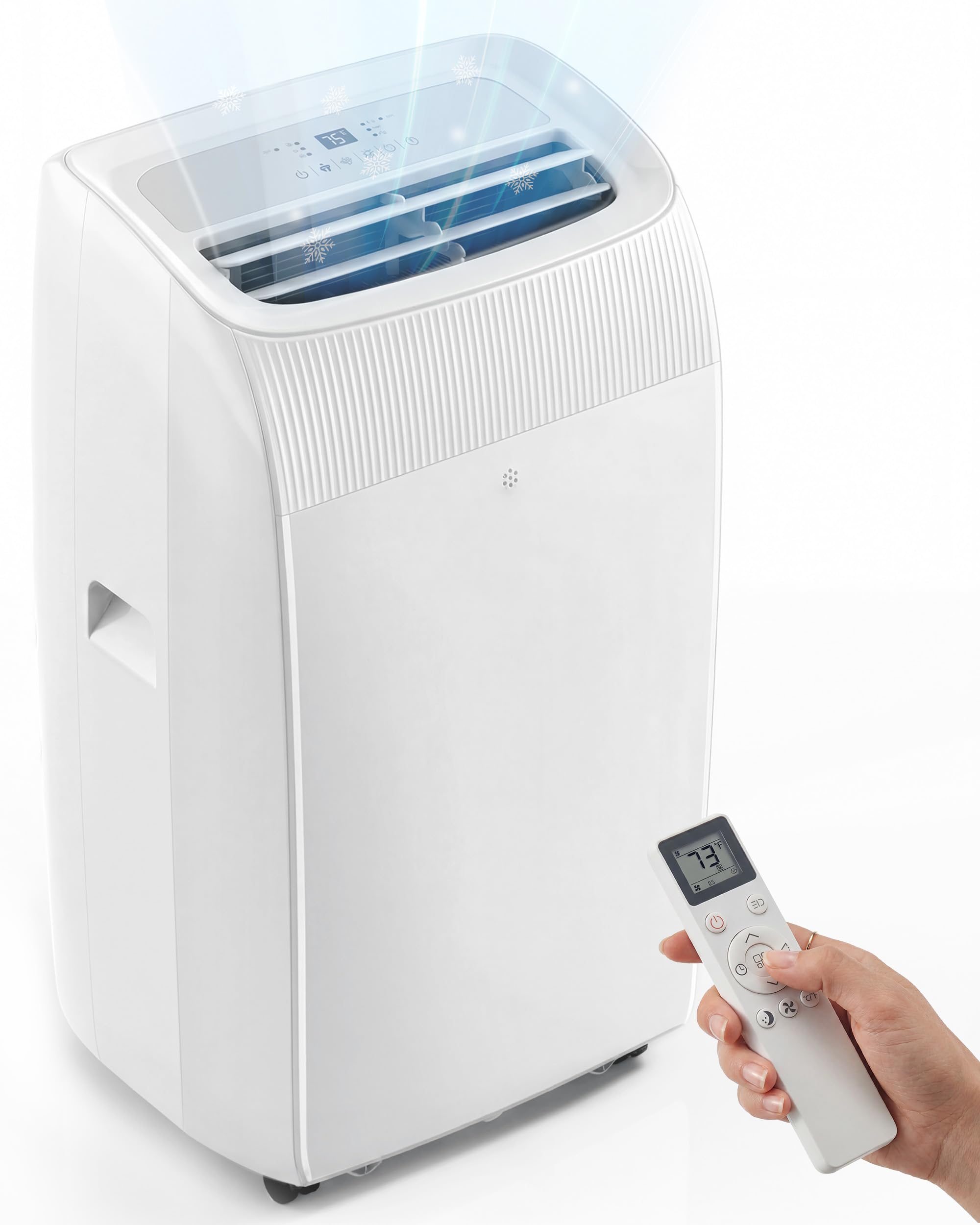
If your camping setup includes a massive canvas bell tent or a toy hauler, the Feelfunn brings residential-grade cooling to the outdoors. Its 14,000 BTU ASHRAE rating (10,000 BTU SACC) is serious overkill for a standard tent, but for a 700-square-foot RV or a large glamping tent with cots and furniture, it is exactly the right tool. The 42 dB Sleep Mode is remarkably quiet for a unit this powerful — quieter than many 5,000 BTU camping ACs.
The auto-evaporation system handles condensate internally in all but the most humid climates, which is a blessing when sleeping on a tent floor without a drain tube. Turbo Mode accelerates the cooldown when you first enter a hot shelter. The child lock is a practical safety feature if kids are sharing the space and might hit the controls.
The trade-off is weight: 62.8 pounds makes it a two-person lift. The window kit is designed for home sliding windows, so you will need to fabricate an adapter for most tent ports.
Why it’s great
- 42 dB Sleep Mode is quieter than many smaller units
- 14,000 BTU rating can cool RVs and large glamping tents up to 700 sq. ft.
- Auto-evaporation system minimizes tent-floor drain fuss
Good to know
- Extremely heavy at 63 pounds — needs two people to move
- High power draw requires a 15-amp hookup or large generator
4. ZAFRO 10,000 BTU Smart Portable Air Conditioner
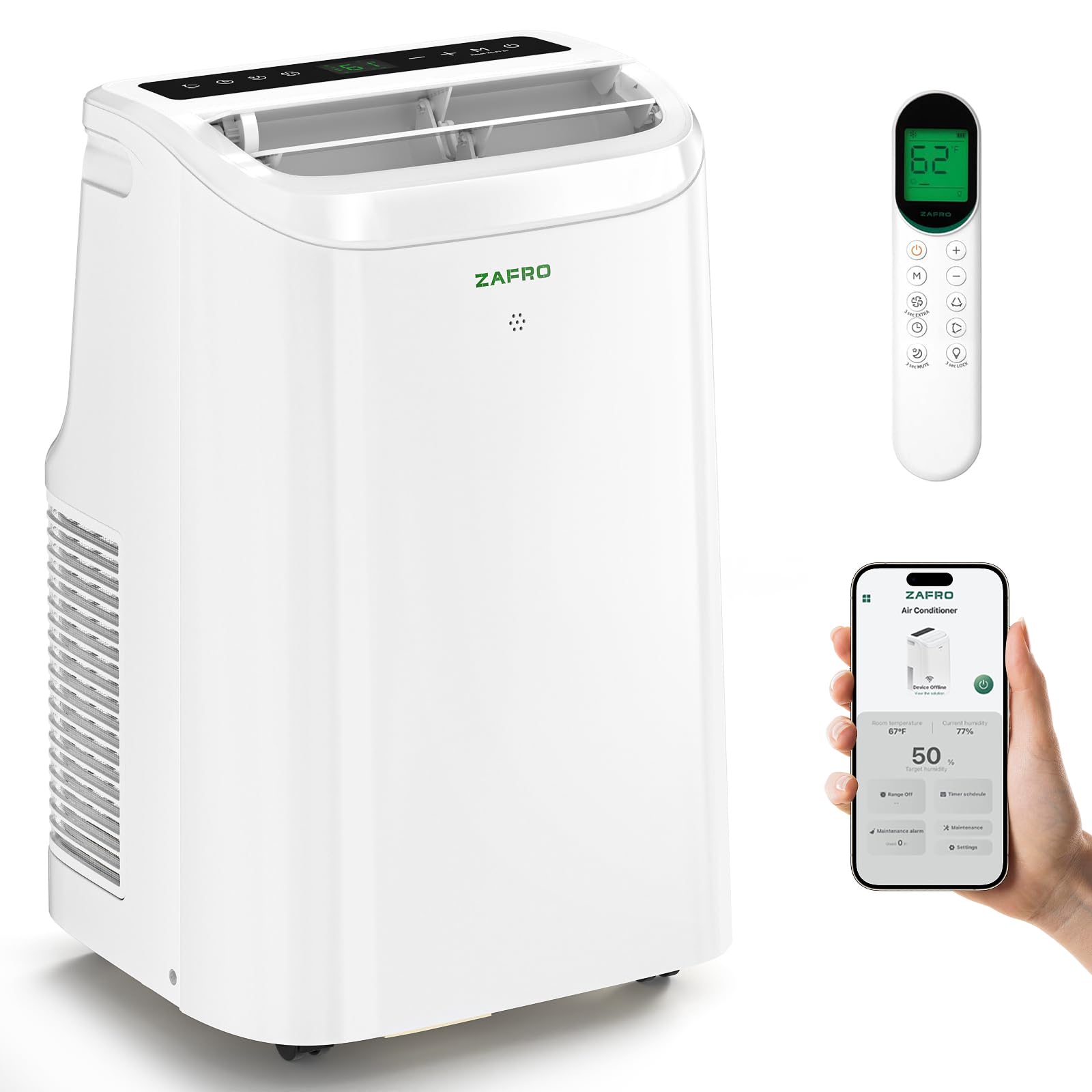
The ZAFRO brings smart-home convenience to the campsite. Through the app, you can set the timer from your sleeping bag or pre-cool the tent before you even arrive if your campsite has power. The 10,000 BTU cooling power is suitable for large tents and small RVs up to 350 square feet, and the self-evaporating system handles condensate automatically in most conditions.
At 52 pounds, it is not a backpacking unit, but the four smooth-rolling casters make it easy to move from car to tent floor without lifting. The ultra-long-range remote works up to 23 feet, so you can adjust settings from outside the tent. The dehumidifier mode pulls 41 pints per day, which is a genuine benefit on muggy mornings — you can feel the reduction in sticky tent air.
The window kit is the limiting factor for tent use: it is designed for home sliding windows and requires some creativity to seal properly into a tent flap. A few users also found the app setup finicky, and the compressor noise is more noticeable than the manufacturer’s 47 dB claim suggests. For pure camping simplicity, a mechanical remote-only unit may be less hassle.
Why it’s great
- App and voice control allow scheduled cooling from a sleeping bag
- Self-evaporating design eliminates bucket-dumping inside the tent
- Dehumidifier mode effectively pulls moisture on humid mornings
Good to know
- Window kit does not easily adapt to tent ports without modification
- Compressor noise is slightly higher than the spec sheet indicates
5. DOMANKI 12,000 BTU Portable Air Conditioner
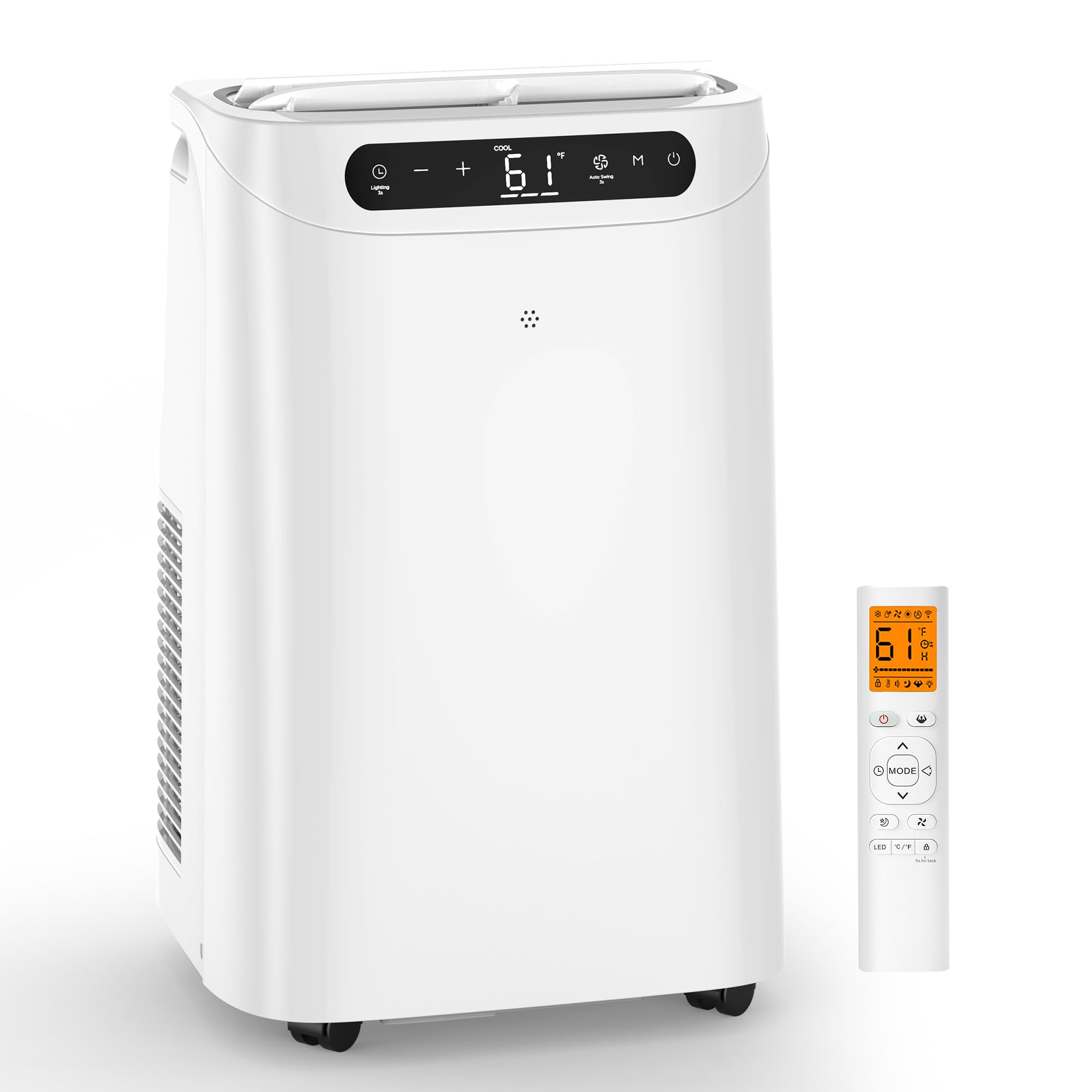
The DOMANKI delivers 12,000 BTU of cooling capacity, enough to handle a large family tent or a pop-up camper with ease. The Turbo Mode accelerates the initial cooldown, which is useful when you return to a hot tent after a day on the trail. The entire setup takes about ten minutes — attach the exhaust hose, extend the window bracket, and plug in.
Sleep Mode drops the noise to 48 dB and dims the LED display, creating a restful environment in a tent. The self-evaporating system handles most condensate in cooling mode; you only need the drain hose when running the dehumidifier separately. The 24-hour timer lets you schedule cooling for specific hours, saving generator fuel.
Customers consistently praised its ability to cool an entire shared living space even when the central AC was down. The main complaint revolves around the controls being slightly confusing at first — the mode labels on the remote don’t perfectly match the panel icons. The included window kit is also on the shorter side, so measure your tent or RV window opening before buying.
Why it’s great
- Turbo Mode delivers fast cooldown for a hot tent after a day out
- Self-evaporating system reduces the need for manual tent drainage
- 10-minute setup with tool-free window bracket
Good to know
- Remote control buttons can be confusing — read the manual before setup
- Window bracket may be too short for wider RV or tent windows
6. KoolSiln 12,000 BTU Portable Air Conditioner
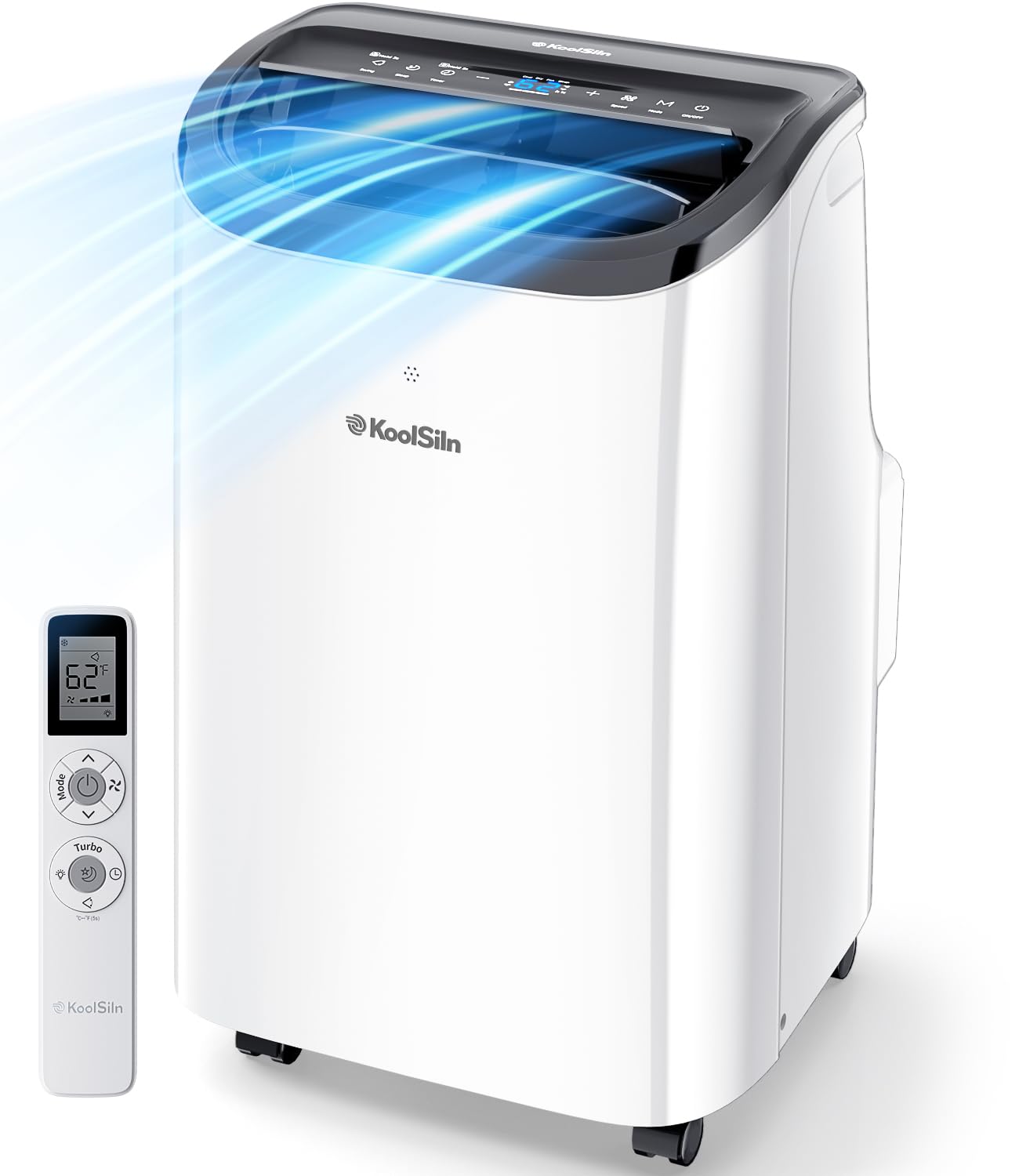
For campers who are light sleepers, noise level is the deciding factor. The KoolSiln operates at 44 dB in Sleep Mode — quieter than a library conversation — making it one of the most camping-friendly units in terms of auditory comfort. The 12,000 BTU rating cools spaces up to 550 square feet, which is ample for a large RV or a cluster of connected dome tents.
Its 80% auto-evaporation technology converts most of the condensate into the exhaust stream, so you are not left with a puddle on the tent floor in the morning. The widened 77° air outlet distributes cold air widely, which prevents hot spots in a long trailer. The three-in-one design (cool, fan, dehumidifier) gives you flexibility when the weather shifts.
The obvious limitation is weight: 66 pounds makes it the heaviest unit on the list. It rolls on casters, but you need a ramp or two people to get it in and out of a vehicle. The warranty is 1 year with lifetime technical support, and many users report consistent temperature maintenance without the on-off cycling that disrupts sleep.
Why it’s great
- 44 dB Sleep Mode is the quietest among high-BTU portable ACs
- 80% auto-evaporation drastically reduces tent-side water drainage
- Wide 77° outlet prevents cold spots in long RVs
Good to know
- Very heavy at 66 pounds — requires a dolly or two people to move
- Initial startup has a brief louder compressor hum
7. Temprium 8000 BTU Smart Portable Air Conditioner
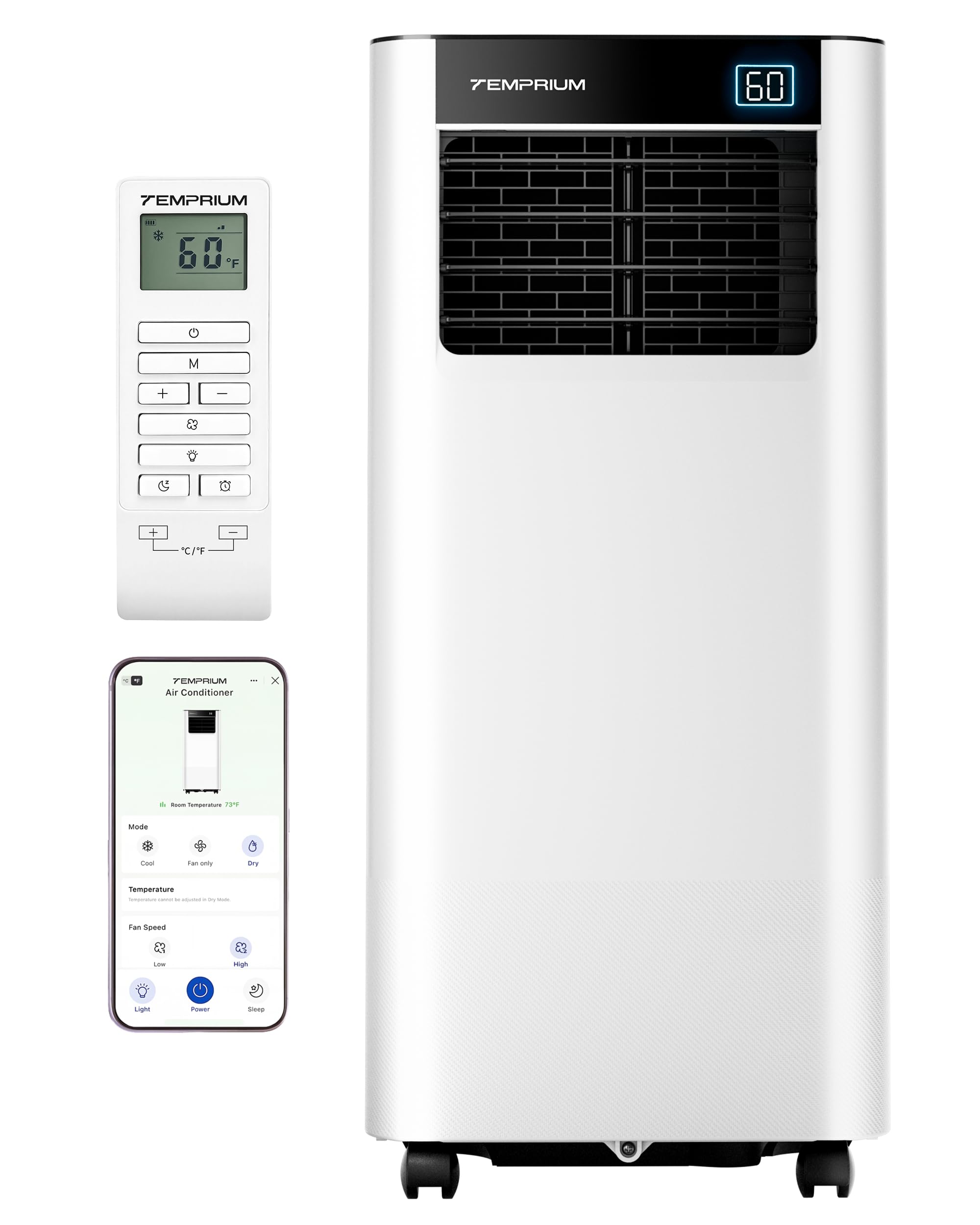
The Temprium sits at a smart intersection of moderate power and full smart-home integration. Its 8,000 BTU rating (ASHRAE) is enough for a medium tent or small RV up to 350 square feet, and the compatibility with Alexa and Google Assistant means you can shout commands from your camp chair. The 50 dB noise level in Sleep Mode is acceptable for most campers.
Setup takes about 30 minutes with the included window kit, which extends from 20 to 49 inches. The auto-evaporative system reduces the frequency of drainage during cooling mode. The CEER rating of 6.1 is decent for energy efficiency — you will use roughly 577 kWh across a year, but for weekend camping the real-world draw is manageable on a 2,000W generator.
Several users reported that the exhaust hose connection to the window panel is a bit loose and required tape to secure. The compressor noise is more noticeable than the fan; some found it loud even in Sleep Mode, while others appreciated it as white noise. The app works well, but requires a temporary WiFi network available at the campsite.
Why it’s great
- Alexa and Google Assistant voice control for hands-free adjustment in the tent
- Auto-evaporative system means less bucket-draining during cooling cycles
- CEER 6.1 rating balances cooling power with reasonable energy use
Good to know
- Exhaust hose connection to window panel may need duct tape reinforcement
- Compressor noise is more audible than the fan — not the quietest pick
8. Laluztop 3-in-1 Evaporative Cooler
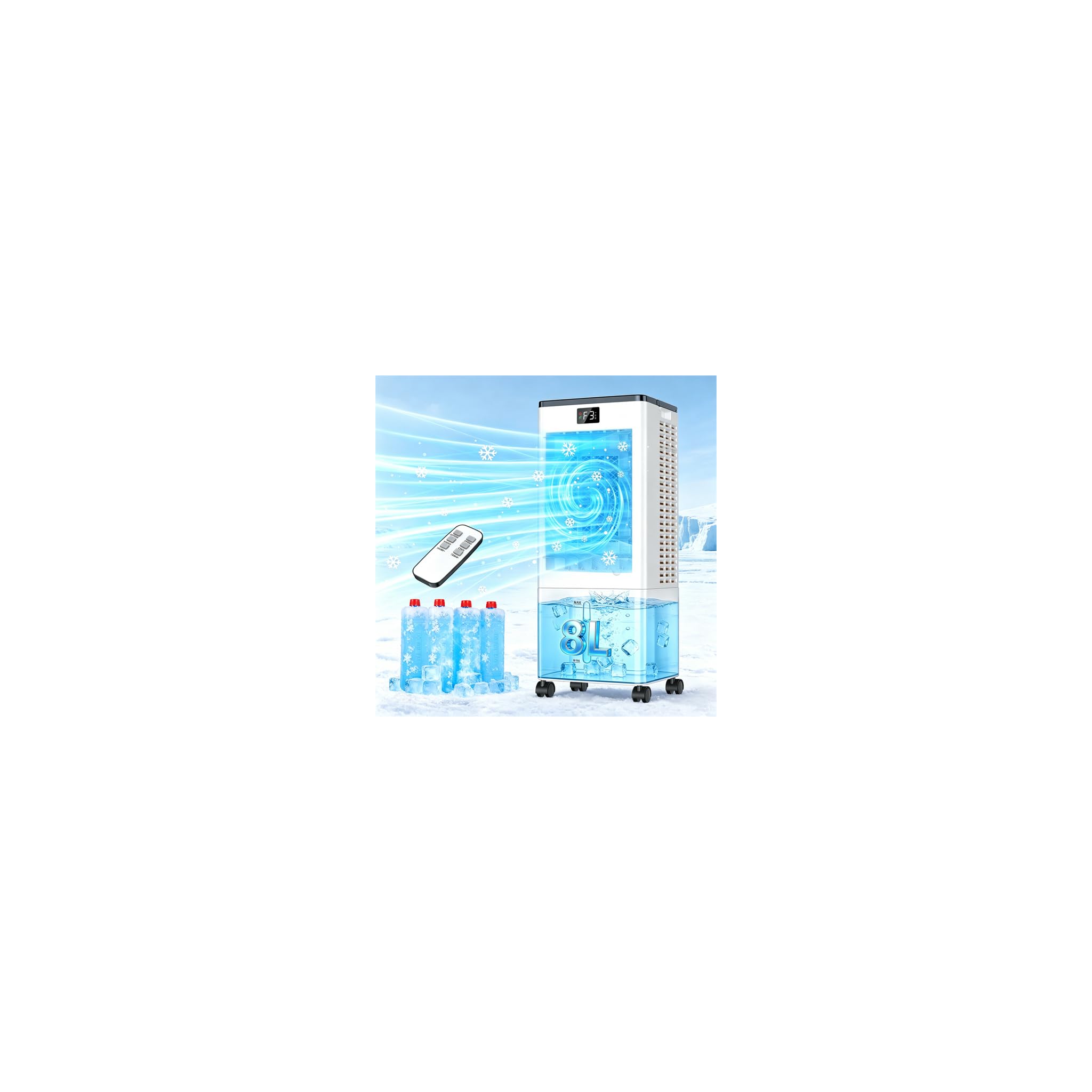
If you camp in the high desert, the Southwest, or any area where humidity rarely hits 50%, the Laluztop evaporative cooler is a legitimate alternative to a heavy compressor unit. It draws only 60 watts — a fraction of what a compressor AC needs — meaning you can run it all night on a mid-sized power station like a 500Wh Jackery. The 8-liter tank lasts 16 hours on the low setting, so you fill it once before bed and wake up cool.
The unit is a tower design with 360° swivel casters and a handle, so moving it around a tent is easy. It includes a remote with a 26-foot range, four adjustable modes (Normal, Natural, Sleep, Cooling), and a 12-hour timer. The top-fill tank is easier than front-fill alternatives — you do not have to crouch and tilt a heavy water bottle.
But this is not a magic bullet. In humidity above 60%, the cooling effect collapses, and you are left with a fan blowing damp air. A few users reported that the top cover can snap off if forced, so handle the latch with care. On dry nights, though, the price-to-performance ratio beats anything in the compressor category.
Why it’s great
- 60W power draw — runs all night on a small portable power station
- 16-hour runtime on low speed with the 8L tank
- Top-fill design is much easier to refill than front-fill alternatives
Good to know
- Ineffective in humidity above 60% — use only in dry climates
- Top cover latch can break if forced open the wrong way
9. FODFINU Swamp Cooler
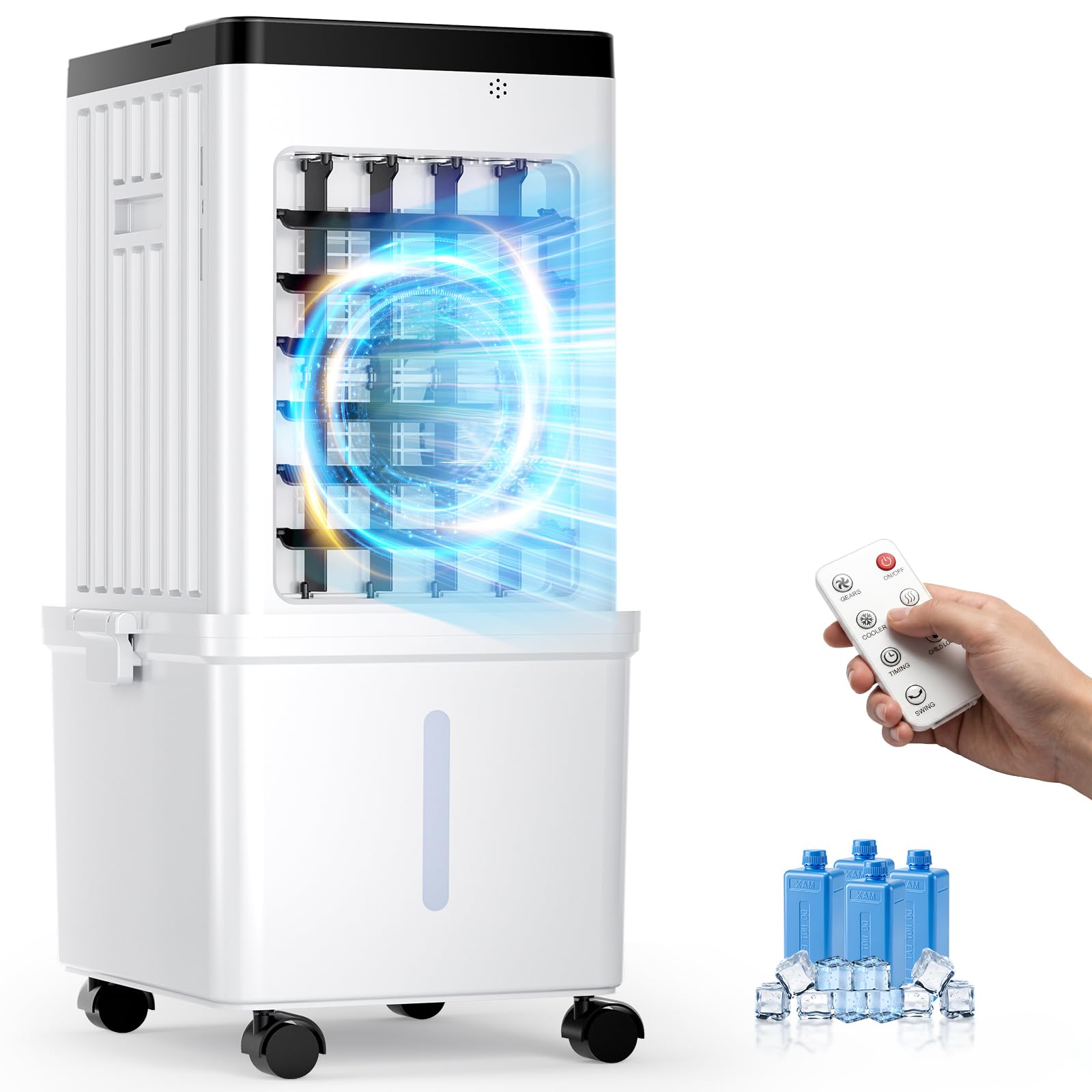
The FODFINU is the most affordable entry into tent cooling, but you must respect its limitations. It is an evaporative cooler, not a compressor AC. In dry conditions, the 2,500 CFM airflow combined with the four included ice packs can drop the temperature around you by a few degrees — enough to take the edge off a hot afternoon inside a tent. The 3.5-gallon tank provides up to 10 hours of runtime, and the 45 dB noise level is very quiet.
At only 8 pounds, you can carry it in one hand across a campsite. It has a 120° oscillation and a touch/remote control panel. Multiple positive reviews from owners using it in bedrooms without AC confirm that it works for spot cooling in dry environments. The included ice packs genuinely boost cooling if you freeze them overnight.
The deal-breakers are real: buyers in humid climates report that it performs no better than a standard fan. A few units arrived with broken latches on the plastic housing, indicating inconsistent quality control. This is a tool for the budget-conscious camper in a low-humidity region — it will not replace a true AC in a hot, muggy tent.
Why it’s great
- Very lightweight at 8 pounds — one-hand portable across a campsite
- Included ice packs provide a real cooling boost in dry conditions
- 45 dB operation is quiet enough for undisturbed tent sleep
Good to know
- Evaporative cooling is ineffective in high-humidity environments
- Plastic housing and latches have inconsistent quality control
FAQ
Can I run a camping AC off a portable power station like a Jackery or Bluetti?
Will an evaporative cooler work in a tent in Florida in July?
How do I route the exhaust hose out of a tent that doesn’t have an AC port?
Is a 12,000 BTU unit too much for a standard 6-person tent?
Final Thoughts: The Verdict
For most users, the ac for tent camping winner is the OUTOHOME 5200BTU because it delivers true compressor cooling at a weight and power draw that actually work for typical car-camping setups — 5,200 BTU, 31 pounds, and 400 watts is the sweet spot. If you want heating and cooling capability for shoulder-season trips, grab the BAYKUL 6800/7500 BTU. And for a no-hassle budget option that works in the dry West, nothing beats the Laluztop 3-in-1 Evaporative Cooler for its 60W draw and 16-hour runtime on a single tank fill.