
Our readers keep the lights on and the weekend projects moving. As an Amazon Associate, I earn from qualifying purchases.
Finding a blue ink that doesn’t feather on cheap paper, dries quickly enough for left-handed note-taking, or brings out the character of your favorite nib is a legitimate hunt. The wrong bottle can turn a smooth-writing pen into a hard-starting, clogging frustration. This guide cuts through the noise to put the right bottle in your hands.
I’m Rikta — the co-founder and writer behind FitlyFast. I’ve spent countless hours cross-referencing flow rates, drying times, water resistance, and nib behavior across dozens of blue ink formulations to build a clear, feature-first comparison for this guide.
Whether you need a vibrant daily driver for work or a nuanced shading ink for your journal, this guide to the best blue ink for fountain pens is built to get you the right bottle on the first try.
How To Choose The Best Blue Ink For Fountain Pens
The sheer number of blue ink shades — from dusty navy to electric cerulean — makes color a starting point, not a final filter. Beyond the hue, the real selection criteria are the ink’s physical behavior in your specific pen and on your typical paper. A dry-writing ink in a fine nib on absorbent paper can feel scratchy and pale, while a wet ink on coated paper can take a minute to dry and smear at the lightest touch. Focus on the ink’s personality, not just its name.
Flow & Lubrication: The Nib Experience
Ink viscosity directly affects how a nib feels on paper. A “wet” or highly lubricated ink increases the pen’s ink output, making the writing experience feel buttery smooth and increasing the apparent nib width. A “dry” ink reduces output, which can tame a very wet pen or a broad nib but may cause hard starts in a dry writer. Dry inks are often preferred on low-quality paper to minimize bleed-through. Knowing your pen’s natural flow is the first step in choosing an ink that either balances or enhances it.
Drying Time & Paper Compatibility
A fast-drying blue ink (under 10 seconds on Rhodia paper) is essential for left-handed writers or anyone who takes quick notes. However, fast drying often comes at the cost of lower water resistance or increased feathering on cheap bond paper. A slower-drying ink might produce richer sheen and shading but demands a blotter or a page left open before closing. Feathering — ink spreading along paper fibers — is the single biggest enemy of crisp writing on standard office paper. Satin-coated papers like Rhodia or Tomoe River are more forgiving, but a well-behaved ink should perform on both.
Sheen & Shading: The Visual Character
Shading is a gradient from dark to light within a single stroke, giving the writing depth and a vintage feel. Sheen is a metallic film that appears in the wettest parts of the stroke, often a red, gold, or green hue sitting on top of the blue base. High-sheen inks tend to be wetter and slower to dry. If you write primarily with fine nibs that produce a thin line, you will see more shading than sheen. Broad or stub nibs are required to reliably produce noticeable sheen. An ink that offers both shading and sheen, like the Sailor Yamadori, is a versatile choice for varied nib sizes.
Quick Comparison
On smaller screens, swipe sideways to see the full table.
| Model | Category | Best For | Key Spec | Amazon |
|---|---|---|---|---|
| Pilot Iroshizuku Kon-peki | Premium Dye | Luxurious daily writing | 50 ml / Deep Azure Blue | Amazon |
| Sailor Shikiori Soten | Mid-Range Dye | Sheen & shading combo | 20 ml / Burgundy Sheen | Amazon |
| Platinum Blue Black | Mid-Range Acidic Dye | Water-resistant office use | 60 ml / Iron Gall Style | Amazon |
| Lamy Blue Black | Mid-Range Dye | Lamy pen pairing | 50 ml / Blue-Black | Amazon |
| Cross Blue | Premium Dye | Smooth flow in converters | 62.5 ml / Classic Blue | Amazon |
| J. Herbin Bleu Pervenche | Entry-Level Natural Dye | Warm, soft blue shading | 30 ml / pH Neutral | Amazon |
| Noodler’s Blue Ghost | Specialty Pigment | Security & UV art | 85 ml / Invisible/Bulletproof | Amazon |
In‑Depth Reviews
1. Pilot Iroshizuku Fountain Pen Ink – Kon-peki
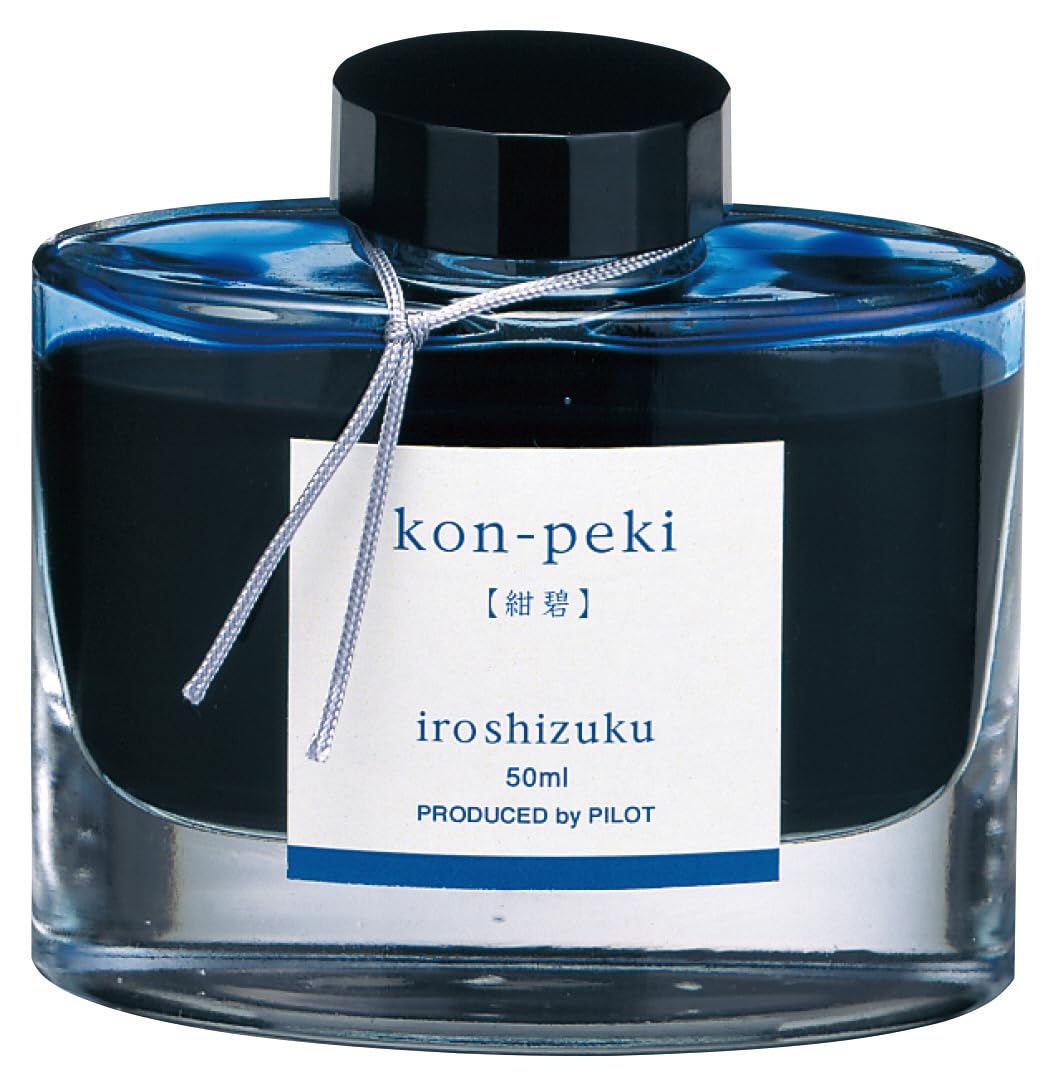
The Pilot Iroshizuku Kon-peki is widely regarded as the gold standard for a reason. This is the benchmark for a “well-behaved” ink: it flows smoothly in every nib size from Japanese fine to Western broad, never feels dry or scratchy, and offers a beautiful medium-depth blue with subtle reddish-pink sheen in wetter strokes. The 50 ml bottle is a substantial amount of ink for the price point, and the bottle itself features a clever indentation at the bottom to help gather the last few drops for your converter.
On Rhodia or Tomoe River paper, Kon-peki lays down a rich, saturated line with virtually no feathering and only the lightest ghosting with broad nibs. The drying time hovers around 25-27 seconds on coated paper, which is slower than average, so left-handed writers or fast note-takers should be cautious. On standard copy paper, the ink performs admirably with fine nibs, but bleed-through becomes more apparent with wetter writers.
The only real reliability concern is its total lack of water resistance. A single drop of water will wash away your writing completely, leaving only a faint blue ghost. This makes it unsuitable for checks, envelopes, or any document that might encounter moisture. Despite that, its consistent performance, beautiful color, and iconic bottle make it the top choice for the vast majority of fountain pen users looking for premium blue ink daily driver.
Why it’s great
- Exceptional, consistent flow across all nib sizes
- Beautiful deep azure blue with subtle sheen
- No feathering on high-quality coated papers
Good to know
- Not waterproof; writing disappears completely when wet
- Slow drying time on coated papers (25-27 seconds)
- Bottle design can cause ink pooling on the rim
2. Sailor Shikiori Soten

The Sailor Shikiori Soten is a blue-teal ink that punches well above its price class when it comes to visual character. What looks like a standard blue-green teal at first glance reveals a powerful burgundy-red sheen in any stroke laid down with moderate to heavy saturation. This dual-tone behavior gives your writing a lively, almost 3D depth that is usually associated with inks costing twice as much. The 20 ml bottle is small, but the performance per milliliter is exceptional.
In terms of handling, this ink is well-lubricated and dries impressively fast — 5 to 10 seconds on Rhodia paper, which is excellent for a high-sheen ink. Users report no smudging under normal writing conditions. It has a slight medicinal aroma, comparable to a peaty Scotch, which some enthusiasts find distinctive but others may find off-putting. On cheap office paper, it holds up reasonably well with fine nibs, though broader nibs will show some feathering.
The 20 ml volume means you are paying a premium per milliliter compared to value-oriented bottles like the Lamy or Platinum. The small bottle also has a narrow mouth, which can make filling larger piston-filling pens directly from the bottle tricky. You’ll likely need a syringe or an ink miser for the last third of the bottle. Despite these quirks, the Soten is simply one of the most rewarding blue inks to write with if you enjoy watching your ink change color on the page.
Why it’s great
- Powerful burgundy sheen appears with moderate saturation
- Very fast dry time for a high-sheen ink (5-10 seconds)
- Beautiful blue-teal base shade with strong depth
Good to know
- Small 20 ml bottle offers lower value per milliliter
- Narrow bottle opening makes filling large pens difficult
- Distinct medicinal scent may not appeal to everyone
3. Platinum Blue Black

The Platinum Blue Black is a classic iron-gall style blue-black ink that offers a combination rarely found in standard dye inks: genuine water resistance and professional restraint. The color emerges from the pen as a medium blue and then darkens on the page over the next few seconds, settling into a sophisticated blue-black with a subtle grayish undertone. The 60 ml bottle is the largest volume in this mid-range tier, making it a strong value for daily, high-volume writing.
This ink is distinctly on the “drier” side of the spectrum. This makes it an excellent choice for wet-writing pens or for left-handed writers who need quick drying to avoid smearing. Reviewers note it behaves flawlessly on cheap office paper with a fine nib, showing little to no feathering, bleed-through, or ghosting. However, some pens that prefer wet inks may experience hard starts or skipping with this ink, so it is not the best match for every pen.
The water resistance is genuine — not fully waterproof like a pigment ink, but the writing remains legible even after a significant water exposure. This makes it ideal for addresses, signatures, or any routine document where moisture is a risk. The acidic nature of the ink is gentle on modern fountain pens, but it does require a slightly more thorough cleaning regime than neutral pH inks. If left unused in a pen for weeks, the ink can become concentrated and cause hard starts, so regular use is recommended.
Why it’s great
- Good water resistance for document security and envelopes
- Excellent behavior on cheap, absorbent office paper
- Large 60 ml bottle offers great value for volume
Good to know
- Dry flow can cause hard starts in pens that prefer wet inks
- Color is more blue-gray than a true dark blue-black
- Requires regular pen cleaning to prevent clogging
4. Lamy Blue Black
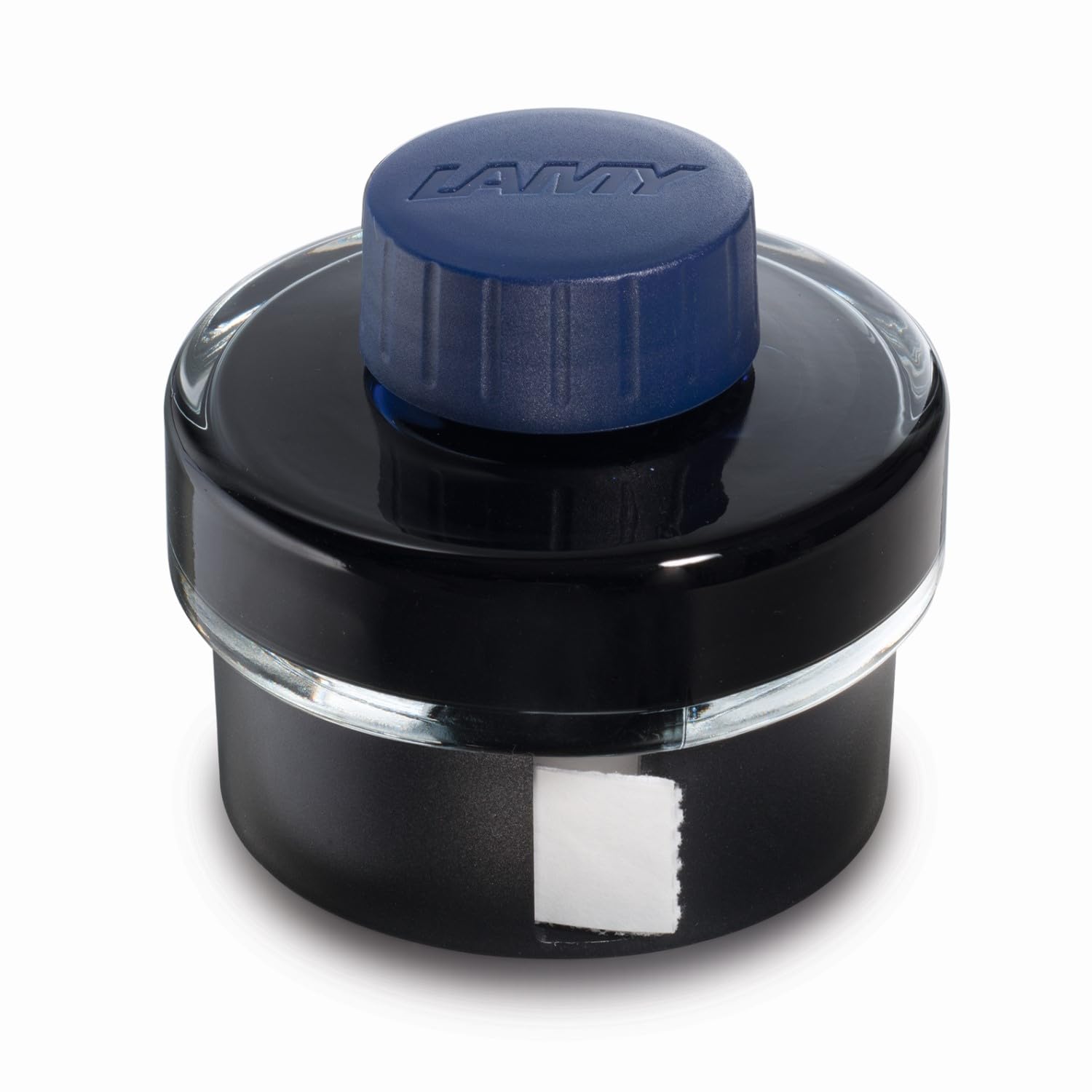
The Lamy Blue Black is the official ink designed for Lamy pens, and the partnership is real. Lamy pens, particularly the Safari and AL-Star, are known for being slightly dry writers, and this ink is formulated with a higher level of lubricity to compensate. Users report that pens which previously dried out or hard-started during a writing session flow consistently and smoothly with this ink. It is a true blue-black — not a washed-out gray-blue — with enough depth to look serious for business correspondence.
The ink flows heavily, which means it writes slightly broader than you might expect. With a fine nib, this can be a blessing if you prefer a bolder line, but it also makes the ink runnier and more prone to bleeding on lower-quality paper. Reviewers specifically note that it bleeds through standard notebook paper, so it is best paired with fountain-pen-friendly paper. The drying time is moderate; it is not as fast as the Platinum ink, but it is not slow enough to smear under normal writing conditions.
The 50 ml bottle is a great size and the price per milliliter is very competitive. The bottle features a distinctive Lamy shape with a wide mouth that makes filling any pen easy, including large piston-fillers. The only consistent knock is that the ink seems to require more frequent pen cleaning than some alternatives, as dried ink can build up more quickly in the feed or converter. If you use Lamy pens exclusively, this ink is a no-brainer; for other pens, it is still a solid, affordable blue-black.
Why it’s great
- Excellent lubricity prevents hard starts in Lamy pens
- True blue-black color with good depth and power
- Large 50 ml bottle is easy to fill from
Good to know
- Can bleed through standard notebook paper
- Runs wet, making fine nibs write broader than expected
- Requires more frequent pen cleaning than drier inks
5. Cross Blue
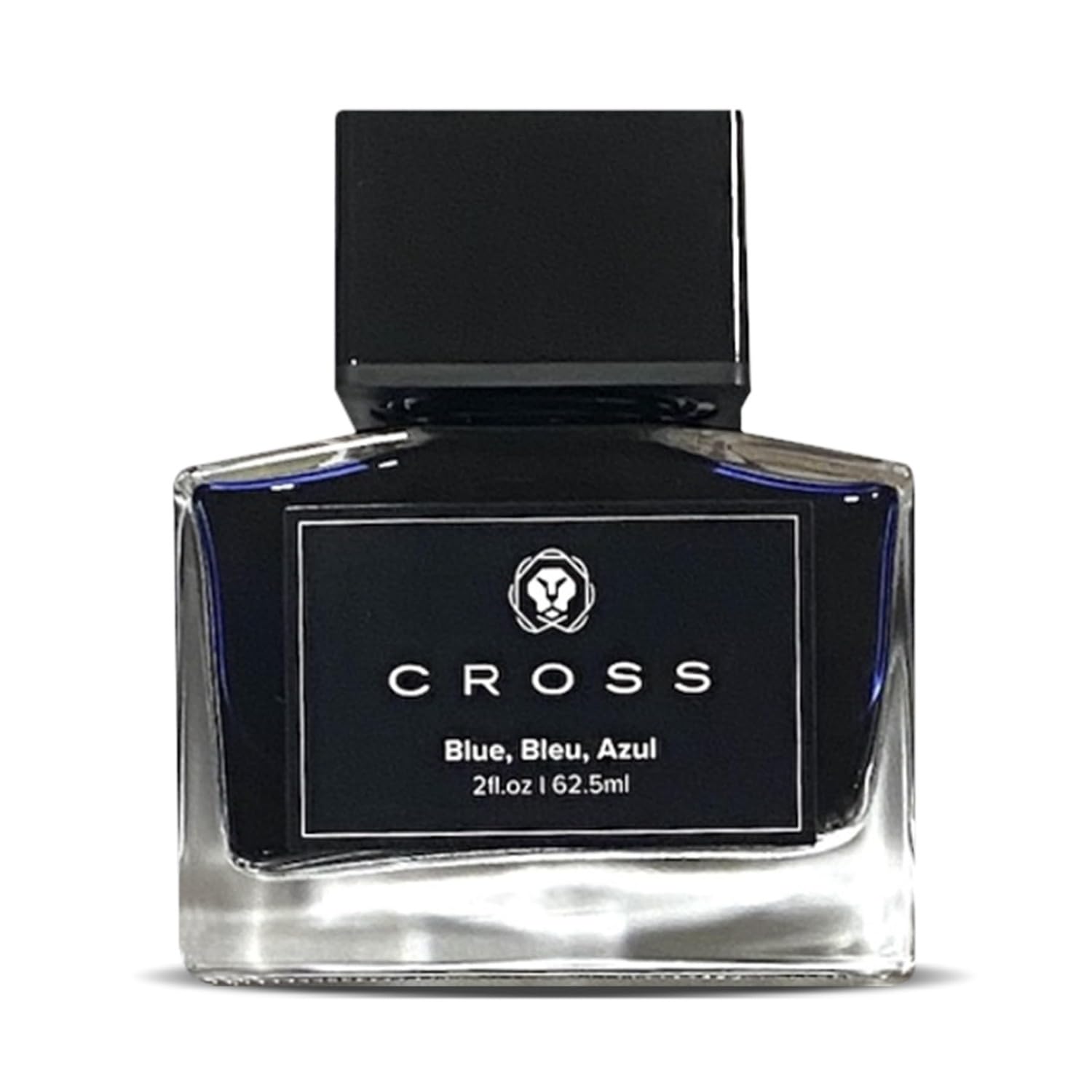
The Cross Blue ink is a traditional, no-nonsense blue that leans towards a classic, somewhat conservative tone — think dark navy blue rather than bright cerulean. It is designed to work seamlessly with Cross pens and converters, but it has proven to be a smooth, reliable performer in almost any fountain pen. The 62.5 ml bottle is the largest single volume in this entire lineup, offering excellent raw value for anyone who writes a lot and wants a consistent, everyday blue.
Users consistently praise the smoothness of this ink. It flows wet and feels buttery, making it a pleasure to use even with fine nibs. The color is deep and opaque when applied wetly, but can look somewhat thin with very fine nibs and light hand pressure. The primary drawbacks are paper-dependent: on standard copier paper or even many notebooks, the ink has a tendency to feather, producing fuzzy edges. It also takes a noticeable amount of time to dry on coated papers, creating a smearing risk for fast writers.
The glass bottle is attractive and functional, with a wide mouth that accommodates even the largest pen sections. However, the ink is quite thick and can be difficult to clean up if spilled, so caution during filling is warranted. This is an ink that rewards high-quality paper but may frustrate users who primarily write on cheap, loose-leaf sheets. It is a solid choice for a dedicated desk pen that stays on good paper.
Why it’s great
- Largest bottle volume at 62.5 ml for long-lasting use
- Very smooth, wet flow that feels great in any pen
- Traditional dark navy blue works well for signatures
Good to know
- Feathers noticeably on standard and printer paper
- Slow drying time on coated papers risks smearing
- Thick consistency can be messy if spilled
6. J. Herbin Bleu Pervenche

The J. Herbin Bleu Pervenche is a unique entry in this list because it isn’t really a standard blue — it is a warm, happy, soft periwinkle with a distinct green undertone. It evokes the color of a clear swimming pool or the sky on a spring morning. This ink is built on all-natural dyes, is pH neutral and non-toxic, making it one of the safest inks for vintage pens or pens with delicate sacs. It flows smoothly and is fast-drying, which is a strong combination for a budget-conscious ink.
On the page, Bleu Pervenche shades beautifully, producing a lovely gradient from a light, almost faded tone at the top of the stroke to a more saturated pool-blue where the ink pools. It is a wet ink with excellent lubrication, and reviewers note that it performs with zero feathering on cheap paper and minimal bleed under normal pressure. The 30 ml bottle is a small, charming glass affair, and the ink is also available in 10 ml and 100 ml bottles.
The periwinkle hue is certainly not for everyone. If you need a serious, dark, or professional blue for business correspondence, this is the wrong bottle. The color is distinctly “casual” and better suited for journaling, personal notes, or sketching. Reviewers also note it is completely water-soluble, offering no water resistance at all. For the price, this is one of the most characterful and well-behaved inks available, but its color niche is narrow.
Why it’s great
- Warm, cheerful periwinkle with beautiful shading
- pH neutral, non-toxic, safe for vintage pens
- Excellent flow with zero feathering on cheap paper
Good to know
- Very casual, soft blue not suited for professional use
- No water resistance; writing disappears when wet
- Fine nibs can appear pinkish due to low saturation
7. Noodler’s Blue Ghost

The Noodler’s Blue Ghost is not a blue ink you use for everyday writing. It is completely invisible under normal light — a clear liquid that only reveals itself under UV (blacklight) with a bright, vibrant blue glow. This is a true “bulletproof” ink meaning it is chemically permanent on paper. Once dry, it will not wash off, even with water, and survives most attempts at removal. The 85 ml bottle is a generous size for a specialty ink.
Performance-wise, Blue Ghost writes smoothly in any fountain pen, from flex nibs to standard fine points. It is slightly thicker than water, which gives it decent lubrication. It dries totally invisible on bright white paper, but can appear slightly chalky on darker or non-white papers. The ink survives being printed over, allowing you to write invisible messages on pre-printed forms. It works well with both fountain and dip pens, but is not intended for paintbrushes.
This is an ink with a very specific use case: creating hidden messages in letters, decorating notebooks with invisible doodles, adding security elements to documents, or for immersive role-playing games. It is not a daily writer. Some users report that the ink needs careful pen hygiene — it does not evaporate inside a capped pen the same way dye inks do, but it can leave a residue if left for weeks. For its intended purpose, no other ink performs this exact trick as reliably as Blue Ghost.
Why it’s great
- Completely invisible under normal light; bright blue UV glow
- Bulletproof permanence — resists water and chemical attack
- Large 85 ml bottle; smooth flow in any fountain pen
Good to know
- Not an everyday writing ink; limited to security/art uses
- Can leave a chalky residue on non-white paper
- Requires consistent pen cleaning to avoid residue buildup
FAQ
Why does my blue ink look different in my pen than on the page?
How often should I clean my pen when using blue dye ink?
What is the “wetness” of an ink and why does it matter?
Are all blue inks safe for vintage fountain pens?
Final Thoughts: The Verdict
For most users, the blue ink for fountain pens winner is the Pilot Iroshizuku Kon-peki because it offers a flawless combination of beautiful color, superb flow across all nib sizes, and iconic packaging that makes the desk feel special. If you want a fast-drying ink with stunning burgundy sheen and don’t mind a smaller bottle, grab the Sailor Shikiori Soten. And for water-resistant office use on cheap paper, nothing beats the Platinum Blue Black.