
Our readers keep the lights on and the weekend projects moving. As an Amazon Associate, I earn from qualifying purchases.
Forget the passive scroll—brain puzzles demand you show up. From spatial reasoning gauntlets that twist your perception to logic grids that force methodical deduction, the right puzzle doesn’t just pass time; it rewires how you think. Whether you are dodging screen fatigue or hunting for a tangible challenge that travels well, the specific build quality, difficulty range, and portability of each option determine whether it becomes a cherished obsession or a dusty shelf ornament.
I’m Rikta — the co-founder and writer behind FitlyFast. I’ve spent countless hours dissecting puzzle mechanics, analyzing material construction, and cross-referencing user strategies to separate the truly engaging challenges from the one-and-done novelties.
This guide breaks down the top contenders across tactile, spatial, and deductive styles, helping you identify the perfect match for your mental workout. Finding the best brain puzzles means weighing factors like piece durability, difficulty progression, and re-playability against your specific patience threshold and preferred puzzle type.
How To Choose The Best Brain Puzzles
Selecting a brain puzzle is a deeply personal decision that hinges on your preferred thinking style and the setting where you plan to use it. A logic grid book offers a completely different mental workout than a disentanglement metal puzzle. Understanding the core categories and specs will save you from buying a puzzle that collects dust after a single use.
Puzzle Type: Deductive vs. Spatial vs. Tactile
Logic grid puzzles—like those from Puzzle Baron or the Ultimate Logic Grid series—require deductive reasoning, note-taking, and pattern elimination. They are perfect for quiet, seated sessions with a pencil. Spatial puzzles like Kanoodle demand you visualize how irregular pieces fit together, building critical 3D thinking skills. Tactile challenges, such as metal disentanglement puzzles or the Rubik’s Cube Pulse Cube, involve physical manipulation and hand-eye coordination, offering a fidget-friendly experience.
Difficulty Progression and Re-Playability
A puzzle that is too easy offers little satisfaction, while one that is too frustrating gets abandoned. Look for puzzles with a clear difficulty curve. Books should have puzzles rated from beginner to expert, with some taking minutes and others hours. Re-playability is key for physical puzzles: a disentanglement puzzle you solve once and never touch again is poor value. The best puzzles, like Kanoodle with its 200 challenges or the Rubik’s Pulse Cube with its timed mode, offer endless configurations or pressure-based variations that keep you returning.
Build Quality and Portability
For books, paper thickness, binding, and font size matter. Spiral-bound or lay-flat designs are superior for usability during play. For metal puzzles, the material should be stainless steel without sharp edges—cheap alloys can bend or break under pressure. Size and weight determine portability; a Kanoodle board that doubles as a storage case is excellent for travel, while a heavy cast-metal Hanayama puzzle is a desk companion. The included pouch or case can make or break the experience for on-the-go solvers.
Quick Comparison
On smaller screens, swipe sideways to see the full table.
| Model | Category | Best For | Key Spec | Amazon |
|---|---|---|---|---|
| Kanoodle | Spatial | 200 puzzles in 2D & 3D | 9 pieces, 200 challenges | Amazon |
| Rubik’s Pulse Cube | Timed | Speed-solving with light timer | Light-up, 60s countdown | Amazon |
| Hanayama UFO | Disentangle | High-difficulty metal challenge | Level 4, 6 cast-metal pieces | Amazon |
| Ultimate Logic Grid | Deductive | 100 puzzles, 4 difficulty levels | 180 pages, 4 flame levels | Amazon |
| Puzzle Baron Vol 3 | Deductive | 200+ puzzles with timed stats | 224 pages, 200+ logic grids | Amazon |
| The Master Theorem | Variety | Eclectic puzzles with story | 212 pages, coded hints | Amazon |
| Wettarn 9-Piece Set | Tactile | Variety of metal challenges | 9 levels, stainless steel | Amazon |
In‑Depth Reviews
1. Educational Insights Kanoodle

The Kanoodle sets the standard for spatial reasoning puzzles with its 200 distinct challenges that range from beginner to expert in both 2D and 3D configurations. The nine puzzle pieces are chunky enough for easy manipulation, and the oversized pyramid board doubles as a storage case—a design choice that makes it genuinely portable. The progression curve is well-calibrated; early puzzles teach you the spatial logic of the pieces before the later configurations demand serious visualization skills.
What separates this from single-solve puzzles is its re-playability. The 200 challenges in the included booklet are just the start—many users find themselves inventing their own patterns. The physical feedback of sliding pieces into a perfect fit is satisfying, and the requirement to balance pieces in the 3D pyramid mode adds an extra stability constraint that forces careful planning. Teachers and parents consistently report that it holds attention longer than most digital alternatives.
The single-player limitation is actually a strength for focus, though it means the social fun comes from passing the board around rather than collaborative solving. The board’s plastic construction is durable but may show wear after heavy classroom use. For anyone wanting a single puzzle that offers months of dedicated mental exercise, this is the most complete package available in the spatial reasoning category.
Why it’s great
- Massive 200-puzzle challenge set with clear difficulty tiers
- Board doubles as storage, making it ideal for travel
- Dual 2D and 3D modes add variety and difficulty
- Large pieces are easy to handle for all ages
Good to know
- Plastic board may show scuffs over time
- Single-player only; no collaborative solving mode
2. Rubik’s Pulse Cube
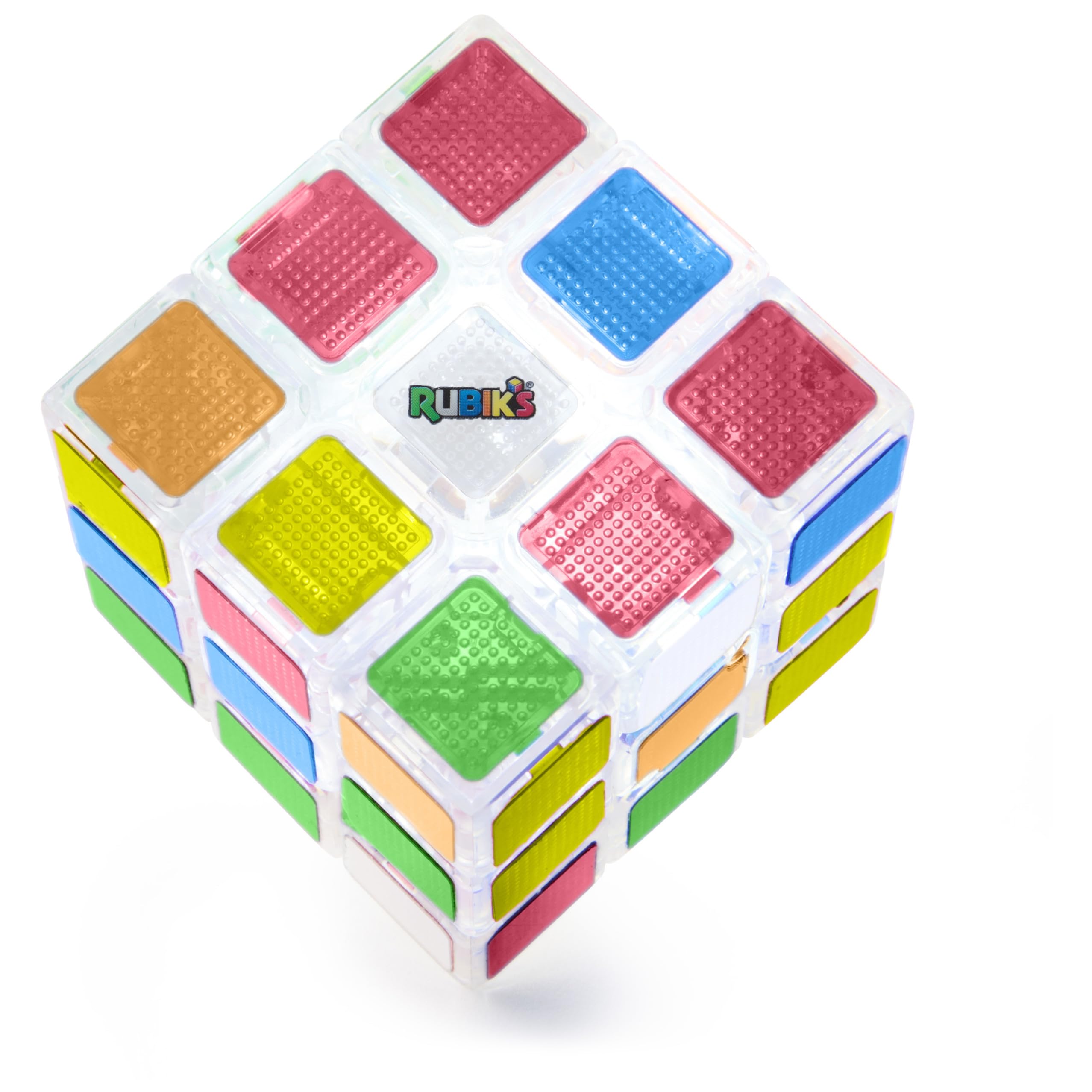
The Pulse Cube reimagines the classic 3×3 by adding a timed light-up mechanism that fundamentally changes the solving pressure. Start with a reflective black surface that hides the colors; scramble it, press the logo, and watch the colors pulse for exactly one minute before the board goes dark. The tactile sensation of speed-solving under a visual countdown creates an urgency that standard cubes lack, pushing you to develop muscle memory over analytical thinking.
The cube itself uses the modern stickerless speed-cube construction, which means smooth rotation and vibrant colors that won’t peel. Users report that one-finger moves are possible once the cube is broken in, making it suitable for advanced techniques like finger tricks and algorithms. The light-up feature uses three replaceable batteries and can be reset mid-solve if you need extra time, which makes it adjustable for different skill levels still chasing their personal best.
The gimmick is genuinely engaging, but it does change the puzzle’s fundamental nature from pure deduction to reaction-speed hybrid. If you are a purist who dislikes time pressure, the light distraction might feel intrusive. The black-to-color reveal also means the cube’s surface can show fingerprints. For solvers who want to measure progress in seconds rather than moves, this is a fresh take on an icon.
Why it’s great
- Light-up timer creates unique speed-solving pressure
- Smooth stickerless mechanism allows one-finger turns
- Adjustable time reset makes it beginner-friendly
- Compact format with replaceable batteries
Good to know
- Light-up feature may distract pure deduction solvers
- Black surface shows fingerprints easily
3. Hanayama UFO Brain Teaser

The Hanayama UFO is a six-piece cast-metal disentanglement puzzle rated Level 4 out of 6, meaning it occupies the sweet spot between approachable and genuinely frustrating. The spaceship-shaped pieces fit together with surgical precision—the gaps are tight enough to hint at the mechanism while requiring careful probing to execute the separation. Re-assembly is consistently reported as harder than disassembly, which extends the puzzle’s lifespan beyond the initial solve.
The weight and machining quality are immediately noticeable. Each piece has a smooth, cool feel with no sharp edges, and the two-inch diameter makes it a satisfying desk companion. The included red velveteen drawstring pouch adds a premium touch for storage, though users note the pouch’s drawstring lacks friction and may need a knot to stay closed. The aesthetic appeal is undeniable—it looks like a miniature sculpture even when unsolved.
This is not a puzzle for casual browsing; it demands focused, sometimes frustrating sessions that can last hours. The lack of instructions or hints means you are entirely dependent on your own spatial reasoning. Some solvers find the solution elusive one day and trivial the next, which hints at the puzzle’s reliance on specific finger positioning rather than pure logic. It is an excellent gift for someone who enjoys being humbled by hardware.
Why it’s great
- Precision cast-metal construction with satisfying weight
- Level 4 difficulty offers substantial challenge
- Re-assembly extends replay value beyond first solve
- Included velvet pouch for storage and gifting
Good to know
- Drawstring pouch may not stay closed without modification
- Requires fine motor precision; not for impatient solvers
4. The Ultimate Logic Grid Puzzle Book for Adults
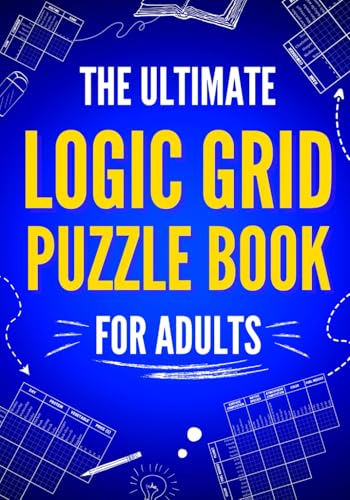
This book delivers exactly what its title promises: 100 handcrafted logic grid puzzles organized across four distinct difficulty levels represented by flame icons. The puzzles range from quick 20-minute warm-ups on the one-flame tier to multi-hour multi-grid challenges on the four-flame tier that require cross-referencing clues between linked puzzles. The themes are current and varied, avoiding the stale repetition that plagues lesser puzzle books.
The paper quality is high enough to withstand erasing, and the font size is comfortable for extended sessions. A standout feature is the inclusion of a QR code that links to a downloadable strategy handbook, which is genuinely useful for beginners unfamiliar with logic grid deduction techniques like clue elimination and grid marking. The gradual difficulty increase teaches you the mechanics before demanding advanced logic.
The binding is the primary physical drawback—the book does not lay flat, forcing you to either break the spine or hold it open with weights. Some longer clues are printed too close to the center margin, making them hard to read. A few users noted minor typos that do not affect solvability. For the price, this offers dozens of hours of screen-free deduction practice, making it the best value in the book category.
Why it’s great
- 100 unique puzzles across 4 clear difficulty tiers
- QR code to downloadable strategy handbook included
- High-quality paper that handles erasing well
- Varied, contemporary themes avoid repetition
Good to know
- Binding does not lay flat for easy solving
- Some center-margin clues are hard to read
5. Puzzle Baron’s Logic Puzzles, Volume 3
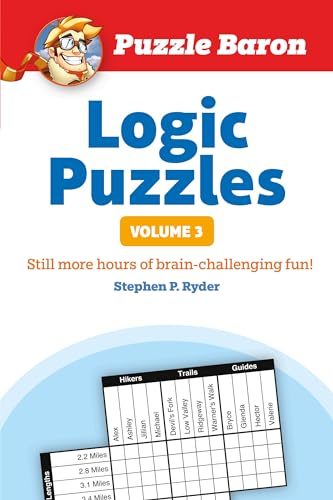
The Puzzle Baron series distinguishes itself by publishing real-time solving statistics alongside each puzzle—average completion time, record time, and the percentage of solvers who complete it. This gamification adds a layer of meta-challenge: you are not just solving the puzzle but racing a community benchmark. Volume 3 contains over 200 grid-based logic puzzles, each with a unique background story and text-based clues that build a narrative context.
The difficulty range is broad, but the majority of puzzles land in the intermediate zone that requires sustained concentration without being punishing. Users report that their average solve time is often double the published average, which initially surprised many but became a rewarding benchmark to beat. The paper quality is durable with clear printing, and the 6×9 inch trim size is genuinely portable for commutes or travel.
The font is small—a common complaint—and the grid tables are compact, making marking tight. Solutions are provided but lack walkthrough explanations, so you cannot learn why a particular deduction was correct. The binding is standard paperback, so it will not lay flat. Despite these ergonomic compromises, the competitive element and sheer volume of content make this the best choice for solvers who thrive on measurable progression.
Why it’s great
- Community timing stats add competitive motivation
- 200+ puzzles with narrative context for each
- Portable 6×9 size fits in a bag easily
- Clear, durable paper that holds up to erasing
Good to know
- Small font and compact grids can be hard to mark
- Binding does not lay flat; solution explanations missing
6. The Master Theorem
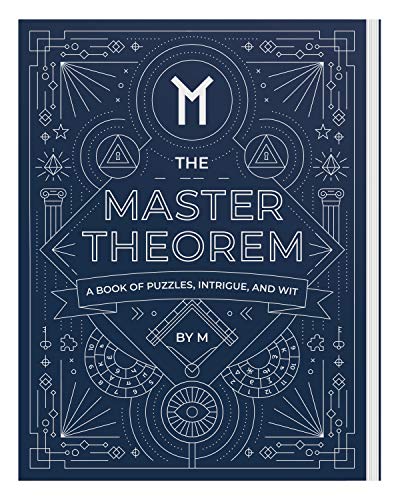
The Master Theorem is not a conventional puzzle book—it is a collection of eclectic, story-driven challenges that span rebus-style riddles, cryptograms, and interactive puzzles requiring external research. Each puzzle begins with a narrative paragraph that contains subtle clues, and hints are encoded using a Caesar cipher, forcing you to decode them before using them. This multi-layered approach means solving involves both the puzzle and the meta-puzzle of how to access help.
The full-color, 212-page hardcover is beautifully produced with a 7.5×10 inch format that feels substantial without being unwieldy. The variety of puzzle types prevents the boredom of repetitive mechanics—one puzzle might test your wordplay, another your ability to Google effectively, and a third your spatial logic. The puzzles are designed to be solved without MENSA-level intelligence; the challenge comes from lateral thinking and persistence rather than raw IQ.
The structure has two notable flaws. The answer section at the back is not sealed, meaning accidental spoilers are possible if you flip too far. Some solvers rubber-band or tape the answer pages shut. Additionally, the hints being Caesar-ciphered can feel unnecessarily obscure—a plaintext hint system alongside the encoded one would be more user-friendly. For solvers who enjoy meta-puzzles and narrative immersion, this is a unique, memorable experience.
Why it’s great
- Wide variety of puzzle types prevents boredom
- Full-color production with premium hardcover feel
- Story-driven clues add narrative depth
- Encoded hint system adds a meta-challenge layer
Good to know
- Answer section unsealed; risk of accidental spoilers
- Caesar-cipher hints may feel unnecessarily obscure
7. Wettarn 9 Pcs Metal Brain Teaser Puzzles

The Wettarn set provides nine distinct metal disentanglement puzzles, each with a graduated difficulty level, housed in stainless steel construction with smooth, rounded edges. The puzzles range from simple loops that yield in seconds to complex interlocking shapes that may take hours of focused manipulation. The variety means you can warm up on the easier pieces before tackling the most frustrating ones—a deliberate progression that teaches the logic of disentanglement.
The 3D shapes are diverse—hooks, rings, and nested loops—preventing the fatigue of solving the same mechanical problem nine times. The stainless steel is heavy enough to feel premium and durable enough to survive being dropped or stepped on without deforming. Users report these are excellent for hand rehabilitation, fidgeting during calls, or as office desk toys that invite collaborative problem-solving from passersby.
The lack of a carrying case or pouch is a missed opportunity—the loose pieces can get separated or lost easily. One unit in a set occasionally arrives slightly bent, though this appears to be an outlier in an otherwise consistent quality run. The included difficulty guide is basic, so you may need to search online for solution strategies on the hardest pieces. For the price, this is the most cost-effective way to explore multiple tactile puzzle styles.
Why it’s great
- Nine distinct puzzles with graduated difficulty
- Stainless steel construction is durable and safe
- Excellent for fidgeting, hand therapy, or office use
- Encourages collaborative solving
Good to know
- No storage case; pieces can get lost easily
- Occasional manufacturing defect on individual pieces
FAQ
Are logic grid puzzle books better than physical metal puzzles for brain training?
How does the Kanoodle 200-challenge system compare to solving a Rubik’s Cube?
What makes a metal brain teaser worth choosing over a cheaper plastic alternative?
Final Thoughts: The Verdict
For most users, the best brain puzzles winner is the Educational Insights Kanoodle because it delivers the deepest replay value with its 200 challenges spanning 2D and 3D modes while remaining genuinely portable. If you want a timed, adrenaline-fueled challenge, grab the Rubik’s Pulse Cube for its light-up speed-solving mechanics. And for the purest tactile frustration and satisfaction, nothing beats the Hanayama UFO and its precision cast-metal design.