
Our readers keep the lights on and the weekend projects moving. As an Amazon Associate, I earn from qualifying purchases.
Adding a pressurized carbon dioxide system to a planted aquarium is the single most impactful upgrade for transforming slow-growing, leggy stems into a lush, compact aquascape. The chemical reaction between citric acid and sodium bicarbonate generates the high-purity CO2 that plants demand, but the hardware that meters and delivers that gas—the regulator, needle valve, solenoid, and diffuser—determines whether your tank thrives or suffers from instability.
I’m Rikta — the co-founder and writer behind FitlyFast. I’ve spent hundreds of hours studying aquarium CO2 system specifications, comparing regulator precision, solenoid reliability, and build materials across the most popular DIY generator kits on the market.
After evaluating over 35 distinct product attributes across these kits, I’ve built this guide to help you find the best aquarium co2 system for your planted tank, whether you are setting up a nano cube or a large display aquarium.
How To Choose The Best Aquarium CO2 System
Choosing a DIY CO2 system is different from buying a paintball or compressed cylinder setup. With a chemical reaction generator, your hardware must handle both the internal pressure of the reaction and the precise metering of gas into the water column. Four specifications define a kit that will perform reliably for months, not weeks.
Stainless Steel Grade and Thickness
The reactor bottle is under constant pressure, often reaching 30–50 bar during the citric acid reaction. Look for SUS304 stainless steel construction with a wall thickness of at least 1.2mm. Thinner metal can bulge or fail over time, and bottles with internal thread designs are prone to seizing from residue buildup. External thread bottles are easier to open and clean after every refill cycle.
Regulator, Needle Valve, and Solenoid Ensemble
The regulator controls the output pressure, the needle valve lets you dial in a precise bubble-per-second rate, and the solenoid allows on/off automation via a timer. A cheap combination where the needle valve is too sensitive or drifts after a few days will frustrate you. Look for a system where the needle valve can hold a steady one bubble per second without constant readjustment. The solenoid should be waterproof or at least splash-resistant, and its coil should remain cool during extended use.
Bubble Counter with Integrated Check Valve
A bubble counter lets you see your CO2 injection rate at a glance. The check valve is the critical safety component that prevents water from siphoning backward into your regulator and reactor if the diffuser clogs or the system loses pressure. Without a check valve, a single power outage or clog can flood your gas lines and ruin the solenoid.
Diffuser Quality and Maintenance Access
Ceramic disc diffusers produce fine micro-bubbles that dissolve efficiently into the water. Cheaper diffusers may produce larger, coarser bubbles that surface before dissolving, wasting your CO2. Also consider whether the diffuser can be disassembled for cleaning—algae and biofilm will clog the ceramic disc over time, and soaking it in hydrogen peroxide is the standard restoration method.
Quick Comparison
On smaller screens, swipe sideways to see the full table.
| Model | Category | Best For | Key Spec | Amazon |
|---|---|---|---|---|
| 2L Hygger CO2 System | DIY Kit | Best Overall Value | 1.2mm SUS304 steel, 2L | Amazon |
| FZONE 2.5L Upgraded | DIY Kit | Easiest Maintenance | External thread, 2.5L | Amazon |
| BAOSHISHAN 2L | DIY Kit | Precision Control | 1.2mm SUS304, fine needle valve | Amazon |
| Fzone 2.5L Original | DIY Kit | Thicker Steel Build | 1.5mm SUS304, 2.5L | Amazon |
| Clscea G700S 4L | Premium DIY | Longest Runtime | 4L equivalent, 2-month fill | Amazon |
| MagTool 2.5-5L | Premium DIY | Integrated Solenoid Design | 50% thicker 304 steel | Amazon |
| 5L Hygger CO2 System | Large Tank | Largest Volume | 1.5mm SUS304, 5L | Amazon |
In‑Depth Reviews
1. 2L Hygger CO2 Generator System
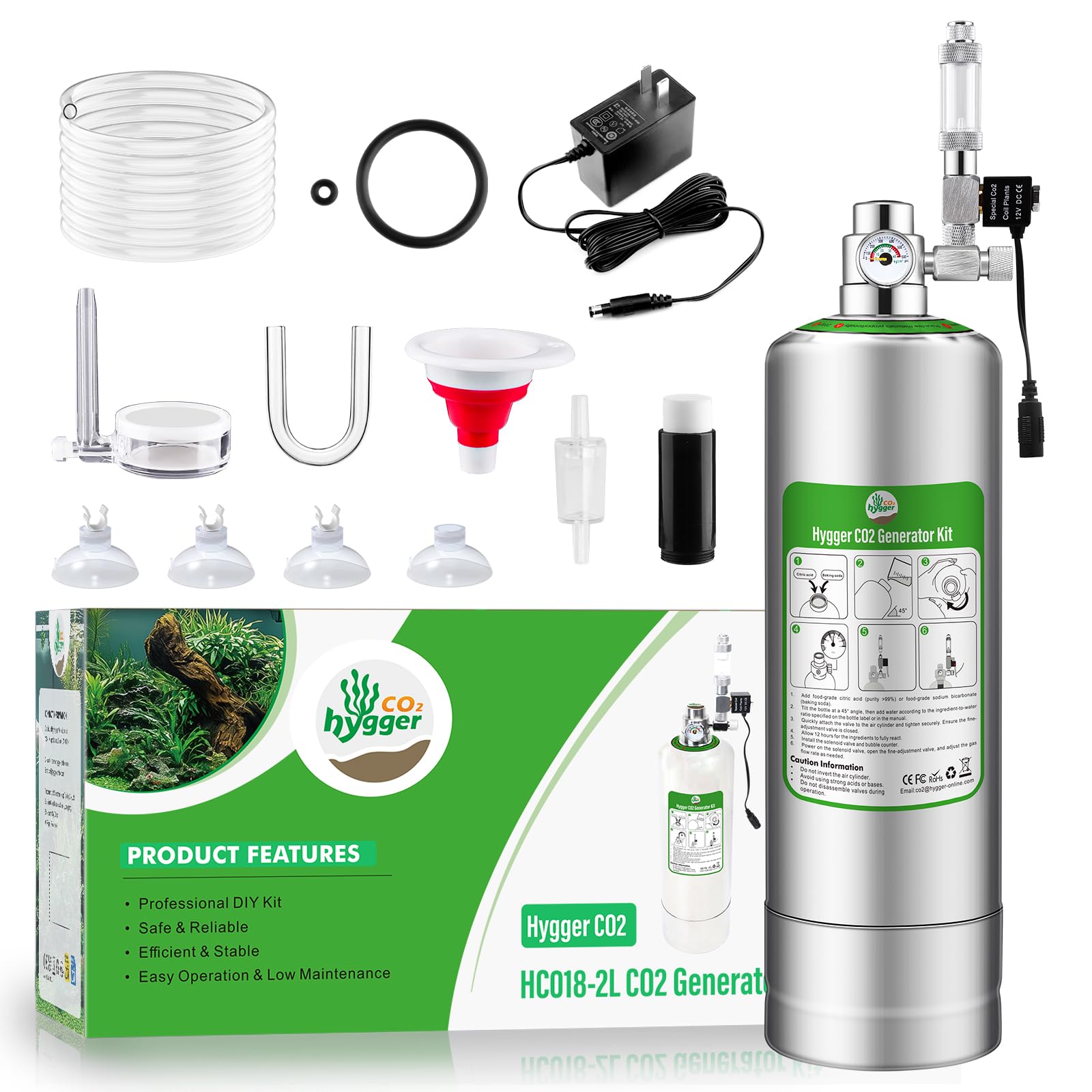
The Hygger 2L kit hits the sweet spot of price, build quality, and included accessories for the majority of planted tank owners. The 1.2mm SUS304 stainless steel bottle is a genuine upgrade over flimsy plastic-based DIY setups, and the 12V waterproof solenoid lets you automate CO2 injection with a simple wall timer. Users consistently report consistent bubble rates for weeks at a time, with one cup each of citric acid and baking soda lasting over two weeks on a 20-gallon tank.
Beginner feedback is overwhelmingly positive—first-time CO2 users find the setup straightforward, and the inclusion of a precision needle valve, bubble counter with check valve, and diffuser means you don’t need to chase down extra parts. The bubble counter also prevents backflow, protecting the regulator from water damage if your diffuser clogs. Some users note the included funnel is too small, making ingredient transfer messy, but this is a minor inconvenience given the overall value.
The solenoid does emit a soft click when powering on and off, which is standard for this type of valve. A few critical reviews mention regulator or needle valve failures, but these appear to be isolated quality-control cases. For aquarists seeking a mid-range entry into pressurized CO2 without stepping up to a full compressed cylinder setup, this Hygger system delivers the best balance of features and reliability.
Why it’s great
- Thick 1.2mm stainless steel bottle is durable and pressure-safe
- 12V solenoid and bubble counter with check valve included
- Strong beginner-friendly reviews and quick results in small-to-mid tanks
Good to know
- Citric acid and baking soda not included
- Included funnel is too small for easy ingredient loading
- Some units may have regulator quality inconsistency
2. FZONE 2.5L Upgraded CO₂ System
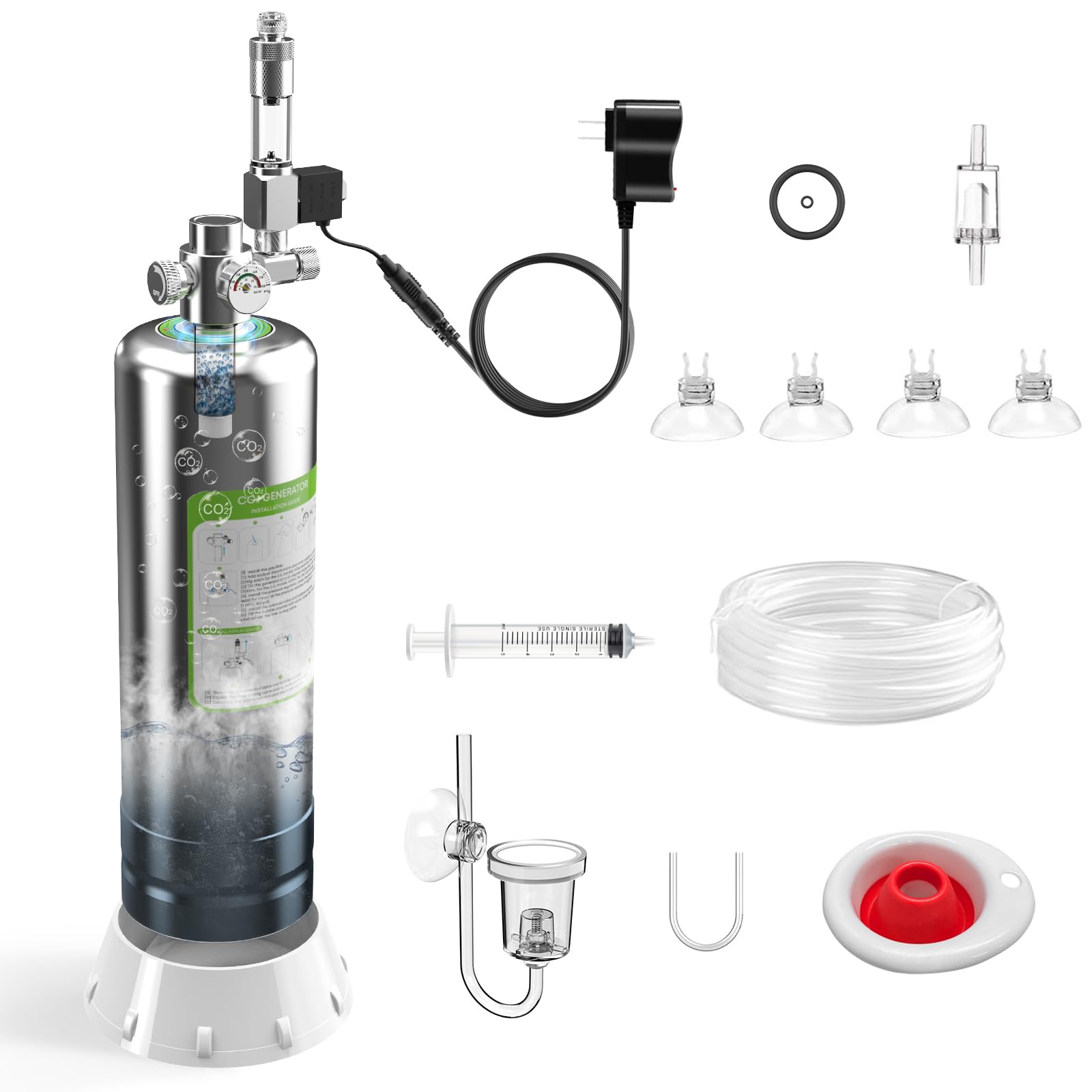
FZONE’s upgraded 2.5L system solves a common complaint with DIY CO2 generators: difficult bottle opening due to residue buildup. The external thread design prevents the cap from sticking after repeated refills, and the built-in fill port lets you add water with a syringe without unscrewing the lid. This is a genuine quality-of-life upgrade for anyone who plans to run CO2 continuously and doesn’t want to fight with the bottle every month.
The all-in-one solenoid and bubble counter reduce the number of connection points, which directly translates to fewer potential leak paths. The precision needle valve holds a steady bubble rate, and users report consistent CO2 delivery for six weeks on a 2.5L charge in a 16-gallon planted tank. The ceramic diffuser produces fine micro-bubbles that dissolve efficiently, and the bundle includes every accessory except the chemical reactants.
On the downside, a small number of units arrived with a leaking one-way valve that required replacement with a metal alternative. Customer service responsiveness is excellent, and replacement parts are shipped quickly. The plastic components in the valve assembly are the weakest link in an otherwise well-engineered system. For aquarists who prioritize easy daily maintenance and long runtime between refills, this FZONE kit is a top contender.
Why it’s great
- External thread bottle never gets stuck from residue
- Integrated fill port allows water refill without removing the cap
- All-in-one solenoid reduces potential leak points
Good to know
- Plastic one-way valve may need replacement with a metal part
- Some units require minor troubleshooting on first setup
- Bottle height may not fit under very short cabinets
3. BAOSHISHAN 2L CO2 System
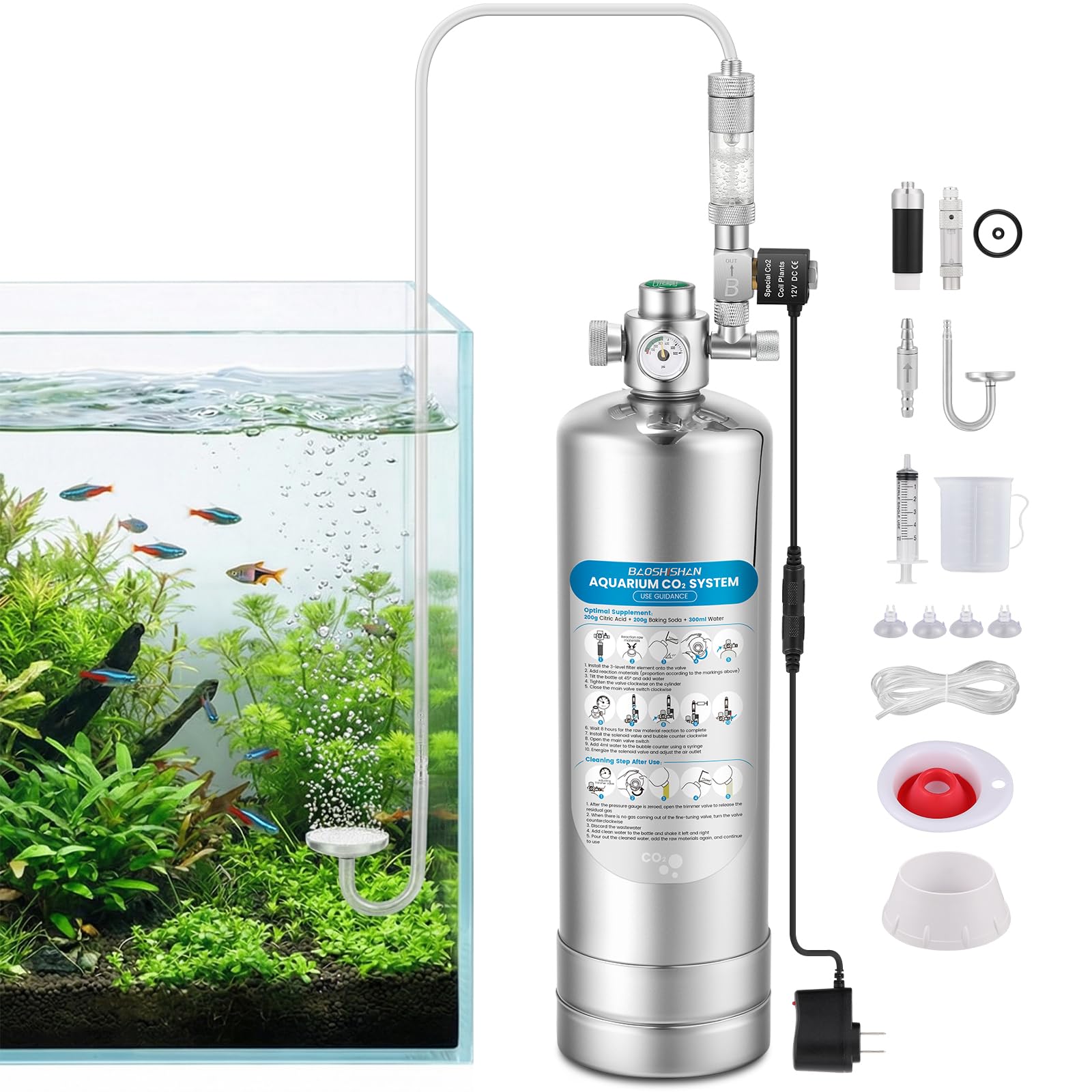
The BAOSHISHAN 2L kit differentiates itself with a needle valve that allows fine-tuning without shutting down the system, plus a water-injectable bubble counter that lets you refill observation fluid without disassembly. This means you can adjust the bubble size and exit speed on the fly, which is a meaningful convenience when dialing in the perfect CO2 rate for a densely planted tank.
The 1.2mm SUS304 bottle uses an external thread design that improves sealing and prevents the cap from seizing after multiple refills. The complete accessory list includes a 2.7-inch stainless steel atomizer diffuser, which is a step up from the standard ceramic disc found in most kits. Users report that one fill of citric acid and baking soda lasts up to 45 days, with the pressure gauge staying solidly in the green zone for months when running on a timer for six hours daily.
Quality control is a mixed bag. Some units ship with a solenoid valve that is non-functional out of the box and only starts working after disassembly and reassembly. A few users report that the system stops releasing CO2 after a few weeks despite the pressure gauge showing a full charge. The 1-year warranty is reassuring, but the inconsistency means you may need to perform a bit of initial troubleshooting. For detail-oriented aquarists who want precise control and a complete kit, this is a strong mid-range option.
Why it’s great
- Water-injectable bubble counter eliminates disassembly for refills
- Fine-tuning needle valve works without shutting down the system
- Includes a stainless steel atomizer diffuser for fine bubbles
Good to know
- Solenoid valve may require reassembly on first use
- Some units stop releasing CO2 after a few weeks
- Output consistency can vary with temperature changes
4. Fzone 2.5L Original CO2 Generator

The original Fzone 2.5L kit uses SUS304 steel that is 1.5mm thick, making it 25% thicker than the 1.2mm standard found on most competitor bottles. This extra thickness provides a higher safety margin against pressure surges, and the bottle can accept up to 400g of raw materials for a full month of CO2 at one bubble per second, eight hours daily. The 12V DC solenoid is quieter and cooler-running than many AC alternatives, and it integrates smoothly with any standard timer.
The precision needle valve is capable of holding a steady one bubble per second, though users consistently note that the adjustment knob is extremely sensitive—a tiny turn can cause a large change in flow rate. Once dialed in, the bubble rate stays stable for days. The bubble counter includes a built-in check valve that protects the tank from backflow, and the included diffuser produces acceptable bubble sizes for most planted tanks.
Customer service is a standout feature, with multiple users praising responsive support that quickly replaced missing or defective parts. The instructions, however, contain errors in the ingredient ratio math and omit the solenoid wiring steps, so first-time users should watch a YouTube tutorial. A few users report that the diffuser plate can detach after a few days, causing CO2 to leak directly into the tank as large bubbles. Replacing the default diffuser with a stainless steel atomizer is a common and inexpensive upgrade.
Why it’s great
- 1.5mm SUS304 steel bottle is thicker and safer than most competitors
- 12V DC solenoid runs cool and quiet with timer automation
- Excellent customer support for replacement parts
Good to know
- Needle valve is extremely sensitive to adjust
- Instructions contain wrong material weights and missing solenoid setup
- Default diffuser plate may detach after a few days
5. Clscea G700S 4L CO2 Generator

The Clscea G700S is engineered for aquarists who want the longest possible interval between refills. The bottle has a 2.4L physical volume but is rated for a 4L equivalent gas capacity, and users report that a single charge lasts up to two months on a 25-gallon tank running at one to two bubbles per second. The triple-layer stainless steel filter prevents debris from reaching the solenoid, and the self-cleaning bubble counter design lets you flush valve pathways by simply refilling the counter with water.
The John Guest quick-connect fittings allow tool-free tubing connection and disconnection, making setup and maintenance faster than threaded fittings. The solenoid and needle valve produce consistent output, and the system builds usable pressure in under 12 hours. Users who use ice water and stagger their dry ingredients during filling report even smoother startup and slower reaction rates.
Some users have experienced quality issues with the solenoid valve, describing it as flimsy. In one severe case, the bubble counter valve opened fully after a year of use, dumping all CO2 into the tank and killing the fish. The diffuser is also mediocre, producing coarser bubbles than a premium ceramic or stainless steel alternative. Clscea offers a one-year warranty and sells replacement parts individually, but the long-term reliability concerns make this a better fit for experienced hobbyists who know how to maintain and monitor the system closely.
Why it’s great
- Two-month runtime per fill is the longest of any DIY kit reviewed
- Triple-layer filter and self-cleaning bubble counter prevent clogs
- John Guest quick-connect fittings for tool-free installation
Good to know
- Solenoid valve feels flimsy and may require maintenance
- Default diffuser produces coarser bubbles than competing kits
- One user reported a catastrophic valve failure after one year
6. MagTool 2.5-5L DIY CO2 Generator

MagTool’s upgraded version features a food-grade 304 stainless steel bottle that is 50% thicker than standard DIY tanks, with a mirror-polished finish that looks clean beside any aquarium stand. The 2.5L bottle holds 200-300g of raw material, while the 5L variant accepts 600-800g for extended runtime. The external thread design prevents the cap from seizing, and the all-in-one integrated solenoid and bubble counter reduces connection points for fewer potential leaks.
The kit includes a diffuser, check valve, tubing, funnel, syringe, ceramic disc, sealing rings, and power adapter—everything except the chemical reactants. Users report that the bubble counter and regulator remain leak-free, and the solenoid allows reliable timer-based automation. Detailed community posts provide exact ingredient ratios (457g citric acid, 600g baking soda, 934mL water) that produce 450-550 PSI, helping new users achieve the perfect reaction from the first fill.
Long-term durability is the main concern. Multiple users report that the solenoid or other parts fail within six months, and some replacement parts are not readily available. One user went through three units in a year. The default diffuser is mediocre, and the included tubing is rigid, requiring heat to fit over fittings. The one-year warranty on key components is helpful, but the inconsistent longevity makes this a better choice for hobbyists who are comfortable with occasional part replacement.
Why it’s great
- 50% thicker 304 stainless steel bottle with mirror finish
- Integrated solenoid design reduces leak-prone connection points
- Community-tested ingredient ratios for optimal pressure
Good to know
- Solvent and diffuser may fail within 6 months of use
- Replacement parts are not always available
- Tubing is rigid and requires heat to install over fittings
7. Hygger Pro 5L CO2 Generator
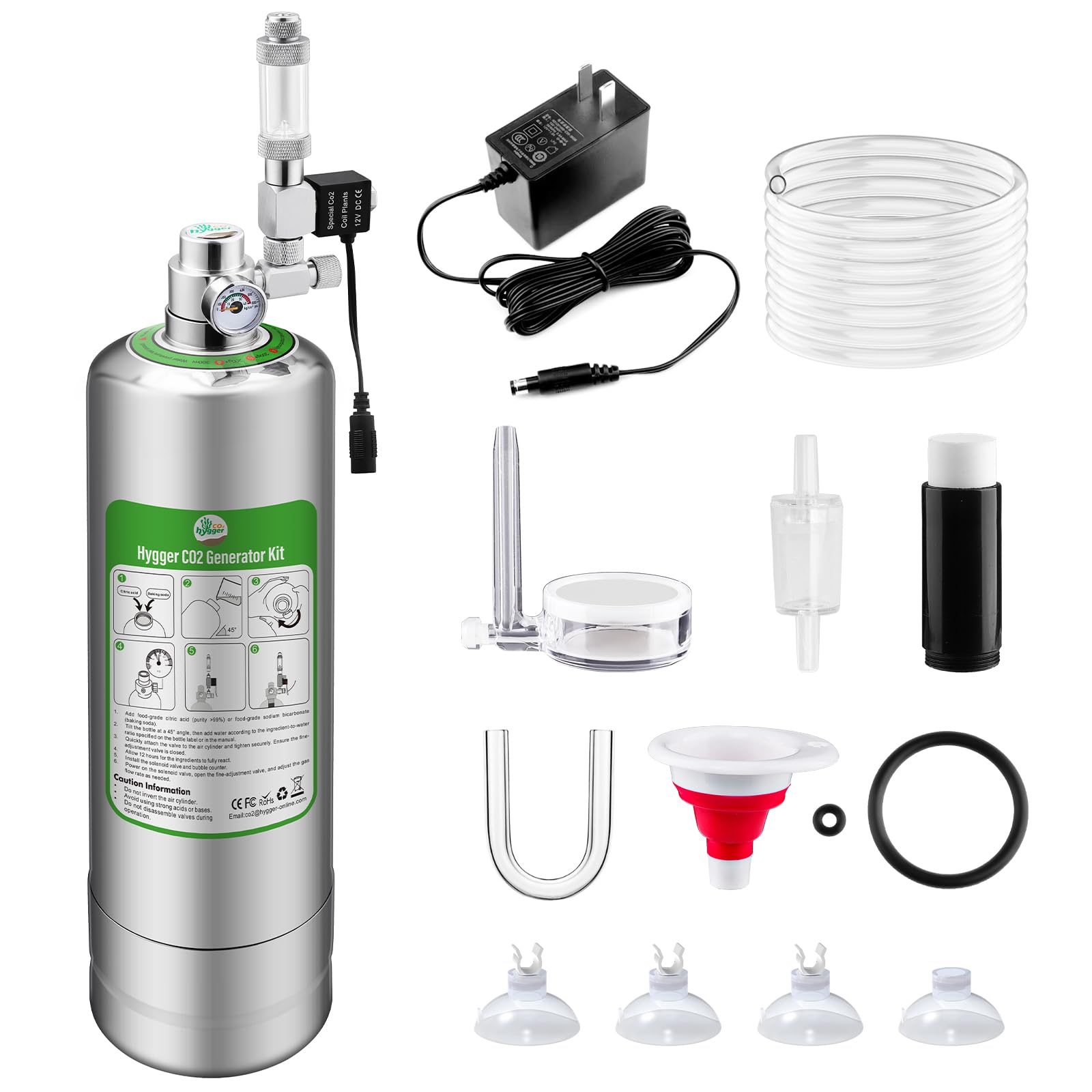
The Hygger Pro 5L is essentially the larger sibling of the 2L kit that took the top spot, and it shares the same heavy-duty 1.5mm SUS304 stainless steel construction. The 5L volume is ideal for larger planted tanks of 40 gallons and above, or for hobbyists who want the longest possible runtime between refills without moving to a dedicated compressed cylinder. The included 12V solenoid, precision needle valve, and bubble counter with check valve mirror the 2L kit’s proven design.
Setup is the same straightforward process as the smaller Hygger unit—connect the tubing, add the reactants, and set your timer. The larger bottle generates enough CO2 to maintain stable levels in demanding high-light, high-plant-density setups. The regulator holds pressure consistently, and the bubble counter provides clear visibility for dialing in your bubble rate. Users running the system on a 20-gallon tank report that a single refill lasts significantly longer than two weeks.
The same caveats apply as with the 2L model: the funnel is too small for easy ingredient loading, and there is a risk of receiving a unit with a defective regulator or needle valve. The 5L bottle is also physically larger and heavier, so it requires more cabinet space. A few critical reviews label the entire system as cheap junk, but the majority of users find it delivers reliable performance for the price. For anyone with a larger tank who wants a single-system solution without stepping up to compressed CO2, this is the most practical choice.
Why it’s great
- Large 5L volume supports big tanks and long runtime
- 1.5mm stainless steel bottle is durable and high-pressure rated
- Proven Hygger design with solenoid, bubble counter, and check valve
Good to know
- Included funnel is too small for the larger bottle opening
- Quality control on regulator and needle valve can be inconsistent
- Large bottle requires significant cabinet space
FAQ
How long does a DIY citric acid CO2 system last before refilling?
What happens if the bubble counter runs dry and water backflows into the solenoid?
Can I use a DIY CO2 system on a nano tank smaller than 10 gallons?
Why does my DIY CO2 system stop producing gas even though there is still pressure on the gauge?
Is a DIY generator system as good as a compressed CO2 cylinder with a professional regulator?
Final Thoughts: The Verdict
For most users, the best aquarium co2 system winner is the Hygger 2L CO2 Generator Kit because it delivers the best combination of stainless steel build quality, complete accessory bundle, and proven beginner-friendly performance at a mid-range investment. If you want the longest runtime between refills and have a larger tank, grab the Hygger Pro 5L System. And for the easiest daily maintenance with its external thread design and built-in fill port, nothing beats the FZONE 2.5L Upgraded System.