
Our readers keep the lights on and the weekend projects moving. As an Amazon Associate, I earn from qualifying purchases.
The frustration is universal: you’ve spent good money on a quality tabletop radio or receiver, but the built-in whip antenna leaves you with a muddled sea of static and the occasional distant, ghost-like voice. The gap between a radio’s potential and its actual performance often comes down to one overlooked accessory.
I’m Rikta — the co-founder and writer behind FitlyFast. My deep market research and endless hours analyzing user reviews and RF specifications mean this guide targets the specific antennas that actually break through urban noise and rural dead zones for AM reception.
To get you clear, consistent broadcasts, I’ve filtered through dozens of models to bring you a definitive guide to the best am radio antenna for your specific listening environment and technical skill level.
How To Choose The Best AM Radio Antenna
Selecting the right antenna for AM isn’t about buying the biggest one you can find; it’s about matching the antenna’s design to your radio’s inputs and your local signal environment. A passive loop excels in a quiet, suburban setting, while an active amplified unit or an outdoor mast is often mandatory for noisy urban apartments or rural dead zones. Focus on the coupling method (wired vs. wireless), frequency coverage (AM broadcast band vs. shortwave), and build durability before checking any other feature.
Passive Loop vs. Active Amplified Antennas
A passive loop antenna uses a tuned coil of wire to capture the magnetic component of the AM radio wave. It requires no power and works best when placed physically close to the radio’s internal ferrite bar (inductive coupling) or wired via an external AM antenna jack. These are highly sensitive but don’t boost signal; they merely capture it more efficiently. An active antenna uses a built-in amplifier, often powered by batteries or a USB cable, to boost a weak signal and overcome noise. These are ideal for locations with very weak signals, but the amplifier can also amplify local electronic interference, so quality control in the circuit design is critical.
Impedance Matching and Connector Types
Mismatched impedance between the antenna (50 or 75 Ohms) and your radio’s input can cause a significant loss of signal power. Most portable radios with an external AM input expect a 50 Ohm connection via a 3.5mm mono plug or RCA jack. Some higher-end tabletop radios and receivers use 75 Ohm F-type connectors. Using an adapter is often fine, but ensure the antenna is designed for the frequency range of AM broadcast (530-1710 kHz). For radios without an external AM jack, you must rely on inductive coupling, meaning the antenna must have a loop that can physically sit near the radio.
Quick Comparison
On smaller screens, swipe sideways to see the full table.
| Model | Category | Best For | Key Spec | Amazon |
|---|---|---|---|---|
| Sangean ANT-100 | External Whip | Upgrading indoor radio reception | 6.5 ft Coax, Magnetic Mount | Amazon |
| Jensen AN150SR | Amplified Glass Mount | Marine & vehicle AM reception | 6 mA @ 12V DC Draw | Amazon |
| Sutekus AN200 | Passive Loop | Serious AM DXing at home | Tunable 530-1710 KHz Loop | Amazon |
| Midland 18-259W | Window Mount Mast | Improving NOAA weather radio | 12 ft Pre-wired Cable | Amazon |
| Kaito AN-100 | Passive Loop | Easy wireless inductive coupling | 12 oz, Tuning Dial | Amazon |
| Tecsun AN-48X | Active Loop | Broadband AM/LW/SW reception | Powered (2 AAA batteries) | Amazon |
| Pixel AFHD-4 | Outdoor Omni | Whole-house HD & long-range AM | 48 in, 90 Mile AM Range | Amazon |
In‑Depth Reviews
1. Sangean ANT-100 External Antenna

The Sangean ANT-100 is the simplest and most effective upgrade for any tabletop radio, weather alert receiver, or home stereo with an AM external antenna jack. Its 6.5-foot coax cable and magnetic base let you place the black steel whip on a metal shelf or window frame without any permanent installation, directly improving signal capture over the tiny internal ferrite bar. The 3.5mm RCA connector is standard for most modern radios, making this a true plug-and-play solution with zero configuration required.
User reports consistently show dramatic reception improvements for NOAA weather radios like the Midland WR-400, turning previously useless static into clear local broadcasts. The 50-Ohm impedance is properly matched for consumer radio inputs, and the small form factor means it won’t dominate your desk space. For the slight cost, it delivers a tangible signal-to-noise ratio gain that beginners and experienced listeners alike can appreciate.
Some users note that the connector fit can feel loose on certain radio jacks, requiring a careful alignment to maintain contact. In extremely weak signal zones, it may only provide a marginal improvement rather than a transformative one. However, for 90% of home listeners struggling with mediocre reception, this antenna solves the problem at a minimal investment.
Why it’s great
- True plug-and-play with standard RCA jack
- Magnetic base allows flexible placement
- Immediate improvement on most indoor radios
Good to know
- Connector fit can be loose on some jacks
- Not suitable for extremely weak rural signals
2. Jensen AN150SR AM/FM Antenna

The Jensen AN150SR is a long-range amplified antenna purpose-built for demanding environments like boats, RVs, and vehicles where a traditional whip is impractical. It mounts to glass using adhesive foam strips and draws minimal power (6 milliamps at 12V DC) from your stereo’s antenna wire, making it a clean conversion for marine dashboards and off-road vehicles. The amplifier helps pull in distant AM talk and FM music stations that would otherwise be lost behind metal cabins or tree cover.
Users installing this in side-by-sides and Polaris SxS models report going from local-only reception to scanning a full dial of available stations. The white body and low profile are less obtrusive than a tall metal mast, and the 7-foot cable provides enough length to tuck the wiring behind a dash or console. For environments with significant RF noise, the built-in amplifier can overcome interference that defeats a passive antenna.
The reliance on adhesive foam means the mount can fail in high heat or when cleaned poorly, and some users report worse reception in densely wooded areas compared to a standard car antenna. Proper grounding (to chassis metal) is non-negotiable for the amplifier to function correctly; a simple stick-on mount may not deliver full potential. It’s a specialized tool for a specific moveable installation, not a desktop upgrade.
Why it’s great
- Amplified design works in noisy mobile environments
- Glass mount installation is clean and weather-sealed
- Significantly improves reception in RVs and boats
Good to know
- Adhesive mount can fail in high heat
- Requires proper chassis ground for best performance
3. Sutekus AN200 AM Loop Antenna

The Sutekus AN200 (identical to the famous Tecsun AN-200) is a passive tunable loop antenna that offers serious DXers a significant gain of around 40 dBu over a radio’s internal ferrite. The key design feature is the high-Q coil, which provides sharp passband tuning to reject adjacent-channel interference, a common problem on dense AM dials. It works both via inductive coupling (place the radio inside or next to the loop) and via a 3.5mm cable for radios with an external AM input.
Users routinely report pulling in daytime AM stations from over 150 miles away on portable receivers like the Degen and Tecsun PL-880. The physical separation from the radio’s internal electronics is a major advantage, reducing the noise floor caused by switching power supplies and digital circuits inside modern radios. The large base makes it stable for placing a small radio on top or within the loop itself, maximizing magnetic flux transfer.
The 3.5mm cable connection is reported by some as essentially useless for signal boosting, with the inductive coupling method being the only reliable way to get a substantial improvement. For radios lacking a ferrite bar (increasingly rare), the wired connection will be necessary but may underwhelm. The tuning knob on some units feels slightly mushy, requiring a light touch to find the exact resonance point for each station.
Why it’s great
- Substantial 40 dBu gain with inductive coupling
- Sharp tuning rejects adjacent-channel interference
- Reduces noise floor from internal electronics
Good to know
- Wired 3.5mm connection is often ineffective
- Requires radio with internal ferrite for best results
4. Midland 18-259W Window Mount Antenna
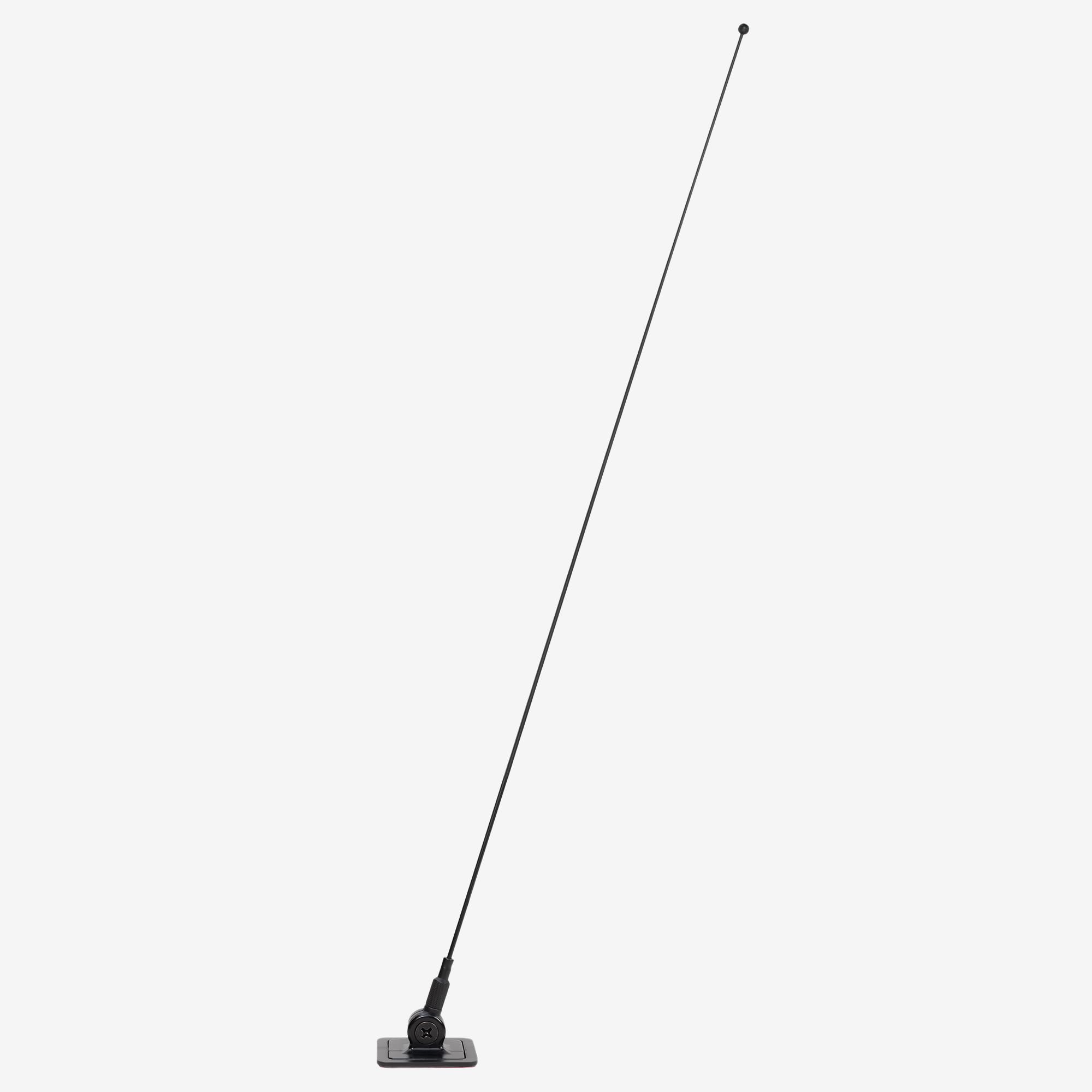
The Midland 18-259W is a dedicated window mount antenna designed specifically for NOAA weather radios and VHF weather band frequencies. It uses a 17-7 stainless steel rod with a black-kote finish for corrosion resistance, and the 12-foot pre-wired cable provides ample length to route from a window to your receiver. The removable radiator makes it convenient to detach for car washes, and it’s compatible with popular Midland models like the WR120, WR300, and WR400.
Users living in fringe reception areas (50+ miles from a transmitter) report a substantial improvement in audio clarity and reliability compared to the stock telescopic whip. The design is optimized for vertical polarization, which is the standard for NOAA broadcasts, making it a focused tool rather than a general-purpose antenna. For homes with single-pane windows, installation is genuinely hassle-free, requiring just a few minutes to hang and plug in.
The antenna works poorly with double-pane or energy-efficient windows, which block a significant portion of the RF signal. Some users in basements or metal-framed buildings found the antenna actually worsened reception (dropping from 4 bars to 2), as the window mount introduced more signal path loss than the stock whip. It is best suited for first-floor, single-pane window placement in moderate-to-good signal areas.
Why it’s great
- Specifically optimized for NOAA weather VHF band
- Corrosion-resistant steel with long 12-ft cable
- Removable radiator for convenience
Good to know
- Poor performance with double-pane windows
- Can worsen reception in basements or steel buildings
5. Kaito AN-100 Tunable AM Loop Antenna

The Kaito AN-100 is an elegantly designed passive loop antenna that excels at reducing noise and pulling in weak stations, particularly for AM broadcast band DXing. Its tuning dial adjusts a variable capacitor for each frequency, allowing you to peak the signal while nulling out adjacent stations. The 12-ounce weight is light and compact, and it works wirelessly via inductive coupling, which means no messy cables for radios that lack an external antenna jack.
Users living in rural or fringe areas describe it as “working like magic,” turning previously unusable talk radio stations into clear broadcasts. When paired with high-end portables like the Tecsun PL-880 or the Grundig Satellit 750, it significantly lowers the noise floor and reveals stations that were previously buried. The red color and small footprint on a desk are aesthetically pleasing compared to larger, industrial-looking loops.
Some units have a slightly loose tuning knob and input jack straight out of the box, and after a few months the tuning knob may develop static that requires contact cleaner application. It requires patience and a light touch to find the exact sweet spot for each station, which may frustrate users expecting instant results. For low-end radios with tiny internal ferrite bars, the improvement is minimal; it truly shines only on quality receivers.
Why it’s great
- Wireless inductive coupling works flawlessly
- Reduces noise floor for serious DXing
- Compact and aesthetically pleasing design
Good to know
- Knob and jack can be loose on some units
- Best results require a quality radio with ferrite bar
6. Tecsun AN-48X Indoor Active Loop Antenna

The Tecsun AN-48X is an active loop antenna that covers AM (520-1700 KHz), Longwave (120-400 KHz), and Shortwave (3.50-20.00 MHz), making it the most versatile indoor option for multi-band listeners. Powered by two AAA batteries, its built-in preamplifier can boost weak signals from distant transmitters, and the included connection cables and radio stand make it compatible with virtually any receiver. The active circuit is particularly effective for crystal and regenerative radios, which lack their own RF gain.
Users report a significant increase in station count on shortwave receivers, pulling in signals from up to 777 miles away during nighttime DX sessions. The antenna sharpens tuning and cuts through adjacent signal swamping on crowded bands. It is also highly effective with SDRs (Software Defined Radios) and HackRF units, delivering clean signals even when placed next to other electronics that normally produce interference.
The tuning and gain knobs are very touchy, earning “fiddly” as the most common descriptor in reviews. The build quality feels somewhat cheap, with a plastic stand that many users find useless or unstable. For pure AM broadcast band reception, the active amplifier can actually introduce distortion on some radios (like the C. Crane 330), and a passive loop like the Sutekus AN200 often provides cleaner AM results at a lower cost.
Why it’s great
- Covers AM, Longwave, and Shortwave bands
- Active preamp boosts weak distant signals
- Works great with SDR and regenerative radios
Good to know
- Touchy knobs require fine adjustments
- Build quality feels cheap and stand is weak
- Can introduce distortion on some AM radios
7. Pixel Technologies AFHD-4 AM FM HD Antenna

The Pixel Technologies AFHD-4 is a premium omnidirectional outdoor antenna designed for serious home and commercial installations. Standing 48 inches tall and weighing 4 pounds, it promises up to 90 miles of AM mono reception and 50 miles for AM HD Radio. It comes with mounting hardware for attic, external wall, or pipe installation and includes both 75 Ohm twin lead and single lead wire for compatibility with modern receivers and older spring-terminal tuners.
Users in extremely rural environments, such as farms with steel buildings in Northwestern Minnesota, report going from zero AM reception to clear, consistent broadcasts across the dial. The build quality is excellent, with corrosion-resistant materials and a robust design that can handle harsh weather. For HD Radio listeners, the AFHD-4 is essential, as the digital HD signal is more susceptible to dropout than analog, and this antenna provides the clean capture needed for lock.
The very high cost is a major barrier for casual listeners, and some users in areas with moderate signals found no improvement over a simple indoor dipole. Below-ground installations (workshops, basements) may still struggle with hum and static even with this antenna mounted on the roof peak. The coaxial F-connector design is standard for modern tuners, but users with older spring-terminal receivers will need to carefully manage the AM/FM switching connections.
Why it’s great
- Outstanding 90-mile AM range specification
- Supports HD Radio for digital AM reception
- Robust build quality for outdoor installation
Good to know
- Very high cost for the hardware
- May not outperform simple options in good signal areas
- Requires attic or outdoor mounting for best results
FAQ
Can I use an AM loop antenna with a radio that has no external antenna jack?
Is an active amplified antenna always better for weak AM signals?
What is the difference between a passive and an active AM antenna?
Final Thoughts: The Verdict
For most users, the am radio antenna winner is the Sangean ANT-100 because it offers a genuine, measurable improvement for virtually any radio with an external AM jack, at a cost that makes it a no-brainer. If you want to do serious distance AM DXing or clean up a noisy urban dial, grab the Sutekus AN200 for its superior passive loop tuning and noise reduction. And for a permanent, whole-house solution covering both AM and HD Radio, nothing beats the Pixel AFHD-4.