
Our readers keep the lights on and the weekend projects moving. As an Amazon Associate, I earn from qualifying purchases.
Finding a board game that genuinely engages a five-year-old, a teenager, and two adults sitting at the same table is a rare feat. Most titles lean too young, too complex, or simply too long to hold a multi-generational group’s attention past the first turn. The right game clicks for everyone — offering easy rules, meaningful decisions, and a playtime that respects a busy evening.
I’m Rikta — the co-founder and writer behind FitlyFast. I’ve spent dozens of hours analyzing the mechanics, component quality, age ratings, and real-world family feedback behind the leading titles to separate the instant crowd-pleasers from the shelf-sitters.
Whether you need a cooperative challenge that builds teamwork or a fast-paced dice duel that ends before bedtime, this guide breaks down the top contenders to help you find the best board games for families of all ages.
How To Choose The Best Board Games For Families Of All Ages
Not every game labelled “family” delivers for both a first-grader and a grandparent. The difference comes down to a few specific design choices that determine whether everyone stays engaged or wanders off halfway through.
Playtime & Pacing
Younger attention spans collapse after about 30 minutes. Look for games with a stated playtime of 20 to 45 minutes. Real-time games like 5-Minute Dungeon keep the energy high with a strict clock, while turn-based titles like So Clover! move fast because everyone participates simultaneously.
Cooperative vs. Competitive
Cooperative games (Horrified: Greek Monsters, 5-Minute Dungeon) pit the whole family against the game itself, sidestepping the sore-loser problem and encouraging teamwork talk. Competitive games like Tetris: The Board Game add direct interaction and tactical blocking. A mixed household benefits from having at least one co-op option in the rotation.
Replayability & Variability
A family game that plays the same every time gets stale fast. Titles with variable set-ups, multiple scenarios, or modular components — Monkey Palace’s collapsing towers or the six different monster challenges in Horrified — offer genuine reason to come back to the table.
Component Quality & Setup
Thin cards and flimsy boards don’t survive sticky fingers and repeat play. Prioritize games with sturdy tiles, thick cardboard, or LEGO-grade bricks. Also consider setup time. Games that require separating 200 pieces before the first round lose momentum before they even start.
Quick Comparison
On smaller screens, swipe sideways to see the full table.
| Model | Category | Best For | Key Spec | Amazon |
|---|---|---|---|---|
| Monkey Palace | Strategy / Building | Creative families who love building | 45-minute playtime, 231 LEGO elements | Amazon |
| 5-Minute Dungeon | Cooperative / Real-Time | High-energy groups needing quick rounds | 5-minute rounds, 275 cards | Amazon |
| Horrified: Greek Monsters | Cooperative / Strategy | Mythology fans wanting deep teamwork | 60-minute playtime, 6 unique monsters | Amazon |
| So Clover! | Cooperative / Word | Wordplay lovers and large groups | 30-minute playtime, 220 keyword cards | Amazon |
| Exploding Kittens: The Board Game | Competitive / Party | Fans of the card game wanting a board | Flippable board, 65 action cards | Amazon |
| Tetris: The Board Game | Competitive / Puzzle | Strategy fans who love spatial puzzles | 20-minute rounds, 128 Tetriminos | Amazon |
| Dumpster Dice | Competitive / Dice | Quick, portable family fun | 5-10 minute rounds, 80 dice | Amazon |
In‑Depth Reviews
1. Monkey Palace

Monkey Palace delivers a rare combination: a game that rewards both creative building and strategic resource management. Using 231 real interlocking LEGO bricks as the playing field, families stack towers, place their monkeys, and score bananas when those towers wobble and collapse. The physical, tactile element keeps younger hands engaged while the scoring system — counting bananas earned from smart placements — challenges older players to think several moves ahead. The 45-minute playtime hits the sweet spot for a weeknight session.
Setup takes a few minutes the first time, but after one play the process becomes intuitive. The included jungle maps and 84 game cards introduce enough variety that no two games unfold the same way. Players must decide whether to build high for immediate points or connect to special scoring spaces for long-term gain, creating meaningful tension without analysis paralysis.
One notable consideration: the game recommends ages 10 and up, though many families report success with kids as young as seven when an adult guides the strategy. The limited number of LEGO pieces means groups of four may need to supplement after several rounds, but the core experience remains tight and satisfying. This is the game that keeps the whole table talking — and building.
Why it’s great
- Unique LEGO brick construction adds a hands-on, creative layer to strategy gameplay
- Variable tower builds and scoring paths offer high replayability
- Encourages spatial reasoning and forward planning in a fun, social setting
Good to know
- Best suited for ages 10+; younger kids may need rule assistance
- May require extra bricks for full four-player games over multiple rounds
2. 5-Minute Dungeon

If your family struggles to sit still for a full game, 5-Minute Dungeon is the answer. This cooperative, real-time card game challenges players to work together and defeat a dungeon in exactly five minutes — a strict timer keeps everyone moving, and the included free app adds themed narrators that heighten the atmosphere. Matching symbols from your hand to the dungeon deck requires split-second decisions, and the chaos often leads to laughter and shouting in equal measure.
With 275 cards and 10 unique heroes (each with special abilities), the game offers substantial variety across its six boss battles. The rules are simple enough that a first-grader can understand the core loop after a single round, yet the cooperative pressure creates a genuinely engaging challenge for adults. The cardboard mats hold up well to frequent play, and the box is compact enough for travel or restaurant tables.
The real-time nature means the game relies heavily on group energy. Quiet families or those preferring turn-based deliberation may find the pace overwhelming. But for active households where everyone wants to participate simultaneously, this title delivers a concentrated burst of fun that ends before anyone loses focus.
Why it’s great
- Extremely fast setup and playtime — complete a full game in five minutes
- Cooperative gameplay builds teamwork and avoids player elimination
- High replay value from 10 heroes and 6 boss scenarios
Good to know
- Real-time pressure may feel stressful for some players
- Limited decision depth for serious strategy gamers
3. Horrified: Greek Monsters
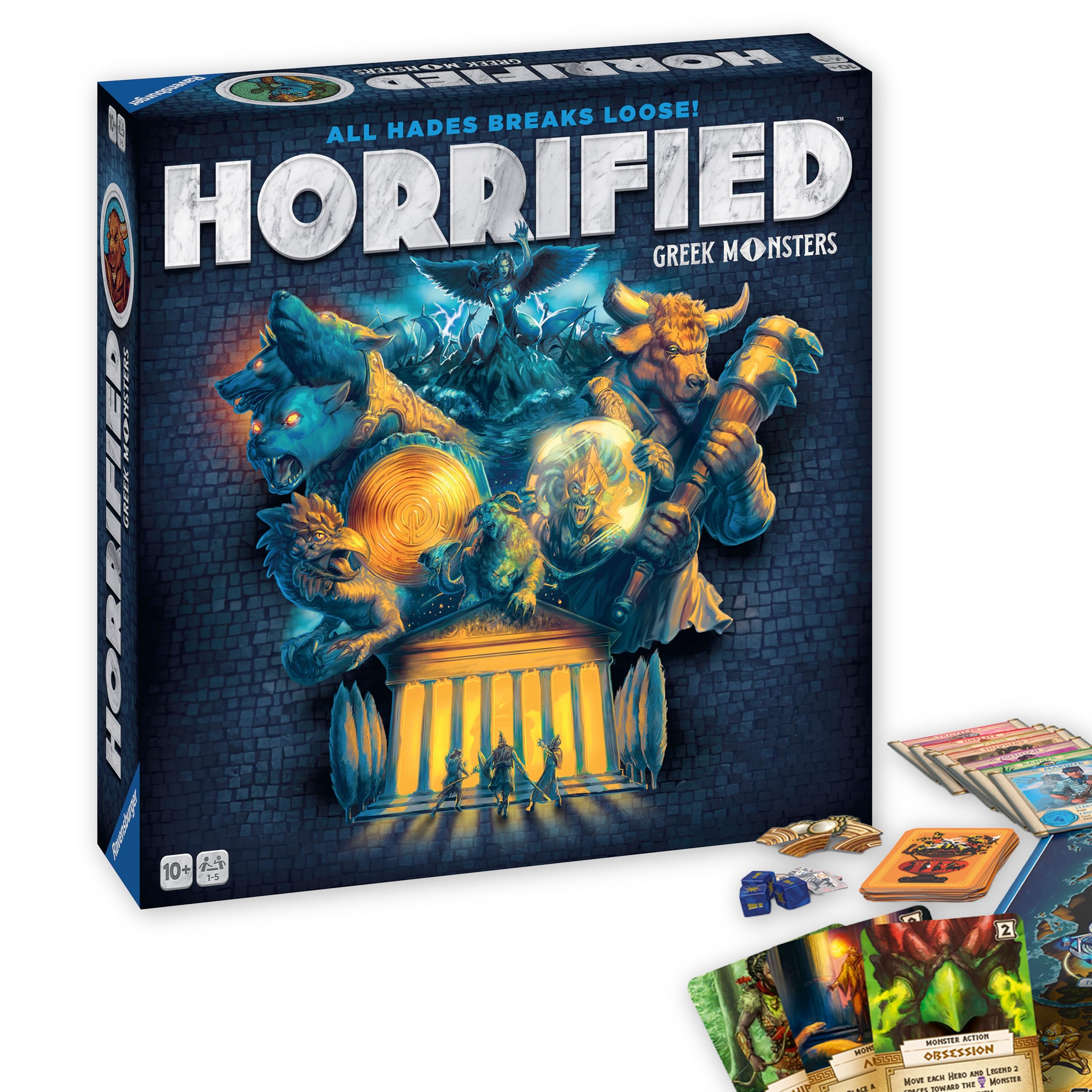
Ravensburger’s Horrified: Greek Monsters offers the deepest cooperative experience in this lineup. Players take on the role of heroes defending Elysium from six mythological beasts — Medusa, Cerberus, Chimera, and others — each requiring a unique method to defeat. The gameplay centers on a pick-up-and-deliver mechanic where items must be gathered and used at specific locations, forcing the team to coordinate movement and resources carefully over a 60-minute session.
The component quality stands out noticeably. The game board features rich, thematic artwork, and the monster figurines add a tactile presence that draws players into the world. Each monster’s unique defeat conditions mean every playthrough requires a fresh strategy, which directly addresses the replayability concern common in family games. The “perk” cards and hero abilities give each player a distinct role, preventing quarterbacking (one player dominating the decisions).
The 10+ age rating is appropriate — younger players may struggle with the multi-step victory conditions and the need to track several active threats simultaneously. The difficulty scales with the number of monsters included, so families can adjust the challenge. For households that enjoy mythology or want a game that demands real collaboration over several rounds, this is the standout pick.
Why it’s great
- Rich cooperative design with six unique monster challenges for high replayability
- Beautiful board and sturdy monster figurines enhance immersion
- Encourages genuine teamwork and strategic discussion among players
Good to know
- 60-minute playtime may be too long for younger children
- Complex rule set requires an adult to teach the first session
4. So Clover!

So Clover! fills a specific and useful niche: a cooperative word association game that works for large groups with zero downtime. Each player writes a single clue that connects two keywords on their “clover” card, then teammates collectively guess which words the clue links. Because everyone reads and discusses simultaneously, no one sits out waiting for a turn — the entire table stays engaged from the first round.
The 220 keyword cards ensure that even frequent players will encounter fresh combinations regularly. The scoring system rewards clever connections but remains simple enough that a 10-year-old can compete on equal footing with adults. The cooperative nature eliminates the tension of elimination, making it ideal for families where younger members may feel intimidated by competitive word games. Setup is practically instant: pass out the boards and markers, shuffle the cards, and start.
Players looking for deep strategy or physical components may find So Clover! too simple. The game lives entirely in language and lateral thinking — if your family prefers dice or building, this won’t scratch that itch. But for gatherings that prioritize conversation, creativity, and laughter, this title consistently delivers memorable moments.
Why it’s great
- Simultaneous participation means zero downtime for any player
- Cooperative format reduces pressure and encourages creative thinking
- High replayability from 220 keyword cards and endless clue combinations
Good to know
- Relies entirely on language skills; less engaging for non-verbal or reluctant readers
- Limited tactile or physical play — purely a card-and-marker game
5. Exploding Kittens: The Board Game
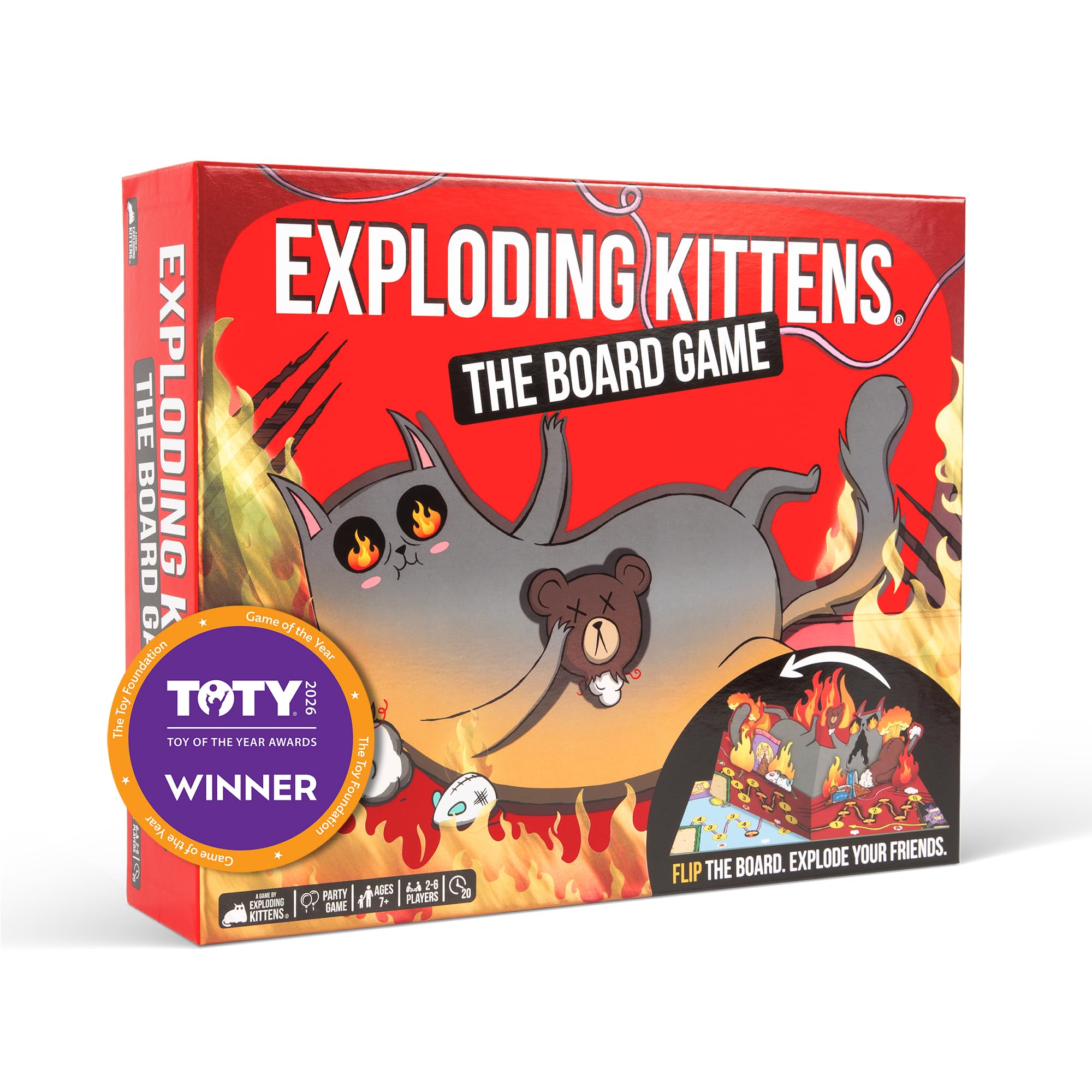
This board game adaptation of the Exploding Kittens card franchise adds a physical board that flips mid-game, revealing a completely new path and injecting a surprise element that changes every playthrough. Players move their standees along the track, drawing cards and triggering effects, all while trying to avoid the inevitable explosion. The 65 action cards and 26 move cards introduce the same irreverent humor the brand is known for — Meatpants, Litterbox Sandworms, and Butterfly Punches are all in play.
The production quality is solid: the pop-up board is sturdy, the standees are colorful, and the cards feel durable enough for repeated shuffling. The 7+ age rating is accurate — the game stays simple enough for younger players to grasp after a round or two, while the unpredictable board flips keep adults entertained. The recommended playtime runs about 30 to 45 minutes, fitting neatly into a standard family game night window.
Long-time fans of the original card game may find the board version less frantic than the classic draw-one-play-one format. The board movement adds structure but slightly dilutes the chaos that made the card game iconic. As a standalone family experience, however, it delivers plenty of laugh-out-loud moments.
Why it’s great
- Flippable board mechanic introduces genuine surprise and replayability
- Funny, engaging theme that appeals to both kids and adults
- Sturdy pop-up board and card components hold up to frequent play
Good to know
- Less frantic than the original card game; some fans may feel it’s slower
- Board stiffness may need a few plays to loosen up fully
6. Tetris: The Board Game
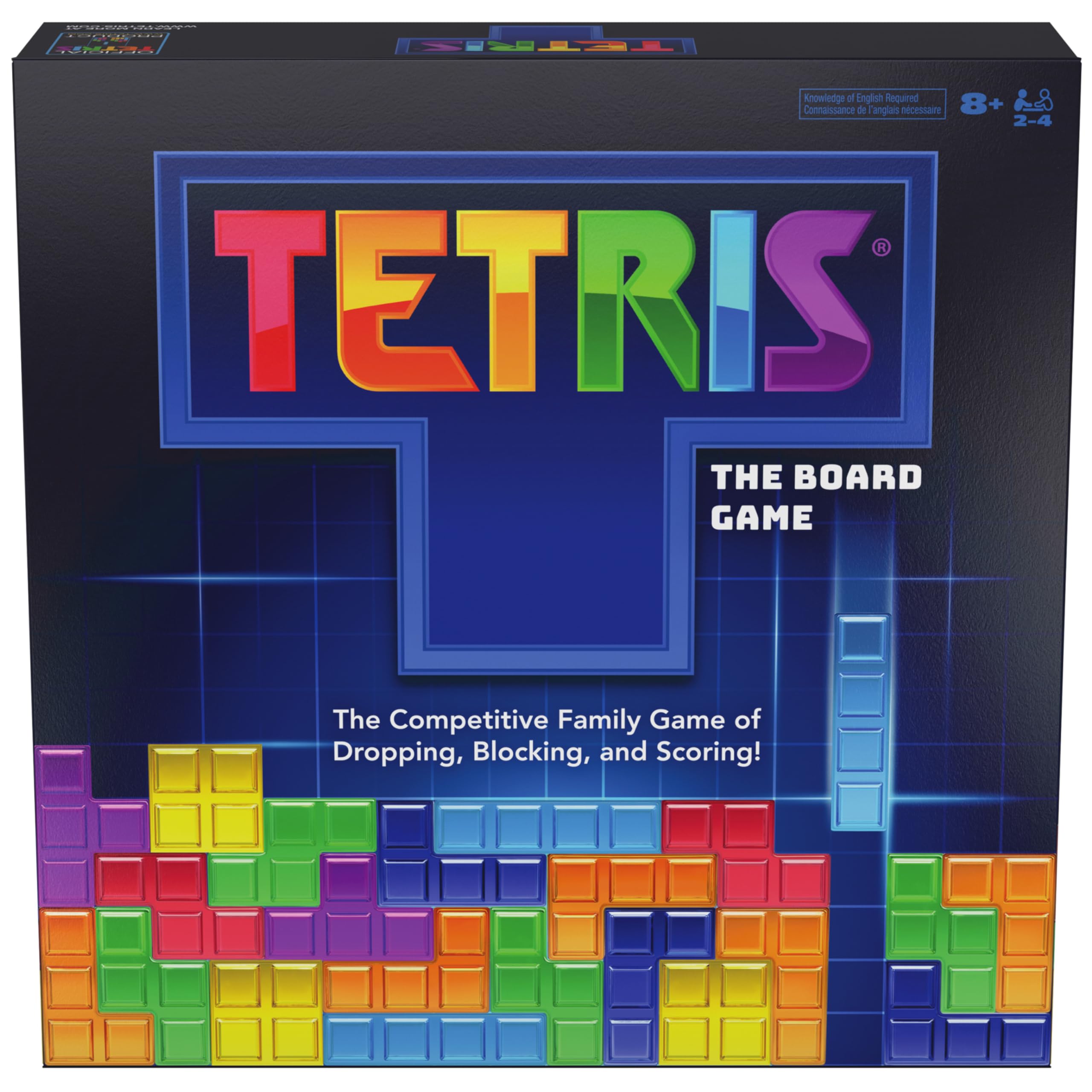
Translating the world’s most iconic digital puzzle into a tabletop format is no small task, and Tetris: The Board Game pulls it off with a clever competitive twist. Players take turns dropping semi-translucent Tetrimino pieces onto their personal grid, attempting to complete lines while simultaneously sabotaging opponents by dropping “garbage” pieces into their boards. It retains the spatial reasoning challenge of the original while adding direct player interaction that keeps everyone involved.
The 128 included Tetriminos and 24 Tetrimino cards ensure enough variety for multiple games without repeating identical setups. Each round lasts about 20 minutes, making it ideal for families who want a focused burst of gameplay. The components are durable — the grids and pieces withstand the constant sliding and stacking that the game demands. The age rating of 8+ is accurate; younger children may struggle with visualizing rotations and placements.
The competitive blocking mechanic can feel aggressive for sensitive players. Getting a garbage piece dropped into your grid at a critical moment may cause frustration. For families that enjoy direct confrontation and puzzle solving equally, this game fills a unique spot in the collection.
Why it’s great
- Faithfully recreates the digital puzzle experience with physical Tetriminos
- Competitive blocking mechanic adds tension and player interaction
- Fast 20-minute rounds suit short attention spans
Good to know
- Direct sabotage may frustrate younger or less competitive players
- Spatial reasoning requirement may be challenging for some ages 8-10
7. Dumpster Dice
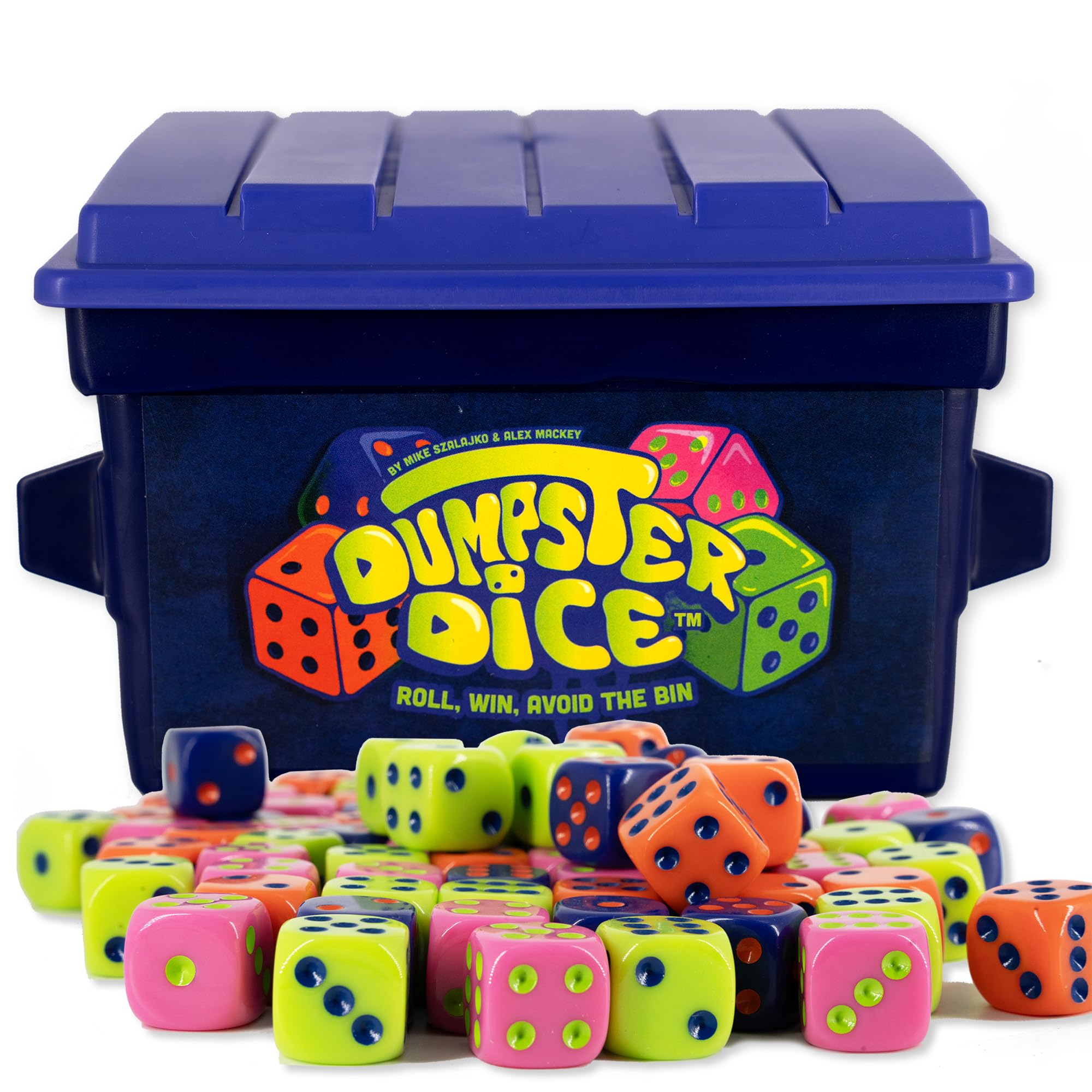
Dumpster Dice strips the board game experience down to its purest form: roll dice, collect sets, avoid the bin. With a 5 to 10 minute round time, this is the fastest game in the lineup and the most portable — the included dumpster tin doubles as the storage case and game board, making it effortless to toss in a bag for restaurants, waiting rooms, or road trips. The 80 colorful dice in four player colors keep the visual energy high, and the included graffiti sticker sheet lets kids personalize their dumpster.
The rules support up to five different gameplay variations, so the core mechanic of rolling to complete a 1-6 dice set can be adapted for different skill levels. The 6+ age rating is genuinely inclusive — reviewers report that even four-year-olds grasp the basic concept quickly. The fast pace means no one sits bored for long, and the lack of complicated setup or scoring makes it accessible immediately.
Players seeking deep strategy or meaningful decisions will find Dumpster Dice too light. The outcome is heavily luck-based, with little room for tactical play. As a warm-up game, travel companion, or entry point for very young children, however, it performs exactly as intended.
Why it’s great
- Extremely portable with the dumpster tin serving as both storage and board
- Fast 5-10 minute rounds work for short attention spans and busy schedules
- Multiple game variations increase replayability from a simple core mechanic
Good to know
- Heavily luck-dependent with minimal strategic depth
- Best as a filler or travel game, not as a centerpiece for game night
FAQ
What is the best cooperative board game for a family with kids ages 6 to 12?
Is a 60-minute board game too long for a 7-year-old?
How many players does a typical family board game support?
Can adults enjoy board games designed for ages 8+?
Final Thoughts: The Verdict
For most users, the board games for families of all ages winner is Monkey Palace because it uniquely combines physical building with strategic decision-making, keeping every age group engaged and talking. If you want fast-paced cooperative chaos that fits in a five-minute window, grab 5-Minute Dungeon. And for a deep, collaborative strategy session that rewards thoughtful teamwork, nothing beats Horrified: Greek Monsters.