
Our readers keep the lights on and the weekend projects moving. As an Amazon Associate, I earn from qualifying purchases.
Stepping into music production or mixing for the first time means facing a wall of specs, driver sizes, and amplifier ratings that can feel overwhelming. A pair of accurate monitors is the single most important tool for hearing your mix without coloration, yet the beginner market is flooded with options that prioritize volume over truth. The difference between a speaker that flatters your track and one that reveals its flaws is measured in the quality of its crossover, the rigidity of its cabinet, and the neutrality of its frequency response.
I’m Rikta — the co-founder and writer behind FitlyFast. I’ve spent hundreds of hours analyzing studio monitor specifications, reading through customer feedback on driver performance and amplifier reliability, and mapping the real-world differences between entry-level, mid-range, and premium active monitor pairs for the home studio market. This guide is built on that research, not on affiliate hype.
Whether you are a bedroom producer, a podcaster, or a gamer seeking true stereo imaging, finding the right pair of beginner studio monitors requires understanding driver composition, port placement, and amplifier architecture — not just brand recognition.
How To Choose The Best Beginner Studio Monitors
Selecting your first pair of near-field monitors is a balance between driver size, amplifier class, and room acoustics. A monitor that sounds impressive in the store may reveal muddy low-end or harsh treble once placed on your desk. Focus on three core areas: driver configuration, connectivity options, and cabinet build quality.
Driver Size and Woofer Material
The woofer diameter, typically 4 to 5.25 inches for desk-friendly monitors, dictates how low your monitors can reach before bass rolls off. Woven composite or polypropylene cones offer stiffness for punchy transients, while paper cones deliver a warmer, sometimes less defined low end. Silk dome tweeters are preferred for smooth, non-fatiguing high frequencies — critical for long mixing sessions.
Amplifier Architecture and Power
Bi-amped designs, where separate amplifier channels drive the woofer and tweeter, provide cleaner headroom and lower distortion than single-amp designs. Class D amplifiers are efficient and run cool, but serious listeners may prefer the linearity of Class A/B. Look for a total RMS power rating of at least 30W per channel for usable volume in a bedroom studio.
Connectivity and Room Calibration
Balanced inputs (XLR or 1/4-inch TRS) reject electrical noise over longer cable runs — essential for a quiet noise floor. Unbalanced RCA inputs are fine for short distances but more prone to hum. Front-firing bass ports offer greater placement flexibility near walls, while rear ports require at least six inches of clearance for clean bass response. High-frequency and low-frequency trim switches help adapt the monitor to your room’s acoustics.
Quick Comparison
On smaller screens, swipe sideways to see the full table.
| Model | Category | Best For | Key Spec | Amazon |
|---|---|---|---|---|
| JBL 305P MkII (Pair) | Premium | Transparent Mix Translation | 5″ woofer, 82W total Class-D | Amazon |
| Pioneer DJ DM-50D-BT | Premium | DJ/Production Hybrid | 5″ woofer, 2-way DSP mode | Amazon |
| Mackie MR524 | Mid-Range | Vocal Clarity & Detail | 5″ polypropylene, 65W Class A/B | Amazon |
| PreSonus Eris E4.5 BT | Mid-Range | Compact Desk with Bluetooth | 4.5″ woven composite, 50W Class AB | Amazon |
| Rockville APM5D (Pair) | Mid-Range | USB Audio Interface Integration | 5.25″ polypropylene, 250W peak | Amazon |
| KRK Classic 7 | Mid-Range | Punchy Bass for Hip-Hop/EDM | 7″ woofer, 73W Class A/B | Amazon |
| Micca PB42X (Pair) | Budget | Vocal-Accurate Desktop Pair | 4″ carbon fiber, 30W Class-D | Amazon |
| Pioneer DJ DM-40D | Budget | Entry-Level DJ Monitoring | 4″ woofer, 96kHz DSP | Amazon |
| Edifier R1280T (Pair) | Budget | Casual Listening & TV | 4″ full range, 42W RMS | Amazon |
In‑Depth Reviews
1. JBL 305P MkII (Pair)

The JBL 305P MkII delivers the most transparent sound reproduction in the beginner class, thanks to its patented Image Control Waveguide that creates a wide, forgiving sweet spot ideal for near-field mixing. Dual 41-watt Class-D amplifiers drive a 5-inch woofer and separate tweeter, producing deep, clean bass down to 43Hz without the muddiness that plagues cheaper ported designs. The Slip Stream port minimizes turbulence, allowing the monitors to be placed closer to walls than rear-ported competitors.
Boundary EQ and HF Trim switches let you compensate for room modes and bright rooms, making the 305P MkII adaptable to untreated spaces — a common reality for beginners. The MDF cabinet is sturdy and deadens resonance effectively at moderate levels. Reviewers consistently note the immediate improvement in stereo width, low-mid fullness, and overall mix clarity when upgrading from entry-level powered speakers.
Balanced XLR and 1/4-inch TRS inputs ensure a noise-free signal path when connected to an audio interface. Some users report slight hiss when no audio is playing, but this is typical of Class-D designs and drops below the noise floor during playback. For the price, no other monitor in this guide offers the same combination of imaging precision, bass accuracy, and room-tuning flexibility.
Why it’s great
- Exceptional stereo imaging with wide sweet spot
- Boundary EQ and HF trim for room adaptation
- Clean, extended bass from Slip Stream port
Good to know
- Requires balanced cables for optimal noise rejection
- Slight electronic hiss at idle (typical for Class-D)
2. Pioneer DJ DM-50D-BT

Pioneer DJ brings its club pedigree to the desktop with the DM-50D-BT, a 5-inch two-way system that switches between a flatter production mode and a more exciting DJ mode via DSP. When set to “Production,” the monitors deliver a reasonably neutral response suitable for mixing and arrangement, while the DJ mode boosts low-end and high-frequency presence for beatmatching and casual listening. This dual-personality feature is rare in the beginner tier and makes the DM-50D-BT uniquely versatile for those who both produce and perform.
The Class-D amplifier operates at a 96kHz sampling rate, keeping distortion low even at higher volumes. Pioneer’s DECO convex diffuser helps spread high frequencies evenly across the listening area, reducing the need for perfect head placement. The 5-inch woofer provides noticeably more low-end authority than the 4-inch DM-40D, and the front-panel headphone jack adds convenience for private monitoring.
Bluetooth 5.0 connectivity allows wireless streaming from smartphones and tablets, though purists will want to use the wired RCA or mini-jack inputs for critical listening. One minor quirk: the speakers automatically power down after a period of silence, requiring a few seconds to wake up when audio resumes. For a DJ-producer hybrid user, these monitors offer a rare degree of flexibility without demanding a second pair of speakers.
Why it’s great
- Switchable production/DJ mode via DSP
- Good low-end from 5-inch woofer
- Bluetooth 5.0 for wireless streaming
Good to know
- Auto power-off introduces slight wake delay
- Not as flat as dedicated studio monitors
3. Mackie MR524
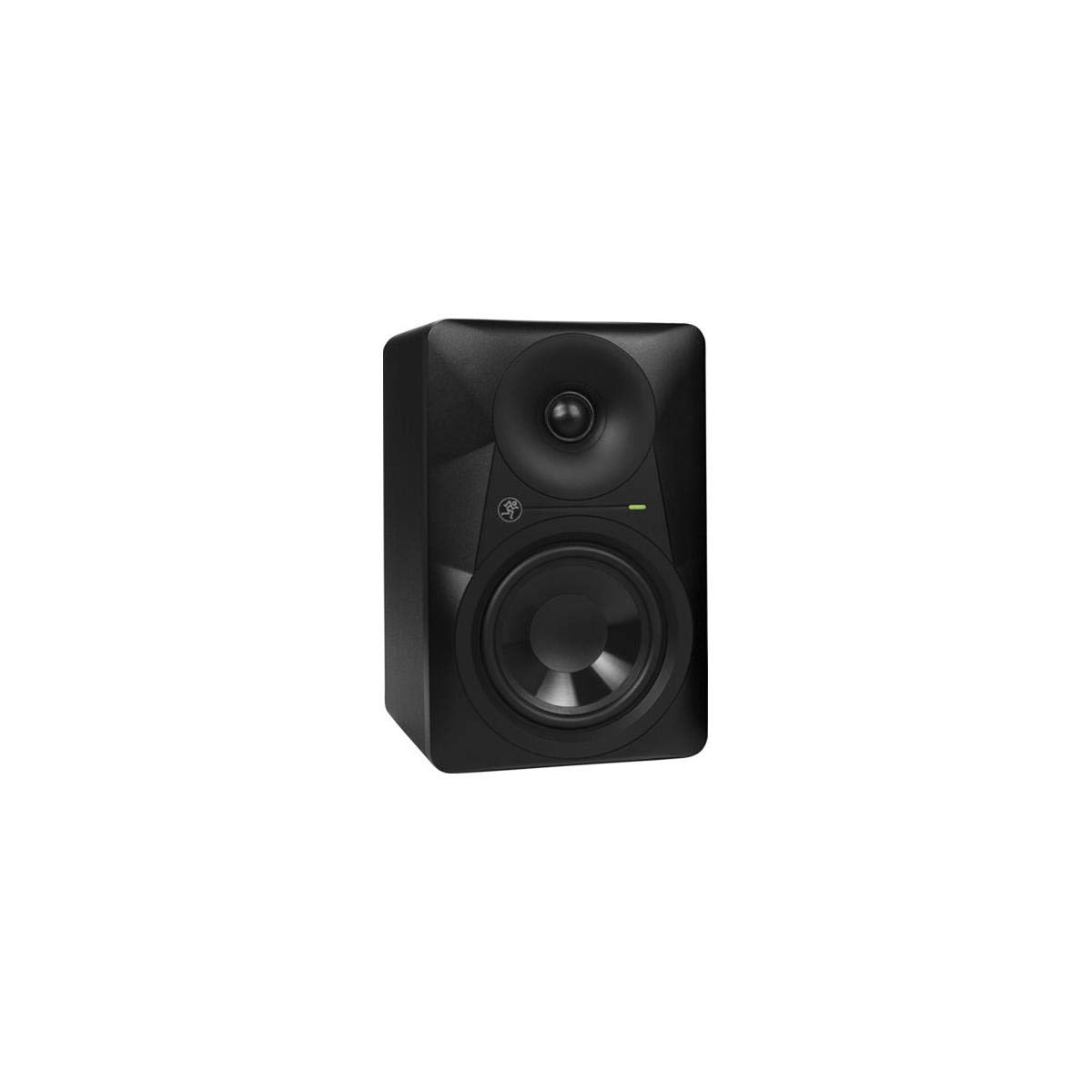
The Mackie MR524 is built around a 5-inch polypropylene woofer and a 1-inch silk dome tweeter, a combination engineered for vocal clarity and detailed high-end without listener fatigue. Mackie’s logarithmic waveguide design ensures ultra-wide dispersion, meaning the sweet spot is large enough to accommodate a second person during collaboration. The bi-amped 65-watt Class A/B amplifier delivers 30 watts to the tweeter and 35 to the woofer, providing clean headroom for dynamic peaks.
One of the MR524’s standout features is its adjustable acoustic controls: a high-frequency level switch, a mid-range level switch, and a low-frequency level switch that let you fine-tune the monitors to your room’s specific resonances. The front-firing port allows placement near walls without the bass becoming boomy — a major advantage for desktop setups with limited space. Reviewers consistently praise the non-fatiguing nature of the tweeter, which remains smooth even during long sessions.
The only ergonomic drawback is the power switch located on the rear panel, which can be awkward to reach if the monitors are placed against a wall. The balanced XLR and 1/4-inch TRS inputs support clean signal routing from any professional audio interface. For a producer focused on vocal mixing or acoustic guitar, the MR524 delivers a level of midrange detail that exceeds its price point.
Why it’s great
- Non-fatiguing silk dome tweeter
- Front-firing port for wall-friendly placement
- Acoustic controls for room adaptation
Good to know
- Power switch is on the rear panel
- Not ideal for heavy bass production without a sub
4. PreSonus Eris E4.5 BT

PreSonus packs studio-grade features into a compact 4.5-inch format with the Eris E4.5 BT, making it the best choice for cramped desks that still demand accurate monitoring. The woven composite woofer produces tighter bass than paper cones of the same size, and the 1-inch silk dome tweeter provides a wide sweet spot for near-field listening. The built-in 50-watt Class AB amplifier delivers clean power sufficient for a bedroom-sized room.
What sets the E4.5 BT apart is its connectivity suite: RCA, 1/4-inch balanced TRS, and a front-panel 1/8-inch stereo aux input, plus Bluetooth 5.0 for wireless playback. This multi-input flexibility lets you switch between a desktop computer, a phone, and a DJ controller without swapping cables. Acoustic tuning controls for low and high frequencies help compensate for less-than-ideal room acoustics — a practical feature for beginners who lack treatment panels.
Some users report quality control inconsistencies, including occasional hissing or buzzing that worsens over time. The midrange can exhibit a slight spike that causes ear fatigue during very long listening sessions. For a price that includes Studio One Prime and the Studio Magic plug-in suite, the E4.5 BT offers exceptional value for anyone building a home studio from scratch, but the QC issues warrant buying from a retailer with a solid return policy.
Why it’s great
- Compact size with Bluetooth and multiple inputs
- Acoustic tuning controls for room adaptation
- Includes Studio One Prime production software
Good to know
- Quality control issues with hissing reported
- Midrange can cause fatigue after extended use
5. Rockville APM5D (Pair)
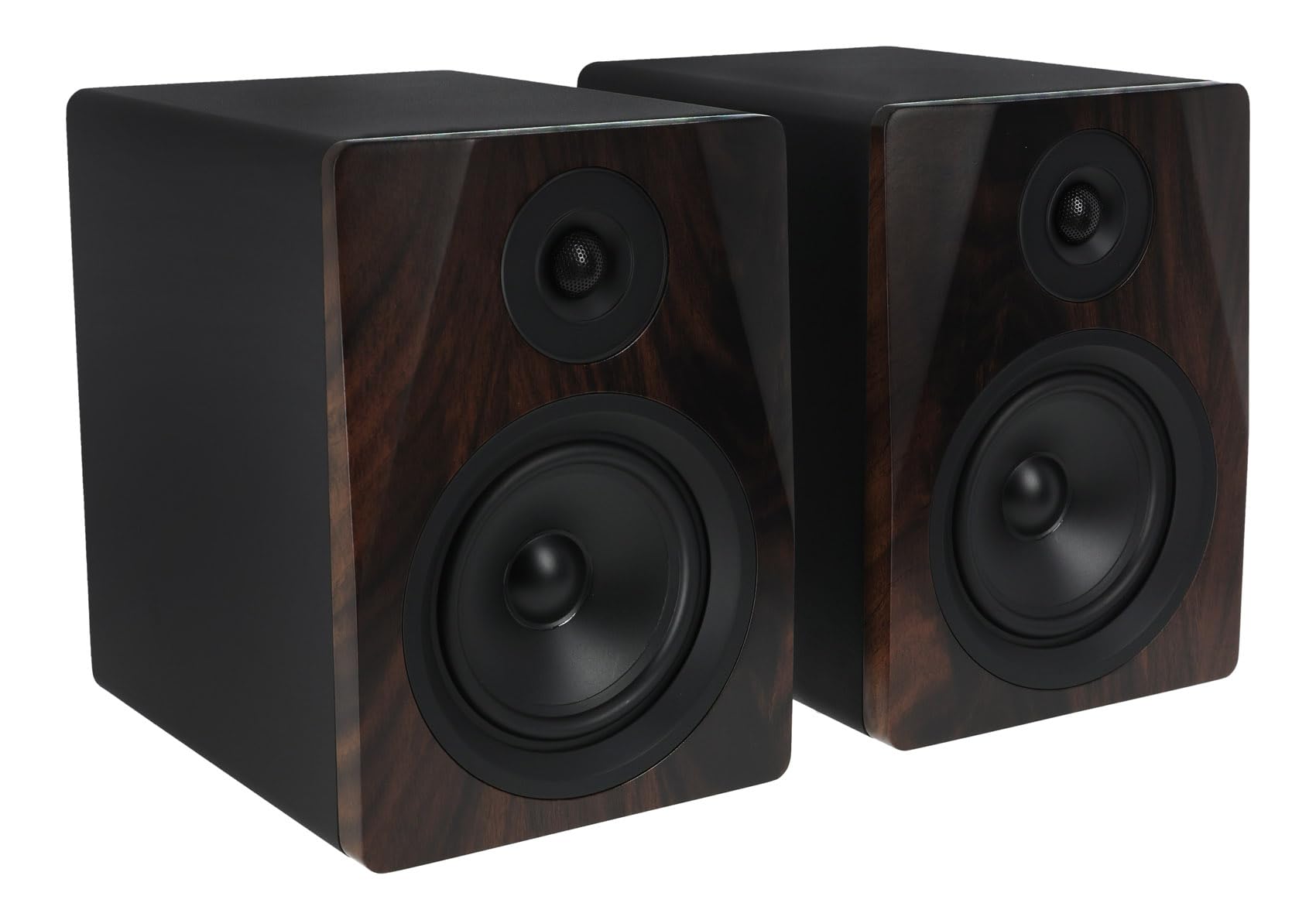
The Rockville APM5D packs an unusual number of features for its price: a bi-amped Class-D design, USB audio input that functions as a simple audio interface, and a 0.5-inch thick MDF cabinet that reduces cabinet resonance significantly better than plastic alternatives. The 5.25-inch polypropylene cone delivers punchy, responsive bass, while the 3/4-inch neodymium silk dome tweeter handles high frequencies with minimal fatigue. The rear-firing bass port requires some clearance, but the enclosed DSP (ADAU1701) helps manage crossovers cleanly.
The USB connectivity is the standout feature here — it allows direct digital connection to a computer without needing an external audio interface, which is a genuine advantage for beginners on a tight budget. The computer-optimized crossover network ensures that the transition between woofer and tweeter remains seamless, producing a balanced soundstage that punches well above its price bracket. Users report that with lossless streaming sources, the sound is crisp and immersive across genres.
The monitors are larger than typical 5-inch designs, so measuring your desk depth before ordering is advised. The rear-mounted controls are tidy but require adjusting before placing the speakers in their final position. For a producer looking for an all-in-one solution without the cost of a separate interface, the APM5D delivers serious value, though the brand lacks the studio pedigree of JBL or Mackie.
Why it’s great
- Built-in USB audio interface saves money
- Thick MDF cabinet minimizes resonance
- Bi-amped Class-D with DSP crossover
Good to know
- Larger cabinet than typical 5-inch monitors
- Rear-firing port needs wall clearance
6. KRK Classic 7

The KRK Classic 7 is a 7-inch two-way powered monitor that delivers the kind of bass extension normally reserved for larger rooms, making it a powerhouse for bass-heavy genres like hip-hop, trap, and electronic dance music. The 73-watt Class A/B amplifier is custom bi-amped to match the drivers, providing high headroom and low distortion even at elevated listening levels. The front-firing port is a critical design decision here — it allows the large 7-inch driver to be placed near walls without the low-end becoming overwhelming, a common pain point with rear-ported designs.
Dedicated low-frequency and high-frequency adjustment controls let you dial in the monitors to your room’s specific challenges. The heavy-duty enclosure is built from thick MDF and feels significantly more solid than plastic-bodied competitors. Reviewers often describe the Classic 7 as “budget hero” monitors, noting that the bass is punchy and clear rather than boomy, and that the midrange and treble are cleaner than the older Rokit series.
Balanced XLR and 1/4-inch TRS inputs provide professional-grade connectivity. The trade-off for the 7-inch driver is a larger cabinet that may dominate a smaller desk, and the price sits at the higher end of the beginner category. For a producer who needs low-end authority without a separate subwoofer, the Classic 7 is the best choice in this guide.
Why it’s great
- Deep bass extension from 7-inch woofer
- Front-firing port for flexible placement
- High headroom from Class A/B amp
Good to know
- Large cabinet takes up desk space
- Bass-heavy tuning may not suit everyone
7. Micca PB42X (Pair)

The Micca PB42X is a 4-inch two-way powered bookshelf speaker that doubles as a competent near-field monitor for desktop music production. Its balanced woven carbon fiber woofer provides fast transient response and tighter bass than typical paper cones, while the silk dome tweeter delivers smooth treble with accurate imaging. The 30-watt Class-D amplifier is modest but clean, sufficient for a desktop setup without the walls shaking.
Where the PB42X truly excels is vocal and midrange clarity. The highly optimized crossover creates an open, balanced sound that makes spoken word and vocals sound lifelike. Reviewers consistently mention that the mids are natural, the highs are sweet, and the low end, while limited in depth, is tight and musical. The ported enclosure extends bass response to around 80Hz before rolling off, meaning a subwoofer is recommended for bass-heavy genres.
The build quality is sturdy for the price, with magnetic grills and a compact footprint that fits on small desks. Connectivity is limited to RCA inputs, so an audio interface with RCA outputs or a simple adapter is required. The PB42X is not a full-range monitor, but for acoustic, folk, or vocal-centric production at a budget-friendly price, it punches far above its size.
Why it’s great
- Exceptional vocal and midrange clarity
- Compact size fits small desks
- Fast transient response from carbon fiber woofer
Good to know
- Low bass rolls off around 80Hz
- RCA-only input, no balanced TRS/XLR
8. Pioneer DJ DM-40D

The Pioneer DJ DM-40D is a 4-inch two-way desktop monitor designed primarily for beginner DJs who need a speaker that works both for cueing and for casual listening. Its unique 2-way sound mode uses DSP to switch between a flatter production setting and a more colored DJ setting, giving beginners a chance to experience how their mixes sound in a club-like frequency curve. The Class-D amplifier runs at 96kHz sampling, keeping the signal pure even at higher volumes.
The DECO convex diffuser helps spread high frequencies evenly, reducing the pinpoint positioning requirement typical of near-field monitors. The 4-inch woofer delivers tight, clean bass for its size, and the time-aligned woofer and tweeter ensure coherent frequency delivery across the listening area. Front-panel headphone jack and easy RCA/mini-jack connectivity make it simple to plug into a DJ controller without adapters.
The DM-40D is not intended for critical mixing or mastering — reviewers note that the sound is not neutral enough for detailed production work, with a noticeable dip in the upper mids that can hide vocal detail. The DJ mode switch does not fully compensate for this coloration. For a budget-conscious DJ who needs a compact practice monitor, the DM-40D is functional, but it should not be the first choice for a producer seeking flat response.
Why it’s great
- 2-way sound mode for DJ/production flexibility
- Compact 4-inch design fits tight spaces
- 96kHz DSP for clean amplification
Good to know
- Not neutral enough for serious mixing
- Upper mid dip hides vocal detail
9. Edifier R1280T (Pair)

The Edifier R1280T is a powered bookshelf speaker with a 4-inch full-range driver and a 13mm silk dome tweeter, designed more for casual listening and vinyl setups than critical studio monitoring. The 42-watt RMS amplifier provides enough volume for a small room, and the classic wood-grain MDF cabinet looks elegant in any living space. Dual AUX inputs allow simultaneous connection to two devices, and the included remote control adds convenience for daily use.
Sound quality is pleasant and warm, with smooth treble and consistent mids. However, the bass response is limited — several reviewers note that a subwoofer is needed for balanced playback. The side-panel bass and treble controls let you tweak the EQ slightly, but the overall voicing is not flat enough to be considered a true studio monitor. The R1280T is best suited for background listening, TV audio, or as a simple desktop speaker for non-critical applications.
Setup is straightforward, though some users report that the included cables are short and the manual could be clearer. The speakers lack balanced inputs, which means they are more prone to picking up noise from nearby electronics. For a beginner who wants a stylish, affordable speaker for casual music enjoyment, the R1280T is a solid choice, but it cannot replace a dedicated near-field monitor for mixing or production.
Why it’s great
- Elegant wood finish and compact size
- Remote control and dual AUX inputs
- Pleasant, warm sound for casual listening
Good to know
- Not a true studio monitor — non-flat response
- Lacks balanced inputs and deep bass extension
FAQ
Do I need an audio interface to use active studio monitors?
What is the difference between a powered bookshelf speaker and a studio monitor?
Is a 7-inch studio monitor too large for a bedroom studio?
Why do some monitors have front-firing ports and others rear-firing ports?
What balanced cables should I buy for my monitors?
Final Thoughts: The Verdict
For most users, the beginner studio monitors winner is the JBL 305P MkII (Pair) because it offers the most transparent sound reproduction, a wide sweet spot, and sophisticated room-tuning controls at a price that challenges monitors costing twice as much. If you need Bluetooth and a compact size for a small desk, grab the PreSonus Eris E4.5 BT. And for bass-heavy production without a subwoofer, nothing beats the KRK Classic 7 in this beginner tier.