
Our readers keep the lights on and the weekend projects moving. As an Amazon Associate, I earn from qualifying purchases.
The difference between a mediocre vegetable harvest and a truly abundant one often comes down to what you put into the soil before you ever plant a single seed. A single bag of the right compost can transform tired, depleted garden beds into a thriving ecosystem of microbial activity, balanced nutrients, and moisture retention that your tomatoes, peppers, and leafy greens will visibly reward you for within weeks.
I’m Rikta — the co-founder and writer behind FitlyFast. I have spent countless hours analyzing the chemical composition, N-P-K ratios, organic certifications, and real-world performance data of bagged soil amendments to build this guide specifically for vegetable gardeners who want measurable results without guesswork.
Whether you are topping off raised beds or amending native clay soil, the right choice depends on understanding the specific nutrient profile and texture of each product. This guide breaks down the seven most effective options to help you find the best bagged compost for vegetable garden that matches your growing goals exactly.
How To Choose The Best Bagged Compost For Vegetable Garden
Selecting the right compost for your vegetable garden goes beyond grabbing the cheapest bag on the shelf. You need to evaluate the nutrient analysis, the source material, the texture, and whether the product is fully composted or simply raw manure. Here are the three most important factors to consider.
Understand N-P-K and the Nutrient Profile
The three numbers on a bag — nitrogen, phosphorus, and potassium — tell you what your vegetables will get fed. Leafy greens like lettuce and kale crave a higher nitrogen number (the first digit), while fruiting crops like tomatoes and peppers need more phosphorus (the middle number) for flower and fruit set. Worm castings typically have a gentle 1-0-0 profile that feeds without burning, while chicken manure often runs 4-2-3, making it much hotter and requiring careful application.
Check the Source Material and Composting Process
Not all composts are created equal. Cow manure is excellent for building soil structure and adding organic matter, but it must be fully composted to eliminate pathogens and weed seeds. Poultry manure is more concentrated and can burn tender roots if applied fresh. Worm castings are a cold-composted product that is packed with beneficial microbes and is virtually impossible to over-apply, making them ideal for seedlings and sensitive crops.
Evaluate Texture and Moisture Retention
The physical feel of the compost matters for root development. A product that is too dense and fine can compact and suffocate roots, while a mix with varied particle sizes creates air pockets for oxygen exchange. Compost that holds moisture well reduces watering frequency in sandy soils, while compost that adds drainage works wonders in heavy clay. Look for a dark, crumbly texture that smells earthy rather than ammonia-like or sour.
Quick Comparison
On smaller screens, swipe sideways to see the full table.
| Model | Category | Best For | Key Spec | Amazon |
|---|---|---|---|---|
| Espoma Organic Land and Sea Gourmet Compost | Premium Blend | Transplanting & soil building | 1 cu ft / 24 lb bag | Amazon |
| Espoma Organic Garden-tone (2-pack) | Granular Fertilizer | Monthly feeding of vegetables & herbs | 3-4-4 N-P-K with Bio-tone | Amazon |
| Back to the Roots Organic Worm Castings | Worm Castings | Seed starting & gentle feeding | 5 lb resealable bag | Amazon |
| Black Kow Composted Cow Manure | Cow Manure | Amending sandy or clay soil | 8 qt / 6 lb bag | Amazon |
| Great Big Roses Liquid Fertilizer Booster | Liquid Booster | Blooming perennials & fruiting vegetables | 32 oz, 8 applications | Amazon |
| Hoffman Dehydrated Super Manure 4-2-3 | Poultry Manure | Fast nitrogen boost | 5 lb, pelletized form | Amazon |
| Worm Bliss Organic Worm Castings | Worm Castings | Containers & small gardens | 1 Qt / 37.23 oz | Amazon |
In‑Depth Reviews
1. Espoma Organic Land and Sea Gourmet Compost

This one-cubic-foot bag is the gold standard for vegetable gardeners who want a complete soil-building product in a single purchase. The blend combines lobster and crab meal for a slow-release source of chitin and calcium, which strengthens plant cell walls and helps deter soil-borne pests. The inclusion of Myco-Tone, a proprietary mix of endo and ecto mycorrhizae, ensures your roots form symbiotic relationships that dramatically increase nutrient and water uptake from day one.
Gardeners report that hostas, tomatoes, and peppers show visible improvement within two weeks of transplanting, with deeper green leaves and more vigorous root systems. The texture is dark, crumbly, and moist without being muddy, making it easy to mix into native soil or use as a top dressing around established perennials. At 24 pounds per bag, it offers serious value for the amount of organic matter it delivers compared to smaller bags of plain manure or peat-based products.
Long-term users note that repeated applications over two or three seasons noticeably reduce the need for additional synthetic fertilizers, as the mycorrhizae and lobster meal continue feeding the soil food web well after the initial nutrients are consumed. This is the most comprehensive one-bag solution for improving the biological and structural health of your vegetable garden soil.
Why it’s great
- Dual-action blend feeds plants and builds soil biology simultaneously
- Contains beneficial mycorrhizae not found in standard compost
- Large bag size covers significant garden area
Good to know
- Heavy bag at 24 pounds may be difficult to move for some
- Higher upfront cost than basic manure options
2. Espoma Organic Garden-tone 3-4-4 (2-Pack)

This two-pack of four-pound bags gives you a season-long feeding program for all cool and warm season vegetables. The 3-4-4 analysis is specifically balanced for crops like tomatoes, peppers, squash, melons, lettuce, kale, and cabbage, providing slightly more phosphorus and potassium than nitrogen to encourage strong root development and fruit set. The Bio-tone formula includes beneficial microbes that continue breaking down organic matter in the root zone even after application.
In real-world growing conditions, users in zone 10b reported harvesting over 400 pounds of tomatoes and 100 pounds of carrots from a single urban garden after switching to Garden-tone. The granules are easy to broadcast around the drip line of each plant, and you simply water them in.
The two-pack format is smart because one bag works for the initial planting preparation and the second carries you through the monthly feeding schedule for the entire growing season. The smell is mild and earthy, dissipating quickly after watering. This is a reliable, repeatable, and organic-approved granular fertilizer that delivers consistent results across a wide variety of vegetable types.
Why it’s great
- Balanced N-P-K supports both leafy growth and fruit production
- Safe for organic gardening with no synthetic chemicals
- Two-bag pack covers a full season for most gardens
Good to know
- Has a noticeable organic odor that some find unpleasant
- Granules require watering in to activate
3. Back to the Roots Organic Worm Castings

Pure vermicompost from earthworms fed a controlled diet delivers one of the most nutrient-dense and microbially rich soil amendments you can buy. This five-pound bag from Back to the Roots is screened to remove debris and provides a gentle 1-0-0 nutrient profile that will never burn even the most delicate vegetable seedlings. The fine, dark granules mix effortlessly into chunky soil recipes containing coco coir, perlite, and charcoal, adding slow-release nutrients without compacting the growing medium.
Gardeners who grow milkweed for monarch butterflies specifically trust this product because it is completely safe for pollinators and contains no synthetic additives. The resealable bag is a practical feature, allowing you to dip into it multiple times without worrying about moisture ruining the contents. Users report that a single application at planting time produces visibly thicker stems and darker leaf color within two weeks, and the benefits persist for several months without needing additional feeding.
One characteristic to consider is the high moisture retention of the castings, which means you should adjust your watering schedule slightly downward when you mix them into your potting soil. This is a premium choice for gardeners who prioritize biological soil health over raw fertilizer numbers, and it works especially well when combined with a balanced granular fertilizer for heavy feeders.
Why it’s great
- Impossible to over-apply or burn plants, even on seedlings
- High microbial content improves long-term soil health
- Resealable bag keeps product fresh for repeated use
Good to know
- Holds moisture, requiring careful watering adjustments
- Five-pound bag covers less area than bulky manure options
4. Black Kow Composted Cow Manure

Black Kow is a legendary name among gardeners for a reason — this composted cow manure is fully broken down, eliminating the weed seeds and pathogens that raw manure can introduce. The 8-quart bag provides a generous volume of organic material that excels at improving both sandy and clay soils. In sandy soils, it acts like a sponge, holding moisture and nutrients around the root zone so they are available when the plant needs them instead of leaching away with the first watering.
For heavy clay soils, the coarse organic matter physically breaks up compacted particles, creating air channels that allow roots to penetrate deeper and breathe more easily. The manure contains millions of beneficial bacteria that convert nitrogen and other nutrients into forms vegetables can readily absorb. Gardeners report that their bulbs, fruit trees, and vegetable beds all respond dramatically to this amendment, with pawpaw and pear trees showing particularly strong growth.
The smell is undeniably strong — users describe it as terrible — but it dissipates quickly once mixed into the soil and does not linger around the garden. The value proposition is strong here because the volume per dollar is higher than worm castings or specialty blends, making it ideal for large beds and bulk soil-building projects where cost matters.
Why it’s great
- Massively improves both sandy and clay soil structure
- High volume per bag for a low price point
- Fully composted to eliminate weed seeds
Good to know
- Strong odor that some find unpleasant when first opened
- Thicker texture can be harder to spread evenly
5. Great Big Roses Liquid Fertilizer Booster
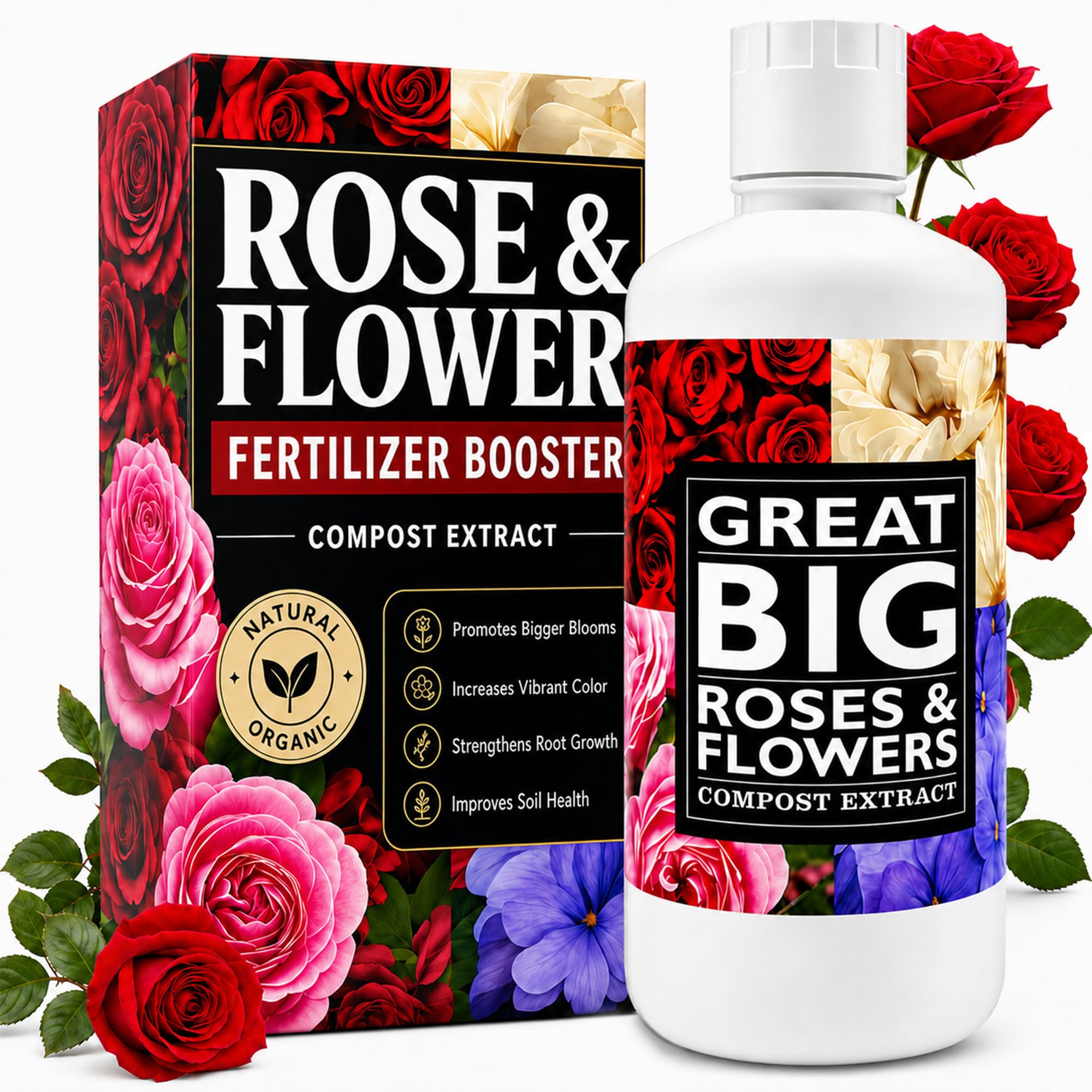
This liquid concentrate is not a compost in the traditional sense, but it functions as a powerful compost extract that amplifies the performance of whatever organic fertilizer you are already using. The formula delivers humic acids, seaweed, and over 70 chelated trace minerals directly to the root zone, unlocking nutrients that were previously locked in the soil. For vegetable gardeners, this means your tomato and pepper plants can access existing soil nutrients more efficiently, often producing noticeable results after a single application.
The 32-ounce bottle mixes at a rate of four ounces per gallon of water, yielding eight full applications that can cover an entire growing season for most gardens. Users report that rose bushes that had not bloomed in years produced big flowers within weeks, and hydrangeas and citrus trees showed similar dramatic responses. The liquid format is especially useful for quick corrective feeding when you notice a nutrient deficiency mid-season, because the nutrients are immediately available to the plant rather than needing time to break down.
The bottle design is the one weak point — the wide mouth makes it easy to spill concentrate during measurement. Given the cost per bottle, every spill is frustrating. However, for growers who want to push their fruiting vegetables to maximum production without adding more bulk compost to already-rich soil, this liquid booster is an effective precision tool.
Why it’s great
- Unlocks existing nutrients in soil for immediate plant uptake
- Contains 70 trace minerals not found in standard fertilizers
- Single bottle covers an entire growing season
Good to know
- Wide-mouth bottle leads to easy spills during mixing
- More expensive per application than granular alternatives
6. Hoffman Dehydrated Super Manure 4-2-3

Dehydrated poultry manure in pelletized form offers the highest nitrogen content of any product in this guide, making it an excellent choice for giving leafy greens and heavy-feeding vegetables a rapid growth boost. The 4-2-3 analysis means four parts nitrogen, which drives lush green foliage production in crops like kale, spinach, lettuce, and cabbage. The pellets are easy to apply — just sprinkle a small amount around the base of each plant and water in, and the nutrients become available to the roots quickly.
Because poultry manure is more concentrated than cow manure, a little goes a long way. Users report that one teaspoon per six-inch pot is sufficient for container vegetables, and one tablespoon per twelve-inch pot works well for in-ground plants. The texture is dry and pelletized, which means less mess than loose castings and easier storage. There is a mild odor, but it is not as pungent as fresh chicken manure, and wearing a dust mask during application is recommended because the fine dust can be irritating.
The primary caution is that over-application will burn plant roots — this is not a product you can apply liberally without consequences. The bag also lacks a resealable closure, so you will need a clip or a storage tub to keep it dry between uses. This is a cost-effective, high-nitrogen option for gardeners who understand precise application rates and want rapid green growth.
Why it’s great
- Highest nitrogen content for fast leafy green growth
- Pelletized form is easy to apply and store
- Very concentrated, so one bag goes a long way
Good to know
- Easy to over-apply, which can burn and damage plants
- Bag does not have a resealable closure
7. Worm Bliss Organic Worm Castings

Worm Bliss offers pure worm castings from worms raised on a strictly vegan diet in a climate-controlled facility, ensuring the final product is screened free of dirt, sand, and synthetic additives. The resulting texture is uniformly rich and dark, with an earthy smell and no ammonia or foul odor. This is an ideal amendment for container vegetable gardens where space is at a premium and every ounce of soil needs to perform at maximum capacity.
The castings improve soil porosity, creating a well-oxygenated environment that supports efficient water and nutrient uptake. The humus content significantly improves water retention, reducing the need for frequent watering in small containers. Users who mix these castings into chunky aroid mixes for indoor vegetables report robust growth and healthier root systems. The product also works well for making compost tea — simply steep the castings in water and use the liquid as a quick foliar feed or soil drench.
The one-quart bag is notably small — barely larger than a bag of potato chips — which catches many first-time buyers off guard. If you have a large vegetable garden, you will need multiple bags or a larger size option. However, for small-space gardeners with a few containers on a patio or balcony, this bag offers uncompromised quality without wasting product you will not use.
Why it’s great
- 100% pure castings with no filler or synthetic ingredients
- Ideal for small container gardens and compost tea
- No odor, making it suitable for indoor use
Good to know
- Very small bag size for the price
- Not cost-effective for large in-ground gardens
FAQ
What is the difference between compost and fertilizer for vegetable gardens?
Can I use bagged compost directly without mixing it into the soil?
How much bagged compost do I need for a raised vegetable bed?
Is worm castings better than cow manure for tomatoes?
Will bagged compost attract pests like rodents or flies?
Final Thoughts: The Verdict
For most users, the best bagged compost for vegetable garden winner is the Espoma Organic Land and Sea Gourmet Compost because it combines lobster and crab meal with beneficial mycorrhizae to simultaneously feed your plants and rebuild your soil biology, all in a generous one-cubic-foot bag. If you want a precise slow-release granular feed that works across every vegetable type and includes an organic safety margin, grab the Espoma Organic Garden-tone (2-pack). And for starting seeds or amending container mixes with a product that will never burn your seedlings, nothing beats the Back to the Roots Organic Worm Castings.