
Our readers keep the lights on and the weekend projects moving. As an Amazon Associate, I earn from qualifying purchases.
The single most common mistake new bonsai growers make is treating their miniature tree like a houseplant stuffed into regular potting mix. Standard soil compacts, holds too much moisture, and suffocates the delicate root system that keeps your bonsai alive and thriving for decades.
I’m Rikta — the co-founder and writer behind FitlyFast. I’ve spent hundreds of hours researching the science of bonsai substrates, analyzing particle size, water retention rates, and aeration properties to find the mixes that genuinely support root health and long-term tree vitality.
This guide cuts through the noise to deliver the most practical, research-backed recommendations for finding the best bonsai soil that fits your specific tree species, climate, and experience level.
How To Choose The Best Bonsai Soil
Bonsai isn’t just about pruning branches — it’s about managing a root system within an artificial container. The soil you choose dictates how much oxygen reaches the roots, how quickly water drains, and how effectively nutrients are absorbed. Skipping this decision leads to stunted growth or a dead tree within months.
Particle Size and Structure
The single most important factor in any bonsai soil is the particle size. A good mix uses particles between 1/8 inch and 1/4 inch. This creates air pockets between each granule, allowing oxygen to reach the roots and excess water to drain freely. Dust and fine particles clog these gaps and suffocate roots — always look for soil that has been sifted to remove sediment.
Water Retention vs. Drainage
A common beginner assumption is that all bonsai soil should drain as fast as possible. The truth is that the right balance depends on your tree species and local climate. Conifers and deciduous trees prefer more moisture retention, while succulents and tropicals need faster drainage. Components like akadama and calcined clay absorb water internally and release it slowly, while pumice and lava rock create fast drainage channels.
Pre-Mixed vs. DIY
Pre-mixed soils offer convenience and consistency, but you sacrifice control over the exact ratio of components. If you are growing a single tree or just starting out, a quality pre-mixed blend simplifies the process. Experienced growers often mix their own substrate to fine-tune water retention and aeration for specific species. If you choose a pre-mix, verify it contains at least two different aggregate types for structural balance.
Quick Comparison
On smaller screens, swipe sideways to see the full table.
| Model | Category | Best For | Key Spec | Amazon |
|---|---|---|---|---|
| Bonsai Jack Universal Organic Mix #221 | Premium Pre-Mix | Long-term root development & precision growers | Screened particle size, pH 6.4 | Amazon |
| Bonsai Soil by The Bonsai Supply (4qt) | Professional Pre-Mix | Experienced users needing fast drainage | 4-quart bag, pre-mixed & sifted | Amazon |
| NOHOBE Hard Akadama (5lb) | Single Component | Custom mixers & visual moisture indicators | 1/8-1/4 inch grain, 5 pounds | Amazon |
| Harris Bonsai Soil (2qt) | All-Purpose Pre-Mix | Beginners and multi-species households | Includes lime for pH balance | Amazon |
| DUSPRO Premium Bonsai Soil Mix (2qt) | 4-in-1 Pre-Mix | Convenience-oriented users wanting akadama blend | Contains akadama, pumice, vermiculite, peat moss | Amazon |
| Tinyroots Akadama (2.25qt) | Single Component Sifted | Japanese-style growers & quality akadama seekers | Sifted 1/8-1/16 mesh, 2.25 quarts | Amazon |
| Calcined Clay by The Bonsai Supply (2qt) | Single Component | Succulent & cactus growers on a budget | 1/8 inch particle, 2-quart bag | Amazon |
In‑Depth Reviews
1. Bonsai Jack Universal Organic Bonsai Soil Mix #221, 2 Gallons
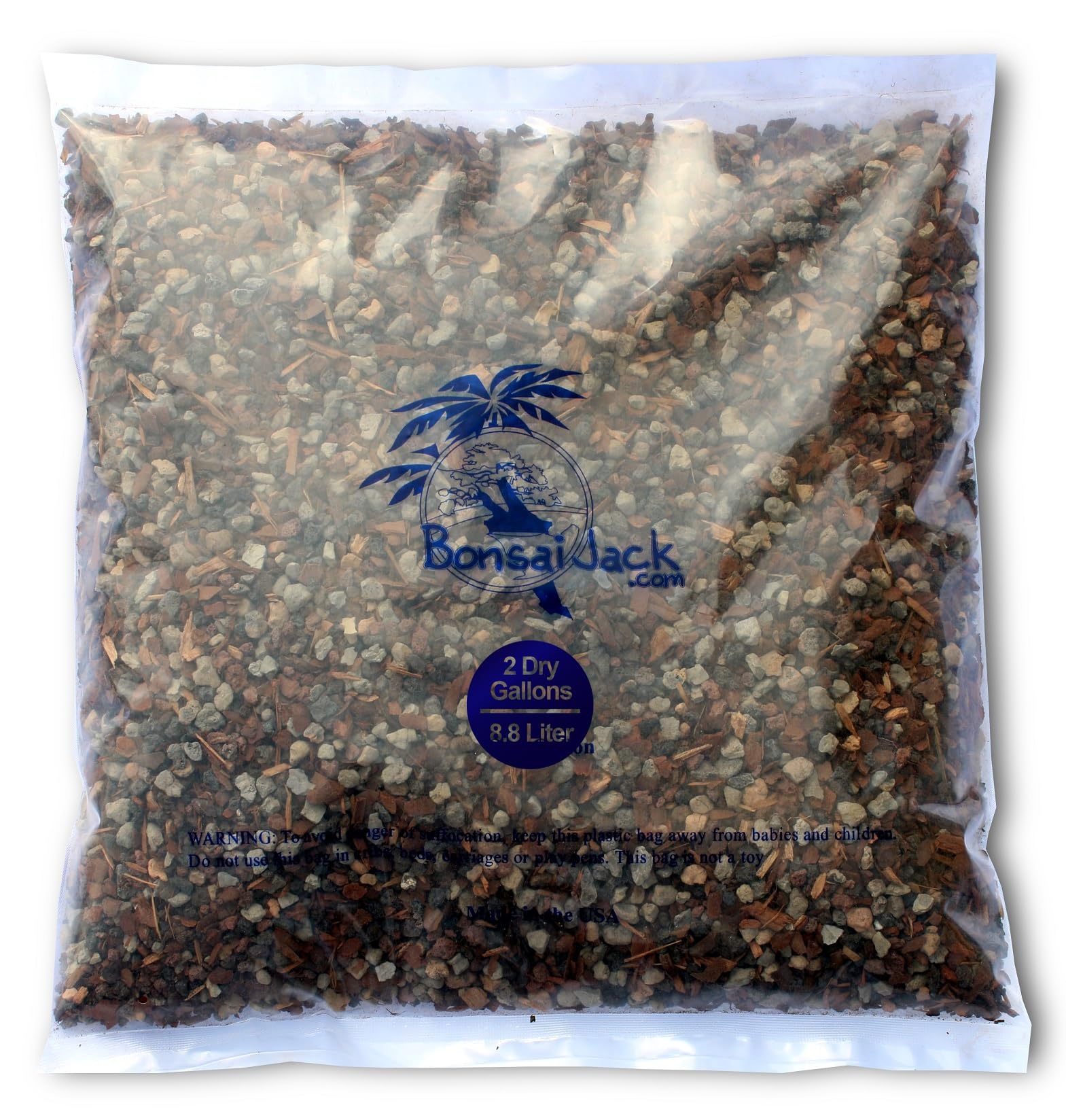
Bonsai Jack has sold over a hundred thousand bags of Mix #221 for good reason — it offers the most consistent particle size of any pre-mixed option on this list. The 1/4-inch screened granules create excellent air pockets, and the pre-washed process removes virtually all dust that could clog the substrate. The pH is locked at 6.4, which suits the vast majority of bonsai species including tropicals and conifers.
This mix uses a blend of pine bark, calcined clay, and porous aggregates that strike a reliable balance between water retention and drainage. Users report that root health improves noticeably after repotting, with less breakdown over time compared to akadama-based mixes. The 2-gallon bag provides enough volume for several repotting sessions, making it one of the better values for serious hobbyists.
The only trade-off is that the pine bark component does break down slowly over 2-3 years, meaning you will need to refresh the top layer periodically. For growers focused on long-term root development and ramification, this mix delivers professional-grade performance without the premium price of pure akadama.
Why it’s great
- Consistent 1/4-inch screened particles ensure optimal aeration
- Pre-washed to eliminate dust and fine sediment
- Balanced pH of 6.4 suits most bonsai species
- Large 2-gallon bag offers excellent value
Good to know
- Pine bark component will slowly break down over a few years
- Less suitable for mature trees in high-precision refinement
2. Bonsai Soil by The Bonsai Supply – 4qts. Professional Bonsai Soil Mix

This mix from The Bonsai Supply is their best-selling formulation and it targets experienced growers who want rapid drainage and maximum aeration. The particle structure is open and porous, which means water flows through quickly and roots get plenty of oxygen — a critical factor for preventing root rot in species like Japanese maples and pines.
What sets this product apart is the eco-friendly resealable stand-up pouch made from recycled materials. The 4-quart bag gives you double the volume of most entry-level options without a massive jump in investment. Users consistently report improved tree health after switching to this mix, particularly for trees that were previously struggling in dense, organic-heavy soil.
However, because this mix drains so efficiently, it lacks intrinsic nutrients. Beginners who use this soil straight out of the bag will need to fertilize regularly and water more attentively — otherwise, the tree can dry out faster than expected. Adding up to 30% organic material like chunky bark or compost is a solid workaround for those still developing their watering discipline.
Why it’s great
- Professional-grade drainage prevents root rot effectively
- Comes pre-mixed and sifted for immediate use
- Eco-friendly resealable packaging keeps soil fresh
Good to know
- Lacks nutrients — requires regular fertilizing
- Drains very fast, demanding attentive watering
3. NOHOBE 5lb Hard Akadama Bonsai Soil 1/8-1/4 inch Small Grain

Akadama is the gold standard in Japanese bonsai cultivation, and this offering from NOHOBE delivers hard-fired clay particles that resist crumbling far better than cheaper alternatives. The 1/8 to 1/4 inch grain size is ideal for custom blending — combine it with pumice and lava rock for a well-draining mix that still holds moisture inside each granule.
The visual moisture indicator is a practical advantage: the akadama darkens noticeably when wet, giving you a clear signal about when to water. Users report minimal dust compared to budget akadama options, and the reusable sealing bag keeps the material dry between uses. This product is also popular among succulent and cactus growers for its ability to prevent overwatering.
One thing to note is that akadama is heavy — 5 pounds of this material fills less volume than you might expect. If you are repotting multiple trees, you may need more than one bag. Additionally, pure akadama is rarely used alone for bonsai; plan to mix it with other aggregates like pumice or lava rock for best results.
Why it’s great
- Hard-fired granules resist breaking down over time
- Darkens when wet for easy watering cues
- Free of fillers, dyes, and chemicals
Good to know
- Heavy material — 5 pounds covers less volume than expected
- Best used as a component in a custom mix
4. Harris Bonsai Soil, All Purpose Premium Blend, 2qt

Harris has formulated this blend specifically for versatility — it works well with Juniper, Pine, Ficus, Fir, and most other common bonsai species. The inclusion of forest humus, pumice, calcined clay, and basalt rock dust creates a soil that retains enough moisture for beginner-friendly watering while still draining effectively enough to prevent soggy roots.
A standout feature is the addition of lime for pH balance, which is uncommon in many budget blends. This helps buffer the soil against acidity fluctuations that can stress delicate root systems. The 2-quart bag is sized perfectly for a single bonsai tree repotting or several small containers, and the price point makes it an easy entry point for newcomers.
User reviews highlight fast new growth after repotting with minimal transplant shock. The mix holds moisture longer than purely inorganic substrates, making it a good match for growers in dry climates or those who cannot water daily. The trade-off is that it may retain slightly too much water for species that prefer very lean, fast-draining conditions.
Why it’s great
- Versatile formula works with many bonsai species
- Contains lime for pH stabilization
- Encourages fast new growth with low transplant stress
Good to know
- Higher organic content may not suit all species
- 2-quart bag is small for multiple trees
5. DUSPRO Premium Bonsai Soil Mix Ready to Use Pre-Mixed 4in1, 2 Quart
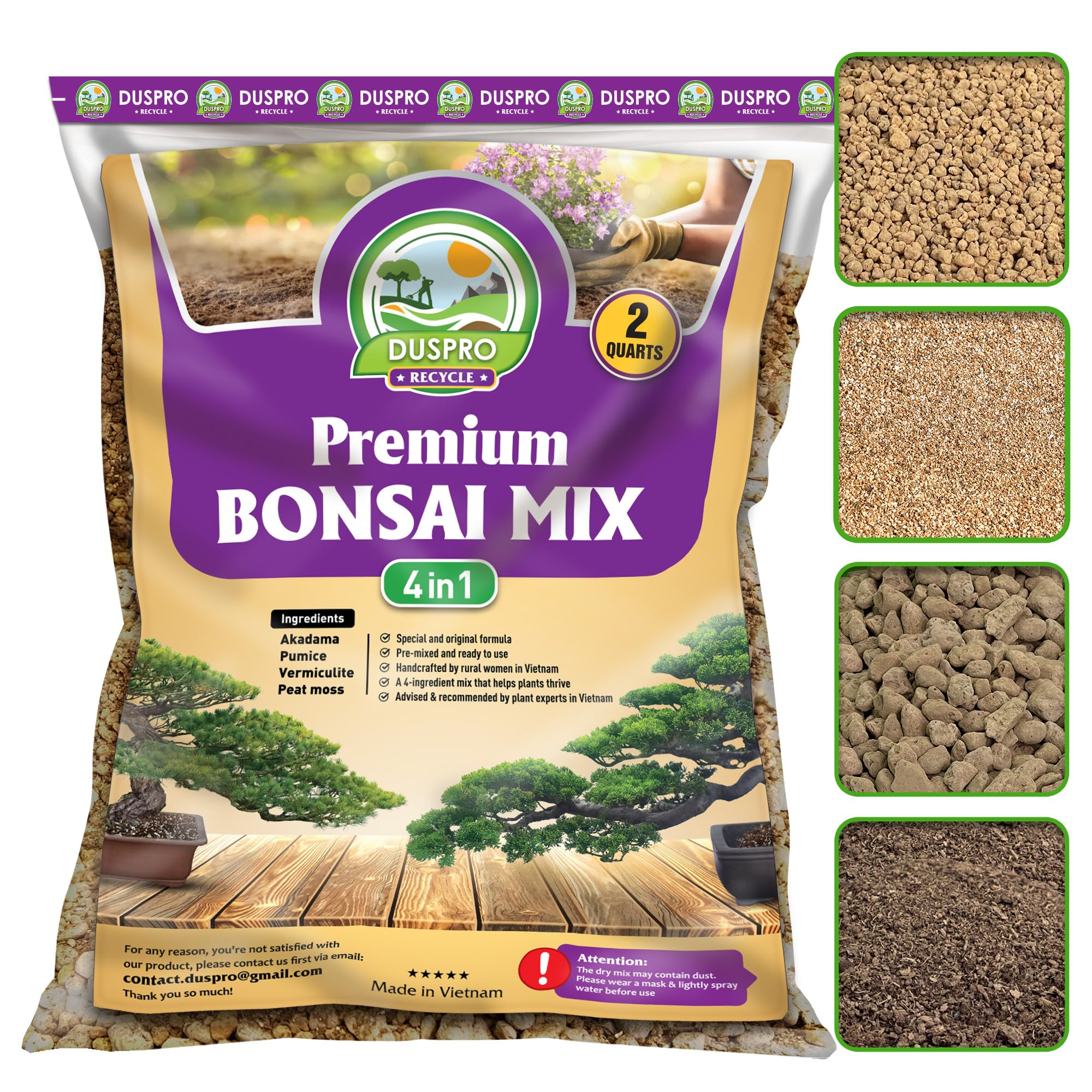
DUSPRO combines akadama, pumice, vermiculite, and peat moss into a single ready-to-use formula that eliminates the guesswork for beginners. The inclusion of akadama gives it legitimate bonsai credentials, while the pumice and vermiculite work together to balance aeration with moisture retention. This is essentially a 4-in-1 solution for anyone who wants to start repotting without sourcing separate components.
The peat moss component boosts the nutrient-holding capacity of the mix, which helps sustain young trees through their first growing season. User feedback is generally positive, with many reporting strong root establishment and healthy foliage after repotting. The convenience factor is real — you open the bag and pour it straight into the pot.
The main drawback reported by some users is drainage inconsistency. Because the mix includes finer organic material like peat moss, a few batches have arrived with excess dust that slows water flow. Rinsing the soil lightly before use can resolve this and improve the overall drainage performance significantly.
Why it’s great
- Convenient pre-mixed blend with four quality components
- Akadama provides moisture retention and aeration
- Nutrient-rich formula supports vigorous growth
Good to know
- Some bags contain dust that impedes drainage
- Pre-rinsing recommended for best performance
6. Tinyroots Akadama 2.25qt Bonsai Soil, Sifted 1/8-1/16 Mesh

Tinyroots focuses on quality control by sifting their akadama through a 1/8-inch mesh and then through a 1/16-inch mesh to remove sediment and small particles before bagging. This double-sifting process results in granules that are more uniform than many competing akadama products, which means more consistent aeration throughout the pot.
The volcanic origin of this akadama gives it good internal porosity — it absorbs water like a sponge and slowly releases it to the roots. Users who have tried cheaper akadama options note that this version holds its shape longer and produces far less dust. It works well as a soil amendment mixed with Tinyroots tropical blend or as a standalone component for species that prefer sharper drainage.
Some customers mention that the packaging can show signs of sun exposure during shipping, though the soil itself remains usable. The 2.25-quart volume is sufficient for a medium-sized bonsai or several smaller training pots, but heavier users may find they need multiple bags for larger projects.
Why it’s great
- Double-sifted to remove fine dust and sediment
- Granules resist crumbling better than budget akadama
- Visual moisture indicator aids watering decisions
Good to know
- Packaging may show light damage during delivery
- Volume may be limited for larger repotting jobs
7. Calcined Clay for Bonsai, Succulent, Cactus | 2 Quarts | The Bonsai Supply

If you are on a tight budget but still want a soil component that outperforms standard potting mix, this calcined clay from The Bonsai Supply is a strong entry-level option. The high-firing process creates durable clay particles that resist breaking down, and the 1/8-inch size promotes air pockets and good drainage. Many succulent and cacti growers rely on this as their primary substrate.
The calcined clay absorbs and releases water gradually, which helps prevent both overwatering and underwatering. Users report that it simplifies watering routines significantly, especially for plants like lithops and other drought-sensitive species. The eco-friendly stand-up pouch is a nice bonus for storage convenience.
It is worth noting that this is a single-component product rather than a full bonsai mix. For most bonsai trees, you will need to combine this calcined clay with other aggregates like pumice or lava rock to create a balanced substrate. The reddish-pink color may also be surprising if you are used to gray or tan bonsai soils.
Why it’s great
- Durable fired clay particles resist breakdown
- Excellent for succulents and cacti
- Affordable entry point for soil-free mixes
Good to know
- Single component — must be mixed for bonsai use
- Reddish-pink color differs from traditional akadama
FAQ
Can I use regular potting soil for my bonsai tree?
How often should I repot my bonsai with fresh soil?
Should I sift my bonsai soil before using it?
Can I mix different bonsai soil brands together?
Final Thoughts: The Verdict
For most users, the best bonsai soil winner is the Bonsai Jack Universal Organic Mix #221 because it delivers consistent particle size, balanced pH, and long-term root health without the premium price of pure akadama. If you want fast drainage and professional-grade aeration, grab the Bonsai Soil by The Bonsai Supply (4qt). And for a custom mix base with true Japanese akadama quality, nothing beats the NOHOBE 5lb Hard Akadama.