
Our readers keep the lights on and the weekend projects moving. As an Amazon Associate, I earn from qualifying purchases.
Finding toys that genuinely engage a child on the autism spectrum without overwhelming their senses is a uniquely challenging hunt. The wrong toy is ignored in minutes, while the right one can provide a calming focal point, build communication skills, and deliver hours of meaningful, self-directed play.
I’m Rikta — the co-founder and writer behind FitlyFast. My research for this guide involved cross-referencing hundreds of verified customer reviews, analyzing the specific design features that support sensory regulation, and assessing each product’s ability to deliver tactile, visual, or vestibular input in a safe and durable package.
Each toy on this list was selected for its ability to meet a specific sensory need or developmental goal, from fidget variety and emotional learning to active spinning and non-verbal communication. This is the definitive guide to autistic toys.
How To Choose The Best Autistic Toys
An effective toy for an autistic child addresses one or more sensory systems—tactile, vestibular, auditory, or visual—in a predictable, repeatable way. The key is identifying whether the child seeks sensory input or avoids it.
Identify the Sensory Need
A child who craves movement will respond to a spinning chair, while a child who needs oral or manual stimulation will engage with a variety pack of fidget items. Visual seekers benefit from projectors with changing patterns and colors. Understanding the specific sensory profile determines whether the toy will soothe or overstimulate.
Prioritize Durability and Safety
Autistic children often use toys in repetitive, high-intensity ways that test seams and materials. Look for reinforced stitching, BPA-free and non-toxic plastics, supports for load-bearing items, and surfaces that are easy to wipe clean. Avoid toys with small parts that can be easily detached or swallowed.
Consider the Skill-Building Potential
Beyond regulation, the best toys teach. Communication devices, emotion puppets, and talking pens build language. Spinning chairs improve balance and body awareness. Construction sets and space-themed manipulative objects encourage cognitive flexibility. The toy should offer a path from co-regulation towards independent play and learning.
Quick Comparison
On smaller screens, swipe sideways to see the full table.
| Model | Category | Best For | Key Spec | Amazon |
|---|---|---|---|---|
| BABAMU Spinning Chair | Vestibular | Active sensory seekers | 220 lbs weight capacity | Amazon |
| KOKODI Talking Pen | Audio Language | Speech & literacy building | 1,500+ English pronunciations | Amazon |
| Joyreal AAC Device | Communication | Non-verbal expression | 37 pre-installed talking buttons | Amazon |
| Staryou Sensory Light Projector | Visual/Audio | Calm-down & bedtime routine | 31 color modes + 15 sounds | Amazon |
| COOLDUCK Solar System Set | STEM Tactile | Thematic sensory play | 10 foam planets + 17 flash cards | Amazon |
| hand2mind Feeling Puppets | Emotional Learning | Emotion identification | 5 hand puppets with mood hands | Amazon |
| FunKidz Fidget Pack Box | Tactile Variety | On-the-go sensory breaks | 24 unique fidget items | Amazon |
In‑Depth Reviews
1. BABAMU Spinning Chair for Autistic Kids
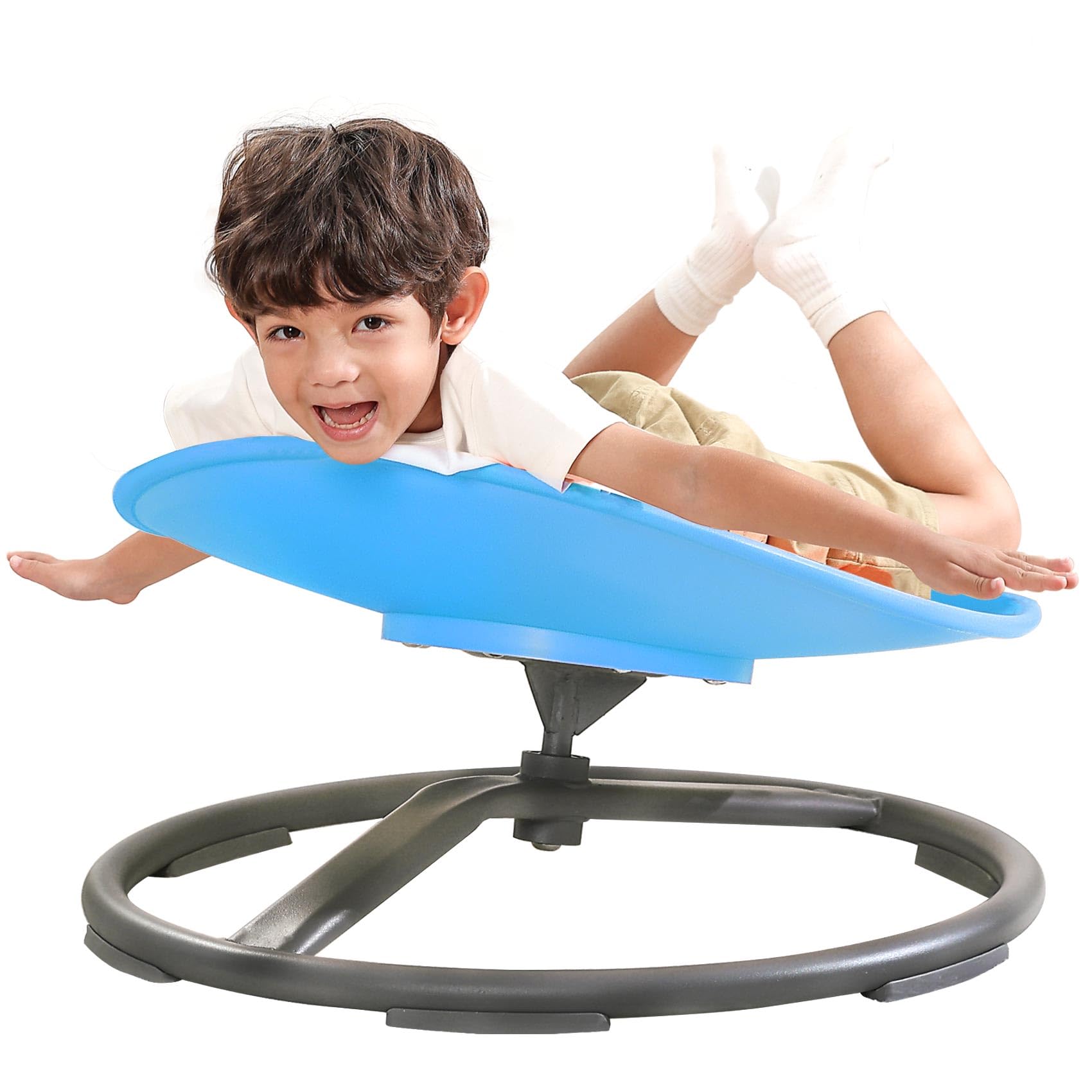
The BABAMU Spinning Chair is the single most impactful sensory tool for the vestibular-seeking child on this list. Its reinforced metal base and full 360-degree rotation allow for safe, repetitive spinning that directly addresses the need for proprioceptive and movement input without requiring an adult to push or supervise constantly.
Built with a high-impact polypropylene shell and a stainless steel frame, the chair supports up to 220 pounds, meaning older children and teens can use it as well. The smooth polished edges eliminate burr risks, and the ergonomic curved design supports sitting, kneeling, and prone positions. Anti-slip feet prevent sliding during vigorous spins, making it a stable platform for both calming and active play.
Parents report that the spinning motion effectively reduces motion sickness sensitivity over time and improves overall body balance. The chair blends into home environments rather than looking like clinical equipment. Easy assembly, wipe-clean surface, and compact footprint make it a practical long-term investment in sensory regulation.
Why it’s great
- Heavy-duty 220 lb load capacity outlasts the child’s growth
- Reduces car/sea sickness through gentle vestibular training
Good to know
- Requires minor assembly (frame to seat base)
- Larger footprint than a standard chair, needs floor space
2. KOKODI Talking Pen Books Set
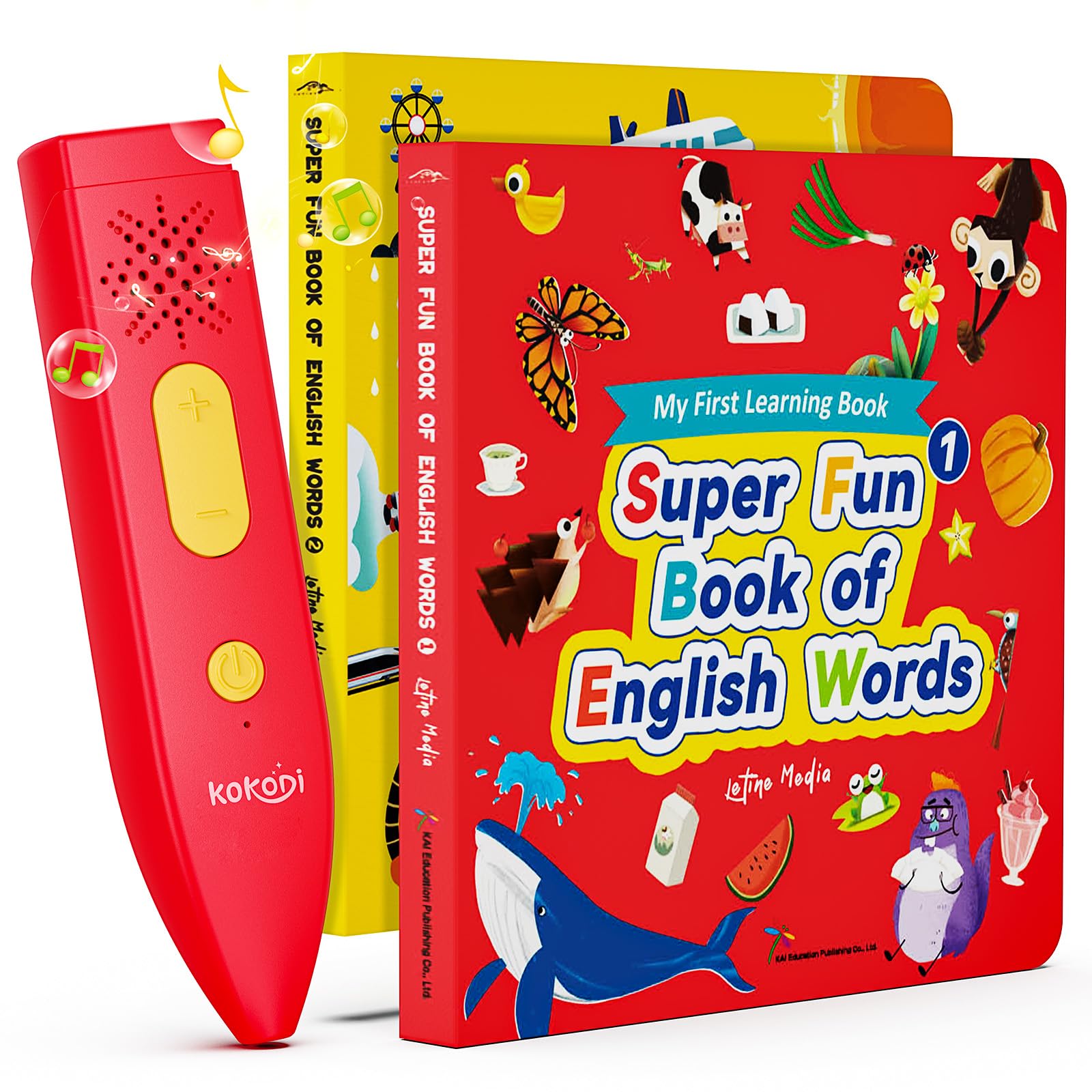
The KOKODI Talking Pen merges auditory learning with tactile interaction in a way that directly benefits autistic children who thrive on repetition and clear cause-and-effect feedback. The set includes two spiral-bound books covering 22 themes with over 450 words, and the child simply taps the pen on any image or word to hear it spoken in crisp American English.
No downloads, no screen dependence—just insert two AAA batteries and the pen works immediately. The pen responds within a 120-degree angle and reads clearly even for children who struggle with fine motor precision. The books feature rounded corners, tear-resistant pages, and environmentally friendly ink. A recording function lets parents layer in their own voice for familiar comfort or messaging.
Parents of non-verbal and minimally verbal children report sustained engagement for up to an hour at a time, a stark contrast to short attention spans with flash cards or static books. The independent play potential is high—the child can explore without adult cueing. This makes it a strong candidate for building pre-reading skills and confidence.
Why it’s great
- Independent tapping builds cause-and-effect understanding
- Recording function strengthens parent connection via voice
Good to know
- Pen tip must touch marked areas accurately for sound to trigger
- AAA batteries not included in the box
3. Joyreal AAC Device for Autism

For non-verbal children and those with speech delays, the Joyreal AAC Device provides an immediate, low-friction bridge to self-expression. It features 37 pre-installed picture-based buttons covering essentials like “yes,” “no,” “I’m thirsty,” “I’m sleepy,” and “it’s too loud,” plus 8 programmable buttons for personalization with the caregiver’s own voice.
The device is lightweight, battery-powered (3 AAA batteries), and comes in a storage bag for portability. A male/female voice switch adds flexibility, and the volume is adjustable so the sound cuts through busy environments without distortion. The pictures are clear and intuitive—no complex hierarchies to navigate like a tablet-based AAC app.
A Mayo Clinic speech therapist noted the device’s effectiveness for a 3-year-old who began communicating consistently for the first time. While the button membrane requires a direct intentional push (preventing accidental activation), this also encourages deliberate communication. It is a practical backup to higher-tech systems or a standalone tool for families on a structured budget.
Why it’s great
- Recordable buttons allow personalized, familiar voices
- Simpler to use than iPad-based AAC apps
Good to know
- Buttons require direct, intentional pressure (minor learning curve)
- Runs on AAA batteries, not rechargeable
4. Staryou Sensory Light Projector

The Staryou Sensory Light Projector targets the visual and auditory sensory systems simultaneously, making it an outstanding tool for calming a child who struggles with bedtime transitions. It projects three interchangeable film modes—Ocean Animals, Starry Skies, and Dinosaur World—onto the ceiling and walls in vivid color, creating a safe and predictable visual retreat.
With 15 built-in sounds including white noise, nature tracks, and lullabies, plus 31 customizable color modes and a 360-degree rotating head, the unit can be fine-tuned to match the child’s exact regulation state. The remote control with large buttons allows caregivers to adjust brightness (10/50/100%), set timers (1/2/4 hours), or switch films without disturbing the child.
Users report that the projector holds attention far longer than a static night light and provides the visual anchoring that helps autistic children self-soothe. The dinosaur egg aesthetic appeals to young kids without being babyish. The only limitation is that if the unit auto-shuts off, the remote cannot wake it; manual restart is required.
Why it’s great
- Three projection themes keep visual engagement fresh
- Remote operation enables parent-led calming without leaving the room
Good to know
- Auto-shutoff prevents remote wake-up, requiring manual restart
- Plastic shell is lightweight but not impact-resistant
5. COOLDUCK Solar System Planets Toys

The COOLDUCK Solar System Set provides a thematic sensory experience that combines soft tactile materials with structured learning content. It includes 10 foam planets, 6 space bouncy balls, 2 astronaut figures, a mesh storage bag, planet stickers, and 17 flash cards. The foam planets are non-toxic and highly durable, appropriate for squishing and tossing without breaking.
Pediatric occupational therapists recommend this set for fine motor development, motor planning, and pretend play within a space exploration narrative. The flash cards add a turn-taking, cognitive element that works well for joint attention and co-regulation between child and therapist or parent. The included mesh bag simplifies cleanup, making it a practical choice for classroom calm-down corners.
Parents of space-obsessed autistic children report that the set sustains attention in a focused, repetitive manner without losing novelty. The stress-ball texture of the planets provides passive hand stimulation while the visual appeal of the solar system theme encourages verbal labeling and sequencing. The set is lightweight and portable, suitable for travel.
Why it’s great
- Combines tactile input with structured STEM learning
- OT-recommended for fine motor and motor planning skills
Good to know
- Foam planets may compress with heavy squeezing over time
- Small astronaut figures pose a choking risk for children under 3
6. hand2mind Feelings Family Hand Puppets

The hand2mind Feelings Family Hand Puppets tackle the critical but often overlooked area of emotional literacy in autistic children. Each puppet represents a different core emotion (happy, sad, scared, angry, surprised) and features hands that physically act out the feeling—sadness wipes tears, scared clutches its face, anger clenches fists—providing a multi-sensory model of emotion.
The puppets are brightly colored with engaging textures and large enough to fit both child and adult hands, enabling turn-taking and guided play. Speech-language pathologists use these to prompt identification of facial expressions and to script appropriate responses to emotional scenarios. The durable fabric construction holds up to repeated dress-up and hand manipulation.
Parents report that the puppets help children articulate their own feelings by projecting them onto the character. A toddler who had trouble naming feelings began using the “sad” puppet to indicate when they were upset. This externalization is a powerful first step toward self-regulation and social communication for many autistic children.
Why it’s great
- Hands physically demonstrate each emotion for multi-sensory learning
- Durable fabric withstands enthusiastic play and washing
Good to know
- Limited to five basic emotions; does not cover nuanced feelings
- Hand puppets require some dexterity for independent use by younger toddlers
7. FunKidz Fidget Pack Box
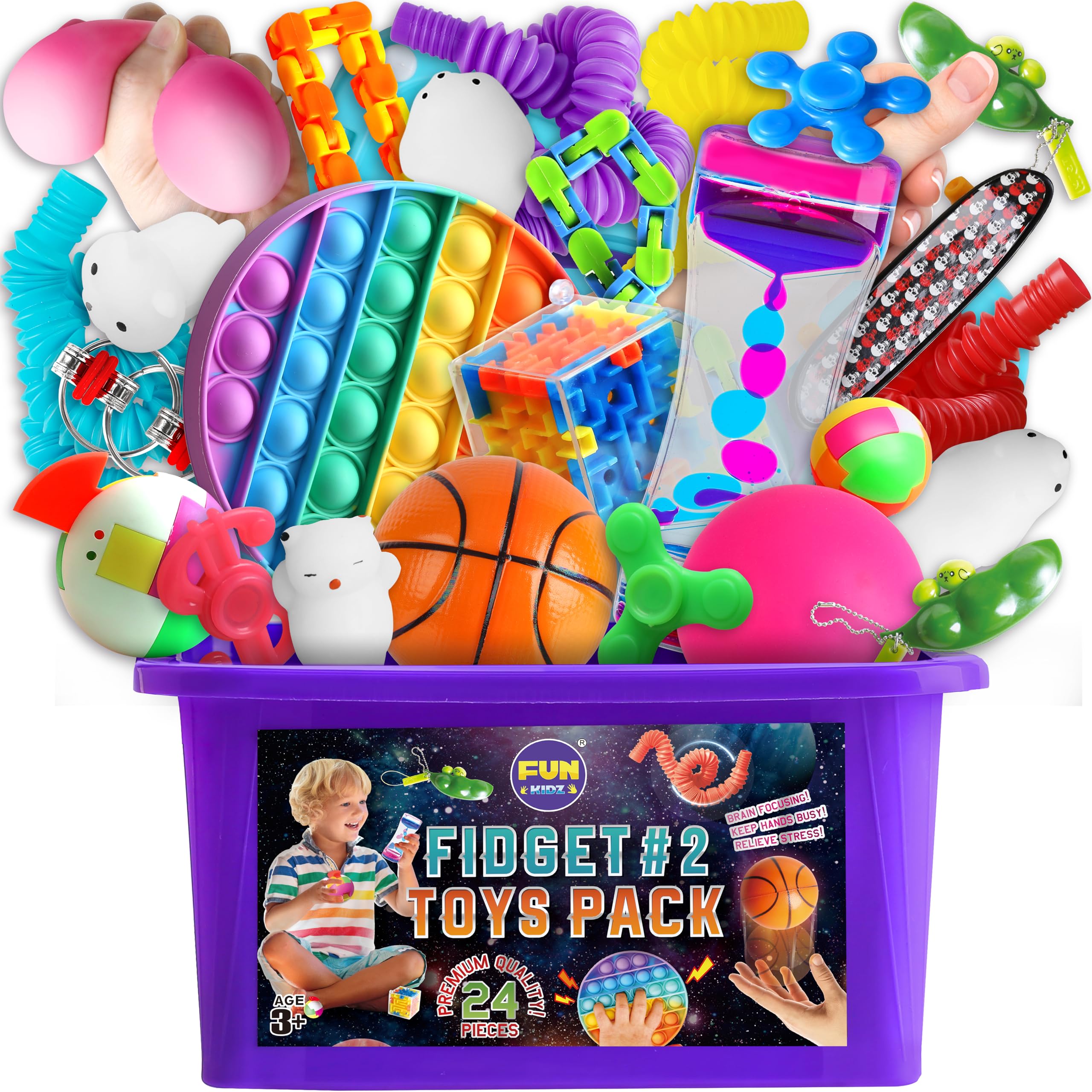
The FunKidz Fidget Pack Box is an entry-level, high-variety kit that allows an autistic child to sample different tactile sensations without a large upfront commitment. It contains 24 distinct items including a pop bubble, liquid motion bubbler, pop tubes, bike chains, squishy balls, finger skateboard, and a foam basketball set, all packed in a reusable plastic treasure box.
While the items are compact and many are made of lightweight plastic, the diversity is the draw—children can discover which textures and motions they prefer before investing in a larger, single-item sensory tool. The box also doubles as a storage case, teaching organizational skills. The bright colors and low individual item weight make it appropriate for car rides, classroom breaks, and calm-down corners.
Customer feedback from parents of autistic children notes that while some components feel “cheesy” or less durable, the set introduces new forms of stimulation that maintain interest. The fidget spinner and liquid timer are often favorites. This pack is an excellent starting point for families who want to explore what type of tactile input their child responds to most.
Why it’s great
- 24-item variety helps identify which fidget textures the child prefers
- Reusable storage box encourages organization and portability
Good to know
- Individual pieces are smaller and less durable than standalone fidgets
- Some components (like the finger skateboard) are more novelty than therapeutic
FAQ
How do I know if my child needs vestibular input or tactile input?
Are communication devices like the Joyreal AAC better than tablet apps?
What age range is the spinning chair appropriate for?
How do I clean and maintain sensory toys for an autistic child?
Final Thoughts: The Verdict
For most users, the autistic toys winner is the BABAMU Spinning Chair because it delivers targeted vestibular stimulation in a durable, weight-rated design that grows with the child. If you want language and communication support, grab the Joyreal AAC Device. And for calming bedtime routines with multi-sensory projection, nothing beats the Staryou Sensory Light Projector.