
Our readers keep the lights on and the weekend projects moving. As an Amazon Associate, I earn from qualifying purchases.
Finding a bandage that actually stays on the palm is a unique challenge — the constant bending, gripping, washing, and friction from daily tasks make standard strips peel off within hours. The wrong dressing leaves wounds exposed to dirt and bacteria, slowing recovery and risking infection.
I’m Rikta — the co-founder and writer behind FitlyFast. After spending dozens of hours researching wound care materials, adhesion technologies, and real user experiences across hundreds of palm-specific applications, I’ve pinpointed the dressing types that reliably handle the palm’s demanding environment.
This guide cuts through the confusion to deliver a focused selection of dressings engineered for the high-movement, high-contact anatomy of the hand, helping you find the best bandage for palm of hand that stays secure and promotes faster healing.
How To Choose The Best Bandage For Palm Of Hand
The palm is a high-flex, high-friction zone with thick skin that sweats during activity. A palm bandage must do three things simultaneously: stay stuck through repeated bending, absorb moisture without becoming a swamp, and cushion the wound from constant physical contact. Here’s what separates a smart buy from a waste of money.
Material Type: Hydrocolloid vs. Silicone Foam vs. Alginate
Hydrocolloid gel dressings create a moist healing environment and are fully waterproof — ideal for palm blisters and minor cuts that need multi-day protection. Silicone foam dressings add a thick cushion layer that absorbs exudate and protects fragile tissue, making them the top choice for post-surgical palm wounds or deep scrapes. Alginate dressings are specialized for heavily draining wounds and require a secondary adhesive cover, so they are less practical for daily palm use unless exudate is heavy.
Adhesion and Waterproof Seal
Palm bandages face near-constant moisture from hand washing, sweating, and exposure to water. A strong waterproof seal that resists edge curling is non-negotiable. Silicone adhesive borders offer a balance of secure hold and gentle removal that minimizes skin trauma — critical when changing a dressing multiple times on healing palm skin.
Flexibility and Fit
A rigid bandage will crack and lift with every fist clench or grip. Thin, flexible films like hydrocolloid rolls or low-profile silicone foam sheets conform to the palm’s natural contours without bunching. Cut-to-size rolls let you shape a dressing that precisely covers the wound without wasting material or leaving gaps around the edges.
Absorbency and Cushion
The palm absorbs pressure and shock constantly. A bandage with a thick absorbent layer — like a 5-layer foam or a high-GSM pad — not only pulls fluid away from the wound but also provides a physical buffer against impact. This reduces pain during daily tasks and prevents the wound bed from being disturbed by external pressure.
Quick Comparison
On smaller screens, swipe sideways to see the full table.
| Model | Category | Best For | Key Spec | Amazon |
|---|---|---|---|---|
| Dimora Silicone Foam Dressing 4×4 | Premium Silicone Foam | Post-surgical palm wounds & high-exudate | 5-layer absorbent pad with silicone border | Amazon |
| Hydrocolloid Roll 2×19.7ft | Premium Hydrocolloid | Custom cut-to-fit palm blisters & cuts | 19.7-foot continuous roll, 0.5mm thin | Amazon |
| Medtecs Hydrocolloid Gel Bandage | Hydrocolloid Gel | Multi-day palm blister protection | 2x absorption vs standard bandages | Amazon |
| Livaclean Island Dressing 2×5 & 4×10 | Island Gauze | Larger palm abrasions or incisions | 200 GSM pad with hypoallergenic border | Amazon |
| Hydrocolloid Wound Care Roll 2×16.5ft | Hydrocolloid Roll | Economical custom palm coverage | 16.5-foot hydrocolloid roll, self-adhesive | Amazon |
| Carbou Calcium Alginate 4×4 | Alginate Dressing | Heavy-draining palm wounds | Absorbs 20x its weight in fluid | Amazon |
| Dimora Silicone Foam Dressing 6×6 | Premium Silicone Foam | Large palm wounds needing cushion | Cuttable 6×6 inch pad, super absorbent | Amazon |
In‑Depth Reviews
1. Dimora Silicone Foam Dressing 4×4

The Dimora Silicone Foam Dressing is built around a 5-layer core that absorbs up to 15 times its weight in wound fluid while maintaining a moist healing environment — exactly what a palm wound needs when it’s under constant pressure from gripping and movement. The medical-grade silicone adhesive border seals around the wound without sticking to the moist bed, so dressing changes are painless even on sensitive palm skin.
Its semi-permeable PU film layer is both waterproof and breathable, allowing oxygen and vapor exchange while blocking external dirt and moisture. The 4×4 inch outer size accommodates a 2.5×2.5 inch pad, making it ideal for moderately to highly exudating palm wounds like abrasions, surgical incisions, or deep scrapes that require multiple days of undisturbed protection.
Users consistently report that this dressing stays securely in place during daily activities and showers, and that it dramatically accelerates healing for post-surgical wounds. The only trade-off is shipping speed, which can sometimes lag, but the clinical-grade performance makes it worth planning ahead for.
Why it’s great
- Painless removal — silicone won’t stick to moist wound bed
- Cleared for FSA/HSA use on post-surgical palm wounds
- Waterproof barrier stays secure through hand washing
Good to know
- Border dressings require dry surrounding skin for best adhesion
- May cause reaction in those with adhesive allergies
2. Hydrocolloid Roll 2×19.7ft
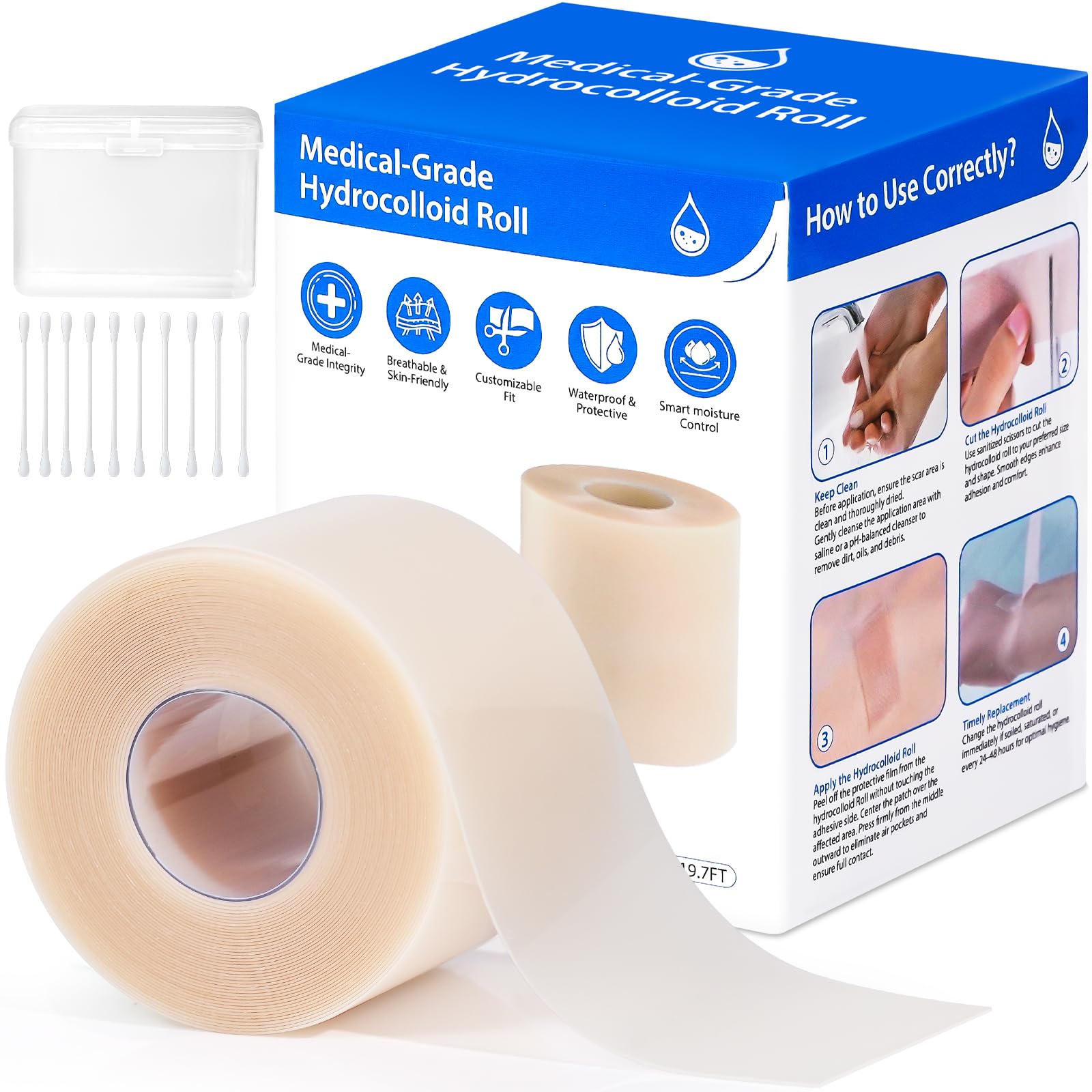
With 19.7 continuous feet of hydrocolloid material, this roll eliminates the guesswork of sizing — you cut exactly the shape your palm wound needs, whether it’s a narrow strip between the thumb pad or a wide coverage across the heel of the hand. The 0.5mm beige film is low-profile enough to wear under gloves or during manual work without bunching.
The hydrocolloid matrix absorbs exudate and converts it into a gel, creating a sealed moist environment that research shows can speed recovery by up to 40 percent compared to dry gauze. Its waterproof and sweat-proof adhesive holds through showers, swimming, and workouts, while the semi-transparent layer lets you monitor fluid buildup without lifting the dressing.
Users love the flexibility — it conforms to knuckles, heels, and palm creases without cracking. The edge curling reported by a few reviewers is mild and can be mitigated by cutting rounded corners. For those who want to avoid waste and customize coverage, this roll is a smart, economical choice.
Why it’s great
- Cut any shape for odd palm contours
- Stays on through hand washing and sweat
- Very economical compared to pre-cut pads
Good to know
- Backing can be tricky to remove — try bending the spool first
- Thinner than some pre-cut hydrocolloid pads
3. Medtecs Hydrocolloid Gel Bandage
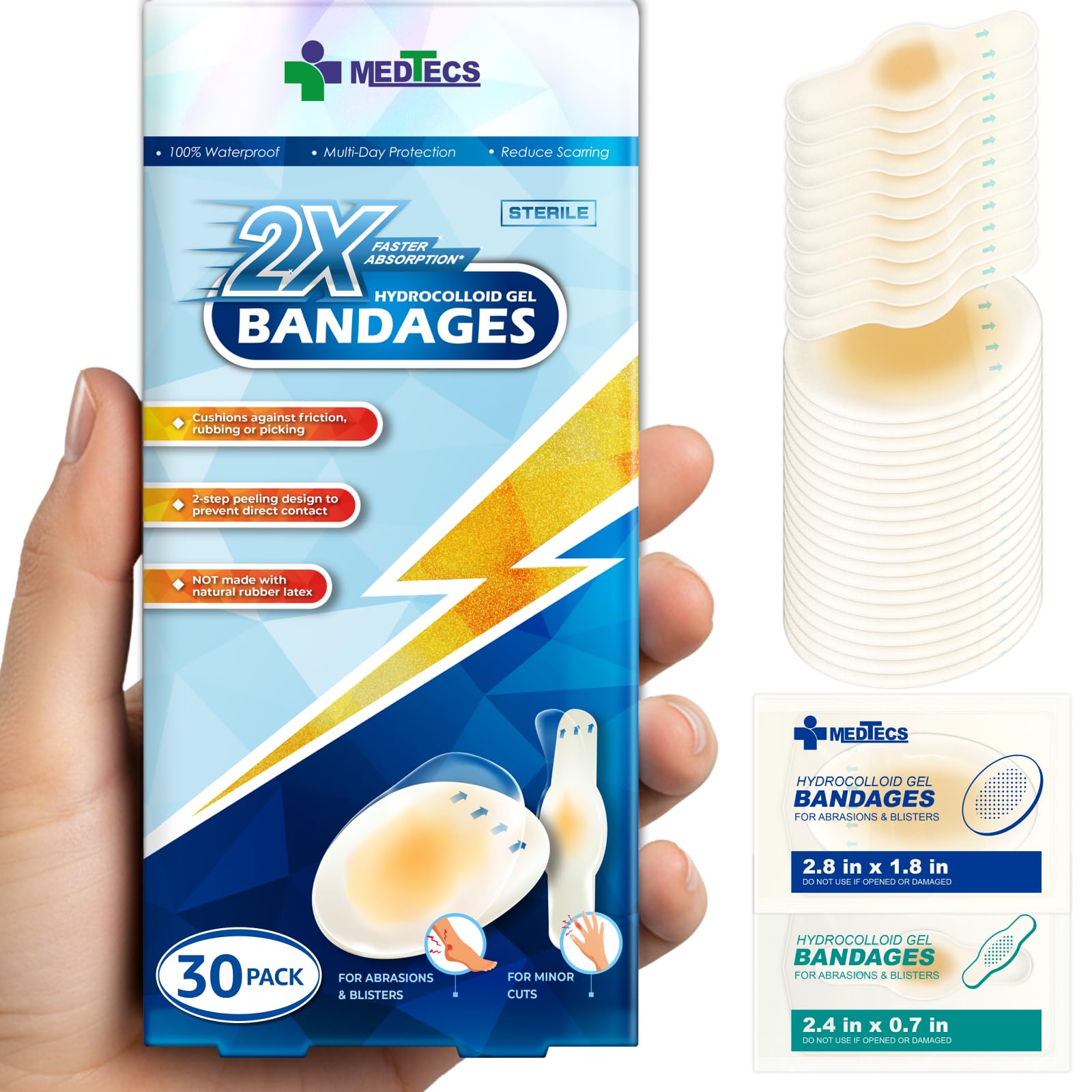
Medtecs engineered these hydrocolloid gel bandages with twice the absorption power of standard gel bandages, making them excellent for palm blisters and minor cuts that produce light to moderate exudate. The ellipse and strip shapes are designed to fit the palm’s natural curves — the ellipse covers the fleshy center while the strip works along finger-to-palm transitions.
Users report these bandages staying stuck for multiple days, even through showers and manual labor. The gel turns white with bubbles as it absorbs, giving a visible cue of healing progress. The 100 percent waterproof seal forms a tight barrier against infection, which is critical for palm wounds that are constantly exposed to dirt and moisture during daily tasks.
The main drawback is occasional edge curling on the larger ellipse shapes — some users add a thin strip of medical tape to secure the edges. But for mid-range pricing and reliable multi-day wear, this pack offers strong value for general palm wound care.
Why it’s great
- 2X faster absorption than standard gel bandages
- Ellipse shape fits the palm’s natural curve
- Stays put for days, even in the shower
Good to know
- Edges may curl on larger pieces without tape
- Not ideal for heavy exudate or deep wounds
4. Livaclean Island Dressing 2×5 & 4×10
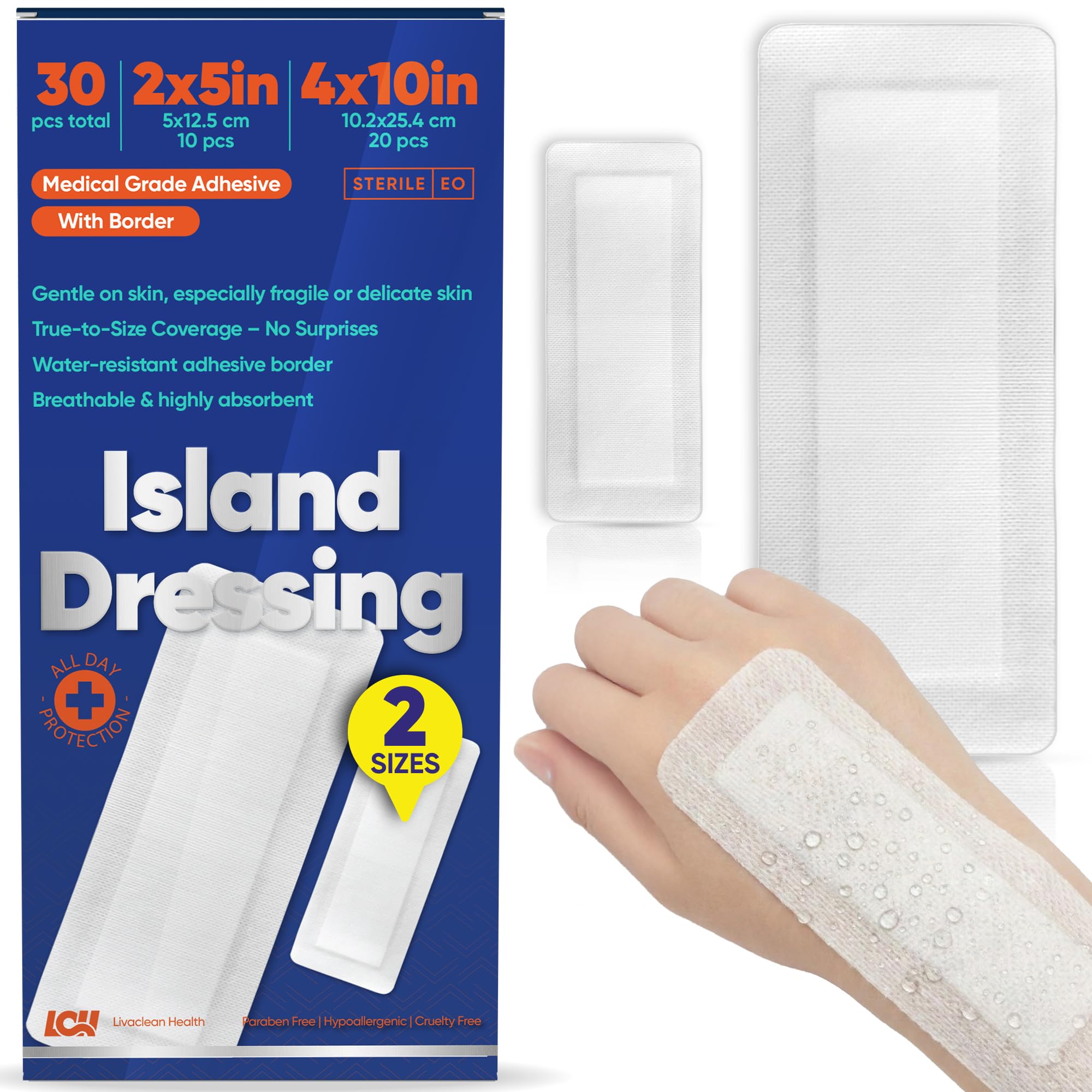
This island dressing stands out for its 200 GSM pad — roughly double the weight of standard 80-120 GSM variants — which means it won’t leak through even under the constant pressure of a gripping palm. The water-resistant, hypoallergenic acrylic border creates a secure seal that stays put through movement while remaining gentle on skin.
The two included sizes — 2×5 inches for smaller palm cuts and 4×10 inches for larger abrasions or surgical incisions — give you versatility for different palm wound types. The non-stick center pad conforms smoothly to the wound without adhering, so removal is painless and residue-free. Each dressing is individually wrapped and EO-sterilized, making it ideal for home first-aid kits or post-surgical care.
Users recovering from shoulder, wrist, and hand surgeries report these dressings stay on for the entire required wear time. The one caveat: the adhesive border, while gentle, may still cause a reaction in users with known adhesive allergies. For everyone else, this is a reliable, high-absorbency option for larger palm wounds.
Why it’s great
- 200 GSM pad prevents leakage under palm pressure
- Two sizes fit small cuts to large incisions
- Individually sterile and EO-treated for safety
Good to know
- Not hypoallergenic for adhesive-sensitive skin
- Water-resistant, not fully waterproof
5. Hydrocolloid Wound Care Roll 2×16.5ft
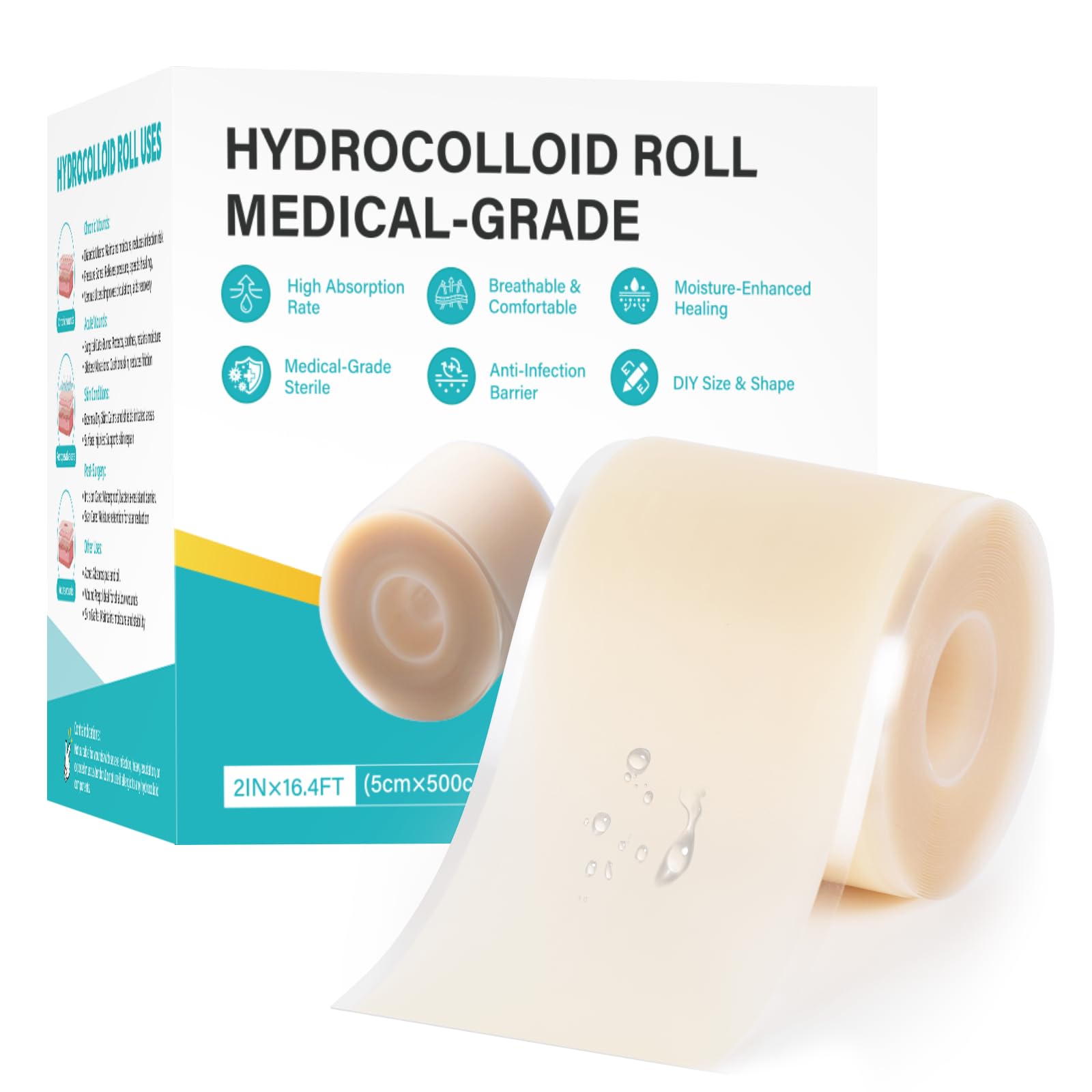
At 16.5 feet of continuous hydrocolloid material, this roll offers the most economical route to palm coverage for users who need custom shapes and aren’t worried about brand names. The self-adhesive material is fully waterproof and stays secure during hand washing, showering, and daily activities — key attributes for the high-contact palm environment.
Users report it works effectively on palm blisters, minor cuts, and even burns, creating the same moist healing environment as pricier pre-cut hydrocolloid patches. The flexible design conforms to the palm’s curves without lifting at the edges during normal movement. It’s also versatile enough for acne, scars, and other body areas, making it a practical multi-use addition to any first-aid kit.
The main complaint is removal: the strong adhesive can pull hair on the back of the hand or forearm if applied there. On the palm itself, where hair is minimal, this is less of an issue. For budget-conscious buyers who want full control over sizing, this roll delivers solid results.
Why it’s great
- Extremely economical — cuts to any palm size
- Waterproof and ultra-sticky for multi-day wear
- Works for burns, cuts, blisters, and acne
Good to know
- Adhesive can pull hairs on removal from hairy skin
- No clear window — harder to monitor wound fluid level
6. Carbou Calcium Alginate 4×4

The Carbou Calcium Alginate dressing is a specialized tool for palm wounds that produce moderate to heavy exudate — think deep abrasions, post-surgical sites, or ulcers. It absorbs up to 20 times its own weight in fluid, far exceeding standard gauze or hydrocolloid, while releasing calcium ions that help accelerate the blood coagulation process directly at the wound site.
It’s soft and conformable, and can be cut to exactly match the wound shape without leaving gaps. The non-adherent design means it won’t stick to the moist wound bed, making removal painless and reducing trauma to fragile healing tissue. However, because it has no adhesive backing, you must secure it with a secondary waterproof dressing or medical tape — critical for the palm, where movement is constant.
This is not a grab-and-go bandage for minor cuts. It’s best for users who have some wound care experience and need high absorbency for draining wounds. For those with appropriate needs, it performs at a clinical level that generic dressings can’t match.
Why it’s great
- Absorbs 20x its weight for heavy-draining palm wounds
- Painless removal — doesn’t stick to moist tissue
- Cuttable to any shape for precise coverage
Good to know
- Requires secondary adhesive tape or dressing to stay on palm
- Overkill for dry or lightly exudating cuts
7. Dimora Silicone Foam Dressing 6×6

This borderless 6×6 inch silicone foam dressing is designed for users who need to cover a large palm wound — or who want to cut custom shapes for multiple smaller areas from a single pad. The medical-grade silicone adhesive is gentle enough for sensitive skin while staying securely adhered during movement, and the super-absorbent foam core retains fluid within its vertical structure rather than letting it spread sideways.
Its breathable polyurethane back allows air circulation while blocking liquid ingress, making it suitable for palm wounds that need protection from both moisture and contamination. Users recovering from pressure sores, burns, or large surgical wounds on the hand report that this dressing stays in place for up to three days and dramatically reduces pain during dressing changes.
Because it has no border, the entire surface is adhesive, so you must ensure the surrounding skin is dry and clean before application. For those who prefer a borderless, cuttable option that delivers clinical-grade absorbency and gentle adhesion, this is a top-tier pick.
Why it’s great
- Large 6×6 cuttable pad for palm wounds of any shape
- Super absorbent vertical fluid retention
- Hypoallergenic silicone safe for sensitive skin
Good to know
- Borderless design requires dry surrounding skin for adhesion
- Not ideal for very small wounds — better for large coverage
FAQ
Can I use a regular Band-Aid on a palm wound?
How long should a palm bandage stay on before changing?
What should I do if the bandage edges curl up on my palm?
Is a hydrocolloid roll better than pre-cut bandages for the palm?
Final Thoughts: The Verdict
For most users, the best bandage for palm of hand is the Dimora Silicone Foam Dressing 4×4 because it delivers the best balance of painless silicone adhesion, high absorbency, and waterproof protection for the high-movement palm environment. If you want a custom-fit option that lets you shape the dressing to any palm contour, grab the Hydrocolloid Roll 2×19.7ft. And for a budget-friendly, multi-day blister and minor cut solution, nothing beats the Medtecs Hydrocolloid Gel Bandage.