
Our readers keep the lights on and the weekend projects moving. As an Amazon Associate, I earn from qualifying purchases.
Waking up groggy with a dry mouth and a stuffy head isn’t just about the quality of your mattress — the air you breathe all night plays a massive role in sleep quality, especially for those managing sleep apnea. A room filled with dust mites, pet dander, pollen, and airborne irritants can inflame nasal passages and airways, making breathing through a CPAP mask or even naturally feel like a chore. The right unit doesn’t just filter; it creates a low-irritant microclimate that supports uninterrupted, restorative sleep.
I’m Rikta — the co-founder and writer behind FitlyFast. For this guide, I spent hours analyzing dozens of HEPA filter specs, CADR ratings, noise decibel levels, and real user feedback to find which models genuinely reduce bedroom airborne pollutants to help you breathe easier through the night.
The goal is simple: find a unit that runs quiet enough to never disturb sleep, cycles the room’s air multiple times an hour with a true HEPA filter, and minimizes waking irritants. This is the definitive guide to finding the air purifier for sleep apnea that fits your room, your budget, and your nightly routine.
How To Choose The Best Air Purifier For Sleep Apnea
Before you click buy, you need to match the machine to your specific bedroom and sensitivity. A purifier that’s too weak for your room size or too loud for your sleep stage won’t help your apnea management. Here’s what to lock in before you choose.
True HEPA Filtration is Non-Negotiable
For sleep apnea, the goal is to remove microscopic particles that inflame airways. A True HEPA filter captures 99.97% of airborne allergens down to 0.3 microns. This includes dust mite droppings, mold spores, pollen, and pet dander — all common triggers for nasal congestion and throat irritation that can worsen apnea events.
Match the CADR to Your Bedroom Size
CADR (Clean Air Delivery Rate) measures how fast a unit cleans the air in cubic feet per minute. A good rule: divide your bedroom square footage by 1.55 to get a target CADR. For a 200 sq ft bedroom, look for a CADR of at least 130. Higher CADR means faster cycles, which means you breathe cleaner air sooner after falling asleep.
Silence Matters More Than You Think
Sleep apnea patients often have lighter sleep architecture. A loud fan or rattling filter can pull you out of deep sleep. Look for a Sleep Mode rated at 25 dB or lower — this is barely a whisper. Units with display light dimming or full shut-off are also crucial for a pitch-dark, distraction-free sleep environment.
Quick Comparison
On smaller screens, swipe sideways to see the full table.
| Model | Category | Best For | Key Spec | Amazon |
|---|---|---|---|---|
| LEVOIT Vital 100 | Budget | Quiet Sleep Mode | 24 dB Sleep Mode | Amazon |
| GermGuardian AC4825W | Budget | UV-C Light | HEPA captures 0.1 microns | Amazon |
| WINIX 5520 | Mid-Range | Real-Time Auto Mode | 23.5 dB Sleep Mode | Amazon |
| Whirlpool WPT80P | Mid-Range | Anti-Bacterial Filter | Whishield Anti-Bacteria | Amazon |
| Coway AP-1512HH | Mid-Range | Sensor Auto Mode | 24.4 dB Low Fan | Amazon |
| LG PuriCare 360 | Premium | 360-Degree Filtration | PM 1.0 Sensor | Amazon |
| Coway Airmega 200M | Premium | Large Room Coverage | 1,748 sq ft per Hr | Amazon |
| BLUEAIR Blue 211 | Premium | Large Open Spaces | 23 dB Low Speed | Amazon |
| Dyson Hushjet | Premium | Compact & Silent | 24 dB Sleep Mode | Amazon |
In‑Depth Reviews
1. Coway AP-1512HH (Mighty)
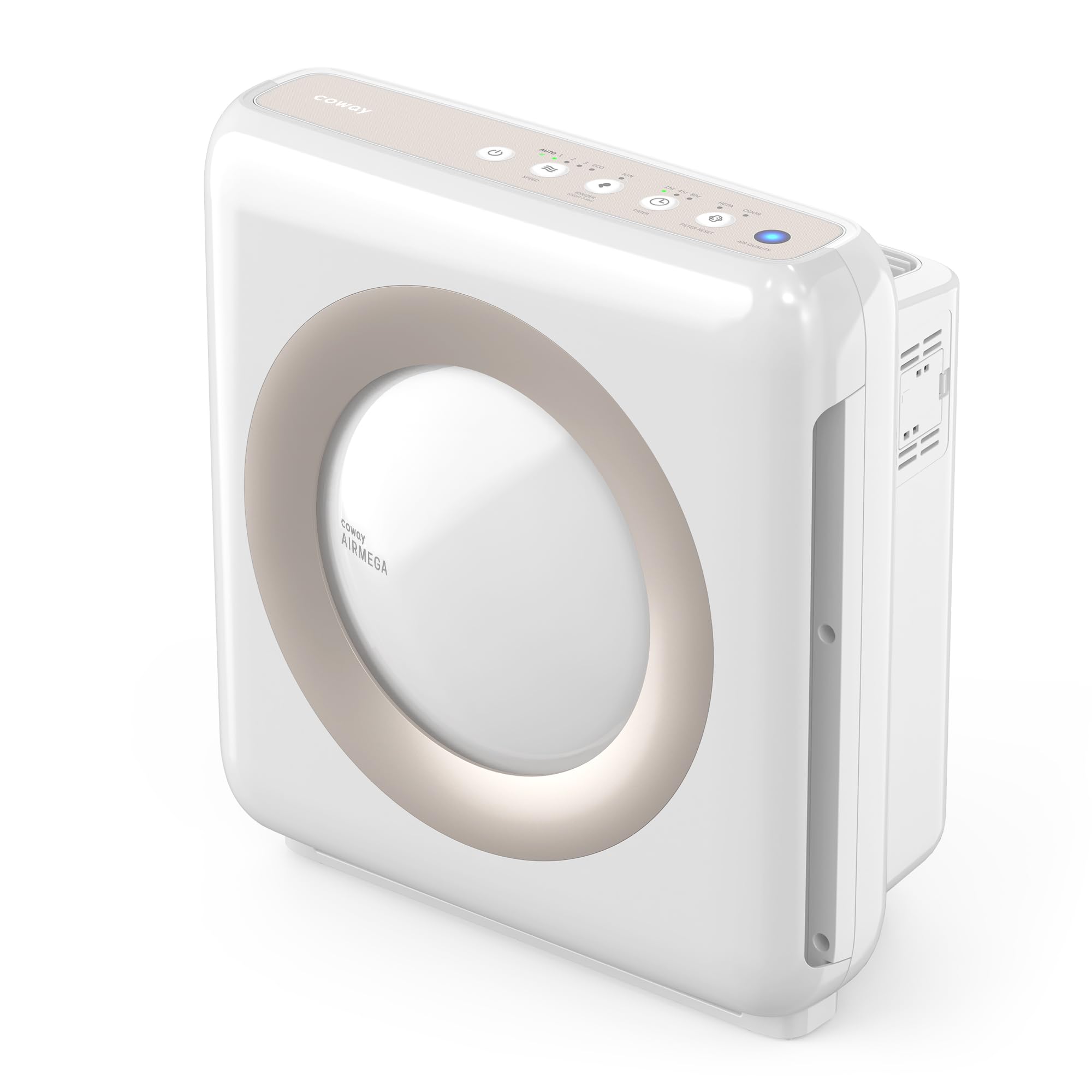
The Coway AP-1512HH is a Wirecutter winner for a reason — it balances powerful filtration with a smart sensor that adjusts fan speed based on real-time air quality. For sleep apnea, this means the unit kicks into higher gear when it detects a spike in particulates (from opening a window or stirring dust), then drops back to near-silent operation when the air is clean. Its 4-stage system includes a washable pre-filter, a deodorization carbon filter, and a True HEPA filter that captures 99.97% of allergens.
The noise profile is excellent: at the lowest setting, it hums at just 24.4 dB, which is quieter than a typical CPAP machine. The upward-facing air vent directs purified air away from your face — a thoughtful touch if you’re sensitive to direct drafts while wearing a mask. The Eco Mode shuts the fan off after 30 minutes of clean air, which saves energy and eliminates any sound entirely during already-clear nights.
Real users report that the pollution sensor reacts almost immediately to cooking smells or dust plumes, auto-tuning the fan. The filter lasts about a year under normal use, and the pre-filter is easy to vacuum. The only trade-off is that the ionizer function (Vital Ion) produces trace ozone — keep it turned off for a pure filtration experience, especially if you have respiratory sensitivity.
Why it’s great
- Near-silent operation on low setting won’t disturb sleep
- Real-time air quality sensor with responsive Auto Mode
- Eco Mode powers down completely when air stays clean
Good to know
- Ionizer produces trace ozone; best left off for pure HEPA filtration
- High setting is loud — not for use near bedtime
2. LG PuriCare 360
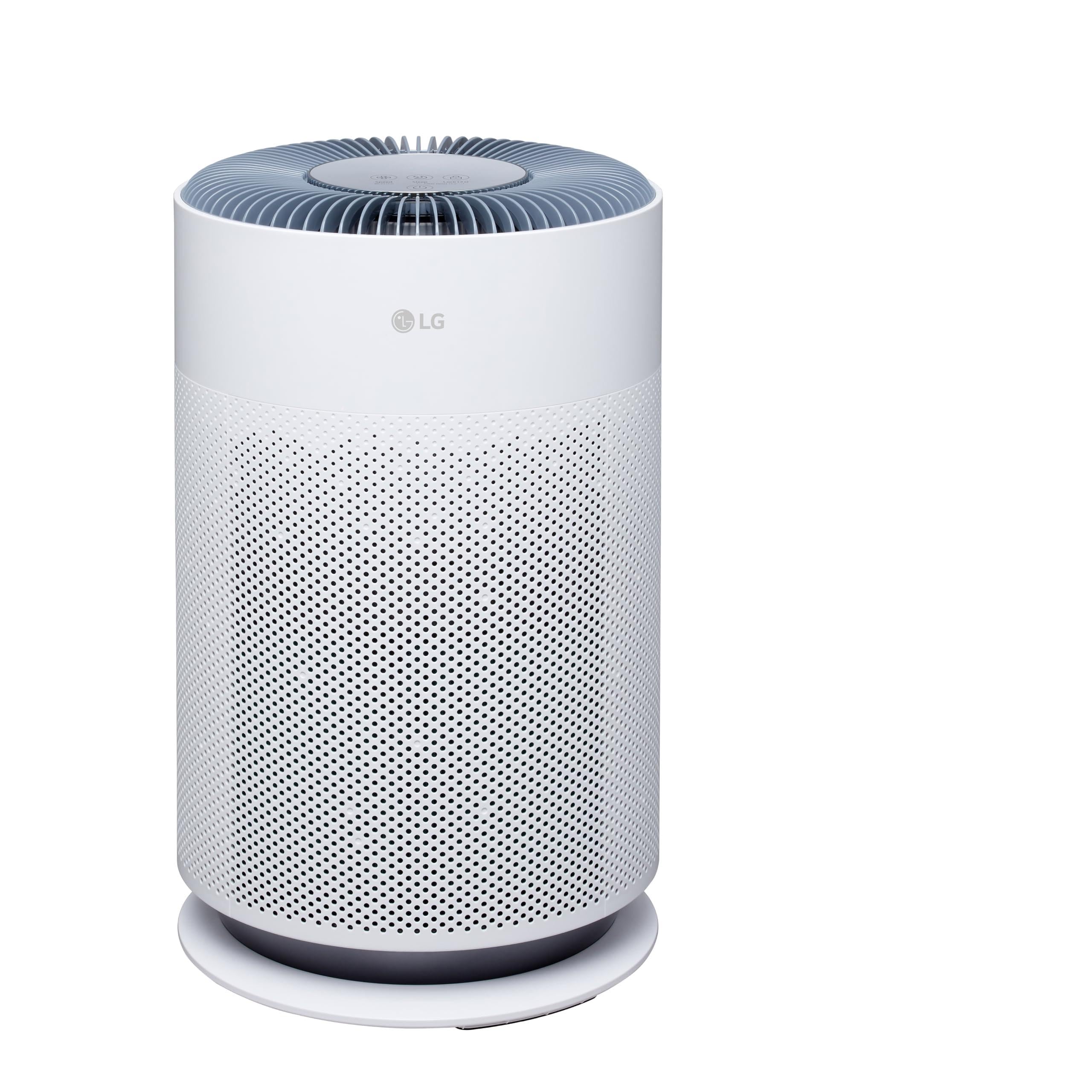
The LG PuriCare 360 brings a unique cylindrical design that pulls air from all directions, making it ideal for placing anywhere in the bedroom without worrying about intake positioning. Its NanoFiber True HEPA filter captures 99.97% of particles as small as 0.3 microns, but the standout feature is its PM 1.0 sensor — it detects ultrafine particles down to 1.0 micron, giving you more precision in knowing exactly what’s in your air.
Noise performance is exceptional: users describe it as “whisper quiet” with the fan being practically inaudible beyond a foot on the lower settings. The sleep mode is particularly effective, with the LED indicator automatically dimming to a soft green so it doesn’t disrupt your darkness. For a sleep apnea patient, maintaining a pitch-black, silent environment is crucial for staying in deep sleep cycles.
The unit covers up to 429 sq ft at 4.8 air changes per hour, which means even a master bedroom gets cycled multiple times through the night. The app connectivity lets you set schedules, check filter life, and monitor air quality history. The only real downside is the price point — you’re paying a premium for LG’s engineering and the 360-degree intake.
Why it’s great
- Pulls air from 360 degrees — no need to position carefully
- PM 1.0 sensor detects ultrafine particles
- Nearly silent operation; perfect for sensitive sleepers
Good to know
- Premium pricing compared to comparable mid-range units
- Turbo mode is loud, but rarely needed at night
3. Coway Airmega 200M

The Airmega 200M is essentially a bigger, more powerful version of the Mighty, designed to clean spaces up to 1,748 sq ft per hour. For a large master bedroom or an open-concept bedroom-adjacent space, this coverage ensures the air you breathe is cycled multiple times before you wake. Its HyperCaptive Filtration System uses a pre-filter, deodorization carbon filter, and True HEPA filter to reduce 99.97% of particles.
The Eco Mode is where this unit shines for sleep apnea: if the air stays clean for 30 minutes, the fan completely shuts off, eliminating any noise. When it detects a pollutant, it kicks back on automatically. This is ideal for nights where you simply want silence but still want the safety net of active filtration if a triggering event occurs. On speed 1, it’s genuinely silent — users describe it as a “low-pitch whoosh” that blends into background white noise.
The pre-filter is washable, extending the life of the main HEPA filter. The auto mode is responsive and the air quality indicator gives you a clear at-a-glance readout. The only consistent complaint is that the new HEPA filter can emit a chemical smell for the first few days of use — it’s worth running the unit on high for a few hours before bringing it into your bedroom.
Why it’s great
- Massive coverage for large bedrooms or open floor plans
- Eco Mode shuts off completely when air is clean
- Excellent sound profile — unobtrusive on low settings
Good to know
- New HEPA filter may emit a chemical smell initially
- Speed indicator lights cannot be turned off
4. BLUEAIR Blue 211
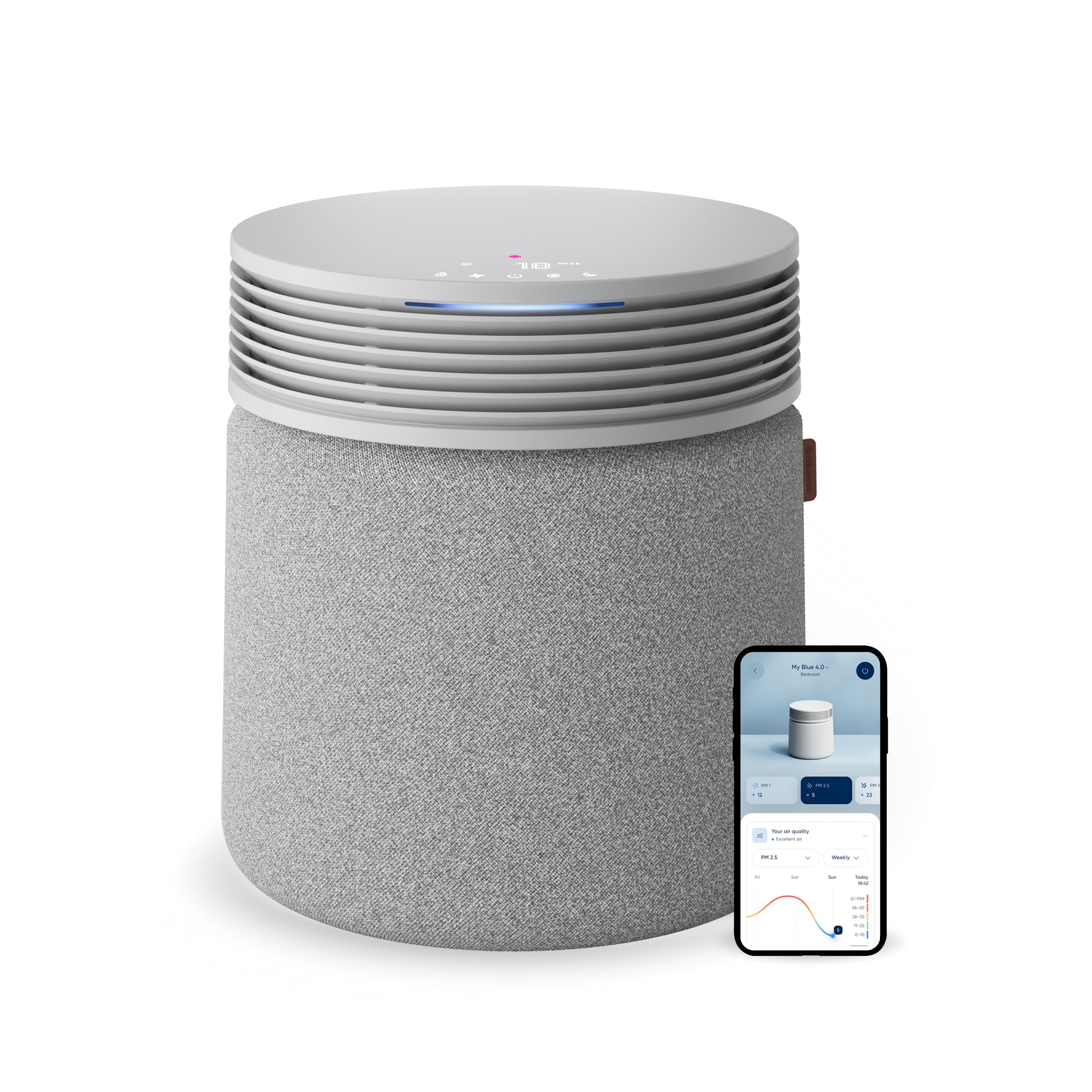
BLUEAIR’s Blue 211 is a powerhouse for large spaces, cleaning up to 3,385 sq ft per hour, but its true strength for sleep apnea lies in its HEPASilent technology — a combination of electrostatic and mechanical filtration that achieves high CADR with very low energy consumption and noise. At its lowest speed, it runs at just 23 dB, which is softer than a library. This makes it one of the quietest units on this list at the premium tier.
The 7-stage filtration includes OdorFence Technology that breaks down VOCs, cooking smells, and pet odors — a massive plus for anyone whose apnea is triggered by environmental irritants. The Auto Mode uses a built-in particle sensor to adjust fan speed, and it’s known to overdrive aggressively when it detects a spike (like when you cook or open a window), then return to near-silent operation. The app gives you remote control, scheduling, and real-time air quality readouts.
One of the cleverest features is the washable pre-filter that comes in various colors — it doubles as a side table, and the fabric cover hides the intake completely. For a bedroom, this means you can place it next to your bed without it looking like a medical appliance. The filter lasts about 9-12 months, and while replacements are on the pricier side, the machine’s efficiency makes it a long-term value.
Why it’s great
- Whisper-quiet operation on low — 23 dB
- OdorFence Technology breaks down VOCs and smells
- Washable fabric cover doubles as a side table
Good to know
- Replacement filters are expensive
- Auto mode can overdrive aggressively, which may surprise you
5. Dyson Hushjet Compact
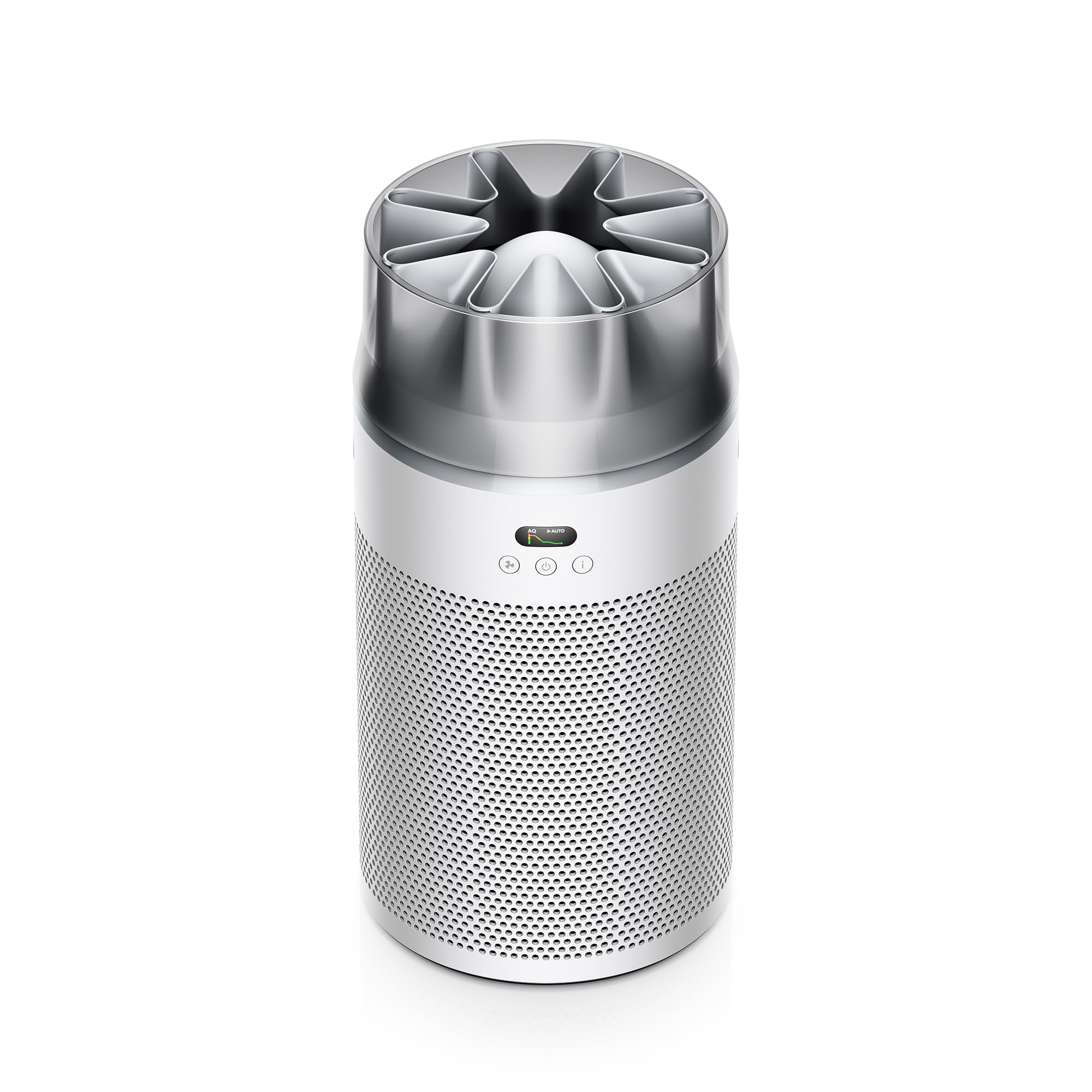
Dyson’s Hushjet is engineered specifically for bedroom use: its star-shaped nozzle reduces turbulence and noise, delivering purified air at just 24 dB in Sleep Mode — quieter than most CPAP machines. For sleep apnea patients, this is a critical feature because it won’t introduce any new auditory disturbances into the sleep environment. The compact footprint (just 9 inches wide) means it fits on a nightstand without dominating the room.
The filtration system is fully sealed to prevent pollutants from escaping back into the air you’re breathing. It uses a 360-degree electrostatic filter that captures 99.97% of particles down to 0.3 microns, combined with a 360-degree activated carbon filter that removes pet odors, cooking smells, and gases like NO₂. Perhaps the most compelling feature for long-term use: the filter lasts up to five years, drastically reducing maintenance costs and the hassle of annual replacements.
The MyDyson app enables remote monitoring, personalized air quality reports, and scheduling. In Auto Mode, the unit intelligently purifies only when it senses a drop in air quality, saving energy and filter life. Real users note that it immediately improved sleep quality and reduced morning stuffiness within two days. The trade-off is the upfront price — this is a significant investment, but the five-year filter life partially offsets the cost.
Why it’s great
- 24 dB Sleep Mode — quieter than a whisper
- Fully sealed system prevents pollutant recirculation
- Filter lasts up to five years — minimal maintenance
Good to know
- High upfront cost compared to mid-range units
- Designed for rooms up to 200 sq ft — best for smaller bedrooms
6. WINIX 5520
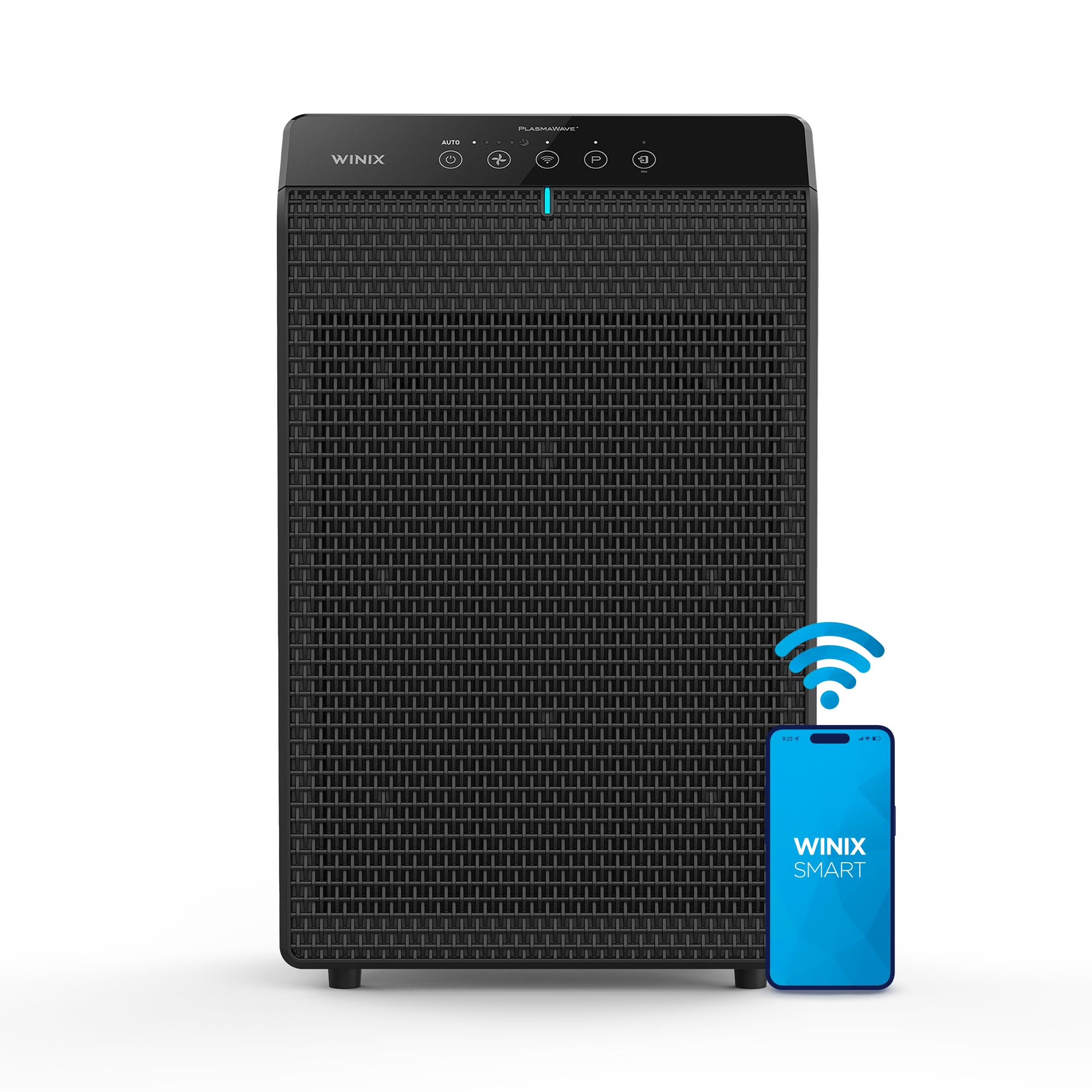
The WINIX 5520 offers premium features at a mid-range price, making it an excellent value pick for sleep apnea buyers. It’s AHAM Verified at 392 sq ft, meaning it can cycle a large bedroom multiple times per hour. The four-layer filtration — washable pre-filter, activated carbon, True HEPA, and Plasmawave ionizer — captures 99.99% of airborne allergens down to 0.01 microns, which is even finer than the standard 0.3 micron requirement.
The standout feature for sleep is the Light Automated Sleep Mode: when the room darkens, the unit automatically switches to its quietest, most energy-efficient setting (just 23.5 dB). When you turn the lights on, it returns to Auto Mode. This eliminates the need to fiddle with settings before bed. The air quality indicator changes color (blue/orange/red) so you can see the improvement in real time, and the Auto Mode adjusts fan speed based on the built-in sensor.
The unit also has Smart App compatibility, allowing voice control via Alexa or Google Home. Real users confirm it effectively reduces dust, pollen, and pet dander, and many note that it dramatically improved their allergies within days. The washable pre-filter catches large debris and extends the life of the main HEPA filter. On the downside, the Alexa integration is not seamless for all users, and the unit is slightly larger than some competitors.
Why it’s great
- Auto Sleep Mode activates when lights are turned off
- 23.5 dB on lowest setting — near-silent
- Captures 99.99% of particles down to 0.01 microns
Good to know
- Alexa integration reported as problematic by some users
- Slightly larger footprint than comparable units
7. Whirlpool WPT80P

The Whirlpool WPT80P is a solid, no-frills air purifier from a trusted appliance brand. Its standout feature for sleep apnea is the proprietary Whishield technology, which eliminates 99.99% of bacteria that may grow on the filters themselves. This is especially important for CPAP users who already have sensitive respiratory systems — you don’t want your air purifier to become a breeding ground for mold or bacteria over time.
The True HEPA filter captures 99.97% of dust and allergens as small as 0.3 microns, while the activated carbon filter reduces common odors from pets, smoking, and cooking. On its lowest setting, the unit is practically silent — users describe it as producing a “calm white noise” on higher settings and being completely inaudible on low. The Sleep Mode is designed to be energy-efficient, running at a low fan speed while still cycling the air.
The WPT80P is rated for 220 sq ft, making it a good fit for a standard bedroom. The controls are simple push buttons without a screen, which means no bright lights to disturb your sleep. It comes with a 5-year limited warranty, backed by Whirlpool’s reputation. The main downside is the lack of an air quality indicator — you have to trust it’s working rather than seeing proof. But for someone who just wants a reliable, silent filter for better breathing, this is a strong contender.
Why it’s great
- Whishield technology prevents bacterial growth on filters
- Virtually silent on low setting
- Simple push-button controls — no bright screens at night
Good to know
- No air quality indicator — no feedback on performance
- Rated for 220 sq ft — not for large master bedrooms
8. LEVOIT Vital 100

The LEVOIT Vital 100 is a budget-friendly workhorse that doesn’t compromise on the features most important for sleep apnea: quiet operation and effective filtration. With a noise level as low as 24 decibels in Sleep Mode, it’s genuinely unobtrusive — you won’t hear it running, and the display lights can be turned off entirely for a dark sleeping environment. The 3-stage filtration system includes a washable pre-filter, a main filter that captures dust and pollen, and a carbon filter that removes odors and VOCs.
It’s AHAM Verified with a 105 CFM CADR, capable of cleaning rooms up to 788 sq ft once per hour. For a typical 200 sq ft bedroom, this means the air is cycled nearly four times every hour. Real users report that it dramatically improves breathing at night, reduces dust accumulation, and makes the room smell fresher. The Check Filter Indicator alerts you when it’s time to inspect the filter, removing guesswork from maintenance.
The timer function (2, 4, or 8 hours) lets you set it to run only while you’re asleep, saving energy. The unit is compact and relatively lightweight at 9.3 pounds. The only notable drawbacks are that on the highest speed, it’s loud (though you won’t use that for sleep), and the WiFi/App features mentioned in some reviews are not consistently available across all versions. For the price, this is one of the best entry-level units for improving bedroom air quality.
Why it’s great
- 24 dB Sleep Mode — nearly silent for sleep
- Display lights can be turned off completely
- AHAM Verified with effective CADR for medium rooms
Good to know
- Loud on max speed — not for nighttime use
- WiFi/smart features not consistent across all units
9. GermGuardian AC4825W

The GermGuardian AC4825W is a classic budget tower purifier that has been a reliable option for years. Its HEPA PURE filter captures 99.97% of allergens down to 0.1 microns — slightly better than the standard 0.3 micron threshold. For sleep apnea, this extra efficiency can make a difference in trapping the finest dust and smoke particles that might otherwise irritate your throat and nasal passages overnight.
A unique feature is the optional UV-C light, which helps reduce airborne bacteria and viruses. While not a substitute for HEPA filtration, it’s an additional layer of protection for users with compromised immune systems or those who are especially sensitive to microbial growth. The unit has three speeds, including a quiet sleep mode that’s gentle enough for a bedside table. Users report that the low speed is practically silent and the overall noise is a manageable white noise that can even be helpful for falling asleep.
The washable pre-filter catches larger debris like cat hair and carpet fibers, extending the life of the main filter. The filter replacement indicator light takes the guesswork out of maintenance. On the downside, the UV-C bulb eventually needs replacing, and at higher speeds, the unit is noticeably loud — but that’s rarely used during sleep. For a straightforward, affordable entry into air purification for better sleep, this is a solid choice.
Why it’s great
- UV-C light provides additional microbial reduction
- HEPA captures particles down to 0.1 microns
- Washable pre-filter extends main filter life
Good to know
- Loud on high speed — best used on low for sleep
- UV-C bulb requires eventual replacement
FAQ
Can an air purifier actually help with sleep apnea symptoms?
Should I run the air purifier all night or just before bed?
Do I need a CPAP-compatible air purifier or does any HEPA filter work?
Final Thoughts: The Verdict
For most users, the air purifier for sleep apnea winner is the Coway AP-1512HH because its near-silent sleep mode, responsive auto sensor, and Eco Mode deliver exactly what a restless sleeper needs. If you want ultra-quiet 360-degree filtration for a large bedroom, grab the LG PuriCare 360. And for the tightest budget without sacrificing performance, nothing beats the value of the LEVOIT Vital 100.