
Our readers keep the lights on and the weekend projects moving. As an Amazon Associate, I earn from qualifying purchases.
Watching a child struggle with relentless sneezing, watery eyes, and a stuffy nose is exhausting for both parent and kid — especially when the wrong medicine leaves them groggy or fighting the taste. Choosing an antihistamine for a small body means weighing active ingredients, age limits, delivery formats, and daily versus as-needed use.
I’m Rikta — the co-founder and writer behind FitlyFast. I’ve spent countless hours cross-referencing pediatric dosing guidelines, antihistamine profiles, and parent-reported feedback to build this guide that cuts through the marketing noise children’s allergy shelves are buried under.
Whether your child needs a quick-dissolve tablet for school days or a bedtime liquid to stop itchy eyes, this breakdown of the best allergy medicine for children will help you match the right formula to your child’s specific symptoms and schedule.
How To Choose The Best Allergy Medicine For Children
Selecting a children’s allergy medicine is different from grabbing an adult box off the shelf. Pediatric doses are lower, the active ingredients differ in sedation profile and duration, and the delivery system — liquid, chewable, dissolvable — directly affects whether your child actually takes the full dose. Focus on three things: the antihistamine class, the age indication on the label, and the format that fits your child’s swallowing ability.
Active Ingredient: Cetirizine vs. Loratadine vs. Levocetirizine
The three most common antihistamines in children’s allergy medicines are cetirizine (Zyrtec, Kirkland), loratadine (Claritin, Curist), and levocetirizine (Xyzal). Cetirizine is potent and fast-acting but tends to cause drowsiness in about 10-15% of children. Loratadine is the standard non-drowsy option — ideal for school days — but it takes about one to two hours to reach peak effect. Levocetirizine is a refined molecule that offers consistent 24-hour coverage with less inter-patient variability in effectiveness. For a child who needs daily control, a non-drowsy loratadine formula is the safest starting point.
Delivery Format: Liquid, Chewable, or Dissolving Tablet
Liquids are easiest for children under six who cannot reliably chew a tablet, but they require accurate measuring with the included dropper or cup. Chewable tablets work well for toddlers and school-age children who dislike the taste of liquid medicine. Orally disintegrating tablets dissolve on the tongue without water — a lifesaver during travel or for kids who gag on pills. Each format contains the same active ingredient dose, so choose based purely on your child’s cooperation and swallowing ability.
Drowsiness Profile and Timing
First-generation antihistamines like diphenhydramine (Benadryl) are not recommended for routine allergy control in children due to strong sedative effects and potential cognitive impacts. All products reviewed here are second-generation antihistamines, but cetirizine and levocetirizine still cause noticeable drowsiness in a subset of children. If your child needs alertness for school, opt for loratadine (Claritin, Curist). For bedtime control of nasal congestion and itchy eyes, low-dose cetirizine or levocetirizine can deliver relief without daytime grogginess.
Age Floor and Dosing Precision
Always check the minimum age printed on the box — some formulas start at age two (Kirkland, Curist, Xyzal), while others require age six and older (Dimetapp). Never assume a higher dose is more effective; pediatric antihistamine dosing is weight-based, and exceeding the label’s age-guideline risks sedation and irritability. Liquids offer the most precise fractional dosing for smaller or younger children, while chewables and dissolving tablets are pre-measured in increments of 5 mg (loratadine) or 10 mg (cetirizine).
Quick Comparison
On smaller screens, swipe sideways to see the full table.
| Model | Category | Best For | Key Spec | Amazon |
|---|---|---|---|---|
| Claritin Children’s Chewable | Loratadine Chewable | School-day non-drowsy control | 5 mg loratadine per tablet | Amazon |
| Zyrtec Children’s Dissolve | Cetirizine Dissolving | Fast-acting relief on the go | 10 mg cetirizine per tab | Amazon |
| Xyzal Children’s Liquid | Levocetirizine Liquid | Consistent 24-hour coverage | 1.25 mg/5 mL levocetirizine | Amazon |
| Curist Kids Chewable | Loratadine Chewable | Dye-free daily management | 5 mg loratadine per tablet | Amazon |
| Kirkland Aller-Tec Liquid | Cetirizine Liquid | Budget-friendly daily liquid | 1 mg/mL cetirizine | Amazon |
| Dimetapp Cold & Allergy | Brompheniramine Liquid | Cold-plus-allergy combo | 1 mg brompheniramine per 5 mL | Amazon |
| Dimetapp Cold & Cough | Brompheniramine + DM | Nighttime cough & allergy | 1 mg brompheniramine + 5 mg DM | Amazon |
In‑Depth Reviews
1. Children’s Claritin 24 Hour Non-Drowsy Allergy Grape Chewable Tablet

Claritin’s children’s chewable delivers 5 mg of loratadine per tablet — the standard pediatric non-drowsy dose that maintains alertness throughout a full school day. The grape-flavored chewable format consistently earns high marks from parents whose toddlers and preschoolers initially refused liquid medicine but now ask for this by name. Pediatricians frequently recommend loratadine as the first-line antihistamine for children because its minimal central nervous system penetration means virtually zero daytime sedation at the 5 mg dose.
Each blister pack holds 20 chewable tablets, each providing 24-hour relief from sneezing, runny nose, and itchy eyes caused by pollen, dust, and pet dander. Multiple parent reports note that a single morning dose effectively suppresses symptoms until bedtime without the rebound congestion that sometimes follows other antihistamines. The ingredient loratadine takes about one to two hours to reach peak concentration, making it better suited for proactive daily use than emergency symptom rescue.
The 5 mg dose is labeled for children ages two and older, but the chewable format requires a child to chew effectively before swallowing — supervise younger toddlers. Some users note the 20-count box goes quickly during high-pollen seasons, making subscription purchasing a practical choice. For parents seeking a reliably non-drowsy option that won’t interfere with learning and play, this remains the category standard.
Why it’s great
- Pediatrician-recommended non-drowsy profile preserves school-day focus
- Grape flavor masks bitterness; children willingly take it daily
- Chewable format solves refusal issues common with liquid antihistamines
Good to know
- 20 tablets per pack may not last a full month for daily use
- Onset of relief takes around one to two hours
2. Xyzal Children’s 24 Hour Allergy Relief Liquid

Xyzal Children’s Oral Solution uses levocetirizine dihydrochloride — the active R-enantiomer of cetirizine — at a concentration of 1.25 mg per 5 mL. This refined molecule provides consistently effective 24-hour symptom control with a lower incidence of sedation than standard cetirizine in some clinical comparisons. The liquid format allows precise fractional dosing for younger children, and the grape flavor receives positive feedback even from kids who typically resist medicine.
With a labeled onset of 45 minutes, Xyzal’s levocetirizine acts faster than loratadine options, making it a strong choice for children whose allergy symptoms flare suddenly. The 10-fluid ounce bottle is alcohol-free, sugar-free, and dye-free — a meaningful combination for parents managing artificial dye sensitivities or sugar restrictions. Multiple parent reviewers note that their children show visible improvement in nasal congestion and itchy eyes within the first hour of dosing.
The levocetirizine molecule is more selective for peripheral histamine receptors than first-generation antihistamines, reducing the likelihood of anticholinergic side effects like dry mouth or constipation. Some children may still experience drowsiness with this active ingredient, so the first dose is best given at home on a low-activity day to observe individual response. For parents wanting a liquid that combines rapid onset, clean ingredients, and minimal metabolic variability, this bottle delivers reliably.
Why it’s great
- Rapid 45-minute onset for fast symptom relief
- Alcohol-free, sugar-free, and dye-free formula
- Liquid format enables precise dosing for ages two and up
Good to know
- Levocetirizine can cause drowsiness in sensitive children
- Some kids dislike the aftertaste despite the grape flavor
3. Kirkland Signature Children’s Aller-Tec Liquid 2-Pack

Kirkland Signature Children’s Aller-Tec contains cetirizine hydrochloride at 1 mg per mL — the same active ingredient and concentration as Children’s Zyrtec but in a two-bottle pack that stretches the budget significantly further. Each 16-ounce bottle supplies 480 mL of liquid, which at the standard 5 mL dose for ages two and up delivers 96 daily doses per pair. Parents managing daily pediatric antihistamine costs consistently report that this dual-pack cuts their expense to roughly a third of the brand-name equivalent.
The liquid formulation is dye-free, and the taste — while not as sweet as some competitors — is described as “bearable” by most children. One repeated workaround parents share is diluting the measured dose with an equal amount of water, which eliminates taste complaints without affecting the cetirizine concentration. The included dosing cup is clearly marked in 5 mL increments for accurate measuring.
Cetirizine at this pediatric concentration provides fast-acting 24-hour relief from sneezing, runny nose, and itchy, watery eyes. The active ingredient works within one hour and remains effective through the full dosing interval. Because cetirizine does cause drowsiness in a notable subset of children, evening dosing is a common strategy for parents who want allergy control without daytime sedation. This two-pack offers the lowest cost per dose among all liquid cetirizine options reviewed.
Why it’s great
- Two bottles provide excellent value for daily dosing
- Dye-free formulation suitable for sensitive children
- FSA/HSA eligible for pre-tax savings
Good to know
- Cetirizine may cause drowsiness in some children
- Flavor is less palatable than brand-name alternatives
4. Zyrtec Children’s 24 Hour Dissolving Allergy Relief Tablets

Zyrtec’s Children’s Dissolving Tablets deliver 10 mg of cetirizine hydrochloride in a citrus-flavored orally disintegrating format that requires no water. Each tablet melts on the tongue within seconds, making it a practical option for children who absolutely refuse liquids or struggle with chewable tablets. The 12-count blister pack is travel-friendly and eliminates the risk of dosing errors from measuring cups.
The 10 mg cetirizine dose provides powerful 24-hour allergy relief that starts working within one hour. Parents report that this format is especially useful during school hours, sports practices, and travel when carrying liquid medicine is inconvenient. The dissolving mechanism also means no chewing is required, which is helpful for younger children or those with dental sensitivities.
Because cetirizine frequently causes drowsiness, many reviewers specifically recommend giving these tablets before bedtime. The 10 mg adult-equivalent dose may be stronger than needed for smaller children; consult a pediatrician before starting. The 12-count quantity is relatively small for daily use, so bulk-buying multiple packs is a reasonable strategy. For the parent who prioritizes convenience and portability above all else, this dissolving format is unmatched.
Why it’s great
- Dissolves on the tongue without water for no-fuss dosing
- Citrus flavor is well-tolerated by most children
- Portable blister pack fits easily in a backpack or purse
Good to know
- 10 mg dose may be too high for very young or small children
- Cetirizine sedation is common — best timed for evening use
5. Curist Children’s Allergy Medicine Chewable 60 Count
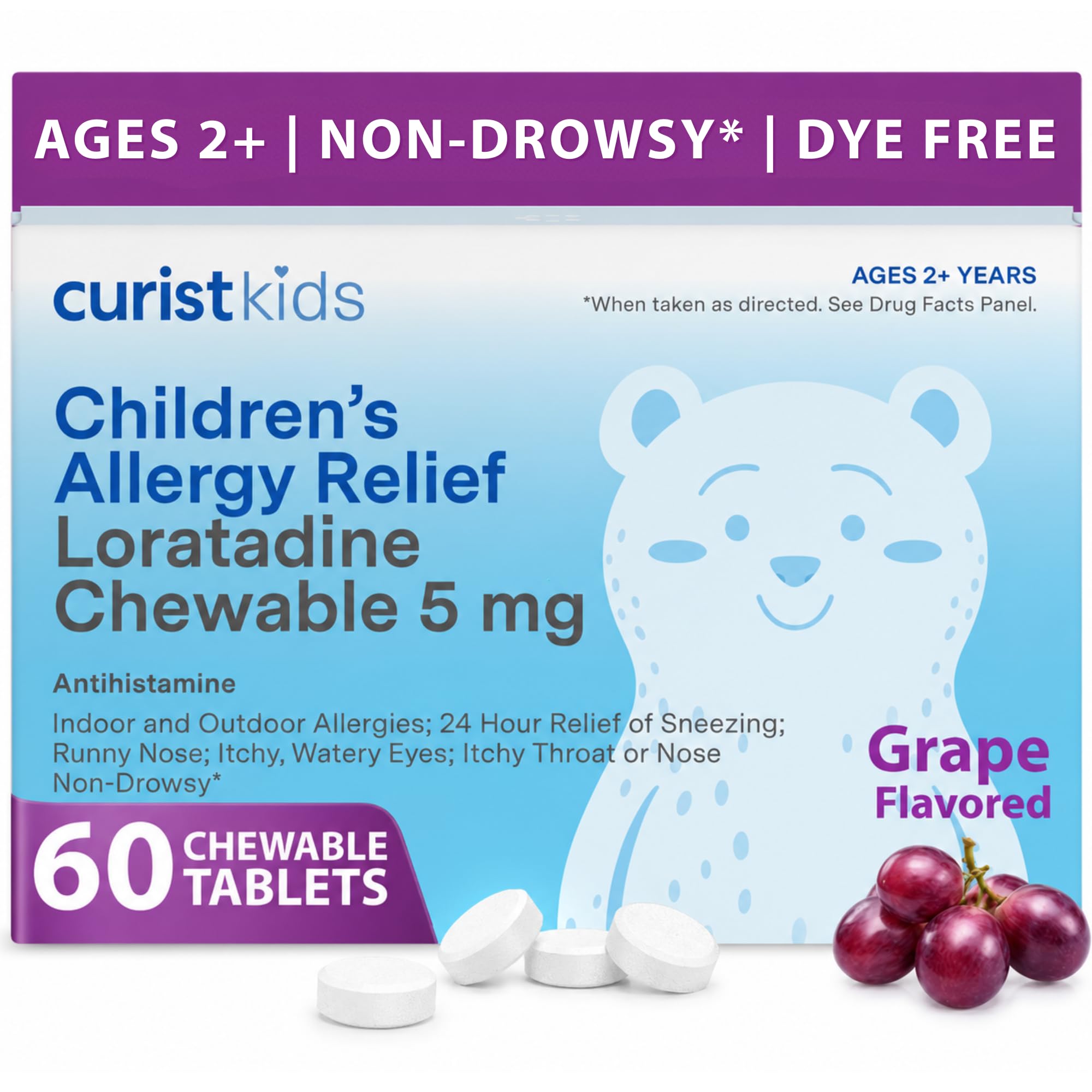
Curist Children’s Allergy Medicine packs 5 mg of loratadine into a dye-free grape-flavored chewable tablet, and the 60-count bottle delivers two full months of daily allergy relief. The near-identical active ingredient profile to Children’s Claritin makes this a straightforward non-drowsy alternative for budget-conscious parents who want the proven efficacy of loratadine without paying for brand marketing. The dye-free formulation addresses a common concern among parents who avoid artificial colorings in children’s medications.
Loratadine’s minimal sedation profile makes this an ideal option for school-day allergies — children maintain normal energy levels and cognitive function throughout the day. Multiple parent reports note that their kids “take it with no fighting” and even request their daily allergy tablet because of the palatable grape flavor. The 60-count supply is the highest tablet count among all loratadine options reviewed, reducing refill frequency and per-dose cost significantly.
As with any loratadine product, the onset of relief takes approximately one to two hours, so this is best suited for proactive daily dosing rather than immediate symptom rescue. Each chewable tablet contains 5 mg of loratadine, which is the standard pediatric dose for children ages two and older. For families who need a dye-free, non-drowsy, high-count daily allergy tablet, the Curist 60-count bottle represents the most economical loratadine option in this lineup.
Why it’s great
- 60-count bottle covers two months of daily dosing
- Dye-free formulation avoids artificial colorings
- Non-drowsy loratadine preserves school-day focus
Good to know
- Onset of action takes one to two hours
- Chewable format requires active chewing before swallowing
6. Children’s Dimetapp Cold & Allergy Liquid
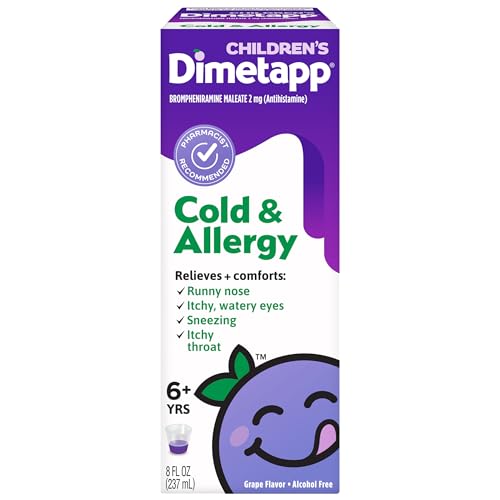
Children’s Dimetapp Cold & Allergy uses brompheniramine maleate (1 mg per 5 mL) — a first-generation antihistamine that effectively targets sneezing, runny nose, itchy throat, and watery eyes associated with both colds and seasonal allergies. This dual-indication formula is designed for situations where allergy symptoms overlap with mild cold symptoms, providing a single medicine for children ages six and older. The grape-flavored liquid is alcohol-free and free from phenylephrine, a decongestant that can cause jitteriness in children.
Brompheniramine is a potent antihistamine that delivers noticeable symptom relief within 30 to 60 minutes, but it crosses the blood-brain barrier more readily than second-generation antihistamines. This means it reliably causes drowsiness in most children — a feature that makes it well-suited for bedtime dosing but problematic for daytime school use. Multiple parent reviewers note that this medicine works “definitely better than adult cold medicine” for their children’s combined cold and allergy symptoms.
The 8-fluid ounce bottle provides approximately 48 doses at the standard 5 mL serving. Parents of children with asthma specifically appreciate the phenylephrine-free formulation, as decongestants in that class can constrict airways. Because the active ingredient is a first-generation antihistamine, this product is best reserved for short-term symptom flares rather than daily allergy management. For the child experiencing seasonal congestion plus a mild cold, this combo formula offers targeted multi-symptom relief in a single dose.
Why it’s great
- Treats both cold and allergy symptoms in one medicine
- Phenylephrine-free and alcohol-free — safe for asthmatic children
- Rapid onset of symptom relief within one hour
Good to know
- Brompheniramine causes significant drowsiness — not for school days
- Labeled for ages six and older only
7. Children’s Dimetapp Cold & Cough Medicine
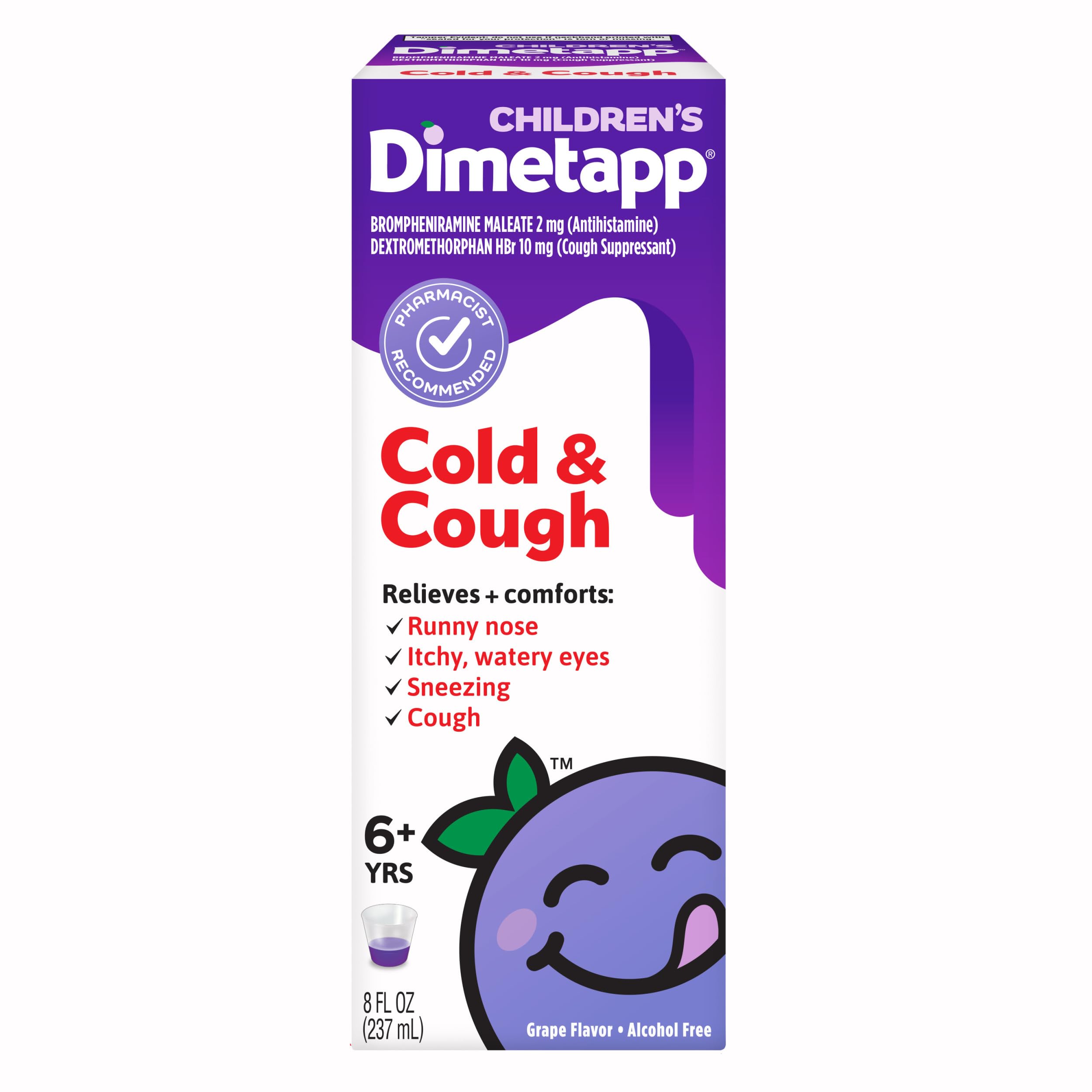
Children’s Dimetapp Cold & Cough combines brompheniramine maleate (the first-generation antihistamine) with dextromethorphan HBr (a cough suppressant) in a grape-flavored liquid designed for children ages six and older. This dual-action formula targets sneezing, runny nose, and itchy, watery eyes via the antihistamine component while the dextromethorphan works on the medulla oblongata to reduce cough frequency. The phenylephrine-free formulation avoids the vasoconstrictive effects of decongestants, making it a preferred option for children with asthma or heart conditions.
Multiple parent reviews corroborate that this medicine “stops cough and runny nose very well” and that children accept the grape flavor without fussing. The brompheniramine component produces strong sedation, which parents consistently leverage by administering this dose at bedtime to help their child sleep through coughing episodes. The 8-fluid ounce bottle provides roughly 48 doses at the standard 5 mL serving size, and the dosing cup is clearly marked for accurate measurement.
This product is a short-term symptomatic treatment for overlapping cold and allergy symptoms, not a daily allergy controller. The dextromethorphan component does not treat the underlying allergic inflammation — it simply suppresses the cough reflex. Parents should avoid giving this medicine during daytime hours, as the combination of antihistamine sedation and cough suppression can significantly impair alertness. For a child struggling through a cold with significant coughing and nasal allergy symptoms, this targeted nighttime formula provides comprehensive symptom relief in a single, well-tolerated dose.
Why it’s great
- Dual-action formula addresses both cough and allergy symptoms
- Phenylephrine-free — safe for children with asthma
- Grape flavor is well-accepted; children take it without resistance
Good to know
- Brompheniramine causes strong drowsiness — strictly for bedtime use
- Dextromethorphan suppresses cough without treating the root cause
FAQ
Is cetirizine or loratadine safer for a two-year-old with pollen allergies?
Can my child take allergy medicine every day during spring allergy season?
Why does Xyzal use levocetirizine instead of regular cetirizine?
Final Thoughts: The Verdict
For most users, the allergy medicine for children winner is the Children’s Claritin Chewable because its 5 mg loratadine dose delivers proven non-drowsy relief that pediatricians trust for school-age kids. If you want a liquid with faster onset and cleaner ingredients, grab the Xyzal Children’s Liquid. And for budget-friendly daily cetirizine coverage, nothing beats the value of the Kirkland Aller-Tec two-pack.