
Our readers keep the lights on and the weekend projects moving. As an Amazon Associate, I earn from qualifying purchases.
Your first podcast recording doesn’t need to sound like it was captured inside a wind tunnel. The difference between a hobbyist feed and a show people actually subscribe to often comes down to one purchase — the right microphone and the gear that supports it. But with terms like “cardioid,” “XLR,” and “dynamic vs. condenser” flying around, most beginners stall out, spending hours researching instead of recording.
I’m Rikta — the co-founder and writer behind FitlyFast. I’ve spent over 150 hours analyzing the technical specs, user reports, and real-world performance data behind the most popular podcast hardware to separate the tools that truly deliver broadcast-ready quality from the ones that just look the part.
This guide breaks down the essential gear choices — microphone types, audio interfaces, and accessories — so you can build a beginner podcast setup that captures your voice clearly, rejects background noise, and keeps your workflow simple from day one.
How To Choose The Best Beginner Podcast Setup
Starting a podcast shouldn’t require a degree in audio engineering. Yet the sheer variety of microphones — dynamic, condenser, USB, XLR, and hybrid models — can make the first purchase feel overwhelming. The goal is to eliminate decision fatigue by focusing on three key decisions: mic type, connectivity, and bundle completeness.
Dynamic vs. Condenser: Which Capsule Fits Your Room?
The single most important spec for a beginner is the microphone capsule type. Condenser mics (like the Audio-Technica AT2020USB-X or Elgato Wave:3) are extremely sensitive and capture a wide frequency range, but they also pick up every keyboard click, air conditioner hum, and room echo. Dynamic mics (like the Shure MV7+ or MAONO PD400X) are less sensitive to ambient noise, making them the better choice for untreated bedrooms, home offices, or shared living spaces. For most beginners recording in non-studio environments, a dynamic capsule will produce a cleaner, more usable track with less editing.
USB vs. XLR: The Simplicity vs. Scalability Trade-Off
USB microphones offer true plug-and-play simplicity — connect a single cable to your computer and start recording in seconds. This is ideal for solo podcasters who want to minimize gear complexity. XLR microphones require an audio interface, which adds cost and setup steps but provides cleaner preamps, multi-mic support for co-hosts, and the ability to upgrade individual components over time. Hybrid microphones like the Shure MV7+ and MAONO PD200W offer both USB and XLR ports, giving you an easy starting point with the option to grow into a professional rig later without replacing the mic itself.
Bundle Completeness: Separating Starter Kits from Add-On Traps
A true beginner podcast bundle should include everything needed to record on day one: the microphone, a stable desk stand or boom arm, necessary cables, and ideally a pop filter or windscreen. Some bundles also include an audio mixer with sound effects, which adds creative options for live streaming. However, many all-in-one kits sacrifice microphone quality for bells and whistles. When evaluating a bundle, prioritize microphone capsule quality and noise rejection over mixer features you may never use. A mid-range dynamic mic with a simple USB connection will outperform a cheap condenser mic paired with a 12-channel mixer.
Quick Comparison
On smaller screens, swipe sideways to see the full table.
| Model | Category | Best For | Key Spec | Amazon |
|---|---|---|---|---|
| Shure MV7+ | Dynamic Hybrid | Broadcast-ready audio | 50 Hz freq response | Amazon |
| Elgato Wave:3 MK.2 | Condenser USB | Streaming with DSP effects | 110 dB max SPL | Amazon |
| MAONO PD400X | Dynamic Hybrid | Versatile studio recording | 78 dB SNR | Amazon |
| HyperX QuadCast 2 | Condenser USB | Gaming & streaming | 77 dB SNR | Amazon |
| Audio-Technica AT2020USB-X | Condenser USB | Natural vocal reproduction | 24-bit / 96 kHz | Amazon |
| MAONO PD200W | Dynamic Hybrid | Wireless duo interviews | 60m wireless range | Amazon |
| Logitech Blue Yeti | Condenser USB | Multi-pattern recording | 100 dB max SPL | Amazon |
| FIFINE KS5W Bundle | Dynamic Bundle | Budget entry-level kit | 16-bit audio | Amazon |
| neculogy G10-P15XB Bundle | Condenser Bundle | All-in-one streaming board | 48V phantom power | Amazon |
In‑Depth Reviews
1. Shure MV7+

The Shure MV7+ is the gold standard for a reason: a dynamic capsule that naturally rejects room echo and ambient noise, paired with a bespoke DSP engine that includes real-time denoiser and Voice Isolation Technology. OBS certification means zero compatibility headaches during live streams, and the LED touch panel with 16.8 million color options makes mute status and level monitoring immediately visible. Auto Level Mode dynamically adjusts gain based on your vocal distance, so you never clip or disappear from the mix during a passionate monologue.
The virtual pop filter eliminates plosives without needing a foam windscreen, and the digital signal path processes 24-bit audio with remarkable clarity. The included desktop stand feels rock-solid, and the 3-meter USB-C cable offers generous placement freedom. Setup is genuinely plug-and-play for USB operation, but the XLR port gives you a clear upgrade path to a professional audio interface when you’re ready for multi-mic interviews or outboard processing.
At a higher investment than entry-level options, the MV7+ justifies every dollar with build quality, software integration, and sound that reviewers consistently describe as “studio-quality” and “buttery.” If you plan to podcast seriously for more than a year, this mic pays for itself in reduced editing time and audience retention.
Why it’s great
- Industry-leading DSP with real-time denoiser and Voice Isolation
- OBS certified with seamless software integration
- Auto Level Mode prevents clipping during dynamic vocal shifts
- Hybrid USB-C/XLR for future-proof upgrading
Good to know
- Heavier build at 3.57 pounds requires a sturdy arm or stand
- Premium price point may exceed a bare-minimum budget
2. Elgato Wave:3 MK.2
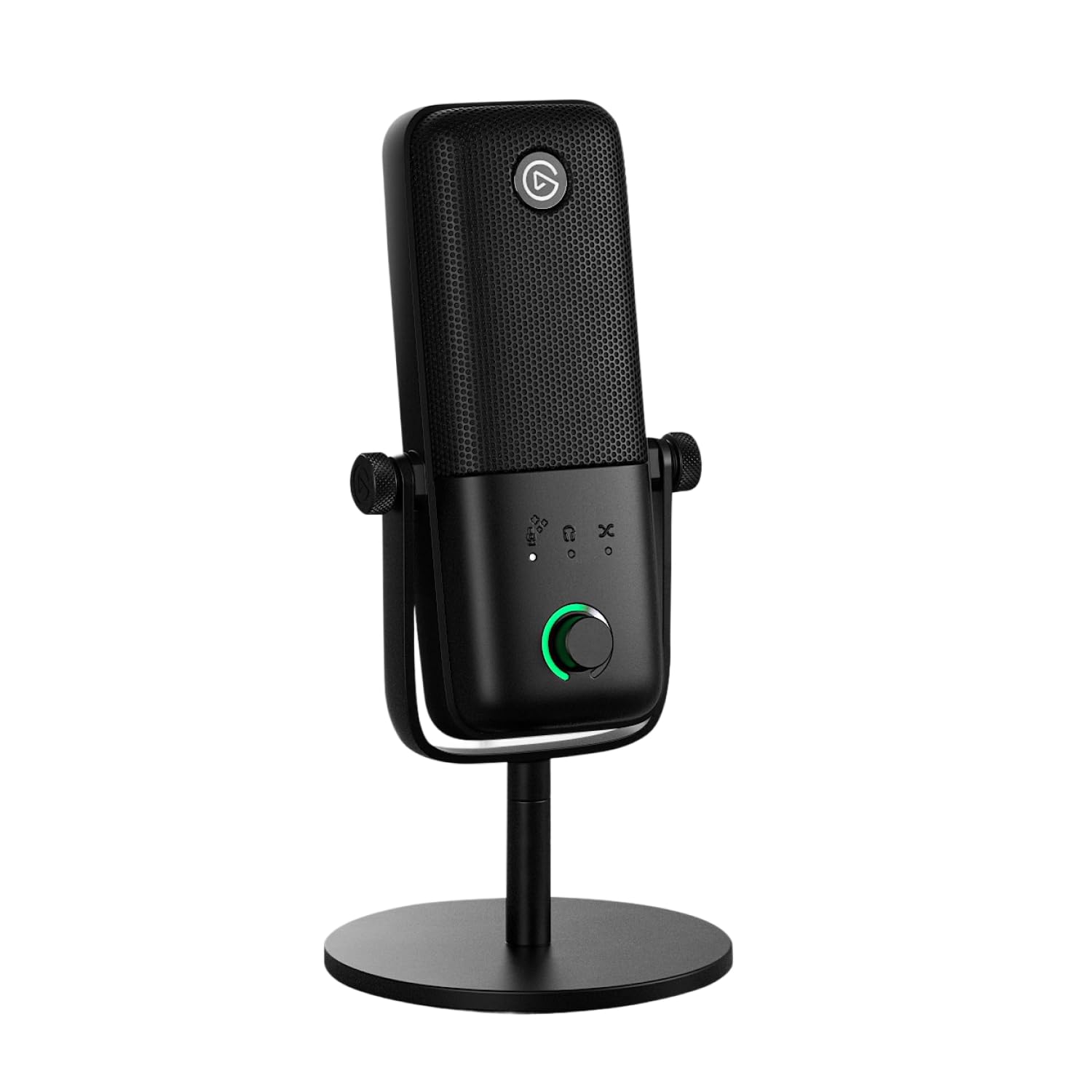
The Elgato Wave:3 MK.2 differentiates itself with a multi-stage Clipguard 2.0 anti-distortion system that makes clipping virtually impossible, even when you lean in during an excited segment. The cardioid condenser capsule delivers focused, studio-quality vocals, but the real magic is in the onboard Wave FX Processor, which unifies DSP effects — voice enhancer, compressor, EQ — and VST plugins into a single signal chain without taxing your computer’s CPU.
The multifunction dial provides instant volume control with tactile feedback, and the tap-to-mute function is responsive enough for live streaming. The included Wave Link app offers natively integrated audio routing, letting you separate game audio, music, and mic into independent channels. The compact form factor saves desk space, and the USB-C connection ensures reliable power and data transfer.
Condenser sensitivity means this mic will pick up ambient noise — keyboard clicks, mouse movements, room echo — more readily than a dynamic option. Users consistently praise the clarity and noise removal, but the microphone performs best in a relatively quiet room. For streamers who want professional vocal processing without a separate audio interface, the Wave:3 MK.2 is a top-tier choice.
Why it’s great
- Clipguard 2.0 prevents clipping at close range
- Onboard DSP with VST support reduces CPU load
- Wave Link app for multi-channel audio routing
- Compact, sleek design saves desk space
Good to know
- Condenser capsule picks up more room noise than dynamic mics
- Height may block monitor placement when centered
3. MAONO PD400X

The MAONO PD400X punches well above its price class with a dynamic capsule that delivers a warm, focused vocal tone and excellent rejection of ambient noise. The 78 dB signal-to-noise ratio and 40 Hz – 16 kHz frequency response produce broadcast-ready clarity without the harsh sibilance often heard in entry-level condensers. The unique 3-in-1 digital knob lets you adjust mic gain, headphone volume, and monitor mix from a single control point, reducing the learning curve for new users.
The Maono Link software provides both Standard Mode with presets for distance and tone, and Advanced Mode with full EQ, limiter, and compressor control. The tap-to-mute function with LED indicator is responsive and visible at a glance. The all-metal construction and heavy desktop stand give the PD400X a substantial feel that rivals microphones costing twice as much. XLR output is available for future integration with an audio interface.
Users consistently note that this mic “holds its own against Shure mics” at a fraction of the investment. The included USB-A to USB-C cable and XLR cable mean you have everything needed to start recording immediately. For podcasters who want a dynamic mic with pro-grade sound and flexible connectivity, the PD400X is the smartest value proposition in this list.
Why it’s great
- Warm, background-rejecting dynamic sound profile
- 3-in-1 digital knob simplifies gain, volume, and mix control
- Full Maono Link software with EQ and compression
- Solid metal construction with included XLR cable
Good to know
- Frequency response tops at 16 kHz, less airy than condensers
- Software requires installation for advanced EQ features
4. HyperX QuadCast 2

The HyperX QuadCast 2 builds on the reputation of its predecessor with a USB-C condenser microphone that prioritizes ease of use and build quality. The aluminum enclosure feels premium in hand, and the integrated shock mount effectively decouples the capsule from desk vibrations. Tap-to-mute with LED feedback is intuitive and instant, and the 77 dB SNR ensures your voice remains distinct from background hiss. The 20 Hz – 20 kHz frequency response captures a wide range of vocal tones.
Setup is truly plug-and-play — connect the USB-C cable and your system recognizes the mic immediately without driver installation. The cardioid polar pattern focuses on the sound source directly in front of the mic while rejecting off-axis noise. The adjustable stand allows for easy positioning, and the included USB-C cable is long enough for most desk configurations. Anti-vibration properties, as noted by users, turn accidental bumps into a dull thud rather than a sharp thump.
As a condenser mic, it will pick up more ambient sound than a dynamic alternative. Users report excellent reliability over a year of daily use, with the red LED dimming slightly over time but the audio quality remaining consistent. For gamers and streamers who want a robust, attractive mic with zero setup friction, the QuadCast 2 delivers.
Why it’s great
- Premium aluminum build with integrated shock mount
- True plug-and-play USB-C operation
- Tap-to-mute with instant LED feedback
- Excellent long-term reliability reported by users
Good to know
- Condenser capsule picks up room echo and keyboard clicks
- Bright red LED may clash with non-RGB setups
5. Audio-Technica AT2020USB-X

The Audio-Technica AT2020USB-X brings the renowned AT2020 studio heritage to a USB form factor. The cardioid condenser capsule delivers a smooth, extended frequency response (20 Hz – 20 kHz) that reproduces vocals with natural warmth and detail. The high-resolution AD converter operating at 24-bit / 96 kHz captures nuances that lower-quality USB mics miss, making it suitable for both podcasting and music recording.
The built-in headphone jack allows zero-latency monitoring directly from the microphone, and the soft-touch capacitive mute button silences audio silently — no mechanical clicking. The two-state LED indicator ring glows blue when powered and red when muted, providing clear visual feedback. The included custom desk stand and USB-C to USB-A cable with a USB-A to USB-C adapter ensure compatibility with modern and legacy devices.
As a condenser microphone, its high sensitivity means it will capture significant ambient noise — including HVAC systems, computer fans, and distant conversations. Users have noted that Discord’s Krisp filter helps mitigate this, but the AT2020USB-X performs best in a treated or naturally quiet space. For vocalists and podcasters who prioritize transparent, detailed sound and can control their environment, this microphone is an outstanding choice.
Why it’s great
- Studio-heritage capsule with smooth, natural vocal reproduction
- 24-bit / 96 kHz AD converter for high-resolution audio
- Zero-latency headphone monitoring
- Capacitive mute with clear LED indicator
Good to know
- High sensitivity picks up background noise and room echo
- Light always stays on when connected, even when PC is off
6. MAONO PD200W
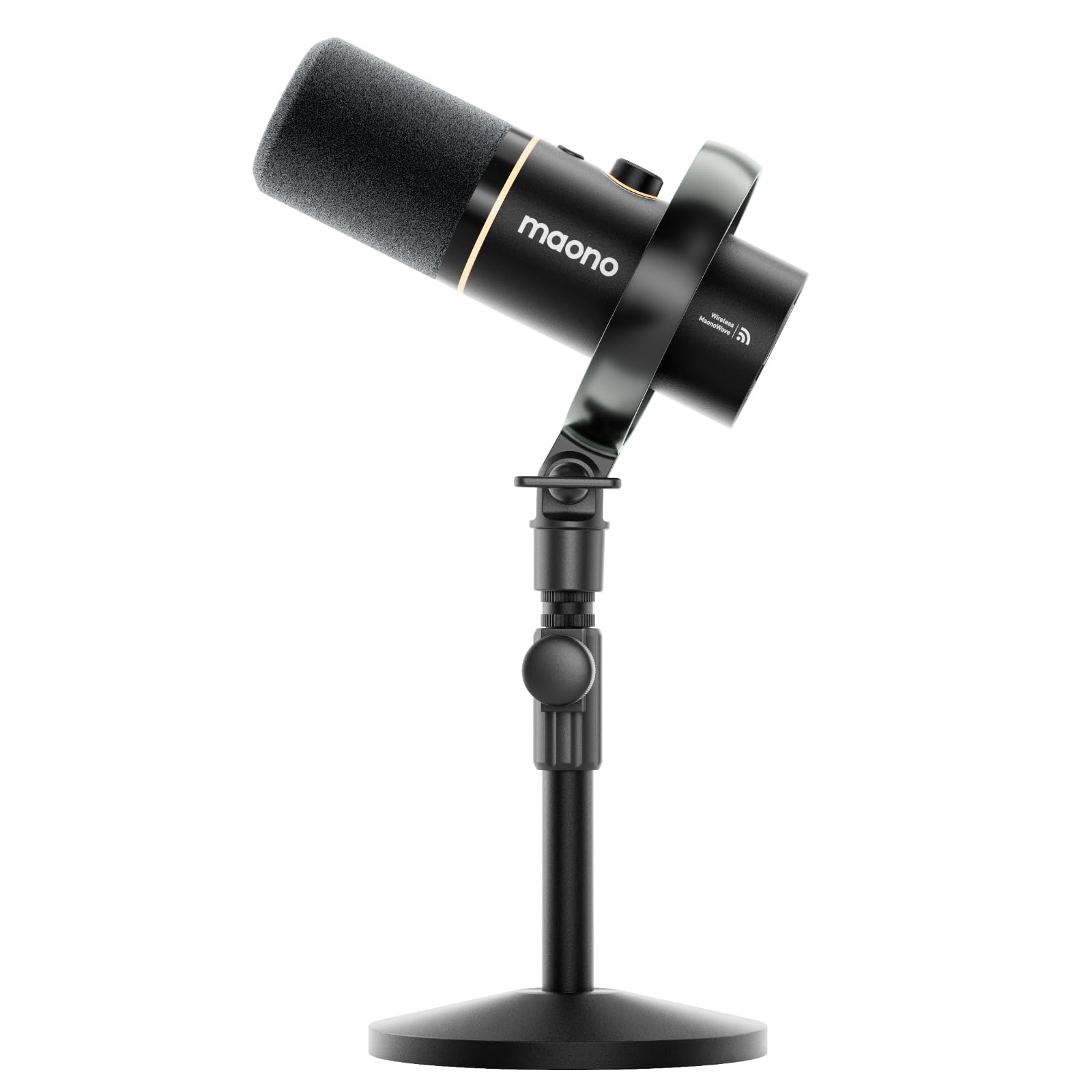
The MAONO PD200W is a unique hybrid that offers three connectivity methods — wireless, USB, and XLR — in a single dynamic microphone. The 60-meter wireless range gives you freedom to move around your recording space without a tether, and the 60-hour battery life (with RGB lighting off) means you can record across multiple sessions without recharging. The premium 30mm dynamic capsule with cardioid pickup delivers a clean 82 dB SNR, and handles SPL up to 128 dB without distortion.
The ability to connect two PD200W wireless mics to a single receiver enables duo podcasts or interviews with independent track recording, a feature usually found in much more expensive systems. The MaonoLink app provides four master-tuned preset modes plus access to full EQ, reverb, and compressor adjustments. The audio-video sync feature records directly to a camera, eliminating post-production alignment work — though the camera accessories are sold separately.
The all-metal construction feels durable, and the desktop stand is substantial enough to keep the mic stable. Users praise the simplicity of setup and the dramatic improvement over built-in laptop mics. The only minor trade-off is the battery needing a recharge every few days with regular use. For solo podcasters who want the option of wireless freedom or duo recording flexibility, the PD200W is a versatile, category-leading choice.
Why it’s great
- Three connectivity options: wireless, USB, and XLR
- 60-hour battery life and 60-meter wireless range
- Supports two-mic wireless duo setup with independent tracks
- MaonoLink app with presets and full EQ control
Good to know
- Battery needs recharging every few days with regular use
- Camera sync accessories sold separately
7. Logitech Blue Yeti
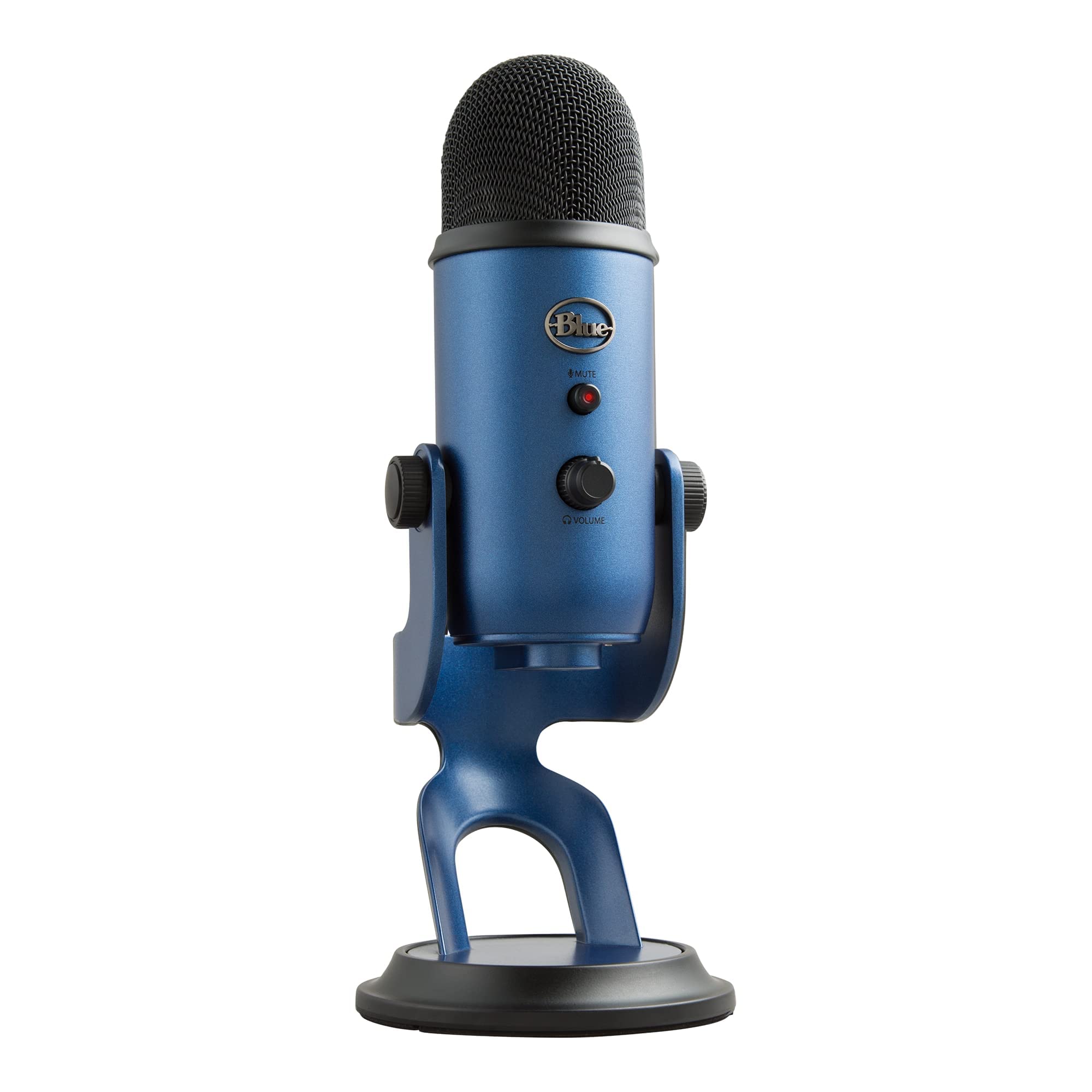
The Logitech Blue Yeti remains the most recognized USB microphone in the podcasting world for good reason. Its custom three-capsule array offers four pickup patterns — cardioid, omnidirectional, bidirectional, and stereo — allowing you to record solo, interview a guest across the table, or capture an entire room. The 100 dB max SPL handles loud vocal peaks without distortion, and the Blue VO!CE software adds broadcast-quality EQ, compression, and HD audio samples.
Onboard audio controls — headphone volume, pattern selection, instant mute, and mic gain — put every important adjustment at your fingertips without needing to open software. The adjustable desktop stand lets you pivot the microphone to optimize proximity effect and tonal balance. Plug-and-play USB-A connectivity means you’re recording within seconds of unboxing, compatible with both Mac and PC.
The Yeti’s condenser design is sensitive, and users consistently report that it picks up background noise like computer fans and keyboard clicks in untreated rooms. The size and weight also make it less portable than smaller alternatives. Despite these trade-offs, the Yeti’s versatility and massive user community provide unmatched troubleshooting resources. For creators who need multiple recording patterns and a proven workhorse, the Blue Yeti remains a solid choice.
Why it’s great
- Four pickup patterns for solo, duo, and room recording
- Blue VO!CE software with broadcast-quality effects
- Onboard gain, pattern, and mute controls
- Massive user community for support and tips
Good to know
- Condenser design picks up significant ambient noise
- Large footprint and heavy at 1.2 kg for a USB mic
8. neculogy G10-P15XB Bundle
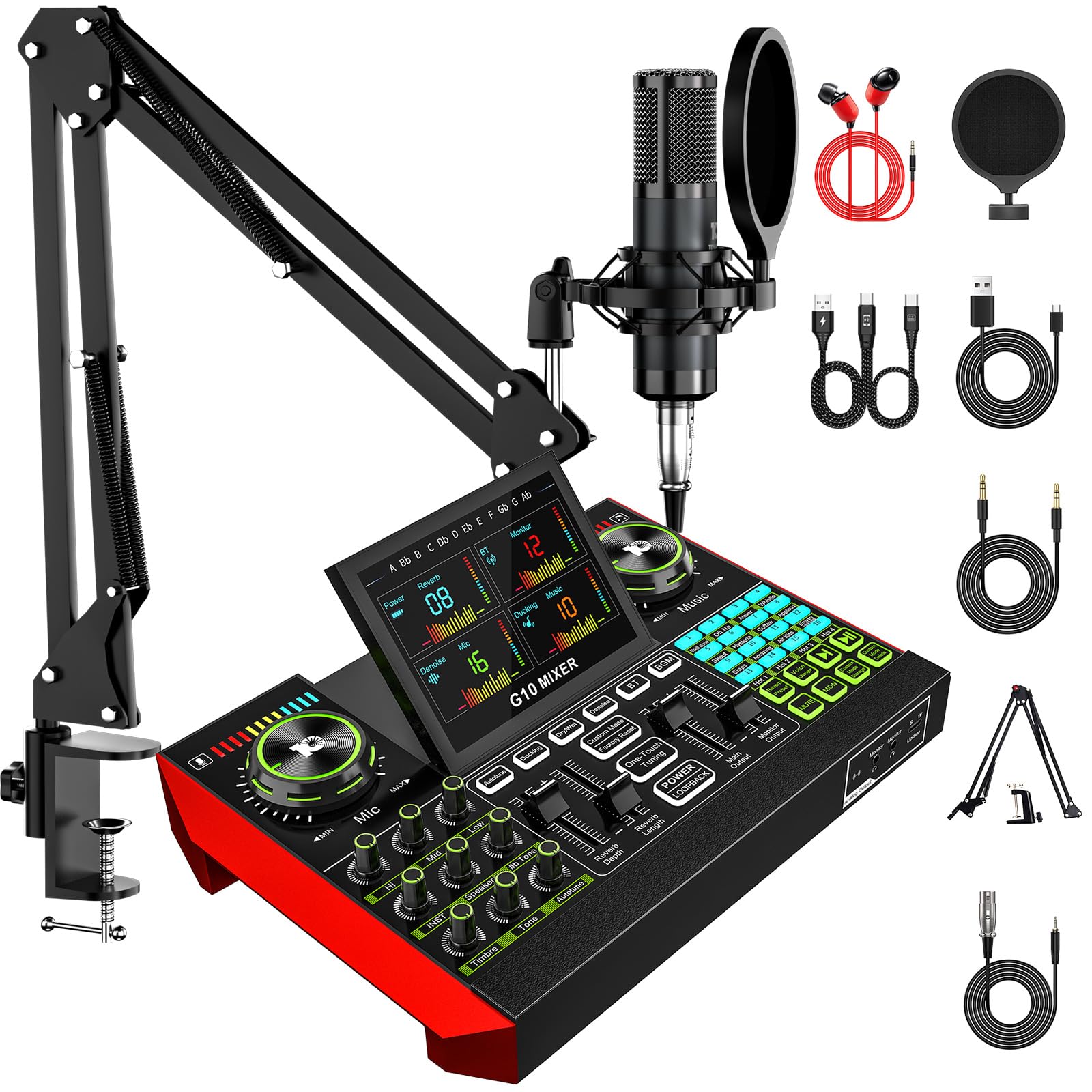
The neculogy G10-P15XB bundle takes an all-in-one approach, pairing a 3.5mm condenser microphone with a G10 audio mixer that includes 12 built-in sound effects, voice changer modes, and 48V phantom power. This is a complete package aimed at content creators who want to add live effects, pitch shifting, and follow-singing functionality to their streams without buying separate hardware. The included boom arm provides flexible positioning, and the mixer connects via Bluetooth or XLR.
The G10 mixer’s noise reduction circuit helps clean up the condenser mic’s naturally higher sensitivity, and the voice changer offers female, deep, baby, and magical presets for creative streams. The follow-singing mode plays the original track in your monitor while outputting only instrumental and vocal to the audience — a useful feature for live music streaming. The bundle includes all necessary cables and a charging cable, minimizing the need for separate purchases.
The primary concern is the 3.5mm condenser microphone itself, which some users report as not being compatible with the G10 mixer or suffering from inconsistent build quality. The setup process can take time as you learn the mixer’s workflow. For beginners who want to add audio effects without a separate computer plugin, this bundle offers integrated functionality, but the microphone quality is a step below dedicated podcast solutions.
Why it’s great
- All-in-one mixer with 12 sound effects and voice changer
- 48V phantom power for professional XLR microphones
- Follow-singing mode for live music performance streams
- Bluetooth connectivity reduces cable clutter
Good to know
- Included condenser mic has inconsistent build quality reports
- Setup can require troubleshooting and configuration time
9. FIFINE KS5W Bundle

The FIFINE KS5W bundle is designed to get you podcasting immediately with a dynamic XLR/USB microphone and a dedicated gaming audio mixer. The dynamic capsule provides natural noise rejection, making it a better choice for untreated rooms than the condenser alternatives at a similar price. The mixer includes a physical slider fader for intuitive volume control and five RGB lighting modes for visual customization during streams.
The gain knob on the microphone lets you adjust sensitivity for different vocal volumes, and the mute button provides instant silencing. USB-C connectivity ensures fast data transfer and compatibility with modern devices. The bundle includes both USB-C and XLR cables, giving you the flexibility to start with USB simplicity and upgrade to XLR later. Users consistently praise the 16-bit sound quality as excellent for the price point.
Some users report that the mixer sporadically shuts off and reboots during extended sessions, which can interrupt a live stream. The mixer lacks advanced voice changer features, so content creators who want real-time vocal effects will need additional software. The plastic construction of the mixer feels less premium than the metal microphone body. For the price, this bundle offers the core components — dynamic mic, mixer, cables — but reliability concerns with the mixer make it a cautious recommendation for critical live broadcasts.
Why it’s great
- Dynamic microphone provides natural noise rejection in untreated rooms
- Bundle includes both USB-C and XLR cables for flexible setup
- Slider fader and gain knob offer tactile audio control
- Excellent 16-bit sound quality for the entry-level price
Good to know
- Mixer reported to sporadically shut off and reboot in some units
- Plastic mixer build feels less durable than metal microphone
FAQ
Should I buy a USB microphone or an XLR microphone for my first podcast setup?
What’s the difference between a dynamic and a condenser microphone for podcasting?
How much background noise will a good condenser microphone pick up during a podcast?
Final Thoughts: The Verdict
For most users, the beginner podcast setup winner is the Shure MV7+ because its dynamic capsule, OBS certification, and Auto Level Mode deliver broadcast-quality audio with minimal effort, saving hours of editing and ensuring your voice consistently sounds professional. If you want a dynamic hybrid with exceptional value and warm vocal tone, grab the MAONO PD400X. And for flexible wireless freedom or duo recording without an interface investment, nothing beats the MAONO PD200W.