
Our readers keep the lights on and the weekend projects moving. As an Amazon Associate, I earn from qualifying purchases.
Stepping into photography means moving beyond smartphone convenience into a world of aperture control, shutter speed decisions, and interchangeable glass. The right entry-level camera should not overwhelm you with menus but must offer room to grow as your eye for composition sharpens. You need a body that balances image quality, autofocus reliability, and portability without draining your budget on features you will not touch for months.
I’m Rikta — the co-founder and writer behind FitlyFast. I have spent countless hours dissecting sensor specifications, autofocus systems, and lens ecosystems to deliver a buying guide that matches real beginners with the tools that will accelerate their learning curve.
This guide cuts through marketing noise to present the best beginner digital camera for photography across mirrorless, DSLR, and bridge platforms for every learning style.
How To Choose The Best Beginner Digital Camera For Photography
Every beginner camera makes trade-offs between sensor quality, autofocus intelligence, lens selection, and ergonomics. Understanding these four pillars will help you pick the body that supports your growth as a photographer rather than limiting it.
Sensor Size and Image Quality
APS-C sensors offer the best balance of cost and performance for beginners. They deliver significantly better dynamic range and low-light performance than smartphone-sized sensors while keeping lenses affordable. Full-frame sensors excel in light gathering and depth of field but come with higher body costs and larger, pricier glass. For most first-time buyers, an APS-C body paired with a kit zoom provides enough quality to learn manual exposure without breaking the bank.
Autofocus System and Points
A beginner benefits most from a system that locks focus quickly without constant micro-adjustments. Phase-detect autofocus arrays with dozens of points across the frame make tracking moving subjects far easier than older contrast-detect systems. Cameras with eye and face detection reduce missed focus in portraits, letting you concentrate on composition rather than chasing focus points.
Lens Ecosystem and Upgrade Path
Your camera body is a temporary home, but the lenses you buy will follow you for years. Canon RF-S and Sony E mount offer growing native lens lineups with affordable primes. Nikon F mount offers decades of used glass, while Micro Four Thirds provides compact lenses ideal for travel. Consider what type of photography excites you most — portraits, landscapes, street — and check whether affordable prime lenses exist in that mount before committing.
Ergonomics and Portability
A camera that stays home because it is too heavy or bulky teaches nothing. Mirrorless bodies generally weigh less than DSLRs, making them easier to carry during learning walks. Grip depth, button placement, and menu layout vary widely between brands. If possible, handle the camera before buying or read reviews from owners with similar hand sizes. A comfortable grip and intuitive controls reduce friction during the early learning phase.
Quick Comparison
On smaller screens, swipe sideways to see the full table.
| Model | Category | Best For | Key Spec | Amazon |
|---|---|---|---|---|
| Canon EOS R50 | Mirrorless | Best Overall for Beginners | 24.2MP APS-C, Dual Pixel AF II | Amazon |
| Fujifilm X-T30 III | Mirrorless | Film Simulation Look | 26.1MP APS-C, 20 Film Sims | Amazon |
| Canon EOS RP | Mirrorless | Entry into Full-Frame | 26.2MP Full-Frame, RF Mount | Amazon |
| Sony ZV-E10 | Mirrorless | Hybrid Photo/Video | 24.2MP APS-C, 425 AF Points | Amazon |
| OM System E-M10 IV | Mirrorless | Compact Travel Camera | 20MP MFT, 5-Axis IBIS | Amazon |
| Panasonic LUMIX G85 | Mirrorless | Dual Stabilization Value | 16MP MFT, 5-Axis IBIS + OIS | Amazon |
| Canon EOS R100 | Mirrorless | Ultra-Compact Mirrorless Starter | 24.1MP APS-C, 4K 24fps | Amazon |
| Canon EOS 2000D (Rebel T7) | DSLR | DSLR Starter Kit | 24.1MP APS-C, 9-Point AF | Amazon |
| Nikon D3500 | DSLR | Classic DSLR Experience | 24.2MP APS-C, 5fps Burst | Amazon |
| Panasonic LUMIX FZ80D | Bridge | Superzoom Reach | 60X Optical Zoom, 4K Photo | Amazon |
| Canon EOS 5D Mark IV | DSLR | Professional Aspiration | 30.4MP Full-Frame, 7fps | Amazon |
In‑Depth Reviews
1. Canon EOS R50
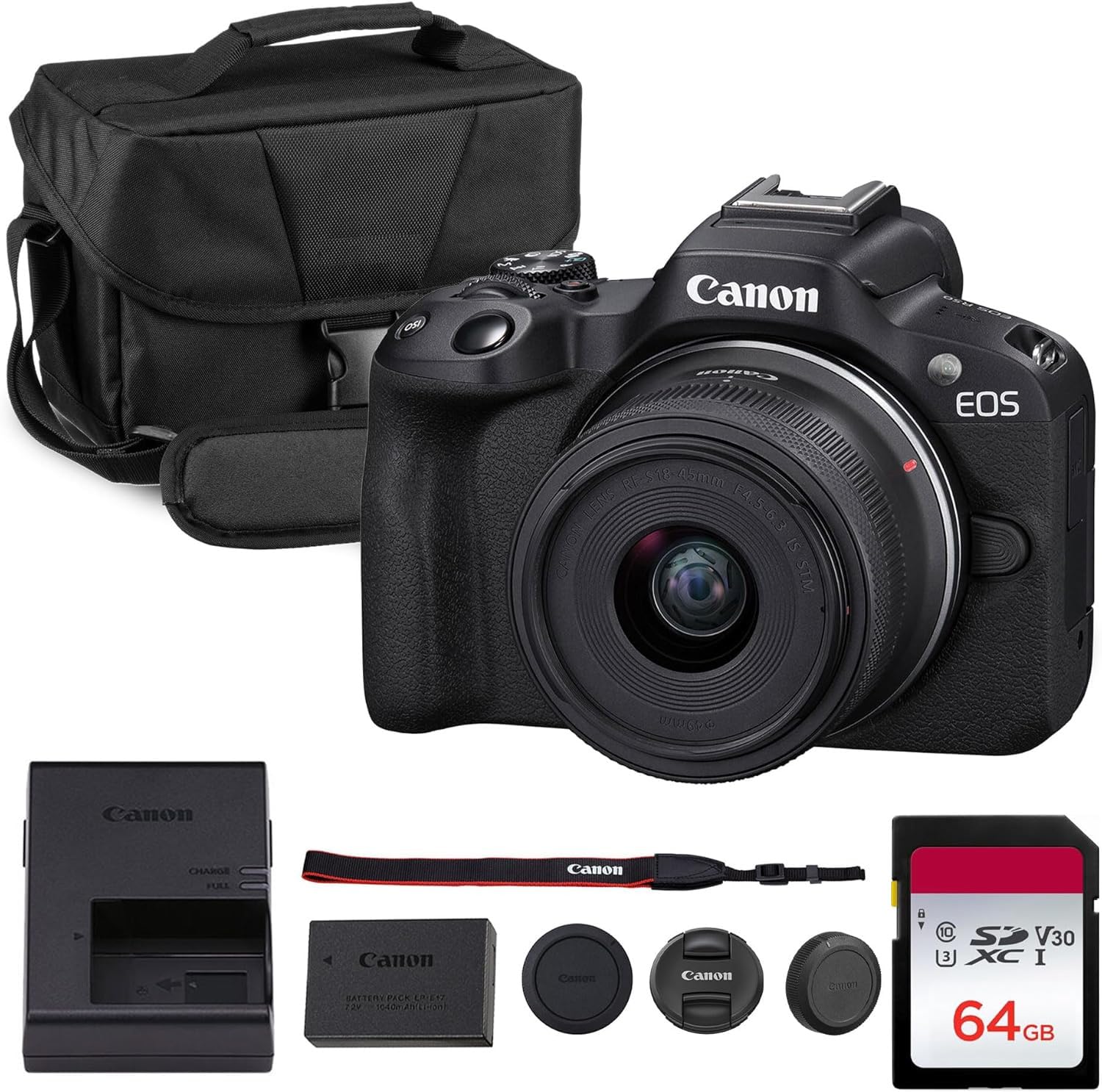
The Canon EOS R50 represents the modern standard for entry-level photography. Its 24.2 megapixel APS-C sensor paired with the DIGIC X processor delivers clean images across its native ISO range, while the Dual Pixel CMOS AF II system covers the vast majority of the frame with 99 autofocus zones. Beginners will appreciate the Creative Assist mode, which explains how aperture and shutter adjustments affect the final image in real time.
The oversampled 4K video captured from the full sensor width provides sharp footage for hybrid usage. The vari-angle touchscreen and vertical video support make this camera particularly practical for content creators who also want to learn still photography. Eye and face detection work reliably for both humans and animals, reducing missed focus during fast-moving situations like pets or active children.
Kit lens selection matters, and the included RF-S 18-45mm f/4.5-6.3 IS STM offers image stabilization and smooth autofocus in a compact package. Battery life is adequate for a full day of casual shooting. The R50 is the lightest Canon R-series body, making it easy to bring along every day, which is the single most important factor for building photography skills.
Why it’s great
- Excellent Dual Pixel AF II with face/eye detection
- Lightweight body encourages daily carry
- Oversampled 4K video from full sensor
- Creative Assist mode teaches exposure fundamentals
Good to know
- Limited native RF-S lens selection currently
- No in-body image stabilization
- Kit lens has slower aperture range
2. Fujifilm X-T30 III
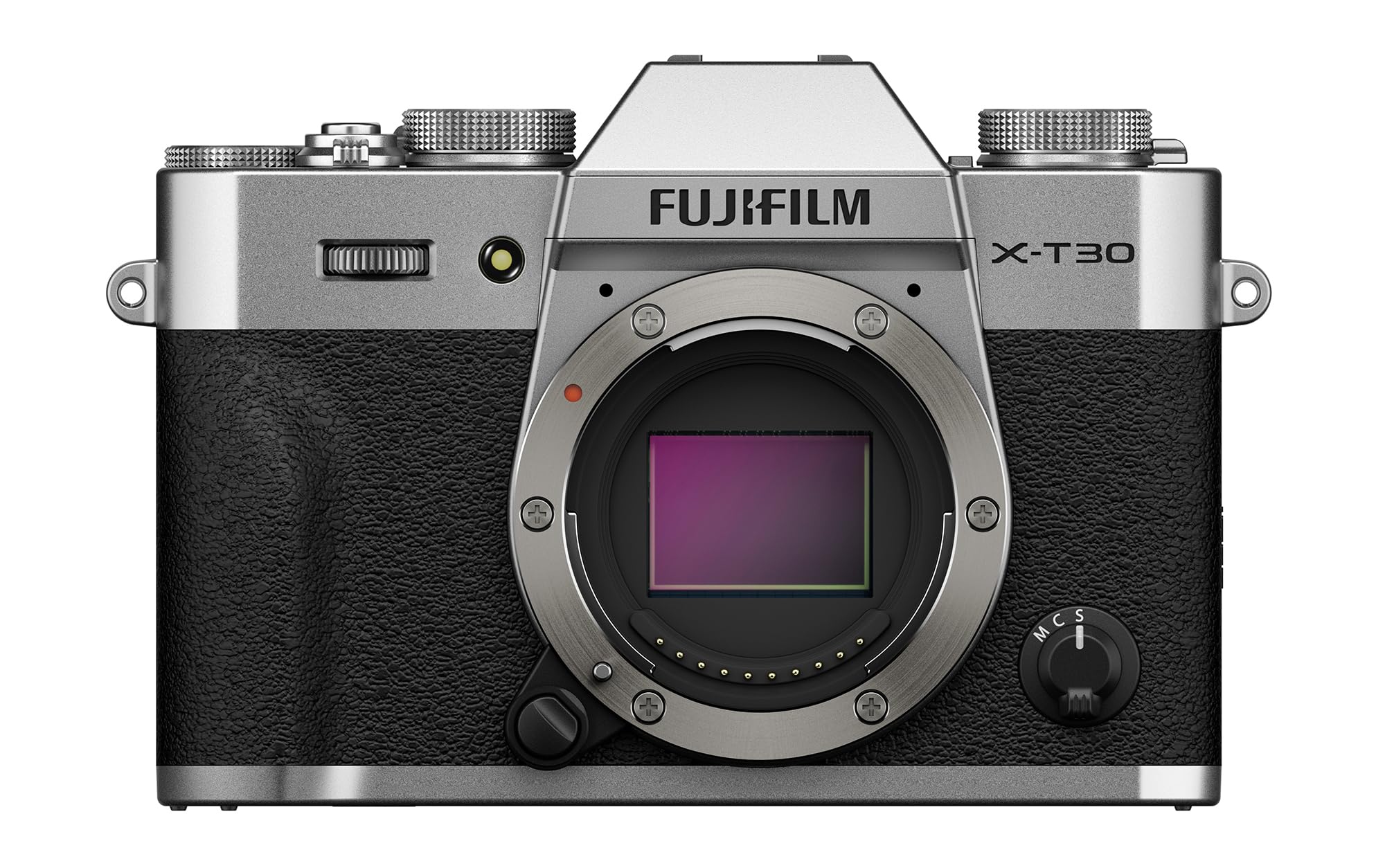
The Fujifilm X-T30 III excels at producing exceptional JPEGs straight out of camera, making it the best choice for beginners who do not want to spend hours in post-processing. The 20 built-in Film Simulations, including the beloved Classic Chrome and Nostalgic Neg, give every shot a distinctive color science that mimics analog film stocks. The 26.1 megapixel X-Trans sensor resolves fine detail with minimal moire.
AI-powered subject detection autofocus handles faces, eyes, animals, and vehicles with speed and accuracy. The retro design uses physical dials for ISO and shutter speed, providing tactile control that reinforces the exposure triangle for learners. The Auto mode switches everything to point-and-shoot simplicity when handing the camera to someone else.
The included XC13-33mm f/3.5-6.3 OIS kit lens offers optical stabilization and a useful zoom range. Bluetooth and Wi-Fi connectivity make image transfer to a smartphone seamless for sharing. The body is compact enough for daily carry, and Fujifilm’s lens lineup includes affordable primes like the XC 35mm f/2 that dramatically improve image quality for portrait work.
Why it’s great
- Stunning JPEG colors without editing
- Physical dials teach manual exposure intuitively
- AI subject detection autofocus
- Compact retro design is enjoyable to use
Good to know
- Smaller grip may feel cramped for larger hands
- Battery life is average
- Kit lens aperture is slow for low light
3. Canon EOS RP

The Canon EOS RP brings full-frame image quality to a body that rivals many APS-C cameras in size and weight. The 26.2 megapixel sensor provides superior low-light performance and shallower depth of field compared to smaller sensors, giving beginners access to professional-looking background blur without requiring fast lenses. The DIGIC 8 processor keeps the interface responsive.
Dual Pixel CMOS AF covers 88 percent of the frame horizontally and 100 percent vertically, with eye detection that works in both stills and video. The vari-angle touchscreen is excellent for overhead or ground-level shots. The RP is also fully compatible with Canon’s extensive EF and EF-S lens library via the inexpensive Mount Adapter EF-EOS R, opening thousands of affordable used lenses.
The RF 24-105mm f/4-7.1 IS STM kit lens provides up to 5 stops of image stabilization and a versatile focal range from wide-angle to short telephoto. 4K video is available, though it uses a crop factor. Battery life from the LP-E17 pack is moderate, so a spare battery is recommended for full-day shoots.
Why it’s great
- Full-frame sensor for superior low-light and bokeh
- Lightweight body for a full-frame camera
- Huge lens compatibility via EF adapter
- Excellent Dual Pixel AF with eye detection
Good to know
- 4K video uses a significant crop
- Kit lens has slow variable aperture
- No in-body image stabilization
4. Sony ZV-E10
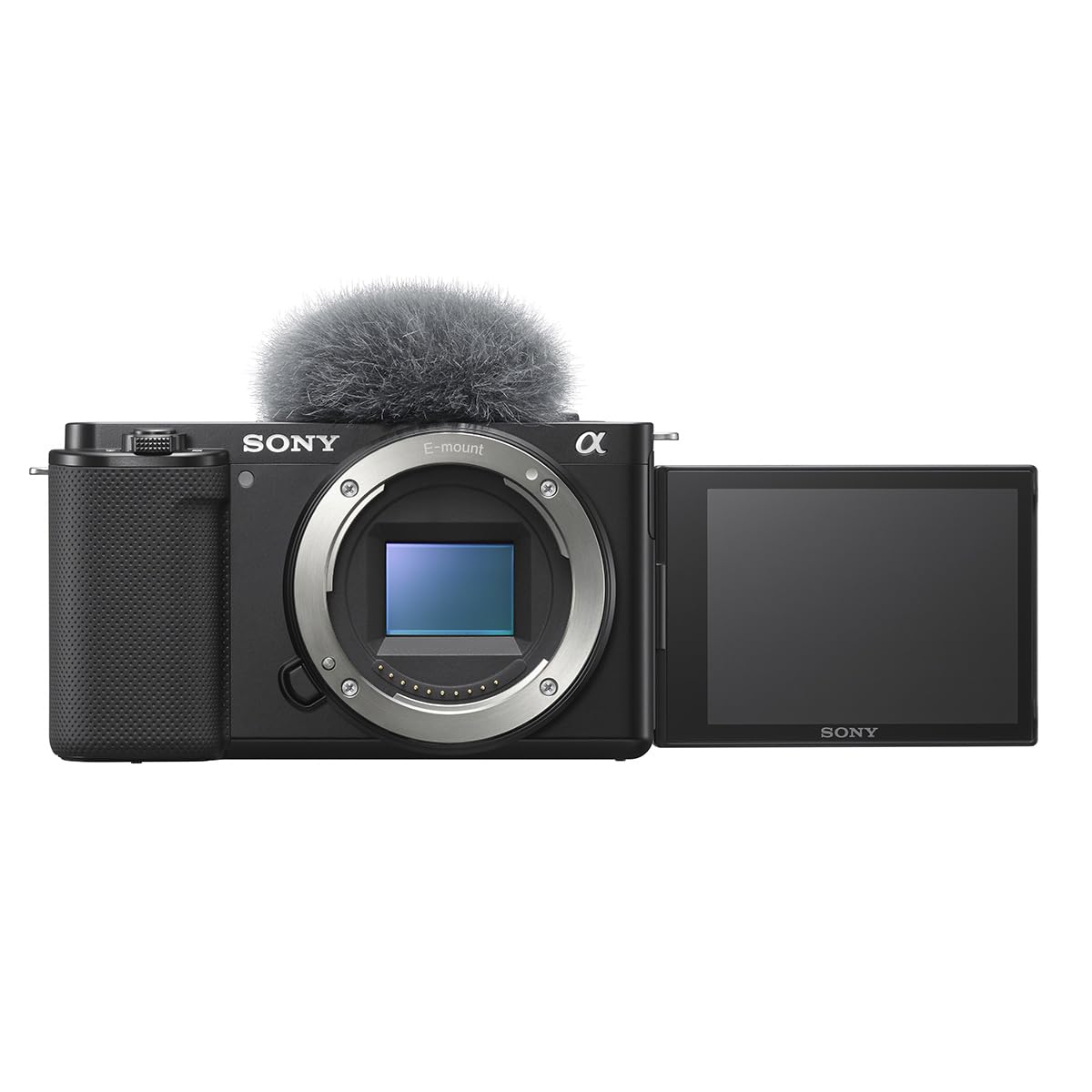
Sony’s ZV-E10 was designed with content creators in mind, but its 24.2 megapixel APS-C sensor and 425-point phase-detection autofocus make it equally capable for still photography beginners. The oversampled 4K video derived from the 6K sensor readout produces exceptional sharpness for hybrid shooters. The Product Showcase mode automatically transitions focus from face to held object, useful for tutorial-style content.
The Background Defocus button provides instant shallow depth of field effects, helping beginners visualize how aperture affects subject separation. The E-mount ecosystem offers the widest selection of third-party lenses, including affordable Sigma and Tamron primes that deliver professional sharpness at budget-friendly prices. The side-opening flip screen works well for self-recording and overhead shots.
Battery life is limited to around 25 minutes of continuous 4K recording, so multiple spare batteries are essential for video work. The electronic stabilization works best with a wide-angle lens. The lack of in-body stabilization means handheld video from longer lenses may show shake, but the fast and reliable autofocus compensates in many scenarios.
Why it’s great
- Outstanding autofocus coverage with 425 phase-detect points
- Oversampled 4K from 6K sensor readout
- Broad third-party lens support via E-mount
- Product Showcase mode for hybrid shooting
Good to know
- No in-body image stabilization
- Small battery requires spares for video
- Electronic viewfinder not included on this model
5. OM System E-M10 Mark IV

The OM System E-M10 Mark IV packs a 20 megapixel Micro Four Thirds sensor with 5-axis in-body image stabilization rated for 4.5 stops of compensation. This stabilization allows handheld shots at shutter speeds that would be impossible with larger sensor cameras, making it the best choice for beginners who shoot in mixed light without a tripod. The flip-down monitor and dedicated selfie mode simplify vlogging and self-portraits.
The 14-42mm EZ pancake kit lens retracts to a nearly flat profile, making the entire package small enough to slip into a jacket pocket or small purse. The 121-point contrast-detect autofocus is accurate in good light and works well for most still subjects. The 16 Art Filters, including a new Instant Film option, add creative variety without post-processing.
Wireless connectivity via Bluetooth provides an always-on connection to the OI Share smartphone app for quick image transfer. The body feeIs sturdy despite its small size, with a metal lens mount and quality controls. Micro Four Thirds offers the widest range of compact, lightweight lenses of any interchangeable lens system, with excellent options for travel photography.
Why it’s great
- Class-leading 5-axis IBIS for shake-free handheld shots
- Extremely compact with retracting kit lens
- Dedicated selfie mode for easy vlogging
- Large Micro Four Thirds lens ecosystem
Good to know
- Smaller sensor limits low-light noise performance
- No external battery charger included
- WiFi transfer is slower than competitors
6. Panasonic LUMIX G85

The Panasonic LUMIX G85 combines a 16 megapixel Micro Four Thirds sensor with a no-low-pass-filter design that resolves nearly 10 percent more fine detail than earlier 16MP sensors. The Dual I.S. 2 system merges 5-axis in-body stabilization with lens-based optical stabilization for effective hand-shake suppression at any focal length. This makes the G85 one of the most stable handheld shooting platforms in its class.
The magnesium alloy body with sealing against dust and splashes allows confident use in light rain or dusty environments. The 12-60mm Power O.I.S. kit lens provides a 24-120mm equivalent focal range, covering wide landscapes to short telephoto portraits. The integrated OLED live viewfinder has 2,360K dots of resolution for a clear, lag-free composition experience.
4K video recording at 30fps and the 4K Photo feature let you extract 8 megapixel stills from video clips, useful for capturing peak action moments. The 49-point contrast-detect autofocus is reliable in good light but slows down in dim conditions. The articulated touchscreen and physical control dials provide flexible shooting ergonomics.
Why it’s great
- Dual in-body plus lens stabilization for shake-free shots
- Weather-sealed magnesium alloy body
- Useful 12-60mm kit lens range
- 4K Photo mode for action capture
Good to know
- 16MP resolution lower than APS-C competitors
- Autofocus slows down in low light at 4K
- No headphone jack for audio monitoring
7. Canon EOS R100

The Canon EOS R100 is the smallest and lightest body in the EOS R series, making it an ideal entry point for photographers who prioritize portability. The 24.1 megapixel APS-C CMOS sensor paired with the DIGIC 8 processor delivers quality images with natural color reproduction characteristic of Canon imaging. Dual Pixel CMOS AF provides 143 autofocus zones with human face and eye detection for reliable portrait focus.
Continuous shooting at 6.5 frames per second in One-Shot AF is sufficient for capturing everyday action. The camera supports 4K video recording at 24fps and slow-motion Full HD at up to 120fps. The included RF-S 18-45mm f/4.5-6.3 IS STM lens offers optical stabilization and a smooth, quiet stepping motor for video work.
The beginner-friendly graphical interface includes guided mode explanations and custom quick menus that accelerate the learning curve. The built-in flash provides emergency fill light in dim settings. Battery life from the LP-E17 pack is decent for a mirrorless camera, lasting through a day of casual shooting. The RF mount provides a clear upgrade path to higher-end Canon bodies and RF lenses.
Why it’s great
- Smallest and lightest EOS R series body
- Dual Pixel CMOS AF with face detection
- Beginner-friendly GUI with quick menus
- Built-in flash for fill light
Good to know
- 4K limited to 24fps
- No external battery charger included
- Electronic viewfinder is basic
8. Canon EOS 2000D (Rebel T7)

The Canon EOS 2000D, also known as the Rebel T7, is a time-tested DSLR design that provides a full optical viewfinder experience at a very accessible price point. The 24.1 megapixel APS-C CMOS sensor with DIGIC 4+ processor delivers solid image quality, though the 9-point autofocus system with a single center cross-type point is limited by modern standards. This camera encourages the discipline of using the center focus point and recomposing.
Built-in WiFi with NFC permits wireless image transfer to a smartphone via the Canon Camera Connect app. The Scene Intelligent Auto mode handles exposure decisions automatically, making the camera approachable for absolute beginners. Creative Filters and Creative Auto modes allow experimentation with different looks without understanding the underlying technical settings.
The included Canon EF-S 18-55mm f/3.5-5.6 DC III zoom lens covers essential focal lengths for general photography. The optical viewfinder provides a clear, lag-free view of the scene, and the 3.0-inch 920K-dot LCD monitor offers live view composition. Accessories included in this kit are entry-level quality and may need upgrading for serious use.
Why it’s great
- Optical viewfinder offers instant response
- Extensive Canon EF/EF-S lens ecosystem
- Scene Intelligent Auto mode for beginners
- WiFi connectivity for easy sharing
Good to know
- Only 9 autofocus points limit fast action
- DIGIC 4+ processor is older generation
- Kit accessories are basic quality
9. Nikon D3500

The Nikon D3500 has been a legendary entry-level DSLR for years, offering a 24.2 megapixel DX-format CMOS sensor without an optical low-pass filter for enhanced sharpness. The native ISO range of 100-25600 provides usable low-light capability for its class. The optical viewfinder with an 11-point autofocus system rewards careful composition and teaches fundamental photography techniques.
The Guide Mode is one of the most effective learning tools in any beginner camera, explaining how each setting affects the final image and suggesting adjustments for common scenarios. The 5fps continuous shooting rate is sufficient for capturing moderate action. The camera’s ergonomic grip is well-suited for comfortable handling during extended shooting sessions.
The included AF-P DX NIKKOR 18-55mm f/3.5-5.6G VR lens features vibration reduction for sharper handheld images. This refurbished model is a renewed unit with a 90-day warranty and includes all original accessories. Users should note the lack of a shutter release remote connection and potential issues with the Snapbridge app for wireless transfers. Battery life is excellent, easily lasting several hundred shots per charge.
Why it’s great
- Excellent Guide Mode for photography education
- No low-pass filter for sharper images
- Comfortable ergonomic grip
- Great battery life for extended shooting
Good to know
- No IR sensor for remote shutter release
- Snapbridge app connection can be unreliable
- Renewed unit with limited warranty
10. Panasonic LUMIX FZ80D

The Panasonic LUMIX FZ80D is a bridge camera that provides a massive 60X optical zoom range from 20mm wide-angle to 1200mm equivalent telephoto, making it the best choice for wildlife, sports, and travel photography where changing lenses is impractical. The Power O.I.S. stabilization system effectively suppresses camera shake at the extreme telephoto end, which is critical for sharp images at 1200mm.
The 2,360K-dot large live viewfinder offers a glare-free composition experience even in bright sunlight. The 4K Photo mode allows extraction of 8 megapixel stills from 4K video bursts at 30fps, and the Post Focus feature lets you select the focus point after capturing the image. The 39-point contrast-detect autofocus is decent in good light but struggles in low-light conditions.
The fixed lens with a small sensor means image quality cannot match interchangeable lens cameras with larger sensors, especially in dim light. The interface is not the most intuitive for beginners starting with cameras. The FZ80D is ideal for photographers who prioritize reach over ultimate image quality and want one camera that covers all focal lengths without changing gear.
Why it’s great
- 60X zoom covers 20-1200mm range
- Power O.I.S. stabilizes long telephoto shots
- 4K Photo and Post Focus features
- Lightweight for such extended reach
Good to know
- Small sensor limits low-light performance
- Image quality trails larger sensor cameras
- Menu interface is not beginner-friendly
11. Canon EOS 5D Mark IV

The Canon EOS 5D Mark IV is the flagship DSLR for serious photographers, featuring a 30.4 megapixel full-frame CMOS sensor and the DIGIC 6+ image processor. This combination delivers exceptional dynamic range, low noise at high ISO settings, and enough resolution for large prints and heavy cropping. The 61-point autofocus system with 41 cross-type points is highly accurate and customizable.
The 5D Mark IV captures 4K Motion JPEG video at 30fps and Full HD at up to 60fps. Dual Pixel CMOS AF provides smooth focus transitions during live view and video capture. The built-in WiFi and GPS functionality enable seamless geotagging and wireless file transfer. The large, bright optical viewfinder offers 100 percent frame coverage and a 0.71X magnification.
For photography beginners who are committed to learning at a professional level, the 5D Mark IV offers a direct path to industry-standard quality. The Canon EF lens mount provides access to the largest lens ecosystem in the world. The body is built to withstand heavy professional use with magnesium alloy construction and extensive weather sealing. Battery life is stellar, easily lasting a full day of intensive shooting.
Why it’s great
- Outstanding 30.4MP full-frame image quality
- 61-point autofocus with wide cross-type coverage
- Stellar battery life for all-day shooting
- GPS geotagging for travel documentation
Good to know
- High price requires significant commitment
- 4K Motion JPEG files are very large
- Bulky and heavy compared to mirrorless
FAQ
Should a beginner start with a DSLR or mirrorless camera?
How many megapixels do I really need as a beginner?
Which lens should I get after the kit lens?
Is it worth buying a renewed or refurbished camera?
Does in-body stabilization matter for a beginner?
Final Thoughts: The Verdict
For most users, the beginner digital camera for photography winner is the Canon EOS R50 because it combines excellent Dual Pixel AF II performance, oversampled 4K video, a lightweight body, and beginner-friendly Creative Assist tools in an RF mount system with clear upgrade potential. If you want the film-like JPEG color science and tactile learning experience of physical dials, grab the Fujifilm X-T30 III. And for a full-frame sensor at a breakthrough size and price point, nothing beats the Canon EOS RP for entry-level access to professional image quality.