
Our readers keep the lights on and the weekend projects moving. As an Amazon Associate, I earn from qualifying purchases.
Algae turns your pool from a refreshing retreat into a slimy green chore. An above ground pool vacuum designed for algae needs aggressive flow rates, fine-mesh filtration, and the ability to trap particles you often cannot see with the naked eye.
I’m Rikta — the co-founder and writer behind FitlyFast. I have spent hundreds of hours analyzing motor specifications, filter micron ratings, and real-world cleaning performance to understand exactly which models actually remove algae versus simply pushing it around.
After evaluating seven top contenders based on suction strength, debris fineness capture, battery endurance, and build quality, I have identified the best options on the market for tackling stubborn blooms. This guide breaks down everything you need to confidently choose the above ground pool vacuum for algae that fits your routine and budget.
How To Choose The Best Above Ground Pool Vacuum For Algae
Algae comes in many forms — from cloudy green water to thick black spots on the liner. Not every pool vacuum can handle this stubborn organic matter. You need a machine that generates enough suction to pull clinging algae free and a filter system fine enough to trap it before it returns to the water column. Below are the critical factors to evaluate.
Suction Power and Flow Rate
The most important spec for algae removal is flow rate, measured in gallons per minute (GPM) or gallons per hour (GPH). Algae is lightweight but adheres to surfaces. A flow rate of at least 18 GPM is recommended for manual handheld units, while robotic cleaners should exceed 1800 GPH. Higher flow rates create the water velocity needed to lift algae from the pool floor and suspend it long enough for the filter to catch it.
Filter Mesh Density
Standard pool vacuum filter bags catch leaves and sand but often return microscopic algae particles to the water. For effective algae removal, look for filter bags or cartridges rated at 300-mesh or finer. A 500-mesh bag captures particles down to roughly 25 microns, which is small enough to trap dead algae cells and prevent them from re-circulating. Models that offer dual-layer filtration — a coarse outer layer and a fine inner layer — provide the best balance of capture efficiency and flow maintenance.
Battery Capacity and Runtime
Killing and removing algae often requires multiple passes across the entire pool floor. A vacuum with a runtime of at least 60 minutes gives you enough time to cover a standard above ground pool without rushing. Lithium-ion batteries in the 2000 mAh to 5200 mAh range are common. Fast charging (under two hours) is a practical advantage if you need to run a second cycle immediately after the first.
Quick Comparison
On smaller screens, swipe sideways to see the full table.
| Model | Category | Best For | Key Spec | Amazon |
|---|---|---|---|---|
| Seauto SAT25 | Robotic Premium | Wall & waterline algae | Dual 180W brushless motors | Amazon |
| BOTLUXE PC10 | Robotic High-End | Heavy algae blooms | 5000 GPH suction, 150µm filter | Amazon |
| Teguy Cordless Handheld | Manual Mid-Range | Quick algae spot cleaning | 18.5 GPM, 500-mesh filter | Amazon |
| JESIMAIK Dual Head | Manual Mid-Range | Visible debris tracking | 18.5 GPM, dual filter mesh | Amazon |
| Enhulk PC15 | Manual Value | Routine algae prevention | 18.5 GPM, wide 13.4″ head | Amazon |
| Aiper Scuba-26X101 | Robotic Entry | Light to moderate algae | 1820 GPH, 100-min runtime | Amazon |
| WYBOT A1 | Robotic Budget | Flat pool algae maintenance | 2280 GPH, dual-layer filtration | Amazon |
In‑Depth Reviews
1. Seauto SAT25 Robotic Pool Vacuum
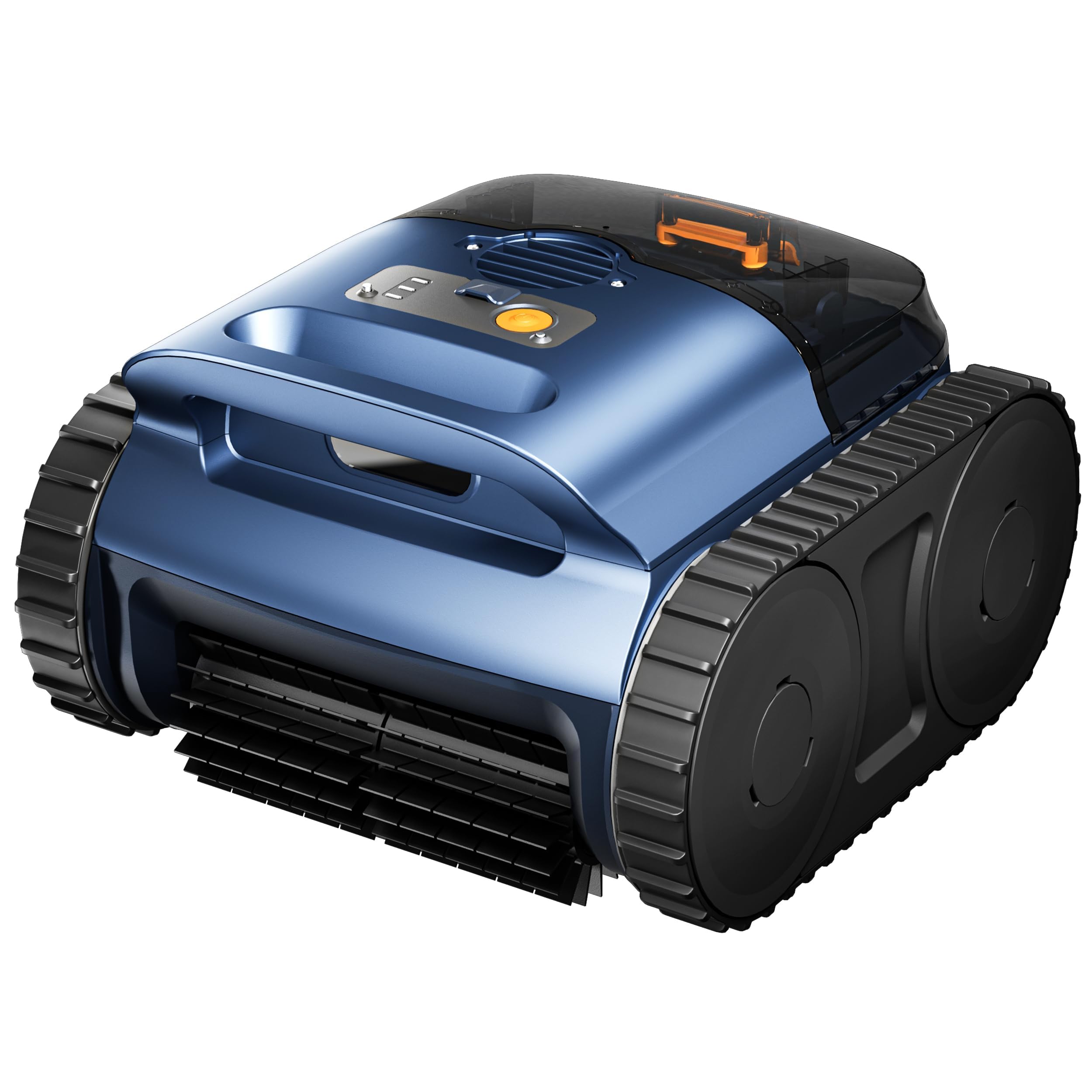
The Seauto SAT25 delivers the most comprehensive algae attack strategy in this lineup. Its dual independently controlled 180W brushless motors generate aggressive suction while maintaining an IP68-certified sealed architecture that withstands continuous submerged operation. Unlike single-motor units, this configuration allows the robot to clean the floor, climb walls, and scrub the waterline in a single cycle — critical for removing the green film that accumulates above the water surface.
The sonar navigation system sets this model apart from random-bouncing competitors. It scans the pool geometry and maps an efficient cleaning path, reducing overlap and ensuring every inch of the liner gets suction exposure. For algae, this systematic coverage means you do not miss the patches that form near steps, corners, or behind ladder entries. Users report that it handles slopes and uneven ground without getting stuck, a common failure point with simpler robotic designs.
Battery runtime reaches 150 minutes, giving you enough endurance to clean a 2150-square-foot pool in one session. The track drive adds climbing stability on vinyl and fiberglass surfaces, preventing the slippage that allows algae to cling undisturbed. While it lacks a smartphone app, the one-touch start and self-parking feature make it as simple as pressing a button and retrieving a clean pool.
Why it’s great
- Two 180W motors provide the highest suction in this lineup
- Sonar mapping eliminates missed algae patches
- Climbs walls and scrubs waterline in one autonomous cycle
Good to know
- Heavier than other robots at nearly 20 pounds
- No app or remote control for manual path selection
2. BOTLUXE PC10 Robotic Pool Cleaner
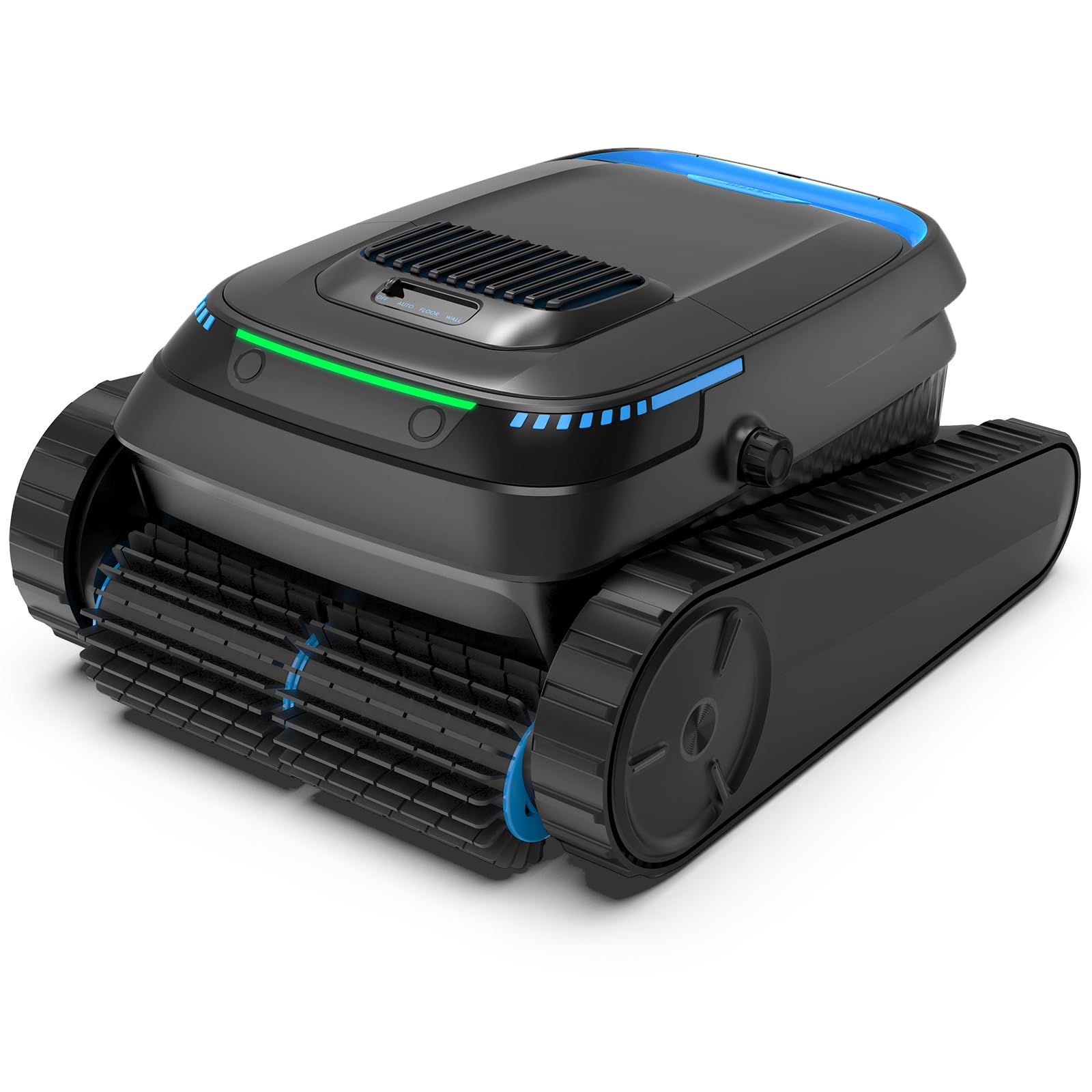
The BOTLUXE PC10 attacks algae with raw power. Its dual drive motors paired with a high-efficiency pump motor generate a staggering 5000 GPH flow rate, which creates enough water velocity to tear mustard algae and black spot algae free from textured pool surfaces. The 150-micron ultra-fine filter — equivalent to roughly 100-mesh — captures the resulting debris in a 4-liter container that prevents immediate re-clogging, a common frustration when vacuuming heavy blooms.
Smart navigation algorithms select between N-shaped and S-shaped cleaning paths depending on your pool layout. You can choose Full Pool, Floor Only, or Wall Only modes. For algae treatment, the Wall Only mode is particularly useful because many algae species, especially black algae, anchor to vertical surfaces. The rugged treads climb slopes up to 30 degrees, so even a slightly sloped above-ground pool floor gets full coverage.
Battery life reaches 120 minutes, and fast charging refills the 5200 mAh pack in 2.5 hours. The self-parking feature returns the robot to the pool edge when the cycle ends or the battery runs low, so you are not fishing around for it. While its filter is excellent for fine particles, the 150µm mesh may require more frequent cleaning during the initial algae kill phase compared to coarser filters.
Why it’s great
- Highest GPH in this review for dislodging stubborn algae
- Ultra-fine 150µm filter traps dead algae cells
- Dedicated wall-only cleaning mode targets vertical algae
Good to know
- Four-liter filter basket requires more frequent emptying in heavy debris
- Premium price tier reflects performance
3. Teguy Cordless Pool Vacuum
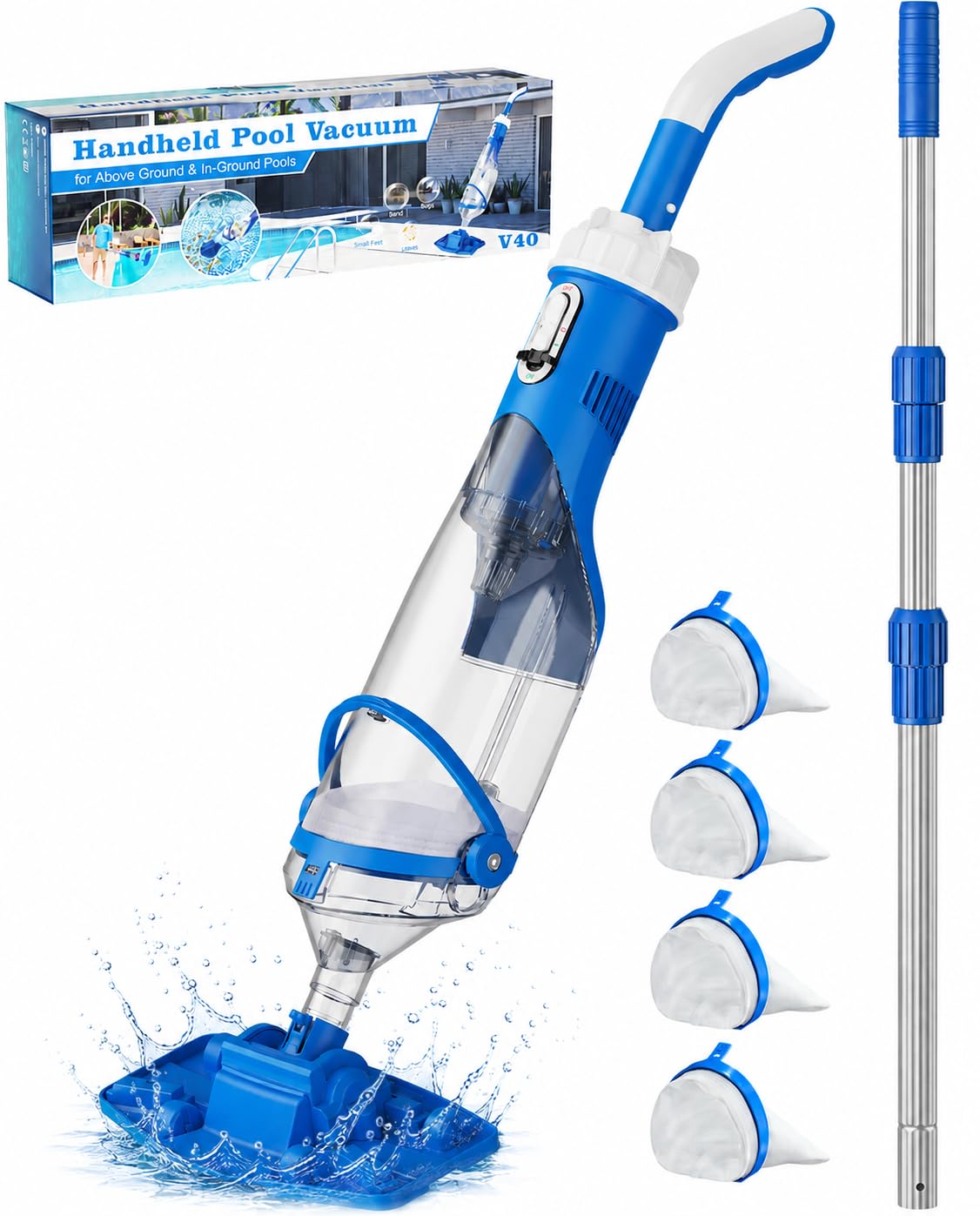
The Teguy handheld vacuum is the best option for pool owners who prefer manual control over algae hotspot removal. Its 40-watt motor drives a consistent 18.5 GPM flow rate, which is the current sweet spot for moving fine algae particles without creating so much turbulence that they resuspend and drift away. The included 500-mesh filter bags are significantly finer than the standard 200-mesh or 300-mesh bags found on many competitors, meaning dead algae cells stay trapped rather than being pumped back through the return jets.
Supercharge technology fully recharges the five 2000 mAh lithium cells in just 1.5 hours. This is critical for algae treatment because you often need to run multiple passes — one to remove the bulk of the slime and another to catch the particles that settle after the water clears. The telescopic pole extends to 7 feet, allowing you to reach the center of a 24-foot round pool without stepping in. The IPX8 waterproof rating provides confidence for full submersion cleaning.
Smart protection system automatically shuts the motor off if the unit sits idle for more than one minute outside of water, preventing accidental dry-run damage. Users consistently praise its ability to pick up sand and fine sediment in a single pass. The only drawback is that the filter bag fills quickly during heavy algae removal, so keeping a spare bag ready is essential.
Why it’s great
- 500-mesh filters trap microscopic algae particles
- 1.5-hour fast charge for multi-session cleaning
- Automatic idle shutoff prevents motor burnout
Good to know
- Filter bag fills quickly during heavy initial algae kills
- Manual operation requires more physical effort than robotic units
4. JESIMAIK Dual Head Pool Vacuum
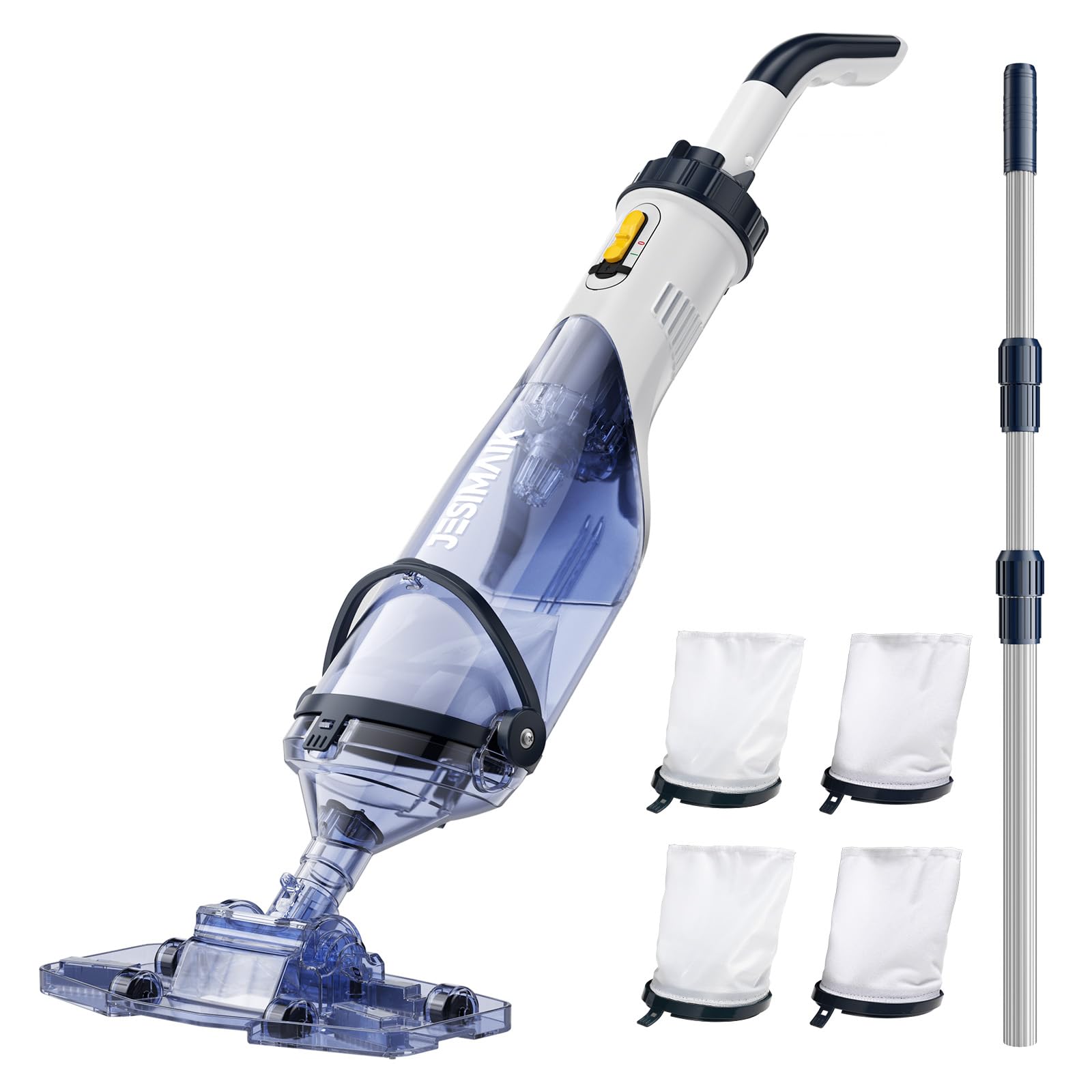
The JESIMAIK pool vacuum features an unusual but highly practical transparent brush head that lets you see exactly what you are picking up in real time. For algae removal, this visibility is a game changer — you can watch the green cloud disappear into the intake and confirm when a section is fully clean before moving on. The dual head design lets you switch between a scrubbing brush for dislodging surface algae and a suction nozzle for picking up the loosened debris.
Flow rate matches the 18.5 GPM benchmark established by the Teguy, but JESIMAIK includes both 300-mesh and 500-mesh filter bags. This dual system means you can start with the coarser 300-mesh bag for the initial heavy pass when the water is thick with dead algae, then switch to the 500-mesh fine bag for the finishing pass. The full-bag alert indicator flashes red when the filter needs emptying, preventing suction loss during critical cleaning moments.
The telescopic pole extends from 35.8 to 87.5 inches, and the unit requires a minimum water depth of 11.8 inches to operate — a spec worth checking if you have a shallow wading area. While one user reported a charging issue that was resolved by customer service, the majority of verified buyers describe the suction as excellent for fine debris and the battery life as sufficient for a full pool cleaning.
Why it’s great
- Transparent head provides real-time algae pickup confirmation
- Two filter mesh densities for phased cleaning
- Full-bag alert prevents wasted passes with a clogged filter
Good to know
- Requires at least 11.8 inches of water depth
- Mixed reports on initial unit charging reliability
5. Enhulk PC15 Pool Vacuum
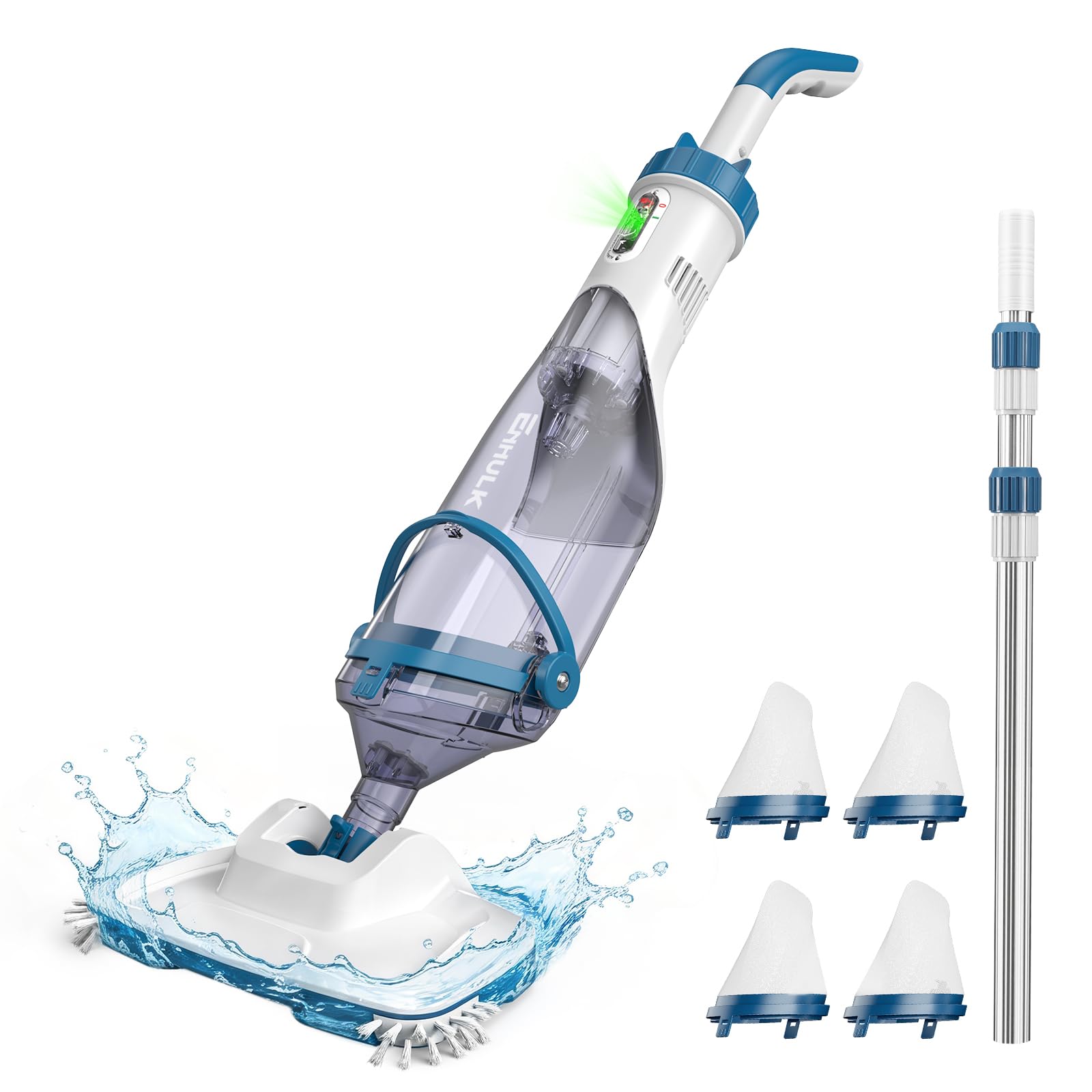
The Enhulk PC15 differentiates itself with a 13.4-inch cleaning head — the widest of the manual units in this guide. This broader head covers more surface area per pass, making it ideal for above ground pools with large open floor expanses where algae tends to settle after a shock treatment. The side brushes sweep debris inward toward the suction path, preventing the common problem of algae getting pushed aside rather than picked up.
Its motor delivers the same 18.5 GPM flow rate as the Teguy and JESIMAIK, but the wider head means you can clear a 15-foot round pool in fewer passes. The battery provides 60 minutes of runtime with a 1.5-hour charge cycle. A red flashing indicator signals when the filter bag is clogged, which is particularly useful during algae cleanup when fine particles can quickly block mesh pores.
Verified users confirm it handles sand, dirt, DE powder, and maple helicopters effectively. One user reported using it to remove 200 pounds of blast media from a 25,000-gallon pool over two days, demonstrating the motor’s durability. The auto shutoff after one minute of dry operation protects the battery and motor. Note that the included handle is less robust than a standard telescopic pole, though the unit does accept standard pool poles.
Why it’s great
- Widest cleaning head reduces time spent per square foot
- Side brushes funnel debris into the suction path
- Durable motor handles heavy continuous use
Good to know
- Included handle feels less premium than the vacuum body
- Filter requires frequent cleaning during heavy debris loads
6. Aiper Scuba-26X101 Cordless Robotic Cleaner
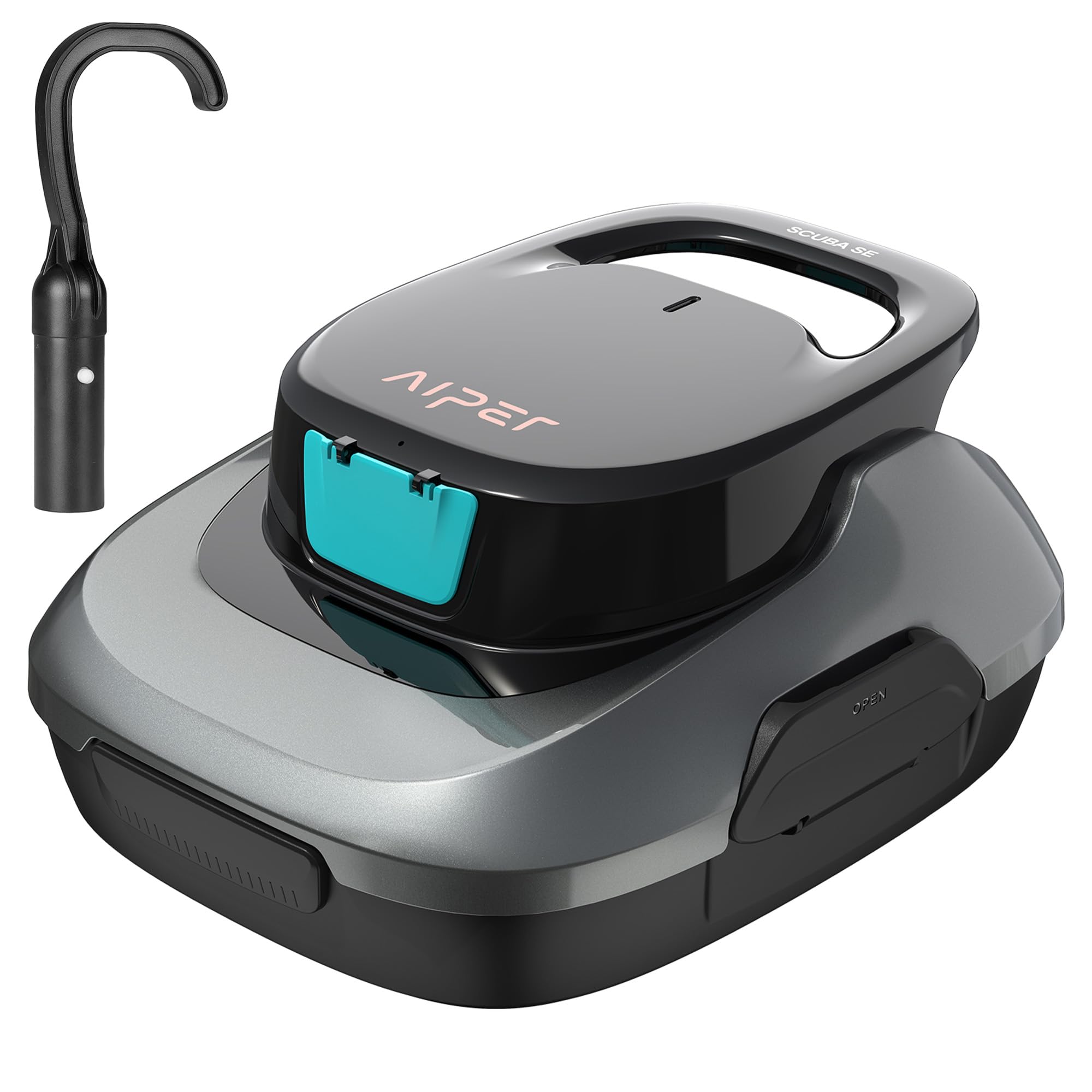
The Aiper Scuba-26X101 represents the entry point for hands-free robotic algae cleaning at an accessible price. Its 1820 GPH suction is more modest than the premium robots, but it handles light to moderate green algae and dead organic matter effectively on flat above ground pool floors. The dual-cleaning mode lets you toggle between a standard daily cycle and a more aggressive deep-clean pattern suited for post-shock algae fallout.
A 100-minute battery life covers pools up to 860 square feet — roughly the size of a 28-foot round above ground pool. The cordless design with smart self-parking means the robot automatically stops near the pool wall when the battery runs low, making retrieval straightforward without reaching in. The drainage system purges up to 80 percent of trapped water in 15 seconds, significantly lightening the unit for transport and storage.
User reports confirm it picks up dead algae and fine dirt effectively. One buyer described the unit as powerful enough to clean up all dead algae on a newly reopened above ground pool with no issues. The primary limitation is that it does not climb walls or scrub the waterline, so surface algae above the floor level requires separate manual treatment. For floor-only algae maintenance, however, it delivers reliable autonomous performance.
Why it’s great
- 100 minutes of cordless autonomous cleaning
- Quick water drainage for easy handling after use
- Simple dual-mode operation for daily or deep cleaning
Good to know
- Floor-only design, does not clean walls or waterline
- Limited to flat above ground pools without steep slopes
7. WYBOT A1 Cordless Robotic Pool Cleaner
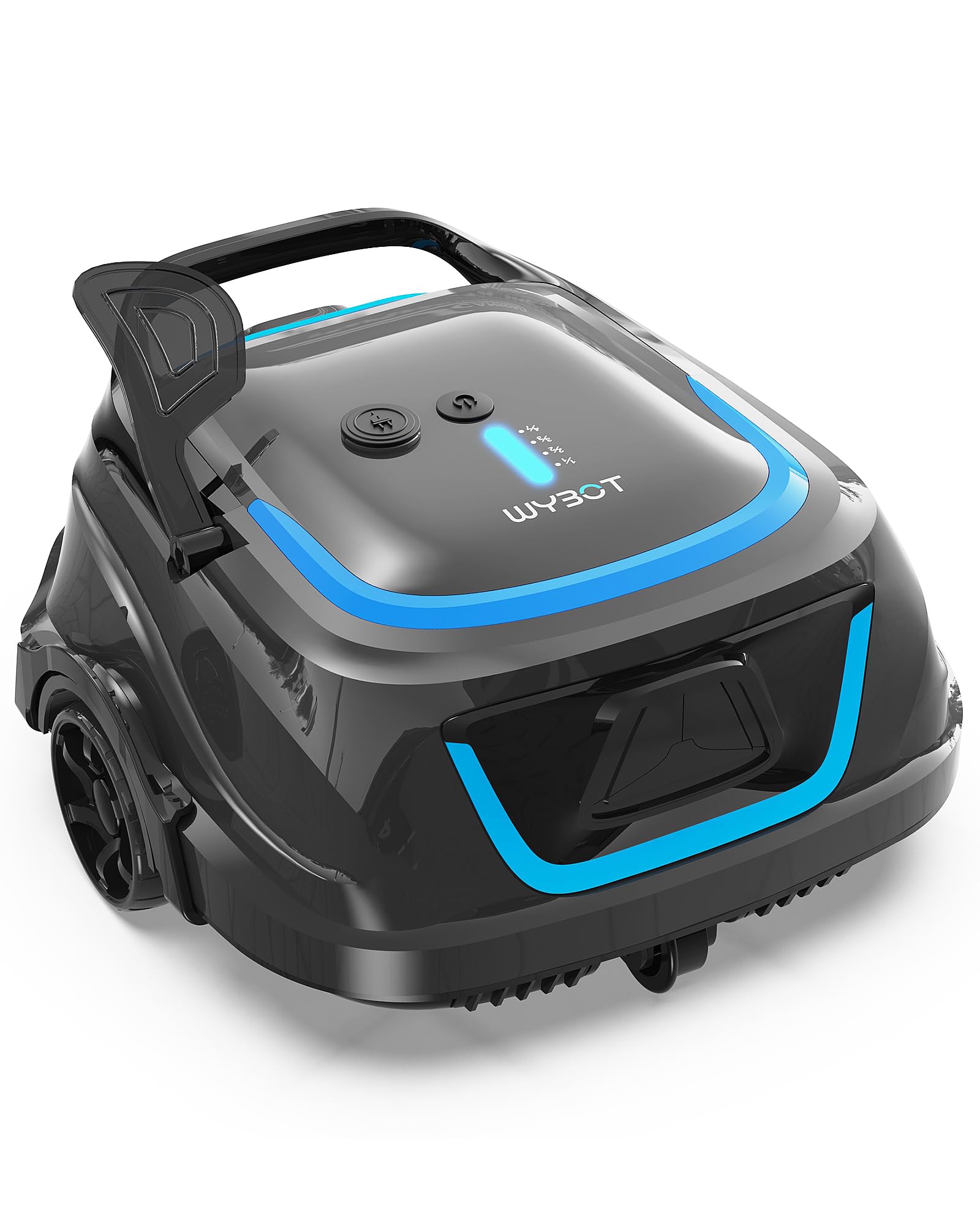
The WYBOT A1 brings a 2280 GPH flow rate at a budget-friendly price point, making it the strongest value entry among the robotic options. Its advanced dual-layer filtration system combines a 180-micron precision filter (roughly 80-mesh) with a textured foam layer that traps fine particles the primary mesh might miss. This is particularly important for algae because the foam layer catches dead cells that can cloud the water if recirculated.
Battery runtime reaches 130 minutes — the second-longest in this guide — and the robot covers pools up to 1100 square feet. The self-parking feature guides it to the pool wall when the battery is low, and a 2.5-hour charge cycle keeps downtime manageable. Note that this model is designed for flat pool bottoms only and should not be used in pools with slopes exceeding 15 degrees or significant liner wrinkles.
Verified buyers highlight its performance on uneven Intex pool bottoms and report that the secondary foam filter noticeably improves water clarity compared to single-mesh robots. One reviewer noted it gets stuck occasionally on pool seams but described it as the best value in the hundred- to two-hundred-dollar range. If your pool has a simple flat floor and you want autonomous algae maintenance without spending premium dollars, this is the strongest budget option.
Why it’s great
- Dual-layer filtration with foam layer captures fine algae particles
- 130-minute runtime covers large pools in one cycle
- Lowest cost robotic entry with strong suction
Good to know
- Not suitable for pools with slopes over 15 degrees
- May get stuck on liner wrinkles or seams
FAQ
Can a standard pool vacuum remove green algae?
How often should I empty the filter bag when cleaning algae?
Is a robotic vacuum better than a manual one for algae?
Will a 500-mesh filter bag slow down my vacuum’s suction?
Final Thoughts: The Verdict
For most above ground pool owners fighting algae, the winner of the above ground pool vacuum for algae search is the Seauto SAT25 because its dual 180W motors and sonar navigation provide wall-climbing, waterline-scrubbing coverage that addresses algae wherever it grows. If you want the raw power to blast through heavy blooms without manual effort, grab the BOTLUXE PC10 with its 5000 GPH suction and 150-micron filter. And for pool owners on a budget who prefer hands-on control, the Teguy Cordless Handheld delivers 500-mesh filtration and fast charging at a very attractive price.