
Our readers keep the lights on and the weekend projects moving. As an Amazon Associate, I earn from qualifying purchases.
An erratic heartbeat, a moment of dizziness—these fleeting symptoms are often the only warning before a serious cardiac event. An Afib monitor gives you the power to capture that irregular rhythm the moment it happens, turning a vague feeling into concrete data your doctor can act on.
I’m Rikta — the co-founder and writer behind FitlyFast. My analysis of this category focuses on FDA clearance, detection specificity for Atrial Fibrillation, data-sharing capabilities with healthcare providers, and long-term reliability across single-lead, multi-lead, and integrated blood pressure designs.
This guide breaks down the top options to help you choose the right device for your specific health needs. After comparing clinical accuracy, portability, and subscription costs, here is the full breakdown of the best afib monitor for your peace of mind.
How To Choose The Best Afib Monitor
Selecting the right atrial fibrillation monitor requires matching the device’s detection method, data output, and form factor to your specific lifestyle and medical needs. The wrong choice could mean missed episodes or useless data.
FDA Clearance and Clinical Validation
Not all personal EKG devices are created equal. An FDA-cleared monitor has undergone review to demonstrate it can accurately detect AFib, bradycardia, and tachycardia. Devices without clearance may offer general heart rate data but lack the validated algorithms needed for arrhythmia diagnosis. Always prioritize monitors that explicitly state FDA clearance for AFib detection.
Detection Method: Single-Lead ECG vs. Blood Pressure Integration
A single-lead ECG recorder (like a credit-card-sized device) requires you to press electrodes with your fingers for 30 seconds to capture a rhythm strip. Blood pressure monitors with AFib detection analyze pulse regularity during inflation. Dedicated ECG monitors provide a visual trace for doctor review, while BP-based detection only flags potential episodes without a shareable waveform. For active AFib screening, dedicated ECG is superior.
Data Sharing and Subscription Requirements
Some monitors store unlimited readings locally and sync to a free app, while others require a monthly or annual subscription to unlock detailed reports or shareable PDFs. Check if the device’s core AFib detection is free or locked behind a paywall. For many users, a monitor with no mandatory subscription offers the best long-term value.
Quick Comparison
On smaller screens, swipe sideways to see the full table.
| Model | Category | Best For | Key Spec | Amazon |
|---|---|---|---|---|
| Withings BPM Connect | BP + Heart Rate | Daily BP tracking with heart rate | FDA Cleared, Wi-Fi Sync | Amazon |
| KardiaMobile Card | Wallet EKG | On-demand AFib detection | 30-Second ECG, 2000 EKGs | Amazon |
| OMRON Gold BP5360 | BP + AFib Screen | Morning BP & AFib screening | AFib Detection During BP | Amazon |
| EMAY Portable ECG | Standalone ECG | No-subscription ECG recording | Built-in LCD Display | Amazon |
| Wahoo TRACKR HR | Fitness HR Monitor | Real-time HR during workouts | 200-Hour Battery Life | Amazon |
| Withings BPM Vision | Premium BP + HR | Clinical-grade home monitoring | 2.8″ Color LCD Screen | Amazon |
| Frontier X2 | 24/7 Chest Strap | Continuous ECG & athlete tracking | Real-Time ECG & Strain | Amazon |
In‑Depth Reviews
1. Frontier X2 Smart Heart Rate Monitor
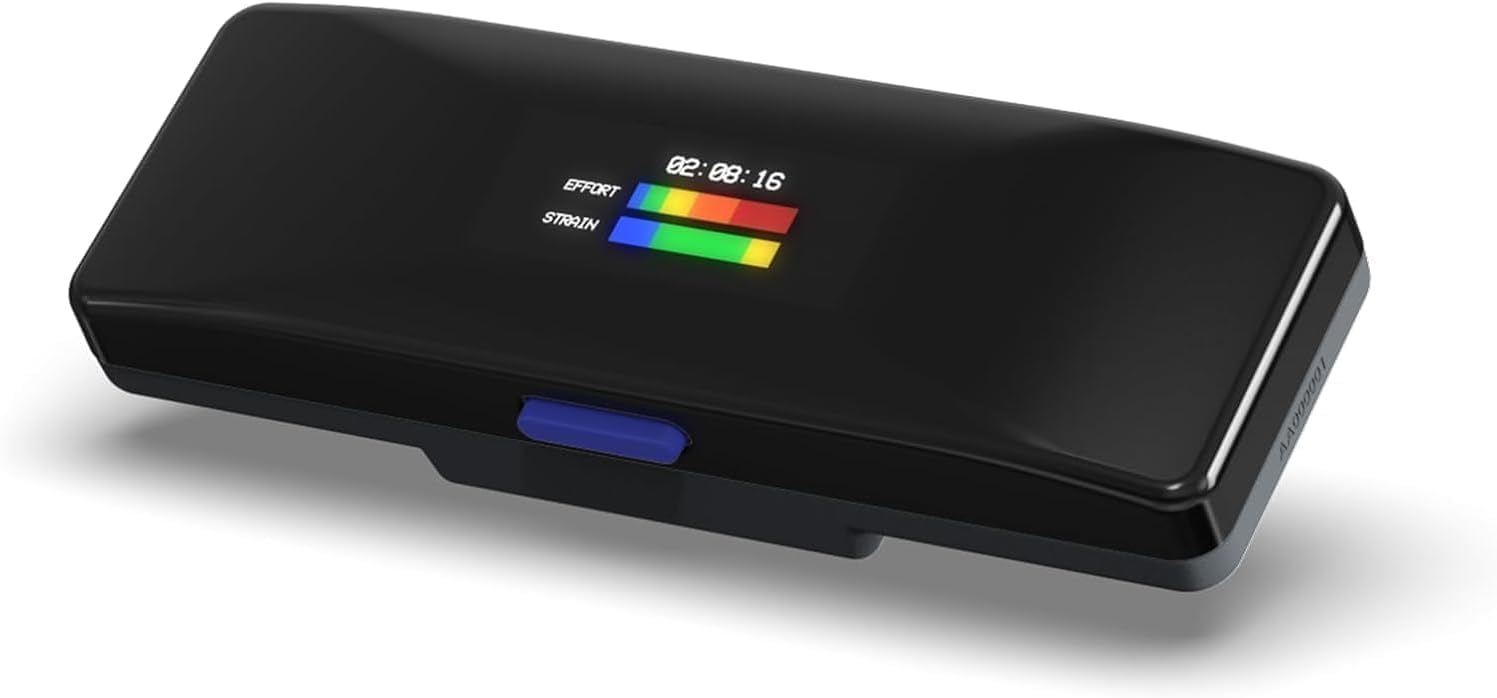
The Frontier X2 is a premium chest strap that provides continuous ECG recording throughout the day and night, not just on-demand. Its ability to track heart rate, breathing rate, and strain in real time makes it the most comprehensive monitor for users who want a complete picture of their heart health beyond a single 30-second reading.
The device pairs via Bluetooth 5.0 to the Fourth Frontier app, allowing you to review ECG traces after workouts or sleep. The real-time vibration alerts can be set to notify you of arrhythmias, high heart rate, or breathing rate deviations, which is invaluable for catching AFib episodes during daily activities or exercise.
Its waterproof design (up to 1.5m) ensures it works for swimming, and the comfortable silicone-dot strap keeps the sensor secure during intense movement. While it comes at a higher price point, the depth of data and continuous monitoring capability is unmatched by simpler handheld or wrist-based alternatives.
Why it’s great
- Continuous 24/7 ECG and heart rate monitoring
- Real-time vibration alerts for arrhythmias and HR zones
- Compatible with Garmin, Peloton, Zwift, and Apple Watch
Good to know
- Requires app subscription for advanced analytics
- Higher price point for the complete package
2. KardiaMobile Card
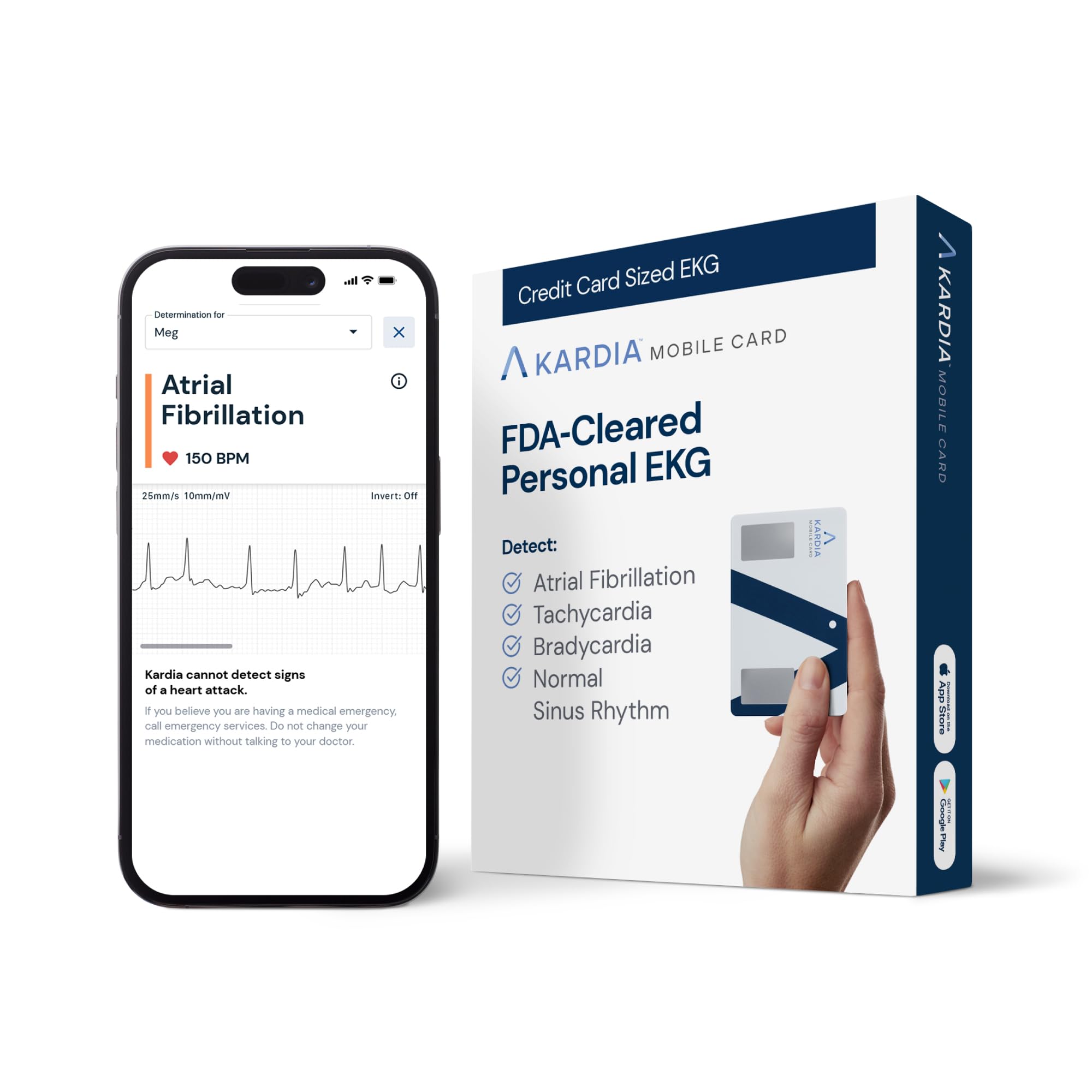
The KardiaMobile Card is the gold standard for portability and on-demand AFib detection. About the size and thickness of two credit cards, it fits in your wallet so you can take a medical-grade EKG wherever you are—no charging, no pairing hassle. Simply place two fingers on the sensors, and the free Kardia app records a single-lead EKG in 30 seconds.
It is FDA-cleared to detect AFib, Bradycardia, Tachycardia, and Normal Sinus Rhythm, and it does not require a subscription for these core detections. The built-in battery lasts for over 2,000 readings, which translates to years of use for most people. The app provides a clear trace that you can share directly with your cardiologist.
The device activates by pressing a power button and automatically shuts off after 10 seconds to conserve battery. While it only offers single-lead recording, that is sufficient for detecting common arrhythmias. It is not recommended for use with pacemakers or ICDs, and it does not check for heart attacks.
Why it’s great
- Credit-card portability for daily carry
- No subscription required for AFib detection
- Long battery life for years of use
Good to know
- Single-lead ECG only
- Cannot be used with pacemakers or ICDs
3. Withings BPM Connect

The Withings BPM Connect combines the functionality of a clinical-grade blood pressure monitor with integrated heart rate tracking. It provides color-coded feedback on its LCD display based on American Heart Association guidelines, making it easy to interpret your systolic and diastolic readings at a glance.
The device syncs automatically via Wi-Fi or Bluetooth to the Health Mate app, where you can store unlimited readings and email reports to your doctor. Its rechargeable battery lasts up to six months, and it supports up to three user profiles, making it practical for household health tracking.
While it does not offer dedicated AFib detection like some competitors, its overall accuracy for blood pressure and heart rate is well-regarded. Some users report that the screen faces outward during use, which can be difficult to read, and the initial Bluetooth pairing process may require patience.
Why it’s great
- Color-coded BP results for easy interpretation
- Wi-Fi and Bluetooth auto-sync to Health Mate app
- Long 6-month rechargeable battery life
Good to know
- No built-in AFib detection feature
- Initial setup can be challenging
4. OMRON Gold BP5360
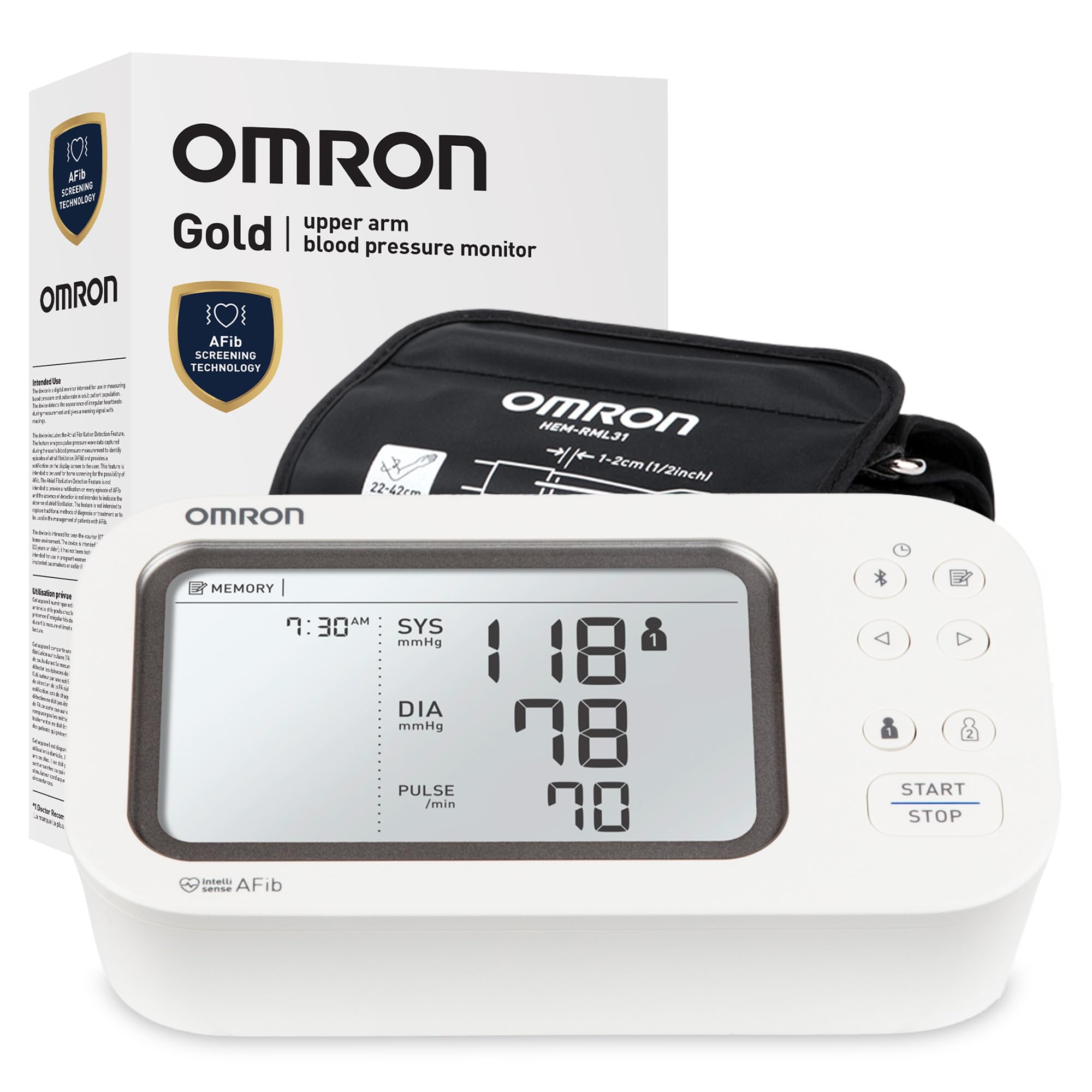
The OMRON Gold BP5360 is designed to screen for atrial fibrillation every time you take a blood pressure reading. Its AFib detection algorithm analyzes pulse regularity during inflation, flagging potential episodes for further evaluation with your doctor. This makes it a dual-purpose device for users who need both BP and arrhythmia screening.
The monitor includes a high morning average indicator, which checks for morning BP spikes linked to higher cardiovascular risk. It connects via Bluetooth to the OMRON connect app for unlimited data storage and report sharing. The wide-range D-ring cuff fits arms from 9 to 17 inches.
A critical note for AFib patients: if the device detects an irregular rhythm, it will display a “Possible AFib” error and will not provide a blood pressure reading. This feature cannot be turned off. While this ensures you are not given inaccurate numbers during an episode, it can be frustrating for users who want both measurements simultaneously.
Why it’s great
- Built-in AFib detection during BP readings
- High morning average indicator for risk assessment
- Supports two separate user profiles
Good to know
- Refuses BP reading if AFib is detected
- AFib detection feature cannot be disabled
5. EMAY Portable ECG Monitor

The EMAY Portable ECG Monitor offers a standalone ECG recording experience without any ongoing subscription fees. It records Lead I ECG signals and displays heart rate on its built-in 1.8-inch LCD screen, so you can view results immediately without needing a smartphone. This is a major advantage for users who prefer not to rely on app interfaces.
The device connects to a PC via USB and to a smartphone via Bluetooth. Its accompanying software allows for sample mode, time setting, case review, and PDF transfers to your physician. The rechargeable lithium battery provides about 2-3 hours of active recording time, which equates to dozens of 30-second measurements.
The EMAY is small—4 by 1.7 by 0.5 inches—and lightweight at 80 grams. It detects abnormalities effectively according to user feedback, though it is not recommended for those with implanted pacemakers. The only minor drawback is the use of micro-USB charging instead of the more modern USB-C standard.
Why it’s great
- No mandatory subscription for recordings
- Built-in LCD for instant results
- Compact and lightweight design
Good to know
- Micro-USB charging port
- Not recommended for pacemaker users
6. Withings BPM Vision
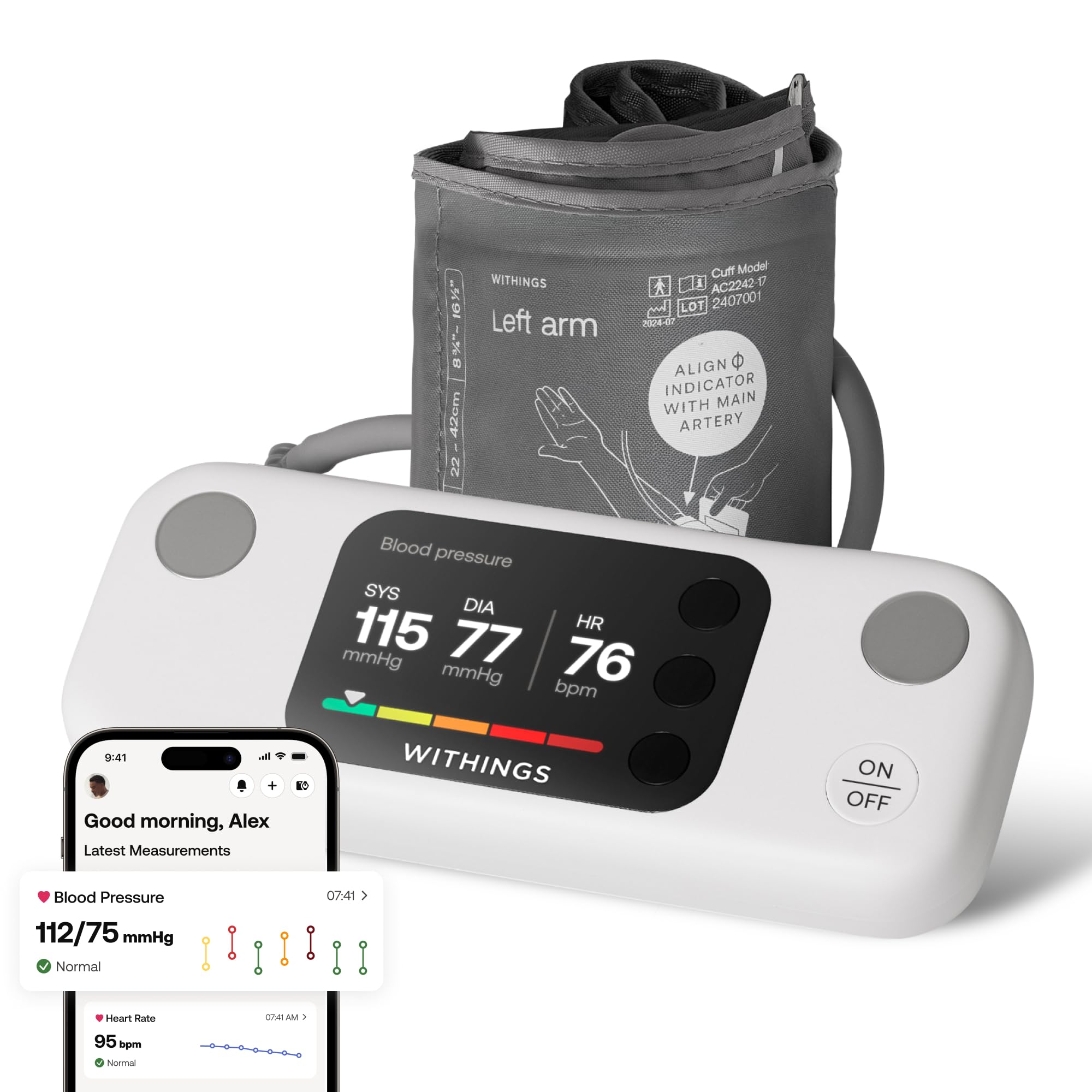
The Withings BPM Vision is the premium upgrade in the Withings BP lineup, featuring a large 2.8-inch color LCD screen that provides crystal-clear results and on-screen tutorials. It offers step-by-step guidance to ensure every reading is taken under ideal conditions, improving consistency for users who need accurate tracking over time.
The device syncs automatically via Wi-Fi or Bluetooth to the Withings app, and its protective case doubles as a stand for comfortable, arms-free viewing. A standout feature is the three-reading average mode, which takes consecutive readings and displays the averaged result, reducing the impact of individual measurement variability.
Battery life is rated at up to one year, and the included wide-range cuff fits arms 8.7 to 16.5 inches. While it offers excellent hardware and accurate readings, some users report app sync glitches, particularly with Android devices. It also does not integrate a dedicated AFib detection feature like the OMRON Gold.
Why it’s great
- Bright 2.8″ color LCD with on-screen tutorials
- Three-reading average mode for accurate tracking
- One-year battery life and included case
Good to know
- App sync can be glitchy on Android
- No dedicated AFib detection algorithm
7. Wahoo TRACKR Heart Rate Monitor

The Wahoo TRACKR Heart Rate Monitor is a premium fitness-focused chest strap that provides accurate real-time heart rate data for training. Its high-capacity rechargeable battery offers up to 200 hours of active life, which is significantly longer than many disposable-battery competitors. This makes it ideal for athletes who train frequently.
It connects via both ANT+ and Bluetooth, allowing it to broadcast to smartphones, fitness equipment, and popular training apps like Zwift and Peloton. The LED indicators provide clear feedback on heart rate detection, battery status, and connection status during workouts. The strap uses a slim, soft, secure fit design with silicone dots to stay in place during intense exercise.
While it excels at heart rate tracking, the TRACKR is not a dedicated AFib monitor. It does not record ECG traces or provide arrhythmia detection. It is best suited for users who want reliable HR data for exercise performance, but it should not be relied upon for detecting irregular heart rhythms.
Why it’s great
- Long 200-hour rechargeable battery life
- Dual ANT+ and Bluetooth connectivity
- Comfortable, secure-fit strap with LEDs
Good to know
- No ECG recording or AFib detection
- Strap may not fit larger arm sizes
FAQ
Can an Afib monitor replace a visit to the cardiologist?
Do I need a prescription to buy an FDA-cleared Afib monitor?
Will a blood pressure monitor with AFib detection give me a reading during an episode?
Final Thoughts: The Verdict
For most users, the best afib monitor winner is the KardiaMobile Card because it combines wallet-sized portability with FDA-cleared AFib detection and no mandatory subscription. If you want continuous heart monitoring with real-time alerts and in-depth data, grab the Frontier X2. And for a budget-friendly option that doubles as a blood pressure monitor with arrhythmia screening, nothing beats the OMRON Gold BP5360.