
Our readers keep the lights on and the weekend projects moving. As an Amazon Associate, I earn from qualifying purchases.
An adventure board game lives or dies by its story — either you’re navigating a shifting candlelit labyrinth, rolling dice to survive a dungeon crawl, or negotiating alien diplomacy across a galactic council. The wrong pick leaves you with a rulebook thicker than the actual gameplay and a table of bored friends. The right one turns a single evening into a running campaign you look forward to all week.
I’m Rikta — the co-founder and writer behind FitlyFast. I’ve spent hundreds of hours analyzing box components, encounter card quality, and campaign progression mechanics to separate the narrative-driven masterpieces from the forgettable filler.
Whether you crave cooperative horror or crew-based exploration, this guide breaks down the top contenders to help you find the best adventure board games for your group’s preferred play style.
How To Choose The Best Adventure Board Games
The most common mistake buyers make is conflating a fantasy theme with genuine adventure mechanics. A true adventure board game needs variable paths, meaningful player choices, and a progression system that makes each session feel like a chapter, not a repeat. Look for games where your decisions alter the map or the story, not just your score.
Campaign Length vs. Session Commitment
Some titles offer a contained 60-minute sprint (like a single race or dungeon), while others demand 60 hours across multiple sittings. Be honest about your group’s consistency. If you meet once a month, a legacy-style campaign where you cannot rewind is a risky investment. A modular game with one-off scenarios offers better long-term value for irregular groups.
Replayability Through Branching Narratives
The best adventure board games avoid a linear storybook. Look for encounter decks, tile randomization, and multiple victory conditions. A game that uses a book of encounters with dozens of entries — like the narrative-driven titles from Red Raven — keeps the story fresh even after the box hits the table for the fifth time. Avoid games that hinge on a single read-through of a static rulebook story.
Quick Comparison
On smaller screens, swipe sideways to see the full table.
| Model | Category | Best For | Key Spec | Amazon |
|---|---|---|---|---|
| The Night Cage | Cooperative Horror | Candlelit maze escape with shifting tiles | 1-5 players, ~40 min | Amazon |
| Dungeons & Dragons – Starter Set | Tabletop RPG | Learn D&D with quick-start guides | 60-min sessions, 3 adventure booklets | Amazon |
| Above and Below | Worker Placement / Story | Village building + cavern exploration | 2-4 players, ~90 min | Amazon |
| HEAT: Pedal to the Metal | Racing / Strategy | Hand-management racing with heat economy | 1-6 players, ~60 min | Amazon |
| Heroes of Barcadia | Dungeon Crawl / Party | Drink-integrated dungeon quests | 2-6 players, ~60 min | Amazon |
| CATAN Starfarers | Space Exploration | Intergalactic diplomacy and ship upgrades | 3-4 players, ~120 min | Amazon |
| Sleeping Gods | Cooperative Campaign | Deep story-driven atlas exploration | 1-4 players, ~60-hour campaign | Amazon |
In‑Depth Reviews
1. The Night Cage

The Night Cage creates an incredibly tight atmosphere by giving every player a shared pool of vision — you can only see tiles directly adjacent to your candle. The central mechanic turns the board itself into an antagonist, as tiles shift and disappear behind you while Wax Eaters close in from the darkness. It’s an easy teach (roughly five minutes to explain) and a full five-player game wraps in about 40 minutes, making it ideal for groups that want high tension without a multi-hour commitment.
The tile-laying system ensures no two games play identically. Each run through the labyrinth forces fresh spatial reasoning because the gate and key locations are completely randomized. The Advanced Game mode adds new monster types and obstacles that change the escape logic, so even experienced groups face new strategic puzzles. The horror theme is reinforced by the component design — the black-on-black tiles and minimalist art keep the focus on limited vision rather than jump scares.
Best with four players, though the solo variant works well for fans of tight resource puzzles. The rulebook has one or two unclear edge cases regarding the blindfold mechanic, but a quick online reference clears them up. Consider pairing it with a dark room and ambient soundtrack for maximum immersion.
Why it’s great
- Unique candlelight vision mechanic creates genuine cooperative tension
- High replayability through randomized tile layout and difficulty modes
- Plays in under an hour with easy-to-learn rules
Good to know
- Rulebook could be clearer on specific interaction rules
- Best experienced in low light, which limits some table setups
2. Dungeons & Dragons – Starter Set
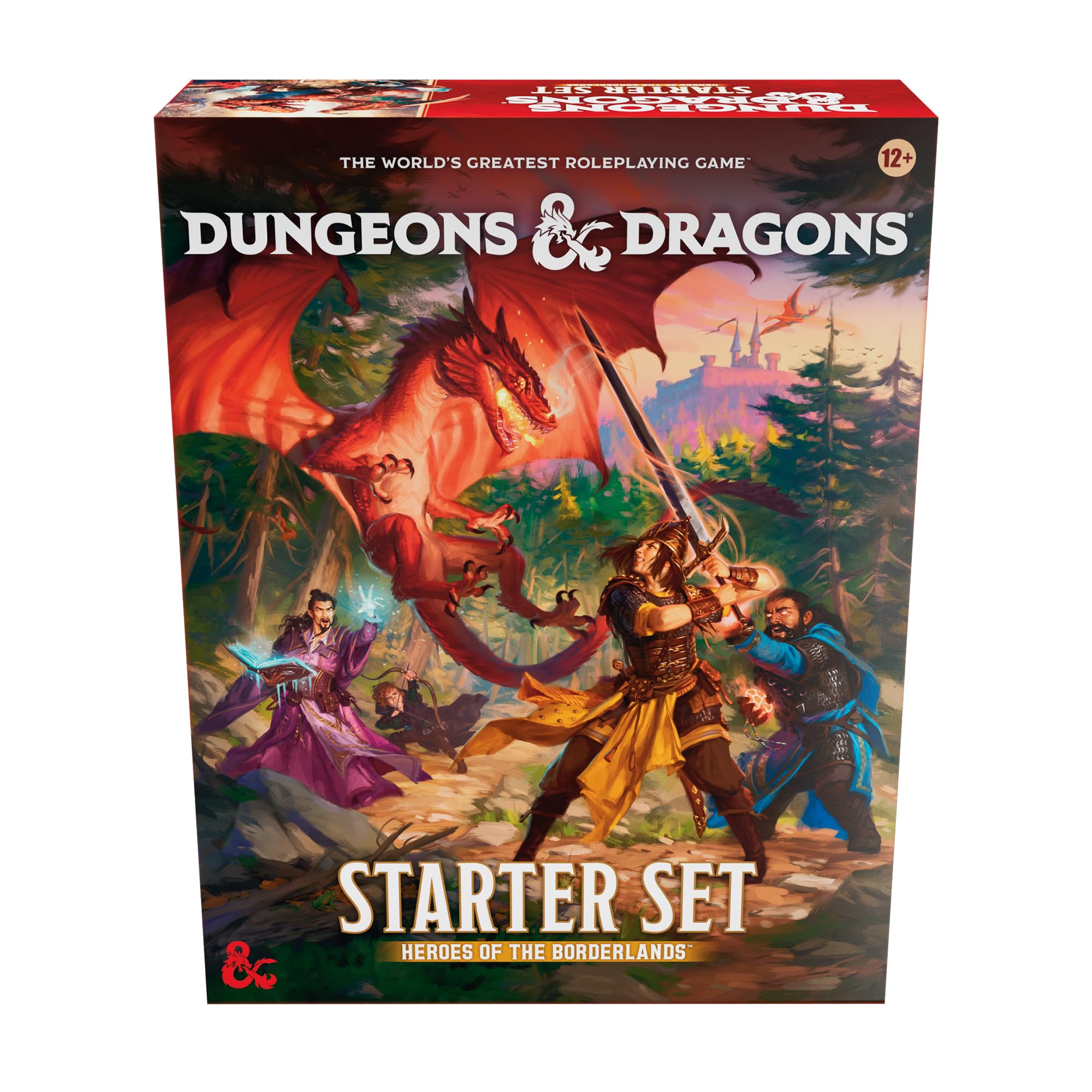
This starter set uses the streamlined 2024 ruleset and focuses on bite-sized hour-long sessions that break down the barrier to entry for new players. The box contains eight pre-made character class boards with their abilities printed directly on the card, so nobody spends the first session flipping through a player’s handbook. The three adventure booklets provide a mix of combat, social interaction, and exploration encounters that gradually introduce more complex rules as the group progresses.
The component quality is a significant step up from earlier starter sets. The fold-out maps are double-sided and thick enough to survive repeated use, the dice have crisp readability, and the token sheets make tracking initiative and spell effects much easier than using scratch paper. The spell cards and magic item cards remove the need to cross-reference rulebooks mid-session, which keeps the pace fast for newer groups.
It lacks a single overarching campaign narrative — each booklet stands alone — but that makes it modular for groups that cannot commit to a long story. If your goal is to teach D&D to a family or a rotating group of friends, this is the cleanest on-ramp currently available. The included quick-start guide teaches the game in about ten minutes.
Why it’s great
- Best on-ramp for D&D with intuitive class boards and spell cards
- High-quality modular maps and tokens survive repeated play
- Bite-sized hour sessions fit busy schedules
Good to know
- No overarching campaign narrative linking the three booklets
- Requires a Dungeon Master to prepare between sessions
3. Above and Below

Above and Below marries a classic worker-placement loop (harvest, build, train, explore) with a storybook encounter system that reads like a choose-your-own-adventure at the table. Each time you send a villager into the caverns below, you draw from the book of encounters and make a narrative choice that rewards you with resources, reputation, or sometimes nothing at all. The writing is charming and varied enough that you can play four or five times before seeing the same scenario twice.
The game shines at two players — the pacing feels tight and the competition stays indirect because you rarely directly attack each other’s resources. The “exertion” mechanic, where you can push a villager harder for a chance at bigger rewards but risk exhaustion, adds a small push-your-luck element to the otherwise methodical planning. The artwork is warm and inviting, and the wooden components have a tactile quality that makes setup feel rewarding.
The main drawback is the seven-round limit, which often leaves players wanting one more turn to execute their final strategy. Experienced groups can house-rule an eighth round easily. The game is not cutthroat — the winner is often unclear until the final scoring — making it a strong choice for mixed-skill groups where some players prefer role-playing over resource optimization.
Why it’s great
- Charming storybook encounters with high narrative variety
- Excellent at two players with indirect, relaxed competition
- Beautiful artwork and high-quality wooden components
Good to know
- Seven rounds can feel slightly short for long-term strategy building
- Exploration encounters rely on luck of the draw from the book
4. HEAT: Pedal to the Metal

HEAT replaces movement dice with a hand-management system where Speed cards advance your car, Heat cards overheat your engine, and Stress cards must be shed to stay in control. The core rules are printed directly on the player dashboards, so even first-time racers can start their engines in under five minutes. The game scales from one to six players, and the included four double-sided tracks offer distinct corner layouts that force different gear-shifting strategies.
The Championship System ties multiple races into a season, letting players upgrade their cars between tracks with new upgrades that affect speed, cooling, and cornering. Weather tokens and road condition tokens add tactical variability without bloating the rules. The Legends Module provides a solo mode with automated opponents that behave according to a simple priority system, giving solo players a genuine challenge rather than a score-chasing puzzle.
The car miniatures are functional but not display-grade, and the modular dashboards can feel thin compared to the rest of the production. However, the core loop — balancing heat output against corner speed while slipstreaming opponents — delivers a sense of velocity that most racing board games fail to capture. It is the rare game where every player feels engaged during every lap, not just during their own turn.
Why it’s great
- Thrilling hand-management system captures real racing tension
- Scalable from solo to six players with robust expansion modules
- High replayability from multiple tracks, weather, and upgrade paths
Good to know
- Car miniatures and dashboards feel slightly lower-quality than the rest
- No built-in collision mechanic (easily house-ruled)
5. Heroes of Barcadia

Heroes of Barcadia replaces traditional hit points with the Liquid Life System — your drink level in the included dishwasher-safe hero cup literally represents your remaining health. Each successful monster kill requires you to drain a portion of your drink, while taking damage fills the cup back up. It turns every combat into a physical, social ritual that keeps players engaged even when it is not their turn. The game supports two to six players and plays in roughly 60 minutes.
The dungeon tiles are fully randomized, and the 140 loot cards plus 27 power-up cards ensure that each quest through the twisting corridors presents different tactical options. The components are entirely waterproof, making the game resistant to the inevitable spills that come with the drinking component. The glitter dice add a celebratory feel to combat rolls, and the tile placement system allows players to shape the dungeon layout as they explore rather than following a fixed map.
The balance leans toward luck-of-the-dice rather than deep strategy, so competitive veterans may find the randomness frustrating. But as a party game that fills the gap between a shallow icebreaker and a serious eurogame, it succeeds admirably. The learning curve is under five minutes, making it easy to pull off the shelf for mixed-skill gatherings.
Why it’s great
- Unique Liquid Life System turns health into a physical drinking mechanic
- Waterproof components survive spills and repeated play
- Ultra-fast teach with quick-paced dungeon tile exploration
Good to know
- Heavily luck-dependent with limited strategic depth
- Novelty of the drinking mechanic may wear thin for serious gamers
6. CATAN Starfarers
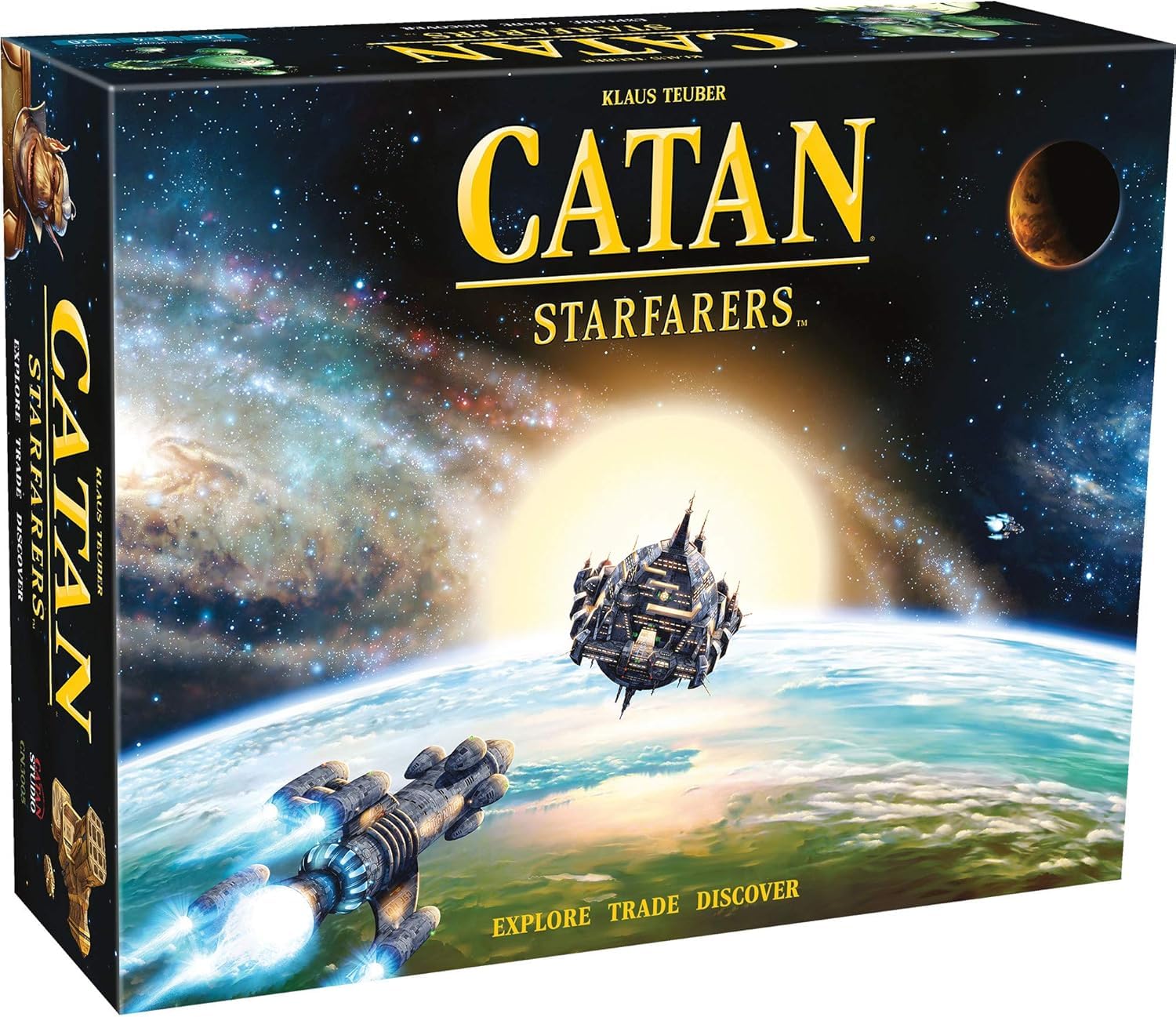
CATAN Starfarers replaces static roads with movable, upgradeable motherships that travel through wormholes to discover new solar systems. Instead of rolling for resource production on fixed tiles, you fly your ship to planets and trade with alien civilizations for friendship tokens that count as victory points. The shaking mechanism for movement and encounters adds a tactile element that sets it apart from any other Catan variant — you place balls in your ship and physically shake it to determine your movement and encounter outcomes.
The game board is variable thanks to the puzzle-cut solar system pieces, forcing players to adapt their strategies each session. Ship upgrades come in three flavors: boosters for speed, freight pods for bargaining power, and cannons for pirate defense. This customization gives each player a distinct specialization, reducing the direct conflict of the original Catan while increasing personal strategy depth. The plastic motherships snap together and feel substantial on the table.
The learning curve is steep for anyone new to the Catan system — expect a full game to run over two hours, and the first playthrough will involve frequent rulebook checks. However, once the rules click, the game offers a more narrative and less confrontational experience than classic Catan. The alien friendship cards provide a clear wind condition that keeps every player engaged until the final scoring.
Why it’s great
- Ship upgrades and customization create deep personal strategy paths
- Unique shaking mechanic adds tactile immersion to movement
- High-quality mothership components and variable board layout
Good to know
- Steep learning curve with session times exceeding two hours
- Requires familiarity with Catan base rules for smooth onboarding
7. Sleeping Gods

Sleeping Gods is a cooperative campaign game that unfolds across a multi-page atlas representing the Wandering Sea. Each turn of the page reveals new islands, hazards, and story beats. You lead Captain Sofi Odessa and her crew, managing resources, completing quests, and making narrative choices that permanently shape your journey. The estimated playtime for a full campaign is around 60 hours, though the journey log system allows you to save progress after any session and resume without resetting the board.
The combat system initially seems odd — it uses a card-based action economy rather than dice — but it forces genuinely strategic decisions about crew positioning and resource allocation. The writing is the game’s strongest asset: encounters are witty, dark, and emotionally resonant, with branching outcomes that make replaying the campaign a meaningful second experience rather than a repeat. The game works very well solo, because the atlas exploration and storybook format naturally pace themselves for a single player.
The setup time is significant — plan for at least 15 to 20 minutes to get everything sorted — and the game demands a large table surface to accommodate the atlas, player boards, cards, and tokens. New players should budget their first session strictly for learning the rules before diving into real campaign progress. The manual is long but logically structured, and a single read-through is enough to start playing competently.
Why it’s great
- Deep narrative with branching choices and genuine replay value
- Excellent solo mode that handles campaign pacing naturally
- Beautiful atlas-based exploration with rich, witty writing
Good to know
- Long setup time and requires a large table surface
- First session should be dedicated purely to learning the rules
FAQ
What is the best adventure board game for a group that meets only once a month?
How important is player count to the quality of the story experience?
Can adventure board games be played solo without losing the narrative feel?
Final Thoughts: The Verdict
For most users, the adventure board games winner is the The Night Cage because it delivers a genuinely unique cooperative experience in under an hour with high replayability and an atmosphere that no other game on this list matches. If you want a deep narrative campaign you can sink dozens of hours into, grab the Sleeping Gods. And for a fast, adrenaline-fueled racing adventure that scales perfectly from solo to six players, nothing beats the HEAT: Pedal to the Metal.