
Our readers keep the lights on and the weekend projects moving. As an Amazon Associate, I earn from qualifying purchases.
Forget rolling dice to move a token. The best art board games replace luck with creative expression, strategic bidding, and the quiet thrill of assembling your own visual masterpiece. Whether you are replicating a photograph with shoelaces or bidding on parody paintings, these games demand a different kind of brainpower — one that blends aesthetics with tactical thinking.
I’m Rikta — the co-founder and writer behind FitlyFast. I spent countless hours analyzing the components, rulebook structures, and strategic depth of titles in this specific category, focusing on how each game translates the creative process into playable mechanics.
This guide narrows your search by breaking down the unique mechanics and player counts that define the best art board games on the market today.
How To Choose The Best Art Board Games
The category is deceptive. An art board game can mean using paint cards to build a canvas, bidding on auction lots, or physically arranging tiles to mimic a gallery wall. You need to identify the type of creative challenge you want before you open your wallet.
Match the Mechanic to Your Group
Some art games are cooperative, like Canvas: Reflections, where you build transparent layers to form a painting. Others are cutthroat auctions, like Modern Art, where you manipulate the market. If your group enjoys playful rivalry, an auction game provides tension. If you prefer collaborative creation, look for games built around tile placement or shared puzzle-solving.
Check the Player Count Cap
Many art-themed games, particularly abstract strategy titles like Mandala, are strictly two-player. Others, like Pictures, shine at higher counts because the simultaneous creative output fills the table with energy. A game that plays 3–5 is more versatile for game nights, while a tight 2-player design often delivers deeper strategic duels.
Look for Component Quality and Visual Appeal
Art board games live or die on their physical presentation. Thick cardboard tiles, linen-finished boards, and vivid card art elevate the experience. Games like Art Society include parody paintings that are genuinely funny, while Modern Art features original artist works. Cheap, blurry components destroy immersion in this category specifically.
Quick Comparison
On smaller screens, swipe sideways to see the full table.
| Model | Category | Best For | Key Spec | Amazon |
|---|---|---|---|---|
| Canvas: Reflections | Expansion | Creative Puzzle Fans | 30 Transparent Cards | Amazon |
| Modern Art | Auction | Competitive Strategists | 5 Auction Types | Amazon |
| Art Society | Tile Placement | Gallery Curators | 30-60 Min Playtime | Amazon |
| Mandala | Abstract | Two-Player Duels | Fabric Play Mat | Amazon |
| Pictures | Creative Party | Family Gatherings | 5 Component Sets | Amazon |
| Let’s Go! to Japan | Strategy | Itinerary Planners | 160 Activity Cards | Amazon |
| Horrified: Greek Monsters | Cooperative | Mythology Lovers | 6 Monster Figures | Amazon |
In‑Depth Reviews
1. Canvas: Reflections

If you already own the base Canvas game, this expansion is essential. It introduces Mirror Cards — reversible transparent cards that double your layering options — and an upgraded board that offers eight Art Card choices instead of four, drastically increasing strategic flexibility during the 30-minute play sessions.
The new Gold Bonus Ribbons reward you for aligning specific elements next to Gold Bonus icons, pushing you to plan your transparent layer stacks with more precision. This shifts the game from pure creative expression into a tighter puzzle where every placement decision matters for scoring.
Customer feedback confirms that the expansion feels like a natural part of the core game, with durable cardboard and clear rulebook integration. The only downside is that it requires the base game, but if you are deep into the Canvas system, this is the upgrade you want.
Why it’s great
- Mirror Cards add meaningful new strategic depth
- Larger board selection improves replayability
Good to know
- Requires the base Canvas game to play
- Runs about 30 minutes, slightly longer with new rules
2. Modern Art

A true classic in the genre. Modern Art puts you in charge of a museum, buying and selling paintings across four rounds using five different auction types. One round you are running a sealed-bid auction; the next you are calling out open bids. The shifting formats keep every session unpredictable.
The game features original artwork from five distinct artists, each with unique visual styles. The production value is strong, with a hefty hammer token and thick money tokens that feel substantial. A 45-minute playtime makes it digestible for regular game nights while offering enough depth for seasoned auction veterans.
Reviewers consistently praise its interactive nature and the way it forces players to read each other’s intentions. The only critique is that it does not play well with two players — it is strictly designed for groups of three to five, so check your player count before committing.
Why it’s great
- Five different auction styles keep gameplay fresh
- Original artist artwork adds real visual value
Good to know
- Not recommended for only two players
- Runs best with 4-5 for maximum tension
3. Art Society

Art Society asks you to bid on paintings at auction, then arrange them on your personal wall using a tile-placement system. The twist is that fashion trends shift on the public opinion board, so a painting that scores big in round one may be worthless in round three. You are constantly adapting your collection strategy.
Component quality is impressive. The box includes a thick insert, high-quality player mats, and parody paintings that will make art history nerds smile. The auction mechanic is accessible to beginners while the trend-tracking system provides strategic layers for experienced players.
The most common feedback from owners is that the game is easy to teach but offers real replayability due to the shifting trend board. The main limitation is the 4-player cap — larger groups are left out, and the game does not include a solo mode.
Why it’s great
- Trend mechanic forces dynamic strategy adjustments
- High-quality components with humorous art
Good to know
- Maximum of 4 players only
- No official solo play mode
4. Mandala

Mandala is a purely abstract two-player game that uses a fabric play mat and square cards to simulate the ritual creation and destruction of sand mandalas. Players compete to control the color distribution across two mandalas, with the scoring value of each color sliding from 1 to 9 points depending on when it is claimed.
The tactile experience is a highlight — the linen play mat and the satisfying weight of the cards make setup feel ceremonial. Despite its abstract nature, the game is easy to learn in under five minutes, though mastering the timing of when to trigger a mandala’s completion takes many sessions.
Dedicated two-player gamers love the depth. Reviews consistently mention that it rivals chess for strategic tension while playing in just 20 minutes. The only drawback is the strict two-player limitation, which makes it a specialized purchase rather than a general family game.
Why it’s great
- Deep strategic play with a short 20-minute runtime
- Beautiful tactile components with linen mat
Good to know
- Strictly two-player only
- Abstract theme may not appeal to all groups
5. Pictures
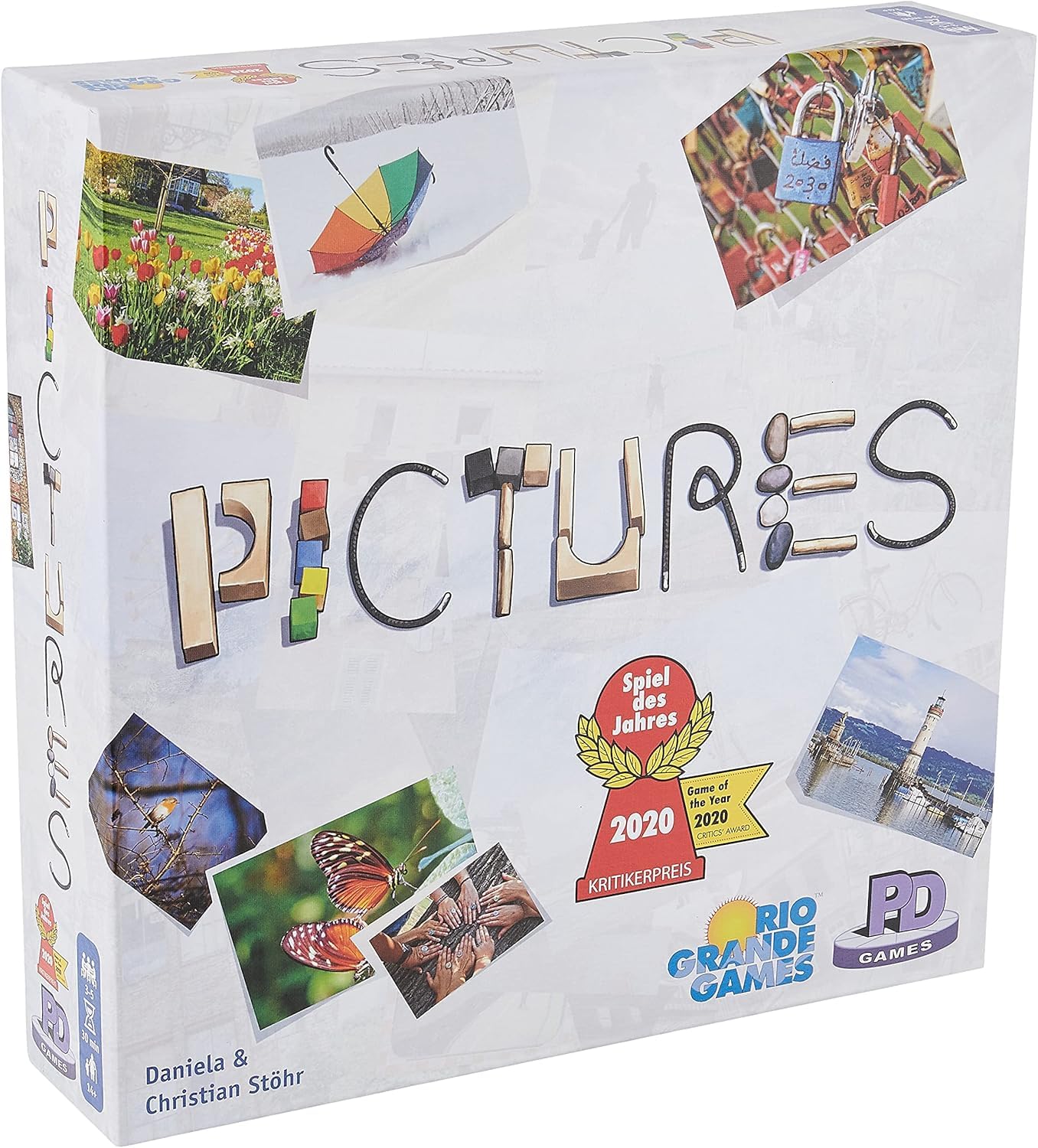
Pictures has the most unique hook in the category: everyone simultaneously recreates a secret photo using one of five component sets, from shoelaces to colored cubes. Players then guess each other’s interpretations. The result is pure creative chaos with zero downtime because everyone acts at once.
The genius of the design is its accessibility. No art skill is required — a child and a grandparent can play on equal footing because the challenge is about clever abstraction, not drawing ability. The 30-minute playtime keeps energy high, and the scoring is simple enough that most groups ignore it in favor of the laughter.
Customer reviews confirm it is a hit at family gatherings, with many reporting that it becomes the most requested game at reunions. The one caution is that the game truly needs 4-5 players to shine. At three players, the guessing phase loses some tension.
Why it’s great
- Simultaneous play means no waiting
- No artistic ability required to have fun
Good to know
- Best with 4-5 players, less engaging at 3
- Scoring is secondary to the creative process
6. Let’s Go! to Japan

While not strictly an art game, Let’s Go! to Japan earns its place here because of its lush illustrated cards and the creative challenge of building a week-long itinerary. Over 160 activity cards represent real Tokyo and Kyoto locations, each with beautiful hand-painted artwork that makes planning a vacation feel like curating a gallery.
The two-phase system — planning then activation — forces you to strategically place cards across days to maximize happiness and minimize stress. The game teaches you about real festivals, costumes, and cultural spots, giving it an educational edge that art lovers appreciate.
Player feedback highlights the solo mode as a genuine strength, rare for this category. The main criticism is that the box arrived dented for some buyers, suggesting the outer packaging could be more protective. Still, the interior components are sturdy and well-organized.
Why it’s great
- Beautifully illustrated location cards with cultural detail
- Functional solo mode for single players
Good to know
- Outer packaging can arrive damaged in transit
- Plays best with 3-4 for competitive tension
7. Horrified: Greek Monsters
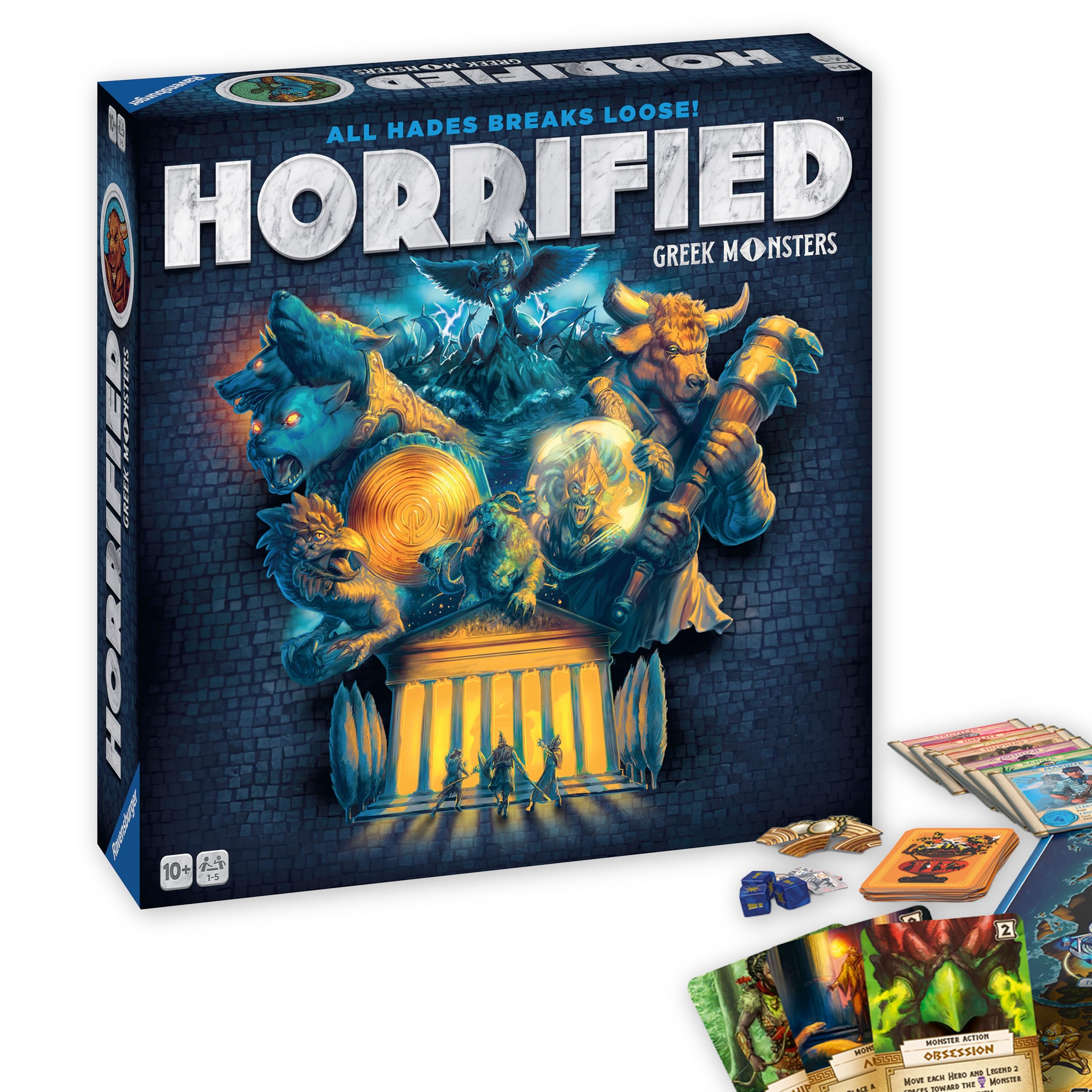
Horrified: Greek Monsters brings cooperative monster-slaying to the table with vibrant, thematic artwork. The game board is colorful and the monster figures are sturdy, providing an immersive experience without the competitive bidding typical of art auction games. Each of the six monsters has unique defeat conditions, ensuring varied sessions.
The cooperative mechanic is forgiving for newcomers — players discuss strategy openly to figure out how to defeat Medusa or Cerberus. The 60-minute playtime is longer than most entries here, but the clear rulebook and strong visual presentation keep engagement high.
Reviews note that the monster mats are flimsy compared to the thick game board. Players familiar with the original Horrified will recognize the core loop, so this is best for mythology fans or those who want a co-op alternative to competitive art games.
Why it’s great
- Cooperative gameplay encourages team discussion
- Colorful board and detailed monster figures
Good to know
- Monster mats are thinner than ideal
- Similar core loop to other Horrified titles
FAQ
Do I need artistic talent to enjoy art board games?
What is the best art board game for two players?
Are these games suitable for children or family game night?
Final Thoughts: The Verdict
For most users, the art board games winner is the Canvas: Reflections expansion because it transforms an already creative base game into a deeper strategic puzzle without losing the artistic spirit. If you want competitive auction tension, grab the Modern Art for its five distinct bidding formats and premium artwork. And for family game night where artistic ability does not matter, nothing beats the simultaneous creative chaos of Pictures.