
Our readers keep the lights on and the weekend projects moving. As an Amazon Associate, I earn from qualifying purchases.
Cutting the cord starts with one decision: picking the antenna that actually pulls in every local channel you’re entitled to without dropouts, pixelation, or daily re-scanning. The wrong antenna turns a money-saving move into a frustrating guessing game with your TV’s signal meter.
I’m Rikta — the co-founder and writer behind FitlyFast. My deep market research and spec analysis for this guide focused on real-world reception reports, amplifier technology differences, and how VHF/UHF element design actually determines channel lock stability for cord-cutters.
After comparing models from budget indoor amps to premium long-range directional arrays, this breakdown of the best antenna for broadcast tv focuses on the specs that separate reliable channel grabs from perpetual signal hunting.
How To Choose The Best Antenna For Broadcast TV
Picking the right antenna isn’t about the biggest mile claim on the box. Real reception depends on your distance from broadcast towers, the terrain between you and them, and what frequency bands your local stations actually use. Here are the three factors that actually separate a reliable antenna from a frustrating dud.
Directionality: Aimed vs. Omnidirectional
A directional antenna focuses all its gain in one narrow beam, making it the right choice for homes with towers clustered in one direction — it rejects multipath interference from the sides and rear. Multi-directional or omnidirectional designs pull channels from multiple directions, ideal when towers are scattered around your location, but they sacrifice gain for that wider pickup arc. The trade-off is real: wider coverage often means weaker signals from distant stations.
Amplification: Active Gain Controls and Noise
Not all amplifiers are equal. Cheap amps boost everything — signal and noise — and can overload in strong signal areas, causing your tuner to drop channels entirely. Premium designs use intelligent gain control (like Televes’ BOSS-Tech) that adjusts amplification band by band and includes FM, LTE, and 5G filtering to keep cell tower interference out. If you’re within 30 miles of towers, an unamplified antenna with low-loss coax often outperforms an overdriven amp.
Frequency Support: UHF and VHF Element Coverage
Many budget antennas only have good UHF elements and weak VHF support. If your local ABC or PBS station still broadcasts on VHF-Hi (channels 7-13), a skinny flat panel or small indoor leaf will struggle. Look for antennas that specifically list Hi-VHF elements — some multi-boom designs include separate rods or loops tuned to 174-216 MHz. Checking your station list on RabbitEars.info before buying saves the headache of missing half your channels.
Quick Comparison
On smaller screens, swipe sideways to see the full table.
| Model | Category | Best For | Key Spec | Amazon |
|---|---|---|---|---|
| Televes DAT BOSS Mix LR 149884 | Premium Long-Range | Extreme fringe rural areas | 46 dBi UHF gain / 100 mi range | Amazon |
| Televes Ellipse Mix 148883 | Premium Directional | Suburban fringe with interference | 40 dBi UHF gain / Smart Amp | Amazon |
| Antennas Direct ClearStream 2V | Mid-Range Directional | Suburban multi-directional pickup | 60+ mi range / Hi-VHF loops | Amazon |
| PBD Amplified Outdoor | Mid-Range Rotating | Motorized aiming across markets | 150 mi claim / 360° rotation | Amazon |
| Qboy 5000+ Miles Antenna | Mid-Range Compact | Budget-conscious indoor/outdoor mix | 4500 channels claim / 40ft cable | Amazon |
| Arrasolt Melas 5000+ Miles | Entry-Level Amplified | First-time cord-cutters indoors | 5000+ mi claim / 48-month warranty | Amazon |
| Qellaff 5000+ Miles Smart Antenna | Budget Indoor Starter | Quick indoor setup for locals | 5000+ mi claim / 38ft coax | Amazon |
In‑Depth Reviews
1. Televes DAT BOSS Mix LR 149884
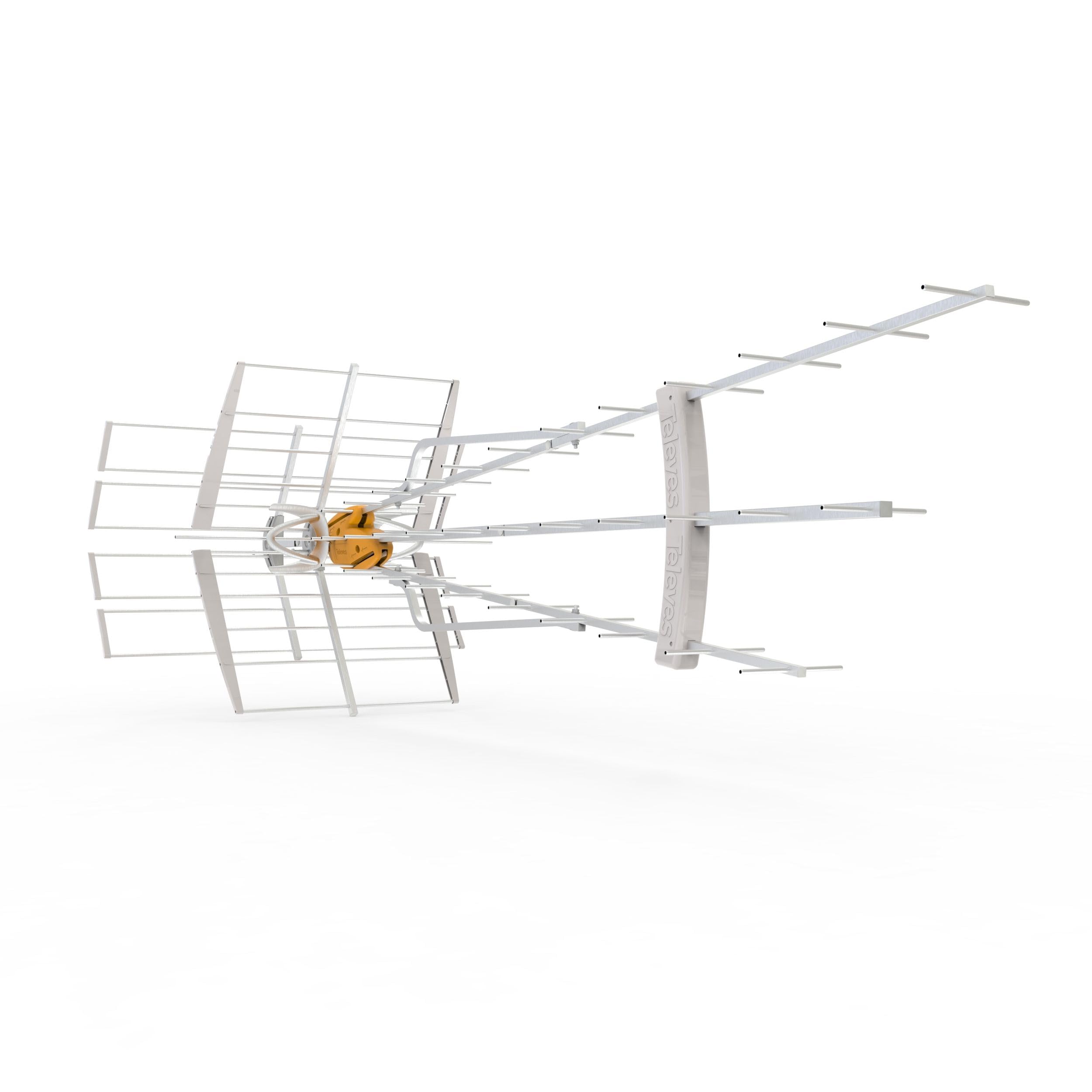
The Televes DAT BOSS Mix LR is the top-end reference for extreme fringe reception. Its stacked triple-boom design delivers 46 dBi UHF gain with a 25 dB front-to-back ratio, meaning it locks onto distant towers while rejecting signals from behind and the sides — critical in rural areas where stations are 70 miles away. The built-in TForce amplifier with BOSS-Tech automatically adjusts gain band by band across VHF and UHF, preventing overload from strong locals while amplifying weak fringe signals.
Installers report pulling 80 to 114 channels from more than 60 miles away in Texas and Wisconsin, with the LTE/4G/5G filtering keeping cell tower hash out of the signal chain. The entire assembly is weather-resistant with aluminum elements, stainless steel hardware, and ABS plastic housing, plus it comes with a UL-listed power inserter and weather boot. That 84-inch width demands space, but the trade-off is market-leading capture area for fringe zones.
The amplifier supports dual operation — it passes signal passively if power cuts, but for distant stations you’ll want it active. The compact folded dipole design is ATSC 3.0 compatible if your area has rolled out NextGen TV. This antenna cures pixelation in the toughest reception areas, but its size and price place it in a league for serious cord-cutters who need guaranteed stability from 50-plus miles.
Why it’s great
- Extreme 46 dBi UHF gain pulls stations from 100+ miles
- Automatic band-by-band gain control prevents overload from close towers
- Integrated LTE/4G/5G filtering eliminates cell interference
Good to know
- Large 84-inch width needs substantial roof or mast space
- Premium price tier for serious fringe applications only
2. Televes Ellipse Mix 148883
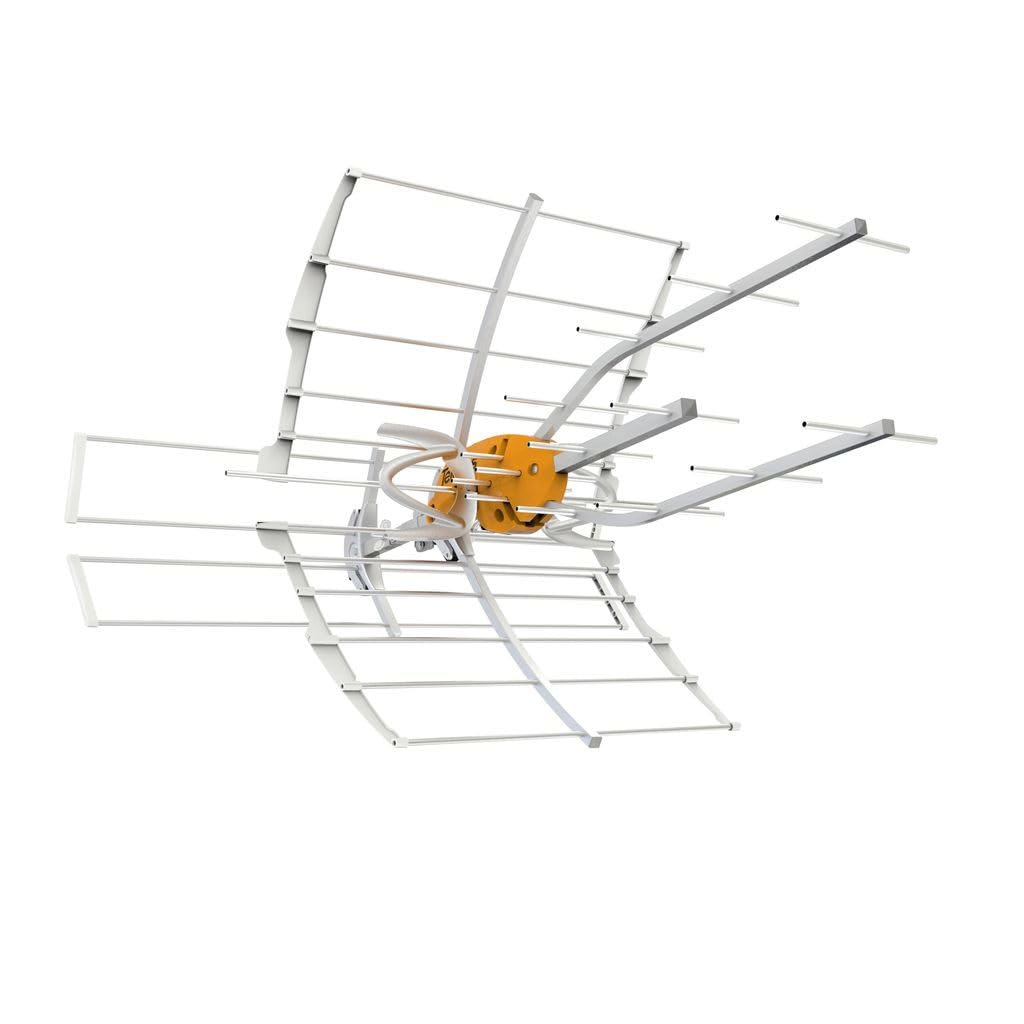
The Televes Ellipse Mix sits one step below the DAT BOSS in gain but still packs the same intelligent TForce preamp and BOSS-Tech automatic gain control. Its triple-boom design with curved reflectors focuses reception in a 40-degree beamwidth with 40 dBi UHF gain — perfect for suburban and attic installations where towers are 30 to 50 miles away but interference from FM radio, 4G, and 5G signals is a real problem. The built-in filtering rejects those frequencies before they hit your tuner.
Users report picking up 105 to 113 sub-stations in markets like Chicago and Orlando from 35 to 40 miles away, often adding stations they couldn’t get with simpler antennas. The tool-less assembly takes under a minute, and the weather-resistant construction handles attic humidity or full outdoor exposure. The amplifier operates in active or passive mode, and the dual-output power inserter can also feed a second TV or another device through the same mast.
This antenna is ATSC 3.0 compatible and supports up to 8K UHD, though you need a NextGen tuner to access those signals. The 75-ohm impedance matches standard RG-6 coax. While it doesn’t match the DAT BOSS’s raw gain for extreme fringe, the Ellipse Mix hits the sweet spot for most suburban homes that need professional-grade interference rejection without the massive footprint of a long-range array.
Why it’s great
- BOSS-Tech auto gain adjustment prevents signal overload from strong locals
- Integrated FM, LTE, and 5G filtering cleans up noisy signal environments
- Compact 38-inch width fits many attic spaces comfortably
Good to know
- Range rating of 75 miles is realistic but still requires clear line-of-sight for fringe
- 40 dBi UHF gain is high but not extreme enough for 80+ mile rural applications
3. Antennas Direct ClearStream 2V
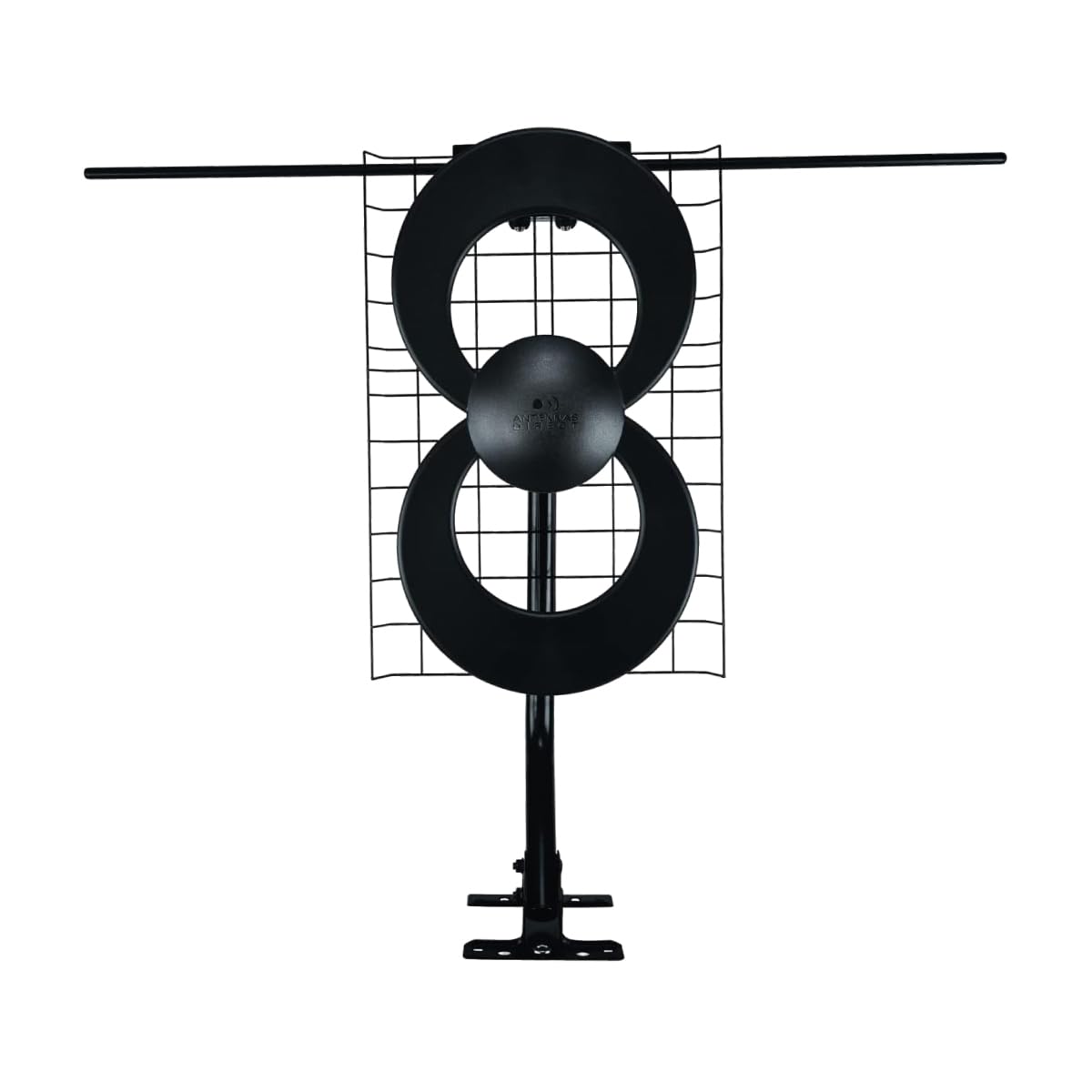
The ClearStream 2V from Antennas Direct is a proven multi-directional performer for suburban homes where broadcast towers sit in different directions. The double-loop UHF element handles UHF channels (14-51) efficiently, while the separate Hi-VHF rod adds support for channels 7-13 — a critical spec since many local ABC and PBS affiliates still broadcast on VHF-Hi. The included reflector focuses forward gain and rejects signals from behind, helping reduce multipath interference that causes pixelation.
Users consistently report pulling 50 to 85 channels from 35 to 45 miles away, even in partially obstructed valleys. The 20-inch mast with pivoting base mounts on vertical or horizontal surfaces indoors, in attics, or outdoors. Assembling the reflector and booms takes about 15 minutes with basic tools. Antennas Direct backs it with a lifetime manufacturer warranty on the antenna itself, though accessories have a 90-day warranty.
The antenna measures 31.4 inches wide by 18 inches tall, making it manageable for attic installations. It’s compatible with 4K, 8K UHD, and ATSC 3.0 NextGen TV signals. Note that the coaxial cable is not included — you’ll need to supply your own RG-6 run. For suburban homes with towers in two or three directions but within 50 miles, the ClearStream 2V is a workhorse that balances gain, pickup pattern, and size better than most mid-range options.
Why it’s great
- Separate Hi-VHF element captures channels 7-13 that flat antennas miss
- Multi-directional pattern pulls stations from opposite tower clusters
- Lifetime warranty on the antenna unit itself
Good to know
- Coaxial cable not included — factor in RG-6 cost for installation
- Best performance needs clear line-of-sight; attic placement may reduce range
4. PBD Amplified Outdoor with 360° Motorized Rotation

The PBD Amplified Outdoor antenna stands out with its integrated 360-degree motorized rotation that you adjust via wireless remote — a genuine advantage when your home sits between two separate broadcast markets. Instead of manually climbing a ladder to re-aim a fixed antenna, you simply press a button to rotate toward the nearest tower cluster. The built-in high-gain amplifier supports a 150-mile range claim, though real-world results from attic installations at 35 miles from Philadelphia still pulled strong signals on multiple channels.
The kit includes a 40-foot RG-6 coaxial cable, mounting pole, and dual TV outputs that let you feed two televisions without an external splitter. Users report replacing Mohu Sky 60 antennas and gaining channels while reducing pixelation. The weatherproof housing is rated for outdoor use. Assembly involves mounting the antenna on the included pole, connecting the rotator cable, and running coax to your TVs.
ATSC 3.0 compatibility future-proofs this unit for NextGen TV broadcasts when they become available in your area. The Lifetime warranty and 24/7 technical support from the manufacturer add peace of mind. Some installations needed the RG-6 re-terminated for best performance. If your TV towers are spread across different compass directions, the motorized rotator changes the game — no more channel dropouts when switching between stations 90 degrees apart.
Why it’s great
- Wireless motorized rotation lets you re-aim from your couch
- Dual TV outputs feed two sets without a splitter
- ATSC 3.0 compatible for future NextGen TV broadcasts
Good to know
- Included coaxial cable may need re-termination for best signal
- Rotator mechanism adds complexity and one more device to power
5. Qboy 5000+ Miles Strongest TV Antenna
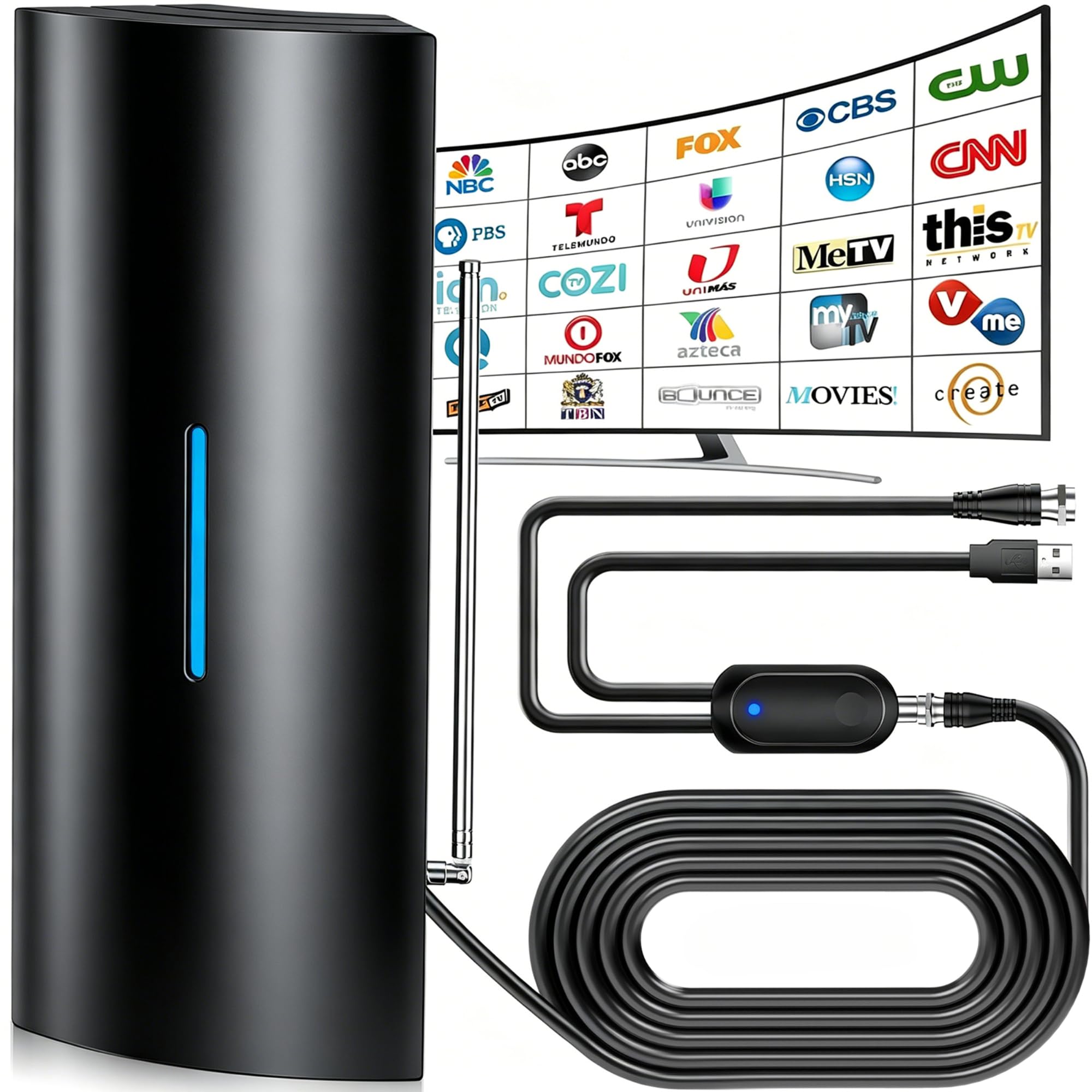
The Qboy antenna is a budget-friendly amplified option that surprised users who tested it alongside other indoor antennas. Its adjustable dipole elements let you angle the arms for optimized VHF and UHF reception, and the 360-degree omnidirectional coverage pattern picks up channels from all directions without re-aiming. The built-in amplifier with a 2026 upgraded smart chip claims to block 5G, cellular, and FM interference, and users 50-plus miles from towers reported pulling in 50+ HD channels with clear picture quality.
The 40-foot high-performance coaxial cable gives you flexibility to mount the antenna high on a wall, in a window, or even in an attic. The waterproof rated housing allows outdoor mounting on balconies or roofs, though the compact plastic body is best in sheltered locations. A telescopic pole extends for height adjustment. Setup takes about 60 seconds — connect coax, plug in the USB power for the amplifier, and run a channel scan.
The lifetime warranty and 24/7 customer support address typical concerns for low-to-mid-priced amplified antennas. The 80-ohm impedance is slightly off the standard 75-ohm spec, but real-world reports show no signal issues. The cute cat-shaped design version even got positive comments. For a compact, amplified antenna that works in both indoor and outdoor scenarios at an approachable price, the Qboy delivers surprisingly strong performance in suburban signal zones.
Why it’s great
- Adjustable dipole elements let you fine-tune VHF/UHF reception
- 40-foot coaxial cable gives flexible mounting placement
- Lifetime warranty provides safety net for entry-level buyers
Good to know
- 5000-mile range claim is exaggerated; works best within 50-60 miles
- USB power adapter for amplifier not included in the package
6. Arrasolt Melas 5000+ Miles Range TV Antenna
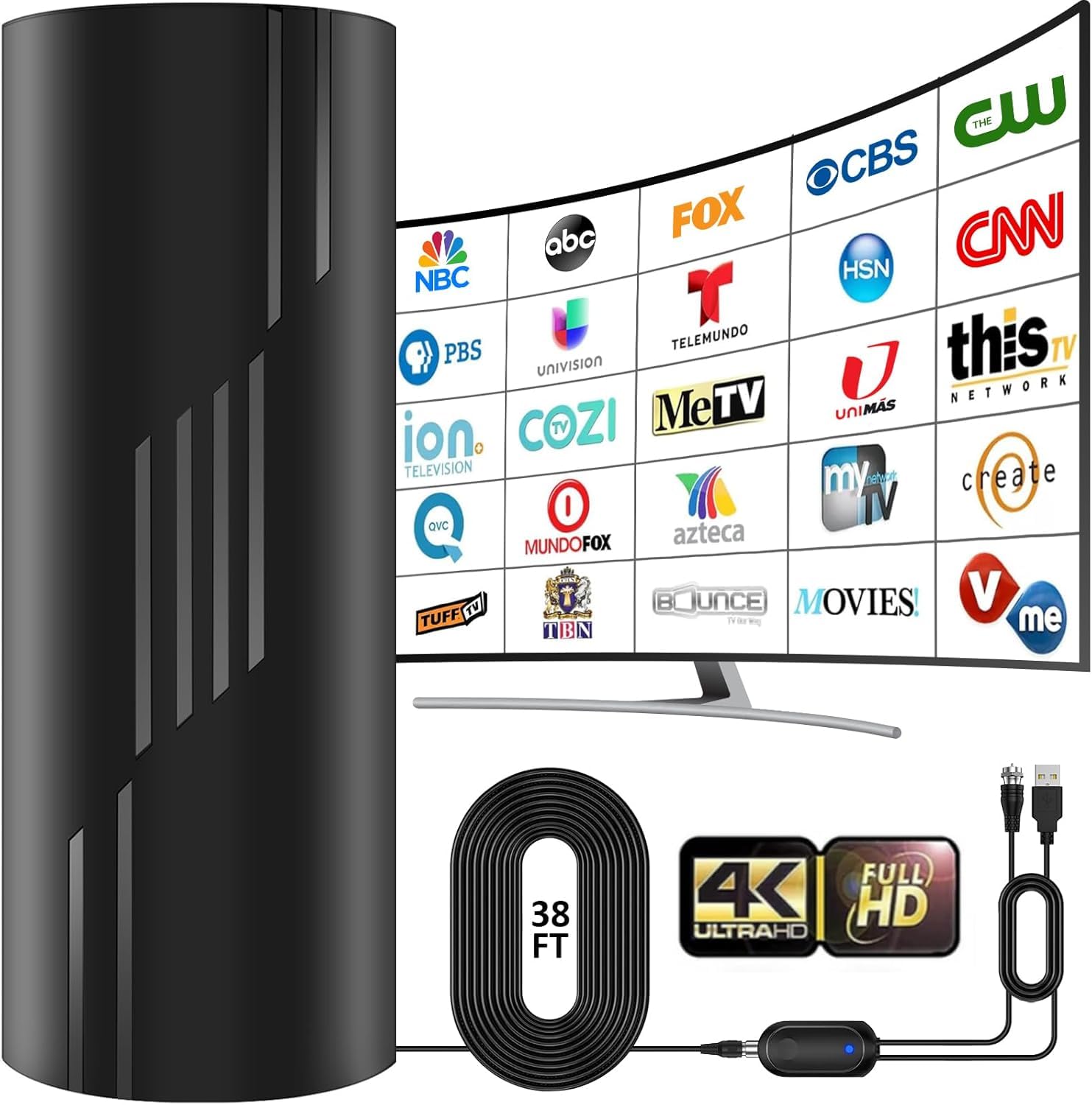
The Arrasolt Melas antenna is an entry-level amplified option designed for quick indoor setup. It uses a built-in 2026 upgraded smart IC chip and amplifier signal booster that claims 5000+ mile reception, though actual stable reception maxes out around 440 miles in user reports. The 360-degree omnidirectional design means you don’t need to point it at towers — just place it high, connect the 38-foot coaxial cable, and run the channel scan. Users report picking up many HD and 4K channels from 50-plus miles away with consistent signal quality.
The slim weatherproof body mounts indoors on walls or windows using the included double-sided adhesive tape or screws. Outdoor mounting on balconies or under eaves works as well. The amplifier draws power from a USB port on your TV or a separate USB adapter (not included). The antenna supports formats from 720p up to 8K HDR, making it compatible with modern and older TVs that have a digital tuner.
The standout feature here is the 48-month warranty — four years of coverage on a budget antenna is rare and tells you the manufacturer has some confidence in its build quality. The plug-and-play setup genuinely takes a couple of minutes. While the long-range claims are not realistic for extreme fringe areas, for suburban and urban homes within 60 miles of towers, the Arrasolt Melas pulls in local channels reliably and is a low-risk entry point for first-time cord-cutters.
Why it’s great
- 48-month warranty well above typical coverage for budget antennas
- 360° pattern eliminates aiming frustration for scattered towers
- Includes 38-foot coax and both adhesive and screw mounting hardware
Good to know
- Listed 5000+ mile range marketing; expect reliable performance within 60 miles
- USB power adapter for the signal booster not included in the box
7. Qellaff 5000+ Miles Smart TV Antenna
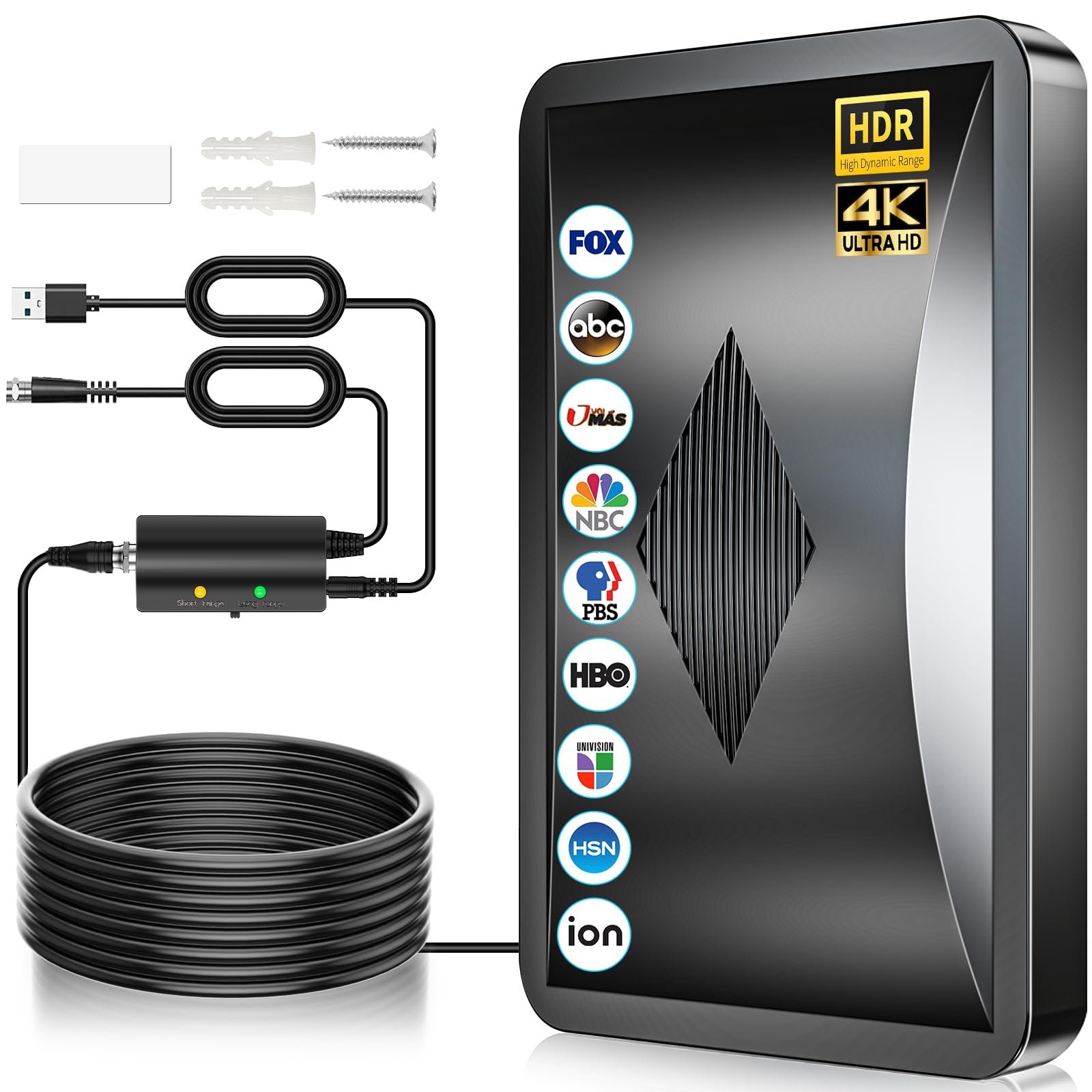
The Qellaff antenna is a compact, modern indoor unit aimed at the budget-conscious cord-cutter. Its slim black design is nearly invisible when placed on a wall or window, and it includes both mounting screws and adhesive tape for flexible placement. The built-in amplifier with a 2026 upgraded Smart IC Chip claims up to 5000+ mile range, but like other budget amps, expect reliable performance within 30-50 miles of towers. Users report picking up 60+ local channels including ABC, CBS, NBC, and Fox with clear HD picture comparable to cable.
The 38-foot high-shield coaxial cable gives solid reach for routing the antenna to a high window or wall position away from the TV. The amplifier has low-noise and long-range settings, letting you choose between stronger gain or reduced noise depending on your distance from towers. Setup is three steps: connect coax, plug the amplifier into USB power, and scan channels. The package does not include a USB wall adapter, so you’ll need your own or plug into the TV’s USB port.
The Qellaff supports 720p, 1080i, 1080p, 2K, and 4K HDR formats. The 85-ohm impedance is slightly higher than standard 75-ohm coax but hasn’t caused reported compatibility issues with modern TV tuners. The 2-year warranty provides reasonable coverage for the price tier. If you need a small, discreet antenna for an apartment or bedroom to grab the major locals without a complex install, the Qellaff offers a clean, low-hassle entry point into over-the-air TV.
Why it’s great
- Slim, near-invisible design blends into modern living spaces
- Amplifier has switchable low-noise and long-range modes
- Easy wall or window mount with included adhesive tape and screws
Good to know
- USB wall adapter not included in package
- Listed 5000+ mile range overstates actual usable distance
FAQ
Do I really need a motorized rotating antenna for broadcast TV?
Why does my indoor antenna lose channels when someone walks through the room?
What does ATSC 3.0 NextGen TV compatibility actually mean for my setup?
How do I know if my local stations broadcast on VHF or UHF frequencies?
Can I use a splitter to feed multiple TVs from one antenna without signal loss?
Final Thoughts: The Verdict
For most users, the best antenna for broadcast tv winner is the Televes Ellipse Mix because it combines professional-grade intelligent gain control, LTE/5G filtering, and a realistic 75-mile range in a compact package that fits attic or outdoor installs. If you need extreme fringe performance to pull in stations from 70-plus miles, grab the Televes DAT BOSS Mix LR with its 46 dBi UHF gain and triple-boom design. And for a mid-range directional workhorse that handles mixed tower directions without breaking the bank, the Antennas Direct ClearStream 2V delivers reliable multi-directional reception with true Hi-VHF support that budget flat panels miss.