
Our readers keep the lights on and the weekend projects moving. As an Amazon Associate, I earn from qualifying purchases.
That stabbing heel pain with your first morning step isn’t just annoying—it’s your plantar fascia screaming for real structural support. Most shoe insoles are just soft cushions that collapse within weeks, offering zero actual correction for fallen arches or overpronation. The difference between temporary padding and genuine biomechanical support is specific foam density, heel cup depth, and an arch contour that doesn’t flatten under load.
I’m Rikta — the co-founder and writer behind FitlyFast. I’ve spent hundreds of hours analyzing foot biomechanics research, comparing orthotic materials, and mapping customer feedback on which arch supports actually deliver lasting relief versus those that simply market it.
A serious buyer of arch supports needs to differentiate between gel-based comfort padding and rigid structural orthotics designed to realign the foot, and this guide isolates the spec-level details that actually matter for treating plantar fasciitis, flat feet, and high-arch strain.
How To Choose The Best Arch Supports
Not all arch supports are built the same. A budget-friendly gel insole may feel nice in the store, but it lacks the rigid structure necessary to correct your foot alignment. The wrong choice can worsen plantar fasciitis or create new knee and hip pain. Here are the three decisive factors you need to evaluate.
Arch Type and Support Height
Your foot’s natural arch height—low (flat feet), medium, or high—determines how much vertical lift your orthotic needs. A high-arch sufferer requires aggressive support that forces the foot into a corrected position, while someone with flat feet needs a more gradual contour that prevents overpronation without causing new discomfort. Look for product descriptions that specify arch height compatibility.
Heel Cup Depth and Stability
A shallow heel cup offers no real control. Serious orthotic insoles feature a deep, molded heel cup that cradles the calcaneus bone and limits excessive motion. This prevents the heel from rolling inward or outward, which is a primary cause of plantar fasciitis and Achilles strain. A depth of at least 8–10 mm is a strong indicator of proper stability.
Material Density and Flexibility
Standard EVA foam compresses quickly and provides only temporary cushioning. The most effective arch supports use a semi-rigid base—often polypropylene or high-density closed-cell foam—that resists collapse under body weight. If you weigh over 180 pounds, prioritize insoles rated for heavy-duty use or 220+ pounds to maintain structural integrity over months of daily wear.
Quick Comparison
On smaller screens, swipe sideways to see the full table.
| Model | Category | Best For | Key Spec | Amazon |
|---|---|---|---|---|
| Superfeet All-Purpose Green | Premium | High arch & plantar fasciitis | Deep heel cup with high-density closed-cell foam | Amazon |
| PowerStep Pinnacle | Premium | Pronation control & all-day wear | Moderate arch support with dual-layer cushioning | Amazon |
| Vionic Slimfit Insole | Premium | Tight casual shoes & flats | Slim 3/4 length with VIO MOTION technology | Amazon |
| Dr. Scholl’s Plantar Fasciitis Relief | Mid-Range | Immediate heel pain relief | Full-length trim-to-fit with deep heel cup | Amazon |
| BestHalo Heavy Duty | Mid-Range | 220+ lbs & work boot use | High arch with gel cushioning and deep heel cup | Amazon |
| Sof Sole Plantar Fascia | Budget | 3/4 length for athletic shoes | Plantar Relief Bridge with gel heel pad | Amazon |
| KidSole Neon Shield | Budget | Kids with flat feet | 3/4 length foam with traction grip pads | Amazon |
In‑Depth Reviews
1. Superfeet All-Purpose Support High Arch Insoles (Green)
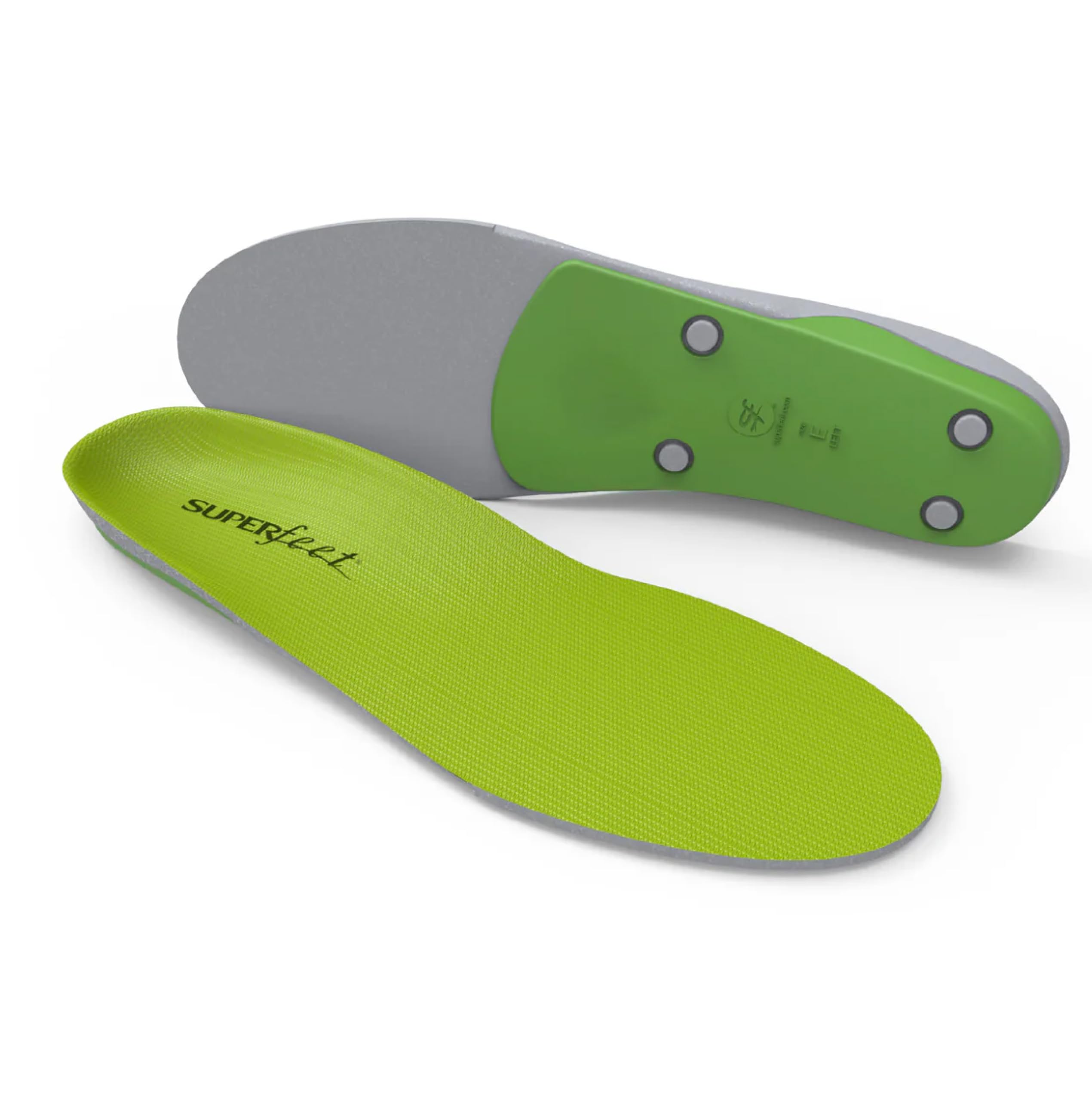
The Superfeet Green is the benchmark for serious arch support. Its high-density closed-cell foam base and deep sculpted heel cup provide aggressive correction for high arches and plantar fasciitis sufferers. Unlike soft gel pads, this insole forces the foot into a neutral alignment, which initially feels stiff but delivers lasting relief after a short break-in period.
The moisture-wicking top cover controls odor, and the trim-to-fit design allows customization for most athletic shoes, work boots, and hiking footwear. Customers report these replacing custom orthotics costing ten times as much, with consistent performance across thousands of steps daily. The deep heel cup cradles the calcaneus effectively, limiting overpronation and supination.
Because the foam is dense, some users note a snug fit that raises the heel slightly, which may alter the feel of shoes with less volume. The firmness is deliberate for structural support, not plush comfort. For those with high arches or chronic plantar fasciitis, this is the most versatile and proven option on this list.
Why it’s great
- Dense closed-cell foam holds shape for months of daily wear
- Deep heel cup provides exceptional stability and shock absorption
- Podiatrist-grade arch support at a fraction of custom orthotic cost
Good to know
- Firm feel requires a 3–5 day break-in period for new users
- Trim-to-fit process must be precise—mistakes are irreversible
2. PowerStep Pinnacle Insoles

PowerStep’s Pinnacle is the #1 podiatrist-recommended insole for good reason. It features a full-length design with a moderate arch support that balances rigidity with dual-layer cushioning, making it ideal for users who need control without the extreme firmness of high-arch orthotics. The deep heel cup and semi-rigid base correct moderate overpronation effectively.
Because the insoles are sized by shoe size rather than trim-to-fit, installation is straightforward—just remove your factory insole and drop these in. Customers with plantar fasciitis report a 65% improvement in pain within days, and many note simultaneous relief from lower back and knee discomfort. The durable construction holds structure through 15,000-step days.
Some users find the heel posting too firm for ultra-high-mileage scenarios, but for daily wear in running shoes, casual shoes, and boots, the balance of support and comfort is exceptional. The moderate arch is a sweet spot for medium-arch feet that don’t need aggressive correction but still require real structural reinforcement.
Why it’s great
- Podiatrist-recommended with proven results for plantar fasciitis
- No trimming required—order by size for instant fit
- Dual-layer cushioning balances support with all-day comfort
Good to know
- Firm heel posting may feel too rigid for users exceeding 15,000 steps daily
- Decreases shoe volume; best used with shoes that have removable insoles
3. Vionic Women’s Slimfit Insole Support
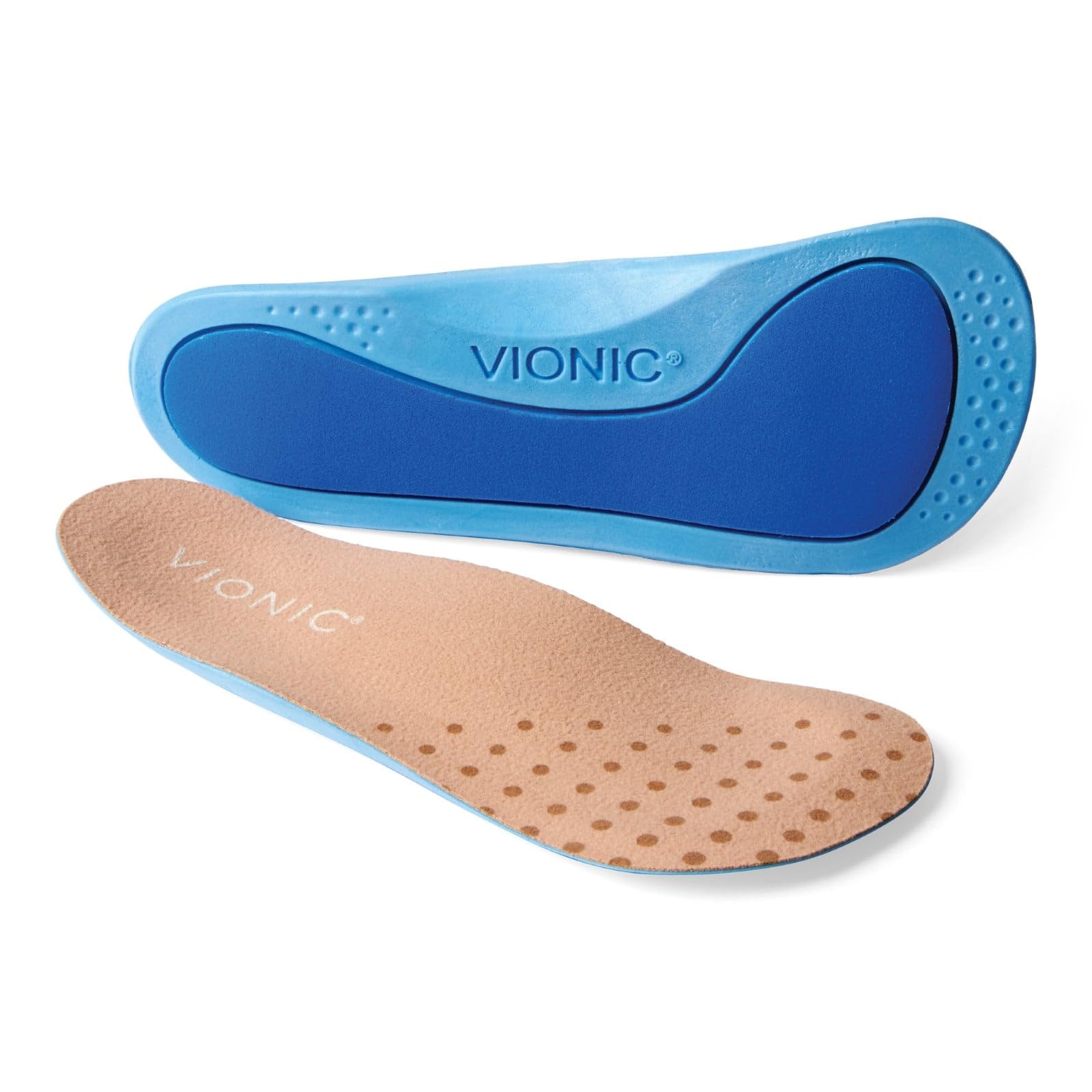
Vionic’s Slimfit is purpose-built for shoes that simply won’t accommodate a full-length orthotic. Ballet flats, thin sneakers like Adidas Sambas, and tight casual shoes often lack arch support entirely, and this slim 3/4-length insole fits where standard inserts cannot. The VIO MOTION technology provides targeted arch lift without adding bulk.
Customers consistently praise how these transform unsupportive fashion shoes into all-day wearable footwear. The insole stays in place without sliding, and it can be easily transferred between different pairs. Users report completing 20,000-step days in casual sneakers with zero foot pain after installing these—a remarkable outcome for such a low-profile design.
Note that the Slimfit lacks the deep heel cup and aggressive arch support of full-length orthotics, so it is not the first choice for severe plantar fasciitis or heavy pronation. For adding essential support to thin dress shoes and flats, however, it is the best-performing option available.
Why it’s great
- Ultra-slim profile fits ballet flats, dress shoes, and low-volume sneakers
- Targeted arch support eliminates foot pain in unsupportive footwear
- Stays in place without adhesive and transfers easily between shoes
Good to know
- Minimal heel cup and arch depth—not suited for severe pronation or high-arch correction
- No cushioning for the forefoot; focuses solely on arch and heel
4. Dr. Scholl’s Plantar Fasciitis Relief Orthotic Insoles

Dr. Scholl’s markets these as the only insole clinically proven to prevent plantar fasciitis recurrence, and many users confirm immediate heel pain relief. The full-length, trim-to-fit design uses a deep heel cup to absorb shock and firm arch support to prevent the plantar fascia from overstretching. The pressure distribution from heel to toe is well-engineered for general relief.
Customer feedback consistently highlights the immediate reduction in morning heel pain—the classic first-step agony. The insole targets the source of discomfort rather than just padding the foot, which explains its popularity among users seeking quick results. The affordable price point makes it a low-risk entry point for new orthotic users.
However, durability is a clear limitation. Heavy users reporting 9-hour standing days on concrete found the material flattening after just 2.5 weeks, with significant loss of support. The foam and gel construction is less resilient than high-density alternatives, so this is best suited for light to moderate daily use or as a trial before investing in premium options.
Why it’s great
- Clinically tested for plantar fasciitis pain relief and prevention
- Immediate reduction in morning heel pain for most users
- Full-length design distributes pressure evenly across the foot
Good to know
- Foam and gel construction flattens quickly under heavy daily use
- Medium arch support may not satisfy high-arch or flat-foot needs
5. BestHalo Heavy Duty Plantar Fasciitis Insoles
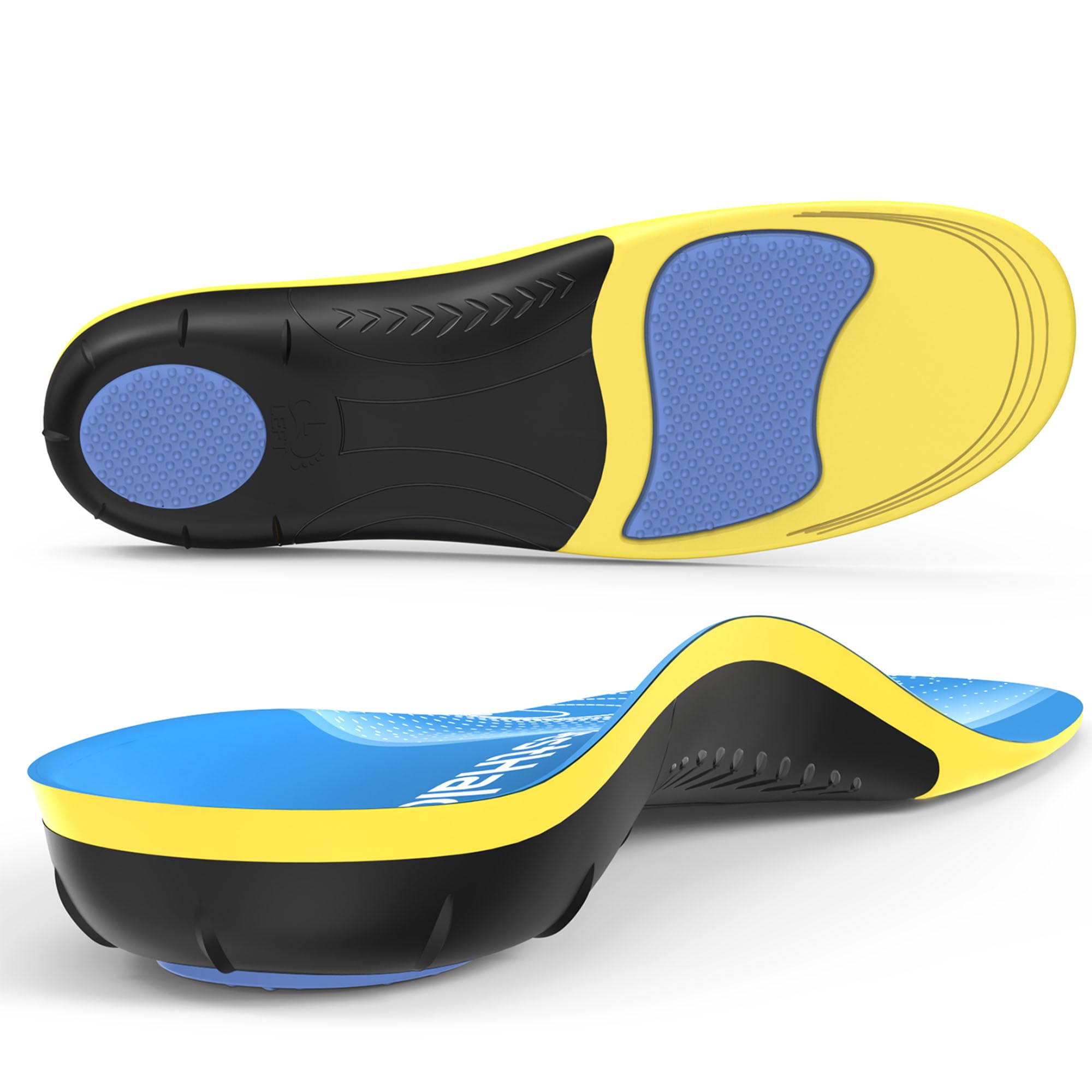
The BestHalo Heavy Duty insoles are engineered specifically for users weighing 220 pounds and above, and for demanding environments like work boots where standard orthotics collapse under pressure. The high arch support is combined with a deep heel cup and EVA foam plus gel cushioning to absorb impact during prolonged standing and walking on hard surfaces.
Customers with post-surgery recovery and chronic foot-to-hip pain report that these eliminated discomfort entirely, outperforming pricier options they had tried previously. The trim-to-fit design adapts to various footwear including athletic shoes and work boots without creating bulk inside the shoe. Users note a firm arch that initially feels intense but stabilizes within a few days of gradual wear.
A small number of users with specific foot mechanics found the high arch too aggressive, causing new lower back pain after two weeks. This highlights that high-arch correction is not universal—those with very flat feet or specific alignment issues should transition slowly. For the target demographic of heavy users needing robust support, this delivers exceptional value.
Why it’s great
- Engineered for 220+ pound users—foam resists compression under heavy load
- High arch support corrects overpronation and stabilizes gait effectively
- Versatile fit for athletic shoes, casual footwear, and work boots
Good to know
- Aggressive arch may require 3–7 day gradual adjustment period
- Not suitable for low-arch feet without a proper transition plan
6. Sof Sole Plantar Fascia Insoles

Sof Sole’s 3/4-length insole uses a Plantar Relief Bridge that provides focused arch support without taking up toe space, making it compatible with most athletic and casual shoes. A gel pad in the heel disperses strike impact and soothes heel spurs, while the truncated design fits snugly without bunching at the toes. This is an FSA and HSA eligible item.
Long-term users report using these insoles for years with consistent results for plantar fasciitis and overpronation. The rubber heel circle that helps with grip may, over time, leave marks on shoe interiors, but this does not affect functionality. The slim profile works well in house shoes and casual sneakers where full-length insoles would not fit.
The price has increased since original release, and some users note that discount structures (12% or 10% off) feel misleading relative to the original price point. For the price, the support is solid for mild to moderate arch needs, but users requiring aggressive correction for heavy pronation or high body weight should look to the premium options above.
Why it’s great
- 3/4 length fits most athletic and casual shoes without crowding toes
- Gel heel pad effectively disperses impact and soothes heel spurs
- Proven track record with customers using them for years
Good to know
- Not suitable for severe pronation or very flat feet needing deep correction
- Rubber heel component can mark shoe interiors over extended use
7. KidSole Neon Shield Arch Support Insole

The Neon Shield by KidSole is one of the few arch supports designed specifically for children with flat feet and pronation issues. The 3/4-length trim design fits into most kids’ sneakers, Vans, Jordans, and even Crocs without crowding the toe box. The soft-but-strong foam material gradually conforms to the child’s foot while providing consistent arch lift.
Parents report dramatic improvements in their children’s walking posture and pain levels. Flat-footed kids who previously complained during walks or errands now hike without discomfort. An 8-year-old with flat feet experienced zero pain after these were installed, and a grandson with potential plantar fasciitis had his pain eliminated entirely. The traction grip pads on the bottom keep the insole from sliding inside the shoe.
Some parents note the insoles run slightly wide for narrow sneakers, though kids happily wear them in looser footwear like Crocs. The slim design prioritizes arch support over forefoot cushioning, so children with very sensitive feet may need a gradual introduction. For addressing pediatric flat feet and pronation, this is a targeted solution that works.
Why it’s great
- Designed specifically for kids with flat feet and pronation disorders
- Eliminates foot pain during walks, hikes, and daily activities
- Fits multiple shoe brands including Vans, Jordans, Adidas, and Crocs
Good to know
- Slightly wide fit may feel tight in narrow sneakers
- Foam gradually molds to the foot—initial support is firm but pliable
FAQ
How long does it take for arch supports to stop hurting?
Can I use arch supports in any shoe?
Should I buy arch supports for flat feet or high arches?
Final Thoughts: The Verdict
For most users, the arch supports winner is the Superfeet All-Purpose Green because its high-density closed-cell foam and deep heel cup provide the structural correction that actually treats plantar fasciitis and high-arch strain. If you need moderate pronation control with all-day comfort, grab the PowerStep Pinnacle. And for adding essential support to thin casual shoes or flats, nothing beats the Vionic Slimfit Insole.