
Our readers keep the lights on and the weekend projects moving. As an Amazon Associate, I earn from qualifying purchases.
A sprained ankle doesn’t just sideline your weekend run — it rewires how you step off a curb, pivot on a court, or even just stand on a ladder. The right brace should feel like a second skin that locks the joint without turning your shoe into a clown car, and the wrong one will slide down your sock before you finish your warm-up.
I’m Rikta — the co-founder and writer behind FitlyFast. I’ve spent many hours breaking down materials, closure systems, and stabilizer designs in this specific niche to separate the braces that deliver real motion control from those that just add bulk.
Whether you are recovering from a grade-two tear or managing chronic instability, choosing the right ankle brace for sprain means understanding how figure-8 straps, removable splints, and medical-grade knit actually interact with your gait.
How To Choose The Best Ankle Brace For Sprain
Selecting an ankle brace for a sprain is not a one-size-fits-all decision. The severity of the injury, the activity you’re returning to, and the type of shoe you wear all dictate whether you need a lace-up stabilizer, a brace with removable splints, or a medical-grade compression sleeve. Below are the three most critical factors to weigh before clicking add to cart.
Closure System: Lace-Up vs. Pull-On vs. Figure-8
Lace-up systems mimic athletic taping and provide the most customizable compression across the midfoot and heel, which is why they dominate the premium tier. Pull-on sleeves like the Bauerfeind MalleoTrain rely on medical-grade knit tension and integrated pads — they are fast to don but offer less adjustable lateral control. Figure-8 straps, often combined with lace-ups, add a second layer of stabilization that specifically targets the subtalar joint to prevent rolling.
Stabilizer Design: Removable Splints vs. Molded Shells
Braces with removable side stabilizers let you transition from high-rigidity recovery mode to flexible daily wear without buying a second unit. The Fitomo and Ultra 360 models use this approach. Molded TPU shells, like the DonJoy POD, provide a rigid exoskeleton that adapts to your foot’s anatomy — ideal for high-impact sports where you need maximum inversion/eversion control but accept a slightly bulkier fit inside cleats.
Material Thickness and Footwear Compatibility
The 1.5mm ultra-thin microfiber fabric found on the Fitomo SAB7 is engineered specifically to disappear inside snug running shoes and work boots. In contrast, neoprene-heavy braces like the McDavid Bio-Logix add cushioning but may force you to size up in footwear. If you plan to wear the brace all day, prioritize low-profile builds with visible ventilation grids to manage moisture and heat buildup.
Quick Comparison
On smaller screens, swipe sideways to see the full table.
| Model | Category | Best For | Key Spec | Amazon |
|---|---|---|---|---|
| Med Spec ASO Ankle Stabilizer | Lace-Up | All-around recovery, PT recommended | Figure-8 straps + CoolFlex padding | Amazon |
| DonJoy Performance POD | Molded Shell | High-impact sports, roll control | Molded TPU shell + EVA liner | Amazon |
| Bauerfeind MalleoTrain | Compression Knit | All-day wear, mild instability | Viscoelastic massage pads | Amazon |
| Ultra 360 Lace Up | Lace-Up | Volleyball, basketball athletes | Figure-8 straps + low-profile build | Amazon |
| Fitomo Triple-Lock Quick Lace | Lace-Up + Splint | Post-op recovery, versatility | Removable dual side stabilizers | Amazon |
| Fitomo 1.5mm Ultra Thin | Figure-8 Sleeve | Daily wear, tight shoe fit | 1.5mm thickness, visible air vents | Amazon |
| McDavid Bio-Logix 419 | Hinge + Strap | Construction, heavy daily use | Flex-link hinge + memory foam | Amazon |
In‑Depth Reviews
1. Med Spec ASO Ankle Stabilizer
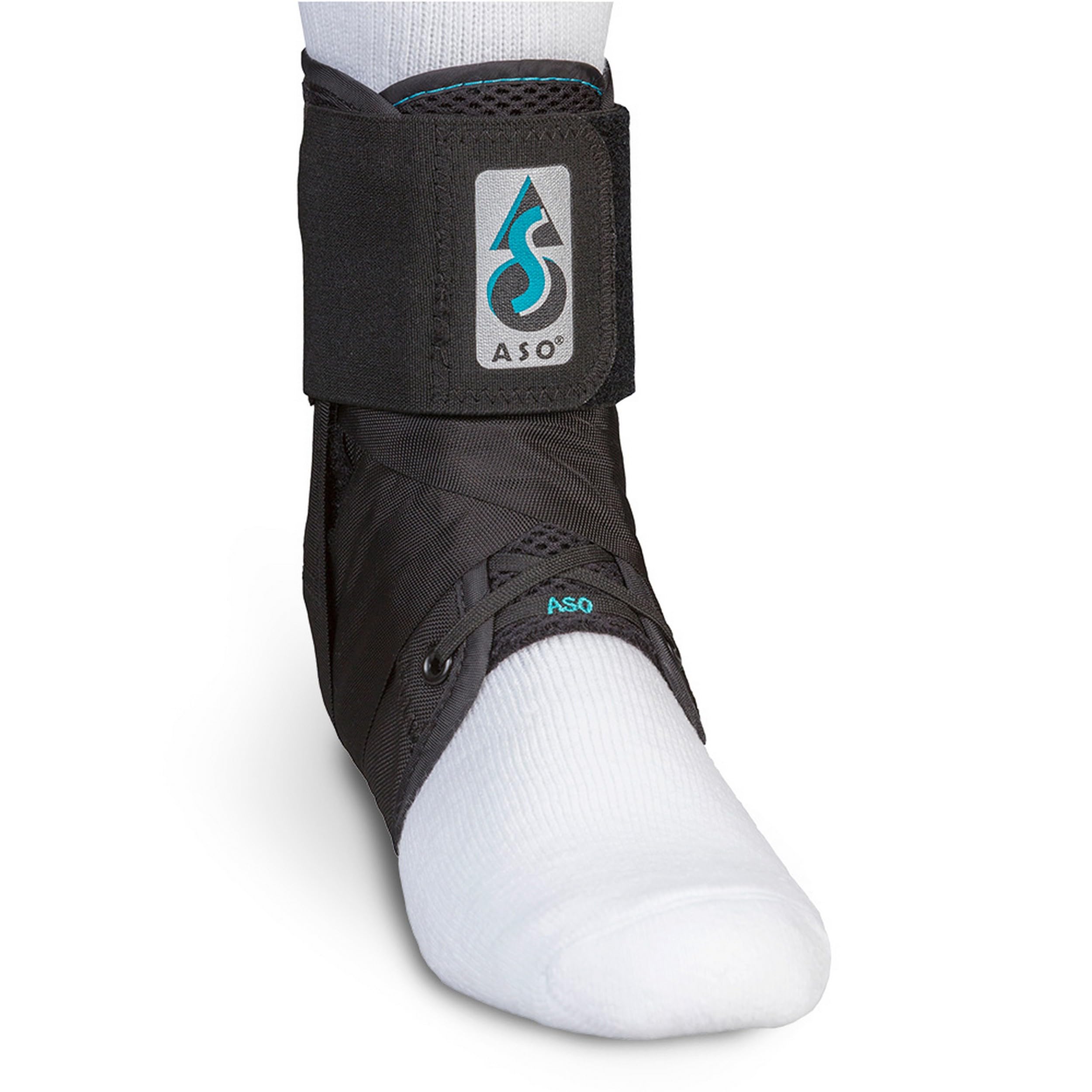
The Med Spec ASO is the brace that athletic trainers and physical therapists consistently reach for, and the reason is its balanced approach: a full lace-up chassis paired with elastic figure-8 straps that lock the heel counter without cutting off circulation. The CoolFlex padding along the tongue and Achilles area reduces irritation during extended wear, and the durable nylon shell resists stretching even after months of daily use.
Users recovering from peroneal tendonitis and grade-two sprains report that the lace-up design provides the most customizable compression of any mid-range brace, and the bilateral fit works for both left and right feet. The included sizing guide asks for a circumference measurement around the ankle bone, so measure before ordering — especially if you are between sizes.
The ASO does require a bit of dexterity to don: you need to loosen the laces fully, slide your foot in, and then cinch evenly from the tongue outward. Once dialed in, it fits comfortably inside most gym shoes and running sneakers, though slip-on shoes will feel noticeably looser.
Why it’s great
- Professional-grade stabilization trusted by trainers and doctors
- Breathable CoolFlex padding resists odor and chafing
- Figure-8 straps provide targeted subtalar control
Good to know
- Laces are long and require even tightening to avoid pressure points
- Not suitable for very low-profile or slip-on footwear
2. DonJoy Performance POD Ankle Brace
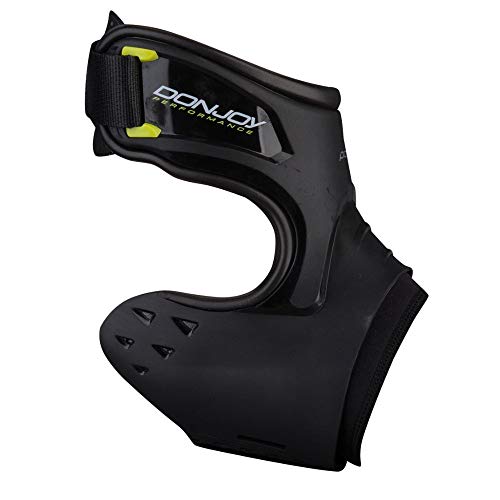
The DonJoy Performance POD uses a molded TPU shell that wraps the lateral and medial malleoli, combined with an EVA underlayer that hugs the contours of your foot. The “On-Demand” technology is engineered to engage specifically during inversion/eversion moments — you get full natural range of motion during straight-line running, but the shell locks up the instant your ankle starts to roll.
This brace is built for athletes who refuse to lose a step. Users playing basketball, lacrosse, and pickleball report that it allows cutting and jumping while providing a reassuring stop during off-balance landings. The low-profile design fits inside most cleats and high-top sneakers, though some wearers with high insteps note that the entry is snug.
A handful of users on the trail-running side found the shell too flexible for severe chronic instability, so this brace is best suited for active individuals returning to sport after a mild-to-moderate sprain rather than those needing rigid post-surgical immobilization.
Why it’s great
- Engineered to maximize natural motion while blocking dangerous roll angles
- Molded TPU shell adapts to individual foot anatomy over time
- Soft EVA liner provides all-day comfort without bulk
Good to know
- Not ideal for severe or post-surgical immobilization needs
- Snug entry can be tricky for very high insteps
3. Bauerfeind MalleoTrain Ankle Support

The Bauerfeind MalleoTrain is the pull-on category’s standout performer, using a medical-grade circular knit that delivers graduated compression without a single strap or lace. Two anatomically contoured viscoelastic massage pads sit over the inner and outer malleoli, redistributing pressure during movement and actively reducing swelling and effusion.
This brace shines for all-day wear — the breathable, moisture-wicking knit and low-profile design mean it vanishes under trousers and fits into most casual shoes and boots. Users with mild ligament insufficiency and post-ORIF recovery report that the proprioceptive feedback noticeably improves gait confidence from the first wear.
The trade-off is adjustable support: unlike lace-up braces, you cannot tighten the MalleoTrain for specific activities. It provides consistent, mild-to-moderate stabilization that is excellent for daily activity, walking, and pickleball, but may not be sufficient for high-intensity cutting sports where a grade-three sprain is a concern.
Why it’s great
- Medical-grade compression knit offers consistent, all-day support
- Viscoelastic pads actively reduce swelling during movement
- Machine-washable and holds shape after repeated washing
Good to know
- Not adjustable — provides a fixed level of compression
- Premium-tier investment for a non-lace-up design
4. Ultra 360 Lace Up Ankle Brace
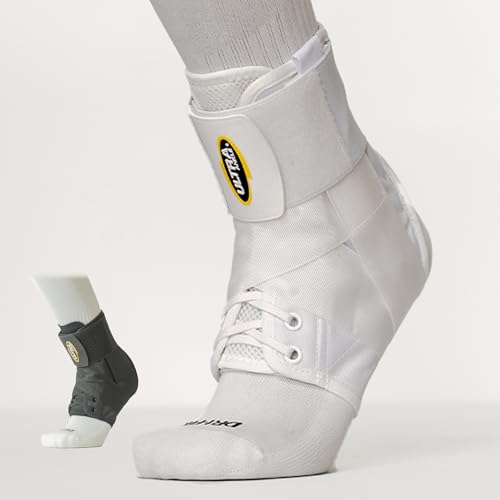
The Ultra 360 takes the classic lace-up-plus-figure-8 formula and refines it with a slim, breathable nylon build that slides easily into volleyball sneakers and cleats without the bulk that plagues many stabilizers. The design intentionally mimics athletic trainer taping, with the lace-up panel controlling midfoot compression while the figure-8 straps lock the rearfoot.
Volleyball parents and basketball players are the core audience here: multiple reviews note that the brace reduced the severity of re-rolling in athletes with a history of ankle sprains. The low-profile fit is a standout — users report wearing it with high-top basketball shoes and even work boots without feeling cramped.
Some users note that the fit can be finicky: if you over-tighten the laces, you may get numbness across the top of the foot, and if you leave them too loose, the figure-8 straps lose their bite. Take the time to dial in the tension during the first few wears, and you will find a locked-in feel that balances mobility with security.
Why it’s great
- Low-profile build fits easily into cleats, sneakers, and boots
- Lace-up design mimics professional taping for customizable compression
- Figure-8 straps target subtalar stability without heel lift
Good to know
- Tension dial-in required to avoid foot numbness or loose support
- White color shows dirt quickly; hand washing recommended
5. Fitomo Triple-Lock Quick Lace Up Ankle Brace
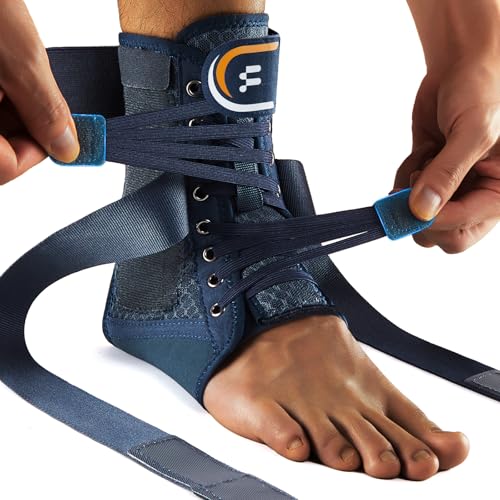
The Fitomo Triple-Lock system combines a quick lace-up front with top-strap compression and two removable side stabilizers, giving you three distinct modes of support. Keep all three elements engaged for maximum rigidity during early recovery, or pull out the splints to transition to a flexible daily brace for walking and light activity.
Users recovering from ORIF surgery and stroke-related inversion report that the figure-8 straps hold the ankle securely without digging in, and the breathable polyester-nylon blend reduces heat buildup during extended wear. The quick-lace mechanism is noticeably faster than traditional eyelet-based systems, making it a strong choice for anyone who needs to get the brace on and off multiple times per day.
One caveat: the sizing runs slightly large — users with narrow ankles or size medium may find the fit a little loose, especially with the stabilizers removed. If you are between sizes, consider going down for a more secure wrap.
Why it’s great
- Removable side stabilizers allow transition from recovery to daily wear
- Quick-lace system enables fast donning and doffing
- Triple-Lock design offers customizable compression levels
Good to know
- Runs slightly large; size down if you have narrow ankles
- Stabilizers can feel bulky in very slim shoes
6. Fitomo 1.5mm Ultra Thin Ankle Brace
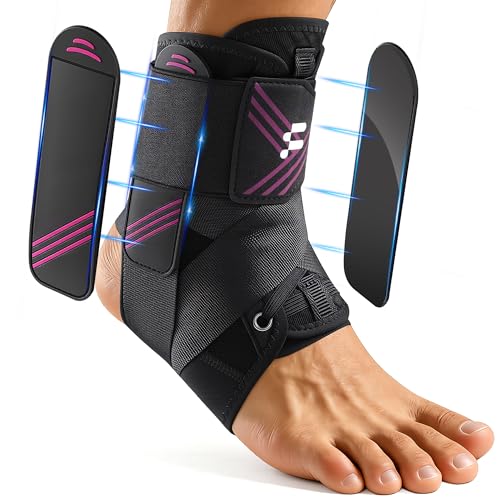
The Fitomo 1.5mm Ultra Thin is engineered specifically for the user whose biggest frustration is a brace that makes their shoe feel like a size too small. At just 1.5mm thick, the microfiber fabric and visible ventilation grid slip into snug running shoes, work boots, and even casual sneakers without any tightness or spill-over.
The support comes from a three-layer system: an inner silicone grip that prevents slippage, a figure-8 stabilizing strap that controls the talus, and a flexible support panel that adds medial-lateral resistance. Users praise its ability to provide meaningful stability without the bulk of an air cast, and the breathable mesh keeps feet cool during all-day wear.
The trade-off for the ultra-thin profile is that this brace is not designed for high-impact sports or severe instability. It hits the sweet spot for daily activity, mild sprain recovery, and for users who need to wear a brace under business-casual footwear without looking like they are wearing medical gear.
Why it’s great
- 1.5mm thickness fits invisibly into all types of footwear
- Three-layer system offers dynamic support without rigidity
- FSA/HSA eligible with visible ventilation for moisture control
Good to know
- Not intended for high-impact sports or grade-three sprains
- Figure-8 strap configuration takes a few tries to master
7. McDavid Bio-Logix 419 Ankle Brace
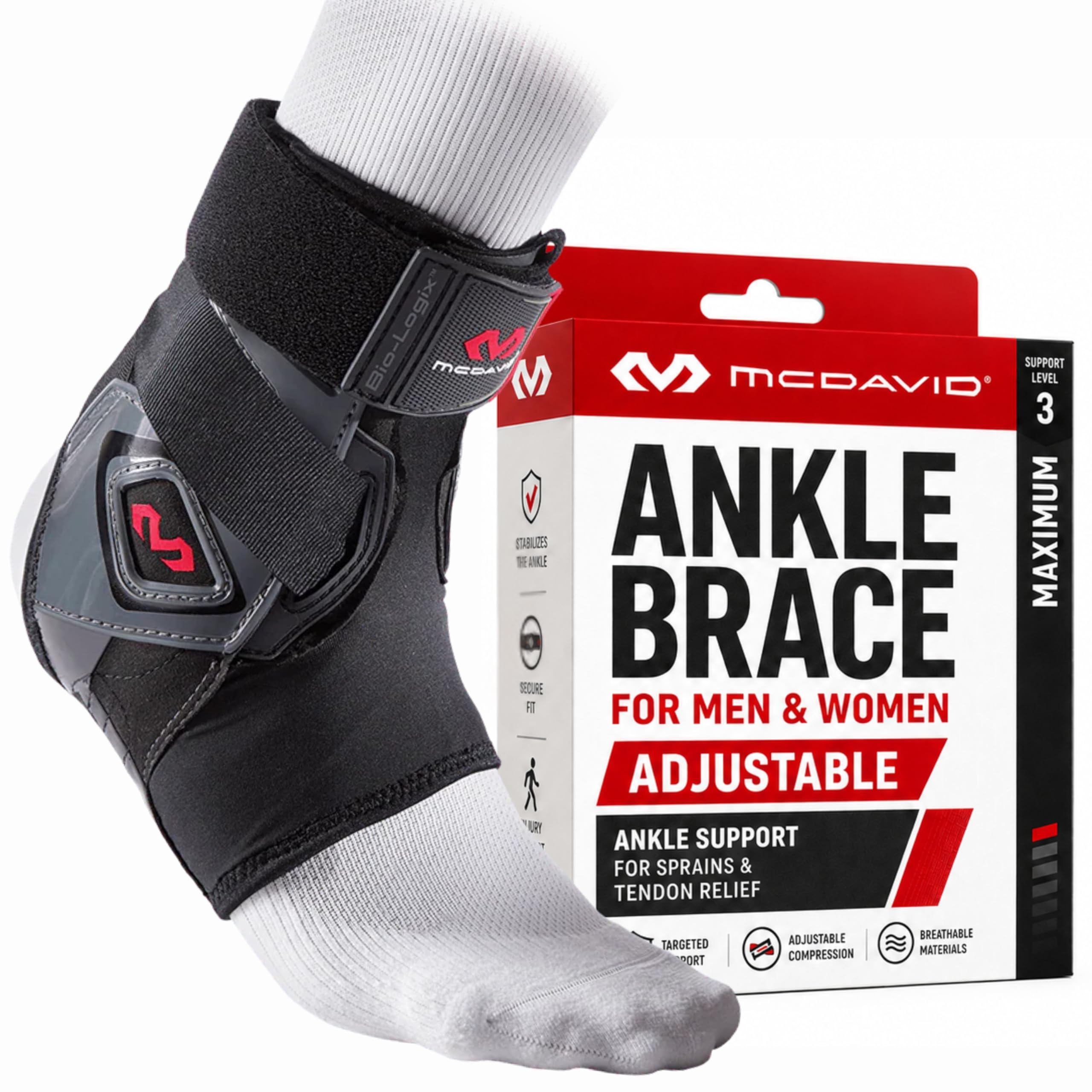
The McDavid Bio-Logix 419 uses a flex-link hinge design combined with contoured side splints and memory foam padding to deliver a balanced mix of rigidity and comfort. The neoprene and spandex wrap provides a snug, sock-like fit, while the two adjustable anchor straps let you dial in compression across the midfoot and heel.
This brace has a strong following among construction workers and tradespeople who need durable daily support for climbing ladders and standing on uneven surfaces. Users report that the memory foam pads conform to the ankle bone over time, reducing pressure points, and the flex-link hinge allows a more natural gait than rigid-shell alternatives.
The neoprene construction is thicker than most low-profile options, so you may need to size up in footwear or stick with looser-fitting work boots. Additionally, some users with narrow ankles find the tube-sock portion too roomy, requiring thick socks to fill the void and maintain stability.
Why it’s great
- Flex-link hinge allows natural dorsiflexion while blocking roll
- Memory foam padding molds to ankle anatomy for custom comfort
- Durable neoprene holds up to daily construction and trades use
Good to know
- Neoprene construction adds bulk; may not fit in slim sneakers
- Anatomically designed for left or right ankle — not bilateral
FAQ
Can I wear an ankle brace for sprain inside my regular shoes without having to size up?
What is the difference between a figure-8 strap and a lace-up system for sprain recovery?
How do I clean an ankle brace without damaging the stabilizers or compression knit?
Final Thoughts: The Verdict
For most users, the ankle brace for sprain winner is the Med Spec ASO Ankle Stabilizer because its professional-grade lace-up and figure-8 combination provides the most versatile support across recovery phases and activities. If you want a precision-engineered shell for dynamic sports, grab the DonJoy Performance POD. And for all-day wear with medical-grade compression that disappears under clothes, nothing beats the Bauerfeind MalleoTrain.