
Our readers keep the lights on and the weekend projects moving. As an Amazon Associate, I earn from qualifying purchases.
The biggest mistake new harmonica players make is buying the wrong key or an instrument with leaky reeds that make every note sound thin and flat. You need a harp that seals well, responds cleanly, and lets you bend notes without fighting the comb. A poor choice kills your motivation before your first wailing blues riff even has a chance.
I’m Rikta — the co-founder and writer behind FitlyFast. I have analyzed dozens of harmonica models across every price tier. This guide is built on hundreds of customer experiences, spec comparisons, and a deep look at reed material, comb construction, and out-of-box tuning reliability.
After filtering for airtightness, responsive phosphor bronze reeds, and durable combs that won’t swell or crack, these seven harmonicas rose to the top as the best options to launch your journey. What follows is the definitive best beginner harmonica guide you need before spending a cent on a mouth organ.
How To Choose The Best Beginner Harmonica
Selecting your first harmonica isn’t complicated, but a few key decisions separate an instrument that will frustrate you from one that will make learning a joy. Here is exactly what matters.
Stick to the Key of C
Almost every beginner lesson, songbook, and online tutorial is written in the key of C. Starting in C also makes learning to bend notes easier because the draw and blow patterns are the most intuitive. Buying a different key for your first harp is a one-way ticket to frustration. Every model in this guide is available in C, and that is the version you want.
Reed Material: Phosphor Bronze Over Brass
Brass reeds are common on ultra-budget harmonicas and they can go out of tune quickly. Phosphor bronze reeds hold their pitch longer, respond faster, and produce a warmer, fuller tone. They also resist corrosion better, which matters if you play in humid environments or don’t want to obsess over drying your harp after every session. A well-built phosphor bronze reed is the single best upgrade a beginner can prioritize.
Comb Type: ABS Plastic Offers the Most Consistent Experience
Wooden combs (traditional on some premium models) can swell from moisture, causing air leaks and a rough playing feel. Metal combs are durable but can feel cold and heavy. ABS plastic combs are lightweight, moisture-resistant, dimensionally stable, and produce a bright, clear tone. For a beginner, ABS is the most forgiving and reliable choice. Most models on this list use food-grade ABS.
Quick Comparison
On smaller screens, swipe sideways to see the full table.
| Model | Category | Best For | Key Spec | Amazon |
|---|---|---|---|---|
| East top 008K | Diatonic | Responsive bending for learners | 1.2mm phosphor bronze reed plate | Amazon |
| JDR North | Diatonic | Loud, rich projection | 1.2mm thick brass reed plate | Amazon |
| Fender Blues Deluxe | Diatonic | Ease of play and moisture resistance | ABS plastic comb, vented case | Amazon |
| Eastrock Blues Harp | Diatonic | Surprisingly rich budget tone | Phosphor bronze reeds, ABS comb | Amazon |
| Easttop Heavy Duty | Diatonic | Durability and clean assembly | 1mm thick copper plate cover | Amazon |
| Hohner Blues Band | Diatonic | Trusted brand, bundled learning | 20 brass reeds, stainless steel covers | Amazon |
| EAST TOP Forerunner 2.0 | Chromatic | Full chromatic scale without valves | 12 holes, 48 tones, valveless design | Amazon |
In‑Depth Reviews
1. East top 008K (Key of C)

The East top 008K earns the top spot because it nails the two things beginners struggle with most: airtightness and responsive note bending. Its 1.2mm phosphor bronze reed plate is thicker than what you find on most entry-level harps, giving you a richer tone and easier access to over-blows as your skills progress. The ABS comb is precisely machined, which means no air leaks even when you are still learning to control your breath.
Players consistently note the bright, clean sound with a high response that rivals harmonicas costing nearly three times as much. The cover plates have an electroplated finish that feels solid in the hand, and the included zippered case with a belt looper makes it easy to carry. A removable yellow key sticker helps you identify the holes, though most users peel it off after a week.
The only caveat is that note bending still requires some practice — no harp can do the work for you. But this 008K gives you the most forgiving platform to learn on. It weighs only about 80 grams, so holding it for extended practice sessions never causes fatigue. If you buy one beginner harmonica, make it this one.
Why it’s great
- Airtight seal supports clean pitch and easy bending
- Thick 1.2mm reed plate produces richer sound than budget alternatives
- Lightweight ABS comb resists moisture swelling
Good to know
- Note bending is easier but still takes practice for a complete beginner
- Removable key sticker may seem a bit cheap, but it’s ultimately helpful
2. JDR North (Key of C)

The JDR North stands out because of its sheer projection. Multiple experienced players comment that this harp is noticeably louder than their Hohner counterparts, making it ideal if you plan to play around others or record yourself early on. The construction features a food-grade ABS comb paired with phosphor bronze reeds and a 1.2mm brass reed plate — thicker than the 0.8mm to 1mm standard you see in cheaper models.
The high-toughness stainless steel cover gives the JDR a substantial weight that feels premium. Bending notes is described as “no problem” by users, and the tuning holds well out of the box. The package includes a cleaning cloth and a rigid EVA protective case, which is a step up from the soft pouches bundled with some competitors.
The main tradeoff is that the stainless covers are heavier than aluminum or plated plastic options. At 0.24 pounds, it is not a heavy harp, but absolute purists who want the lightest possible feel will notice the difference. Still, for someone who wants a loud, confident tone from day one, the JDR North is a serious contender.
Why it’s great
- Exceptionally loud projection that cuts through background noise
- Thick 1.2mm reed plate delivers fuller, purer tone
- Rigid EVA case offers better protection than typical soft pouches
Good to know
- Slightly heavier feel due to stainless steel covers
- Some users reported shipping errors with incorrect key models
3. Fender Blues Deluxe (Key of C)
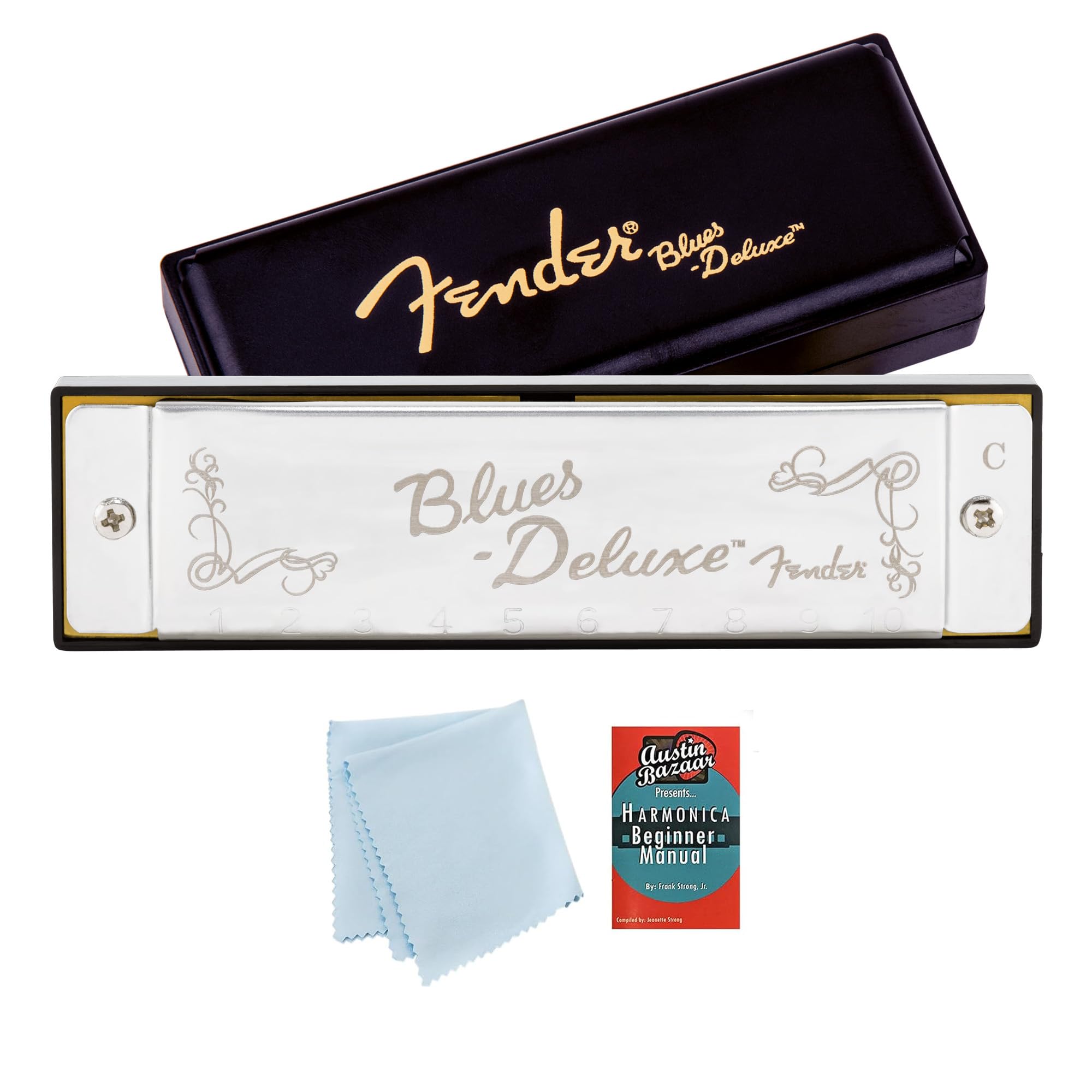
Fender’s Blues Deluxe is designed with beginner convenience front and center. The ABS plastic comb is gentler on the lips than a wood comb, and the moisture-resistant material means you don’t have to be obsessive about drying it after every session. The chromed metal covers give it a classic look and make cleaning effortless — a simple wipe-down restores it to like-new condition.
The standout feature is the included vented plastic case that allows the harp to dry automatically after playing. This passive drying system prevents moisture buildup around the reeds, which extends the life of the instrument significantly. Players also note that the harp requires less air to produce a full note, making it very forgiving for beginners who haven’t mastered breath control yet.
The tradeoff is that the tone leans sharper and less warm compared to a premium Hohner Marine Band. Some players describe it as “bright” rather than “sweet.” The bundle also includes a polishing cloth and an online manual, giving you a start-to-finish learning kit. For pure ease of play and low maintenance, the Fender Blues Deluxe is hard to beat.
Why it’s great
- Vented case dries the harmonica passively after each use
- Requires less air pressure, ideal for players still developing breath support
- Chromed metal covers are easy to clean and stylish
Good to know
- Tone is brighter and less warm than some traditional options
- ABS comb produces a different resonance than wood-comb players may expect
4. Eastrock Blues Harp (Key of C)

The Eastrock Blues Harp is the budget King that doesn’t feel cheap. With phosphor bronze reeds and a food-grade ABS resin comb, it delivers a clean, warm tone that reviewers repeatedly describe as “surprisingly rich” for the price point. The brushed vintage steel surface gives it an aesthetic that looks far more expensive than it is, and the stainless steel cover plates are comfortable to hold for extended periods.
An internal airflow splitter helps maintain stable airflow, making it easier for beginners to produce consistent notes. The harmonica has a reassuring weight — solid enough to feel robust, but not so heavy that it becomes tiring. The included fancy case and cleaning cloth complete the package, though the case is more of a padded pouch than a hard shell.
The only real limitation is that the build quality, while excellent for the price, uses slightly thinner reed stock than mid-range options. Aggressive players who plan to bend notes heavily may find the reeds wear out faster. For a casual learner or someone who just wants a reliable harp to practice on, this Eastrock is a fantastic entry point.
Why it’s great
- Phosphor bronze reeds deliver warm tone that rivals higher-priced harps
- Brushed metal finish looks elegant and resists fingerprints
- Airflow splitter helps beginners produce stable notes
Good to know
- Reed plate is thinner than premium options, may wear faster with heavy play
- Included case is a soft pouch, not a hard protective shell
5. Easttop Heavy Duty (Key of C)

The Easttop Heavy Duty model lives up to its name with a 1mm thick copper plate cover that is thicker than 90% of the options on the market. This extra metal mass produces a noticeably clearer, more melodious tone that projects well. The phosphor bronze reed content is 99.99% copper, making it highly corrosion-resistant, and the nickel-plated ABS resin frets provide a smooth, gentle surface against the lips.
This harmonica comes with SGS safety reports and quality management system certifications, which gives you confidence in the materials. It is fully disassemblable for cleaning, a huge plus for long-term maintenance. The zippered case includes a belt loop and a cleaning cloth, and the packaging is thoughtful enough to work as a gift right out of the box.
The main consideration is the weight. The thick copper covers make this one of the heavier harmonicas in the budget range. Some players love the heft, while others find it uncomfortable for long practice sessions. If you prefer a lighter instrument, the Eastrock or JDR options may suit you better.
Why it’s great
- 1mm copper covers produce a clear, melodious tone
- Fully disassemblable for thorough cleaning
- SGS certified for material safety and quality
Good to know
- Heavier than average, may cause fatigue during long sessions
- Thick covers change the resonance compared to thinner models
6. Hohner Blues Band (Key of C)
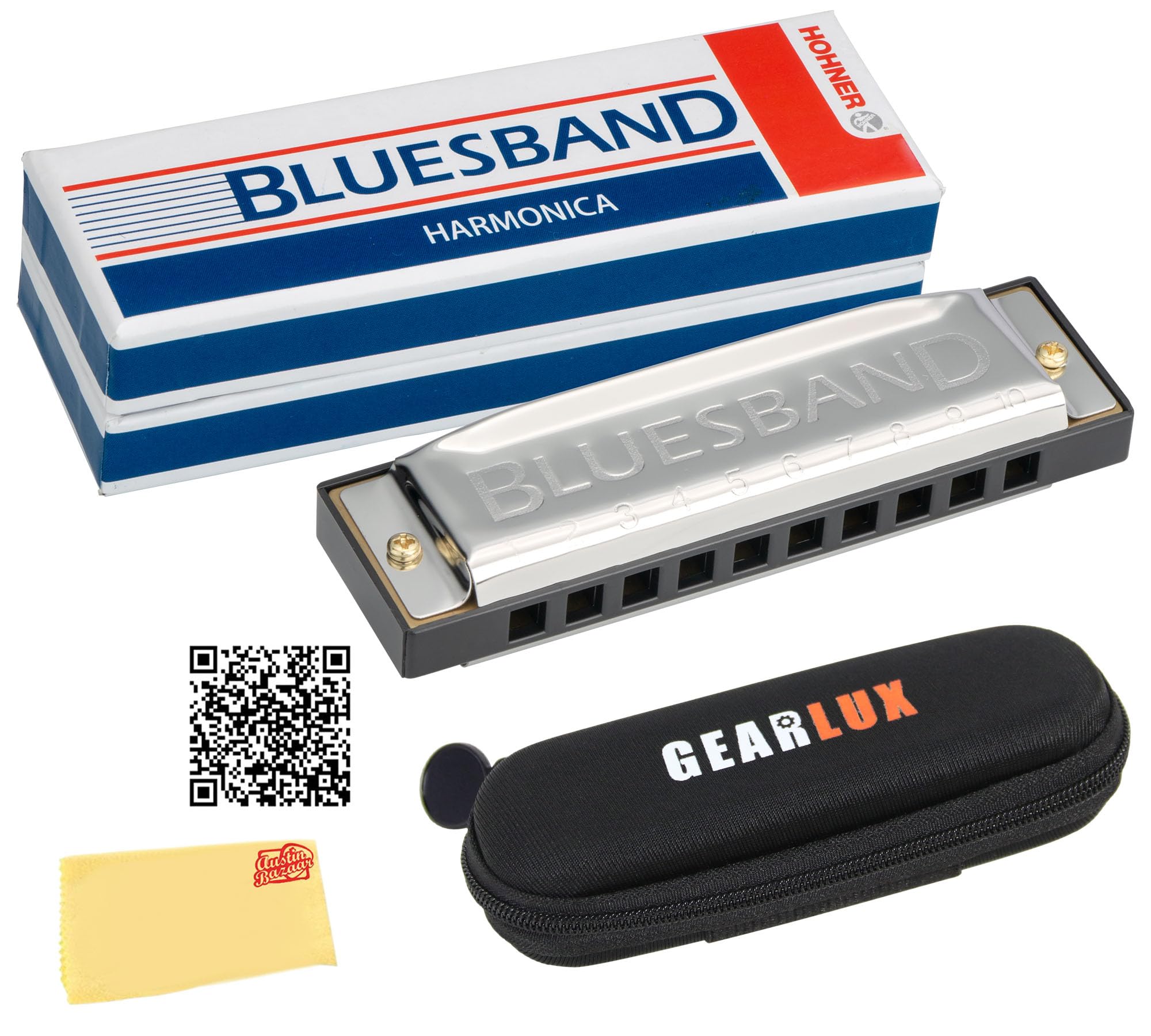
The Hohner Blues Band is the most popular beginner harmonica in the world for good reason. Hohner has been making harmonicas since 1857, and the Blues Band benefits from that legacy. The harp comes with 20 brass reeds set into an ABS comb with stainless steel cover plates. It is available in all major keys, but beginners should stick with the C version included in this bundle.
The real value here is the bundle. Along with the harmonica, you get a Hohner carrying case, a soft pouch, an exclusive Austin Bazaar harmonica beginner online manual, and a polishing cloth. The online manual includes a QR code for free lessons, giving you a structured path from your first note to your first song. The harmonica itself sounds good and plays easily, though experienced players note that brass reeds lack the longevity of phosphor bronze.
The tradeoff is straightforward: the Hohner name commands a price premium for essentially an entry-level harp. The brass reeds are adequate for learning, but you will likely want to upgrade within a year if you get serious. For a gift or a low-commitment way to try the instrument, the Blues Band is a safe, reliable choice.
Why it’s great
- Hohner is a legendary brand with a long reputation for quality
- Bundle includes a structured online beginner manual with free lessons
- Stainless steel covers are durable and easy to clean
Good to know
- Brass reeds are less durable than phosphor bronze for long-term use
- Brand premium means you pay more for entry-level specs
7. EAST TOP Forerunner 2.0 Chromatic (Key of C)

The EAST TOP Forerunner 2.0 is a chromatic harmonica, meaning it can play all 12 notes in the chromatic scale — not just the seven notes of a diatonic. With 12 holes and 48 tones, this is a fully chromatic instrument that opens up jazz, classical, and pop music that a standard 10-hole diatonic cannot play. The valveless design means you can wash it directly under water, solving the biggest maintenance headache of traditional chromatic harmonicas.
The retro quicksand black gold color spraying process gives it a stunning matte finish that doesn’t slip in your hands. The redesigned slider mechanism produces less noise than the Forerunner 1.0, and the mouthpiece is comfortable for extended play. Advanced players praise the airtight construction and the quiet slide action, with some calling it better than Hohner 270 models at a fraction of the price.
This is not a beginner’s first harmonica. Most online tutorials use diatonic numbering, which is incompatible with the chromatic layout. The Forerunner 2.0 is perfect for a player who has already mastered a C diatonic and wants to expand into full chromatic territory. If that describes your goals, this is an incredible value. If you have never played before, start with the East top 008K above.
Why it’s great
- Full 48-tone chromatic scale for jazz, classical, and pop
- Valveless design allows easy cleaning and prevents winter condensation issues
- Quiet slide mechanism and airtight body exceed expectations
Good to know
- Chromatic layout is not compatible with standard diatonic beginner tutorials
- Not recommended for a true first-time player without any previous experience
FAQ
Why do most beginner guides recommend the key of C?
How does an ABS plastic comb compare to a wooden comb?
Can I play blues, folk, and jazz on the same diatonic harmonica?
Final Thoughts: The Verdict
For most users, the best beginner harmonica winner is the East top 008K because it combines an airtight seal, responsive phosphor bronze reeds, and a comfortable ABS comb at a price that makes it a no-brainer. If you want loud projection and a more substantial feel in the hand, grab the JDR North. And for a chromatic player ready to move beyond diatonic limitations, nothing beats the EAST TOP Forerunner 2.0.