
Our readers keep the lights on and the weekend projects moving. As an Amazon Associate, I earn from qualifying purchases.
An outdoor cat faces the harsh reality of wind, rain, and freezing temperatures every single night. Providing a reliable, dry, and insulated shelter is the single most impactful thing you can do to help a feral colony survive the winter, and choosing the right bedding and house design determines whether that shelter actually works or just becomes another damp trap.
I’m Rikta — the co-founder and writer behind FitlyFast. I’ve spent hundreds of hours analyzing customer reviews, material science, and weatherproofing specs to separate the effective shelters from the ones that fail within a single storm.
This guide walks through the critical specifications, weather-proofing details, and real-world assembly factors that separate a truly protective outdoor refuge from one that leaves cats wet and cold. It is designed to help you confidently select the best bedding for feral cats that actually endures the elements and keeps colony cats safe, warm, and dry season after season.
How To Choose The Best Bedding For Feral Cats
Selecting an outdoor shelter for feral cats is different from buying a plush bed for a house cat. The primary goal is survival — not luxury. You need a structure that sheds water, blocks wind, retains heat, and offers a way for a nervous cat to escape if a predator approaches. Understanding the following criteria will help you avoid a purchase that looks good in the box but fails in a storm.
Material: Waterproof Oxford vs. Resin vs. Fabric-Only
The shell material is the single most important weatherproofing factor. Waterproof Oxford fabric (typically 600D to 900D) offers excellent rain protection while staying lightweight and collapsible for storage. Resin or heavy-duty plastic houses are rigid, waterproof, and much heavier — ideal for windy areas where a tent-style shelter might blow away. Avoid any shelter made of thin polyester or cotton fabric without a waterproof coating; these saturate quickly and become dangerously cold.
Floor Design: Elevated or Ground-Flat
An elevated floor is a non-negotiable feature for any outdoor shelter intended for year-round use. Lifting the sleeping surface off the ground prevents rainwater from seeping in, stops cold from transferring from frozen soil, and keeps the interior dry after heavy snow. Many budget shelters have a fabric-only bottom that sits directly on the ground; these are suitable only for dry, protected patios or garages.
Assembly, Portability, and Maintenance
Feral colony caretakers often move shelters between locations depending on weather and colony shifting. A house that snaps together in under five minutes, folds flat for off-season storage, and allows easy access for cleaning reduces daily burden. Look for models with removable tops, zippered roofs, or front panels that drop down for fast straw replacement. A design that requires tools or complex alignment will quickly frustrate regular use.
Quick Comparison
On smaller screens, swipe sideways to see the full table.
| Model | Category | Best For | Key Spec | Amazon |
|---|---|---|---|---|
| TailTastic Elevated | Premium Tent | Wet & Snowy Climates | 900D Oxford, 6 ground stakes, 24″ x 15.7″ x 13″ | Amazon |
| DRATO Resin Igloo | Premium Rigid | High-Wind Areas | Resin + PE, 5.5 kg, raised front opening | Amazon |
| TSEHOOHOO Stackable L | Rigid Mid-Range | Multi-Colony Barns | Plastic, 20.8″ x 16.1″ x 15.1″, stackable | Amazon |
| mivo Collapsible | Mid-Range Tent | Garage & Porch Use | MDF frame, Oxford fabric, 20″ x 13.3″ x 17″ | Amazon |
| Rest-Eazzzy Insulated | Mid-Range Tent | Moderate Climates | Waterproof Oxford, foil insulation, 3.37 lbs | Amazon |
| Anysiny+ Bowl | Mid-Range Tent | Adding a Feeding Station | Polyester, EVA reinforcement, side feeding bowl | Amazon |
| TSEHOOHOO Stackable M | Budget Rigid | Budget Plastic Shelter | Plastic, 16.9″ x 16.1″ x 15″, stackable | Amazon |
In‑Depth Reviews
1. TailTastic Elevated Cat House

This shelter uses a 900-denier waterproof Oxford fabric across all four sides and a premium leather-like fabric on the sloped roof — a combination that actively sheds rain and snow rather than absorbing moisture. The elevated floor platform lifts the sleeping surface off the ground entirely, preventing water seepage and soil-cold transfer. Six ground stakes are included to anchor the house in windy conditions, a serious upgrade over the two-stake or no-stake designs found on most budget tents.
Measuring 24 by 15.7 by 13 inches, the interior is wide enough to comfortably hold two to three adult cats, which matters for colonies where cats huddle together for warmth. The sloped roof prevents water from pooling, and the zippered rear door gives easy access for cleaning and checking on the cats. Several owners noted that feral cats who previously fought accepted this shelter and slept inside together, a strong indicator that the design reduces territorial tension.
The only real limitation is that the top fabric can feel slightly unstable when a cat climbs on it, and some users added extra straw insulation for deep-freeze winter conditions. For spring, summer, and fall, the built-in cushion and elevated platform provide enough warmth and dryness. It is the best all-around shelter for dedicated colony caretakers who want a portable, weather-ready refuge.
Why it’s great
- Elevated floor platform with 6 ground stakes
- 900D Oxford fabric with leather roof sheds rain on contact
- Spacious enough for 2-3 adults
Good to know
- Top fabric may sag under heavy cat weight
- Needs extra straw or a heating pad for deep-winter conditions
2. DRATO Resin Igloo
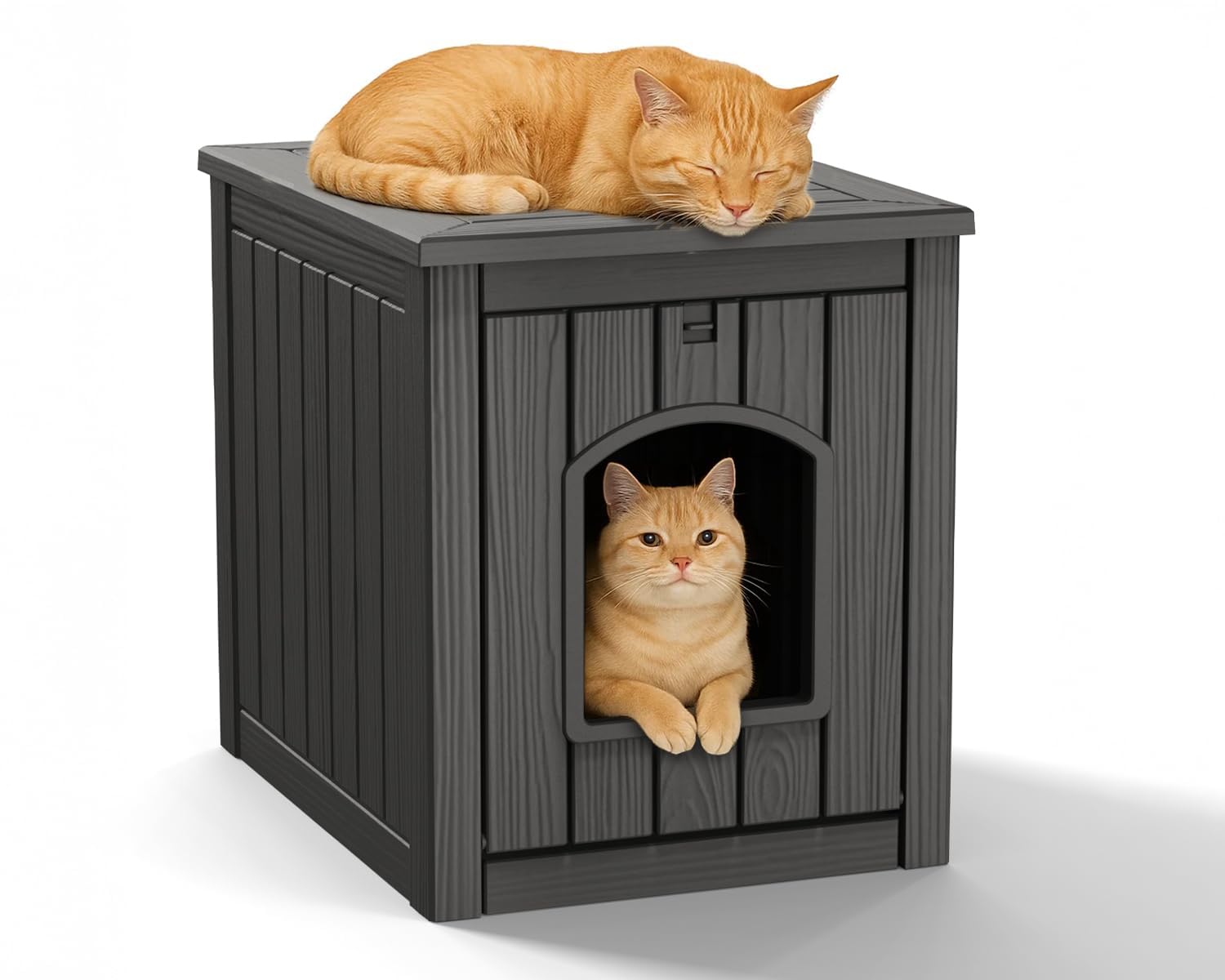
If your colony lives in an exposed field where gusts regularly shake lightweight tents, the DRATO offers a completely different approach. The shell is made from a durable resin blend mixed with polyethylene and polypropylene, giving it a rigid, impact-resistant body that won’t collapse or blow away. The raised front opening is a smart design detail — snow and rain cannot flow inside even during a sideways storm, and the full front panel drops down for easy scooping out of old bedding.
Assembly is genuinely tool-free. The pieces snap together with firm pressure, and experience from customer reviews shows a first-time build time around five minutes after learning the alignment once. Weighing over 12 pounds, the unit feels solid and sits low to the ground, which further reduces wind leverage. The interior is spacious enough for one large cat or two smaller ones, and the enclosed resin walls retain heat better than any fabric-only shelter.
The main drawback is summer ventilation. The enclosed resin design can trap heat, so owners in hot climates should ensure the shelter is placed in a shaded area. Adding a Mylar emergency blanket or reflective straw on top in winter improves heat retention further. This is the undisputed king of weather resistance among all options reviewed here.
Why it’s great
- Heavy, rigid resin shell that will not blow away
- Raised front door prevents all water ingress
- Full front panel drops for easy cleaning
Good to know
- Can overheat in direct summer sun without shade
- No included mat; needs separate bed or straw
3. TSEHOOHOO Stackable L (Green)
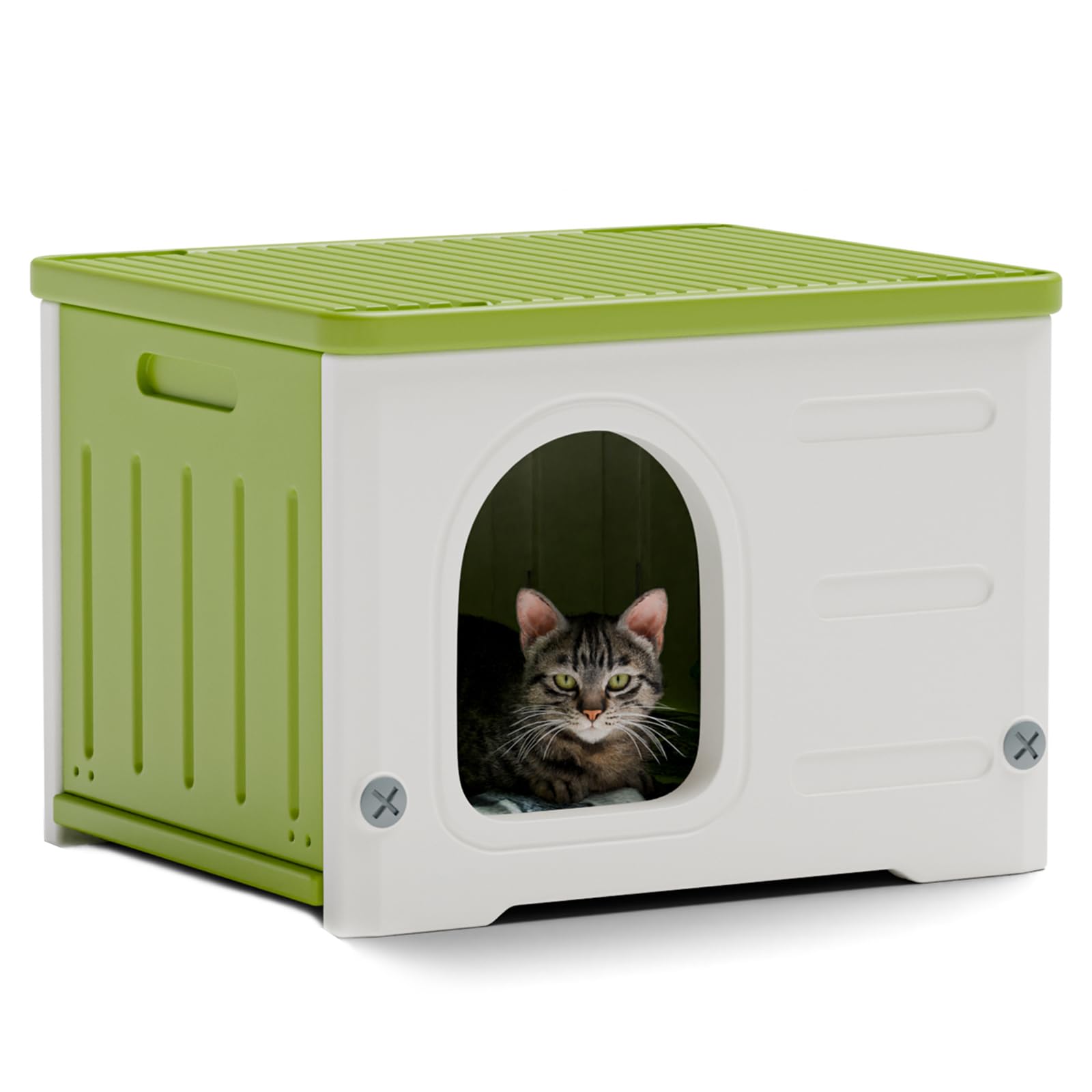
Managing a large colony often requires multiple shelters clustered in a barn or shed. The TSEHOOHOO Stackable is purpose-built for that scenario: each unit has a thickened double-layered plastic body with a top buckle that allows two or more houses to lock together securely without wobbling. The bottom stand elevates the entire unit off the ground, protecting the interior from ground moisture.
The interior measures a generous 20.8 by 16.1 by 15.1 inches, large enough for two adult cats to sleep side by side. The entrance is large — which helps nervous feral cats feel secure because they can see outside and make a quick escape if needed. The included mat is a thin comforter rather than a thick insulating pad; most colony caretakers replace it with a layer of straw for winter warmth.
Assembly involves snapping the walls together and securing them with plastic screws. A few reviews noted misaligned holes on the first build, but the majority reported a smooth process under ten minutes. Because the door is open without a flap, it works best under an existing porch roof or within a barn where it won’t take direct rain. For colony managers who need durable, stackable housing that can be disinfected between seasons, this is a standout.
Why it’s great
- Double-layered plastic that locks into a stable stack
- Elevated base keeps floor dry
- Large door for visibility and quick escape
Good to know
- Included cushion is thin; use straw for insulation
- Large opening lets rain in without overhead cover
4. mivo Collapsible Cat House

The mivo stands out for its internal construction: lightweight MDF (medium-density fiberboard) boards form the walls and roof, giving it a rigid shape that fabric-only tents lack. The outer layer is waterproof Oxford material, and the entire assembly connects via a zippered roof rather than velcro, which holds up better over repeated setups. It measures 20 by 13.3 by 17 inches and includes a removable soft mat.
Assembly is genuinely tool-free and fast: reviewers consistently report two to five minutes from box to finished shelter. The side-opening design — rather than a front-facing door — creates a windbreak effect that keeps drafts out of the main sleeping area. Several customers said their stray cats entered within hours, often carrying their own familiar blanket inside.
Being lightweight (only 2.8 pounds) is a double-edged sword. Without the included ground plugs or a wall bracing it, the house can slide in strong wind. The single-door design also means there is no escape route if a predator appears, making it better suited for protected garages or covered porches than open fields. It is the best pick for an indoor-to-outdoor transition space.
Why it’s great
- Rigid MDF frame inside Oxford fabric shell
- Tool-free assembly in under 5 minutes
- Side door blocks drafts from sleeping area
Good to know
- Very lightweight; needs stakes or wall support in wind
- No predator-escape second door
5. Rest-Eazzzy Insulated Cat House
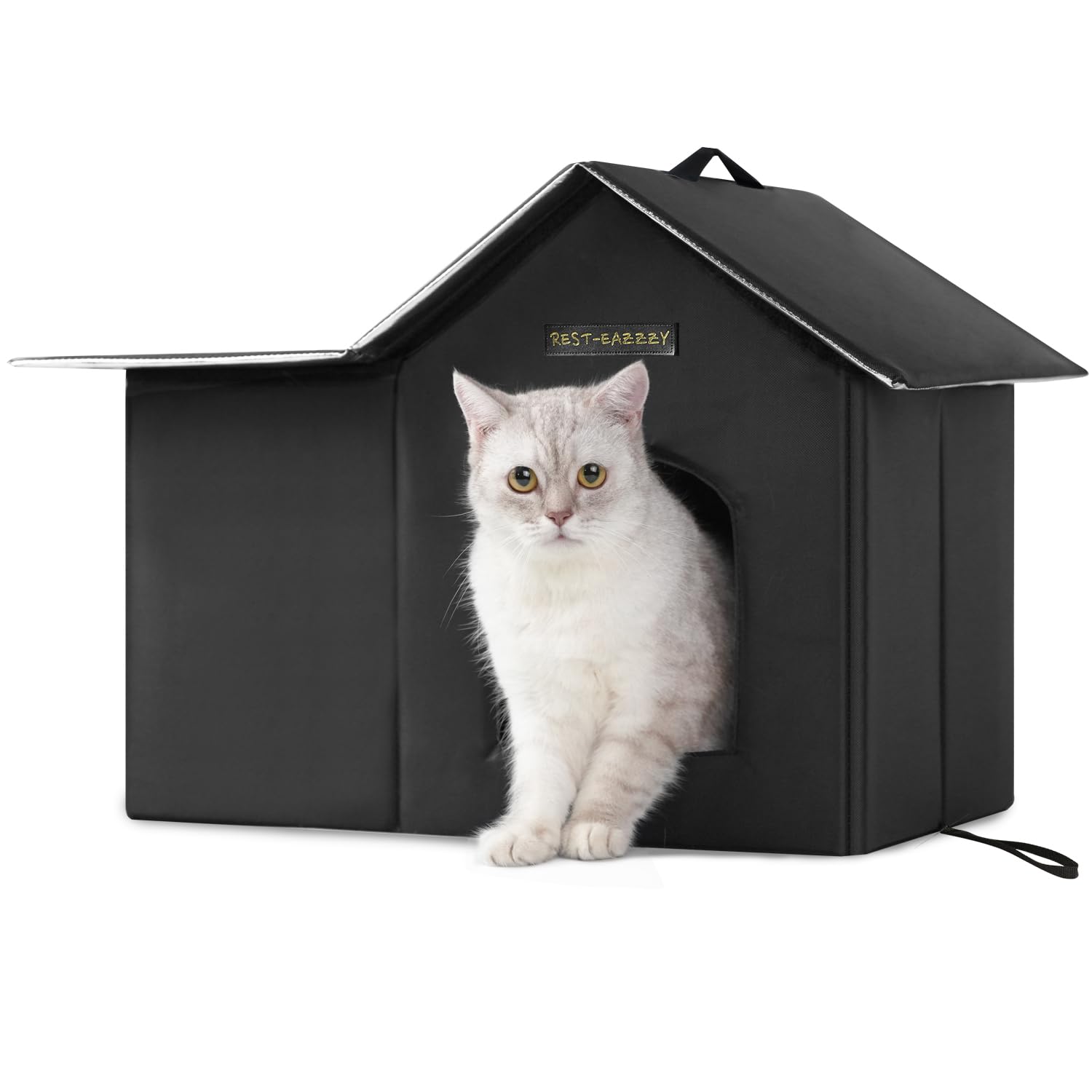
What distinguishes the Rest-Eazzzy from other tent-style shelters is its sandwich-style wall design that incorporates a layer of reflective foil insulation between the inner and outer fabric. This foil layer bounces body heat back toward the cat while also reflecting external cold, making a noticeable difference on sub-freezing nights. The house comes in a medium size (14 by 17 by 20 inches) and a small size, with a built-in carry ring on the roof for portability.
Waterproof Oxford cloth covers the exterior, and a removable mat is included. Assembly is nearly instant — reviewers describe it as “almost no need to assemble” because the walls are sewn in shape and only need the base snapped in. The lightweight design (3.37 pounds) and included curtain at the entrance add extra draft protection.
The main durability concern is UV damage. Several users in high-sun climates reported that the fabric faded and degraded faster than heavier resin shelters when left in direct sun. Placing it under a shaded overhang extends its life significantly. It is a solid mid-range option for mild-to-moderate climates where a tent offers enough wind protection and ease of relocation.
Why it’s great
- Reflective foil insulation layer captures body heat
- Almost zero assembly with carry handle for mobility
- Curtain at entrance improves draft protection
Good to know
- Fabric may fade and weaken in direct sun
- Some units show light UV damage within one season
6. Anysiny+ Bowl Cat House

The Anysiny+ stands out for a unique feature: a removable feeding bowl integrated into the side of the shelter. This allows caretakers to offer food and water near the sleeping area without the bowl being exposed to rain or stepped in by the cat. The exterior uses a waterproof polyester shell with EVA reinforcement and ground plugs for added stability in wind.
The interior is 19.7 by 13.4 by 15.7 inches, and the removable soft mat inside is easy to shake out and wash. Assembly follows the same tool-free pattern as other tent-style shelters, taking most users under ten minutes. The camouflage-gray color option blends into garden or barn environments better than bright designs, which helps shy ferals feel hidden.
One practical downside is that the bottom is made of fabric, not a rigid base, so placing it on wet ground will eventually wick moisture upward unless the shelter is set on pavers or a wooden pallet. The interior flap helps retain warmth but does not fully seal the door. This is a niche pick for caretakers who want a single unit that doubles as a feeding station in a protected space.
Why it’s great
- Integrated removable bowl for dry feeding
- EVA stiffeners and ground plugs add wind resistance
- Interior flap reduces heat loss at night
Good to know
- Fabric bottom sits directly on the ground; needs elevation
- Primary appeal is the bowl, not extreme weatherproofing
7. TSEHOOHOO Stackable M (Green)

For a minimal investment, this medium-sized plastic shelter provides all the core weatherproofing of its larger sibling but in a more compact footprint. The double-layered walls and elevated base keep the interior dry, and the stackable design allows multiple units to be locked together for barn or porch installations. The 16.9 by 16.1 by 15-inch interior fits a single adult cat comfortably but is too small for two.
Assembly uses plastic screws and snap-together walls — most users complete it in under five minutes. The included cushion is described as a thin comforter, so adding a layer of straw or a mylar blanket is highly recommended for winter. The large entrance door provides good visibility and escape routes, which nervous ferals prefer over tiny holes.
Limitations include that the door has no flap and no overhead awning, so rain can enter if the shelter is placed in an unsheltered location. A few owners reported slight misalignment of screw holes during assembly, but the build is sturdy once locked together. It’s the most cost-effective option for caretakers who need a basic dry box under a covered porch or in a garage.
Why it’s great
- Lowest entry cost for a rigid plastic shelter
- Simple 5-minute assembly with snap-in walls
- Walls lock together for stacking multiple units
Good to know
- Fits one cat only; cramped for two
- Open doorway lets rain in without extra cover
FAQ
What is the best insulating material to put inside a feral cat shelter?
Should I buy a fabric tent shelter or a rigid plastic house for outdoor use?
How many cats can share a single outdoor shelter?
Do feral cats need a two-way escape door?
Final Thoughts: The Verdict
For most users, the bedding for feral cats winner is the TailTastic Elevated Cat House because it combines 900D waterproof fabric, an elevated platform, and a spacious interior at a mid-range price point that fits most colony budgets. If you need a shelter that can survive extreme winds and direct rain without blowing away, grab the DRATO Resin Igloo. And for colony managers managing multiple cats in a barn or garage with limited floor space, nothing beats the stackable durability of the TSEHOOHOO Stackable L.